PREPARATION
AND
EVALUATION
OF
INSTRUCTIONAL
MATERIALS
• PRINCIPLES IN
MATERIAL DESIGN
(NUNAN, 1988)
• DESIGN,
DEVELOPMENT AND
DISSEMINATION OF
MATERIALS
MA. ELENA OBLINO ABAINZA
PRINCIPLES IN MATERIAL
DESIGNS
Why ID?
 Designing effective instructional materials
is one way of improving the quality of
educational opportunities.
 The common concern of instructional
designers is the facilitation of successful
learning experiences from which learners
can demonstrate their newly acquired
knowledge, skills and attitudes.
What is an ISD ?
 Instructional design refers to the
systematic process of translating principles
of learning and instruction into plans or
specifications for instructional materials or
activities
Who is an instructional
designer ?
 Instructional designers use established
learning theories and principles as
problem solving procedures (models) to
guide them in making decisions about
their designs.
(Smith and Ragan, 1999)
Basic Elements of ID
1. Determining the needs of the learners
and examining the learning context and
environment
2. Determining the outcomes of the
learning program or course and
formulating the learning objectives
3. Developing appropriate and
meaningful assessment criteria and
procedures
4. Establishing the most effective
approach(es) to delivering the
instruction
Basic Elements of ID
5. Testing and evaluating the effectiveness
of the instructional system (both the
instruction itself and the performance of
the learner)
6. Implementing, adjusting and
maintaining
the instructional system
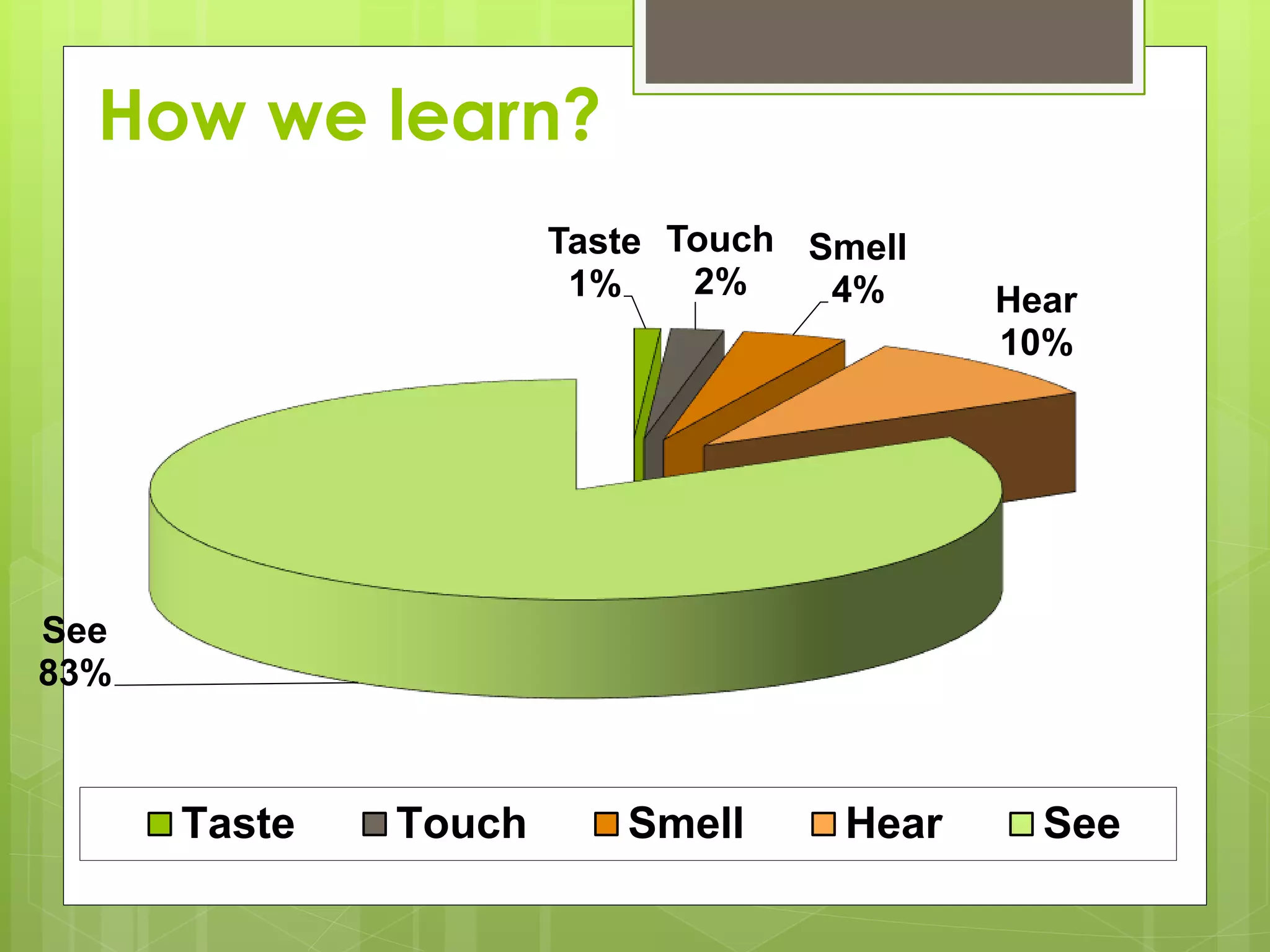
How we learn?
Taste
1%
Touch
2%
Smell
4% Hear
10%
See
83%
Taste Touch Smell Hear See
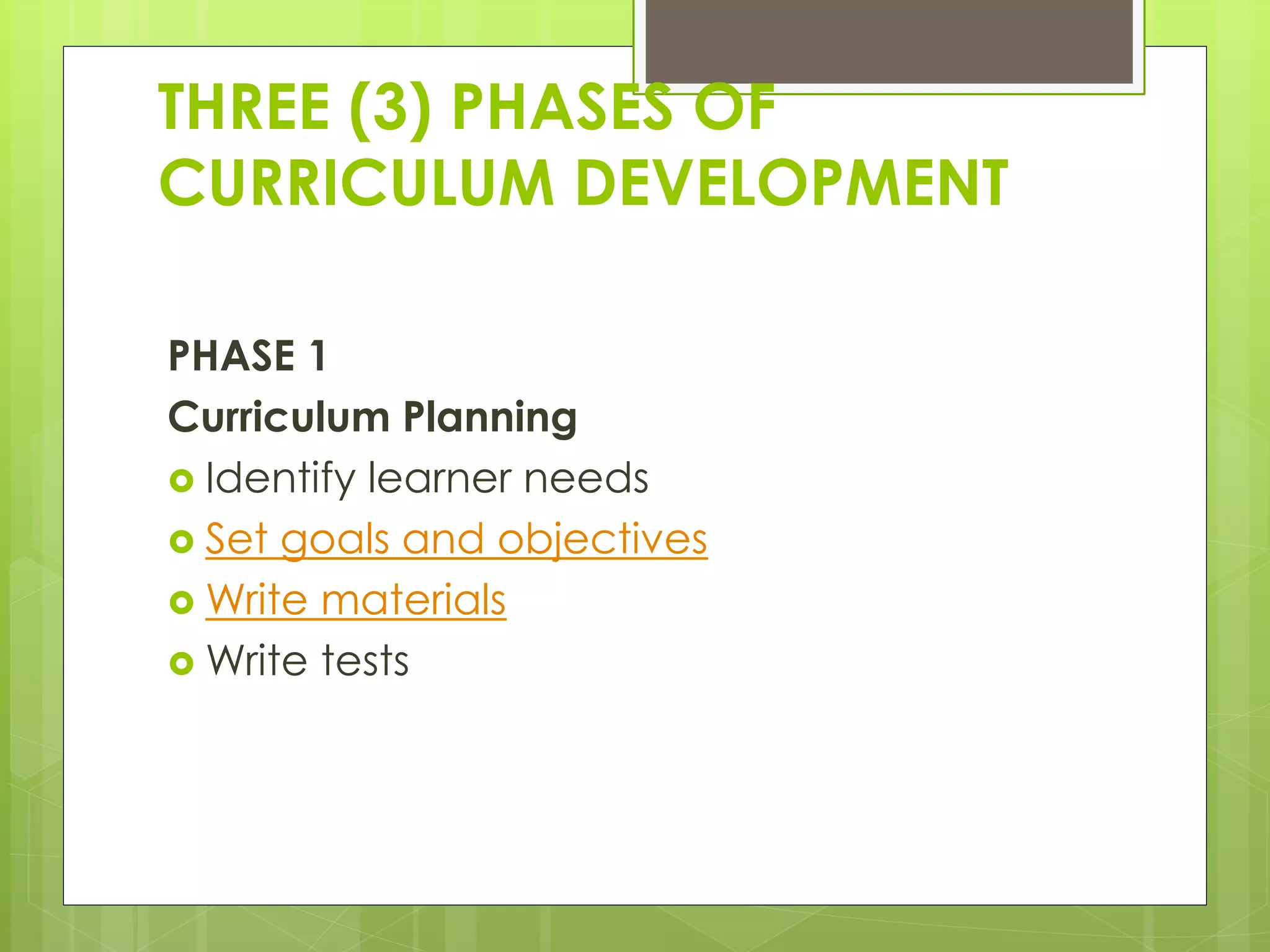
THREE (3) PHASES OF
CURRICULUM DEVELOPMENT
PHASE 1
Curriculum Planning
 Identify learner needs
 Set goals and objectives
 Write materials
 Write tests
Learning Objects
The term learning object generally refers to
a reusable component at the page, lesson,
or, perhaps, course level.
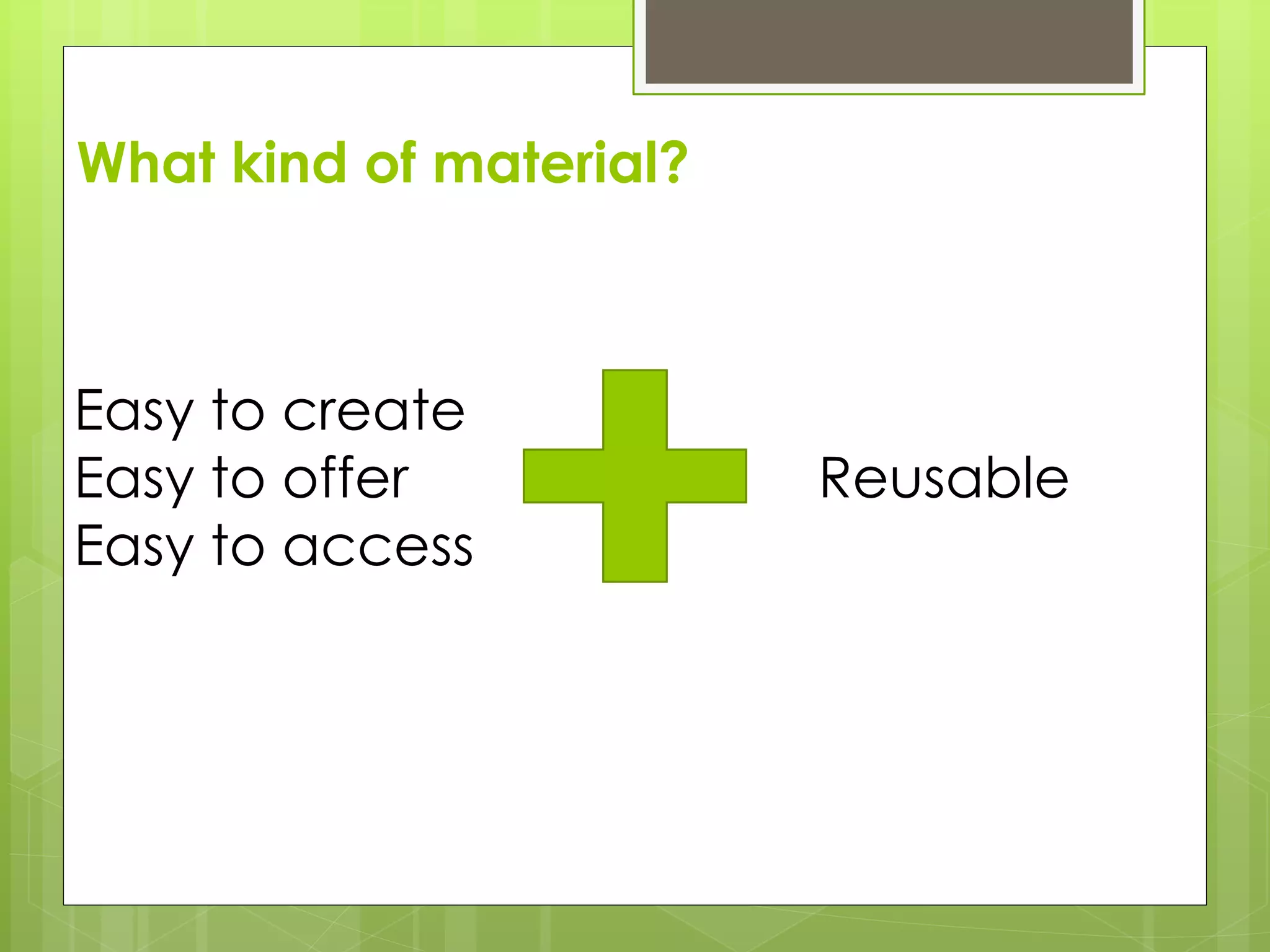
What kind of material?
Easy to create
Easy to offer
Easy to access
Reusable
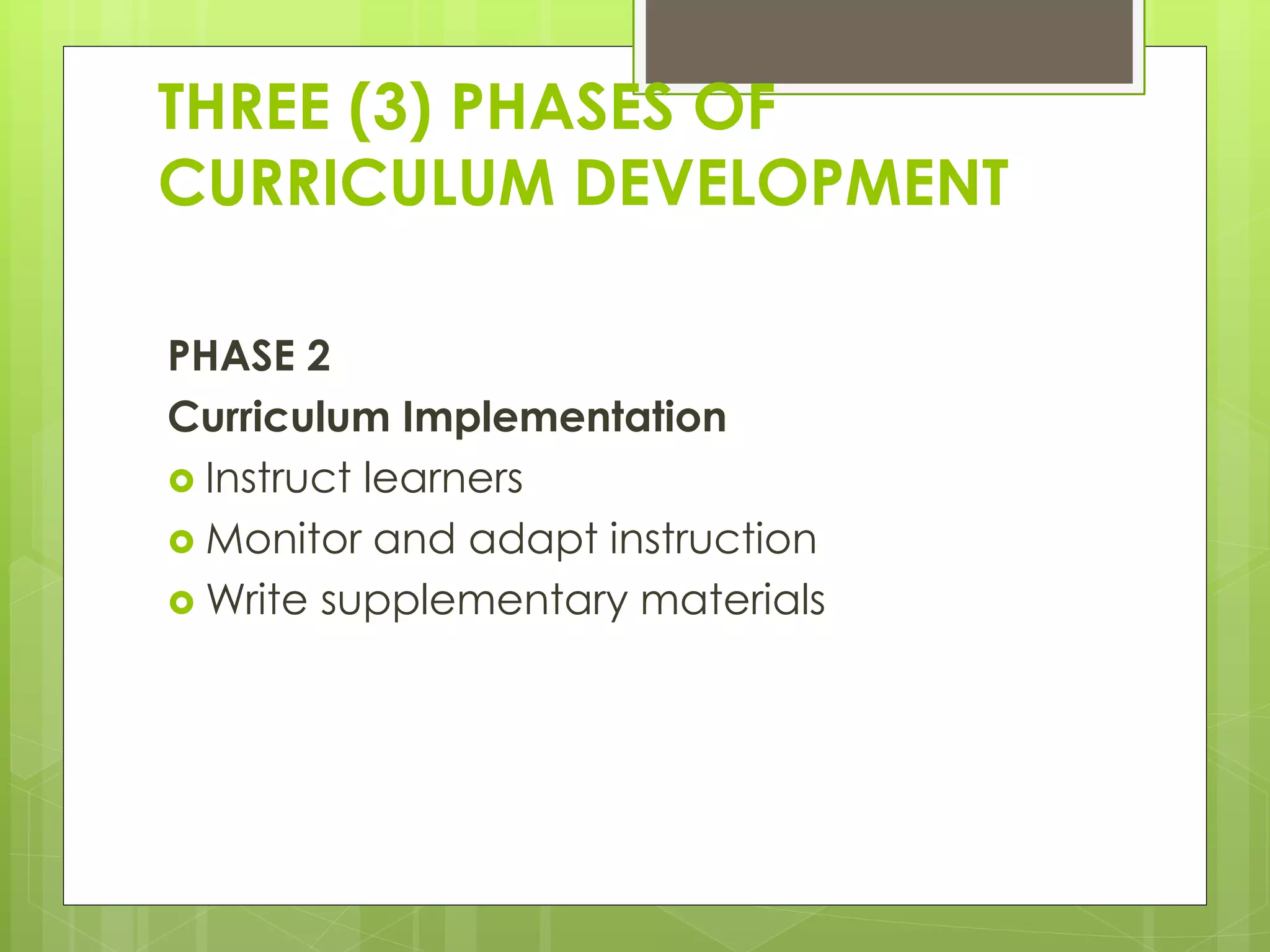
THREE (3) PHASES OF
CURRICULUM DEVELOPMENT
PHASE 2
Curriculum Implementation
 Instruct learners
 Monitor and adapt instruction
 Write supplementary materials
THREE (3) PHASES OF
CURRICULUM DEVELOPMENT
PHASE 3
Curriculum Evaluation
 Test learners
 Evaluate curriculum
 Plan changes in the curriculum
Authentic Versus Created
Materials
 Authentic materials
Refer to the use in teaching of texts
that were not specially prepared for
pedagogic purposes.
 Created materials
Refer to textbooks and other specially
developed instructional resources.
DESIGN, DEVELOPMENT AND
DISSEMINATION OF
MATERIALS
Design Phase
 Accumulated experiences – the writer reviews
or surveys existing materials which can give
useful information about the demands and
the needs in the field.
 Rationale for the design – identifies the
shortcomings of existing materials to ensure
that such short comings are not repeated in
the present material.
 Conceptual Framework – combines major
and minor concepts regarding language
learning, language teaching theories, and
materials design principles upon which the
material is anchored.
Detailed writing of the specification for
the new materials – the specification
includes:
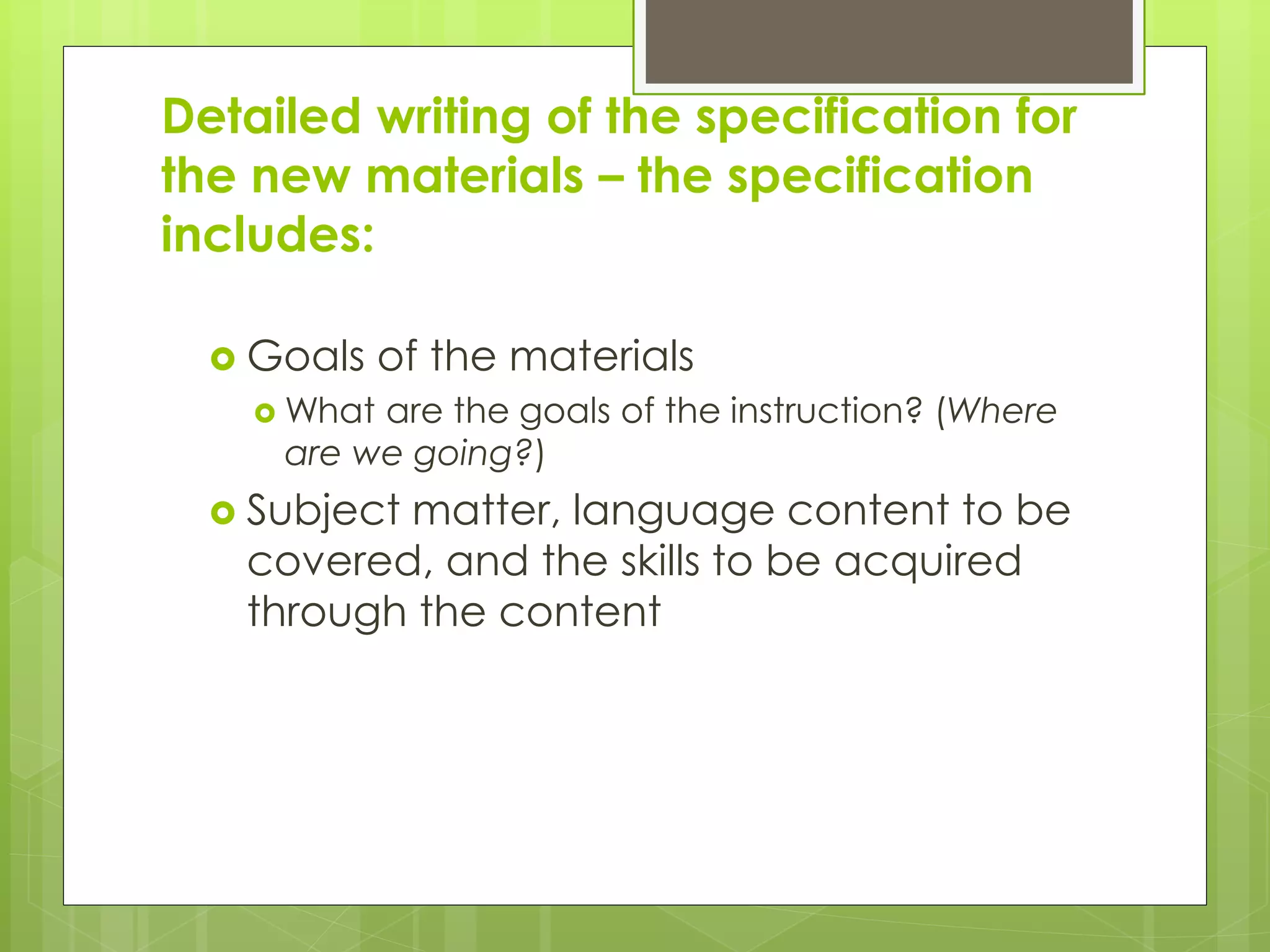
 Goals of the materials
 What are the goals of the instruction? (Where
are we going?)
 Subject matter, language content to be
covered, and the skills to be acquired
through the content
Detailed writing of the specification for
the new materials – the specification
includes:
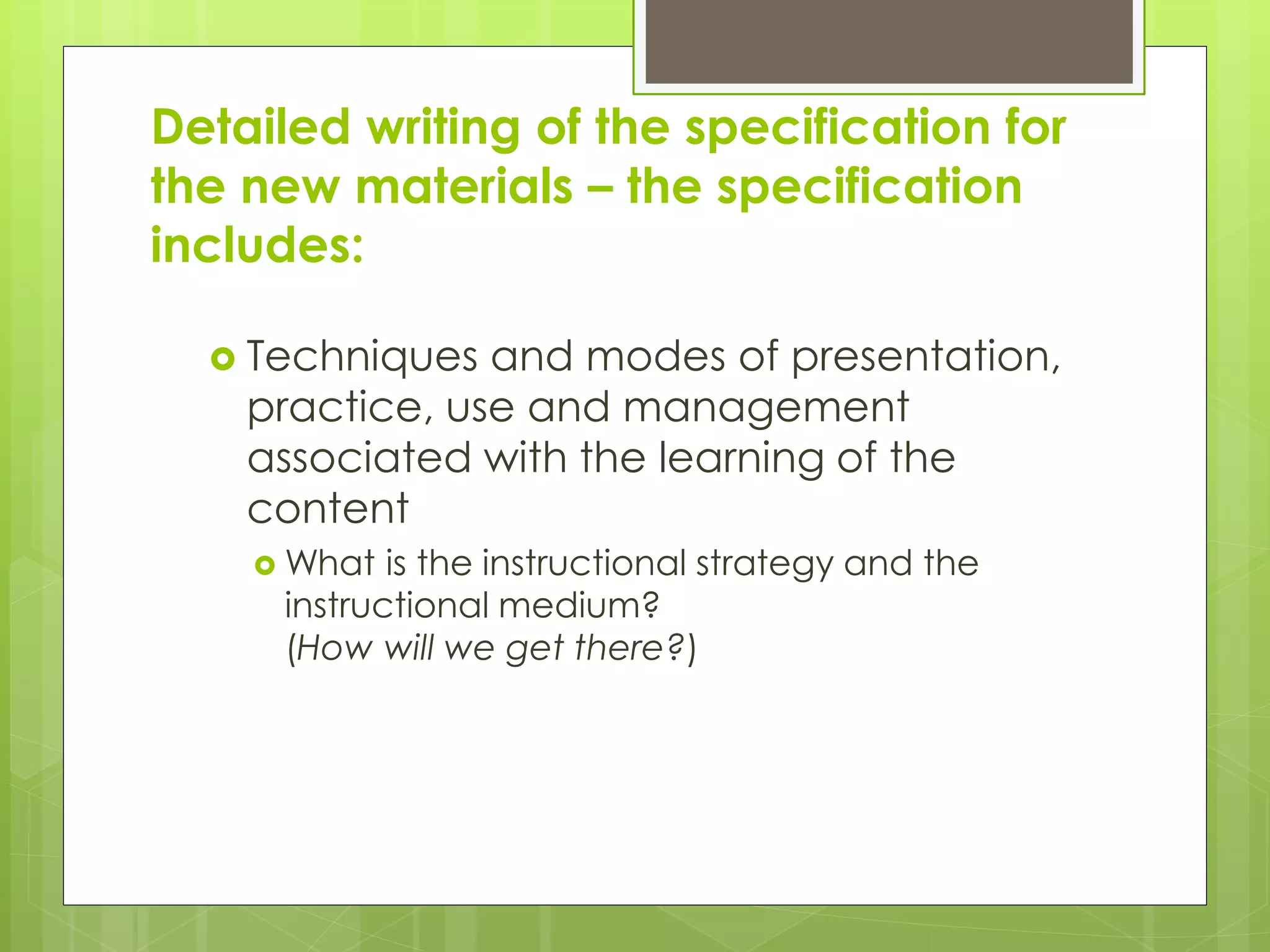
 Techniques and modes of presentation,
practice, use and management
associated with the learning of the
content
 What is the instructional strategy and the
instructional medium?
(How will we get there?)
Detailed writing of the specification for
the new materials – the specification
includes:
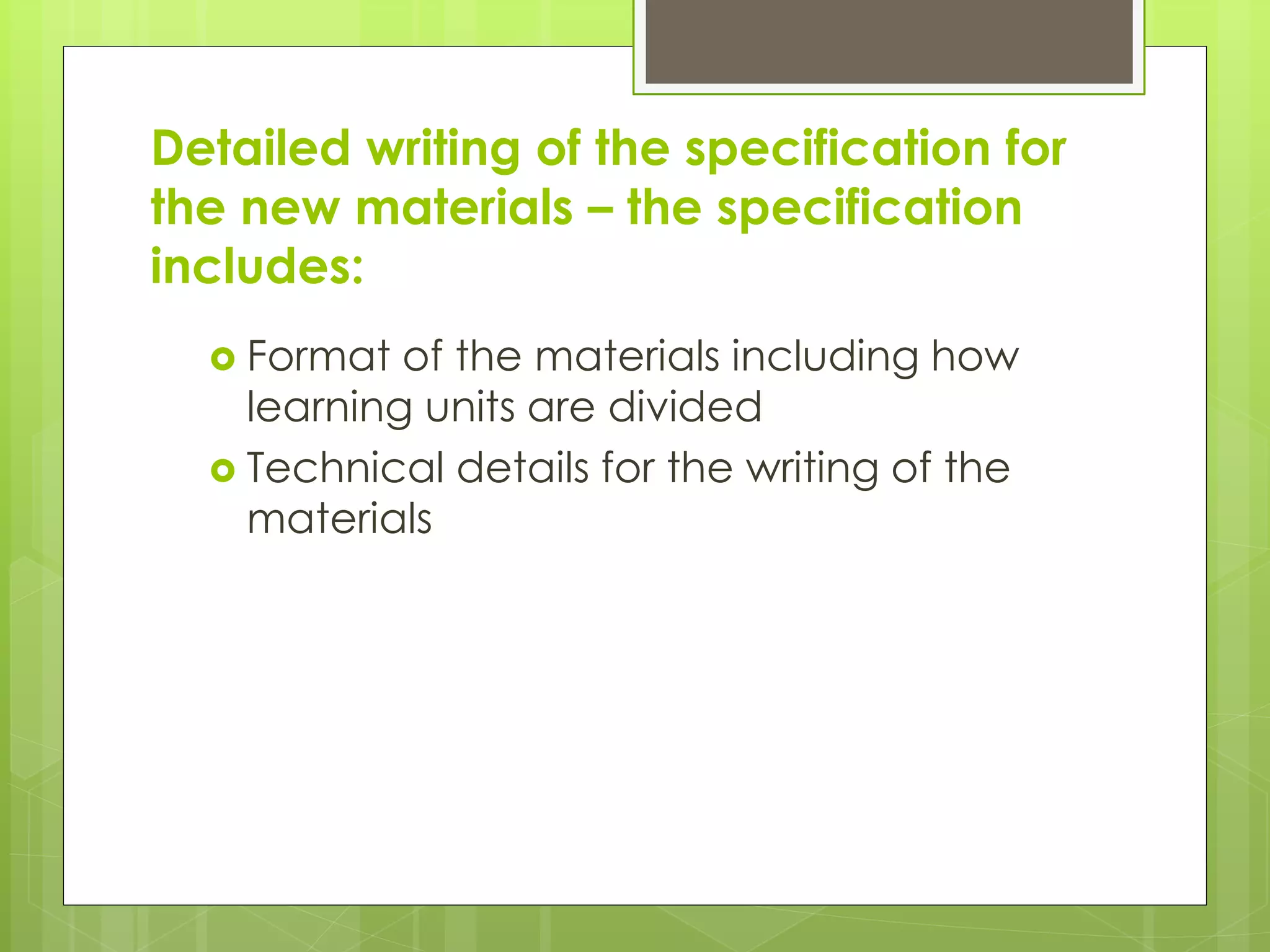
 Format of the materials including how
learning units are divided
 Technical details for the writing of the
materials
Developmental Phase
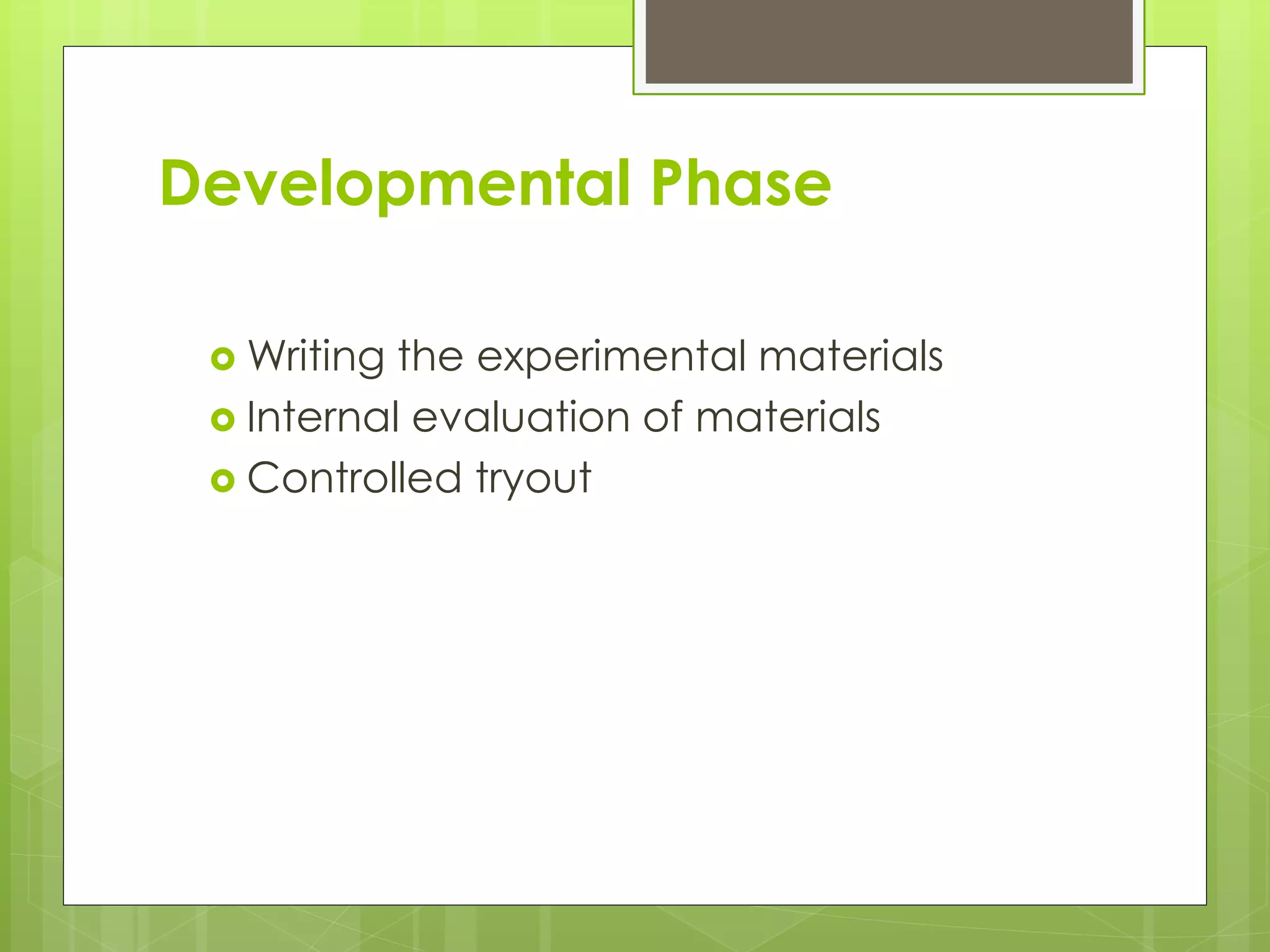
 Writing the experimental materials
 Internal evaluation of materials
 Controlled tryout
Dissemination Phase
 Extensive use of the new IM
 Field evaluation of the IM
 How will we evaluate and revise the
instructional materials for future improvement?
(How will we know when we have arrived?)
Preparation and evaluation of instruction materials

Preparation and evaluation of instruction materials

  • 1.
    PREPARATION AND EVALUATION OF INSTRUCTIONAL MATERIALS • PRINCIPLES IN MATERIALDESIGN (NUNAN, 1988) • DESIGN, DEVELOPMENT AND DISSEMINATION OF MATERIALS MA. ELENA OBLINO ABAINZA
  • 2.
  • 3.
    Why ID?  Designingeffective instructional materials is one way of improving the quality of educational opportunities.  The common concern of instructional designers is the facilitation of successful learning experiences from which learners can demonstrate their newly acquired knowledge, skills and attitudes.
  • 4.
    What is anISD ?  Instructional design refers to the systematic process of translating principles of learning and instruction into plans or specifications for instructional materials or activities
  • 5.
    Who is aninstructional designer ?  Instructional designers use established learning theories and principles as problem solving procedures (models) to guide them in making decisions about their designs. (Smith and Ragan, 1999)
  • 6.
    Basic Elements ofID 1. Determining the needs of the learners and examining the learning context and environment 2. Determining the outcomes of the learning program or course and formulating the learning objectives 3. Developing appropriate and meaningful assessment criteria and procedures 4. Establishing the most effective approach(es) to delivering the instruction
  • 7.
    Basic Elements ofID 5. Testing and evaluating the effectiveness of the instructional system (both the instruction itself and the performance of the learner) 6. Implementing, adjusting and maintaining the instructional system
  • 8.
    How we learn? Taste 1% Touch 2% Smell 4%Hear 10% See 83% Taste Touch Smell Hear See
  • 9.
    THREE (3) PHASESOF CURRICULUM DEVELOPMENT PHASE 1 Curriculum Planning  Identify learner needs  Set goals and objectives  Write materials  Write tests
  • 10.
    Learning Objects The termlearning object generally refers to a reusable component at the page, lesson, or, perhaps, course level.
  • 11.
    What kind ofmaterial? Easy to create Easy to offer Easy to access Reusable
  • 12.
    THREE (3) PHASESOF CURRICULUM DEVELOPMENT PHASE 2 Curriculum Implementation  Instruct learners  Monitor and adapt instruction  Write supplementary materials
  • 13.
    THREE (3) PHASESOF CURRICULUM DEVELOPMENT PHASE 3 Curriculum Evaluation  Test learners  Evaluate curriculum  Plan changes in the curriculum
  • 14.
    Authentic Versus Created Materials Authentic materials Refer to the use in teaching of texts that were not specially prepared for pedagogic purposes.  Created materials Refer to textbooks and other specially developed instructional resources.
  • 15.
  • 16.
    Design Phase  Accumulatedexperiences – the writer reviews or surveys existing materials which can give useful information about the demands and the needs in the field.  Rationale for the design – identifies the shortcomings of existing materials to ensure that such short comings are not repeated in the present material.  Conceptual Framework – combines major and minor concepts regarding language learning, language teaching theories, and materials design principles upon which the material is anchored.
  • 17.
    Detailed writing ofthe specification for the new materials – the specification includes:  Goals of the materials  What are the goals of the instruction? (Where are we going?)  Subject matter, language content to be covered, and the skills to be acquired through the content
  • 18.
    Detailed writing ofthe specification for the new materials – the specification includes:  Techniques and modes of presentation, practice, use and management associated with the learning of the content  What is the instructional strategy and the instructional medium? (How will we get there?)
  • 19.
    Detailed writing ofthe specification for the new materials – the specification includes:  Format of the materials including how learning units are divided  Technical details for the writing of the materials
  • 20.
    Developmental Phase  Writingthe experimental materials  Internal evaluation of materials  Controlled tryout
  • 21.
    Dissemination Phase  Extensiveuse of the new IM  Field evaluation of the IM  How will we evaluate and revise the instructional materials for future improvement? (How will we know when we have arrived?)