What is assessment?? 
Assessment involves the use of empirical data on student 
learning to refine programs and improve student 
learning. (Assessing Academic Programs in Higher 
Education by Allen 2004) 
Assessment for Learning focuses on the opportunities to 
develop students' ability to evaluate themselves, to make 
judgements about their own performance and improve upon it. 
It makes use of authentic assessment methods and offers lots 
of opportunities for students to develop their skills through 
formative assessment using summative assessment 
sparingly.
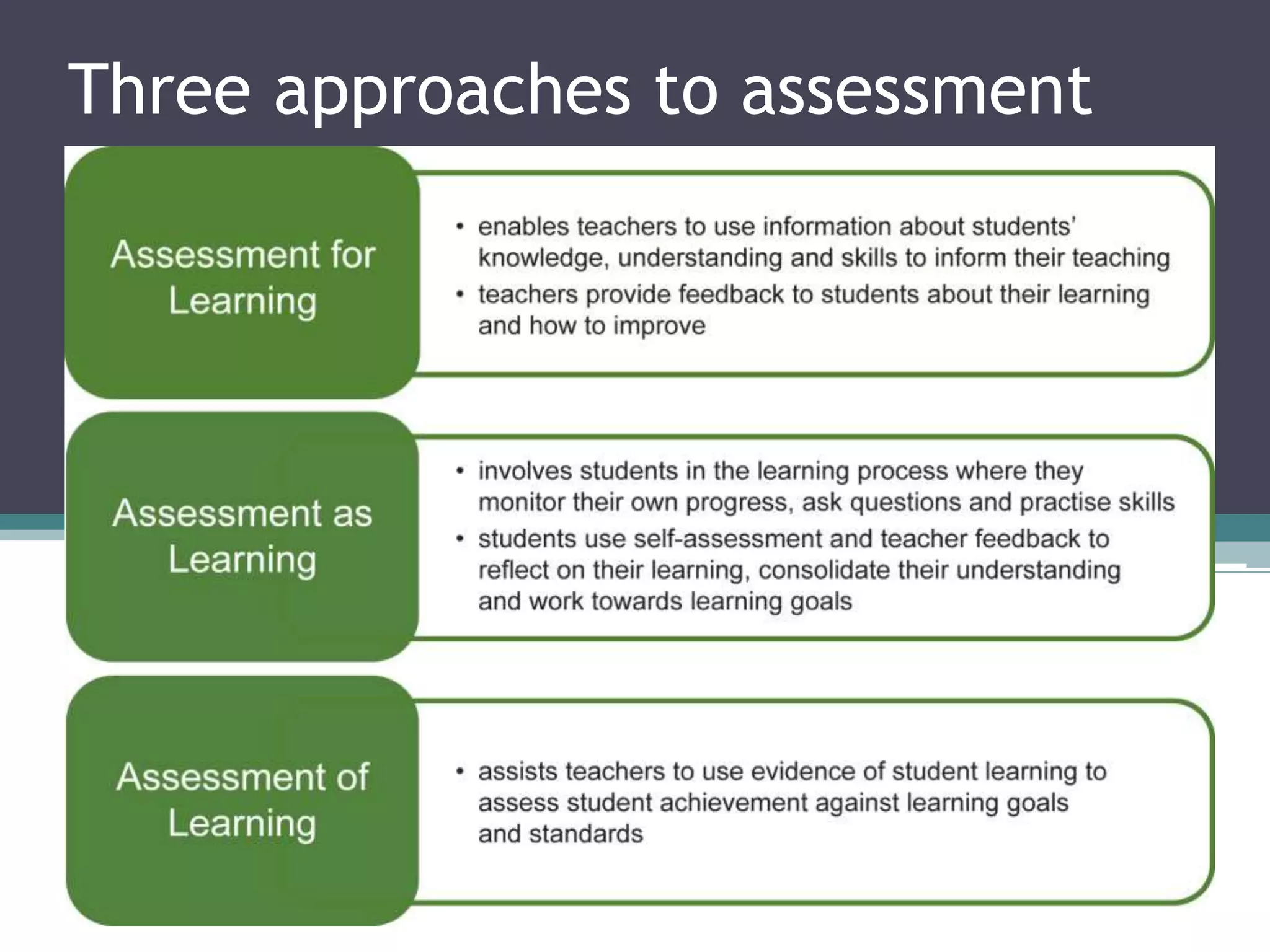
Three approaches to assessment
Important of assessment??
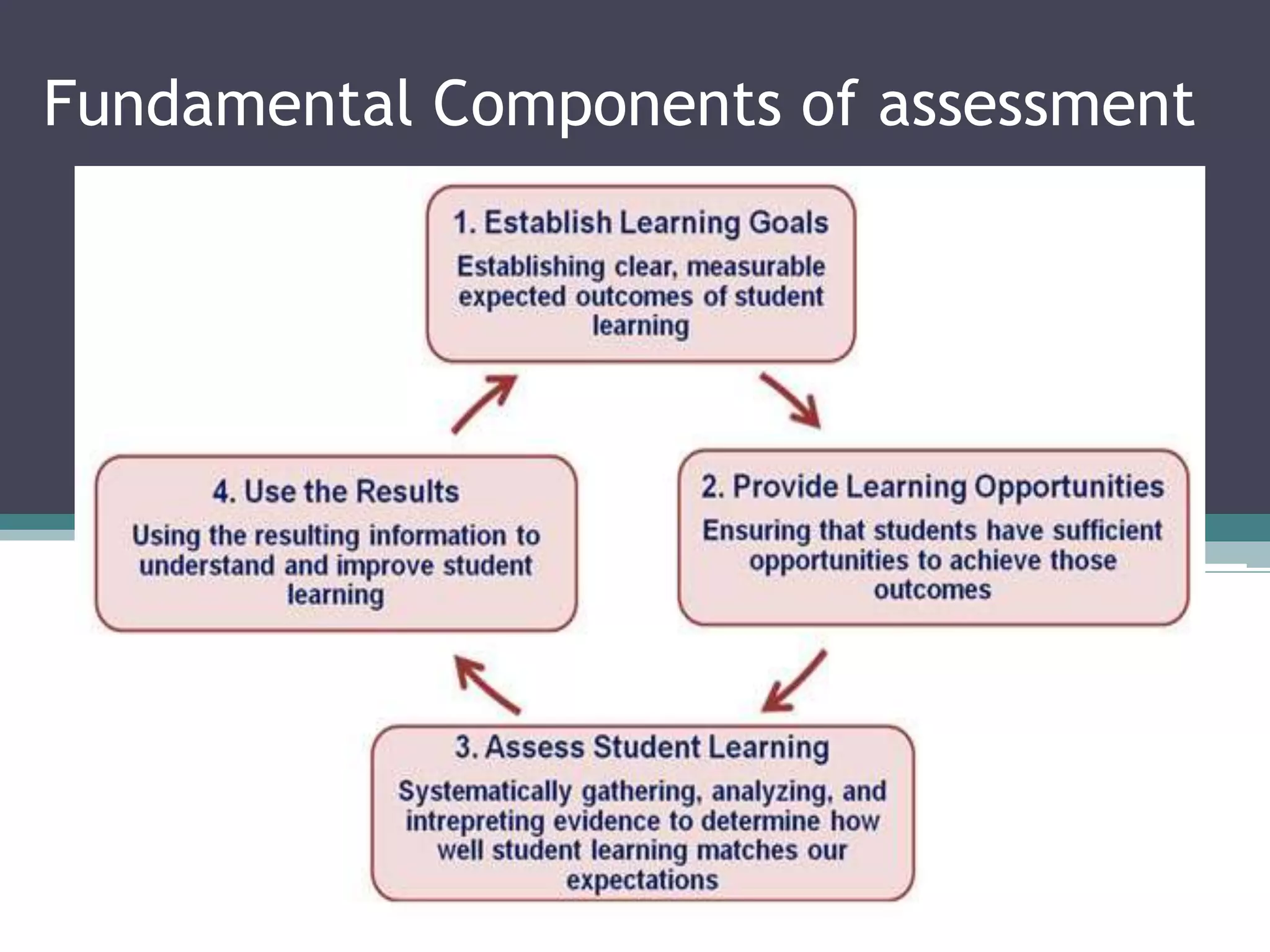
Fundamental Components of assessment
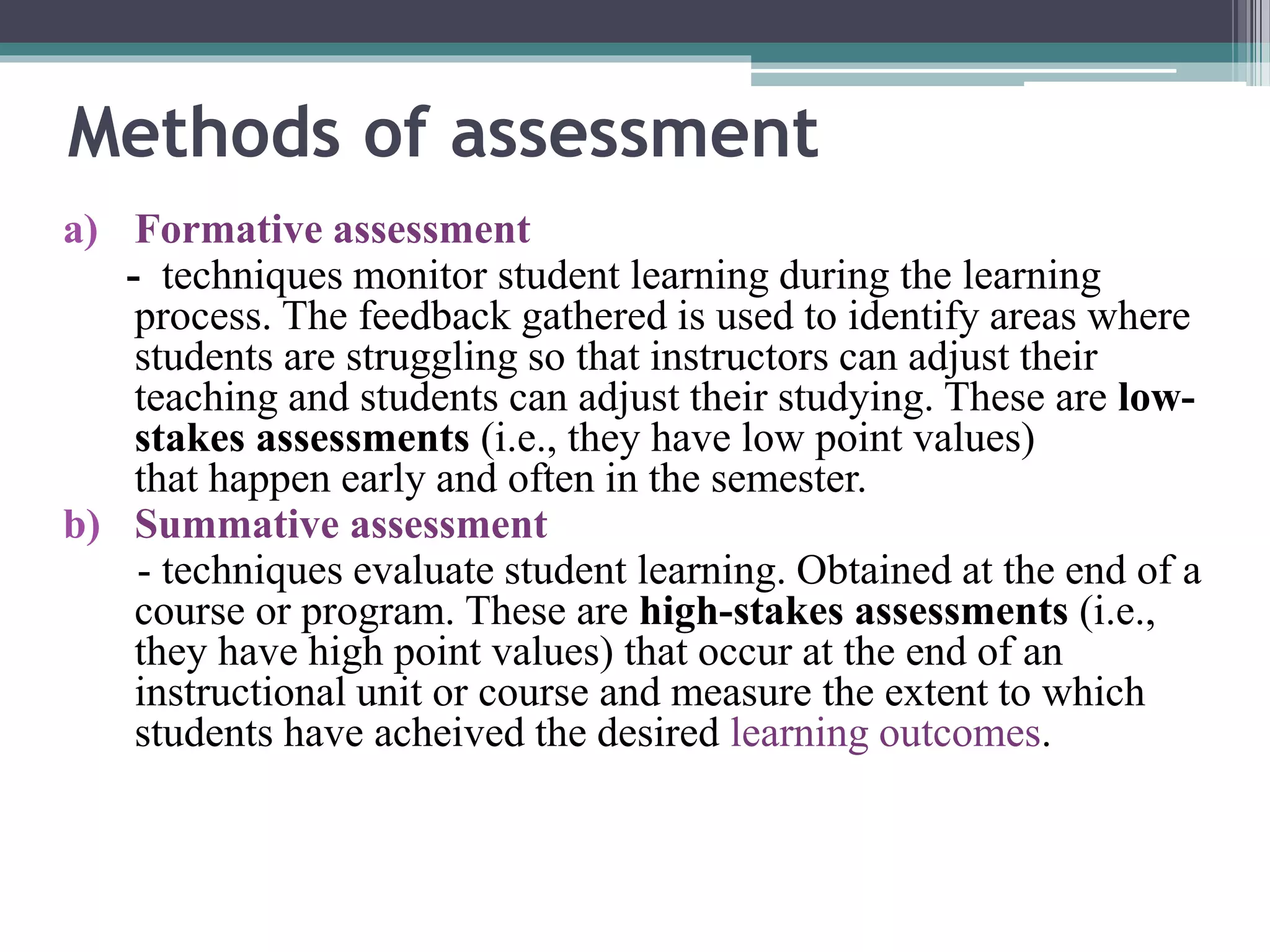
Methods of assessment 
a) Formative assessment 
- techniques monitor student learning during the learning 
process. The feedback gathered is used to identify areas where 
students are struggling so that instructors can adjust their 
teaching and students can adjust their studying. These are low-stakes 
assessments (i.e., they have low point values) 
that happen early and often in the semester. 
b) Summative assessment 
- techniques evaluate student learning. Obtained at the end of a 
course or program. These are high-stakes assessments (i.e., 
they have high point values) that occur at the end of an 
instructional unit or course and measure the extent to which 
students have acheived the desired learning outcomes.
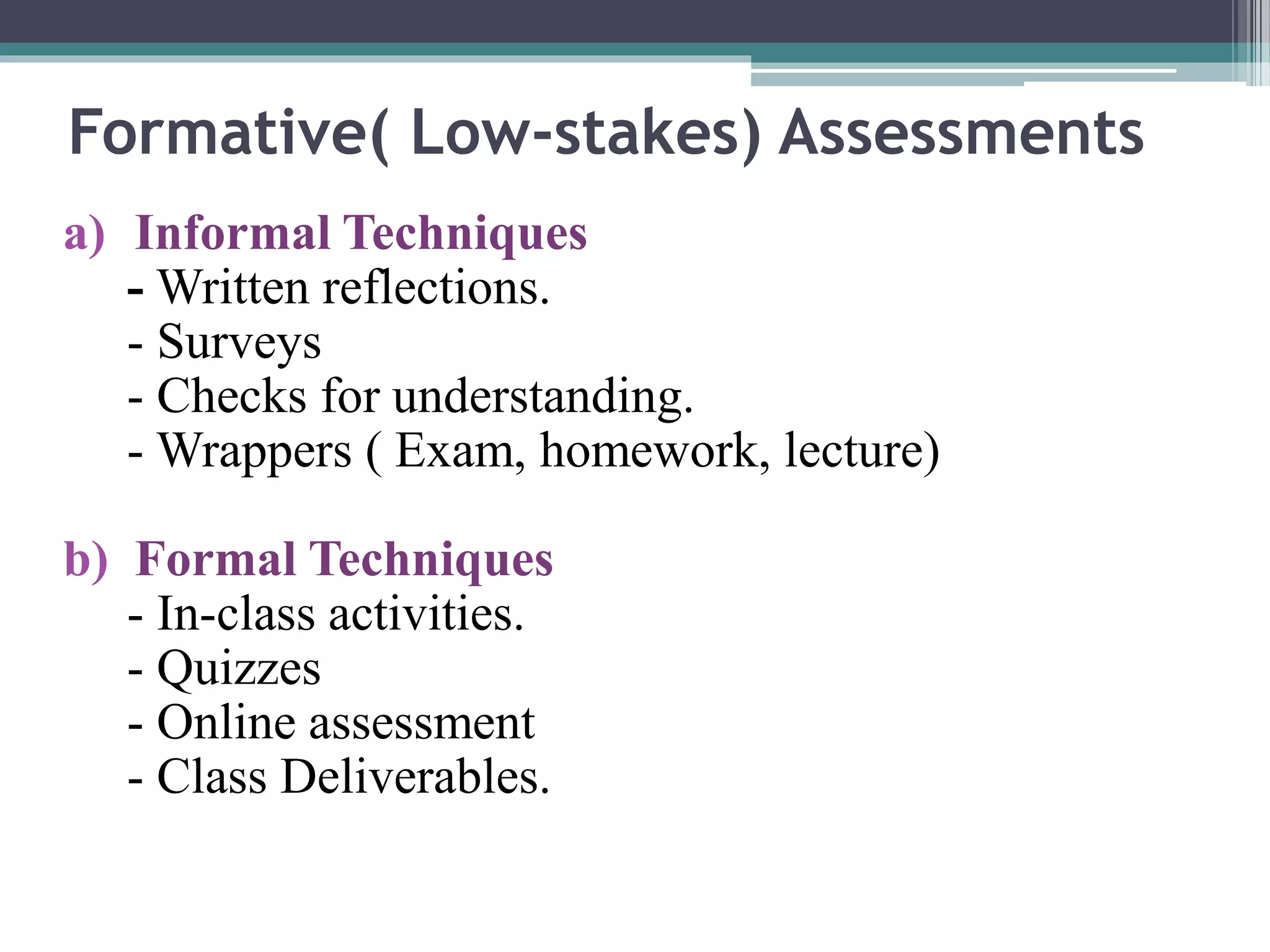
Formative( Low-stakes) Assessments 
a) Informal Techniques 
-Written reflections. 
- Surveys 
- Checks for understanding. 
-Wrappers ( Exam, homework, lecture) 
b) Formal Techniques 
- In-class activities. 
- Quizzes 
- Online assessment 
- Class Deliverables.
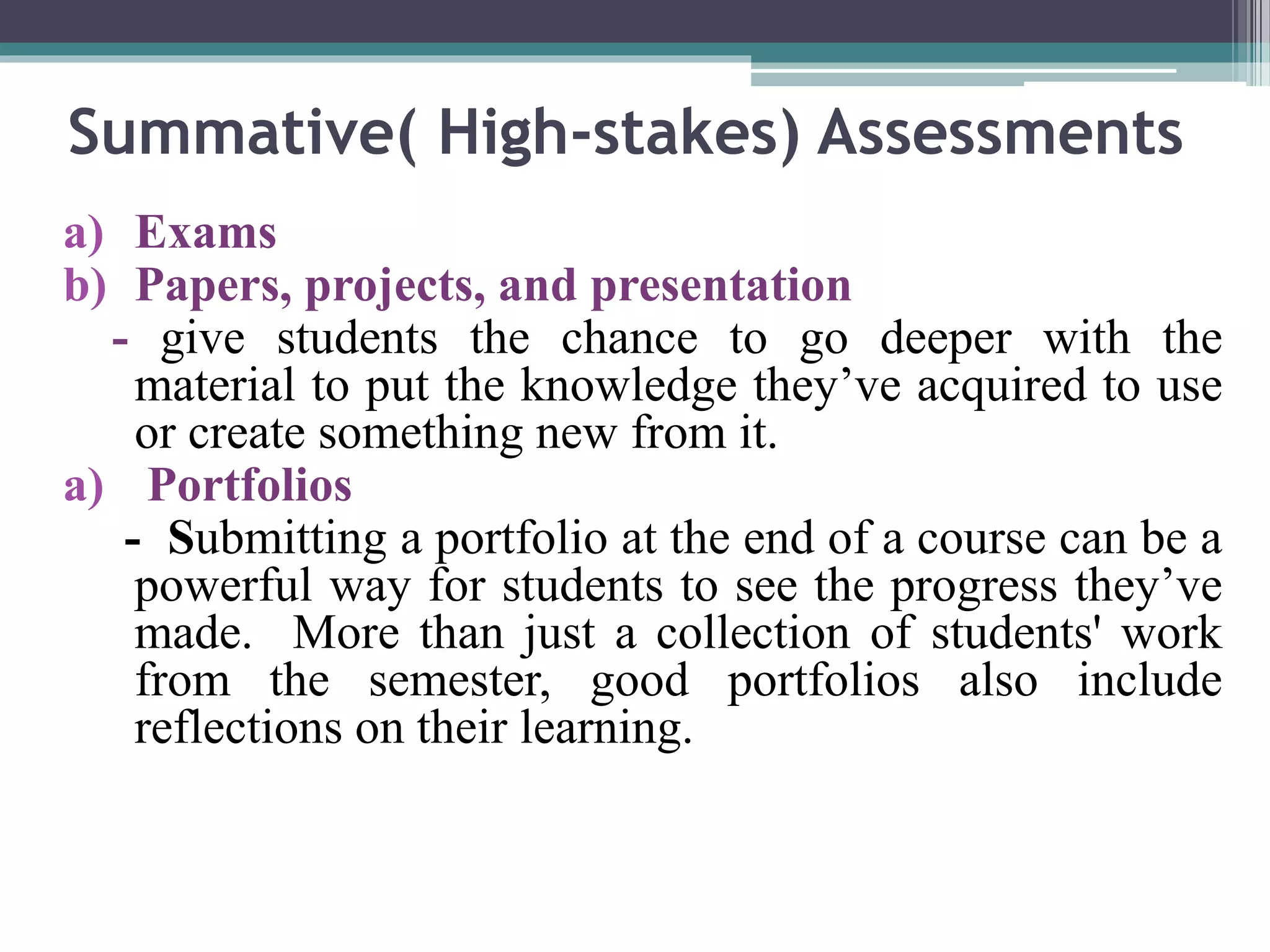
Summative( High-stakes) Assessments 
a) Exams 
b) Papers, projects, and presentation 
- give students the chance to go deeper with the 
material to put the knowledge they’ve acquired to use 
or create something new from it. 
a) Portfolios 
- Submitting a portfolio at the end of a course can be a 
powerful way for students to see the progress they’ve 
made. More than just a collection of students' work 
from the semester, good portfolios also include 
reflections on their learning.
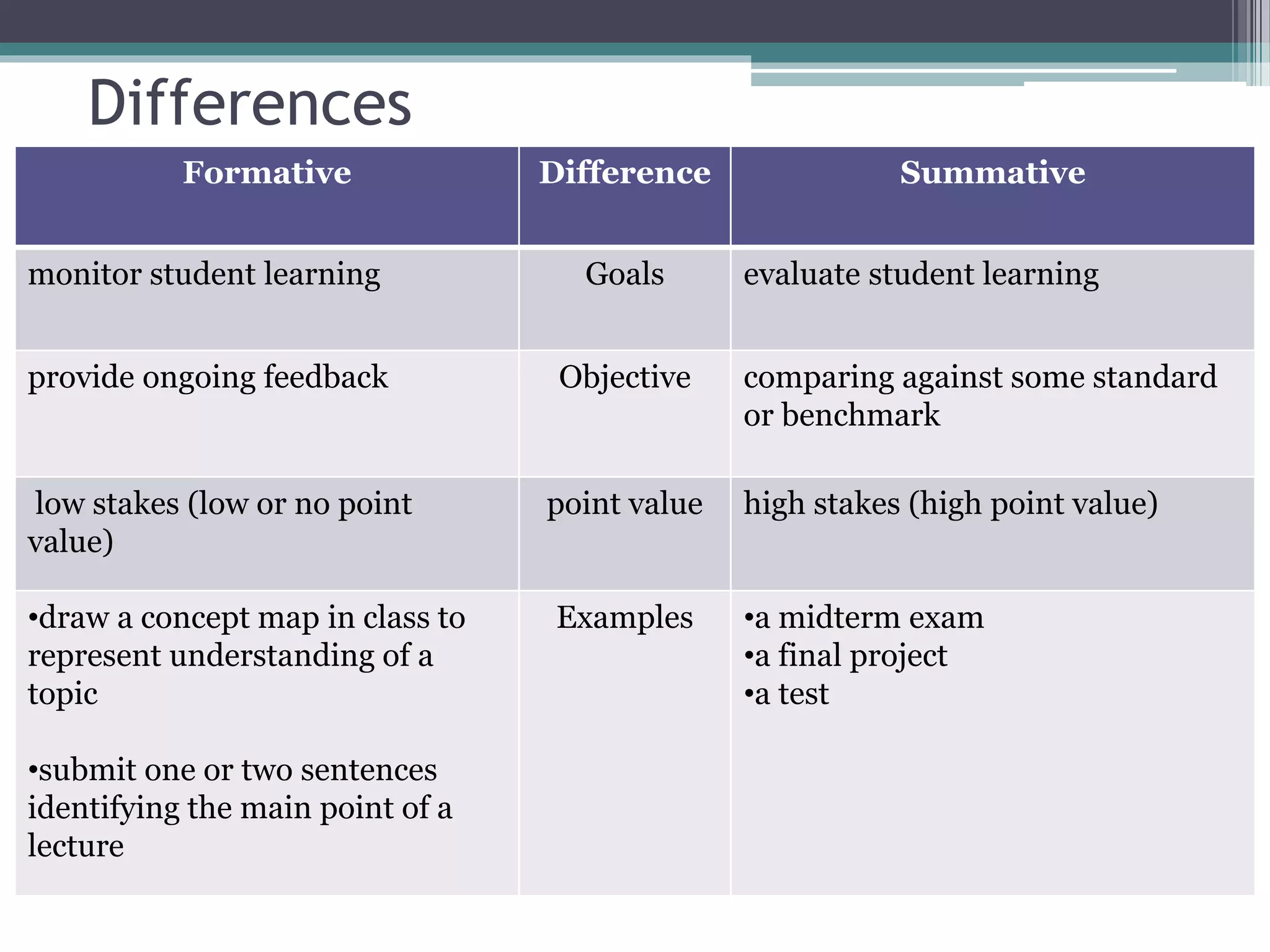
Differences 
Formative Difference Summative 
monitor student learning Goals evaluate student learning 
provide ongoing feedback Objective comparing against some standard 
or benchmark 
low stakes (low or no point 
value) 
point value high stakes (high point value) 
•draw a concept map in class to 
represent understanding of a 
topic 
•submit one or two sentences 
identifying the main point of a 
lecture 
Examples •a midterm exam 
•a final project 
•a test
Assessment for Learning strategies 
• the strategic use of questioning 
Questioning is used not only as a pedagogical tool but also as a deliberate way for 
the teacher to find out what students know, understand and are able to do. 
• effective teacher feedback 
Effective teacher feedback focuses on established success criteria and tells the 
students what they have achieved and where they need to improve. Importantly, 
the feedback provides specific suggestions about how that improvement might be 
achieved. 
• peer feedback 
Peer feedback occurs when a student uses established success criteria to tell 
another student what they have achieved and where improvement is necessary. 
Again, the feedback provides specific suggestions to help achieve improvement. 
• student self-assessment 
Student self-assessment encourages students to take responsibility for their own 
learning. It incorporates self-monitoring, self-assessment and self-evaluation. 
• the formative use of summative assessment 
Summative assessment is a necessary aspect of education. Formative use can be 
made of summative assessment, both before and after the assessment event.
Simple Assessment Strategies Examples 
• An open-ended question that gets them writing/talking 
• Ask students to reflect 
• Use quizzes 
• Ask students to summarize 
• Hand signals 
• Response cards 
• Four corners 
• Think-pair-share 
• Choral reading 
• One question quiz 
• Socratic seminar 
• 3-2-1 
• Ticket out the door 
• Journal reflections 
• Formative pencil–paper assessment 
• Misconception check 
• Analogy prompt 
• Practice frequency 
• Use variety 
• Make it useful 
• Peer instruction 
• “Separate what you do and don’t understand”
Benefits of Assesment 
• Immediate feedback 
• Detailed, personalised feedback 
• Individualised assessment 
• Assessing across the whole syllabus 
• Testing application of technique 
• Assessing deep or conceptual learning 
• Easy to write new questions 
• Quick to set assessments 
• Quick to mark assessments 
• Easy to monitor students 
• Perception of anonymity 
• Testing mathematical writing 
• Testing computer skills
Tools of Assessments 
• Four Guiding Questions 
• Feedback to Students 
• Evidence Action Sheet for Science 
Evidence Action Sheet for Maths 
• Guiding Students in Design and Conduct 
Investigations 
• Scribing Article “Helping Primary Students 
Communicate Their Thinking” 
• Linking Scientific Inquiry In Standards: A Checklist
Four Guiding Questions 
• What do we know the student knows? 
• What are they ready to learn? 
• What do they need to practice? 
• What do they need to be reteach?
Question Types of Assessment 
• Multiple Choice 
• Multiple Select 
• True or False 
• Matching 
• Ordering 
• Fill-in-the-blank(s) 
• Short Answer 
• Essay 
• Offline Item 
• Algorithmic
Conclusion 
• ASSESSMENT is used in many ways in 
education. The good deal of attention is given 
to the use in helping teaching and learning. 
• Assessment is the bridge between Teaching 
and Learning. 
• Assessment helps us to understand our students 
better.

Introduction of teaching assessment

  • 1.
    What is assessment?? Assessment involves the use of empirical data on student learning to refine programs and improve student learning. (Assessing Academic Programs in Higher Education by Allen 2004) Assessment for Learning focuses on the opportunities to develop students' ability to evaluate themselves, to make judgements about their own performance and improve upon it. It makes use of authentic assessment methods and offers lots of opportunities for students to develop their skills through formative assessment using summative assessment sparingly.
  • 2.
  • 3.
  • 4.
  • 5.
    Methods of assessment a) Formative assessment - techniques monitor student learning during the learning process. The feedback gathered is used to identify areas where students are struggling so that instructors can adjust their teaching and students can adjust their studying. These are low-stakes assessments (i.e., they have low point values) that happen early and often in the semester. b) Summative assessment - techniques evaluate student learning. Obtained at the end of a course or program. These are high-stakes assessments (i.e., they have high point values) that occur at the end of an instructional unit or course and measure the extent to which students have acheived the desired learning outcomes.
  • 6.
    Formative( Low-stakes) Assessments a) Informal Techniques -Written reflections. - Surveys - Checks for understanding. -Wrappers ( Exam, homework, lecture) b) Formal Techniques - In-class activities. - Quizzes - Online assessment - Class Deliverables.
  • 7.
    Summative( High-stakes) Assessments a) Exams b) Papers, projects, and presentation - give students the chance to go deeper with the material to put the knowledge they’ve acquired to use or create something new from it. a) Portfolios - Submitting a portfolio at the end of a course can be a powerful way for students to see the progress they’ve made. More than just a collection of students' work from the semester, good portfolios also include reflections on their learning.
  • 8.
    Differences Formative DifferenceSummative monitor student learning Goals evaluate student learning provide ongoing feedback Objective comparing against some standard or benchmark low stakes (low or no point value) point value high stakes (high point value) •draw a concept map in class to represent understanding of a topic •submit one or two sentences identifying the main point of a lecture Examples •a midterm exam •a final project •a test
  • 9.
    Assessment for Learningstrategies • the strategic use of questioning Questioning is used not only as a pedagogical tool but also as a deliberate way for the teacher to find out what students know, understand and are able to do. • effective teacher feedback Effective teacher feedback focuses on established success criteria and tells the students what they have achieved and where they need to improve. Importantly, the feedback provides specific suggestions about how that improvement might be achieved. • peer feedback Peer feedback occurs when a student uses established success criteria to tell another student what they have achieved and where improvement is necessary. Again, the feedback provides specific suggestions to help achieve improvement. • student self-assessment Student self-assessment encourages students to take responsibility for their own learning. It incorporates self-monitoring, self-assessment and self-evaluation. • the formative use of summative assessment Summative assessment is a necessary aspect of education. Formative use can be made of summative assessment, both before and after the assessment event.
  • 10.
    Simple Assessment StrategiesExamples • An open-ended question that gets them writing/talking • Ask students to reflect • Use quizzes • Ask students to summarize • Hand signals • Response cards • Four corners • Think-pair-share • Choral reading • One question quiz • Socratic seminar • 3-2-1 • Ticket out the door • Journal reflections • Formative pencil–paper assessment • Misconception check • Analogy prompt • Practice frequency • Use variety • Make it useful • Peer instruction • “Separate what you do and don’t understand”
  • 11.
    Benefits of Assesment • Immediate feedback • Detailed, personalised feedback • Individualised assessment • Assessing across the whole syllabus • Testing application of technique • Assessing deep or conceptual learning • Easy to write new questions • Quick to set assessments • Quick to mark assessments • Easy to monitor students • Perception of anonymity • Testing mathematical writing • Testing computer skills
  • 12.
    Tools of Assessments • Four Guiding Questions • Feedback to Students • Evidence Action Sheet for Science Evidence Action Sheet for Maths • Guiding Students in Design and Conduct Investigations • Scribing Article “Helping Primary Students Communicate Their Thinking” • Linking Scientific Inquiry In Standards: A Checklist
  • 13.
    Four Guiding Questions • What do we know the student knows? • What are they ready to learn? • What do they need to practice? • What do they need to be reteach?
  • 14.
    Question Types ofAssessment • Multiple Choice • Multiple Select • True or False • Matching • Ordering • Fill-in-the-blank(s) • Short Answer • Essay • Offline Item • Algorithmic
  • 15.
    Conclusion • ASSESSMENTis used in many ways in education. The good deal of attention is given to the use in helping teaching and learning. • Assessment is the bridge between Teaching and Learning. • Assessment helps us to understand our students better.