Allergy :
An allergy is a specific reaction of the body's immune system to a
normally harmless substance, one that does not bother most people.
People who have allergies often are sensitive to more than one
substance.
Allergic reaction :
Normally, the immune system functions as the body's defense against
invading germs such as bacteria and viruses. In most allergic
reactions, however, the immune system is responding to a false alarm.
When an allergic person first comes into contact with an allergen, the
immune system treats the allergen as an invader and gets ready to
attack.
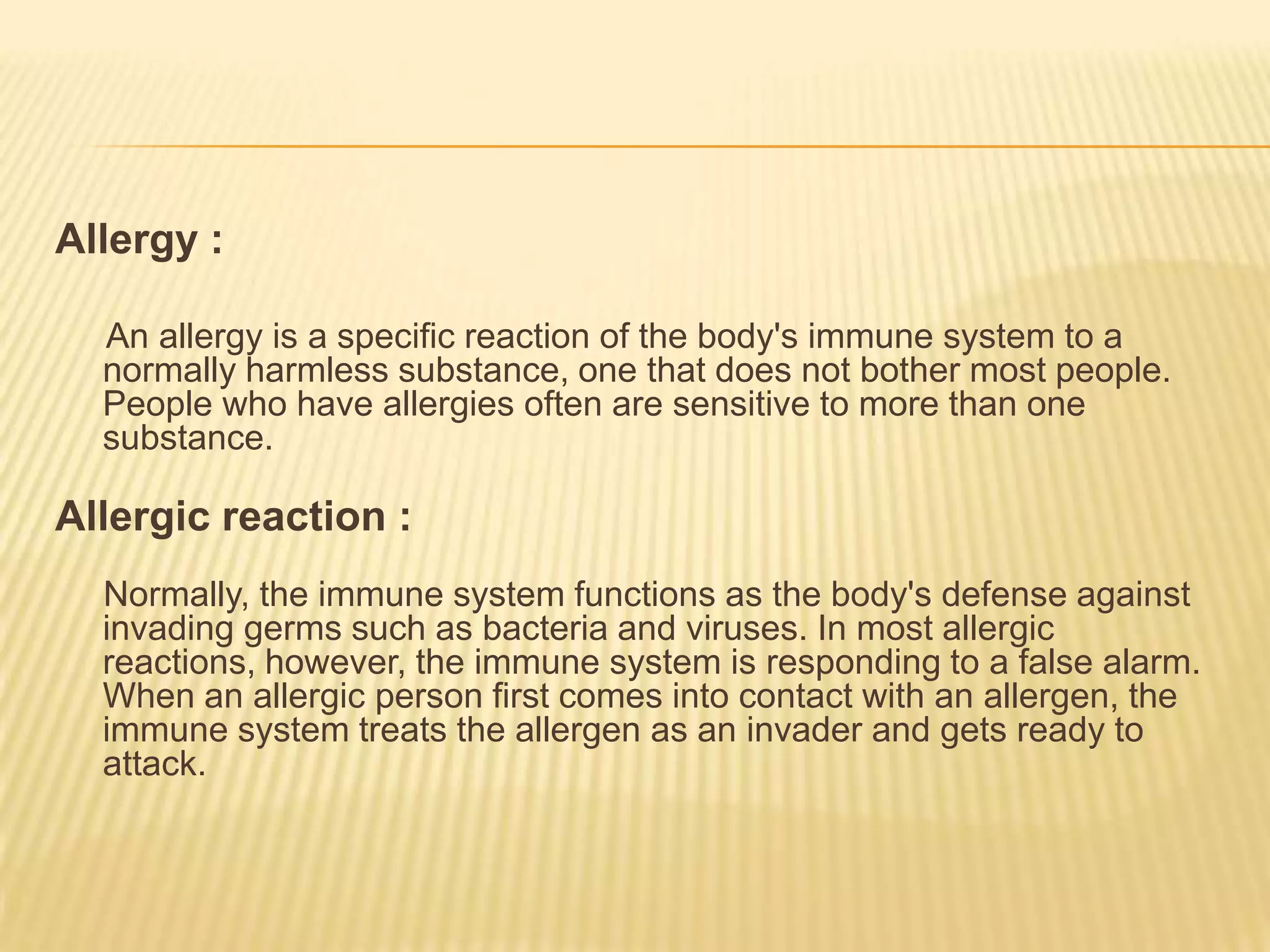
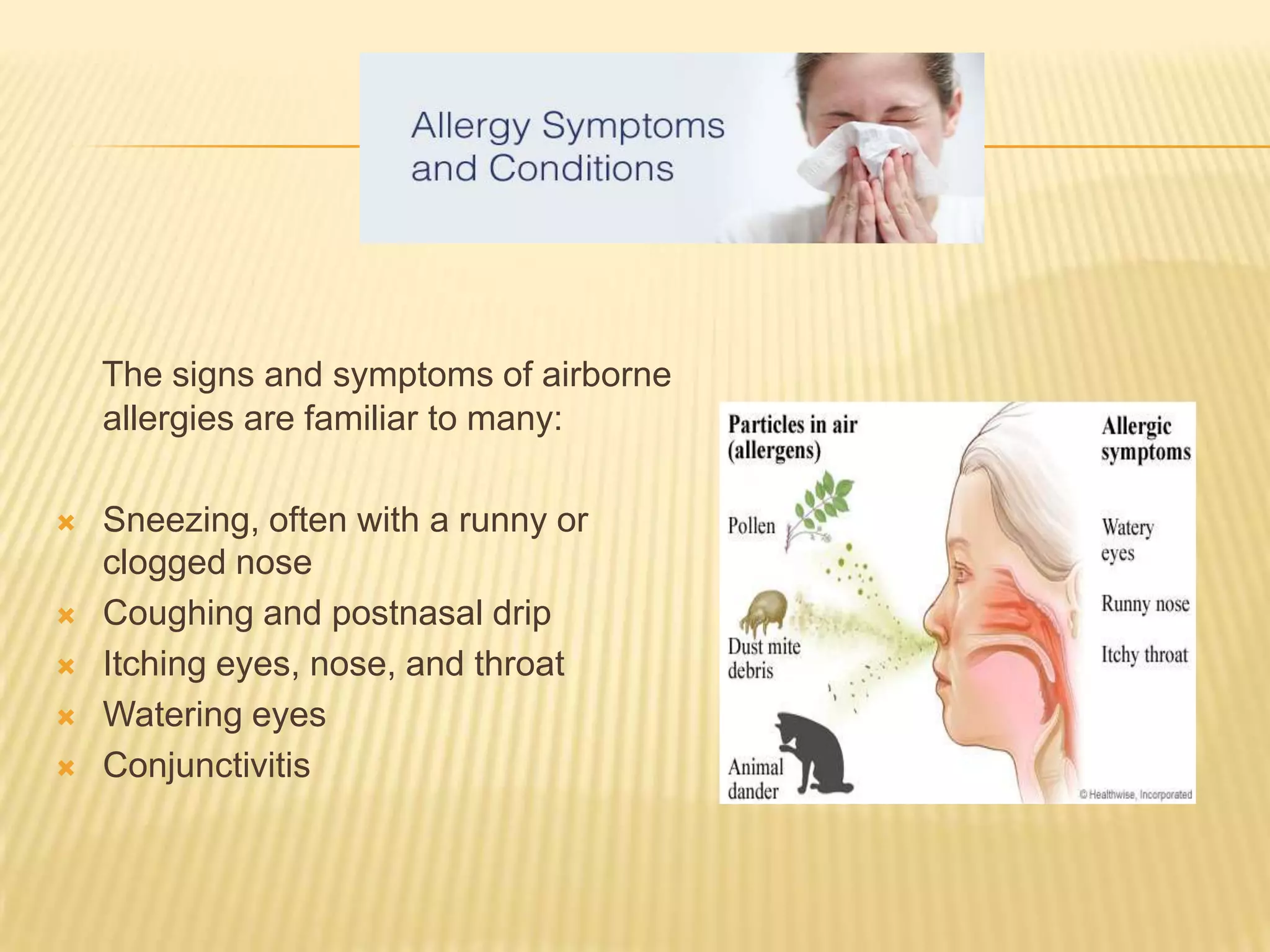
The signs and symptoms of airborne
allergies are familiar to many:
 Sneezing, often with a runny or
clogged nose
 Coughing and postnasal drip
 Itching eyes, nose, and throat
 Watering eyes
 Conjunctivitis
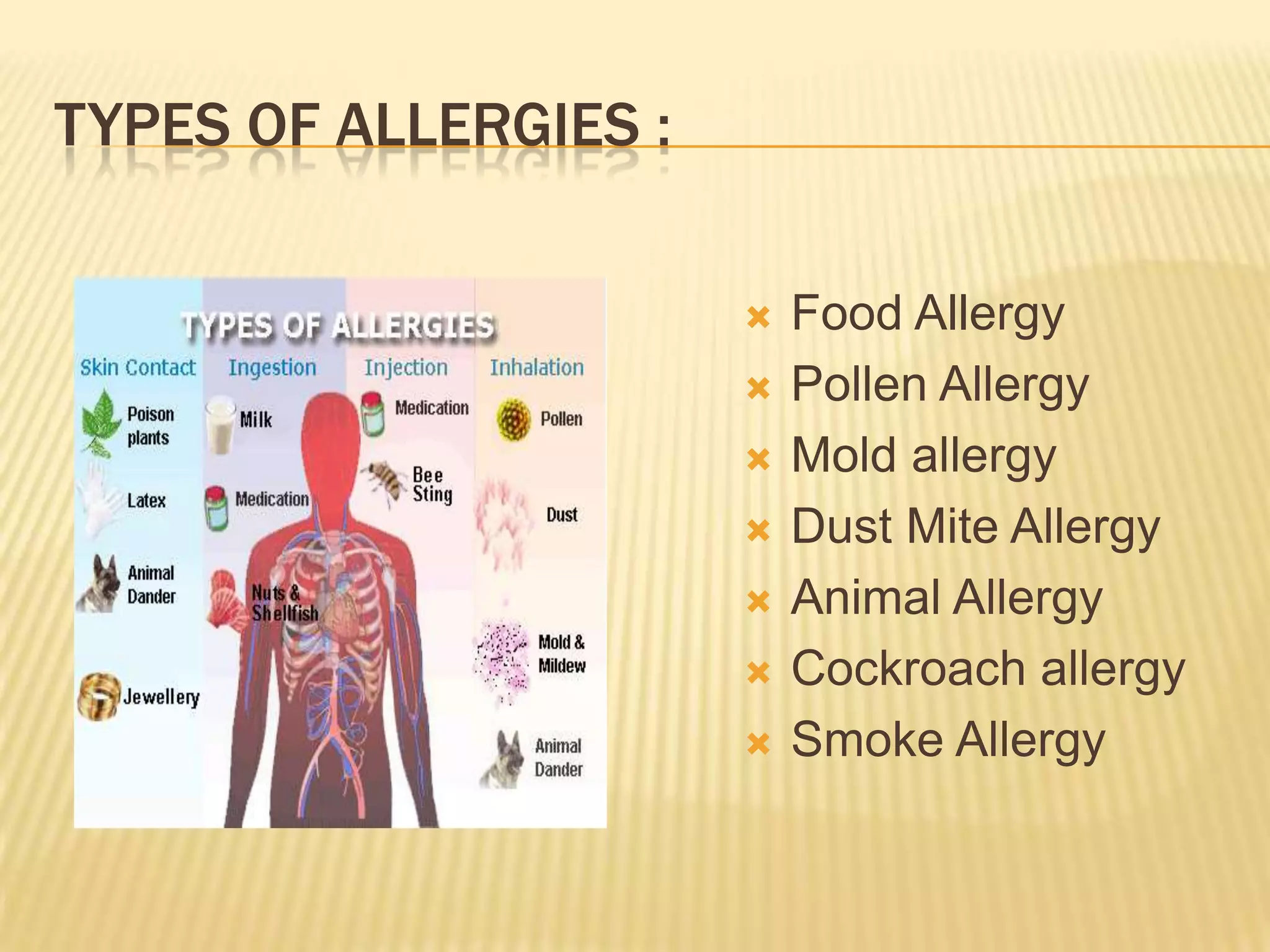
TYPES OF ALLERGIES :
 Food Allergy
 Pollen Allergy
 Mold allergy
 Dust Mite Allergy
 Animal Allergy
 Cockroach allergy
 Smoke Allergy
 Severe allergic reactions (anaphylaxis) need
to be treated with a medicine called
epinephrine, which can be life saving when
given right away. If you use epinephrine, call 911
and go straight to the hospital.
 The best way to reduce symptoms is to
avoid what causes your allergies. This is
especially important for food and drug allergies.
 There are several types of medications to
prevent and treat allergies. Which medicine your
doctor recommends depends on the type and
severity of your symptoms, your age, and
overall health.
 Illnesses that are caused by allergies (such
as asthma, hay fever, and eczema) may need
other
treatments.

Types of Allergies

  • 2.
    Allergy : An allergyis a specific reaction of the body's immune system to a normally harmless substance, one that does not bother most people. People who have allergies often are sensitive to more than one substance. Allergic reaction : Normally, the immune system functions as the body's defense against invading germs such as bacteria and viruses. In most allergic reactions, however, the immune system is responding to a false alarm. When an allergic person first comes into contact with an allergen, the immune system treats the allergen as an invader and gets ready to attack.
  • 3.
    The signs andsymptoms of airborne allergies are familiar to many:  Sneezing, often with a runny or clogged nose  Coughing and postnasal drip  Itching eyes, nose, and throat  Watering eyes  Conjunctivitis
  • 4.
    TYPES OF ALLERGIES:  Food Allergy  Pollen Allergy  Mold allergy  Dust Mite Allergy  Animal Allergy  Cockroach allergy  Smoke Allergy
  • 5.
     Severe allergicreactions (anaphylaxis) need to be treated with a medicine called epinephrine, which can be life saving when given right away. If you use epinephrine, call 911 and go straight to the hospital.  The best way to reduce symptoms is to avoid what causes your allergies. This is especially important for food and drug allergies.  There are several types of medications to prevent and treat allergies. Which medicine your doctor recommends depends on the type and severity of your symptoms, your age, and overall health.  Illnesses that are caused by allergies (such as asthma, hay fever, and eczema) may need other treatments.