Endocrinology and its Glands
Major Endocrine Organs
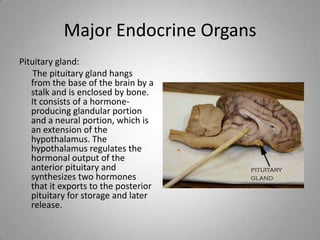
Pituitary gland:
The pituitary gland hangs
from the base of the brain by a
stalk and is enclosed by bone.
It consists of a hormone-
producing glandular portion
and a neural portion, which is
an extension of the
hypothalamus. The
hypothalamus regulates the
hormonal output of the
anterior pituitary and
synthesizes two hormones
that it exports to the posterior
pituitary for storage and later
release.
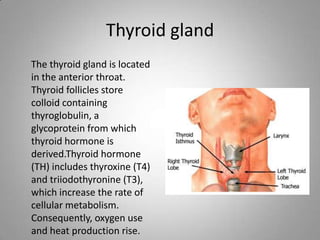
Thyroid gland
The thyroid gland is located
in the anterior throat.
Thyroid follicles store
colloid containing
thyroglobulin, a
glycoprotein from which
thyroid hormone is
derived.Thyroid hormone
(TH) includes thyroxine (T4)
and triiodothyronine (T3),
which increase the rate of
cellular metabolism.
Consequently, oxygen use
and heat production rise.
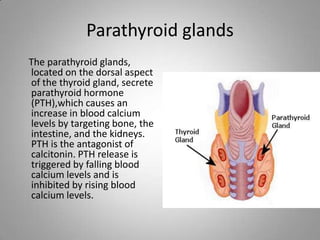
Parathyroid glands
The parathyroid glands,
located on the dorsal aspect
of the thyroid gland, secrete
parathyroid hormone
(PTH),which causes an
increase in blood calcium
levels by targeting bone, the
intestine, and the kidneys.
PTH is the antagonist of
calcitonin. PTH release is
triggered by falling blood
calcium levels and is
inhibited by rising blood
calcium levels.
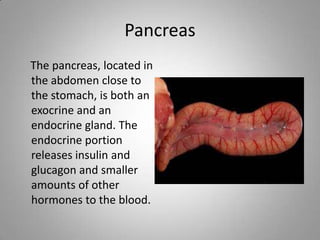
Pancreas
The pancreas, located in
the abdomen close to
the stomach, is both an
exocrine and an
endocrine gland. The
endocrine portion
releases insulin and
glucagon and smaller
amounts of other
hormones to the blood.

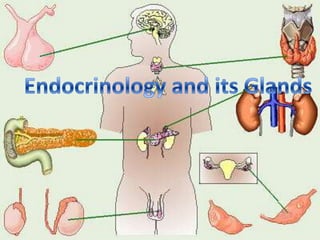
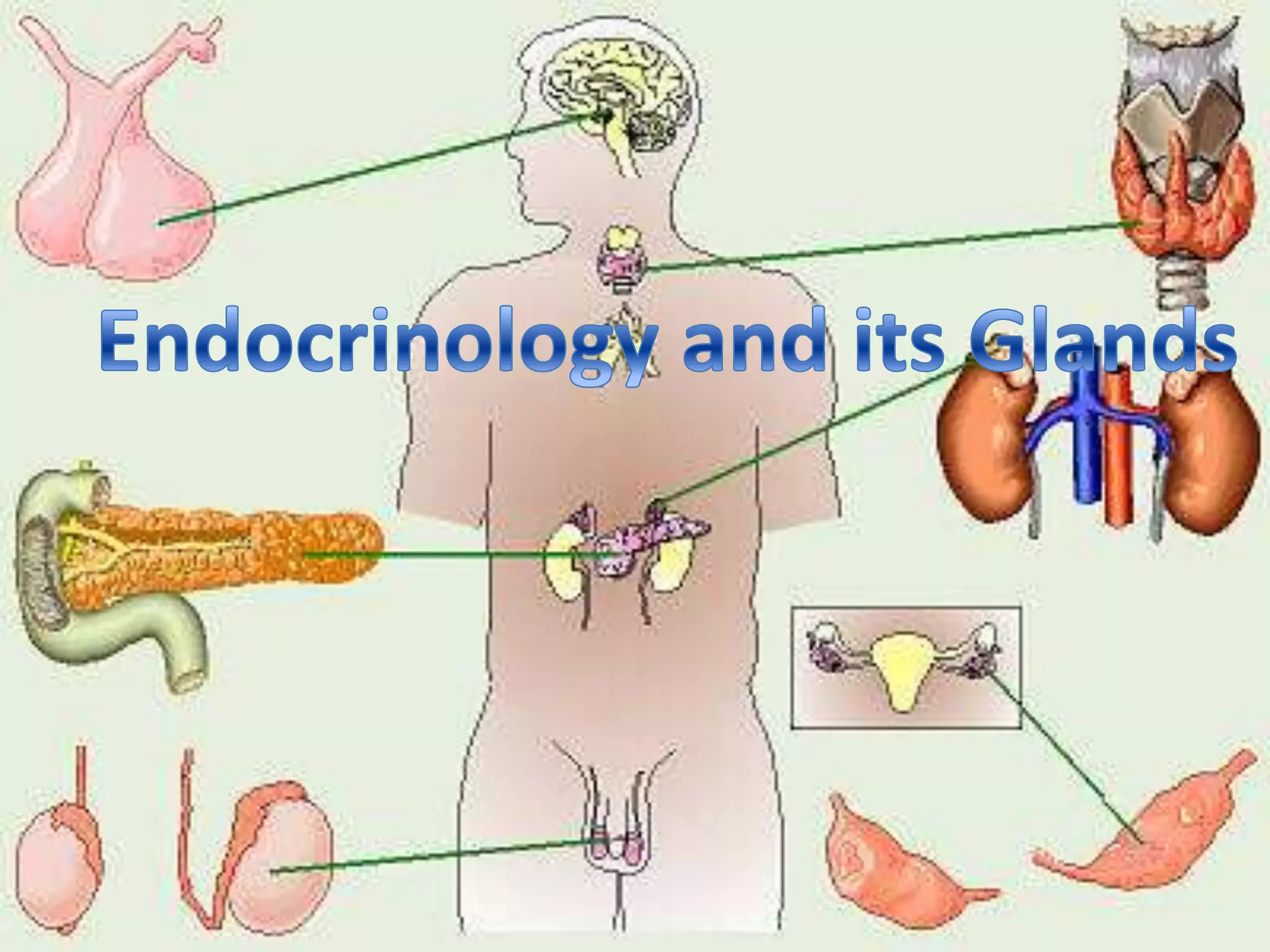
Endocrinology and its Glands

  • 1.
  • 2.
    Major Endocrine Organs Pituitarygland: The pituitary gland hangs from the base of the brain by a stalk and is enclosed by bone. It consists of a hormone- producing glandular portion and a neural portion, which is an extension of the hypothalamus. The hypothalamus regulates the hormonal output of the anterior pituitary and synthesizes two hormones that it exports to the posterior pituitary for storage and later release.
  • 3.
    Thyroid gland The thyroidgland is located in the anterior throat. Thyroid follicles store colloid containing thyroglobulin, a glycoprotein from which thyroid hormone is derived.Thyroid hormone (TH) includes thyroxine (T4) and triiodothyronine (T3), which increase the rate of cellular metabolism. Consequently, oxygen use and heat production rise.
  • 4.
    Parathyroid glands The parathyroidglands, located on the dorsal aspect of the thyroid gland, secrete parathyroid hormone (PTH),which causes an increase in blood calcium levels by targeting bone, the intestine, and the kidneys. PTH is the antagonist of calcitonin. PTH release is triggered by falling blood calcium levels and is inhibited by rising blood calcium levels.
  • 5.
    Pancreas The pancreas, locatedin the abdomen close to the stomach, is both an exocrine and an endocrine gland. The endocrine portion releases insulin and glucagon and smaller amounts of other hormones to the blood.