

Rheumatic Fever
Introduction
Rheumatic fever is an
inflammatory disease that
occurs following a
Streptococcus pyogenes
infection, such as
streptococcal pharyngitis
or scarlet fever. Believed
to be caused by antibody
cross-reactivity that can
involve the heart, joints,
skin, and brain.
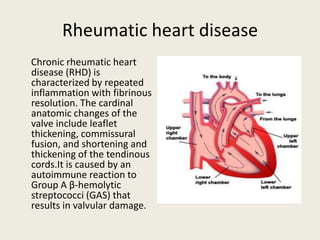
Rheumatic heart disease
Chronic rheumatic heart
disease (RHD) is
characterized by repeated
inflammation with fibrinous
resolution. The cardinal
anatomic changes of the
valve include leaflet
thickening, commissural
fusion, and shortening and
thickening of the tendinous
cords.It is caused by an
autoimmune reaction to
Group A β-hemolytic
streptococci (GAS) that
results in valvular damage.
Treatment
The management of acute
rheumatic fever is geared
toward the reduction of
inflammation with anti-
inflammatory medications
such as aspirin or
corticosteroids. Individuals
with positive cultures for
strep throat should also be
treated with antibiotics.
Aspirin is the drug of choice
and should be given at high
doses.
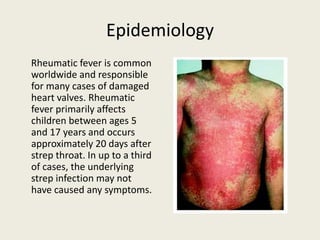
Epidemiology
Rheumatic fever is common
worldwide and responsible
for many cases of damaged
heart valves. Rheumatic
fever primarily affects
children between ages 5
and 17 years and occurs
approximately 20 days after
strep throat. In up to a third
of cases, the underlying
strep infection may not
have caused any symptoms.

Rheumatic Fever

  • 1.
  • 2.
    Introduction Rheumatic fever isan inflammatory disease that occurs following a Streptococcus pyogenes infection, such as streptococcal pharyngitis or scarlet fever. Believed to be caused by antibody cross-reactivity that can involve the heart, joints, skin, and brain.
  • 3.
    Rheumatic heart disease Chronicrheumatic heart disease (RHD) is characterized by repeated inflammation with fibrinous resolution. The cardinal anatomic changes of the valve include leaflet thickening, commissural fusion, and shortening and thickening of the tendinous cords.It is caused by an autoimmune reaction to Group A β-hemolytic streptococci (GAS) that results in valvular damage.
  • 4.
    Treatment The management ofacute rheumatic fever is geared toward the reduction of inflammation with anti- inflammatory medications such as aspirin or corticosteroids. Individuals with positive cultures for strep throat should also be treated with antibiotics. Aspirin is the drug of choice and should be given at high doses.
  • 5.
    Epidemiology Rheumatic fever iscommon worldwide and responsible for many cases of damaged heart valves. Rheumatic fever primarily affects children between ages 5 and 17 years and occurs approximately 20 days after strep throat. In up to a third of cases, the underlying strep infection may not have caused any symptoms.