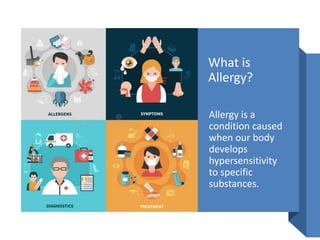
What is
Allergy?
Allergy is a
condition caused
when our body
develops
hypersensitivity
to specific
substances.
Think-Pair-Share
technique.
What are the key
words required to
define allergy
Students work in
pairs and discuss
Clemens Peter
Freiherr von Pirquet
an Austrian scientist
and paediatrician
best known for his
contributions to the
fields of bacteriology
and immunology-
useful in studying
allergy
Common Allergic
Symptoms
Itching
Bumps, rashes or redness
coughing
Sneezing
Sudden feeling of weakness and fainting
difficulty in breathing, asthma
Swelling of the tongue, throat, lips
Abnormal swelling of ears, tongue, eyelid
or any other parts of the body
Pain in the abdomen, nausea, vomiting
Difficulty in swallowing or speaking
Symptoms of allergic reaction contd…
1
2
3
4
5
6
What are the allergic symptoms?
Think – Pair – Share Technique
Sometimes the allergic condition becomes serious and life threatening.
It is called anaphylaxis
This condition is fatal and requires immediate medical condition.
The person suffering is said to be in a state of Anaphylactic shock.
Allergens
• The substances that trigger the allergic
reaction are called allergens
• Common examples of allergens are Dust,
pollen grains, mites ,sunlight, some food
items
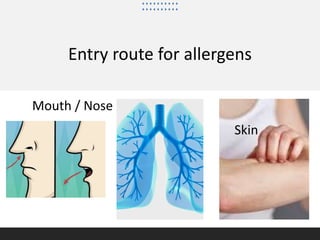
Entry route for allergens
Mouth / Nose
Skin
Mouth Allergy
Symptoms : Itching or swelling of parts of the
mouth, tongue, lips, throat and pharynx , Swelling
of the tongue, throat, lips.
Nasal Allergy
Symptoms: Sneezing, coughing, runny nose
and nose congestion
Skin Allergy
Symptoms: Rashes, severe itching, bumps redness
and blisters
01
02
03
Entry route of allergens
Common
Allergic
Reactions
• Hay Fever
• Cause: reaction to pollen .
It is common when flowers
are in bloom
Symptoms:
• Nose-Lining of the nasal
cavity- sensitive and
inflamed, produce large
amount of mucus, runny
nose and sneezing
• Eyes- itchy, sore and weepy
Common Allergic
Reactions
contd…
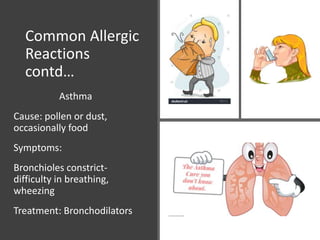
Asthma
Cause: pollen or dust,
occasionally food
Symptoms:
Bronchioles constrict-
difficulty in breathing,
wheezing
Treatment: Bronchodilators
Types of allergies
OSeasonal OPerennial
OAllergies that
occur regularly
during particular
season are called
seasonal allergies.
OPollen grain,
released of
moulds.
OAllergies that are not
caused due to
seasonal factors and
may occur
throughout the year
are called perennial
allergies.
OFood allergy, dust
allergy.
Questions
• What are allergens?
• Name the 3 entry routes for
allergens.
• What is the symptom of mouth
allergy?
• What is the symptom of nasal
allergy?
• What is the symptom of skin allergy?
• What causes Hay fever? What are the
symptoms?
• What is asthma? What is the
treatment?
Think-Pair-Share
Food
Allergy
Non-food
Allergy
Dairy products
Nuts
Over ripe fruits
Eggs
Gluten based items*
Wheat based food. –
chapati, pasta, noodles,
Rava
Sea food
Dust
Pollen
Insect bites – bees, wasps,
ants
Some medicines, perfumes
Cigarette smoke
Bird feather , cat or dog fur
• Which are the 2 categories
into which allergens are
classified?
• Name one point of
difference between Food
and non-food allergy.
• Name the common food
allergens
• Name the common non-
food allergens
• Distinguish between
seasonal and perennial
allergy.
Think-Pair-share
Precautions - Food allergy
ORead the food label
carefully every time
OWhen you go to the
dine or eat out
remember to check
what it contains
before eating.
Precautions - Insect allergy
OWear full sleeved cloths, close shoes,
insect repellent when travelling outdoor.
Precautions - Medicine allergies
OLearn the names of the medicine that your
allergic to.
OKeep your school and caretaker informed.
OKeep a medical chart and remind the
doctor before any treatment.
Think-Pair -Share
• List out the precautions
that you should take for
food, insect and medicinal
allergies.
Seasonal allergies
OThe weather report in newspaper and
news channel gives idea of the pollen
and mould [fungus] discharge.
OKeep windows and doors shut at home
and also while travelling.
OTake shower and change cloths when
you come home.
ODo not hesitate to wear a filter or a
mask to cover your nose and mouth
Preventive measures
OCan be controlled by avoiding the allergen.
ORecognize symptoms and make a note of
what triggered the allergic reaction.
OIntense anaphylactic reactions - ask your
parent to give written emergency plan.
OEducate your friends, school and other who
will be with you about your allergies.
ODoctors specialized in allergy should be consulted
Think-Pair -Share
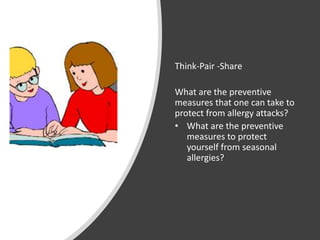
What are the preventive
measures that one can take to
protect from allergy attacks?
• What are the preventive
measures to protect
yourself from seasonal
allergies?
Diagnosis of Allergy
O Skin Prick Test
Diagnosis of Allergy
When is the blood test done?
• Cannot tolerate the many needle scratches
required for skin testing
• Have an unstable heart condition
• Have poorly controlled asthma
• Have severe skin problems
• Might have an extreme reaction during skin
testing called anaphylaxis – Needs medical
treatment right away.
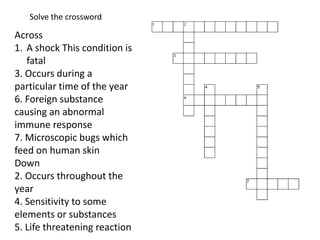
Across
1. A shock This condition is
fatal
3. Occurs during a
particular time of the year
6. Foreign substance
causing an abnormal
immune response
7. Microscopic bugs which
feed on human skin
Down
2. Occurs throughout the
year
4. Sensitivity to some
elements or substances
5. Life threatening reaction
Solve the crossword
Dr. Pramila Kudva is a PhD
in Education from
Mumbai University. She
has over three decades of
experience as a teacher,
teacher educator.
Currently she is working
as a principal of an ICSE
school in Mumbai. She has
several academic
publications to her credit.
This book covers several
theories, techniques and
classroom management
aspects with innumerable
examples. A must for the
school library.E-mail: Pramilakudva2016@gmail.com

Allergy

  • 1.
    What is Allergy? Allergy isa condition caused when our body develops hypersensitivity to specific substances.
  • 2.
    Think-Pair-Share technique. What are thekey words required to define allergy Students work in pairs and discuss
  • 3.
    Clemens Peter Freiherr vonPirquet an Austrian scientist and paediatrician best known for his contributions to the fields of bacteriology and immunology- useful in studying allergy
  • 4.
  • 5.
    Sudden feeling ofweakness and fainting difficulty in breathing, asthma Swelling of the tongue, throat, lips Abnormal swelling of ears, tongue, eyelid or any other parts of the body Pain in the abdomen, nausea, vomiting Difficulty in swallowing or speaking Symptoms of allergic reaction contd… 1 2 3 4 5 6
  • 6.
    What are theallergic symptoms? Think – Pair – Share Technique
  • 7.
    Sometimes the allergiccondition becomes serious and life threatening. It is called anaphylaxis This condition is fatal and requires immediate medical condition. The person suffering is said to be in a state of Anaphylactic shock.
  • 8.
    Allergens • The substancesthat trigger the allergic reaction are called allergens • Common examples of allergens are Dust, pollen grains, mites ,sunlight, some food items
  • 9.
    Entry route forallergens Mouth / Nose Skin
  • 10.
    Mouth Allergy Symptoms :Itching or swelling of parts of the mouth, tongue, lips, throat and pharynx , Swelling of the tongue, throat, lips. Nasal Allergy Symptoms: Sneezing, coughing, runny nose and nose congestion Skin Allergy Symptoms: Rashes, severe itching, bumps redness and blisters 01 02 03 Entry route of allergens
  • 11.
    Common Allergic Reactions • Hay Fever •Cause: reaction to pollen . It is common when flowers are in bloom Symptoms: • Nose-Lining of the nasal cavity- sensitive and inflamed, produce large amount of mucus, runny nose and sneezing • Eyes- itchy, sore and weepy
  • 12.
    Common Allergic Reactions contd… Asthma Cause: pollenor dust, occasionally food Symptoms: Bronchioles constrict- difficulty in breathing, wheezing Treatment: Bronchodilators
  • 13.
    Types of allergies OSeasonalOPerennial OAllergies that occur regularly during particular season are called seasonal allergies. OPollen grain, released of moulds. OAllergies that are not caused due to seasonal factors and may occur throughout the year are called perennial allergies. OFood allergy, dust allergy.
  • 14.
    Questions • What areallergens? • Name the 3 entry routes for allergens. • What is the symptom of mouth allergy? • What is the symptom of nasal allergy? • What is the symptom of skin allergy? • What causes Hay fever? What are the symptoms? • What is asthma? What is the treatment? Think-Pair-Share
  • 15.
    Food Allergy Non-food Allergy Dairy products Nuts Over ripefruits Eggs Gluten based items* Wheat based food. – chapati, pasta, noodles, Rava Sea food Dust Pollen Insect bites – bees, wasps, ants Some medicines, perfumes Cigarette smoke Bird feather , cat or dog fur
  • 16.
    • Which arethe 2 categories into which allergens are classified? • Name one point of difference between Food and non-food allergy. • Name the common food allergens • Name the common non- food allergens • Distinguish between seasonal and perennial allergy. Think-Pair-share
  • 17.
    Precautions - Foodallergy ORead the food label carefully every time OWhen you go to the dine or eat out remember to check what it contains before eating.
  • 18.
    Precautions - Insectallergy OWear full sleeved cloths, close shoes, insect repellent when travelling outdoor.
  • 19.
    Precautions - Medicineallergies OLearn the names of the medicine that your allergic to. OKeep your school and caretaker informed. OKeep a medical chart and remind the doctor before any treatment.
  • 20.
    Think-Pair -Share • Listout the precautions that you should take for food, insect and medicinal allergies.
  • 21.
    Seasonal allergies OThe weatherreport in newspaper and news channel gives idea of the pollen and mould [fungus] discharge. OKeep windows and doors shut at home and also while travelling. OTake shower and change cloths when you come home. ODo not hesitate to wear a filter or a mask to cover your nose and mouth
  • 22.
    Preventive measures OCan becontrolled by avoiding the allergen. ORecognize symptoms and make a note of what triggered the allergic reaction. OIntense anaphylactic reactions - ask your parent to give written emergency plan. OEducate your friends, school and other who will be with you about your allergies. ODoctors specialized in allergy should be consulted
  • 23.
    Think-Pair -Share What arethe preventive measures that one can take to protect from allergy attacks? • What are the preventive measures to protect yourself from seasonal allergies?
  • 24.
    Diagnosis of Allergy OSkin Prick Test
  • 25.
  • 26.
    When is theblood test done? • Cannot tolerate the many needle scratches required for skin testing • Have an unstable heart condition • Have poorly controlled asthma • Have severe skin problems • Might have an extreme reaction during skin testing called anaphylaxis – Needs medical treatment right away.
  • 27.
    Across 1. A shockThis condition is fatal 3. Occurs during a particular time of the year 6. Foreign substance causing an abnormal immune response 7. Microscopic bugs which feed on human skin Down 2. Occurs throughout the year 4. Sensitivity to some elements or substances 5. Life threatening reaction Solve the crossword
  • 28.
    Dr. Pramila Kudvais a PhD in Education from Mumbai University. She has over three decades of experience as a teacher, teacher educator. Currently she is working as a principal of an ICSE school in Mumbai. She has several academic publications to her credit. This book covers several theories, techniques and classroom management aspects with innumerable examples. A must for the school library.E-mail: Pramilakudva2016@gmail.com