Allergy Tests
• They are tests to document the presence of allergic state and
specify the offending allergen(s).
• The presence of an allergic state as documented by allergy tests
does not necessarily imply that the person has a clinical allergic
disease. A positive allergy test indicates a potential readiness to
develop an allergic reaction upon exposure to a specific allergen,
but this does not mean that a clinically significant reaction would
necessarily occur.
• Increasingly strong allergic tests may correlate with increased
disease activity.
• Allergic (Hypersensitivity) Reactions include 4 main types:
1) Immediate (Anaphylactic) (IgE- Mediated) Reaction
2) Cytotoxic Reaction (as incompatible blood transfusion)
3) Immune Complex Reaction (as post- streptococcal GN)
4) Delayed (Cell- Mediated) Reaction (as contact dermatitis)
• Allergic diseases mediated by type 1 hypersensitivity
reaction include:
o Allergic rhinitis (commonest allergic disease for
which specific testing may be needed)
o Conjunctivitis
o Bronchial asthma
o Urticaria
o Anaphylaxis
• Allergens involved include:
o Airborne allergens (aeroallergens)
o Foods
o Drugs
o Insect stings
Allergy Challenge Tests
(Provocative Tests)
(in Vivo Tests)
• Skin Provocation Tests
o Skin Prick Test (SPT)
o Intra-Dermal Test (IDT)
• Bronchial Provocation Tests
• Nasal Provocation Tests (NPT)
Serum IgE Assays
(Serological Tests)
(in Vitro Tests)
• Total IgE
• Allergen Specific IgE
• Indications for Allergy Tests:
o Establishing / confirming diagnosis.
o Directing therapy:
 Targeted allergen avoidance
 Allergen specific immunotherapy
• Specification of a particular allergen may be helpful in justifying the
expenses and efforts required in avoidance measures and
immunotherapy.
It helps also to promote compliance to these therapies.
• Treatment may be increased under conditions of increased
exposure, as during the pollen season or before contact with animals.
• Detailed History and Physical Examination should precede
planning for allergy tests and should dictate the panel of allergens to
be used in provocative testing.
There is no need to perform testing for allergens that are clearly
tolerated or not present in the local environment.
• Allergen Preparations for Skin Tests:
• May contain a single allergen (usually) or multiple allergens.
• Multi- allergen test may be used as an initial screening test to
identify atopic persons (who develop type 1 hypersensitivity to a
broad array of allergens) who warrant further specific testing.
• To improve test specificity and reproducibility, use of standardized
extracts is recommended.
• Recombinant allergen molecules are becoming more available.
These are generally more pure and preferable to biologically- derived
extracts.
• Should be kept at 2 – 8 O
C to maintain stability.
• IDT utilizes allergen preparation 10 – 100 times more dilute than
those used in SPT.
• 50% glycerine is commonly used as a preservative for SPT allergen
extracts, but not for IDT extracts as it may trigger a false +ve
response.
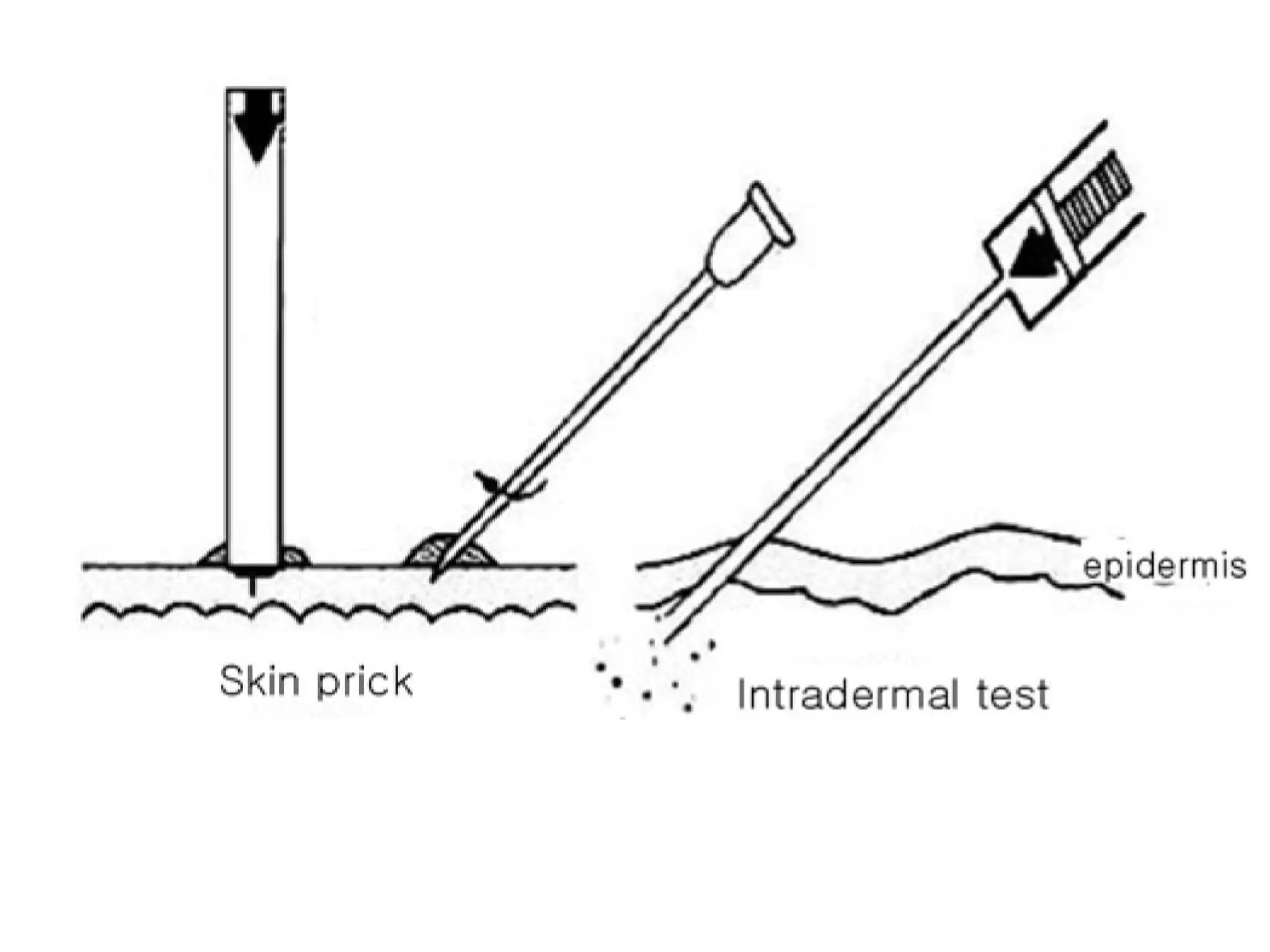
• Skin Prick Test (SPT):
• Both +ve (histamine 0.1%) and –ve (saline) controls are essential for
correct interpretation.
• +ve control should optimally elicit a wheal diameter > 3 mm.
• The device used to prick the skin may have a single or multiple heads
(the former preferred).
• Usually several antigens are tested. To avoid cross contamination, the
antigens should be applied at least 2 cm apart and a separate lancet
used for every antigen application.
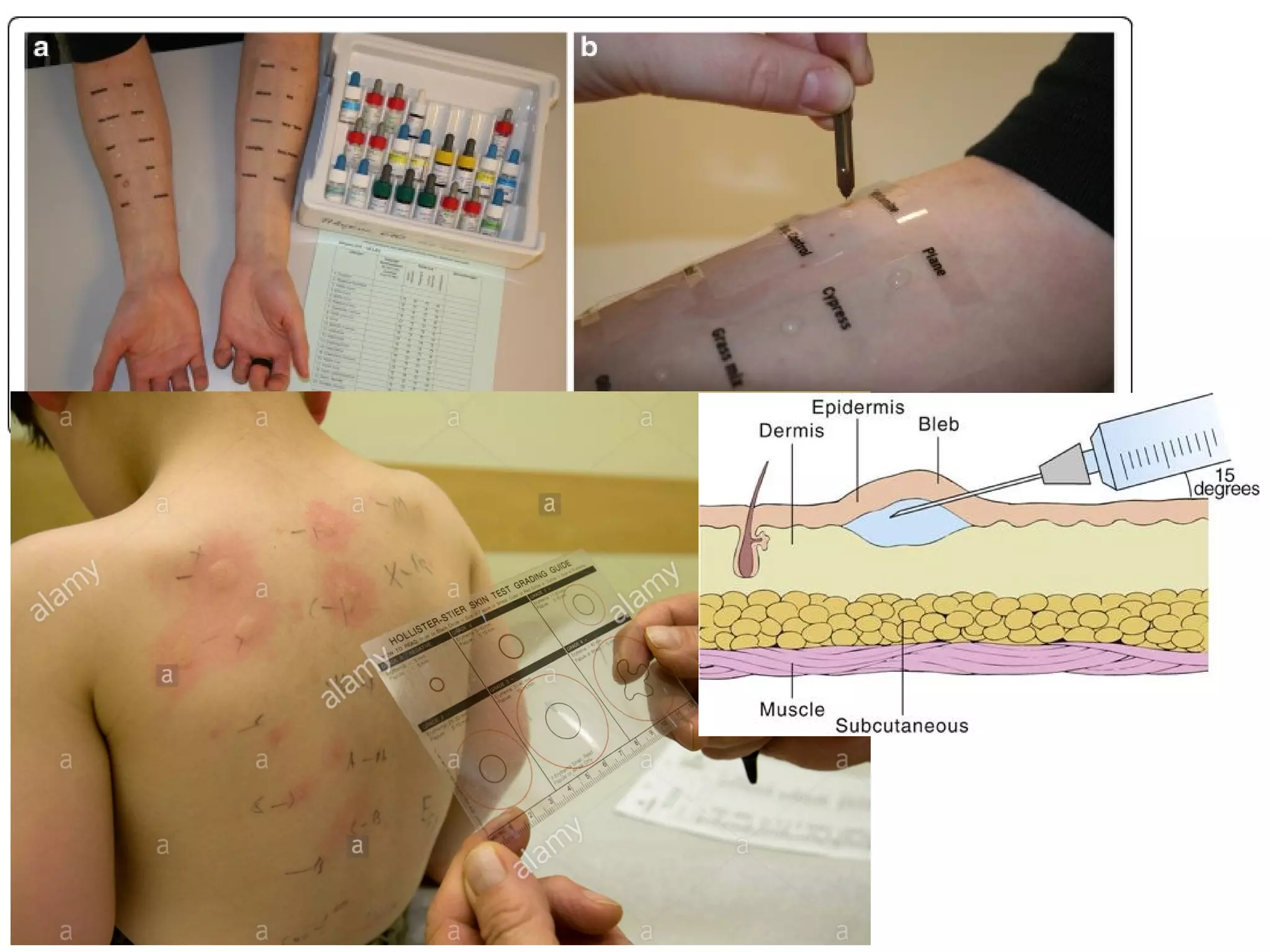
• A drop of allergen extract is placed on the skin and the needle or
lancet is gently passed through it to penetrate the epidermis without
causing any bleeding. The lancet is held against the skin for 1 second,
with equal pressure applied for each application.
• Intra- Dermal Test (IDT):
• Using a hypodermic (insulin) syringe and needle, the skin is held
tense and the needle is inserted just under the dermis, almost parallel
to the skin surface, just far enough to cover the beveled portion.
• Little amount of allergen extract is injected to raise a small bleb.
• Site of Allergic Skin Tests:
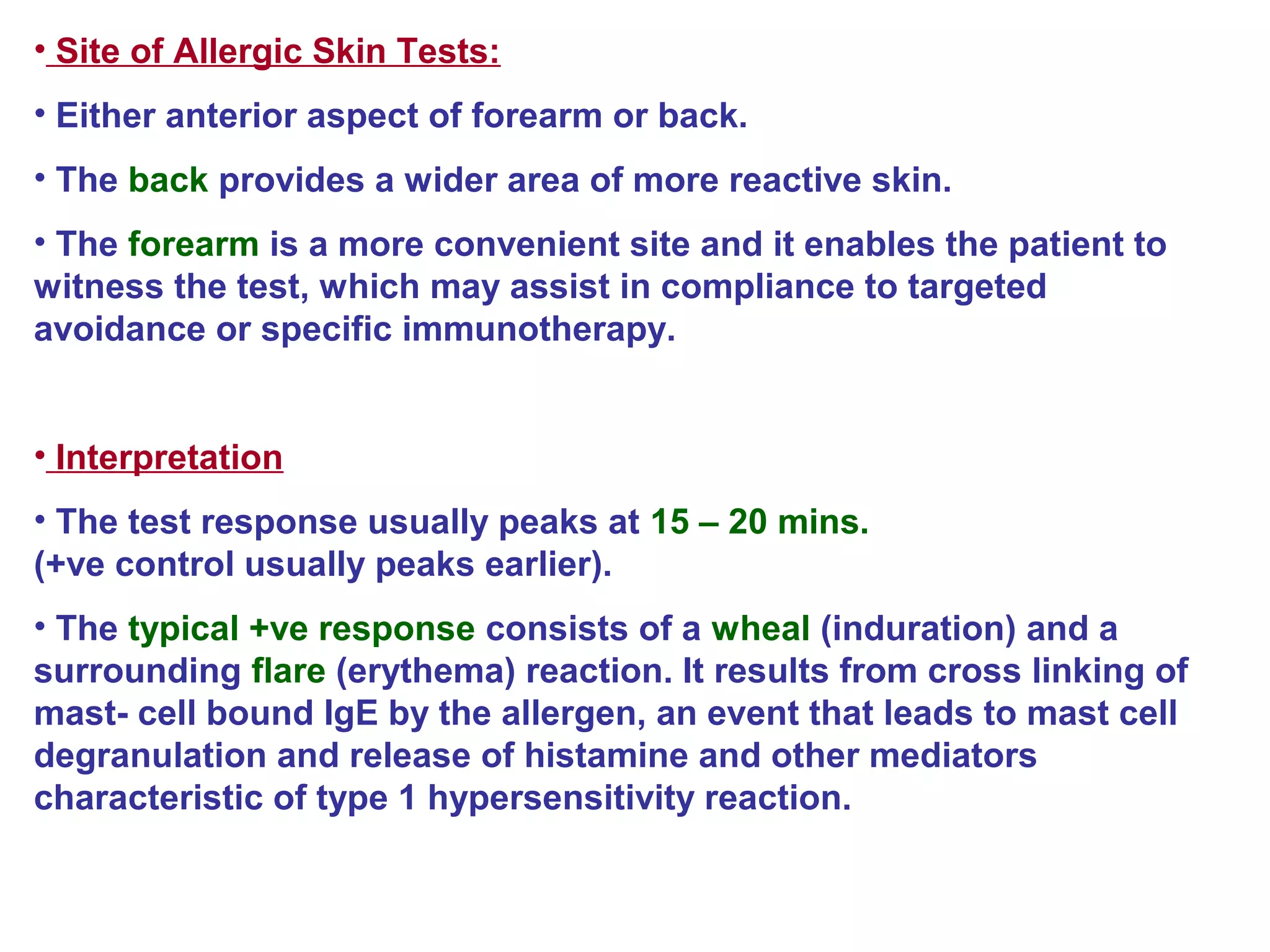
• Either anterior aspect of forearm or back.
• The back provides a wider area of more reactive skin.
• The forearm is a more convenient site and it enables the patient to
witness the test, which may assist in compliance to targeted
avoidance or specific immunotherapy.
• Interpretation
• The test response usually peaks at 15 – 20 mins.
(+ve control usually peaks earlier).
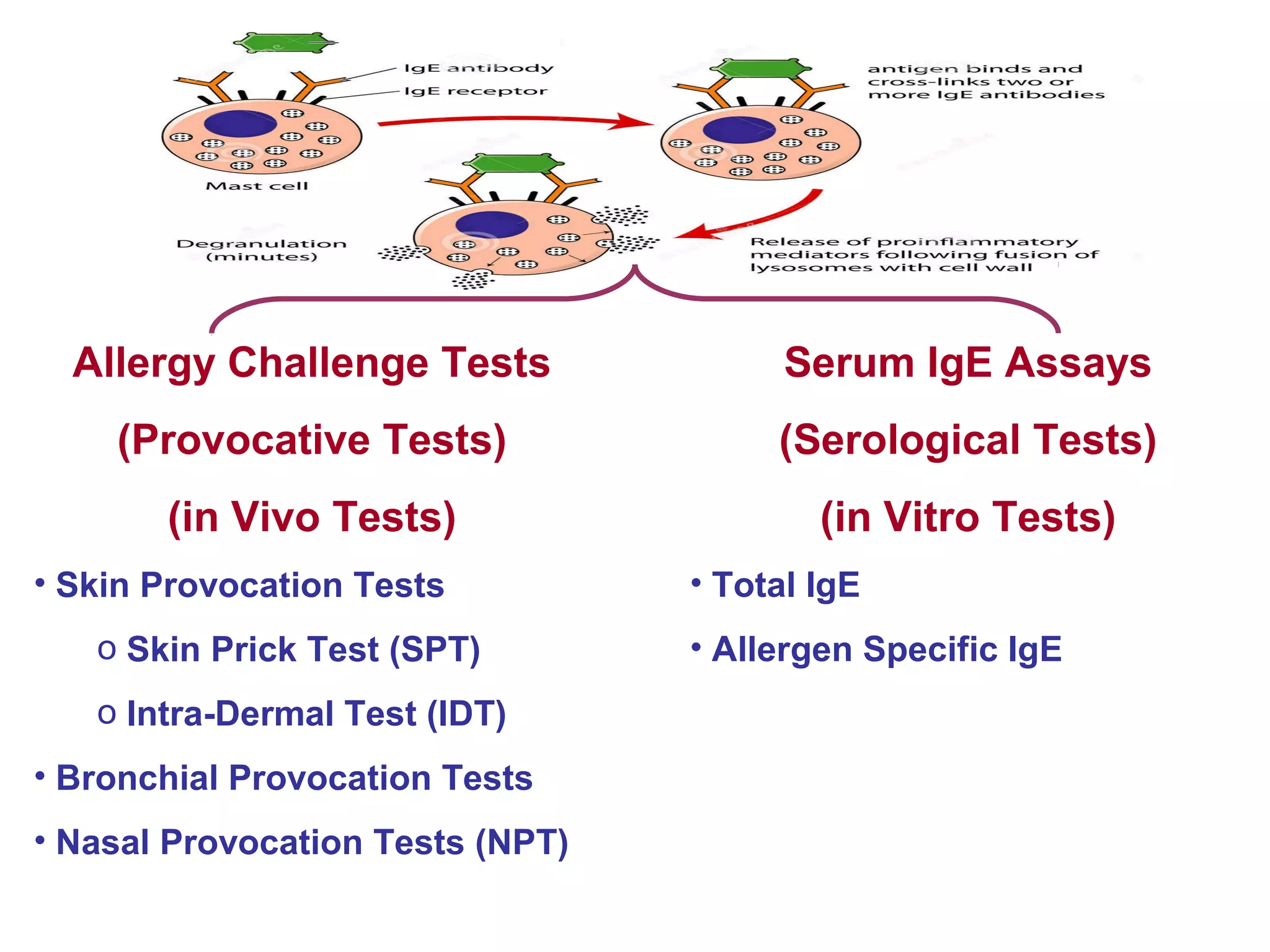
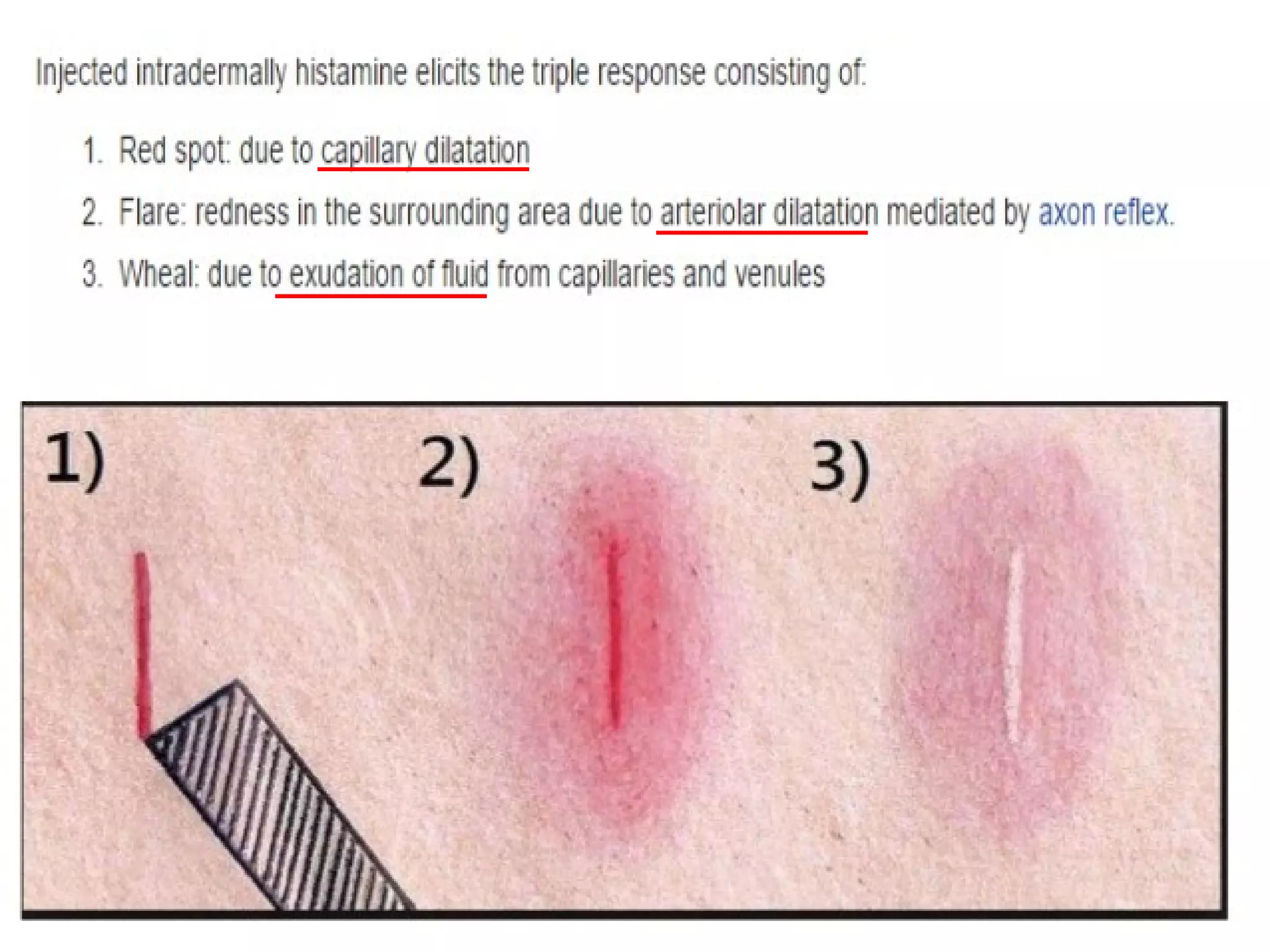
• The typical +ve response consists of a wheal (induration) and a
surrounding flare (erythema) reaction. It results from cross linking of
mast- cell bound IgE by the allergen, an event that leads to mast cell
degranulation and release of histamine and other mediators
characteristic of type 1 hypersensitivity reaction.
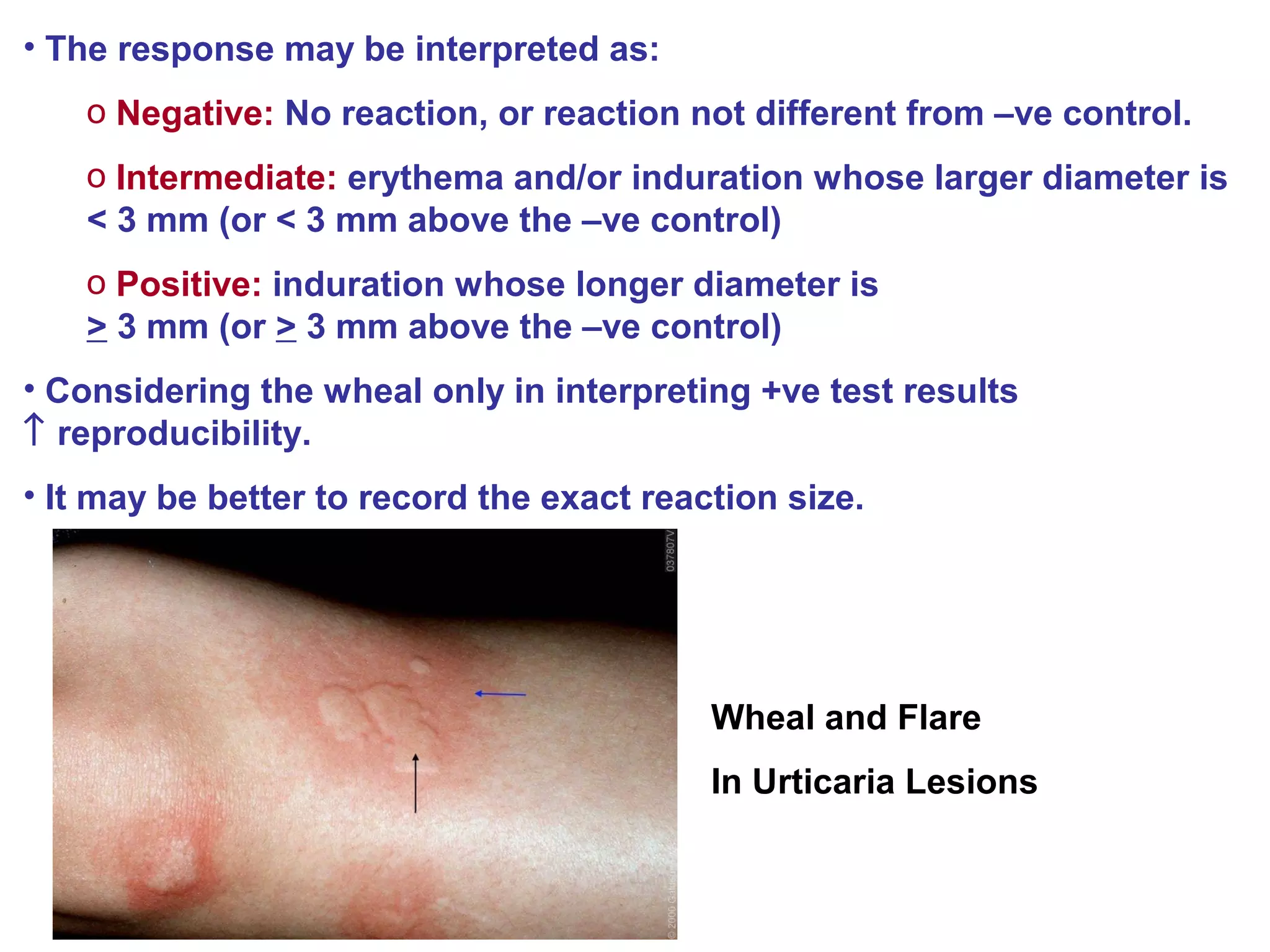
• The response may be interpreted as:
o Negative: No reaction, or reaction not different from –ve control.
o Intermediate: erythema and/or induration whose larger diameter is
< 3 mm (or < 3 mm above the –ve control)
o Positive: induration whose longer diameter is
> 3 mm (or > 3 mm above the –ve control)
• Considering the wheal only in interpreting +ve test results
↑ reproducibility.
• It may be better to record the exact reaction size.
Wheal and Flare
In Urticaria Lesions
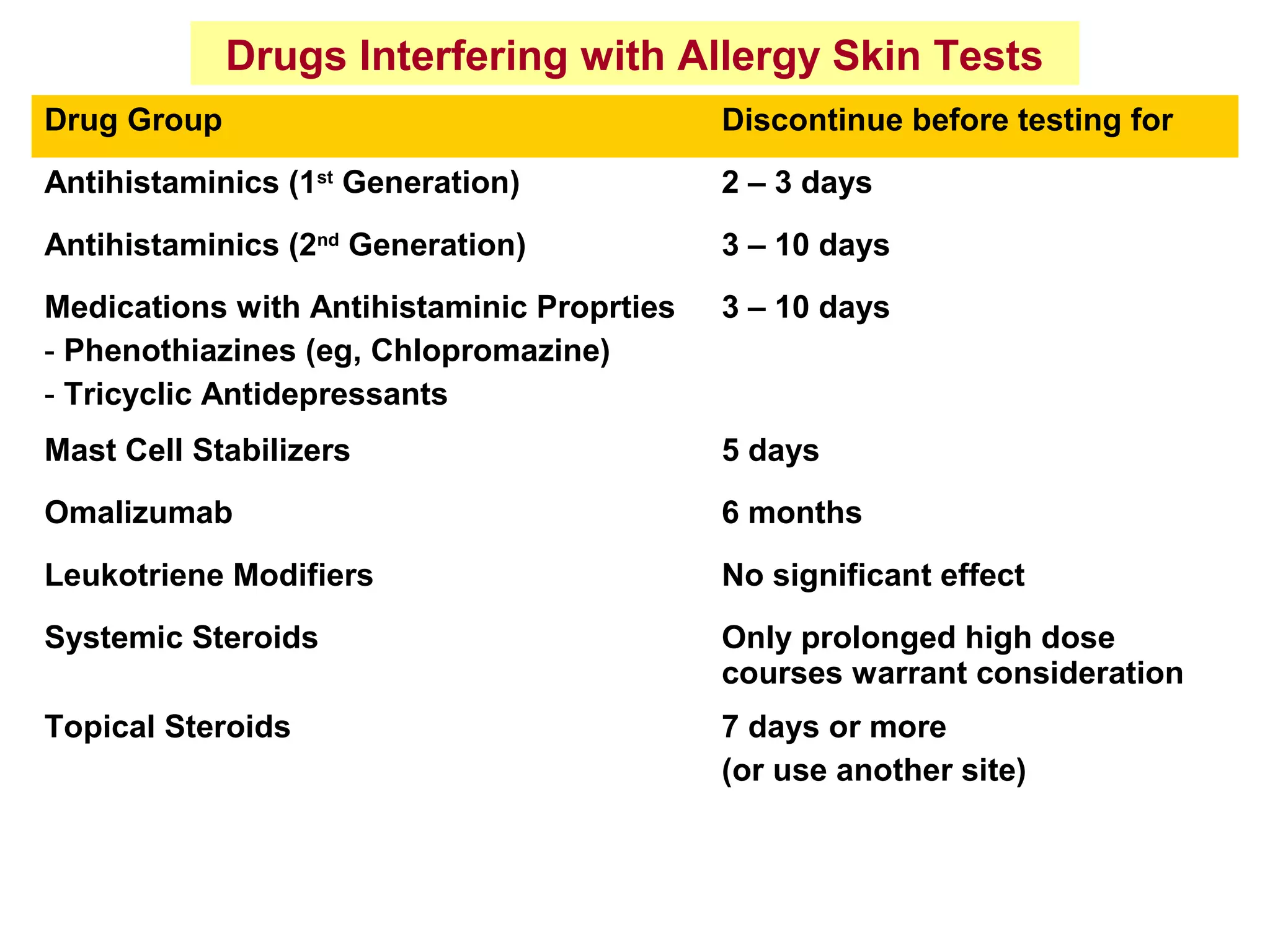
Drug Group Discontinue before testing for
Antihistaminics (1st
Generation) 2 – 3 days
Antihistaminics (2nd
Generation) 3 – 10 days
Medications with Antihistaminic Proprties
- Phenothiazines (eg, Chlopromazine)
- Tricyclic Antidepressants
3 – 10 days
Mast Cell Stabilizers 5 days
Omalizumab 6 months
Leukotriene Modifiers No significant effect
Systemic Steroids Only prolonged high dose
courses warrant consideration
Topical Steroids 7 days or more
(or use another site)
Drugs Interfering with Allergy Skin Tests
False +ve False -ve
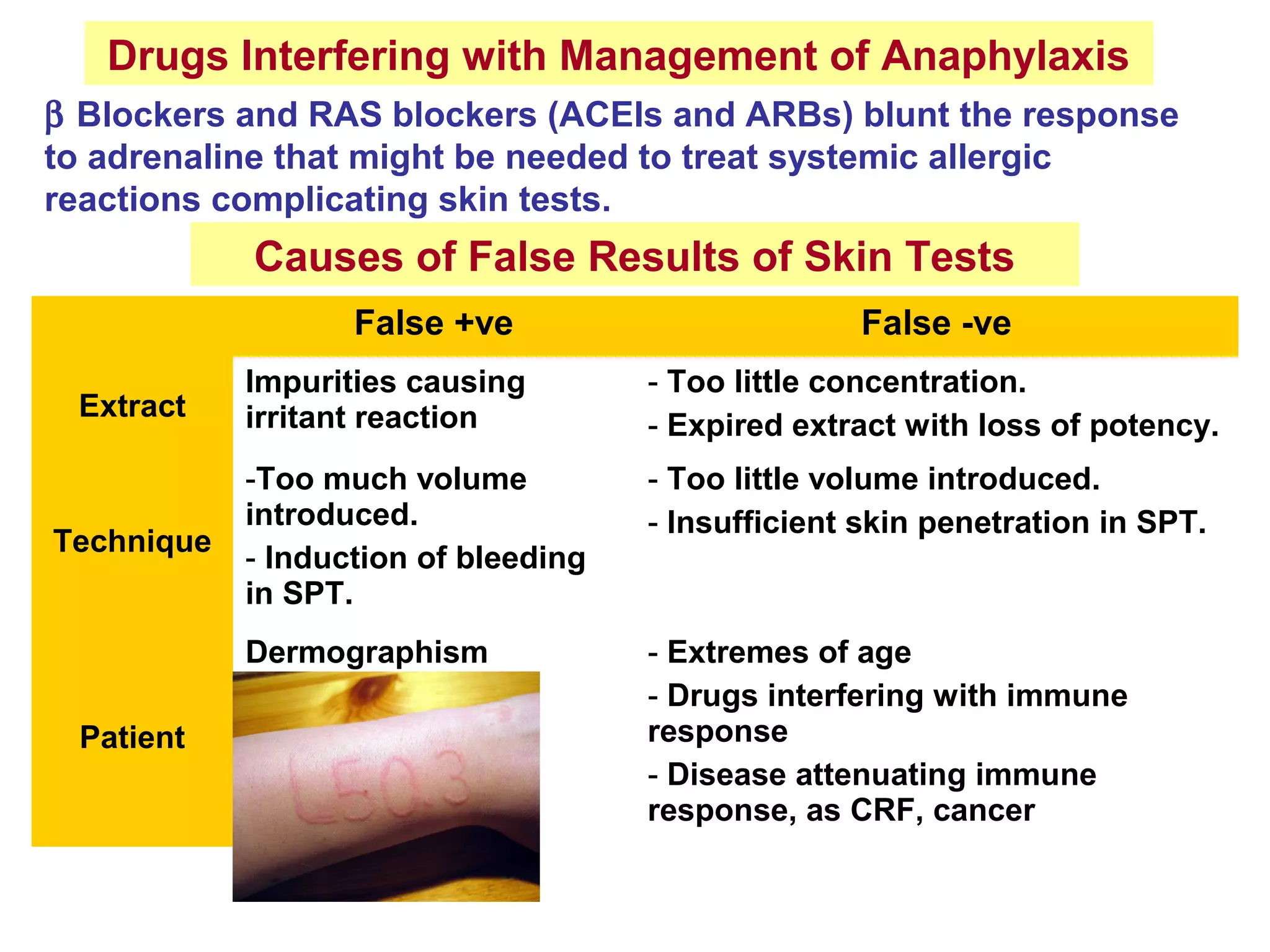
Extract
Impurities causing
irritant reaction
- Too little concentration.
- Expired extract with loss of potency.
Technique
-Too much volume
introduced.
- Induction of bleeding
in SPT.
- Too little volume introduced.
- Insufficient skin penetration in SPT.
Patient
Dermographism - Extremes of age
- Drugs interfering with immune
response
- Disease attenuating immune
response, as CRF, cancer
Drugs Interfering with Management of Anaphylaxis
Causes of False Results of Skin Tests
β Blockers and RAS blockers (ACEIs and ARBs) blunt the response
to adrenaline that might be needed to treat systemic allergic
reactions complicating skin tests.
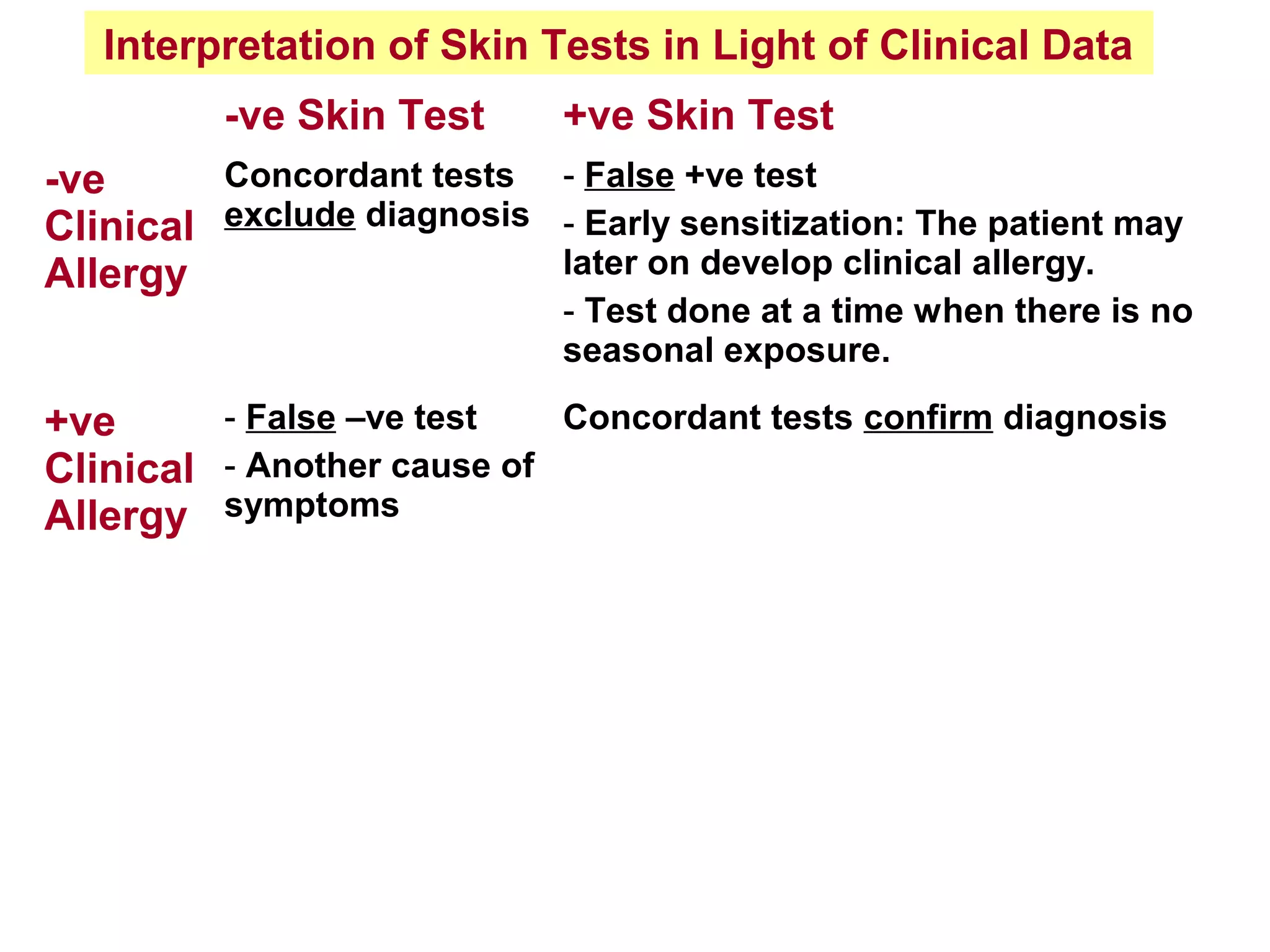
Interpretation of Skin Tests in Light of Clinical Data
-ve Skin Test +ve Skin Test
-ve
Clinical
Allergy
Concordant tests
exclude diagnosis
- False +ve test
- Early sensitization: The patient may
later on develop clinical allergy.
- Test done at a time when there is no
seasonal exposure.
+ve
Clinical
Allergy
- False –ve test
- Another cause of
symptoms
Concordant tests confirm diagnosis
Adverse Reaction to Skin Tests
• Large Local Reaction
• These are the most common adverse reactions.
• Usually resolve with cold compresses and antihistaminics
(local and systemic).
• Systemic Reactions
• Usually occur within 20 minutes of testing.
• More common and severe with IDT; for which severe anaphylaxis
and very rare fatalities were reported.
• Patient should be kept under observation after the test, with facilities
for emergency management of anaphylaxis readily available.
• Patients with uncontrolled asthma are at increased risk for adverse
reactions to skin testing, so testing may be deferred until asthma is
better controlled.
• A titrated skin test may be done in patients with history of severe
systemic allergic reactions. We start by a very dilute preparation then
use gradually increasing concentrations.
Advantages of SPT Advantages of IDT
• More specific: used to
test for aeroallergens
(allergic rhinitis, asthma)
and food allergy
• Lower risk of systemic
reactions
• Easier to perform, less
invasive
• More sensitive: used to
test for drug allergy, eg,
antibiotics, eg, penicillins.
It is contraindicated for food
allergy (high false +ve rate
/ risk of systemic
reactions)
• More reproducible
SPT is usually done first.
A +ve test circumvents
the need for IDT
IDT is mainly used in 2
situations:
- Drug allergy.
- -ve SPT for highly
suspected Ag.
More specific: More certain that +ve results truly indicate the condition
More sensitive: More certain that –ve results truly exclude the condition
Total Serum IgE
Allergen Specific IgE
• Generally elevated in atopic individuals
• Concentrations fluctuate widely around a mean of 125 IU/mL among
atopic and non- atopic persons. So, it is rarely helpful in diagnosis of
allergic diseases apart from 2 conditions in which it is useful to
confirm diagnosis and follow up disease activity:
o Allergic bronchopulmonary aspergillosis
o Atopic dermatitis
• May be markedly elevated even if total IgE is normal or mildly
elevated, so it may occasionally be used as alternative or
complementary to skin testing.
• Assays are expensive and not readily available for many antigens.
The results are delayed and difficult to interpret.
So, these tests are mainly resorted to in:
o Risk of severe systemic reaction
(eg, uncontrolled BA or history of anaphylaxis).
o Extensive skin disease or dermographism.
o Interfering drugs can not be stopped.
Nasal Provocation Test (NPT)
• Each specific organ or location may have its own pattern
of acquiring IgE sensitized mast cells.
• Specific IgE may be locally produced within the nasal
mucosa without being detectable in skin or blood tests.
So, NPT may occasionally be +ve for a specific Ag while
allergic skin tests and serologic IgE assays related to that
Ag are –ve. There is no general +ve correlation between
skin test reactivity and symptoms of allergic rhinitis.
• NPT is intended to reproduce pathologic reactions of
allergic nasal mucosa to defined aeroallergens and
occupationally relevant substances under standardized
conditions.
• NPT may be a safer alternative to bronchial provocation
when evaluating the relevance of specific allergens to the
etiology of bronchial asthma.
• Allergen Extract
• Isotonic buffered aqueous soln. with a neutral pH.
• We start by a concentration 1/1000 of that used in SPT.
• Progressively increasing concentrations may then be used
(titrated test).
• Glycerine- containing extracts can not be used as they elicit a false
+ve reaction.
• Water insoluble allergens may be administered as dry powder using
an inhaler.
• Technique
• Before the Test
o Evaluation of specific sensitization by skin and blood tests.
o Adaptation to room temp. and humidity for 30 mins.
o Rhinoscopic exam. To evaluate baseline conditions and
calculate the baseline clinical score.
• Negative Control:
o Nasal mucosa on the wider side is challenged for non- specific
hyperresponsiveness by isotonic saline using a micropipette.
o Clinical score is re-evaluated after 10 mins.
If no significant changes occur, we proceed to:
• Allergen Application
o Allergen may be applied unilaterally (to the wider side) or
bilaterally (but evaluation of the nasal response should always be
bilateral. Reflex mechanisms cause a concomitant response in the
opposite side).
o 50 – 100 uL of allergen soln. applied by a micropipette while the
patient holds the breath to avoid inhaling the allergen into the
lower airways.
o Clinical score is assessed once again after 10 mins.
o In case of uncertain results, the parameters may be re-eavluated
after an additional 10 mins.
o Patient should be kept under observation for 2hh and should be
informed that symptoms may appear later at home.
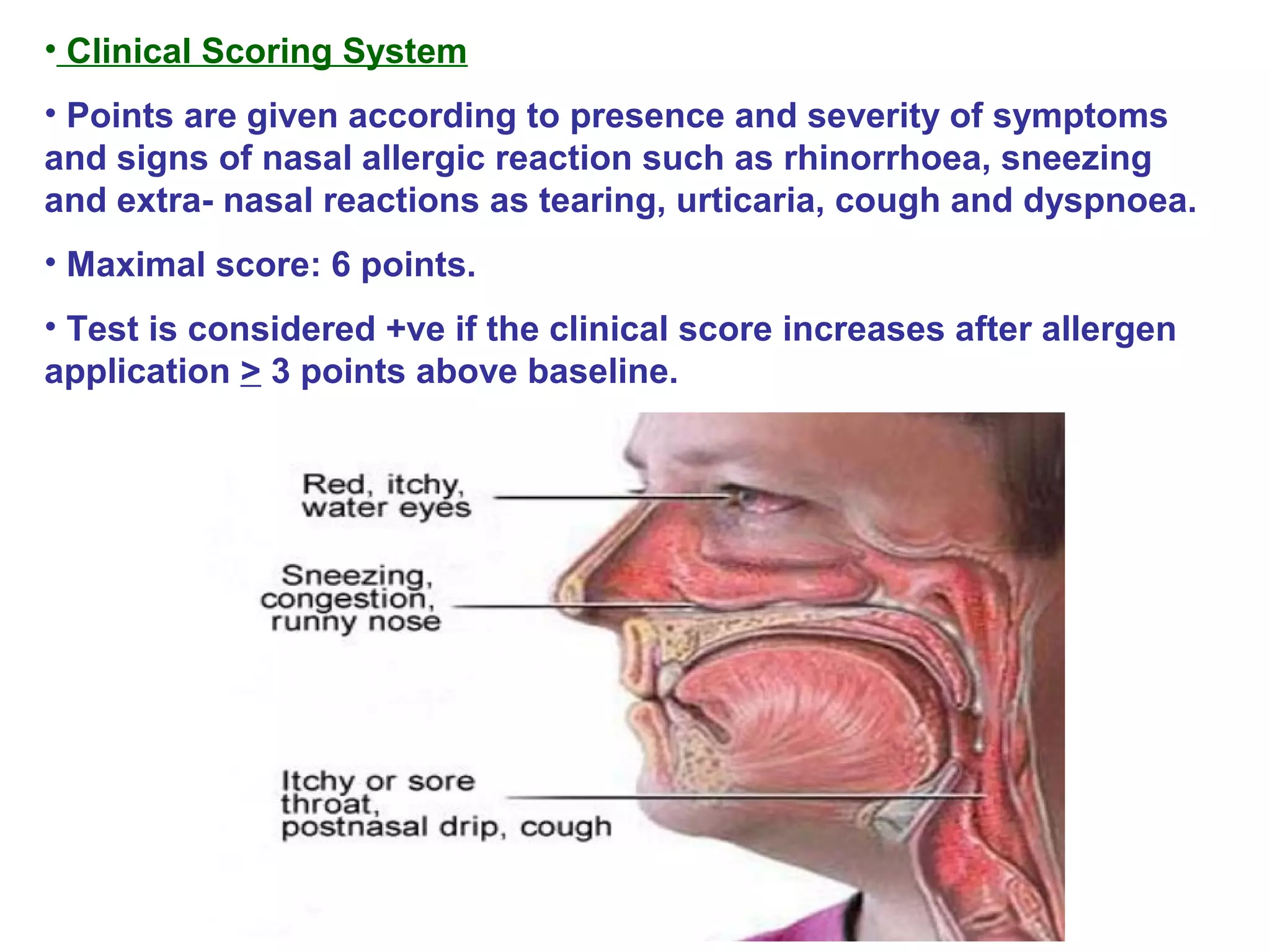
• Clinical Scoring System
• Points are given according to presence and severity of symptoms
and signs of nasal allergic reaction such as rhinorrhoea, sneezing
and extra- nasal reactions as tearing, urticaria, cough and dyspnoea.
• Maximal score: 6 points.
• Test is considered +ve if the clinical score increases after allergen
application > 3 points above baseline.
Contraindications
Absolute
• Acute rhinosinusitis.
• Acute exacerbation of allergic disease.
• Severe cardiopulmonary disease,
including uncontrolled BA, COPD.
• Pregnancy.
Relative
• Respiratory tract infection (Wait 4 weeks).
• Nasal surgery. (Wait 6 – 8 weeks)
• Medications interfering with allergic reaction
(as in skin tests).
• Nasal medications
•Disadvantages of NPT
• Lack of standardization due to broad methodological
variability (regarding performance and interpretation).
• Risk of adverse effects (ear, nose, throat, eye, bronchi).

Allergy testing

  • 1.
    Allergy Tests • Theyare tests to document the presence of allergic state and specify the offending allergen(s). • The presence of an allergic state as documented by allergy tests does not necessarily imply that the person has a clinical allergic disease. A positive allergy test indicates a potential readiness to develop an allergic reaction upon exposure to a specific allergen, but this does not mean that a clinically significant reaction would necessarily occur. • Increasingly strong allergic tests may correlate with increased disease activity. • Allergic (Hypersensitivity) Reactions include 4 main types: 1) Immediate (Anaphylactic) (IgE- Mediated) Reaction 2) Cytotoxic Reaction (as incompatible blood transfusion) 3) Immune Complex Reaction (as post- streptococcal GN) 4) Delayed (Cell- Mediated) Reaction (as contact dermatitis)
  • 2.
    • Allergic diseasesmediated by type 1 hypersensitivity reaction include: o Allergic rhinitis (commonest allergic disease for which specific testing may be needed) o Conjunctivitis o Bronchial asthma o Urticaria o Anaphylaxis • Allergens involved include: o Airborne allergens (aeroallergens) o Foods o Drugs o Insect stings
  • 3.
    Allergy Challenge Tests (ProvocativeTests) (in Vivo Tests) • Skin Provocation Tests o Skin Prick Test (SPT) o Intra-Dermal Test (IDT) • Bronchial Provocation Tests • Nasal Provocation Tests (NPT) Serum IgE Assays (Serological Tests) (in Vitro Tests) • Total IgE • Allergen Specific IgE
  • 4.
    • Indications forAllergy Tests: o Establishing / confirming diagnosis. o Directing therapy:  Targeted allergen avoidance  Allergen specific immunotherapy • Specification of a particular allergen may be helpful in justifying the expenses and efforts required in avoidance measures and immunotherapy. It helps also to promote compliance to these therapies. • Treatment may be increased under conditions of increased exposure, as during the pollen season or before contact with animals. • Detailed History and Physical Examination should precede planning for allergy tests and should dictate the panel of allergens to be used in provocative testing. There is no need to perform testing for allergens that are clearly tolerated or not present in the local environment.
  • 5.
    • Allergen Preparationsfor Skin Tests: • May contain a single allergen (usually) or multiple allergens. • Multi- allergen test may be used as an initial screening test to identify atopic persons (who develop type 1 hypersensitivity to a broad array of allergens) who warrant further specific testing. • To improve test specificity and reproducibility, use of standardized extracts is recommended. • Recombinant allergen molecules are becoming more available. These are generally more pure and preferable to biologically- derived extracts. • Should be kept at 2 – 8 O C to maintain stability. • IDT utilizes allergen preparation 10 – 100 times more dilute than those used in SPT. • 50% glycerine is commonly used as a preservative for SPT allergen extracts, but not for IDT extracts as it may trigger a false +ve response.
  • 7.
    • Skin PrickTest (SPT): • Both +ve (histamine 0.1%) and –ve (saline) controls are essential for correct interpretation. • +ve control should optimally elicit a wheal diameter > 3 mm. • The device used to prick the skin may have a single or multiple heads (the former preferred). • Usually several antigens are tested. To avoid cross contamination, the antigens should be applied at least 2 cm apart and a separate lancet used for every antigen application. • A drop of allergen extract is placed on the skin and the needle or lancet is gently passed through it to penetrate the epidermis without causing any bleeding. The lancet is held against the skin for 1 second, with equal pressure applied for each application. • Intra- Dermal Test (IDT): • Using a hypodermic (insulin) syringe and needle, the skin is held tense and the needle is inserted just under the dermis, almost parallel to the skin surface, just far enough to cover the beveled portion. • Little amount of allergen extract is injected to raise a small bleb.
  • 10.
    • Site ofAllergic Skin Tests: • Either anterior aspect of forearm or back. • The back provides a wider area of more reactive skin. • The forearm is a more convenient site and it enables the patient to witness the test, which may assist in compliance to targeted avoidance or specific immunotherapy. • Interpretation • The test response usually peaks at 15 – 20 mins. (+ve control usually peaks earlier). • The typical +ve response consists of a wheal (induration) and a surrounding flare (erythema) reaction. It results from cross linking of mast- cell bound IgE by the allergen, an event that leads to mast cell degranulation and release of histamine and other mediators characteristic of type 1 hypersensitivity reaction.
  • 11.
    • The responsemay be interpreted as: o Negative: No reaction, or reaction not different from –ve control. o Intermediate: erythema and/or induration whose larger diameter is < 3 mm (or < 3 mm above the –ve control) o Positive: induration whose longer diameter is > 3 mm (or > 3 mm above the –ve control) • Considering the wheal only in interpreting +ve test results ↑ reproducibility. • It may be better to record the exact reaction size. Wheal and Flare In Urticaria Lesions
  • 12.
    Drug Group Discontinuebefore testing for Antihistaminics (1st Generation) 2 – 3 days Antihistaminics (2nd Generation) 3 – 10 days Medications with Antihistaminic Proprties - Phenothiazines (eg, Chlopromazine) - Tricyclic Antidepressants 3 – 10 days Mast Cell Stabilizers 5 days Omalizumab 6 months Leukotriene Modifiers No significant effect Systemic Steroids Only prolonged high dose courses warrant consideration Topical Steroids 7 days or more (or use another site) Drugs Interfering with Allergy Skin Tests
  • 13.
    False +ve False-ve Extract Impurities causing irritant reaction - Too little concentration. - Expired extract with loss of potency. Technique -Too much volume introduced. - Induction of bleeding in SPT. - Too little volume introduced. - Insufficient skin penetration in SPT. Patient Dermographism - Extremes of age - Drugs interfering with immune response - Disease attenuating immune response, as CRF, cancer Drugs Interfering with Management of Anaphylaxis Causes of False Results of Skin Tests β Blockers and RAS blockers (ACEIs and ARBs) blunt the response to adrenaline that might be needed to treat systemic allergic reactions complicating skin tests.
  • 14.
    Interpretation of SkinTests in Light of Clinical Data -ve Skin Test +ve Skin Test -ve Clinical Allergy Concordant tests exclude diagnosis - False +ve test - Early sensitization: The patient may later on develop clinical allergy. - Test done at a time when there is no seasonal exposure. +ve Clinical Allergy - False –ve test - Another cause of symptoms Concordant tests confirm diagnosis
  • 15.
    Adverse Reaction toSkin Tests • Large Local Reaction • These are the most common adverse reactions. • Usually resolve with cold compresses and antihistaminics (local and systemic). • Systemic Reactions • Usually occur within 20 minutes of testing. • More common and severe with IDT; for which severe anaphylaxis and very rare fatalities were reported. • Patient should be kept under observation after the test, with facilities for emergency management of anaphylaxis readily available. • Patients with uncontrolled asthma are at increased risk for adverse reactions to skin testing, so testing may be deferred until asthma is better controlled. • A titrated skin test may be done in patients with history of severe systemic allergic reactions. We start by a very dilute preparation then use gradually increasing concentrations.
  • 16.
    Advantages of SPTAdvantages of IDT • More specific: used to test for aeroallergens (allergic rhinitis, asthma) and food allergy • Lower risk of systemic reactions • Easier to perform, less invasive • More sensitive: used to test for drug allergy, eg, antibiotics, eg, penicillins. It is contraindicated for food allergy (high false +ve rate / risk of systemic reactions) • More reproducible SPT is usually done first. A +ve test circumvents the need for IDT IDT is mainly used in 2 situations: - Drug allergy. - -ve SPT for highly suspected Ag. More specific: More certain that +ve results truly indicate the condition More sensitive: More certain that –ve results truly exclude the condition
  • 17.
    Total Serum IgE AllergenSpecific IgE • Generally elevated in atopic individuals • Concentrations fluctuate widely around a mean of 125 IU/mL among atopic and non- atopic persons. So, it is rarely helpful in diagnosis of allergic diseases apart from 2 conditions in which it is useful to confirm diagnosis and follow up disease activity: o Allergic bronchopulmonary aspergillosis o Atopic dermatitis • May be markedly elevated even if total IgE is normal or mildly elevated, so it may occasionally be used as alternative or complementary to skin testing. • Assays are expensive and not readily available for many antigens. The results are delayed and difficult to interpret. So, these tests are mainly resorted to in: o Risk of severe systemic reaction (eg, uncontrolled BA or history of anaphylaxis). o Extensive skin disease or dermographism. o Interfering drugs can not be stopped.
  • 18.
    Nasal Provocation Test(NPT) • Each specific organ or location may have its own pattern of acquiring IgE sensitized mast cells. • Specific IgE may be locally produced within the nasal mucosa without being detectable in skin or blood tests. So, NPT may occasionally be +ve for a specific Ag while allergic skin tests and serologic IgE assays related to that Ag are –ve. There is no general +ve correlation between skin test reactivity and symptoms of allergic rhinitis. • NPT is intended to reproduce pathologic reactions of allergic nasal mucosa to defined aeroallergens and occupationally relevant substances under standardized conditions. • NPT may be a safer alternative to bronchial provocation when evaluating the relevance of specific allergens to the etiology of bronchial asthma.
  • 19.
    • Allergen Extract •Isotonic buffered aqueous soln. with a neutral pH. • We start by a concentration 1/1000 of that used in SPT. • Progressively increasing concentrations may then be used (titrated test). • Glycerine- containing extracts can not be used as they elicit a false +ve reaction. • Water insoluble allergens may be administered as dry powder using an inhaler. • Technique • Before the Test o Evaluation of specific sensitization by skin and blood tests. o Adaptation to room temp. and humidity for 30 mins. o Rhinoscopic exam. To evaluate baseline conditions and calculate the baseline clinical score.
  • 20.
    • Negative Control: oNasal mucosa on the wider side is challenged for non- specific hyperresponsiveness by isotonic saline using a micropipette. o Clinical score is re-evaluated after 10 mins. If no significant changes occur, we proceed to: • Allergen Application o Allergen may be applied unilaterally (to the wider side) or bilaterally (but evaluation of the nasal response should always be bilateral. Reflex mechanisms cause a concomitant response in the opposite side). o 50 – 100 uL of allergen soln. applied by a micropipette while the patient holds the breath to avoid inhaling the allergen into the lower airways. o Clinical score is assessed once again after 10 mins. o In case of uncertain results, the parameters may be re-eavluated after an additional 10 mins. o Patient should be kept under observation for 2hh and should be informed that symptoms may appear later at home.
  • 21.
    • Clinical ScoringSystem • Points are given according to presence and severity of symptoms and signs of nasal allergic reaction such as rhinorrhoea, sneezing and extra- nasal reactions as tearing, urticaria, cough and dyspnoea. • Maximal score: 6 points. • Test is considered +ve if the clinical score increases after allergen application > 3 points above baseline.
  • 22.
    Contraindications Absolute • Acute rhinosinusitis. •Acute exacerbation of allergic disease. • Severe cardiopulmonary disease, including uncontrolled BA, COPD. • Pregnancy. Relative • Respiratory tract infection (Wait 4 weeks). • Nasal surgery. (Wait 6 – 8 weeks) • Medications interfering with allergic reaction (as in skin tests). • Nasal medications •Disadvantages of NPT • Lack of standardization due to broad methodological variability (regarding performance and interpretation). • Risk of adverse effects (ear, nose, throat, eye, bronchi).

Editor's Notes

  • #2 Allergy tests are usually meant to test for type 1 hypersensitivity reactions. +ve allergy skin tests for immediate hypersensitivity indicate the presence of mast cell- bound IgE specific to the tested Ag. Simply establishing the presence of IgE against allergens (sensitization) whether in vivo (skin tests) or in vitro (IgE assays) does not automatically designate a disease or clinical relevance in a given patient. Careful history and physical examination remain the fundamental method for diagnosis of allergic disease.
  • #3 Allergy tests are usually meant to test for type 1 hypersensitivity reactions
  • #4 Skin provocation tests include: Skin scratch test, which is no longer recommended, being difficult to standardize and interpret
  • #5 An important initial step is to select antigens to be used in skin testing, on the basis of clinical history, geographical location and work environment, A knowledge of local “aeroliology” is essential. Indiscriminate testing for a large panel of irrelevant allergens may result in many irrelevant +ve result, which, if over- interpretted, may result in costly socially, emotionally and/pr nutritionally detrimental actions of unnecessary allergen avoidance.
  • #10 Up: SPT on forearm Down Left: SPT on the back Down Right: Intradermal injection
  • #18 Omalizumab treatment affects both allergy skin tests and IgE assays. Compared with serological tests, skin tests have the following advantages: More readily available. Less expensive More sensitive No blood sample Results are immediately available and visible to the patient and his/her family, which is more conductive for compliance to the therapeutic plan
  • #21 Testing of only on Ag per day is advised. If several allergens need to be tested, a minimum of 1 week should be left between tests.