



DIFFERENT TYPES OF
ALLERGY TESTING
NOVEMBER 2016
ALLERGY TESTING HAS
DIFFERENT PROCEDURES
A lot of hospitals are staffed with allergy
testing specialists and highly qualified
immunologists. So make sure that with the help
of your GP you go to the right person.
Based on the symptoms you have
provided, the specialist will make a
list of allergens to be tested for.
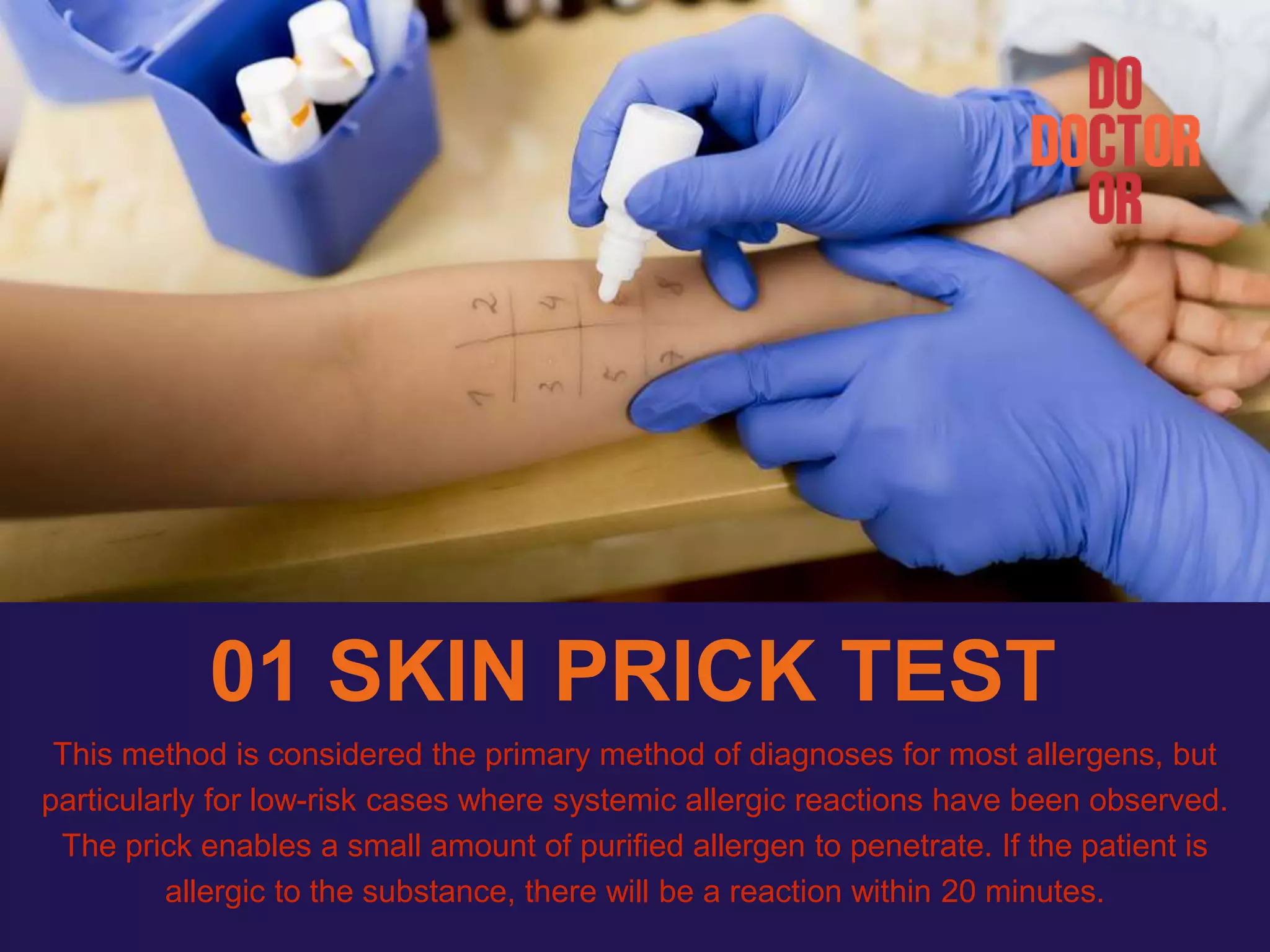
This method is considered the primary method of diagnoses for most allergens, but
particularly for low-risk cases where systemic allergic reactions have been observed.
The prick enables a small amount of purified allergen to penetrate. If the patient is
allergic to the substance, there will be a reaction within 20 minutes.
01 SKIN PRICK TEST
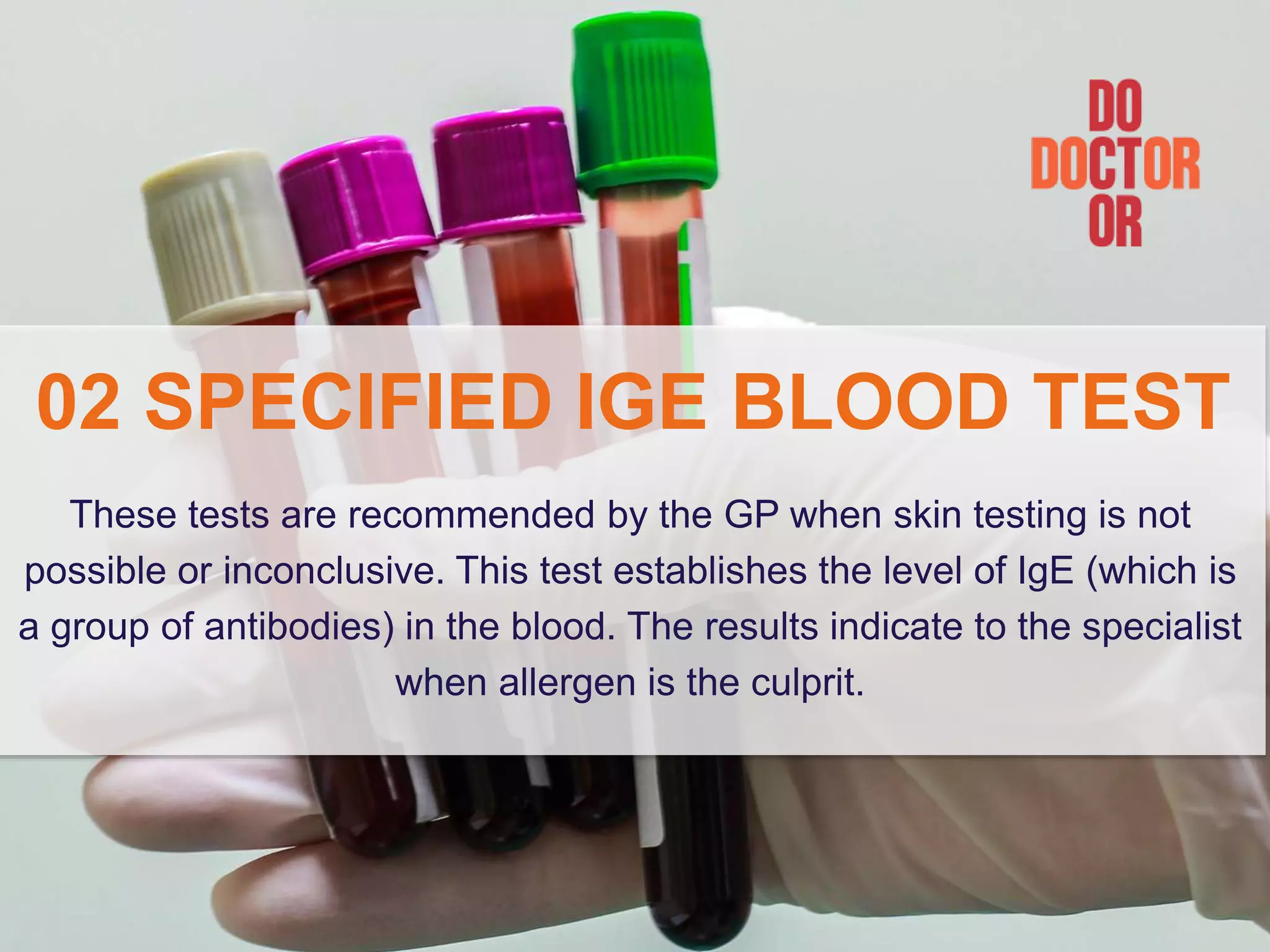
02 SPECIFIED IGE BLOOD TEST
These tests are recommended by the GP when skin testing is not
possible or inconclusive. This test establishes the level of IgE (which is
a group of antibodies) in the blood. The results indicate to the specialist
when allergen is the culprit.
03 PATCH TESTING
This form of testing is commonly used to diagnose contact
dermatitis. People are often allergic to certain perfumes, metals
and sometimes plants (poison ivy gets its name for a reason).
When a patch containing the substance is applied to the skin, a
positive result will show as a blister or rash under the patch.
It’s a long test and can take weeks. In the initial stages of
the test the person only consumes foods not suspected to
be allergens. Then there is a ‘challenge’ – from a food
suspected to be an allergen.
04 ELIMINATE DIETS AND
CHALLENGE TESTING
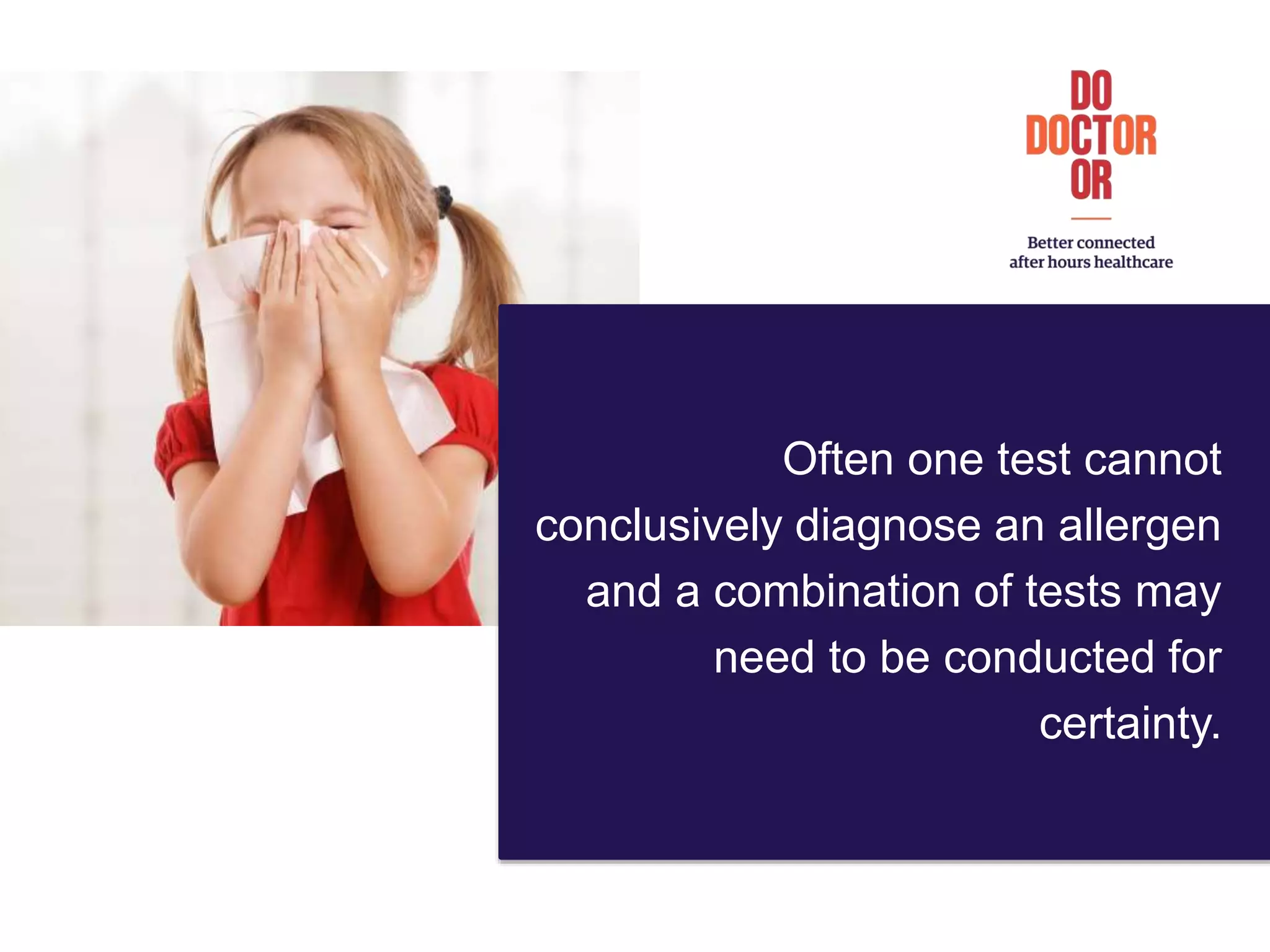
Often one test cannot
conclusively diagnose an allergen
and a combination of tests may
need to be conducted for
certainty.
A GOOD TEAM COMPRISING YOR GP, ALLERGIST
AND / OR A QUALIFIED IMMUNOLOGIST
SHOULD BE ABLE TO DIAGNOSE YOUR ALLERGY
AND PREPARE AN ACTION PLAN TO HELP YOU
MANAGE IT.
CALL 13 26 60
FOR EMERGENCIES CALL 000

Different Types of Allergy Testing

  • 1.
    DIFFERENT TYPES OF ALLERGYTESTING NOVEMBER 2016
  • 2.
    ALLERGY TESTING HAS DIFFERENTPROCEDURES A lot of hospitals are staffed with allergy testing specialists and highly qualified immunologists. So make sure that with the help of your GP you go to the right person.
  • 3.
    Based on thesymptoms you have provided, the specialist will make a list of allergens to be tested for.
  • 4.
    This method isconsidered the primary method of diagnoses for most allergens, but particularly for low-risk cases where systemic allergic reactions have been observed. The prick enables a small amount of purified allergen to penetrate. If the patient is allergic to the substance, there will be a reaction within 20 minutes. 01 SKIN PRICK TEST
  • 5.
    02 SPECIFIED IGEBLOOD TEST These tests are recommended by the GP when skin testing is not possible or inconclusive. This test establishes the level of IgE (which is a group of antibodies) in the blood. The results indicate to the specialist when allergen is the culprit.
  • 6.
    03 PATCH TESTING Thisform of testing is commonly used to diagnose contact dermatitis. People are often allergic to certain perfumes, metals and sometimes plants (poison ivy gets its name for a reason). When a patch containing the substance is applied to the skin, a positive result will show as a blister or rash under the patch.
  • 7.
    It’s a longtest and can take weeks. In the initial stages of the test the person only consumes foods not suspected to be allergens. Then there is a ‘challenge’ – from a food suspected to be an allergen. 04 ELIMINATE DIETS AND CHALLENGE TESTING
  • 8.
    Often one testcannot conclusively diagnose an allergen and a combination of tests may need to be conducted for certainty.
  • 9.
    A GOOD TEAMCOMPRISING YOR GP, ALLERGIST AND / OR A QUALIFIED IMMUNOLOGIST SHOULD BE ABLE TO DIAGNOSE YOUR ALLERGY AND PREPARE AN ACTION PLAN TO HELP YOU MANAGE IT.
  • 10.
    CALL 13 2660 FOR EMERGENCIES CALL 000