Dr. Amy Scott Metcalfe
Department of Educational Studies
Faculty of Education
University of British Columbia
Using Twitter for Academic Communication
Digital and Social Media for Research
Purposes: A Panel
Date: Tuesday, February 10, 2015 Time: 12:30 – 2:00 p.m. Venue: University of British
Columbia, Vancouver, Canada, Scarfe Building – Room 310
What is the significance of social media, digital technologies and online platforms to advance
research in education? Digital and social media can play a role at all stages of the research
process, including the generation of research questions, data collection, analysis, academic
dissemination, and knowledge mobilization. This panel will bring together four researchers from
the Faculty of Education – two faculty members and two trainees – who will share their
experience using digital and social media for research purposes. Their brief presentations will be
followed by a period for questions and open discussion.
Panelists:
Dr. Mary Bryson (Professor, LLED) will speak about the use of Digital Storytelling as a method
for health knowledge mobilization
Dr. Amy Metcalfe (Associate Professor, EDST) will talk about her experience using Twitter for
academic communication
Dr. Chelsey Hauge (postdoctoral fellow, Institute for Gender, Race, Sexuality & Social Justice)
will share her experience using digital media production for social justice in the context of
international education
Ashley Shaw (PhD student in EDCP) will discuss her research in online communities,
including Facebook and MOOCs
Dr. Natasha Boskic, Senior Manager of Learning Design in the Faculty of Education, will facilitate
the panel.
http://yre.educ.ubc.ca/digital-and-social-media-panel/
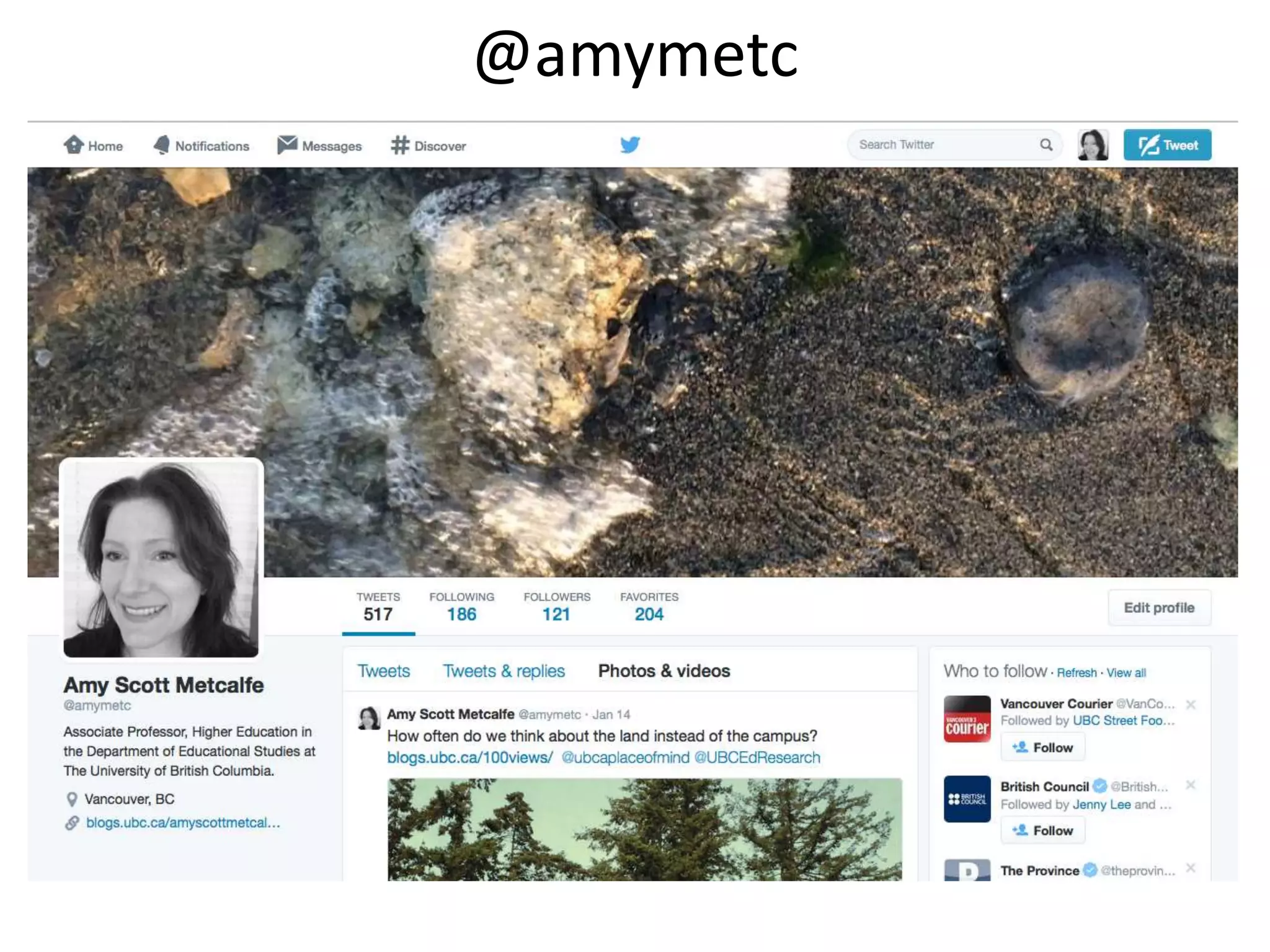
@amymetc
Twitter for Academic Communication
• Dissemination of research
• Connecting with students beyond the campus
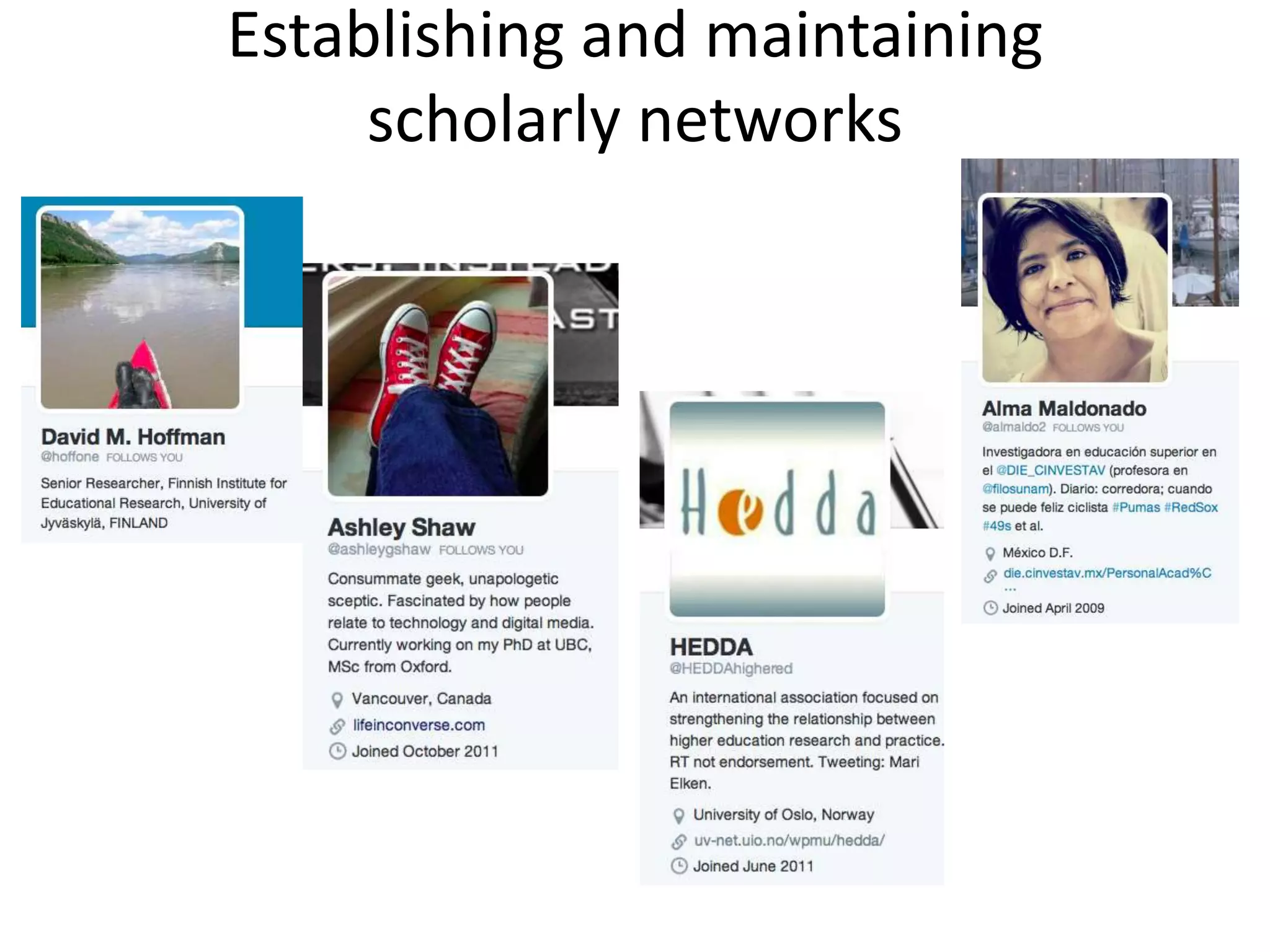
• Establishing and maintaining scholarly networks
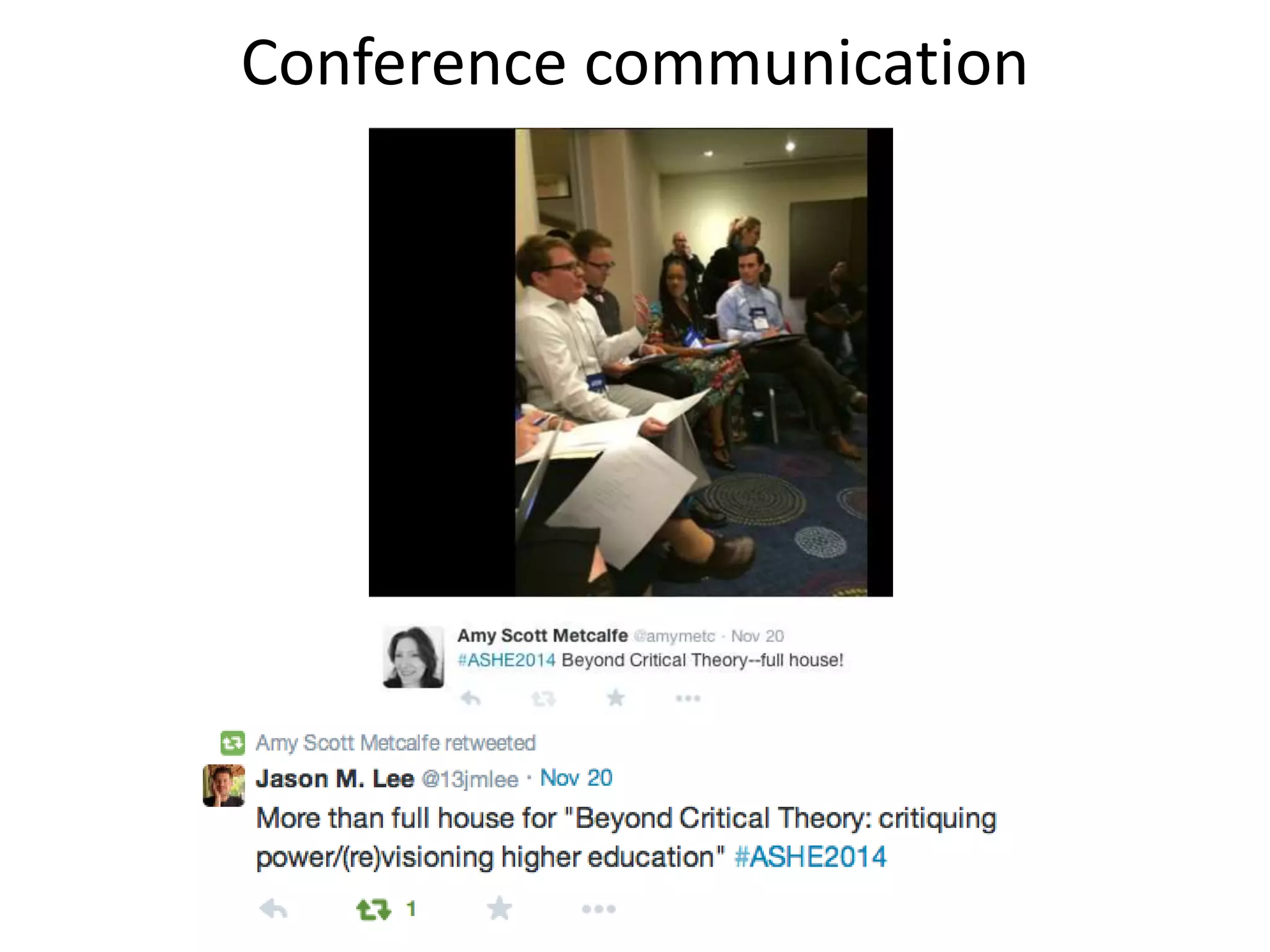
• Conference communication
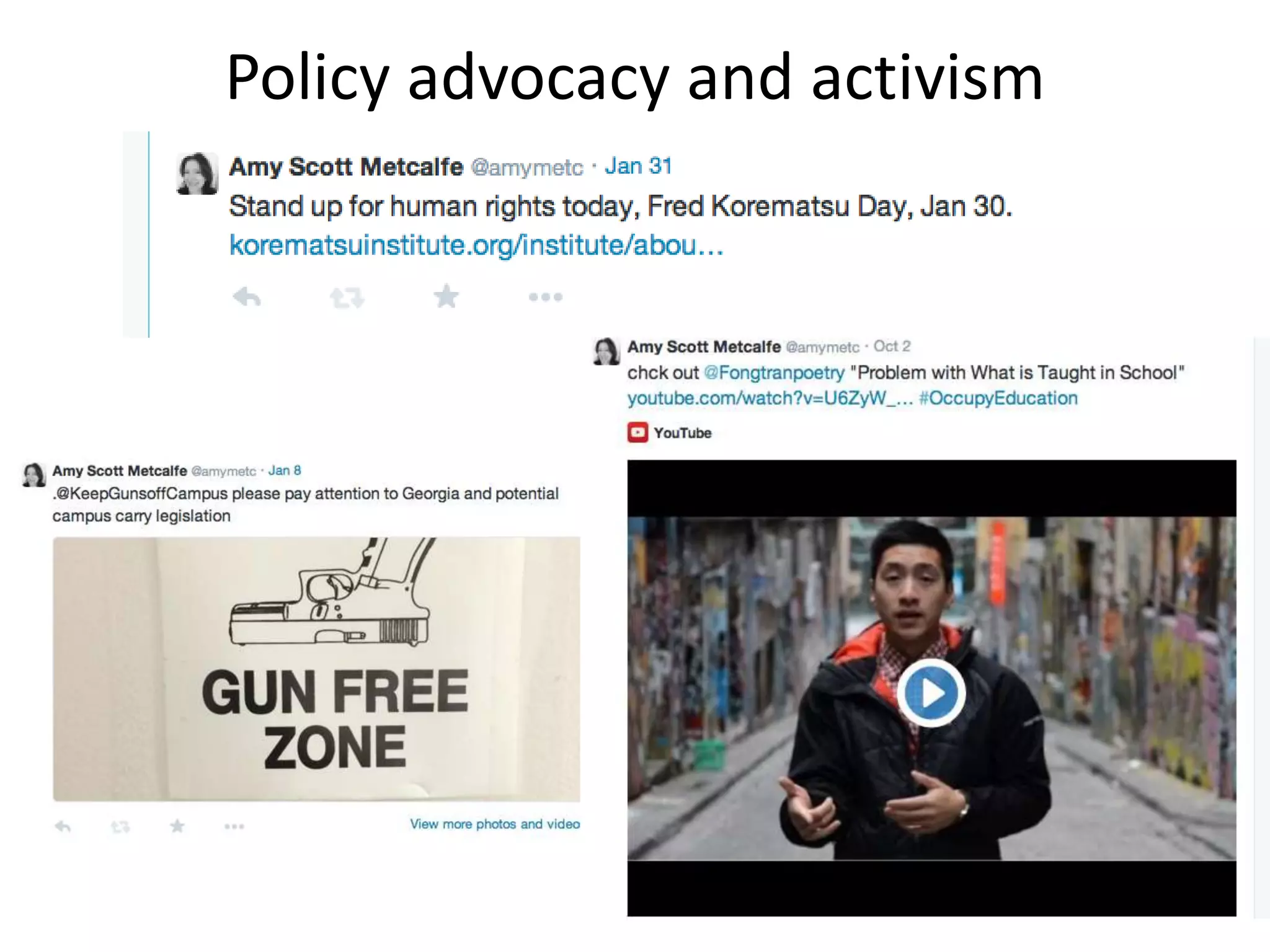
• Policy advocacy and activism
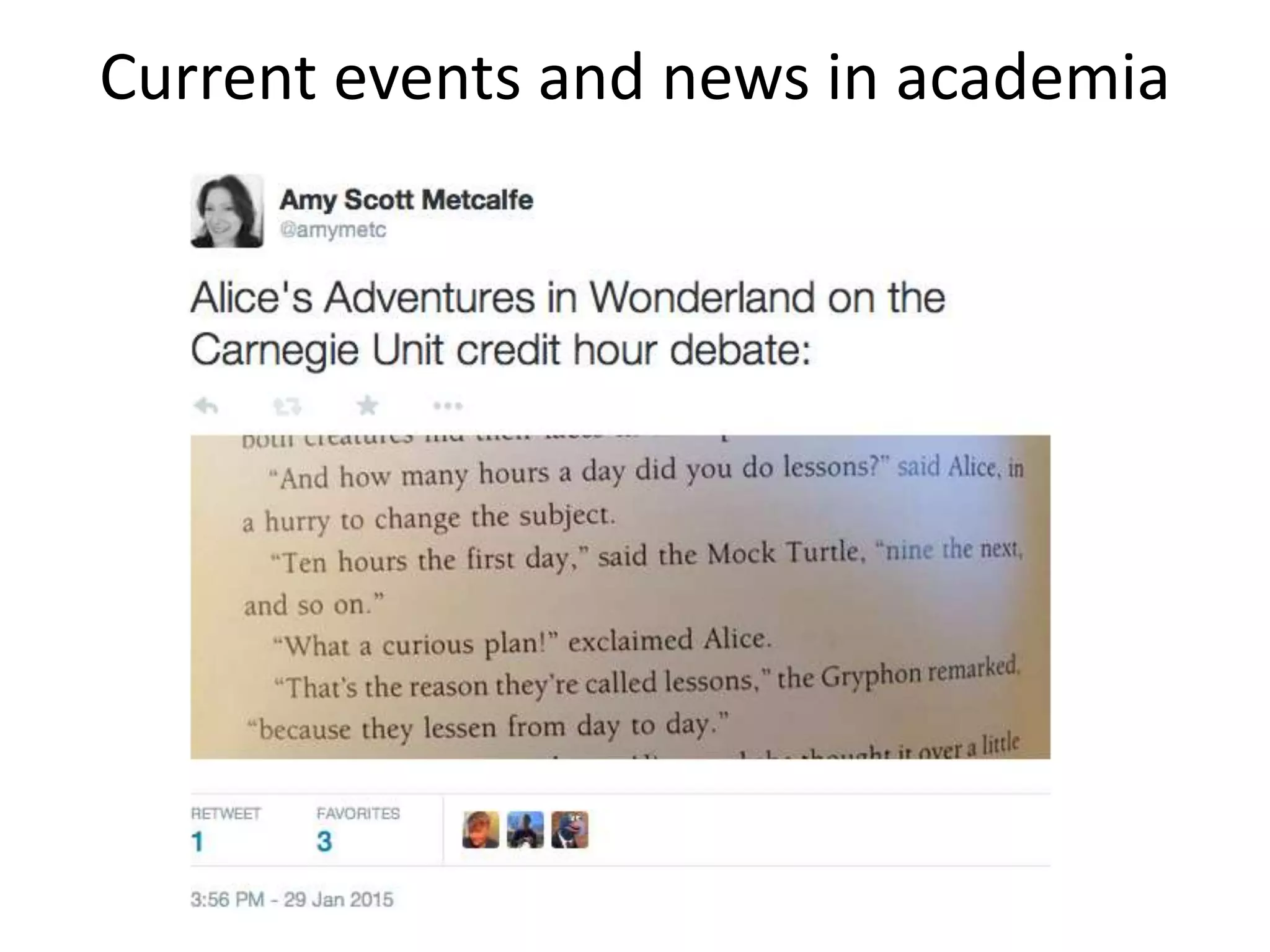
• Current events and news in academia
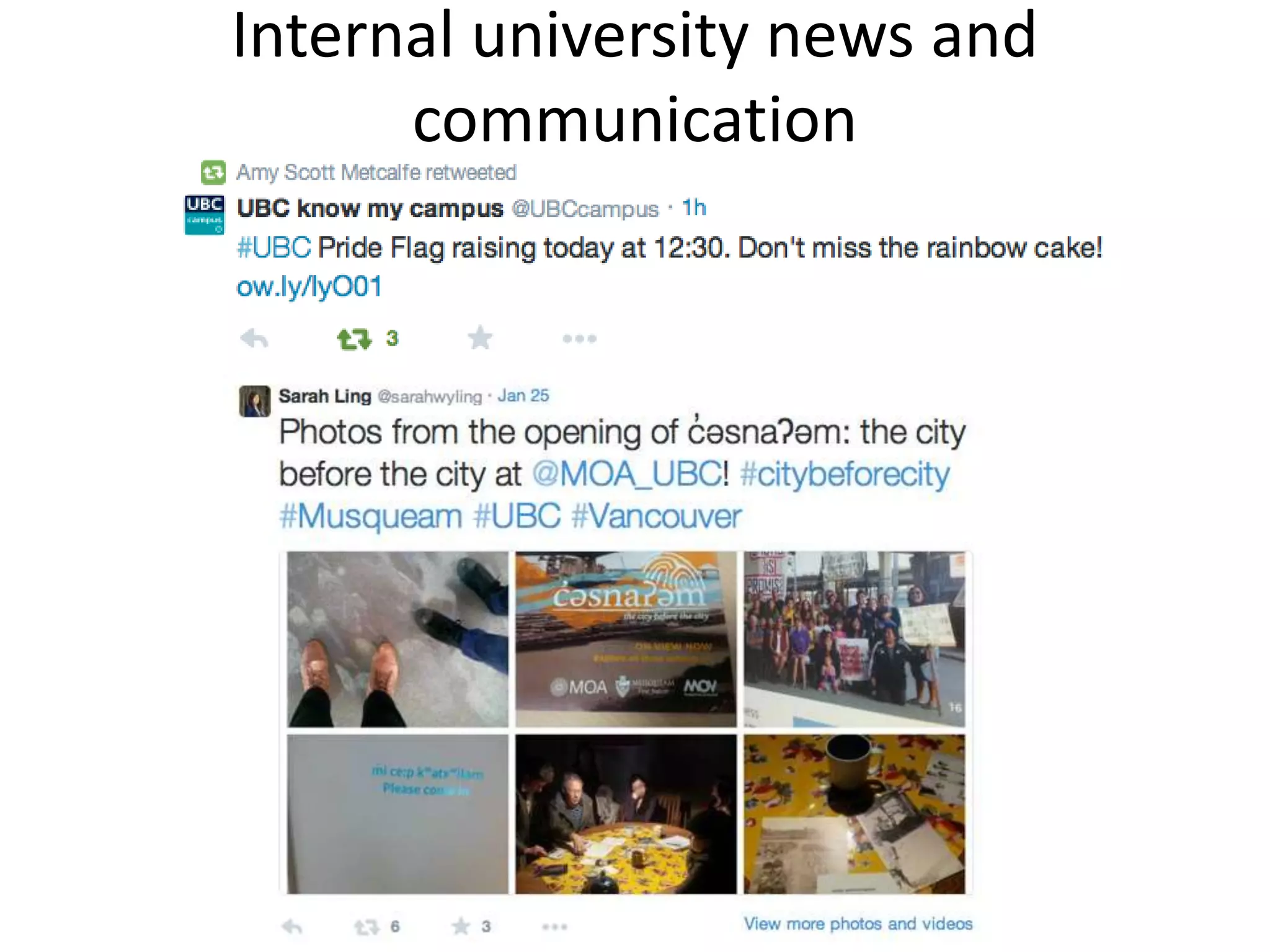
• Internal university news and communication
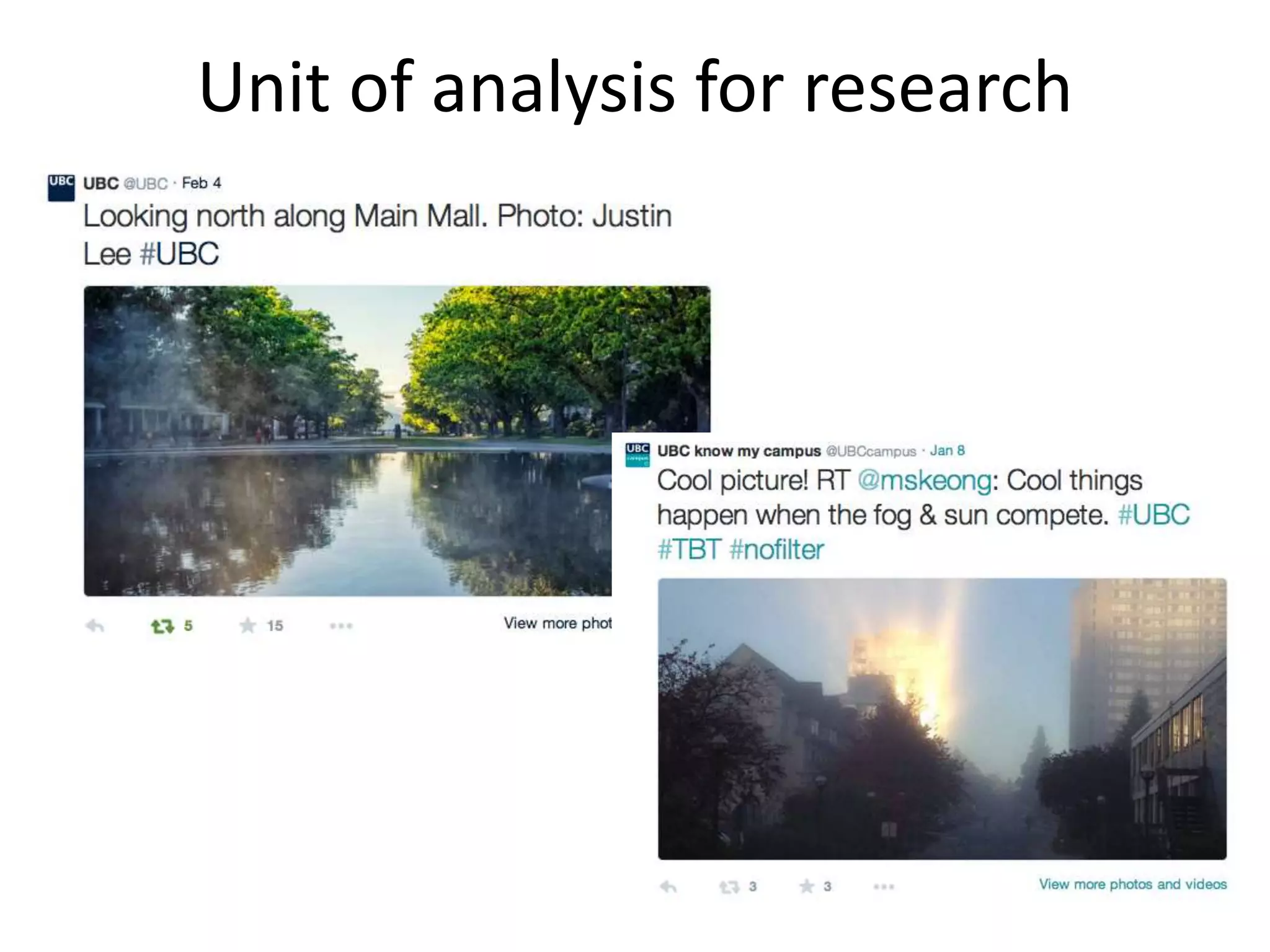
• Unit of analysis for research on higher ed
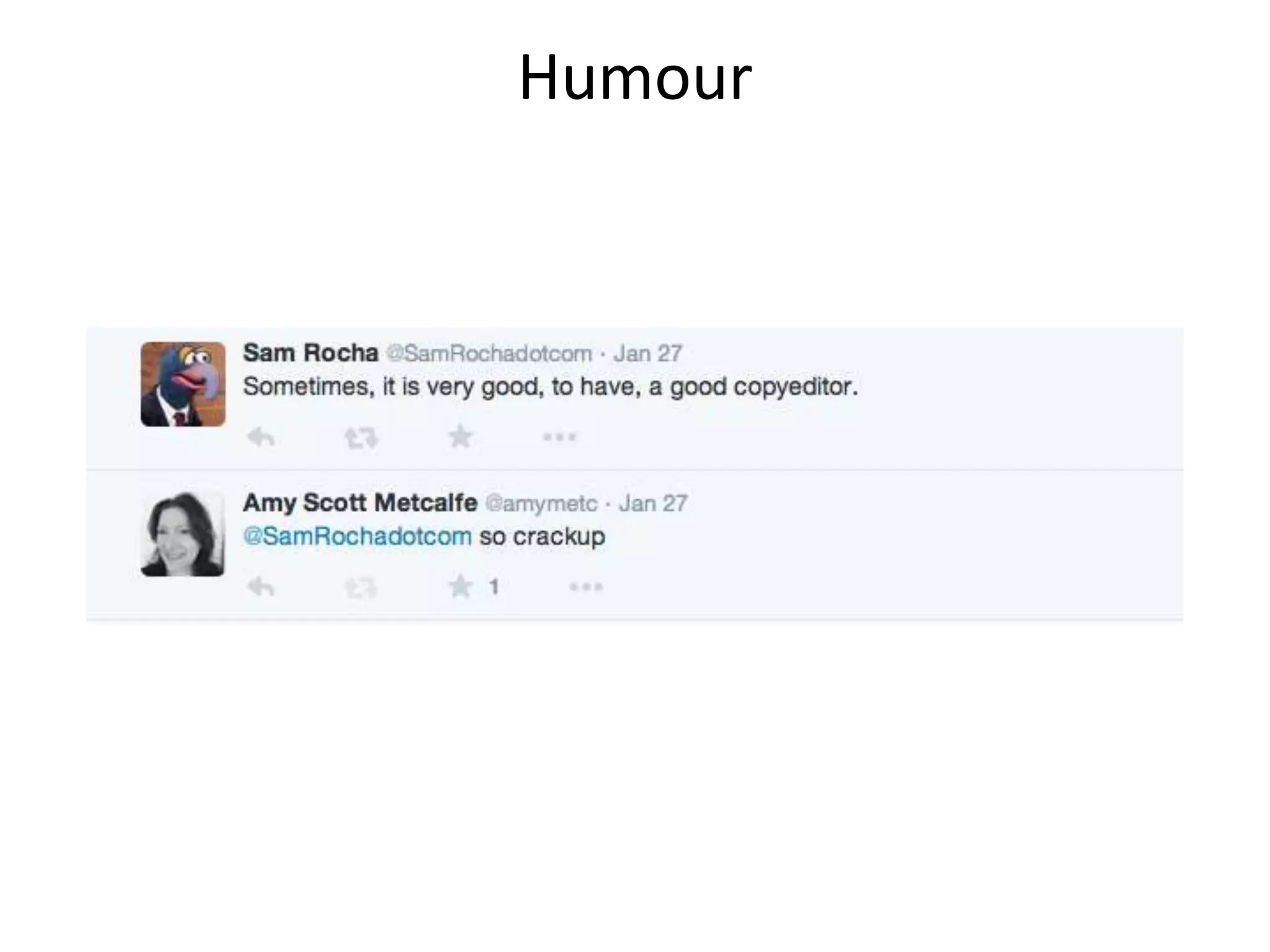
• Humour
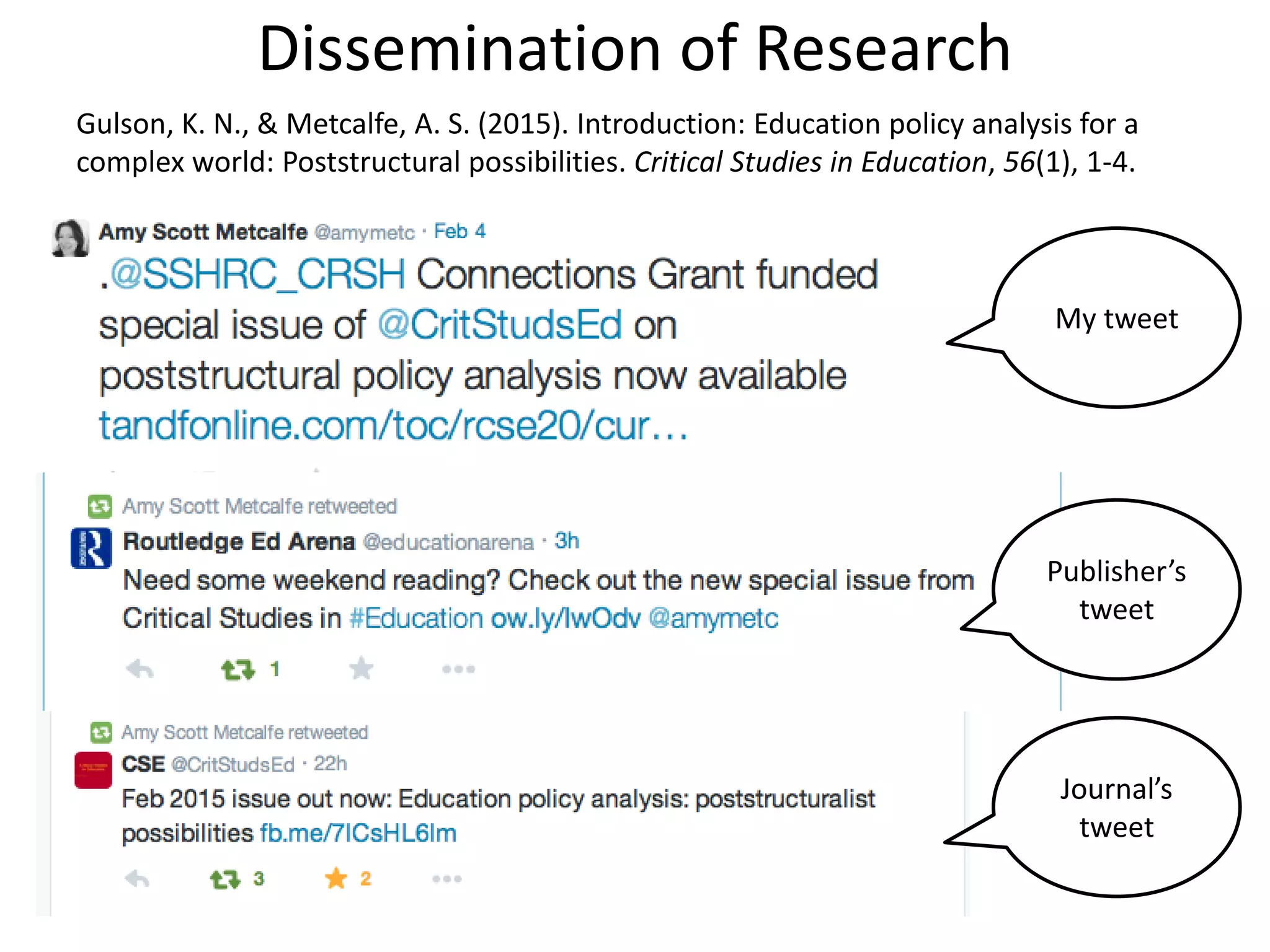
Dissemination of Research
Gulson, K. N., & Metcalfe, A. S. (2015). Introduction: Education policy analysis for a
complex world: Poststructural possibilities. Critical Studies in Education, 56(1), 1-4.
My tweet
Publisher’s
tweet
Journal’s
tweet
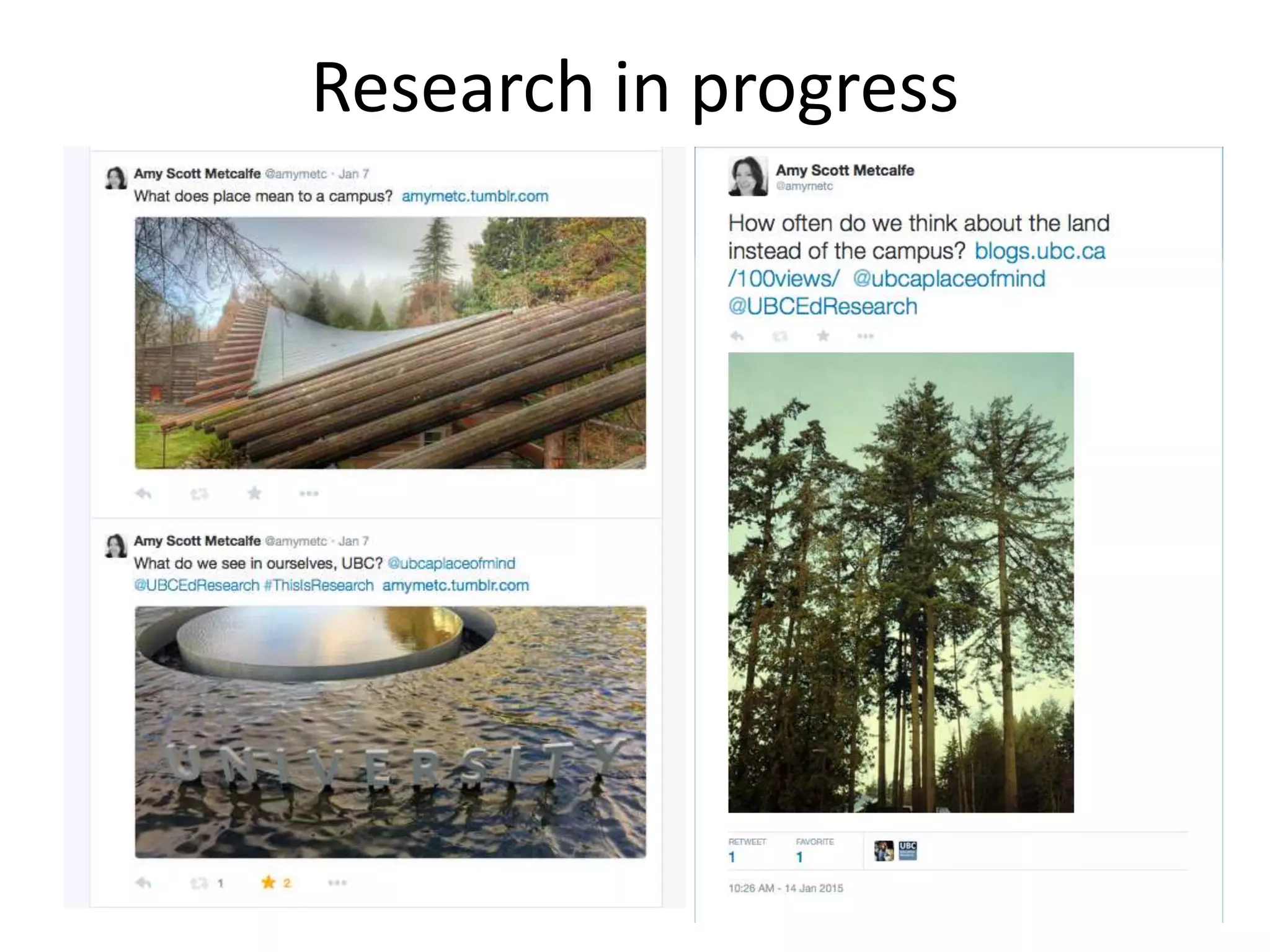
Research in progress
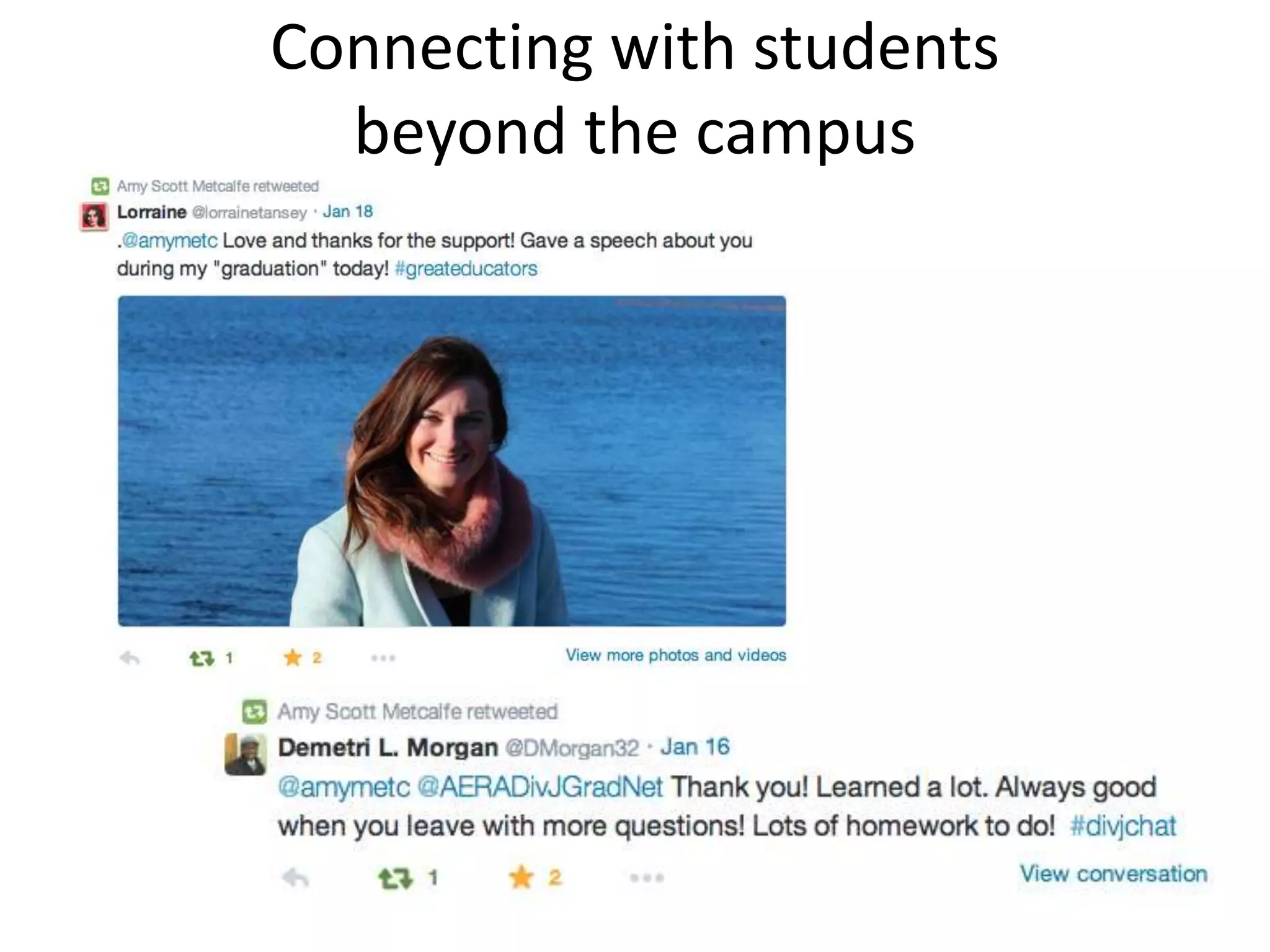
Connecting with students
beyond the campus
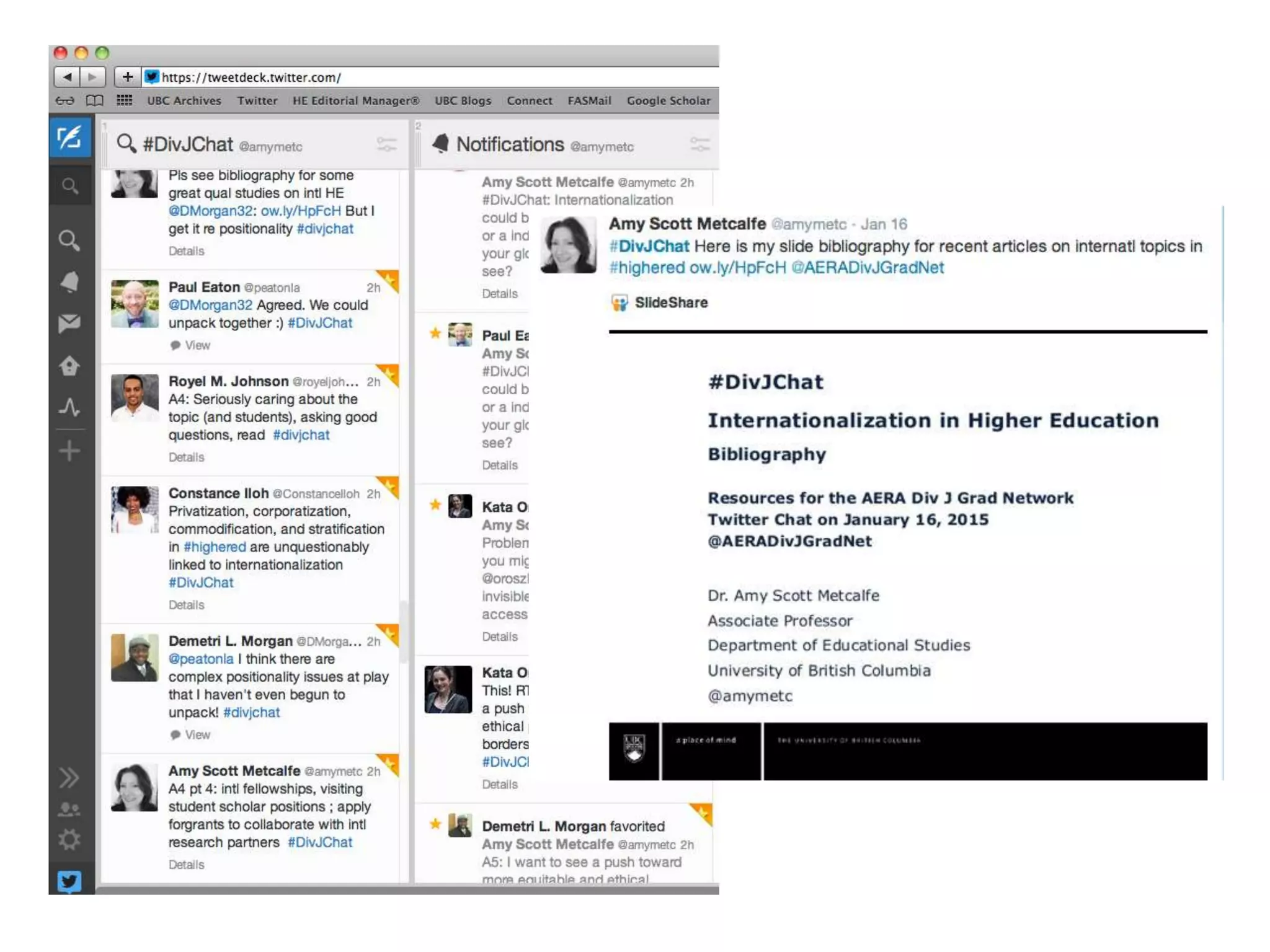
Establishing and maintaining
scholarly networks
Conference communication
Policy advocacy and activism
Current events and news in academia
Internal university news and
communication
Unit of analysis for research
Humour
References
Ebner, M. (2013). The influence of Twitter on the academic environment. In B.
Patrut, M Patrut, & C. Cmeciu (Eds.), Social media and the new academic
environment: Pedagogical challenges, pp. 293-307. Hershey, PA: IGI Global.
Hoffmann, C. P. (2015). Success measurement of scientific communication:
The contribution of new media to the governance of universities. In I. M.
Welpe, J. Wollersheim, S. Ringelhan, & M. Osterloh (Eds.), Incentives and
performance, pp. 291-306. Springer International Publishing.
Holmberg, K., & Thelwall, M. (2014). Disciplinary differences in Twitter
scholarly communication. Scientometrics, 101(2), 1027-1042.
Mahrt, M., Weller, K., & Peters, I. (2014). Twitter in scholarly communication.
In K. Weller, A. Bruns, J. Burgess, M. Mahrt, & C. Puschmann (Eds.), Twitter
and society, pp. 399-410. New York: Peter Lang.
Weller, K., & Strohmaier, M. (2014). Social media in academia: How the Social
Web is changing academic practice and becoming a new source for research
data. it-Information Technology, 56(5), 203-206.

Using Twitter for Academic Communication

  • 1.
    Dr. Amy ScottMetcalfe Department of Educational Studies Faculty of Education University of British Columbia Using Twitter for Academic Communication
  • 2.
    Digital and SocialMedia for Research Purposes: A Panel Date: Tuesday, February 10, 2015 Time: 12:30 – 2:00 p.m. Venue: University of British Columbia, Vancouver, Canada, Scarfe Building – Room 310 What is the significance of social media, digital technologies and online platforms to advance research in education? Digital and social media can play a role at all stages of the research process, including the generation of research questions, data collection, analysis, academic dissemination, and knowledge mobilization. This panel will bring together four researchers from the Faculty of Education – two faculty members and two trainees – who will share their experience using digital and social media for research purposes. Their brief presentations will be followed by a period for questions and open discussion. Panelists: Dr. Mary Bryson (Professor, LLED) will speak about the use of Digital Storytelling as a method for health knowledge mobilization Dr. Amy Metcalfe (Associate Professor, EDST) will talk about her experience using Twitter for academic communication Dr. Chelsey Hauge (postdoctoral fellow, Institute for Gender, Race, Sexuality & Social Justice) will share her experience using digital media production for social justice in the context of international education Ashley Shaw (PhD student in EDCP) will discuss her research in online communities, including Facebook and MOOCs Dr. Natasha Boskic, Senior Manager of Learning Design in the Faculty of Education, will facilitate the panel. http://yre.educ.ubc.ca/digital-and-social-media-panel/
  • 3.
  • 4.
    Twitter for AcademicCommunication • Dissemination of research • Connecting with students beyond the campus • Establishing and maintaining scholarly networks • Conference communication • Policy advocacy and activism • Current events and news in academia • Internal university news and communication • Unit of analysis for research on higher ed • Humour
  • 5.
    Dissemination of Research Gulson,K. N., & Metcalfe, A. S. (2015). Introduction: Education policy analysis for a complex world: Poststructural possibilities. Critical Studies in Education, 56(1), 1-4. My tweet Publisher’s tweet Journal’s tweet
  • 6.
  • 7.
  • 9.
  • 10.
  • 11.
  • 12.
    Current events andnews in academia
  • 13.
    Internal university newsand communication
  • 14.
    Unit of analysisfor research
  • 15.
  • 16.
    References Ebner, M. (2013).The influence of Twitter on the academic environment. In B. Patrut, M Patrut, & C. Cmeciu (Eds.), Social media and the new academic environment: Pedagogical challenges, pp. 293-307. Hershey, PA: IGI Global. Hoffmann, C. P. (2015). Success measurement of scientific communication: The contribution of new media to the governance of universities. In I. M. Welpe, J. Wollersheim, S. Ringelhan, & M. Osterloh (Eds.), Incentives and performance, pp. 291-306. Springer International Publishing. Holmberg, K., & Thelwall, M. (2014). Disciplinary differences in Twitter scholarly communication. Scientometrics, 101(2), 1027-1042. Mahrt, M., Weller, K., & Peters, I. (2014). Twitter in scholarly communication. In K. Weller, A. Bruns, J. Burgess, M. Mahrt, & C. Puschmann (Eds.), Twitter and society, pp. 399-410. New York: Peter Lang. Weller, K., & Strohmaier, M. (2014). Social media in academia: How the Social Web is changing academic practice and becoming a new source for research data. it-Information Technology, 56(5), 203-206.