

The Future of Open Source
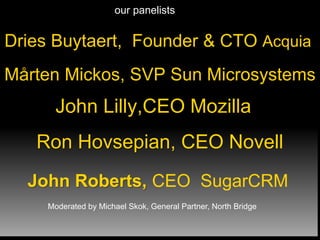
Dries Buytaert, Founder & CTO Acquia
Ron Hovsepian, CEO Novell
John Lilly,CEO Mozilla
Mårten Mickos, SVP Sun Microsystems
John Roberts, CEO SugarCRM
our panelists
Moderated by Michael Skok, General Partner, North Bridge
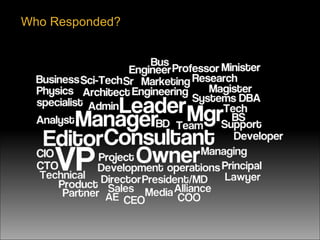
Who Responded?
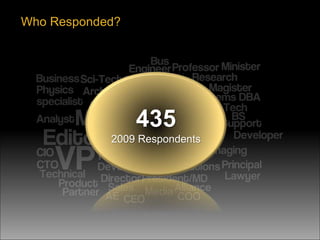
Who Responded?
435
2009 Respondents
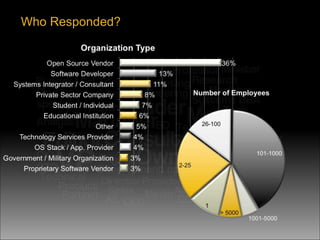
Who Responded?
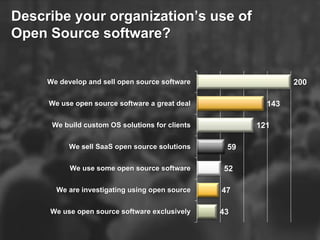
Describe your organization’s use of
Open Source software?
43
47
52
59
121
143
200
We use open source software exclusively
We are investigating using open source
We use some open source software
We sell SaaS open source solutions
We build custom OS solutions for clients
We use open source software a great deal
We develop and sell open source software
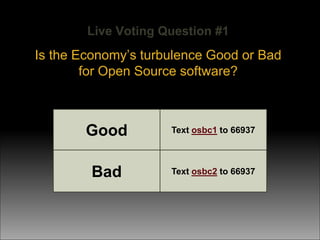
Live Voting Question #1
Is the Economy’s turbulence Good or Bad
for Open Source software?
Good Text osbc1 to 66937
Bad Text osbc2 to 66937
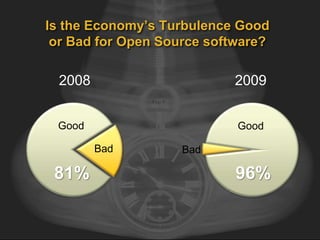
Is the Economy’s Turbulence Good
or Bad for Open Source software?
Good
Bad
2008
Good
Bad
2009
81% 96%
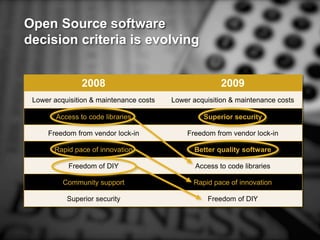
Open Source software
decision criteria is evolving
2008 2009
Lower acquisition & maintenance costs Lower acquisition & maintenance costs
Access to code libraries Superior security
Freedom from vendor lock-in Freedom from vendor lock-in
Rapid pace of innovation Better quality software
Freedom of DIY Access to code libraries
Community support Rapid pace of innovation
Superior security Freedom of DIY
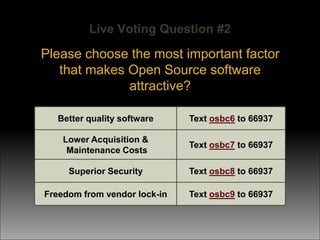
Live Voting Question #2
Please choose the most important factor
that makes Open Source software
attractive?
Better quality software Text osbc6 to 66937
Lower Acquisition &
Maintenance Costs
Text osbc7 to 66937
Superior Security Text osbc8 to 66937
Freedom from vendor lock-in Text osbc9 to 66937
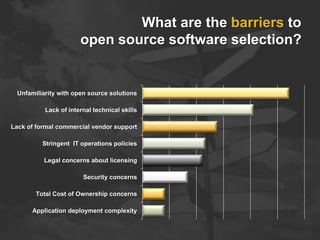
What are the barriers to
open source software selection?
Application deployment complexity
Total Cost of Ownership concerns
Security concerns
Legal concerns about licensing
Stringent IT operations policies
Lack of formal commercial vendor support
Lack of internal technical skills
Unfamiliarity with open source solutions
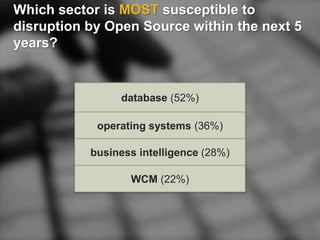
Which sector is MOST susceptible to
disruption by Open Source within the next 5
years?
database (52%)
operating systems (36%)
business intelligence (28%)
WCM (22%)
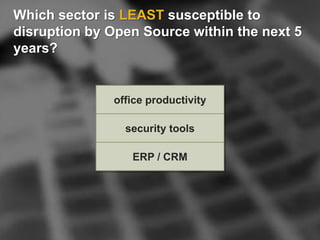
Which sector is LEAST susceptible to
disruption by Open Source within the next 5
years?
office productivity
security tools
ERP / CRM
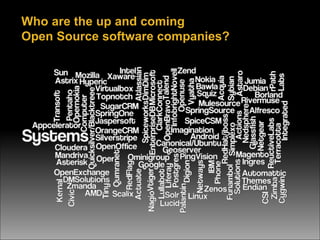
Who are the up and coming
Open Source software companies?
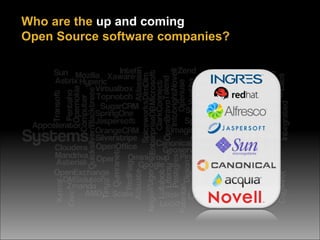
Who are the up and coming
Open Source software companies?
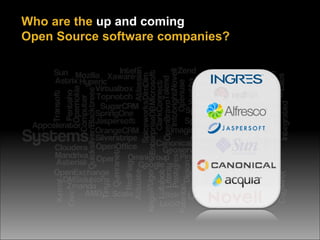
Who are the up and coming
Open Source software companies?
Live Voting Question #3
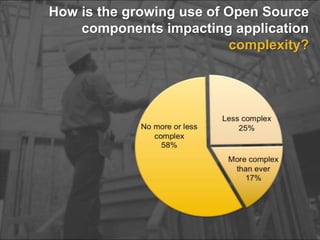
How is the growing use of Open Source
components impacting application complexity?
More complex Text osbc3 to 66937
No more or less complex Text osbc4 to 66937
Less Complex Text osbc5 to 66937
How is the growing use of Open Source
components impacting application
complexity?
experience
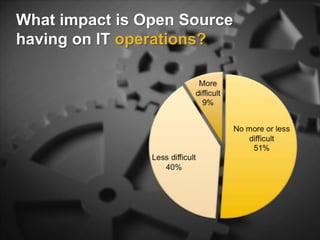
What impact is Open Source
having on IT operations?
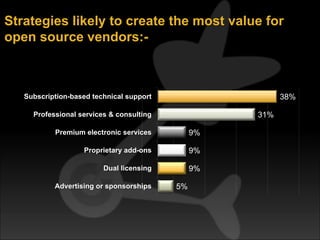
Strategies likely to create the most value for
open source vendors:-
5%
9%
9%
9%
31%
38%
Advertising or sponsorships
Dual licensing
Proprietary add-ons
Premium electronic services
Professional services & consulting
Subscription-based technical support
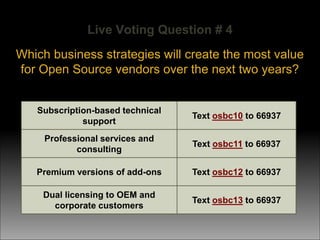
Live Voting Question # 4
Which business strategies will create the most value
for Open Source vendors over the next two years?
Subscription-based technical
support
Text osbc10 to 66937
Professional services and
consulting
Text osbc11 to 66937
Premium versions of add-ons Text osbc12 to 66937
Dual licensing to OEM and
corporate customers
Text osbc13 to 66937
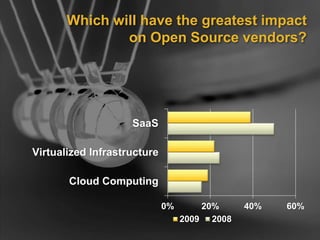
Which will have the greatest impact
on Open Source vendors?
0% 20% 40% 60%
Cloud Computing
Virtualized Infrastructure
SaaS
2009 2008
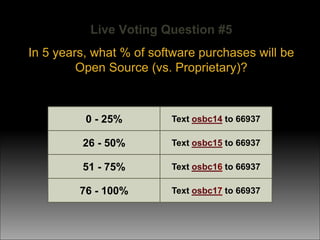
Live Voting Question #5
In 5 years, what % of software purchases will be
Open Source (vs. Proprietary)?
0 - 25% Text osbc14 to 66937
26 - 50% Text osbc15 to 66937
51 - 75% Text osbc16 to 66937
76 - 100% Text osbc17 to 66937
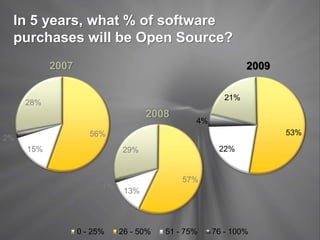
In 5 years, what % of software
purchases will be Open Source?
28%
56%
15%
2%
2007
29%
57%
13%
1%
2008
0 - 25% 26 - 50% 51 - 75% 76 - 100%
21%
53%
22%
4%
2009
28%
56%
15%
2%
2007
29%
57%
13%
1%
2008
21%
53%
22%
2009
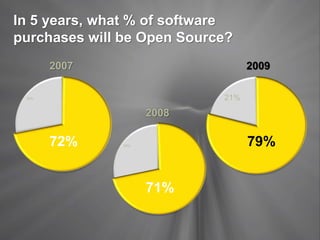
79%
71%
72%
In 5 years, what % of software
purchases will be Open Source?
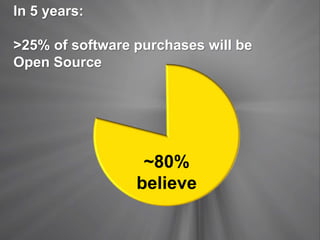
~80%
believe
In 5 years:
>25% of software purchases will be
Open Source
future
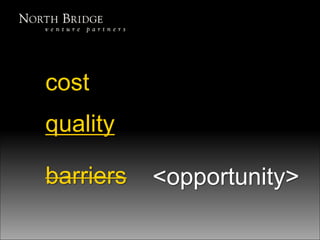
cost
quality
barriers <opportunity>
would like to
thank…

2009 North Bridge Future of Open Source Study

  • 1.
    The Future ofOpen Source
  • 3.
    Dries Buytaert, Founder& CTO Acquia Ron Hovsepian, CEO Novell John Lilly,CEO Mozilla Mårten Mickos, SVP Sun Microsystems John Roberts, CEO SugarCRM our panelists Moderated by Michael Skok, General Partner, North Bridge
  • 4.
  • 5.
  • 6.
  • 7.
    Describe your organization’suse of Open Source software? 43 47 52 59 121 143 200 We use open source software exclusively We are investigating using open source We use some open source software We sell SaaS open source solutions We build custom OS solutions for clients We use open source software a great deal We develop and sell open source software
  • 8.
    Live Voting Question#1 Is the Economy’s turbulence Good or Bad for Open Source software? Good Text osbc1 to 66937 Bad Text osbc2 to 66937
  • 9.
    Is the Economy’sTurbulence Good or Bad for Open Source software? Good Bad 2008 Good Bad 2009 81% 96%
  • 10.
    Open Source software decisioncriteria is evolving 2008 2009 Lower acquisition & maintenance costs Lower acquisition & maintenance costs Access to code libraries Superior security Freedom from vendor lock-in Freedom from vendor lock-in Rapid pace of innovation Better quality software Freedom of DIY Access to code libraries Community support Rapid pace of innovation Superior security Freedom of DIY
  • 11.
    Live Voting Question#2 Please choose the most important factor that makes Open Source software attractive? Better quality software Text osbc6 to 66937 Lower Acquisition & Maintenance Costs Text osbc7 to 66937 Superior Security Text osbc8 to 66937 Freedom from vendor lock-in Text osbc9 to 66937
  • 12.
    What are thebarriers to open source software selection? Application deployment complexity Total Cost of Ownership concerns Security concerns Legal concerns about licensing Stringent IT operations policies Lack of formal commercial vendor support Lack of internal technical skills Unfamiliarity with open source solutions
  • 13.
    Which sector isMOST susceptible to disruption by Open Source within the next 5 years? database (52%) operating systems (36%) business intelligence (28%) WCM (22%)
  • 14.
    Which sector isLEAST susceptible to disruption by Open Source within the next 5 years? office productivity security tools ERP / CRM
  • 15.
    Who are theup and coming Open Source software companies?
  • 16.
    Who are theup and coming Open Source software companies?
  • 17.
    Who are theup and coming Open Source software companies?
  • 18.
    Live Voting Question#3 How is the growing use of Open Source components impacting application complexity? More complex Text osbc3 to 66937 No more or less complex Text osbc4 to 66937 Less Complex Text osbc5 to 66937
  • 19.
    How is thegrowing use of Open Source components impacting application complexity?
  • 20.
  • 21.
    What impact isOpen Source having on IT operations?
  • 22.
    Strategies likely tocreate the most value for open source vendors:- 5% 9% 9% 9% 31% 38% Advertising or sponsorships Dual licensing Proprietary add-ons Premium electronic services Professional services & consulting Subscription-based technical support
  • 23.
    Live Voting Question# 4 Which business strategies will create the most value for Open Source vendors over the next two years? Subscription-based technical support Text osbc10 to 66937 Professional services and consulting Text osbc11 to 66937 Premium versions of add-ons Text osbc12 to 66937 Dual licensing to OEM and corporate customers Text osbc13 to 66937
  • 24.
    Which will havethe greatest impact on Open Source vendors? 0% 20% 40% 60% Cloud Computing Virtualized Infrastructure SaaS 2009 2008
  • 25.
    Live Voting Question#5 In 5 years, what % of software purchases will be Open Source (vs. Proprietary)? 0 - 25% Text osbc14 to 66937 26 - 50% Text osbc15 to 66937 51 - 75% Text osbc16 to 66937 76 - 100% Text osbc17 to 66937
  • 26.
    In 5 years,what % of software purchases will be Open Source? 28% 56% 15% 2% 2007 29% 57% 13% 1% 2008 0 - 25% 26 - 50% 51 - 75% 76 - 100% 21% 53% 22% 4% 2009
  • 27.
  • 28.
    ~80% believe In 5 years: >25%of software purchases will be Open Source
  • 29.
  • 30.