BALAJI.R
ALTHEANZ 09’
 Rejection is a complex process in which
“recepient immune system recognize
the graft as foreign and attacks it”.
 It involves
1. Cell mediated immunity
2. Circulating antibodies
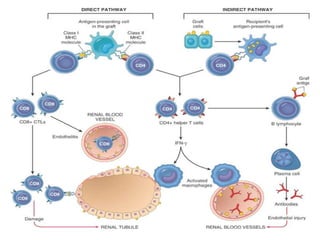
 It is caused by T-cell mediated reactions.
 Destruction of grafts occurs by
1. CD8+ CTLs
2. CD4+ helper cells
 Delayed hypersensitivity is triggered by
CD4+ helper cells.
 2 pathways
1. Direct pathway
2. Indirect pathway
 It is called humoral rejections.
 2 types
1. Hyperacute
2. Acute
HYPERACUTE:
 Presence of preformed antidonor
antibodies.
 Transplant rejection has already occurred.
ACUTE:
 Initial exposure to class I&II HLA
antigens.
 Antibodies causes injury by
1. Complement dependent
cytotoxicity
2. Inflammation
3. Antibody dependent cell
mediated cytotoxicity.
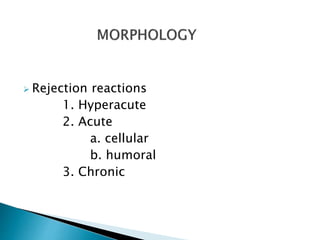
 Rejection reactions
1. Hyperacute
2. Acute
a. cellular
b. humoral
3. Chronic
 Occurs within minutes or hours after
transplantation.
 Kidney becomes
1. Cyanotic
2. Mottled
3. Flaccid
 Immunoglobulin and complement
deposition occurs.
 Neutrophils accumulate leading to
occlusion of capillaries & fibrinoid necrosis.
 Cellular – mononuclear cell infiltrate
 Humoral – vasculitis
ACUTE CELLULAR:
 Seen within initial months after
transplantation.
 Mononuclear cells accumulates in
glomerular and peritubular capillaries
leading to FOCAL TUBULAR NECROSIS.
 Treatment – cyclosporin.
 Also known as rejection vasculitis.
 Necrotizing vasculitis characterised by
intimal thickening.
 Presence of complement breakdown
product C4d – indicator of humoral
rejection.
 Treatment – B cell depleting agents.
 Immunosuppressive agents
1. Cyclosporin
2. Azathioprine
3. Steroids
4. Rapamycin
5. Monoclonal antibodies.
ANOTHER METHOD:
 Prevention of host T cells from
receiving co-stimulatory signals (B7-
1&2) from dendritic cells.
DISADVANTAGES:
 EBV induced lymphoma
 HPV induced squamous cell carcinoma
 Kaposi sarcoma
 Hematopoietic stem cell transplants are
used for
1. Hematological malignancy
2. Aplastic anemia
3. Thalassemia
4. Non hematological cancers
PROBLEMS:
1. Immunodeficiency
2. GVH disease
 Occurs in any situation in which
“immunologically competent cells or their
precursors are transplanted to
immunologically crippled recipients and the
transferred cells recognize allo-antigens in
the host”.
 It may be
1. Acute
2. Chronic
 Days to weeks after allogenic bonemarrow
transplantation.
 Clinical features
1. Generalised rash
2. Jaundice
3. Ulceration of gut
4. Bloody diarrhea
 Follow acute syndrome or occur insidiously.
 Clinical features
1. Cutaneous injury
2. Cholestatic jaundice
3. Esophageal strictures
4. Depletion of lymphocytes
 It is a life threatning condition.
 Treatment – bonemarrow transplants.
Transplant rejection

Transplant rejection

  • 1.
  • 2.
     Rejection isa complex process in which “recepient immune system recognize the graft as foreign and attacks it”.  It involves 1. Cell mediated immunity 2. Circulating antibodies
  • 3.
     It iscaused by T-cell mediated reactions.  Destruction of grafts occurs by 1. CD8+ CTLs 2. CD4+ helper cells  Delayed hypersensitivity is triggered by CD4+ helper cells.  2 pathways 1. Direct pathway 2. Indirect pathway
  • 5.
     It iscalled humoral rejections.  2 types 1. Hyperacute 2. Acute HYPERACUTE:  Presence of preformed antidonor antibodies.  Transplant rejection has already occurred.
  • 6.
    ACUTE:  Initial exposureto class I&II HLA antigens.  Antibodies causes injury by 1. Complement dependent cytotoxicity 2. Inflammation 3. Antibody dependent cell mediated cytotoxicity.
  • 7.
     Rejection reactions 1.Hyperacute 2. Acute a. cellular b. humoral 3. Chronic
  • 8.
     Occurs withinminutes or hours after transplantation.  Kidney becomes 1. Cyanotic 2. Mottled 3. Flaccid  Immunoglobulin and complement deposition occurs.  Neutrophils accumulate leading to occlusion of capillaries & fibrinoid necrosis.
  • 10.
     Cellular –mononuclear cell infiltrate  Humoral – vasculitis ACUTE CELLULAR:  Seen within initial months after transplantation.  Mononuclear cells accumulates in glomerular and peritubular capillaries leading to FOCAL TUBULAR NECROSIS.  Treatment – cyclosporin.
  • 12.
     Also knownas rejection vasculitis.  Necrotizing vasculitis characterised by intimal thickening.  Presence of complement breakdown product C4d – indicator of humoral rejection.  Treatment – B cell depleting agents.
  • 16.
     Immunosuppressive agents 1.Cyclosporin 2. Azathioprine 3. Steroids 4. Rapamycin 5. Monoclonal antibodies.
  • 17.
    ANOTHER METHOD:  Preventionof host T cells from receiving co-stimulatory signals (B7- 1&2) from dendritic cells. DISADVANTAGES:  EBV induced lymphoma  HPV induced squamous cell carcinoma  Kaposi sarcoma
  • 18.
     Hematopoietic stemcell transplants are used for 1. Hematological malignancy 2. Aplastic anemia 3. Thalassemia 4. Non hematological cancers PROBLEMS: 1. Immunodeficiency 2. GVH disease
  • 19.
     Occurs inany situation in which “immunologically competent cells or their precursors are transplanted to immunologically crippled recipients and the transferred cells recognize allo-antigens in the host”.  It may be 1. Acute 2. Chronic
  • 20.
     Days toweeks after allogenic bonemarrow transplantation.  Clinical features 1. Generalised rash 2. Jaundice 3. Ulceration of gut 4. Bloody diarrhea
  • 21.
     Follow acutesyndrome or occur insidiously.  Clinical features 1. Cutaneous injury 2. Cholestatic jaundice 3. Esophageal strictures 4. Depletion of lymphocytes  It is a life threatning condition.  Treatment – bonemarrow transplants.