DR R SATHYAJITH
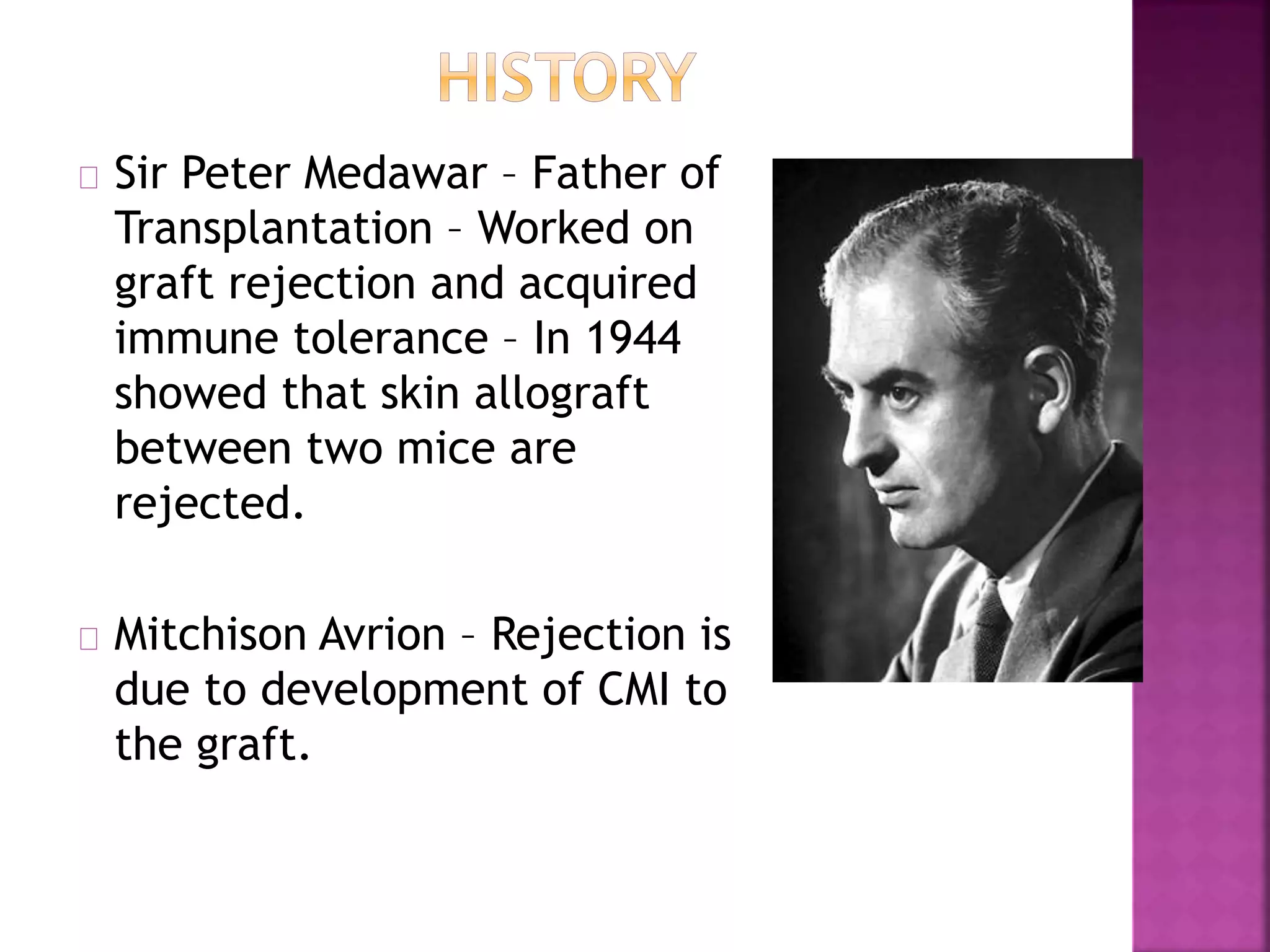
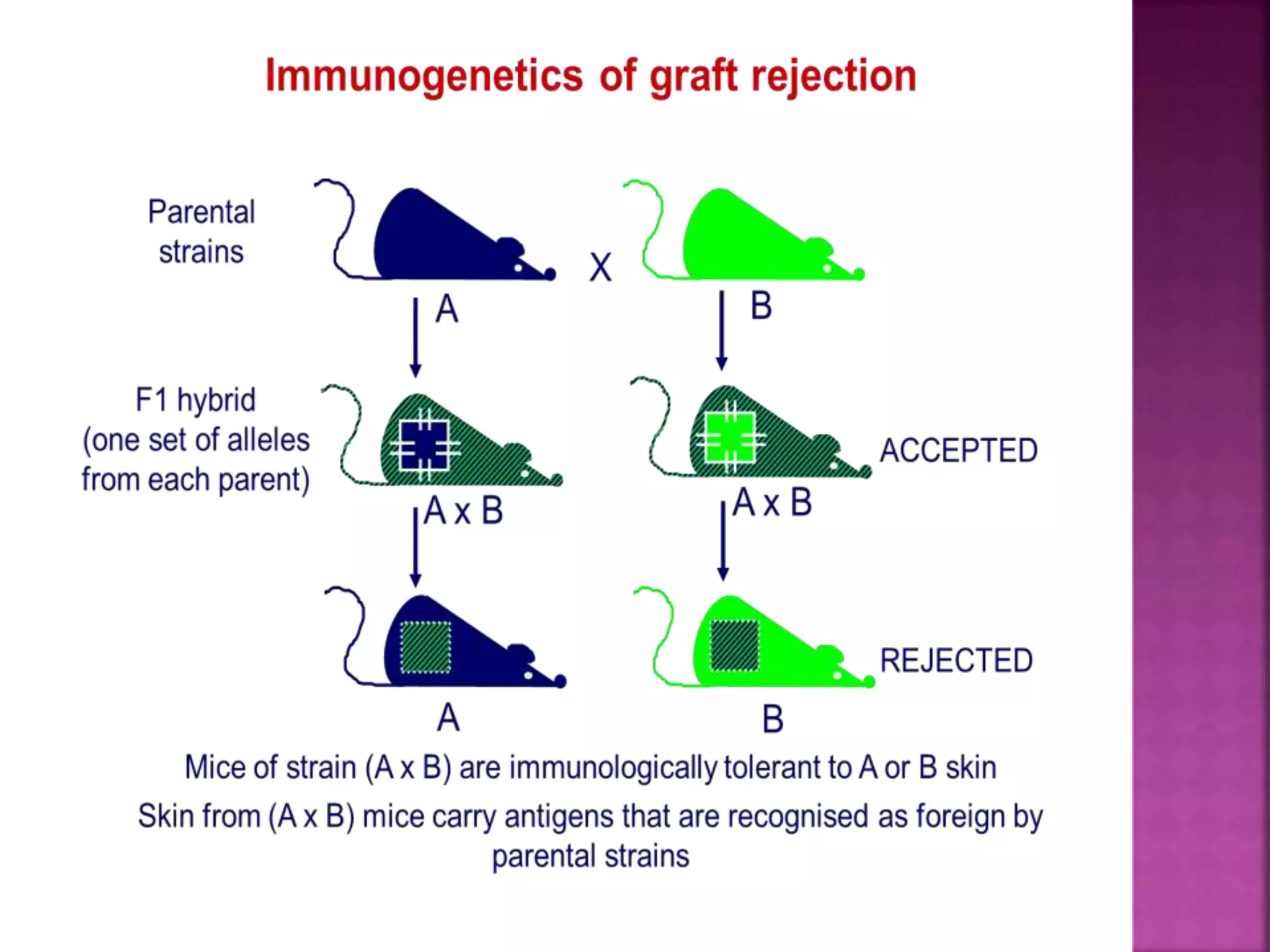
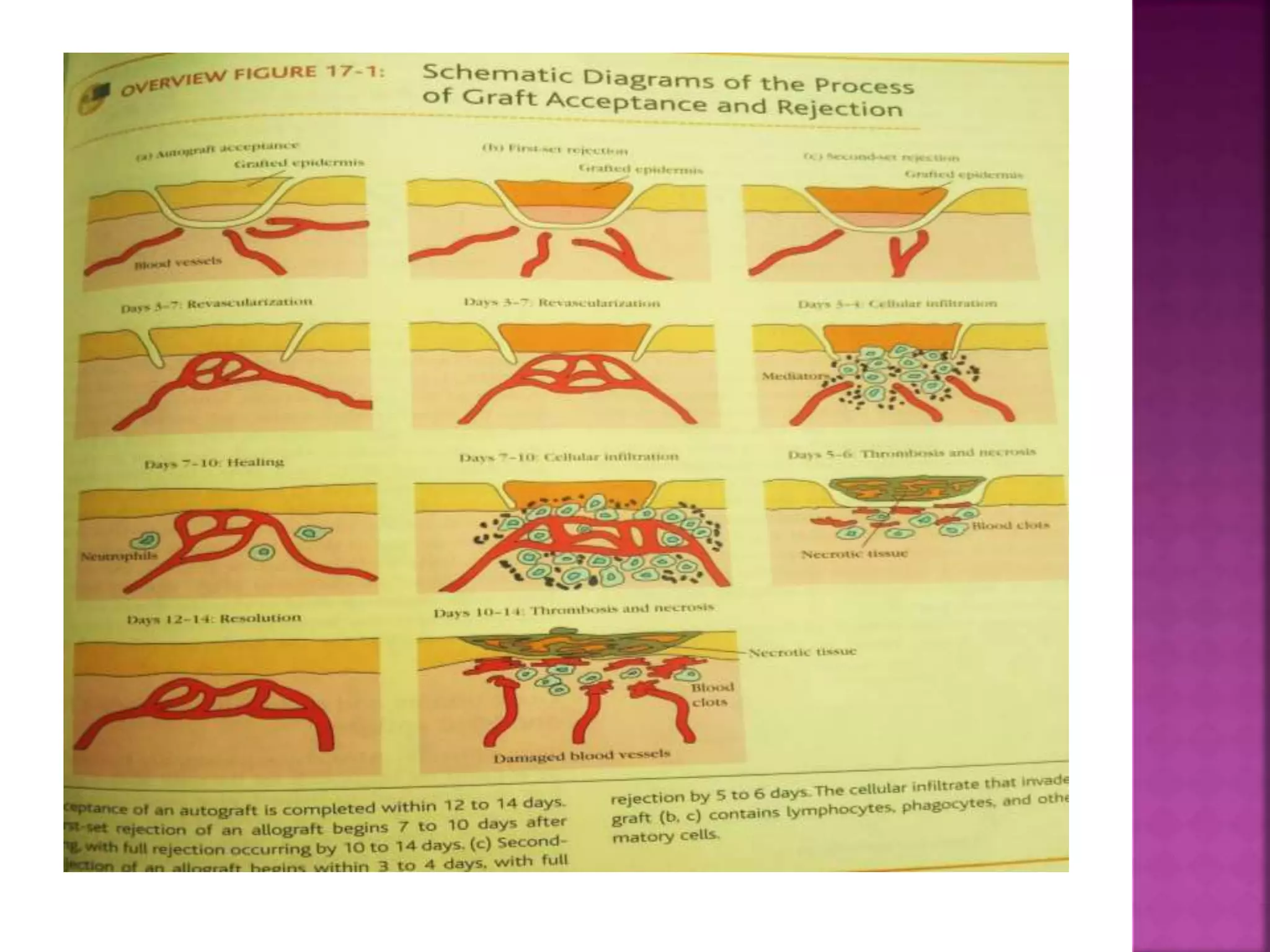
Sir Peter Medawar – Father of
Transplantation – Worked on
graft rejection and acquired
immune tolerance – In 1944
showed that skin allograft
between two mice are
rejected.
Mitchison Avrion – Rejection is
due to development of CMI to
the graft.
1st successful Tx – 1906 - Cornea
Joseph E Murray – 1954 – 1st kidney transplant
bw identical twins in boston.
Dr. Thomas E Starzl – 1967 – 1st liver Tx.
Christian Bernard – 1967 – 1st heart Tx.
Dr. Donnall E Thomas – 1968 – 1st BM Tx.
Schwartz Dameshek – 1959 – Showed 6-
mercaptopurine was immunosupressive.
Implantation of “non-self” tissue into the
body
The process of taking cells, tissues, or organs
called a graft (transplant), from one part of
individual and placing them into another
(usually different individual).
Donor: the individual who provides the graft.
Recipient or Host: the individual who
receives the graft.
Homograft = Allograft = Allogenic
Heterograft = Xenograft = Xenogenic
Syngeneic = Isograft
Orthotopic – graft placed in their normal
anatomic location.
Heterotopic – graft placed into a site other
than their normal one. They are useful when
orthotopic placement may be technically
difficult.
Stored or Fresh.
Living or Cadaveric donor.
Live grafts/Vital grafts - Kidney, Heart.
Non living - Bone, Artery.
Static or Structural grafts.
Transplantation immunology - sequence of
events that occurs after an allograft or xenograft
is removed from donor and then transplanted
into a recipient.
A major limitation to the success of
transplantation is the immune response of the
recipient to the donor tissue.
Control of infection
Genetic matching of donors with host.
Administering agents to inhibit the immune
system
Antiseptic techniques & Abx
HLA typing and Tissue matching
Immunosuppressive agents
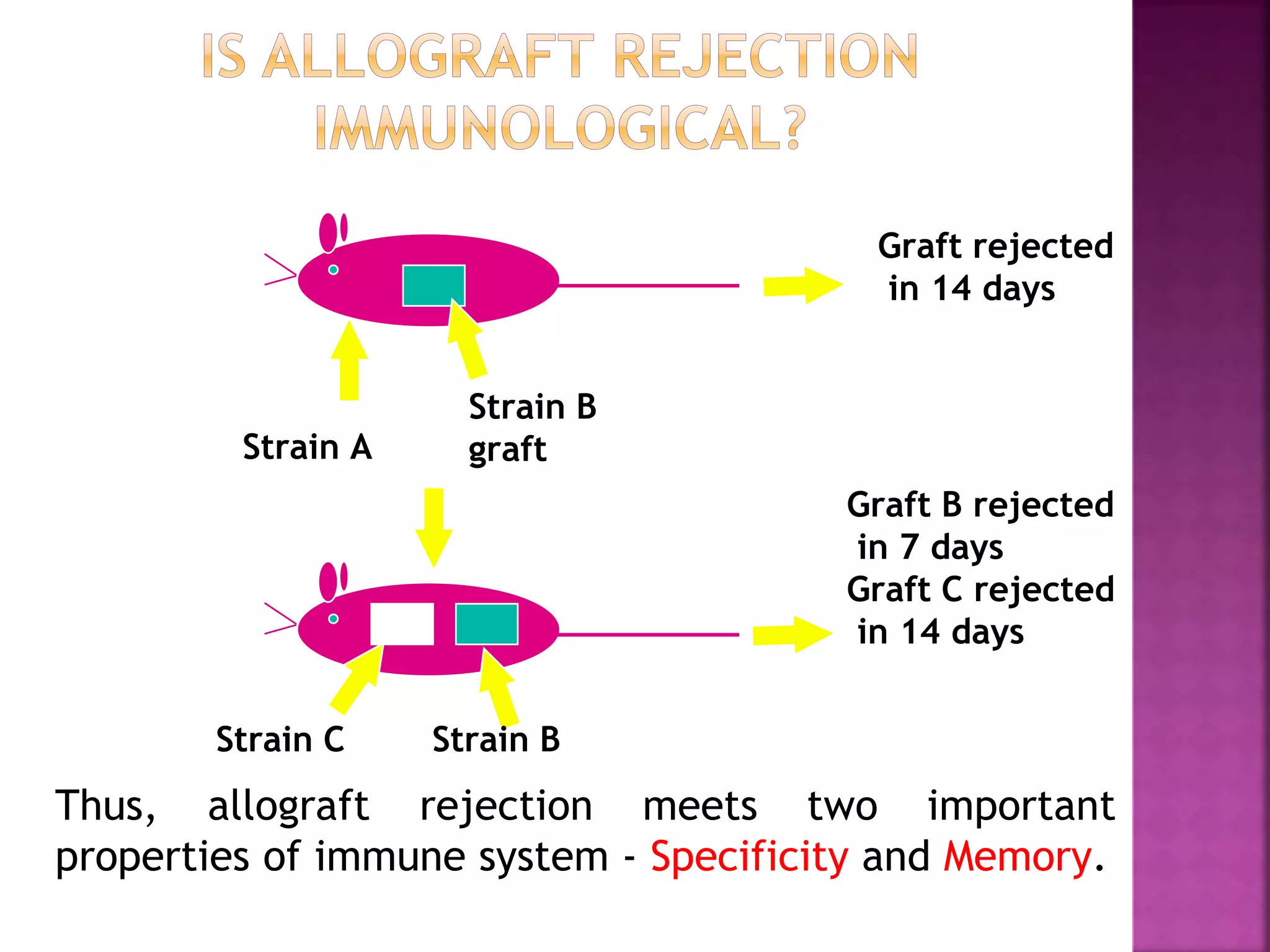
Strain A
Strain B
graft
Graft rejected
in 14 days
Strain C
Graft B rejected
in 7 days
Graft C rejected
in 14 days
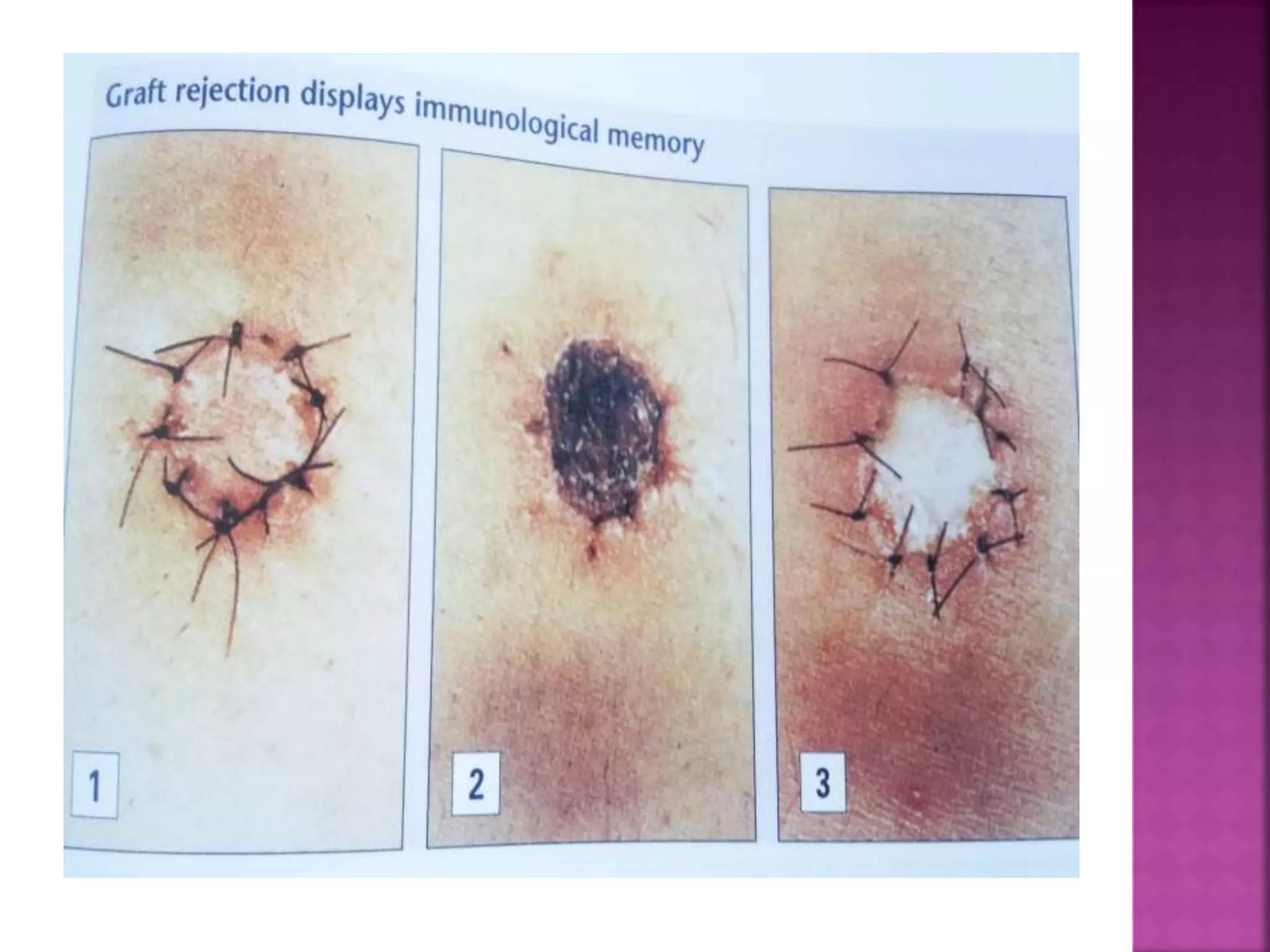
Thus, allograft rejection meets two important
properties of immune system - Specificity and Memory.
Strain A
Strain B
graft
Strain C Strain B
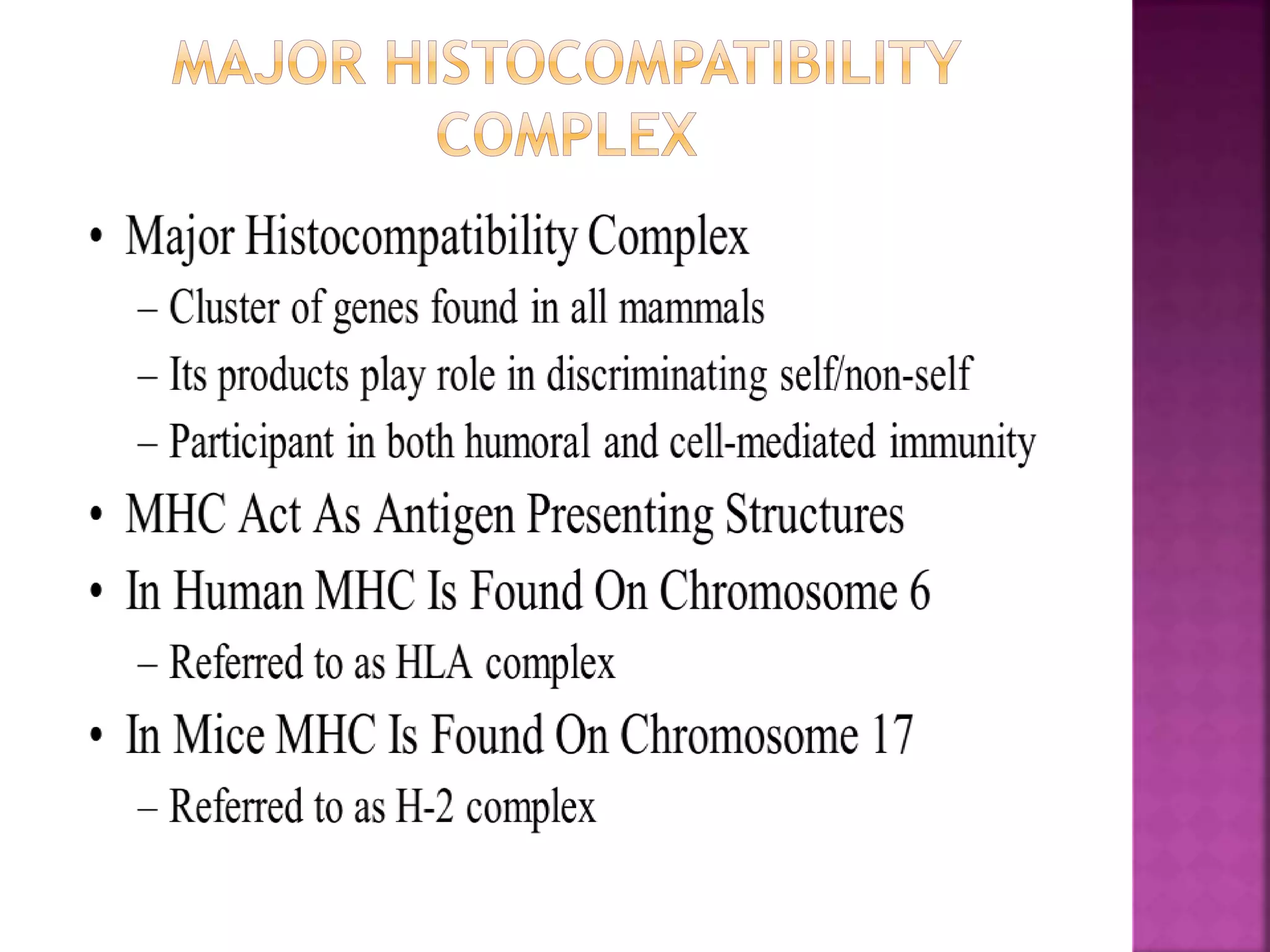
Class I MHC genes
 Glycoproteins expressed on all nucleated cells
 Major function to present processed Ags to TC
Class II MHC genes
 Glycoproteins expressed on Macrophages, B-cells, DCs
 Major function to present processed Ags to TH
Class III MHC genes
 Products that include secreted proteins that have
immune functions. Ex. Complement system,
inflammatory molecules
Class I MHC Genes Found In Regions A, B and
C In Humans (K and D In Mice)
Class II MHC Genes Found In Regions DR, DP
and DQ (IA and IE In Mice)
Class I and Class II MHC Share Structural
Features
Both involved in APC
Class III MHC Have No Structural Similarity To
Class I and II
Ex. TNF, heat shock proteins, complement
components
• MHC Products Are Highly Polymorphic
– Vary considerably from person to person
• However, Crossover Rate Is Low
– 0.5% crossover rate
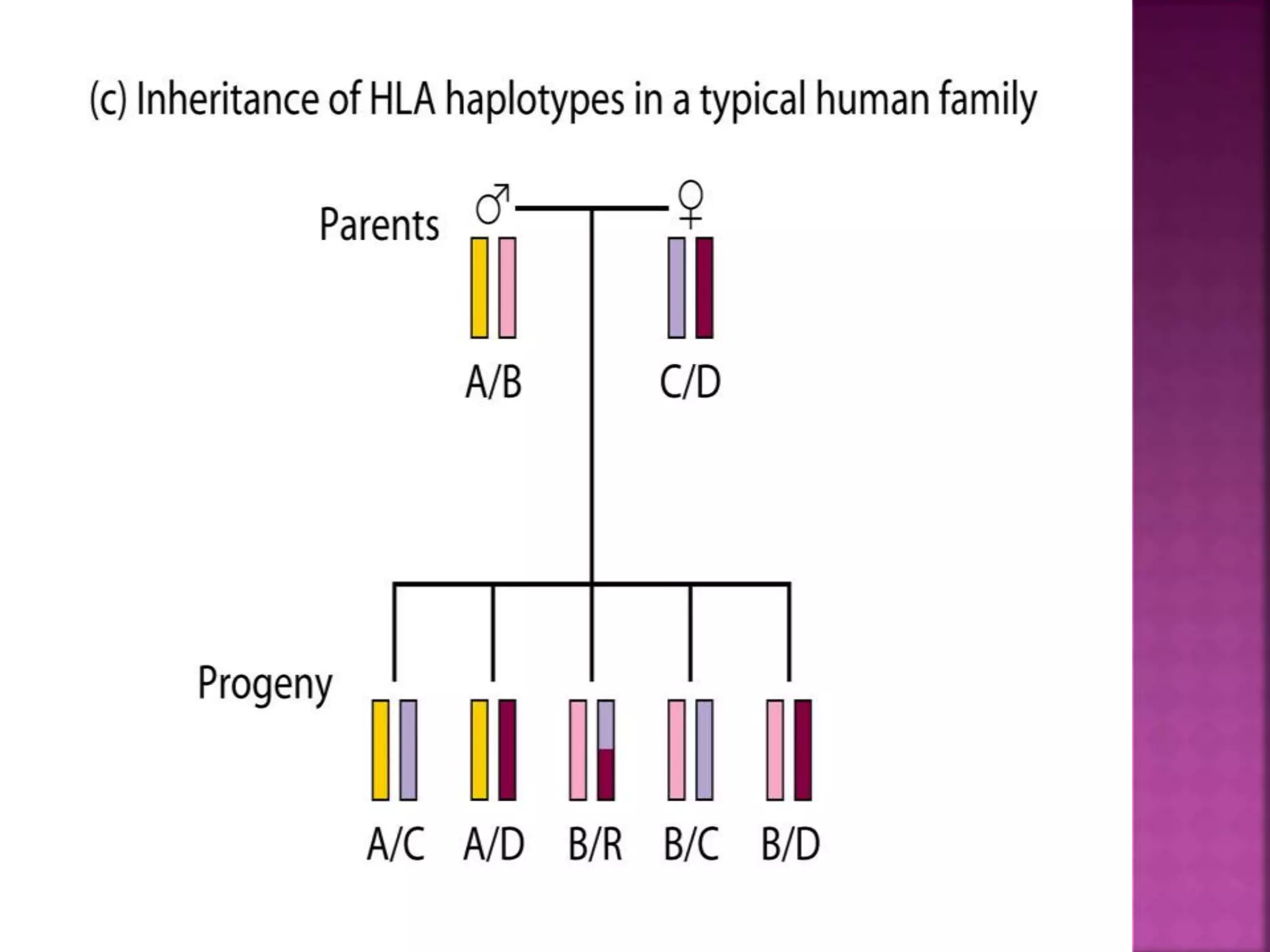
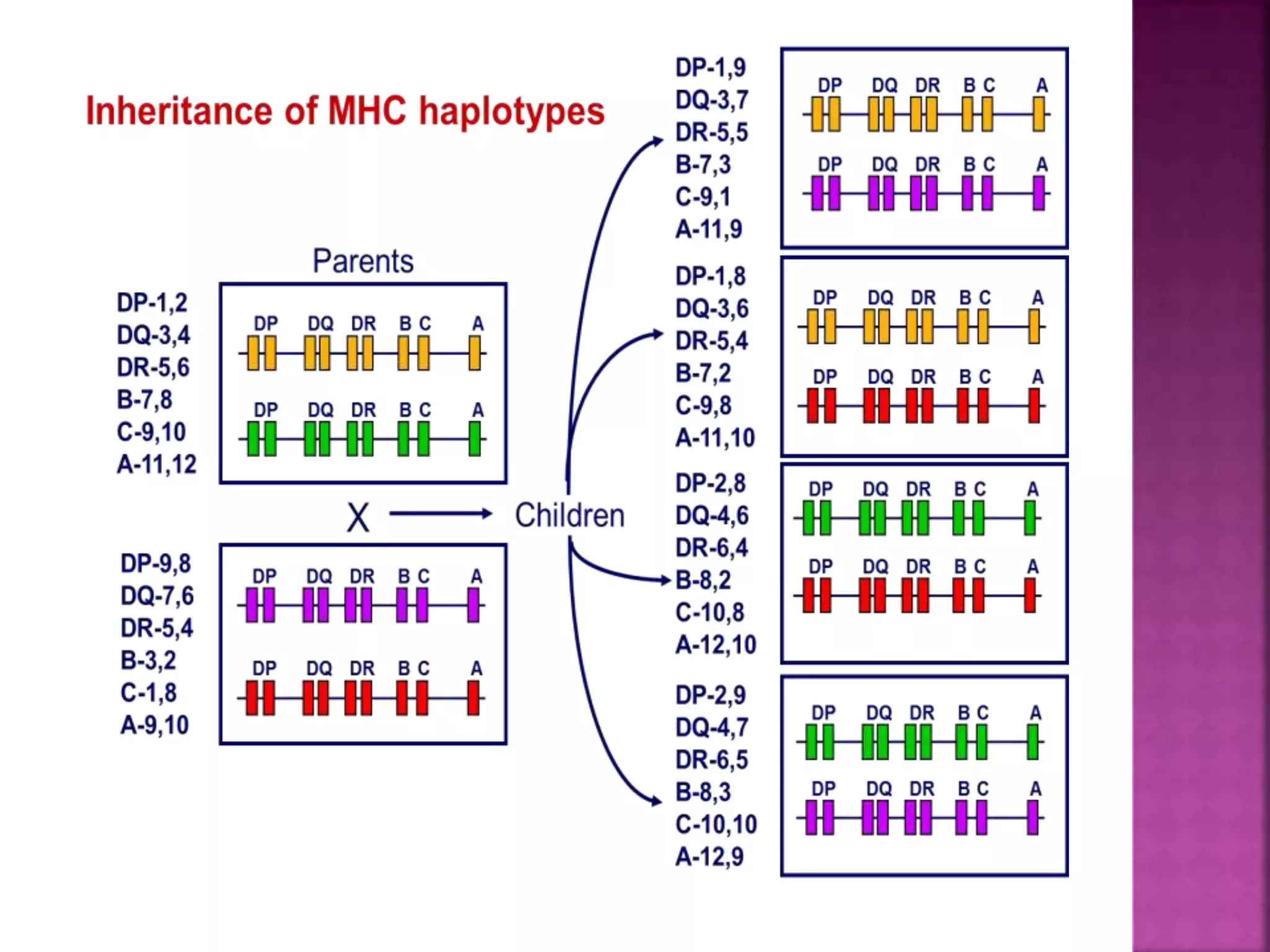
– Inherited as 2 sets (one from father, one from mother)
– Haplotype refers to set from mother or father
• MHC Alleles Are Co-dominantly Expressed
– Both mother and father alleles are expressed
• Inbred Mice Haplotypes Are Designated With
Italic Superscript
– Ex. H-2b
– Designation refers to entire set of H-2 alleles
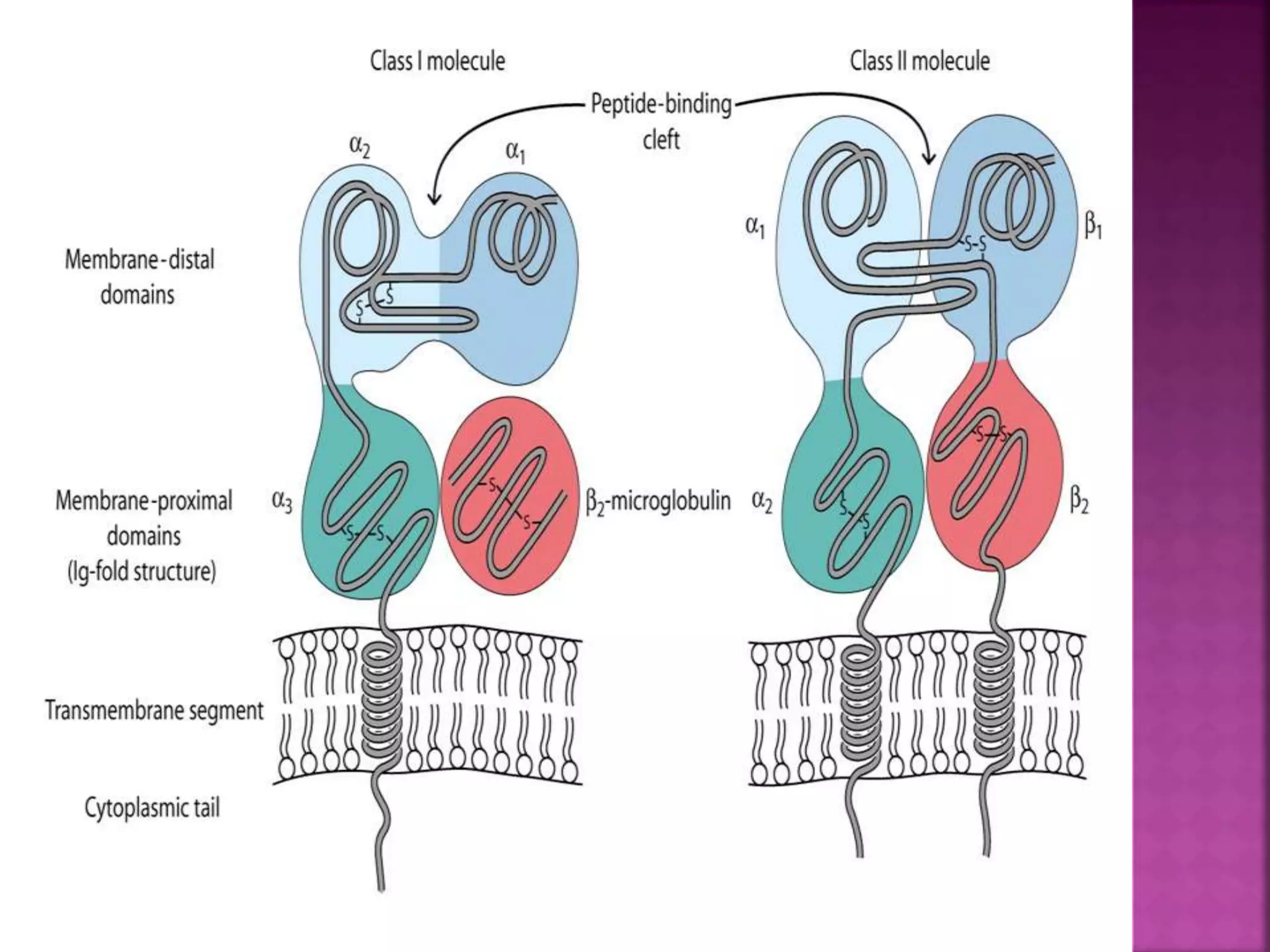
• Comprised of 2 molecules
–  chain (45 kDa), transmembrane
– 2-microglobulin (12 kDa)
– Non-covalently associated with each other
• Association Of  Chain and 2 Is Required For
Surface Expression
•  Chain Made Up Of 3 Domains (1, 2 and 3)
• 2-microglobulin Similar To 3
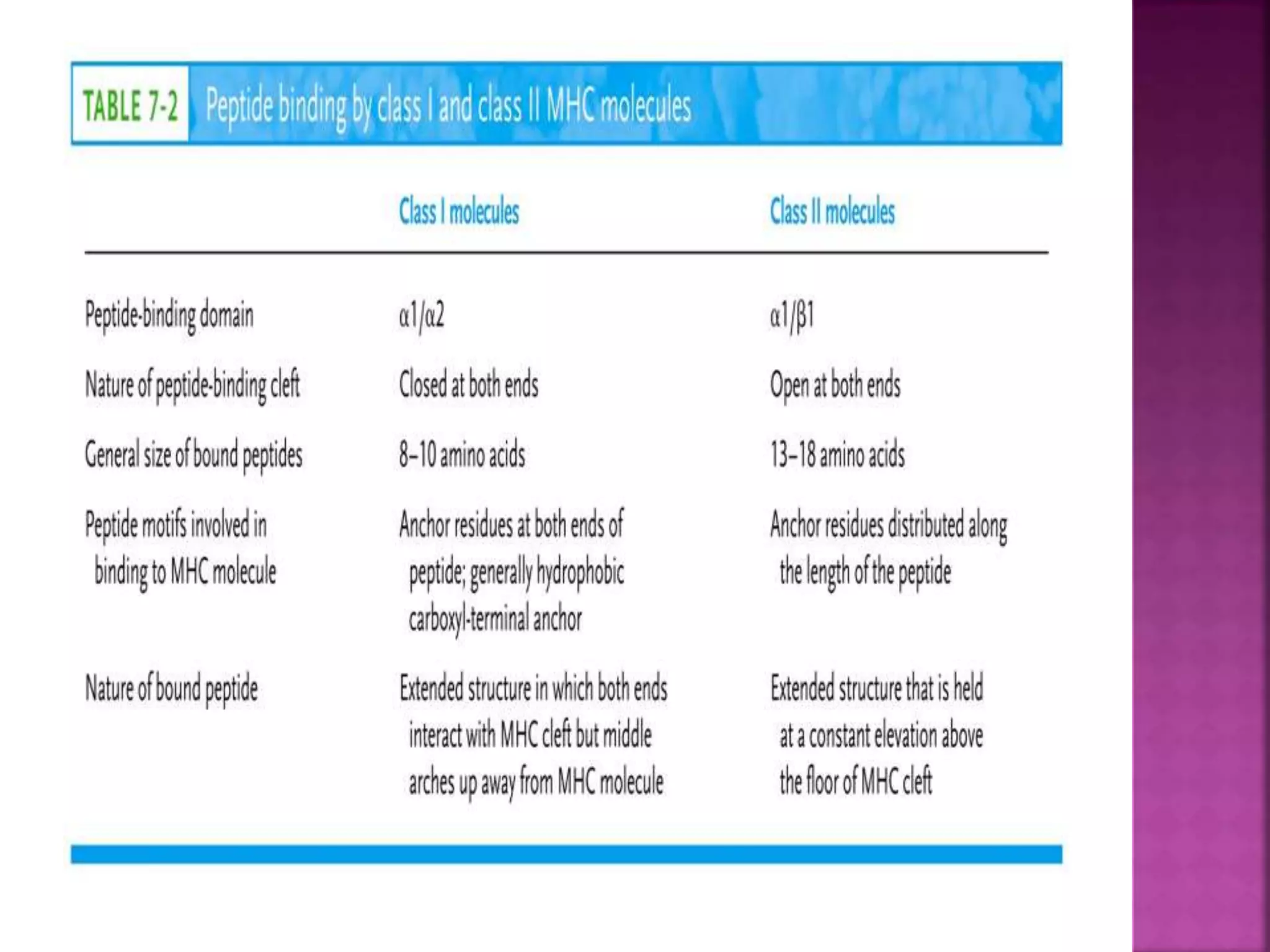
• 1 And 2 Form Peptide Binding Cleft
– Fits peptide of about 8-10 a/a long
• 3 Highly Conserved Among MHC I Molecules
– Interacts with CD8 (TC) molecule
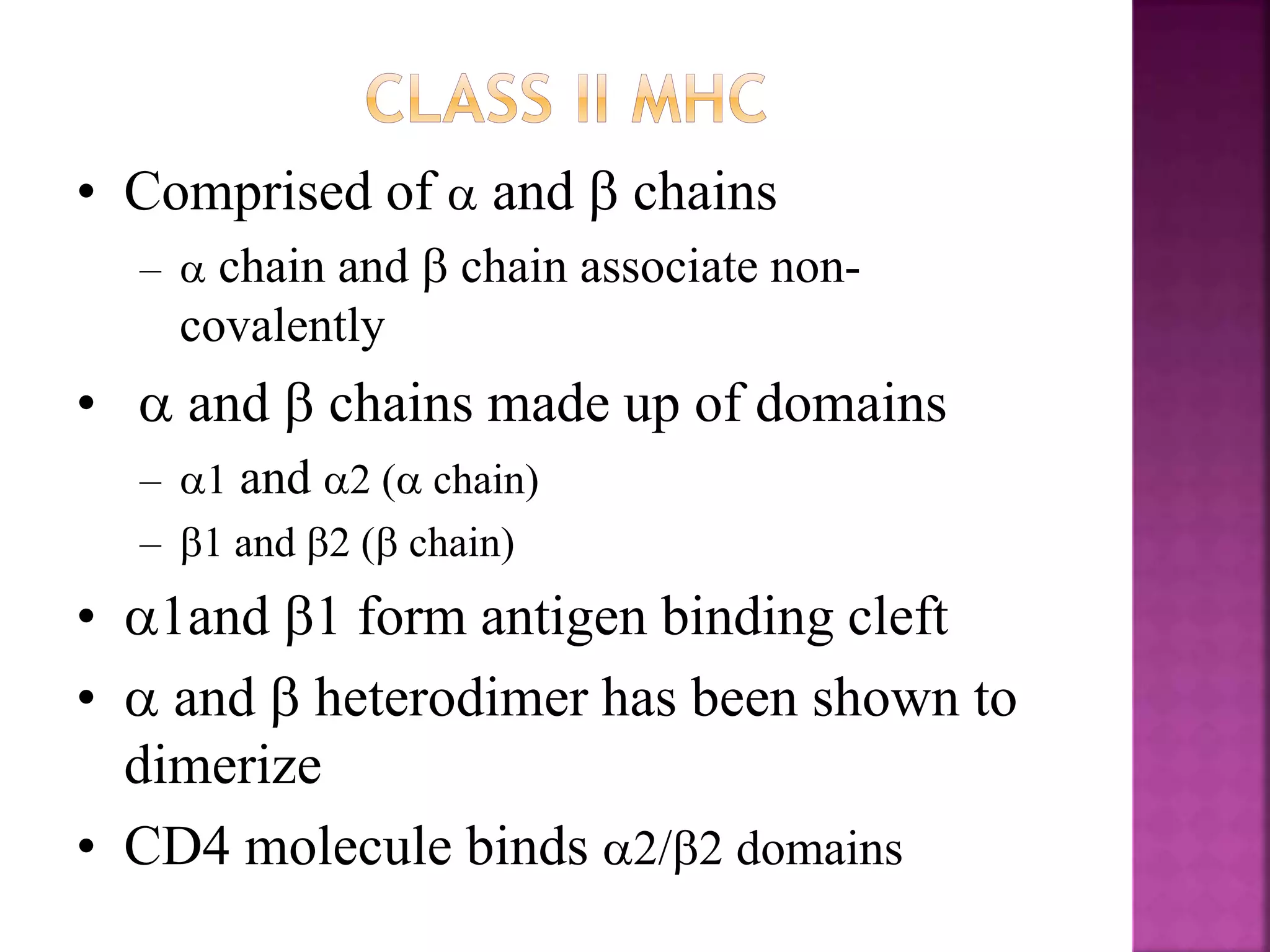
• Comprised of  and  chains
–  chain and  chain associate non-
covalently
•  and  chains made up of domains
– 1 and 2 ( chain)
– 1 and 2 ( chain)
• 1and 1 form antigen binding cleft
•  and  heterodimer has been shown to
dimerize
• CD4 molecule binds 2/2 domains
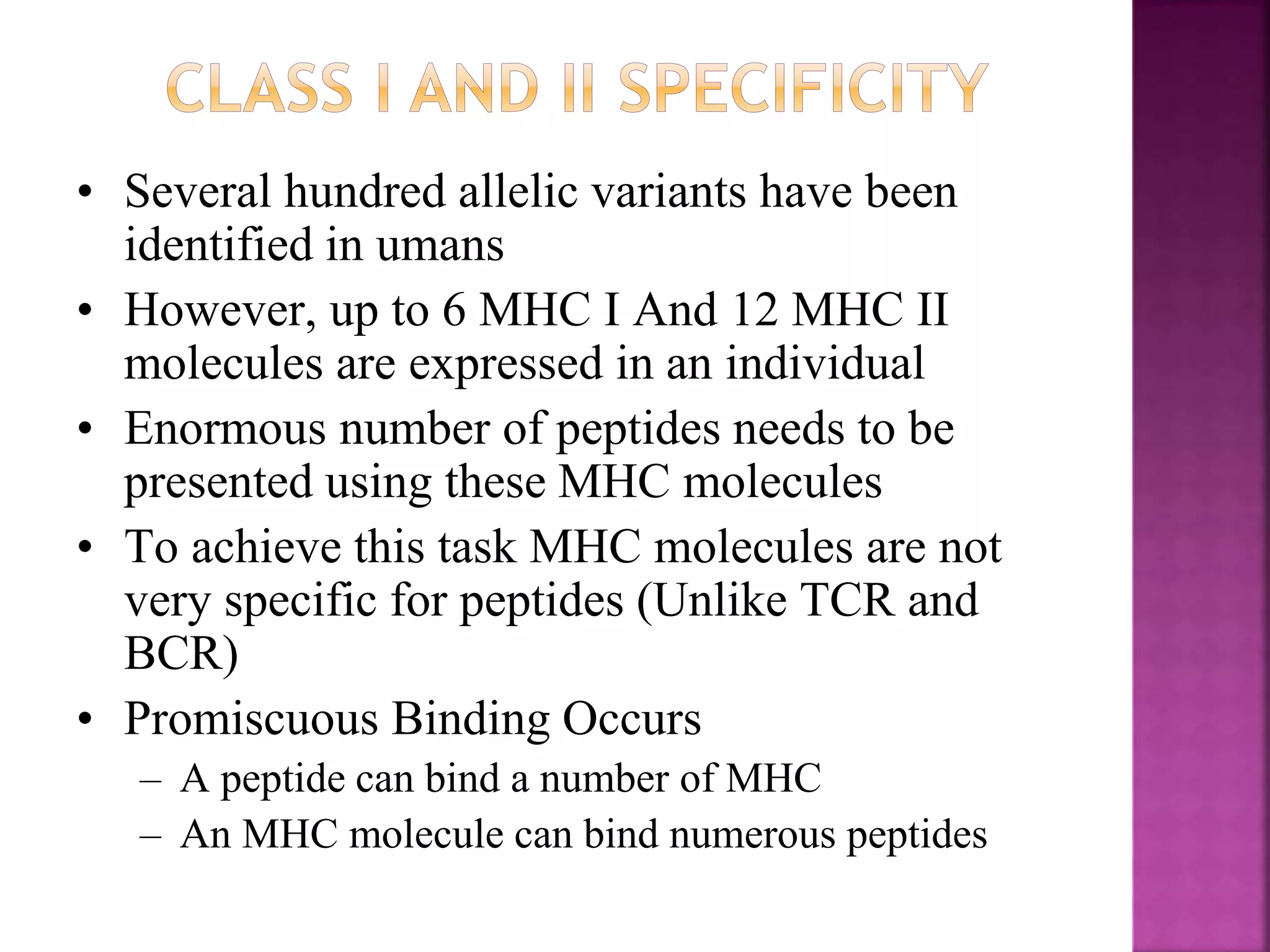
• Several hundred allelic variants have been
identified in umans
• However, up to 6 MHC I And 12 MHC II
molecules are expressed in an individual
• Enormous number of peptides needs to be
presented using these MHC molecules
• To achieve this task MHC molecules are not
very specific for peptides (Unlike TCR and
BCR)
• Promiscuous Binding Occurs
– A peptide can bind a number of MHC
– An MHC molecule can bind numerous peptides
• MHC is one of the most polymorphic
complexes known
• Alleles can differ up to 20 a/a
• Class I alleles in humans: 1884 A, 2490
B, 1384 C
• Class II alleles in humans: HLA-DR
1094 , 7  - total combo=8302
• HLA DP (34, 155, 5270t) and HLA
DQ (47, 165, 7755t)
M/N Q/R
M/Q M/R N/Q N/R 2% Genetic
Recombinati
on
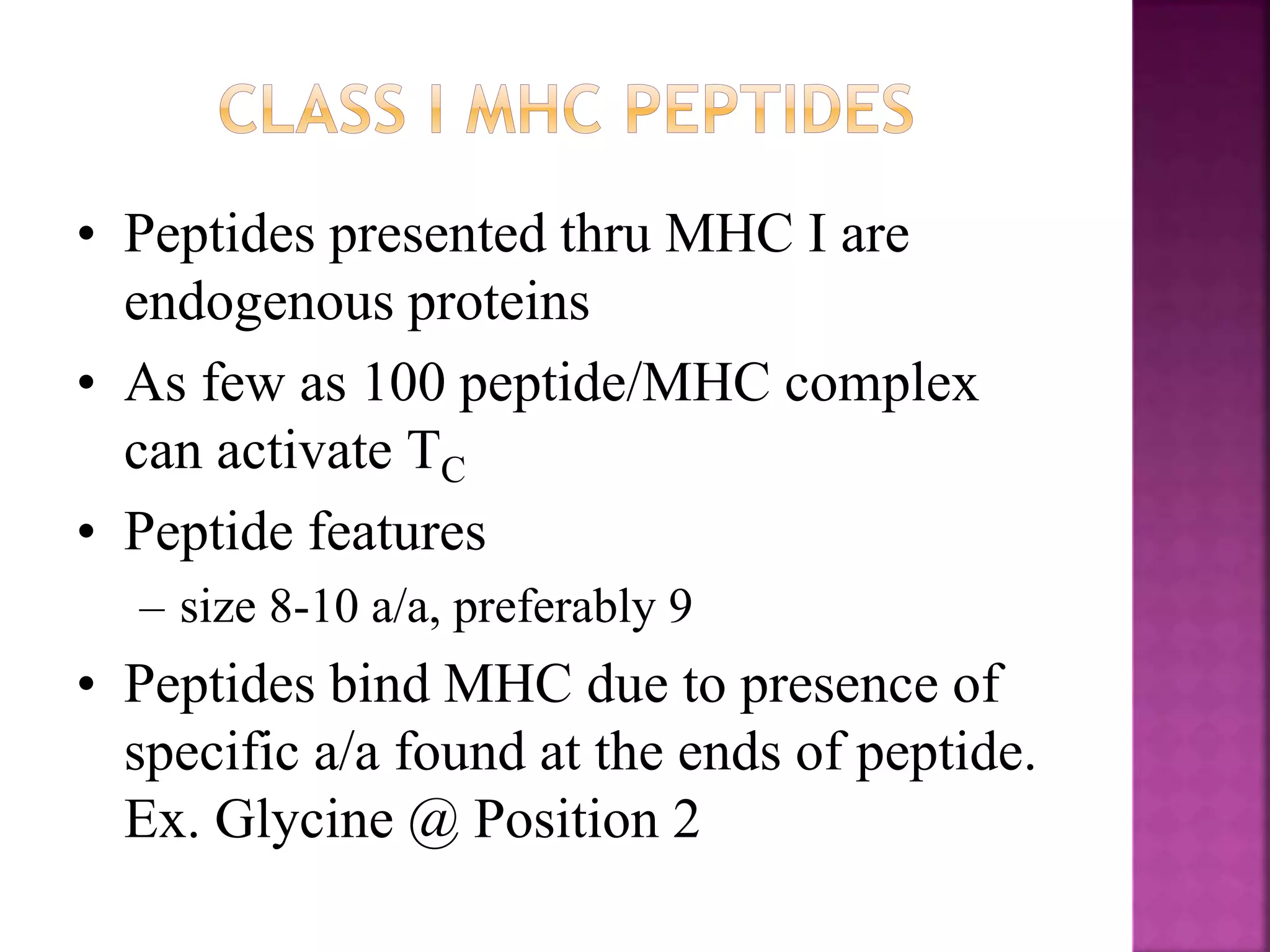
• Peptides presented thru MHC I are
endogenous proteins
• As few as 100 peptide/MHC complex
can activate TC
• Peptide features
– size 8-10 a/a, preferably 9
• Peptides bind MHC due to presence of
specific a/a found at the ends of peptide.
Ex. Glycine @ Position 2
• Peptides presented through MHC II are
exogenous
– Processed thru endocytic pathway
• Peptides are presented to TH
• Peptides are 13-18 a/a long
• Binding is due to central 13 a/a
• Longer peptides can still bind MHC II
• MHC I peptides fit exactly, not the Case
with MHC II peptides
• Expression is regulated by many cytokines
– IFN, IFN, IFN and TNF increase MHC
expression
• Transcription factors that increase MHC
gene expression
– CIITA (Transactivator), RFX (Transactivator)
• Some viruses decrease MHC expression
– CMV, HBV, Ad12
• Reduction of MHC may allow for immune
system evasion
Recognition of transplanted cells that are
self or foreign is determined by polymorphic
genes (MHC) that are inherited from both
parents and are expressed co-dominantly.
Alloantigen elicit both cell-mediated and
humoral immune responses.
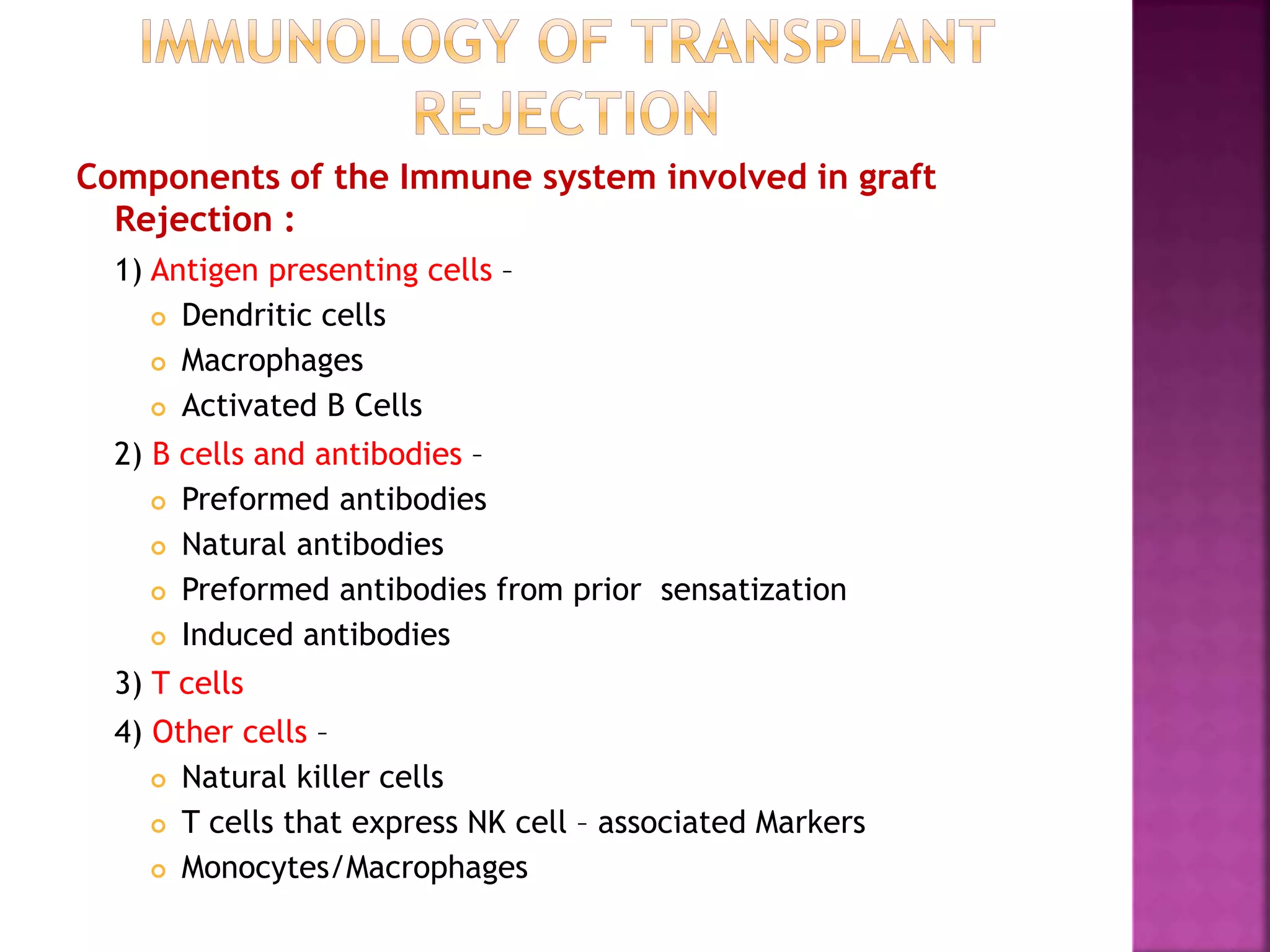
Components of the Immune system involved in graft
Rejection :
1) Antigen presenting cells –
 Dendritic cells
 Macrophages
 Activated B Cells
2) B cells and antibodies –
 Preformed antibodies
 Natural antibodies
 Preformed antibodies from prior sensatization
 Induced antibodies
3) T cells
4) Other cells –
 Natural killer cells
 T cells that express NK cell – associated Markers
 Monocytes/Macrophages
Direct Presentation
Recognition of an intact MHC molecule displayed by
donor APC in the graft
Basically, self MHC molecule recognizes the structure of
an intact allogeneic MHC molecule
Involves both CD8+ and CD4+ T cells.
 Indirect Presentation
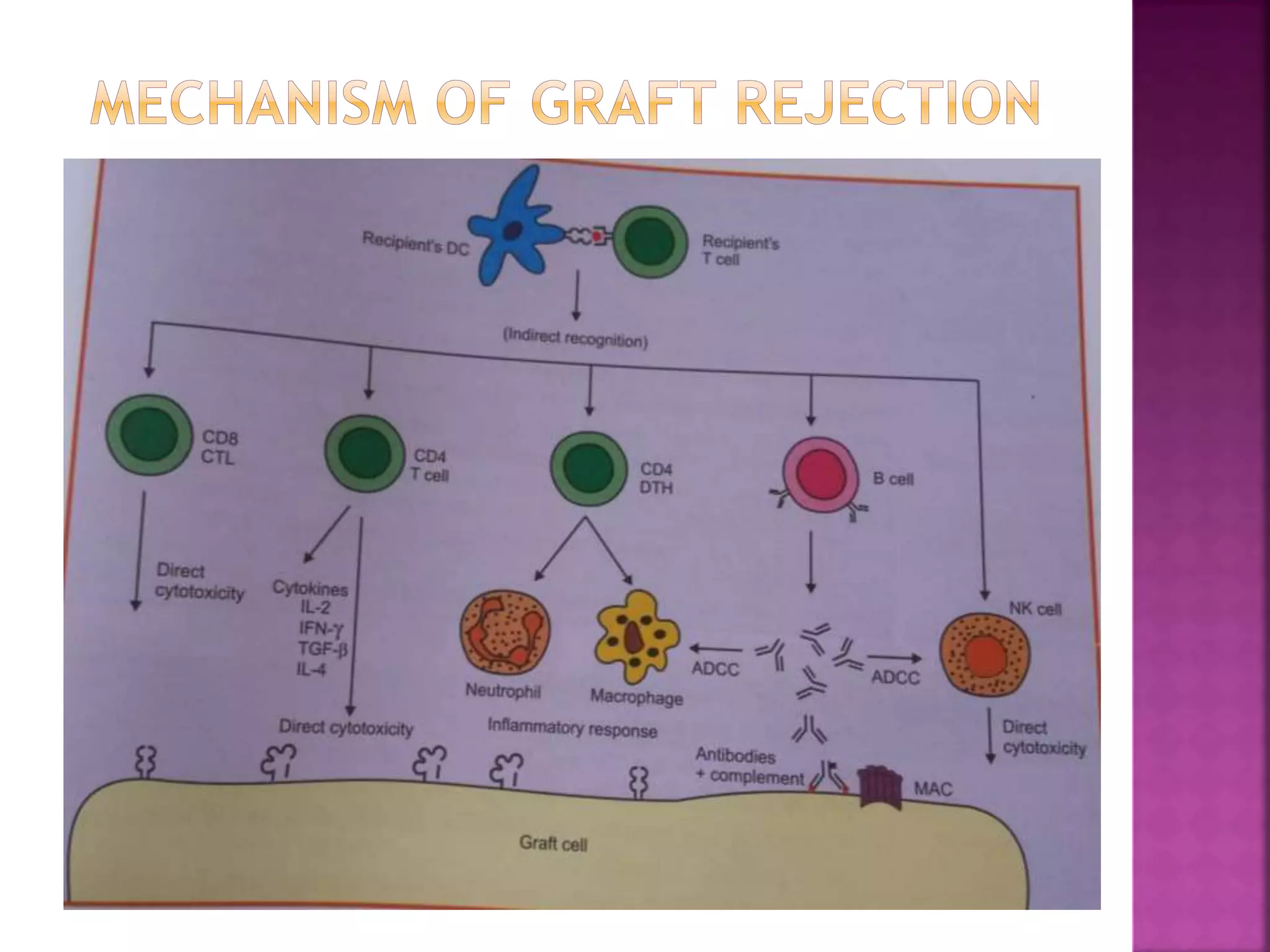
Donor MHC is processed and presented by recipient APC
Basically, donor MHC molecule is handled like any other
foreign antigen
Involve only CD4+ T cells.
Antigen presentation by class II MHC molecules
Donor APCs migrate to regional lymph nodes
and are recognized by the recipient’s TH
cells.
Alloreactive TH cells in the recipient induce
generation of TDTH cell and CTLs then migrate
into the graft and cause graft rejection.
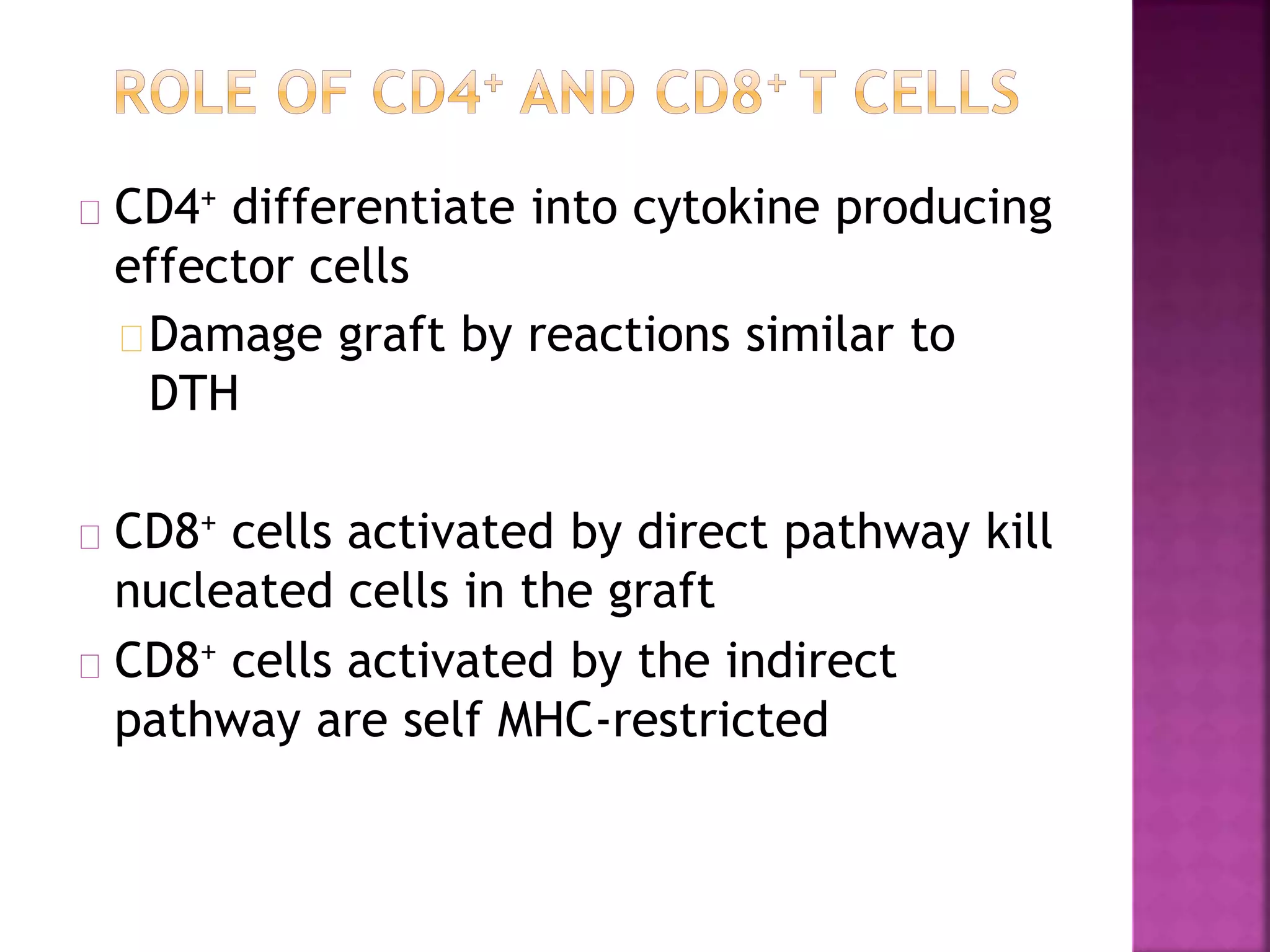
CD4+ differentiate into cytokine producing
effector cells
Damage graft by reactions similar to
DTH
CD8+ cells activated by direct pathway kill
nucleated cells in the graft
CD8+ cells activated by the indirect
pathway are self MHC-restricted
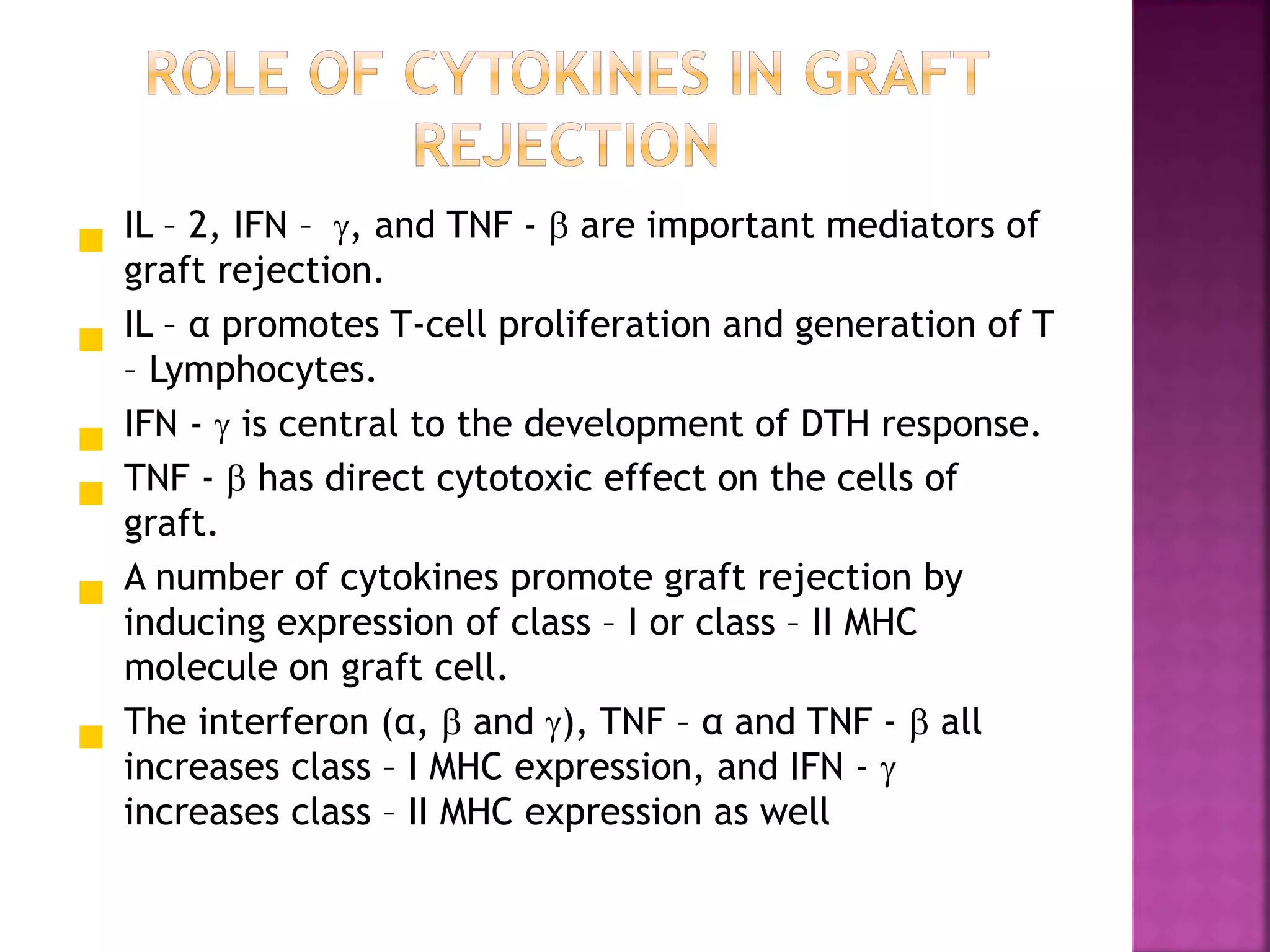
 IL – 2, IFN – , and TNF -  are important mediators of
graft rejection.
 IL – α promotes T-cell proliferation and generation of T
– Lymphocytes.
 IFN -  is central to the development of DTH response.
 TNF -  has direct cytotoxic effect on the cells of
graft.
 A number of cytokines promote graft rejection by
inducing expression of class – I or class – II MHC
molecule on graft cell.
 The interferon (α,  and ), TNF – α and TNF -  all
increases class – I MHC expression, and IFN - 
increases class – II MHC expression as well
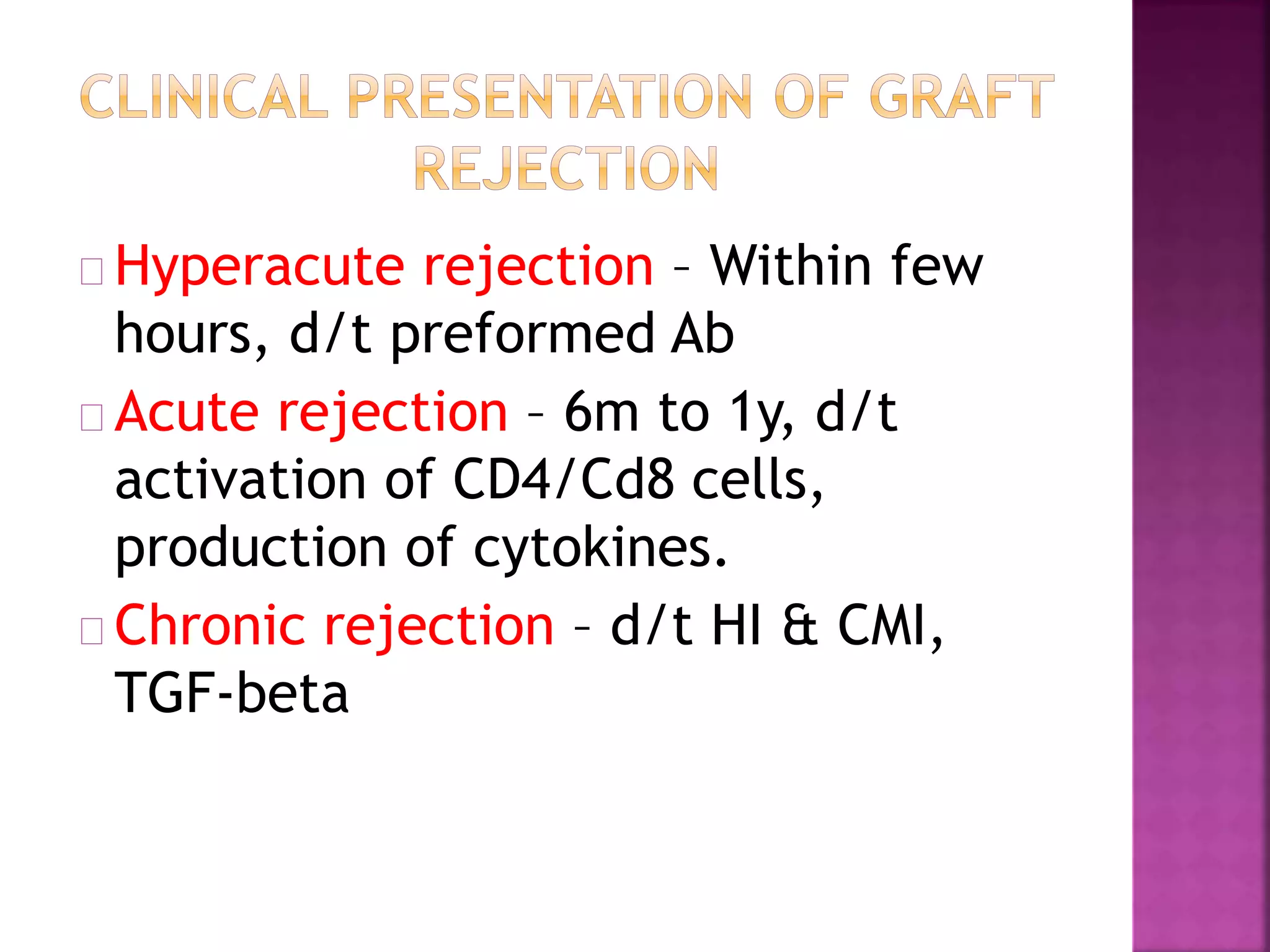
Hyperacute rejection – Within few
hours, d/t preformed Ab
Acute rejection – 6m to 1y, d/t
activation of CD4/Cd8 cells,
production of cytokines.
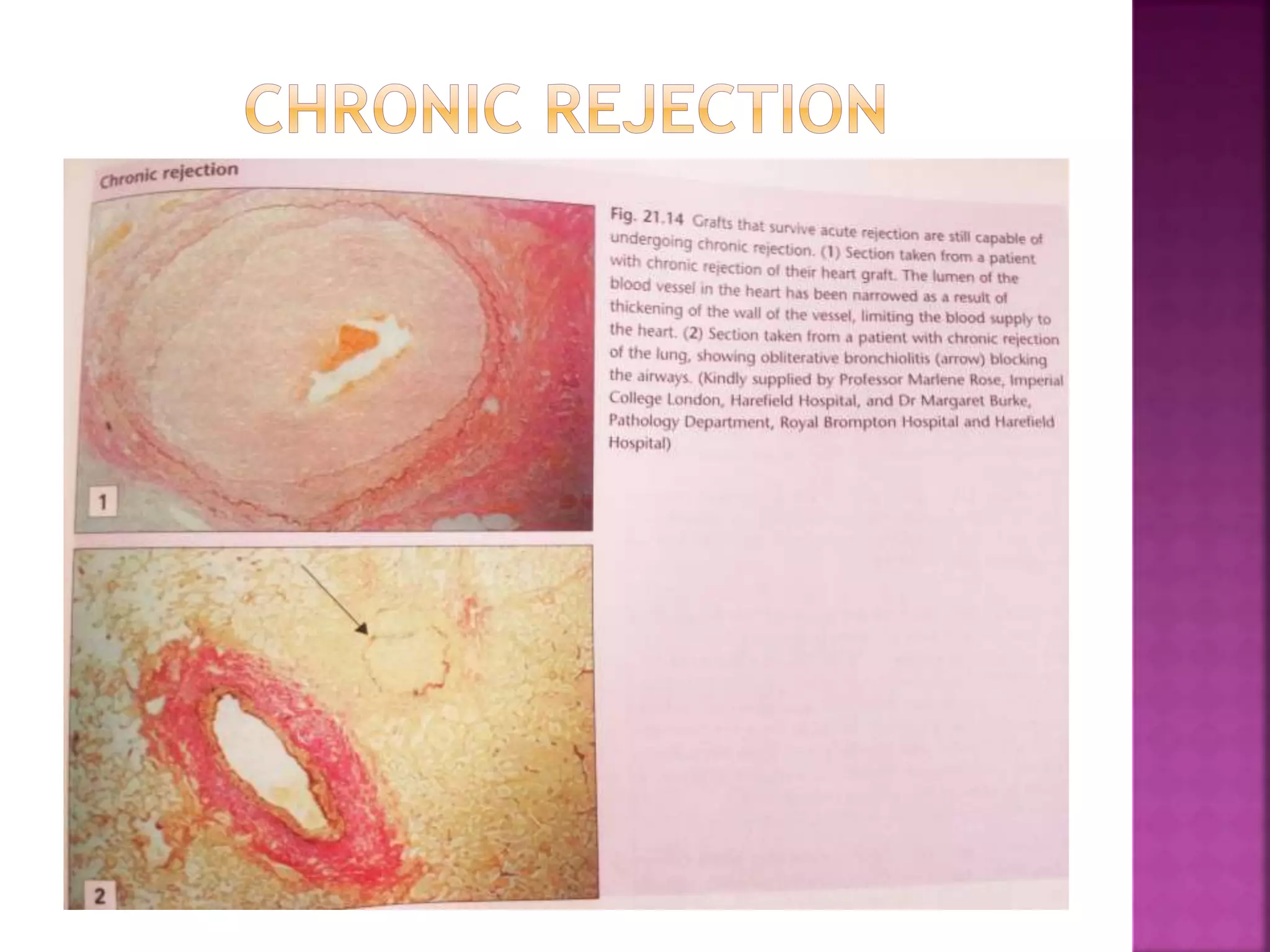
Chronic rejection – d/t HI & CMI,
TGF-beta
No vascularisation – White/pale
Pre-existing Ab’s d/t –
1. Repeated transfusions
2. Repeated pregnancies
3. Previous grafts
4. Blood group incompatibility
Kidney graft most vulnerable
Liver relatively resistant
Mediated by T cells
Massive infiltration by host macrophages and
lymphocytes
 TH cell activation & proliferation
 Activation of DTH response
 CD8 Tc mediated cytotoxicity
 CD4 mediated cytotoxicity
 Ab production
 ADCC by NK cells
Increased survival in 1st year
Chronic rejection not prevented.
Both HI & CMI
Depends on -
 Genetic disparity at HLA bw donor &
recipient
 Effectiveness of immunosupressive drug
regimen
Cardinal features –
Thickening & blocking of BV dt
proliferation of sm cells
Deposition of Ag-Ab complex in graft
Formation of scar tissue & fibrosis
Main culprit – TGF-beta
Increased risk in –
 Previous episodes of acute rejection
 Inadequate immunosupression
 Initial delay in graft function
 Old age or HTN in donor
 Diabetes, HTN or DLP in recipient
 Reperfusion injury to organ
 Post transplant infection with CMV
Male tissues contain XY
When male tissue with XY is grafted to
female (XX), as females don't contain Y
gene, the grafts may not be accepted
However grafts done from female to male
are accepted.
The Phenomenon of unilateral sex linked
histocompatibility is known as EICHWALD
SILMSER effect.
Organ to be transplanted should be
selected best with ABO compatibility
and HLA matching
Immunosuppressant –
Multiple drugs are used
Intensive induction and low dose
maintenance
Tx dysfunction monitoring & Rx of
established rejection
Withdrawal or reduction of dose of a
drug whenever toxicity outweighs
the benefits
Major Ag difference found on MHC
molecules
Many different alleles of MHC molecules
If donor & recipient share as many alleles
as possible, the strength of rejection
response is reduced
In humans, HLA matching is rarely perfect
b/w unrelated donors
Loci outside MHC can also lead to
rejection (MinorHC)
No attempt to match MinorHC
 Little possibility of getting a good match
(Even perfectly matched at MHC locus,
will not be matched at MinorHC)
 Effect of matching is too small to be
clinically significant
Tx b/w HLA identical individuals require
some degree of immune suppression.
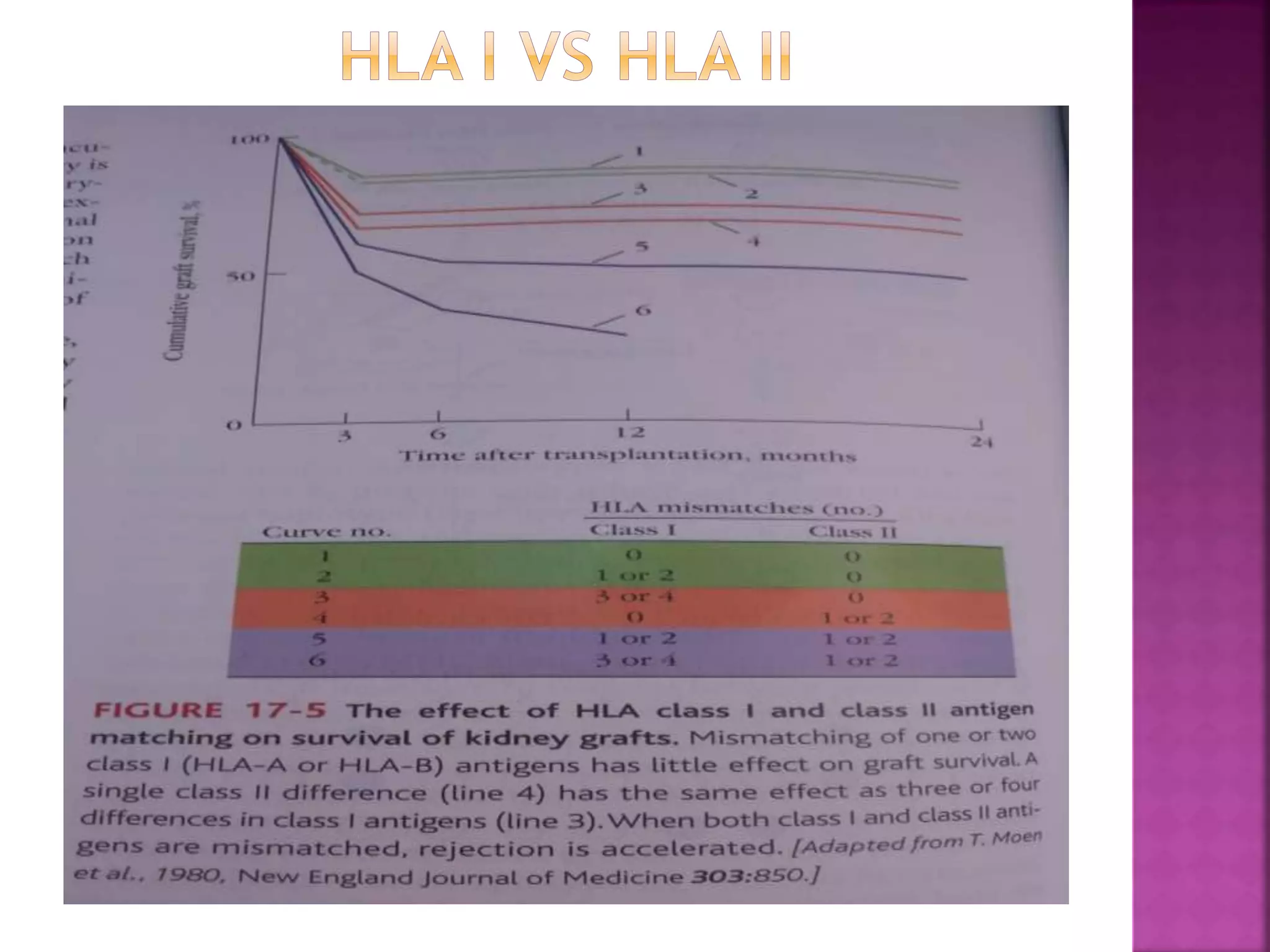
HLA matching is most important for
kidney & BM
Liver & heart Tx may survive with greater
mismatching
Matching/ Mismatching of class I Ag has a
lesser effect on graft survival unless there
is also mismatching of class II Ag
Classically done using –
Micro-cytotoxicity (MCT)
Mixed lymphocyte reaction
(MLR)
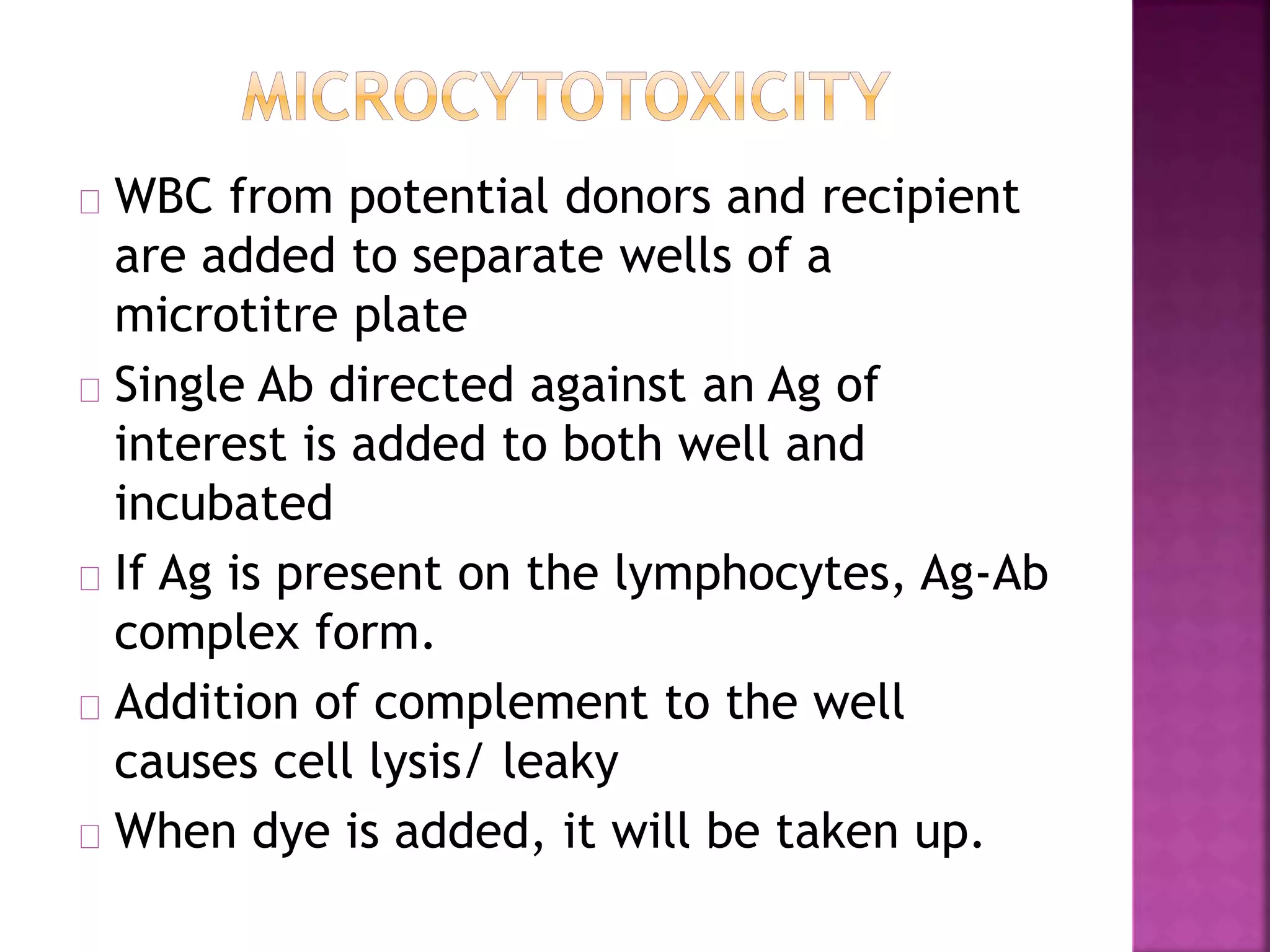
WBC from potential donors and recipient
are added to separate wells of a
microtitre plate
Single Ab directed against an Ag of
interest is added to both well and
incubated
If Ag is present on the lymphocytes, Ag-Ab
complex form.
Addition of complement to the well
causes cell lysis/ leaky
When dye is added, it will be taken up.
Even when HLA compatible donor is not
available, Tx may be sucessful – MLR done
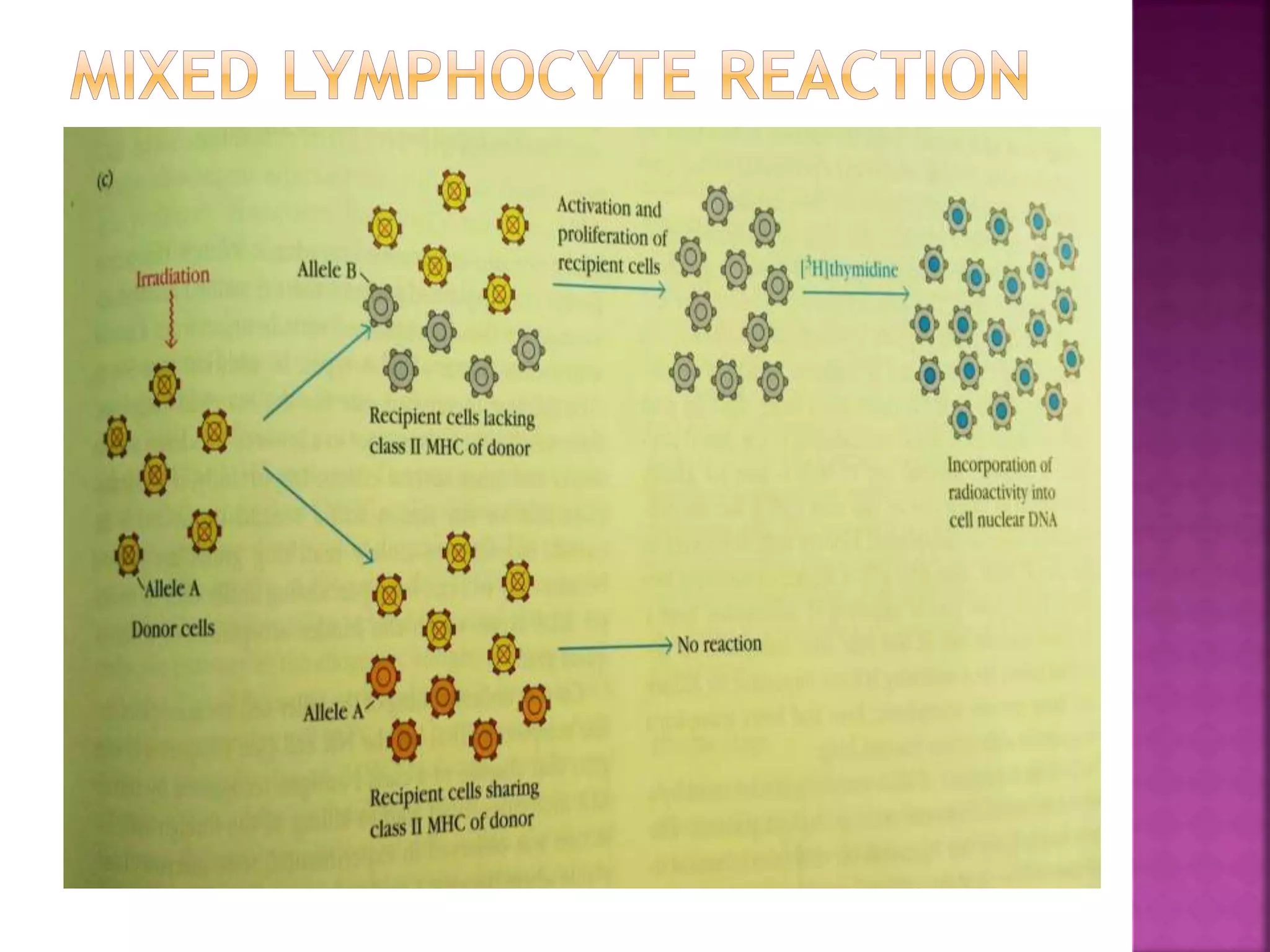
To determine identity of class II HLA Ag
Lymphocyte from the donor is irradiated
or treated with mitomycin C to prevent
cell division – Stimulator cells
Add them to lymphocytes from the
recipient – Responder cells
Radioactive nucleotide – 3H Thymidine is
used
If class II Ag’s on the 2 cell population are
different , the recipient cells will divide
rapidly (T-cell activation) and take up
large quantity of radioactive nucleotides
into the newly synthesized nuclear DNA.
The amount of radioactive nucleotide
uptake is roughly proportional to the MHC
class II difference bw the donor &
recipient .
Advantages –
 Better indication of degree of TH cell
activation generated in response to class
II MHC Ag of potential graft
Disadvantages -
 Takes several days to run the assay
 If potential donor is a cadaver, it is not
possible to wait for the results of MLR as
organ may become non viable
DNA analysis/ Genomic typing
Restriction fragment length
polymorphism (RFLP) with southern
blotting
Polymerase chain reaction
amplification using sequence based
primers (PCR-SSP)
Flow cytometry cross typing
Scientists at TRON (Translational Oncology at
the University Medical Center of the
Johannes Gutenberg University, Germany)
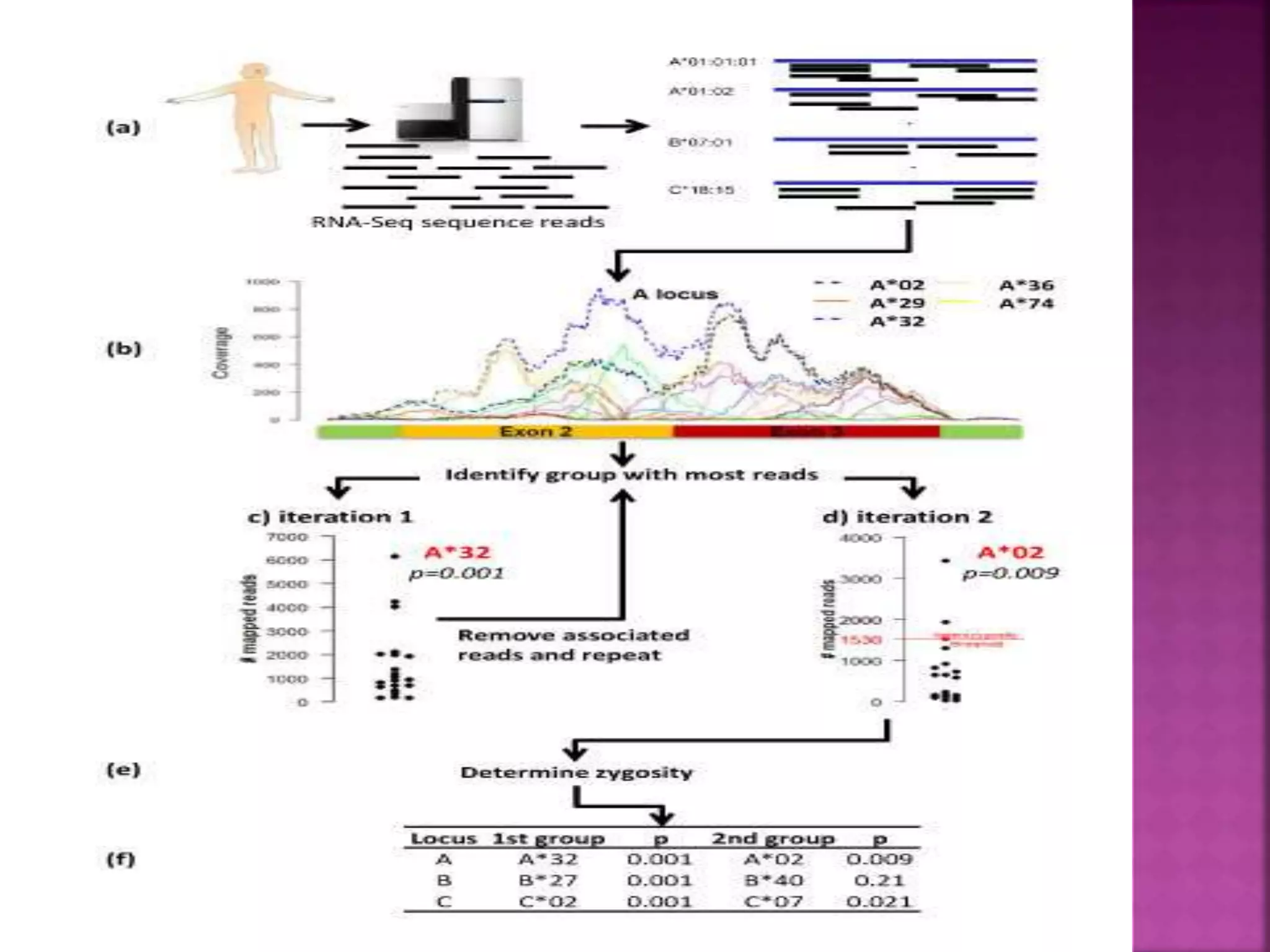
have developed a new method, seq2HLA, for
obtaining an individual’s HLA class I and II
type and expression using standard NGS RNA-
Seq data.
It comprises mapping RNA-Seq reads against
a reference database of HLA alleles,
determining and reporting HLA type,
confidence score and locus-specific
expression level
Scientists at the BC Cancer Agency, Michael
Smith Genome Sciences Centre, Canada have
developed a new method, – a computational
method for identifying HLA alleles directly
from shotgun sequence datasets.
Their approach circumvents the additional
time and cost of generating HLA-specific
data and capitalizes on the increasing
accessibility and affordability of massively-
parallel sequencing.
Reduce the natural immunity of the host
Useful in –
 Inhibition of organ transplantation
rejection
 Rx of Autoimmune diseases
2 types –
 Generalised – Nonspecific – Increased risk
of infection & lymphoid cancers.
 Specific – Reduce IR to alloAg of graft –
Not yet achieved in humans.
Calcineurin inhibitors –
Tacrolimus, Sirolimus, Everolimus,
Pimecrolimus.
Glucocorticoids –
Prednisolone, Betamethasone,
Dexamethasone.
Nephrotoxic/ Diabetogenic
Antiproliferative/ Antimetabolite/
Cytotoxic –
Cyclophosphamide, Azathioprine,
Leflunomide, Mycophenolate
mofetil, Thalidomide, Methotrexate,
Pentostatin, Chlorambucil,
Vincristine, Cytarabine
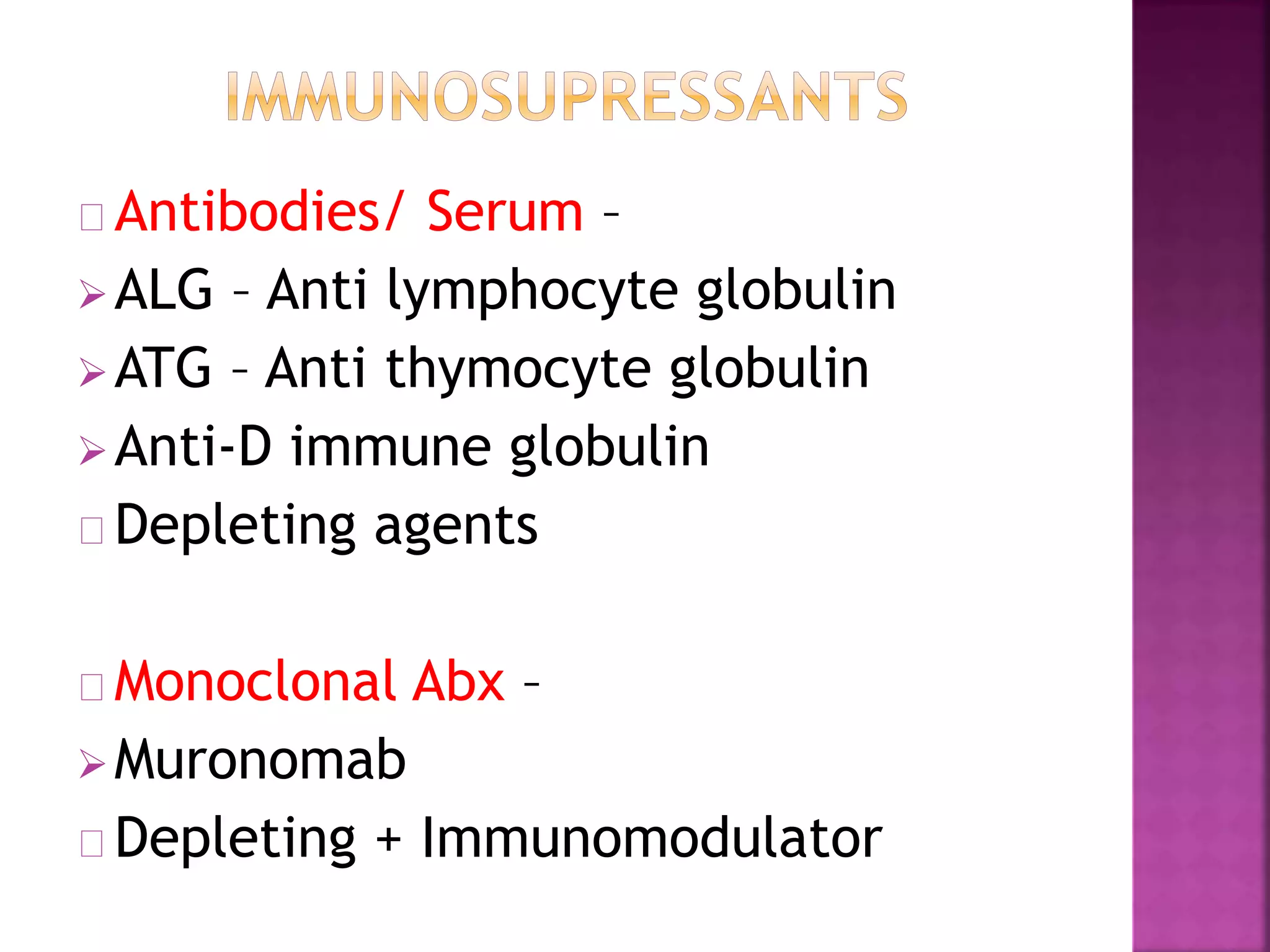
Antibodies/ Serum –
ALG – Anti lymphocyte globulin
ATG – Anti thymocyte globulin
Anti-D immune globulin
Depleting agents
Monoclonal Abx –
Muronomab
Depleting + Immunomodulator
Cyclosporin & Tacrolimus –
 Chemically different
 Bind to different molecular targets
 Do not act directly
 Bind to Immunophilin – C to Cyclophilin &
T to FK binding protein (FKBP-12)
 After binding – Interact with calcineurin –
Block its Phosphatase activity
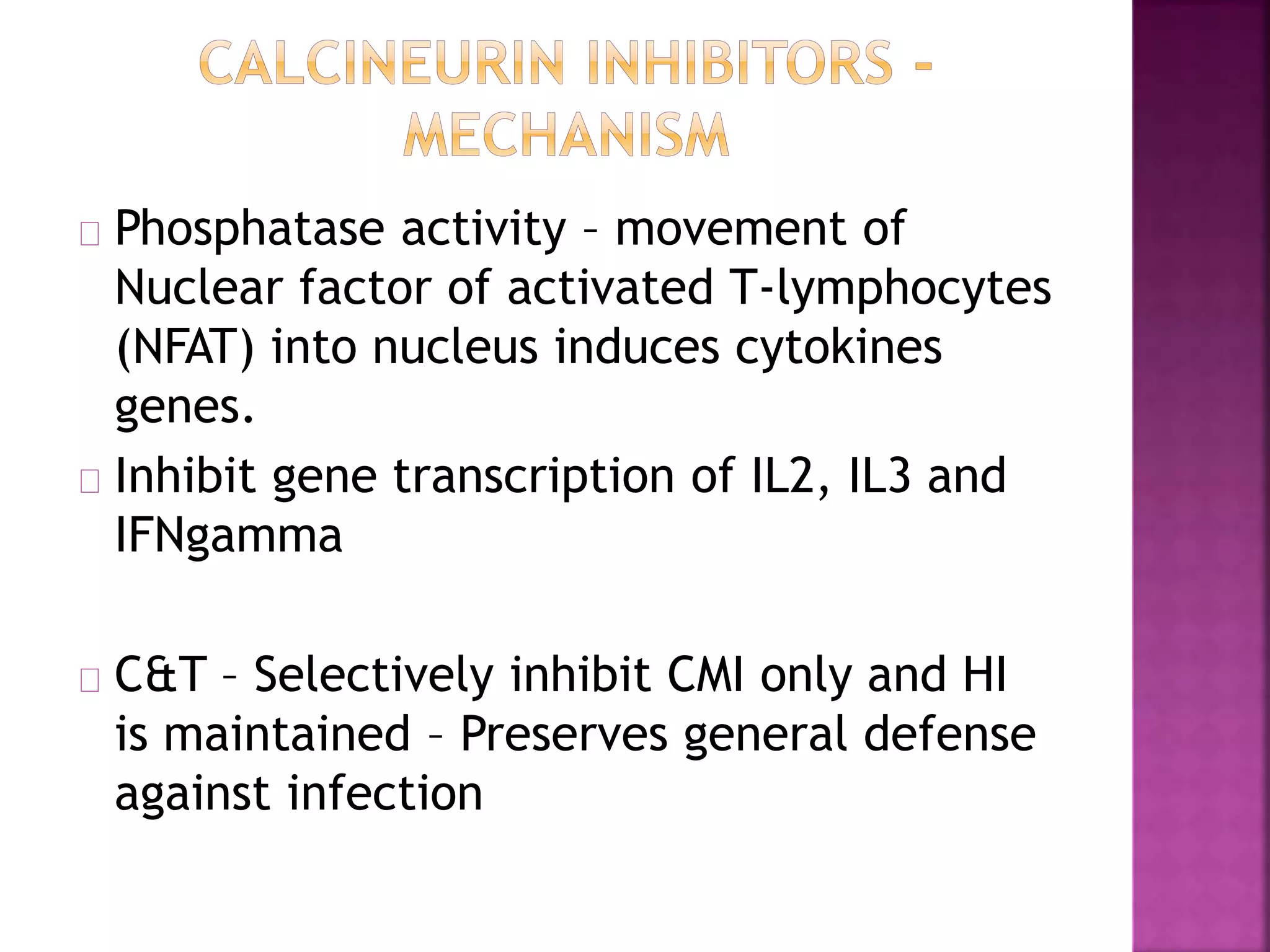
Phosphatase activity – movement of
Nuclear factor of activated T-lymphocytes
(NFAT) into nucleus induces cytokines
genes.
Inhibit gene transcription of IL2, IL3 and
IFNgamma
C&T – Selectively inhibit CMI only and HI
is maintained – Preserves general defense
against infection
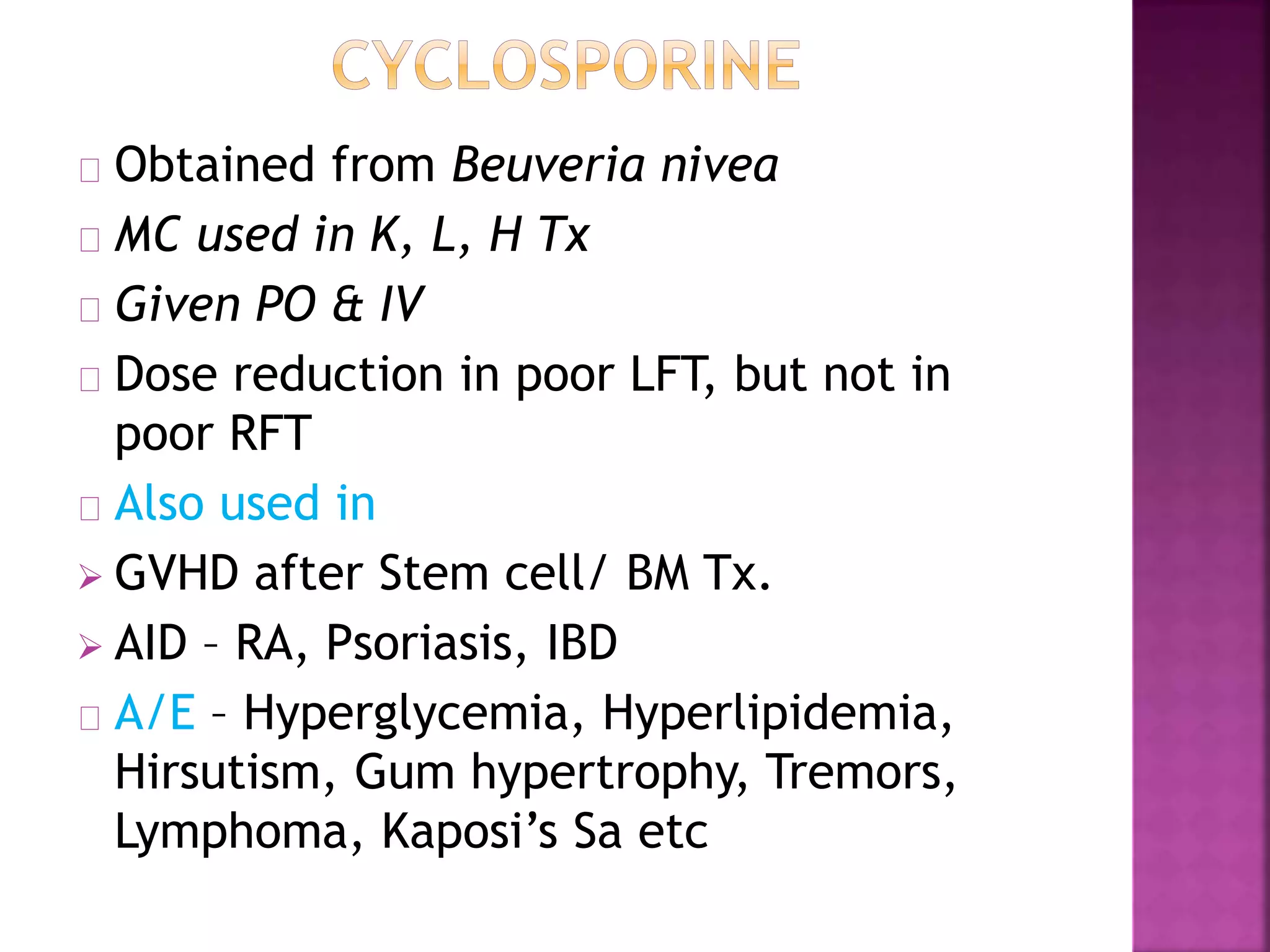
Obtained from Beuveria nivea
MC used in K, L, H Tx
Given PO & IV
Dose reduction in poor LFT, but not in
poor RFT
Also used in
 GVHD after Stem cell/ BM Tx.
 AID – RA, Psoriasis, IBD
A/E – Hyperglycemia, Hyperlipidemia,
Hirsutism, Gum hypertrophy, Tremors,
Lymphoma, Kaposi’s Sa etc
From Streptomyces tsukubaensis
10-100 time potent than cyclosporine
Rescue therapy if cyclosporine fails
No Hyperuricemia/ Hyperlipidemia
From Streptomyces hygroscopicus
Binds with FKBP-12 but does not inhibit
calcineurin
Blocks cell cycle G1 to S phase by inhibiting
Mammalian target of rapamycin (mTOR)
No nephrotoxicity
Cytotoxic & Most effective
Destroys proliferating lymphoid cells
by alkylating property
Inhibits HI>>CMI
Preferred for BM Tx only
A/E – Hemorrhagic cystitis dt
metabolite acrolein – Mesna Rx.
Low host toxicity and High specificity
MAB are made using Hybridoma technique
To prevent anti-mouse Ab IR, they are
Chimerised (-ximab) or Humanised (-
umab)
Use based on expression of specific Ag in
certain conditions –
 HER2/ NEU – Breast Ca – Tratuzumab
 TNF alpha – RA – Infliximab
 IgE – BA - Omalizumab
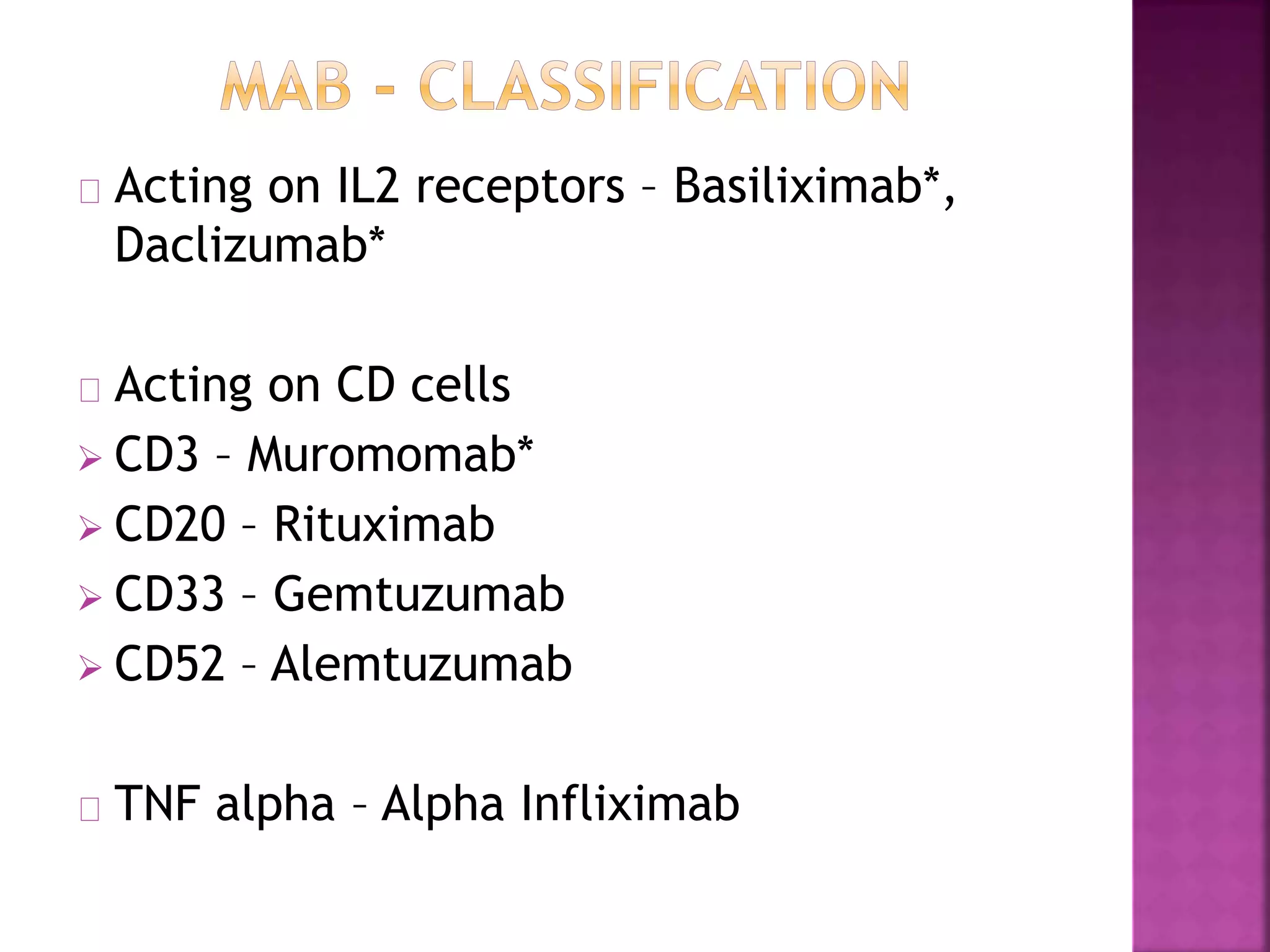
Acting on IL2 receptors – Basiliximab*,
Daclizumab*
Acting on CD cells
 CD3 – Muromomab*
 CD20 – Rituximab
 CD33 – Gemtuzumab
 CD52 – Alemtuzumab
TNF alpha – Alpha Infliximab
VEGF – Ranizumab
EGFR – Cetuximab
LFA1 – Efalizumab
HER2/ NEU – Trastuzumab
Platelets receptors – Abciximab
IgE – Omalizumab
F-glycoprotein on RSV – Palivizumab
Alpha4 integrin - natalizumab
Rarely hypersensitivity
Fever
H/A
Chills
Arthralgia
Hypotension
More during initiation/ first dose
Poor tissue penetration – remain
largely in vascular compartment
Short action – persist in blood 2-
14d
Extremely expensive
Increased susceptibility to infection
Delayed wound healing
Increased risk of neoplasms
particularly lymphomas
Organ toxicity such as nephrotoxicity
Others – Hypertension,
Hyperglycemia, Hypokalemia,
Hyperlipidemia, Thrombocytopenia,
Mouth ulcers
Agents used –
Cyclosporine
Prednisolone
ATG/ ALG
Azathioprine
Muromonab
Daclizumab
ATG is better & safer than ALG,
Muromonab
Started just before Tx and continued for
2w – 2m
Regimen used depends on organ to be Tx
& toxicity of drug
MC – Cyclosporine + Prednisolone +
Azathioprine
In renal Tx Cyclosporine  ATG
If no rejection after 2w, dose reduced and
maintained
If rejection – Change drugs or Increase
dose
Drugs used –
Calcineurin inhibitors
Glucocorticoids
Mycophenolate mofetil
Chlorambucil
Multiple drugs used simultaneously
Each act at distinct site in T-cell
activation
Therapy is prolonged, very often
lifelong
Continuation of induction drugs at
low doses are used
If drug toxicity  D/C drug
Drugs used – Agents effective against
activated T-lymphocytes used like
Glucocorticoids – Pulse therapy – IV
Mpred 0.5-1g/d x 5d
Polyclonal ALG
Muromonab
Other agents not effective against
activated T-Lyphocytes
Deoxypergualin – Inhibits CTL production
Mezoribine – Metabolic antagonist of
purine synthesis
Biquinar sodium – Impairs pyrimidine
metabolism
Leflunomide – Inhibits T cell response to
cytokines
Fusion proteins – Inhibits T cell activation
 Belatacept
 Alefacept
Allografts can be placed without rejection
reaction
 Anterior chamber of eye
 Cornea
 Uterus
 Testes
 Brain
These sites are characterized by an
absence of lymphatic vessels and in some
absence of blood vessel as well
AlloAg of graft cannot sensitize the
recipient’s lymphocytes
Graft has an increased likelihood of
acceptance even when HLA Ag are
not matched
Physically sequestrated graft cells
from the immune system cells – by
encapsulating – Current research
 Trophoblast in placenta do not express
classical MHC Ag
 Extravillous trophoblast provide adequate
blood supply to the foetus
 Trophoblast secrete IDO (Indo-amine
dioxygenase) which destroys aa trytophan
required for T cell activation
 The no of alloreactive T cell is reduced in
pregnancy
 Trophoblast express non classical class I
MHC Ag - HLA-G, which protects the
foetus from NK cell-mediated lysis
Graft mounts an IR against the Ag of
host
Graft contains immunocompetent T
cells
Recipient possesses transplantation
Ag’s that are absent in the graft
The recipient must not reject the
graft
Common in BM Tx
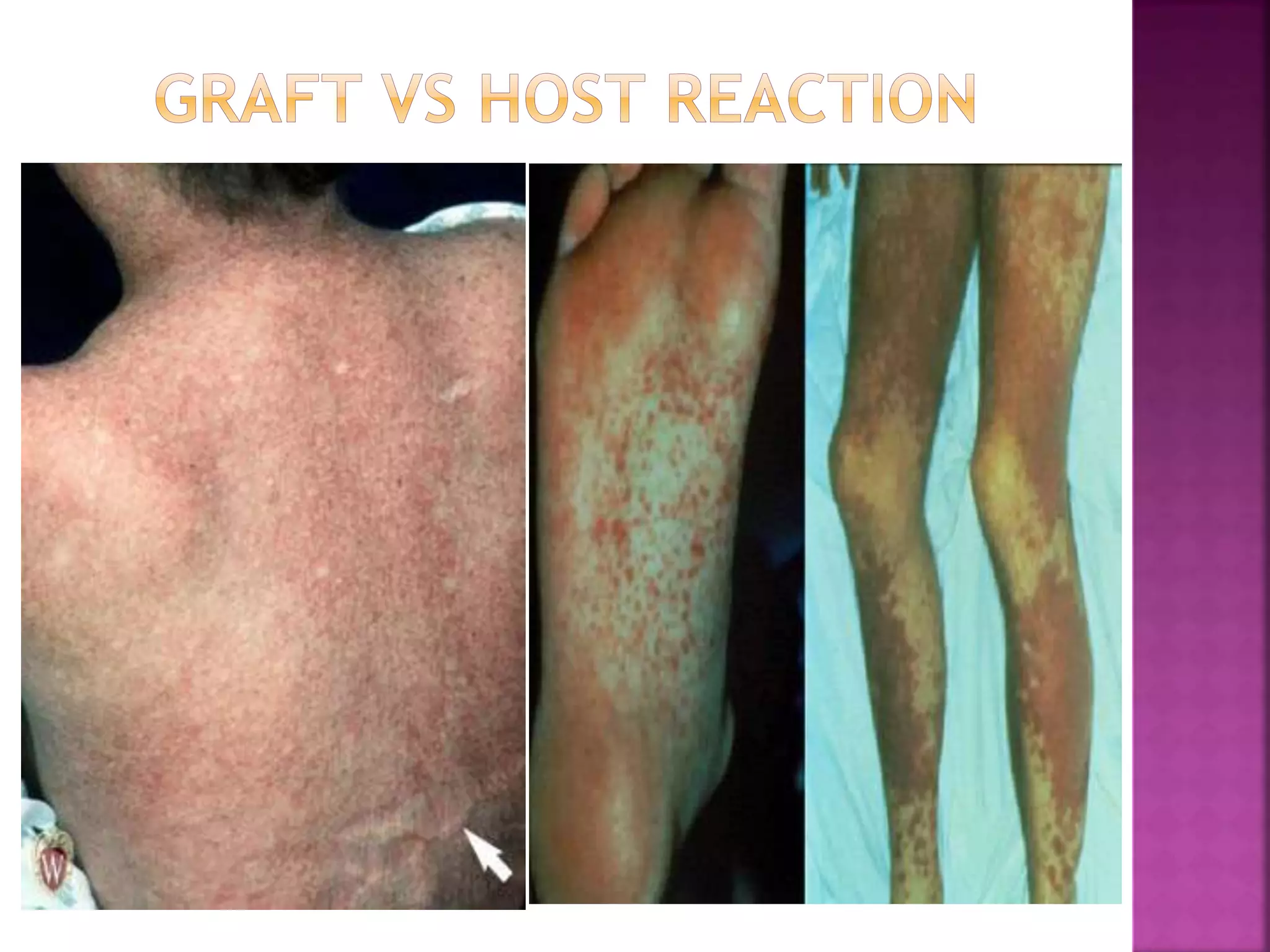
T cells from the transplant recognize the
host MHC molecules as non-self and
attack the host.
This is a type IV hypersensitivity reaction
Antibody plays no role at all.
Occurs in –
 Allograft in a recipient in whom specific
immunological tolerance has been
induced
 Adult lymphocytes injected into
immunologically deficient recipient
(Newborn)
Avoided by – PURGING
 Removal of all T cells from the graft
before Tx by treating with ALS/ Anti-CD3
Ab’s
Beneficial in – LEUKEMIA
 Moderate GvH reaction is beneficial to
destroy the residual leukemic cells which
persists inspite of chemotherapy
In animal experiments – GVHD
 Runt’s disease
 Growth retardation
 Emaciation
 Diarrhea
 HSM
 Lymphoid atrophy
 Anemia
 Terminally fatal
In humans –
 Severe inflammatory reaction, Rashes,
Diarrhea & Pneumonitis
HI acts in opposition to CMI, by inhibiting
graft rejection
Afferent inhibition – Ab combine with Ag
released from the graft – Unable to elicit
IR
Central inhibition – Ab combine with
lymphoid cells – by negative feedback
influence make them incapable of
responding to the Ag
Efferent inhibition – Ab coat the surface
of graft cells – sensitised lymphocytes
cannot contact them
An allograft will be made
acceptable if recipient is
made immunologically
tolerant
Unresponsiveness to self-antigens is
called immunologic tolerance
2 types – Central T/B cell &
Peripheral T/B cell tolerance
Tolerance is the key factor in
protecting an individual from
autoimmune diseases
Unresponsiveness to donor MHC Ag by the
recipient immune system
Successful Tx is achieved only when Tx is
permanently tolerated by the host
 Host must retain immune competence for
pathogens
 Donor Ag tolerance should be stable %
maintained in the recipient in the absence of
immusupression
Failure to achieve permanent Tx
tolerance in spite –
 Understanding the process of Tx rejection
 Better & safer IS drugs
 Improved protocol of IS
Alternative –
 Harness host’s own regulatory immune
mechanism & amplify them
After allogeneic Tx, along with
activation of T effector cells which
causes destruction of graft, the
graft protective T regulatory (Treg)
cells are also generated.
The balance between the 2 subsets
decides the fate of allograft
Tx tolerance should evolve strategies for –
 Suppression of T effector cells
 Stimulation of Treg cells
 T effector cells are in large numbers –
controlling them is more effective
 Stable, perpetuating & long-lasting
Current therapeutic strategies
indiscriminately inhibit alloreactive cells
as well as Treg cells
Adaptive Tregs like Foxp3+, CD25+, CD4+
are also generated in response to alloAg
in Tx
Tregs prevent contact b/w T effector &
Dendritic cells
Tregs are preferentially localized at sites
of inflammation in the Tx where Ag is
expressed
Ag specific Tregs are more effective
compared to polyclonal Tregs in TX
Main barrier is very high frequency of
alloreactive T cells in peripheral T cell
pool
Tregs like T cells are stimulated by direct
& indirect pathways, the precursor
frequency of these 2 cell types varies,
influencing outcomes.
Surgical trauma & ischemia-reperfusion
injury  inflammatory signals  IL-6 
Inhibit conversion of CD4+ Foxp3- cells
into CD4+ Foxp3+ Treg cells
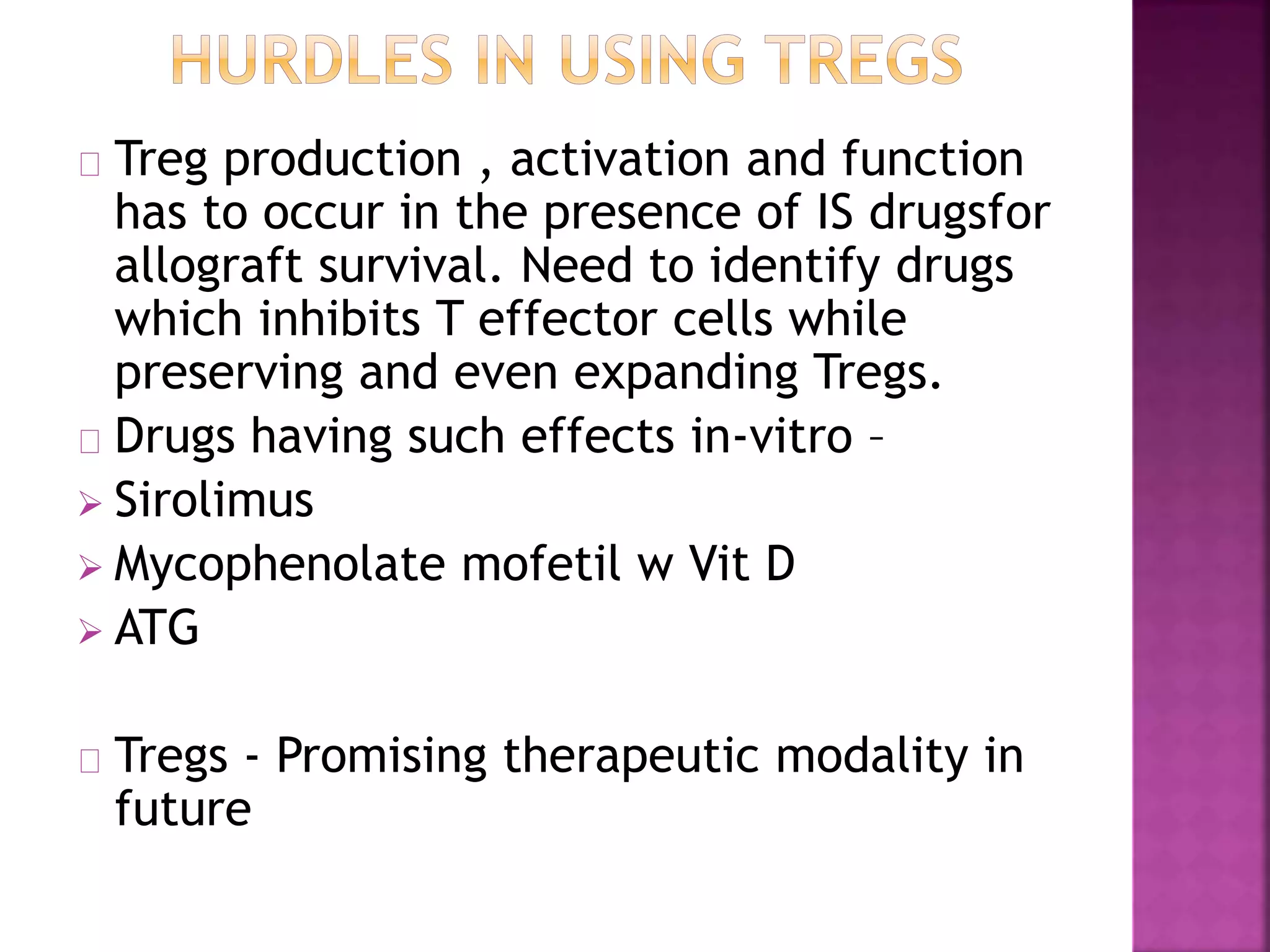
Treg production , activation and function
has to occur in the presence of IS drugsfor
allograft survival. Need to identify drugs
which inhibits T effector cells while
preserving and even expanding Tregs.
Drugs having such effects in-vitro –
 Sirolimus
 Mycophenolate mofetil w Vit D
 ATG
Tregs - Promising therapeutic modality in
future
HSC – Replacement of haematopoises in
many diseases like leukemia, MDS,
Hemoglobinopathies
Developmental plasticity – Ability of HSC
to differentiate into a variety of other
tissue cell type
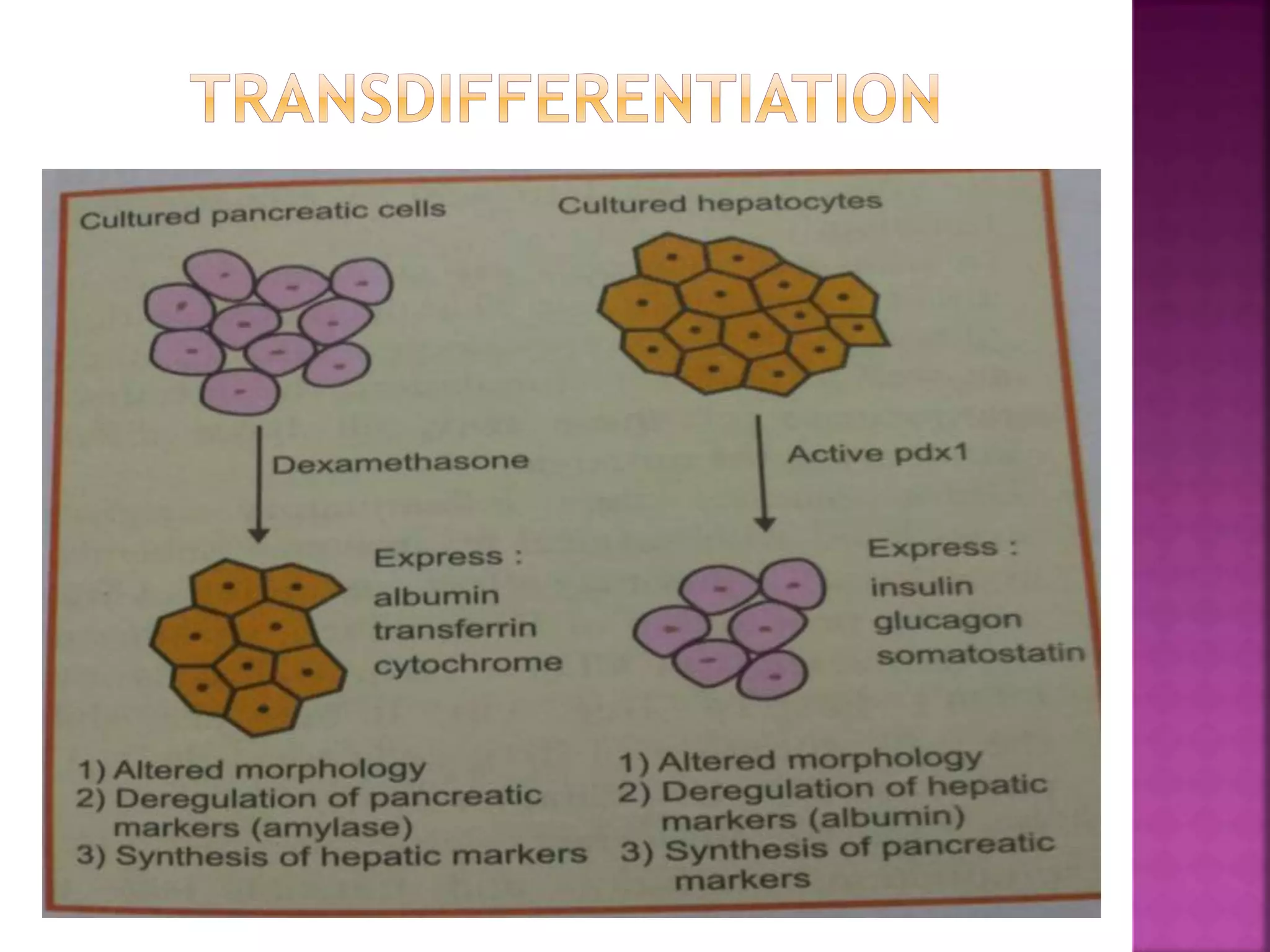
Transdifferentiation – Process of plasticity
of adult stem cells to generate other
tissue cells
Adipose derived stem cells (ASC)
collected by lipoaspiration is exploited for
tissue regeneration
REFERENCE
Immunobiology - Janeway
Immunology – Kuby
Immunology – Roitt
Immunology – Lippincots
TB of basic & clinical Immunology – Sontakke
DNA methods for HLA typing – A Workbook for
beginners
(http://www.ashihla.org/images/uploads/DNAMethodsforHLATyping%E2%80%
93Workbook.pdf)

Immunology of transplantation with MHC

  • 1.
  • 2.
    Sir Peter Medawar– Father of Transplantation – Worked on graft rejection and acquired immune tolerance – In 1944 showed that skin allograft between two mice are rejected. Mitchison Avrion – Rejection is due to development of CMI to the graft.
  • 3.
    1st successful Tx– 1906 - Cornea Joseph E Murray – 1954 – 1st kidney transplant bw identical twins in boston. Dr. Thomas E Starzl – 1967 – 1st liver Tx. Christian Bernard – 1967 – 1st heart Tx. Dr. Donnall E Thomas – 1968 – 1st BM Tx. Schwartz Dameshek – 1959 – Showed 6- mercaptopurine was immunosupressive.
  • 4.
    Implantation of “non-self”tissue into the body The process of taking cells, tissues, or organs called a graft (transplant), from one part of individual and placing them into another (usually different individual). Donor: the individual who provides the graft. Recipient or Host: the individual who receives the graft.
  • 7.
    Homograft = Allograft= Allogenic Heterograft = Xenograft = Xenogenic Syngeneic = Isograft Orthotopic – graft placed in their normal anatomic location. Heterotopic – graft placed into a site other than their normal one. They are useful when orthotopic placement may be technically difficult.
  • 8.
    Stored or Fresh. Livingor Cadaveric donor. Live grafts/Vital grafts - Kidney, Heart. Non living - Bone, Artery. Static or Structural grafts.
  • 9.
    Transplantation immunology -sequence of events that occurs after an allograft or xenograft is removed from donor and then transplanted into a recipient. A major limitation to the success of transplantation is the immune response of the recipient to the donor tissue.
  • 10.
    Control of infection Geneticmatching of donors with host. Administering agents to inhibit the immune system Antiseptic techniques & Abx HLA typing and Tissue matching Immunosuppressive agents
  • 16.
    Strain A Strain B graft Graftrejected in 14 days Strain C Graft B rejected in 7 days Graft C rejected in 14 days Thus, allograft rejection meets two important properties of immune system - Specificity and Memory. Strain A Strain B graft Strain C Strain B
  • 21.
    Class I MHCgenes  Glycoproteins expressed on all nucleated cells  Major function to present processed Ags to TC Class II MHC genes  Glycoproteins expressed on Macrophages, B-cells, DCs  Major function to present processed Ags to TH Class III MHC genes  Products that include secreted proteins that have immune functions. Ex. Complement system, inflammatory molecules
  • 22.
    Class I MHCGenes Found In Regions A, B and C In Humans (K and D In Mice) Class II MHC Genes Found In Regions DR, DP and DQ (IA and IE In Mice) Class I and Class II MHC Share Structural Features Both involved in APC Class III MHC Have No Structural Similarity To Class I and II Ex. TNF, heat shock proteins, complement components
  • 24.
    • MHC ProductsAre Highly Polymorphic – Vary considerably from person to person • However, Crossover Rate Is Low – 0.5% crossover rate – Inherited as 2 sets (one from father, one from mother) – Haplotype refers to set from mother or father • MHC Alleles Are Co-dominantly Expressed – Both mother and father alleles are expressed • Inbred Mice Haplotypes Are Designated With Italic Superscript – Ex. H-2b – Designation refers to entire set of H-2 alleles
  • 25.
    • Comprised of2 molecules –  chain (45 kDa), transmembrane – 2-microglobulin (12 kDa) – Non-covalently associated with each other • Association Of  Chain and 2 Is Required For Surface Expression •  Chain Made Up Of 3 Domains (1, 2 and 3) • 2-microglobulin Similar To 3 • 1 And 2 Form Peptide Binding Cleft – Fits peptide of about 8-10 a/a long • 3 Highly Conserved Among MHC I Molecules – Interacts with CD8 (TC) molecule
  • 27.
    • Comprised of and  chains –  chain and  chain associate non- covalently •  and  chains made up of domains – 1 and 2 ( chain) – 1 and 2 ( chain) • 1and 1 form antigen binding cleft •  and  heterodimer has been shown to dimerize • CD4 molecule binds 2/2 domains
  • 31.
    • Several hundredallelic variants have been identified in umans • However, up to 6 MHC I And 12 MHC II molecules are expressed in an individual • Enormous number of peptides needs to be presented using these MHC molecules • To achieve this task MHC molecules are not very specific for peptides (Unlike TCR and BCR) • Promiscuous Binding Occurs – A peptide can bind a number of MHC – An MHC molecule can bind numerous peptides
  • 32.
    • MHC isone of the most polymorphic complexes known • Alleles can differ up to 20 a/a • Class I alleles in humans: 1884 A, 2490 B, 1384 C • Class II alleles in humans: HLA-DR 1094 , 7  - total combo=8302 • HLA DP (34, 155, 5270t) and HLA DQ (47, 165, 7755t)
  • 33.
    M/N Q/R M/Q M/RN/Q N/R 2% Genetic Recombinati on
  • 36.
    • Peptides presentedthru MHC I are endogenous proteins • As few as 100 peptide/MHC complex can activate TC • Peptide features – size 8-10 a/a, preferably 9 • Peptides bind MHC due to presence of specific a/a found at the ends of peptide. Ex. Glycine @ Position 2
  • 37.
    • Peptides presentedthrough MHC II are exogenous – Processed thru endocytic pathway • Peptides are presented to TH • Peptides are 13-18 a/a long • Binding is due to central 13 a/a • Longer peptides can still bind MHC II • MHC I peptides fit exactly, not the Case with MHC II peptides
  • 38.
    • Expression isregulated by many cytokines – IFN, IFN, IFN and TNF increase MHC expression • Transcription factors that increase MHC gene expression – CIITA (Transactivator), RFX (Transactivator) • Some viruses decrease MHC expression – CMV, HBV, Ad12 • Reduction of MHC may allow for immune system evasion
  • 39.
    Recognition of transplantedcells that are self or foreign is determined by polymorphic genes (MHC) that are inherited from both parents and are expressed co-dominantly. Alloantigen elicit both cell-mediated and humoral immune responses.
  • 40.
    Components of theImmune system involved in graft Rejection : 1) Antigen presenting cells –  Dendritic cells  Macrophages  Activated B Cells 2) B cells and antibodies –  Preformed antibodies  Natural antibodies  Preformed antibodies from prior sensatization  Induced antibodies 3) T cells 4) Other cells –  Natural killer cells  T cells that express NK cell – associated Markers  Monocytes/Macrophages
  • 42.
    Direct Presentation Recognition ofan intact MHC molecule displayed by donor APC in the graft Basically, self MHC molecule recognizes the structure of an intact allogeneic MHC molecule Involves both CD8+ and CD4+ T cells.
  • 43.
     Indirect Presentation DonorMHC is processed and presented by recipient APC Basically, donor MHC molecule is handled like any other foreign antigen Involve only CD4+ T cells. Antigen presentation by class II MHC molecules
  • 44.
    Donor APCs migrateto regional lymph nodes and are recognized by the recipient’s TH cells. Alloreactive TH cells in the recipient induce generation of TDTH cell and CTLs then migrate into the graft and cause graft rejection.
  • 45.
    CD4+ differentiate intocytokine producing effector cells Damage graft by reactions similar to DTH CD8+ cells activated by direct pathway kill nucleated cells in the graft CD8+ cells activated by the indirect pathway are self MHC-restricted
  • 46.
     IL –2, IFN – , and TNF -  are important mediators of graft rejection.  IL – α promotes T-cell proliferation and generation of T – Lymphocytes.  IFN -  is central to the development of DTH response.  TNF -  has direct cytotoxic effect on the cells of graft.  A number of cytokines promote graft rejection by inducing expression of class – I or class – II MHC molecule on graft cell.  The interferon (α,  and ), TNF – α and TNF -  all increases class – I MHC expression, and IFN -  increases class – II MHC expression as well
  • 48.
    Hyperacute rejection –Within few hours, d/t preformed Ab Acute rejection – 6m to 1y, d/t activation of CD4/Cd8 cells, production of cytokines. Chronic rejection – d/t HI & CMI, TGF-beta
  • 50.
    No vascularisation –White/pale Pre-existing Ab’s d/t – 1. Repeated transfusions 2. Repeated pregnancies 3. Previous grafts 4. Blood group incompatibility Kidney graft most vulnerable Liver relatively resistant
  • 51.
    Mediated by Tcells Massive infiltration by host macrophages and lymphocytes  TH cell activation & proliferation  Activation of DTH response  CD8 Tc mediated cytotoxicity  CD4 mediated cytotoxicity  Ab production  ADCC by NK cells
  • 53.
    Increased survival in1st year Chronic rejection not prevented. Both HI & CMI Depends on -  Genetic disparity at HLA bw donor & recipient  Effectiveness of immunosupressive drug regimen
  • 54.
    Cardinal features – Thickening& blocking of BV dt proliferation of sm cells Deposition of Ag-Ab complex in graft Formation of scar tissue & fibrosis Main culprit – TGF-beta
  • 56.
    Increased risk in–  Previous episodes of acute rejection  Inadequate immunosupression  Initial delay in graft function  Old age or HTN in donor  Diabetes, HTN or DLP in recipient  Reperfusion injury to organ  Post transplant infection with CMV
  • 58.
    Male tissues containXY When male tissue with XY is grafted to female (XX), as females don't contain Y gene, the grafts may not be accepted However grafts done from female to male are accepted. The Phenomenon of unilateral sex linked histocompatibility is known as EICHWALD SILMSER effect.
  • 59.
    Organ to betransplanted should be selected best with ABO compatibility and HLA matching Immunosuppressant – Multiple drugs are used Intensive induction and low dose maintenance
  • 60.
    Tx dysfunction monitoring& Rx of established rejection Withdrawal or reduction of dose of a drug whenever toxicity outweighs the benefits
  • 61.
    Major Ag differencefound on MHC molecules Many different alleles of MHC molecules If donor & recipient share as many alleles as possible, the strength of rejection response is reduced In humans, HLA matching is rarely perfect b/w unrelated donors Loci outside MHC can also lead to rejection (MinorHC)
  • 62.
    No attempt tomatch MinorHC  Little possibility of getting a good match (Even perfectly matched at MHC locus, will not be matched at MinorHC)  Effect of matching is too small to be clinically significant Tx b/w HLA identical individuals require some degree of immune suppression.
  • 63.
    HLA matching ismost important for kidney & BM Liver & heart Tx may survive with greater mismatching Matching/ Mismatching of class I Ag has a lesser effect on graft survival unless there is also mismatching of class II Ag
  • 64.
    Classically done using– Micro-cytotoxicity (MCT) Mixed lymphocyte reaction (MLR)
  • 65.
    WBC from potentialdonors and recipient are added to separate wells of a microtitre plate Single Ab directed against an Ag of interest is added to both well and incubated If Ag is present on the lymphocytes, Ag-Ab complex form. Addition of complement to the well causes cell lysis/ leaky When dye is added, it will be taken up.
  • 67.
    Even when HLAcompatible donor is not available, Tx may be sucessful – MLR done To determine identity of class II HLA Ag Lymphocyte from the donor is irradiated or treated with mitomycin C to prevent cell division – Stimulator cells Add them to lymphocytes from the recipient – Responder cells Radioactive nucleotide – 3H Thymidine is used
  • 68.
    If class IIAg’s on the 2 cell population are different , the recipient cells will divide rapidly (T-cell activation) and take up large quantity of radioactive nucleotides into the newly synthesized nuclear DNA. The amount of radioactive nucleotide uptake is roughly proportional to the MHC class II difference bw the donor & recipient .
  • 70.
    Advantages –  Betterindication of degree of TH cell activation generated in response to class II MHC Ag of potential graft Disadvantages -  Takes several days to run the assay  If potential donor is a cadaver, it is not possible to wait for the results of MLR as organ may become non viable
  • 72.
    DNA analysis/ Genomictyping Restriction fragment length polymorphism (RFLP) with southern blotting Polymerase chain reaction amplification using sequence based primers (PCR-SSP) Flow cytometry cross typing
  • 73.
    Scientists at TRON(Translational Oncology at the University Medical Center of the Johannes Gutenberg University, Germany) have developed a new method, seq2HLA, for obtaining an individual’s HLA class I and II type and expression using standard NGS RNA- Seq data. It comprises mapping RNA-Seq reads against a reference database of HLA alleles, determining and reporting HLA type, confidence score and locus-specific expression level
  • 75.
    Scientists at theBC Cancer Agency, Michael Smith Genome Sciences Centre, Canada have developed a new method, – a computational method for identifying HLA alleles directly from shotgun sequence datasets. Their approach circumvents the additional time and cost of generating HLA-specific data and capitalizes on the increasing accessibility and affordability of massively- parallel sequencing.
  • 77.
    Reduce the naturalimmunity of the host Useful in –  Inhibition of organ transplantation rejection  Rx of Autoimmune diseases 2 types –  Generalised – Nonspecific – Increased risk of infection & lymphoid cancers.  Specific – Reduce IR to alloAg of graft – Not yet achieved in humans.
  • 78.
    Calcineurin inhibitors – Tacrolimus,Sirolimus, Everolimus, Pimecrolimus. Glucocorticoids – Prednisolone, Betamethasone, Dexamethasone. Nephrotoxic/ Diabetogenic
  • 79.
    Antiproliferative/ Antimetabolite/ Cytotoxic – Cyclophosphamide,Azathioprine, Leflunomide, Mycophenolate mofetil, Thalidomide, Methotrexate, Pentostatin, Chlorambucil, Vincristine, Cytarabine
  • 80.
    Antibodies/ Serum – ALG– Anti lymphocyte globulin ATG – Anti thymocyte globulin Anti-D immune globulin Depleting agents Monoclonal Abx – Muronomab Depleting + Immunomodulator
  • 81.
    Cyclosporin & Tacrolimus–  Chemically different  Bind to different molecular targets  Do not act directly  Bind to Immunophilin – C to Cyclophilin & T to FK binding protein (FKBP-12)  After binding – Interact with calcineurin – Block its Phosphatase activity
  • 82.
    Phosphatase activity –movement of Nuclear factor of activated T-lymphocytes (NFAT) into nucleus induces cytokines genes. Inhibit gene transcription of IL2, IL3 and IFNgamma C&T – Selectively inhibit CMI only and HI is maintained – Preserves general defense against infection
  • 83.
    Obtained from Beuverianivea MC used in K, L, H Tx Given PO & IV Dose reduction in poor LFT, but not in poor RFT Also used in  GVHD after Stem cell/ BM Tx.  AID – RA, Psoriasis, IBD A/E – Hyperglycemia, Hyperlipidemia, Hirsutism, Gum hypertrophy, Tremors, Lymphoma, Kaposi’s Sa etc
  • 84.
    From Streptomyces tsukubaensis 10-100time potent than cyclosporine Rescue therapy if cyclosporine fails No Hyperuricemia/ Hyperlipidemia From Streptomyces hygroscopicus Binds with FKBP-12 but does not inhibit calcineurin Blocks cell cycle G1 to S phase by inhibiting Mammalian target of rapamycin (mTOR) No nephrotoxicity
  • 85.
    Cytotoxic & Mosteffective Destroys proliferating lymphoid cells by alkylating property Inhibits HI>>CMI Preferred for BM Tx only A/E – Hemorrhagic cystitis dt metabolite acrolein – Mesna Rx.
  • 86.
    Low host toxicityand High specificity MAB are made using Hybridoma technique To prevent anti-mouse Ab IR, they are Chimerised (-ximab) or Humanised (- umab) Use based on expression of specific Ag in certain conditions –  HER2/ NEU – Breast Ca – Tratuzumab  TNF alpha – RA – Infliximab  IgE – BA - Omalizumab
  • 87.
    Acting on IL2receptors – Basiliximab*, Daclizumab* Acting on CD cells  CD3 – Muromomab*  CD20 – Rituximab  CD33 – Gemtuzumab  CD52 – Alemtuzumab TNF alpha – Alpha Infliximab
  • 88.
    VEGF – Ranizumab EGFR– Cetuximab LFA1 – Efalizumab HER2/ NEU – Trastuzumab Platelets receptors – Abciximab IgE – Omalizumab F-glycoprotein on RSV – Palivizumab Alpha4 integrin - natalizumab
  • 89.
  • 90.
    Poor tissue penetration– remain largely in vascular compartment Short action – persist in blood 2- 14d Extremely expensive
  • 91.
    Increased susceptibility toinfection Delayed wound healing Increased risk of neoplasms particularly lymphomas Organ toxicity such as nephrotoxicity Others – Hypertension, Hyperglycemia, Hypokalemia, Hyperlipidemia, Thrombocytopenia, Mouth ulcers
  • 92.
    Agents used – Cyclosporine Prednisolone ATG/ALG Azathioprine Muromonab Daclizumab
  • 93.
    ATG is better& safer than ALG, Muromonab Started just before Tx and continued for 2w – 2m Regimen used depends on organ to be Tx & toxicity of drug MC – Cyclosporine + Prednisolone + Azathioprine In renal Tx Cyclosporine  ATG If no rejection after 2w, dose reduced and maintained If rejection – Change drugs or Increase dose
  • 94.
    Drugs used – Calcineurininhibitors Glucocorticoids Mycophenolate mofetil Chlorambucil Multiple drugs used simultaneously Each act at distinct site in T-cell activation
  • 95.
    Therapy is prolonged,very often lifelong Continuation of induction drugs at low doses are used If drug toxicity  D/C drug
  • 96.
    Drugs used –Agents effective against activated T-lymphocytes used like Glucocorticoids – Pulse therapy – IV Mpred 0.5-1g/d x 5d Polyclonal ALG Muromonab Other agents not effective against activated T-Lyphocytes
  • 97.
    Deoxypergualin – InhibitsCTL production Mezoribine – Metabolic antagonist of purine synthesis Biquinar sodium – Impairs pyrimidine metabolism Leflunomide – Inhibits T cell response to cytokines Fusion proteins – Inhibits T cell activation  Belatacept  Alefacept
  • 98.
    Allografts can beplaced without rejection reaction  Anterior chamber of eye  Cornea  Uterus  Testes  Brain These sites are characterized by an absence of lymphatic vessels and in some absence of blood vessel as well
  • 99.
    AlloAg of graftcannot sensitize the recipient’s lymphocytes Graft has an increased likelihood of acceptance even when HLA Ag are not matched Physically sequestrated graft cells from the immune system cells – by encapsulating – Current research
  • 101.
     Trophoblast inplacenta do not express classical MHC Ag  Extravillous trophoblast provide adequate blood supply to the foetus  Trophoblast secrete IDO (Indo-amine dioxygenase) which destroys aa trytophan required for T cell activation  The no of alloreactive T cell is reduced in pregnancy  Trophoblast express non classical class I MHC Ag - HLA-G, which protects the foetus from NK cell-mediated lysis
  • 102.
    Graft mounts anIR against the Ag of host Graft contains immunocompetent T cells Recipient possesses transplantation Ag’s that are absent in the graft The recipient must not reject the graft Common in BM Tx
  • 103.
    T cells fromthe transplant recognize the host MHC molecules as non-self and attack the host. This is a type IV hypersensitivity reaction Antibody plays no role at all. Occurs in –  Allograft in a recipient in whom specific immunological tolerance has been induced  Adult lymphocytes injected into immunologically deficient recipient (Newborn)
  • 105.
    Avoided by –PURGING  Removal of all T cells from the graft before Tx by treating with ALS/ Anti-CD3 Ab’s Beneficial in – LEUKEMIA  Moderate GvH reaction is beneficial to destroy the residual leukemic cells which persists inspite of chemotherapy
  • 106.
    In animal experiments– GVHD  Runt’s disease  Growth retardation  Emaciation  Diarrhea  HSM  Lymphoid atrophy  Anemia  Terminally fatal In humans –  Severe inflammatory reaction, Rashes, Diarrhea & Pneumonitis
  • 110.
    HI acts inopposition to CMI, by inhibiting graft rejection Afferent inhibition – Ab combine with Ag released from the graft – Unable to elicit IR Central inhibition – Ab combine with lymphoid cells – by negative feedback influence make them incapable of responding to the Ag Efferent inhibition – Ab coat the surface of graft cells – sensitised lymphocytes cannot contact them
  • 111.
    An allograft willbe made acceptable if recipient is made immunologically tolerant
  • 112.
    Unresponsiveness to self-antigensis called immunologic tolerance 2 types – Central T/B cell & Peripheral T/B cell tolerance Tolerance is the key factor in protecting an individual from autoimmune diseases
  • 113.
    Unresponsiveness to donorMHC Ag by the recipient immune system Successful Tx is achieved only when Tx is permanently tolerated by the host  Host must retain immune competence for pathogens  Donor Ag tolerance should be stable % maintained in the recipient in the absence of immusupression
  • 114.
    Failure to achievepermanent Tx tolerance in spite –  Understanding the process of Tx rejection  Better & safer IS drugs  Improved protocol of IS Alternative –  Harness host’s own regulatory immune mechanism & amplify them
  • 115.
    After allogeneic Tx,along with activation of T effector cells which causes destruction of graft, the graft protective T regulatory (Treg) cells are also generated. The balance between the 2 subsets decides the fate of allograft
  • 116.
    Tx tolerance shouldevolve strategies for –  Suppression of T effector cells  Stimulation of Treg cells  T effector cells are in large numbers – controlling them is more effective  Stable, perpetuating & long-lasting Current therapeutic strategies indiscriminately inhibit alloreactive cells as well as Treg cells
  • 117.
    Adaptive Tregs likeFoxp3+, CD25+, CD4+ are also generated in response to alloAg in Tx Tregs prevent contact b/w T effector & Dendritic cells Tregs are preferentially localized at sites of inflammation in the Tx where Ag is expressed Ag specific Tregs are more effective compared to polyclonal Tregs in TX
  • 118.
    Main barrier isvery high frequency of alloreactive T cells in peripheral T cell pool Tregs like T cells are stimulated by direct & indirect pathways, the precursor frequency of these 2 cell types varies, influencing outcomes. Surgical trauma & ischemia-reperfusion injury  inflammatory signals  IL-6  Inhibit conversion of CD4+ Foxp3- cells into CD4+ Foxp3+ Treg cells
  • 119.
    Treg production ,activation and function has to occur in the presence of IS drugsfor allograft survival. Need to identify drugs which inhibits T effector cells while preserving and even expanding Tregs. Drugs having such effects in-vitro –  Sirolimus  Mycophenolate mofetil w Vit D  ATG Tregs - Promising therapeutic modality in future
  • 120.
    HSC – Replacementof haematopoises in many diseases like leukemia, MDS, Hemoglobinopathies Developmental plasticity – Ability of HSC to differentiate into a variety of other tissue cell type Transdifferentiation – Process of plasticity of adult stem cells to generate other tissue cells Adipose derived stem cells (ASC) collected by lipoaspiration is exploited for tissue regeneration
  • 122.
    REFERENCE Immunobiology - Janeway Immunology– Kuby Immunology – Roitt Immunology – Lippincots TB of basic & clinical Immunology – Sontakke DNA methods for HLA typing – A Workbook for beginners (http://www.ashihla.org/images/uploads/DNAMethodsforHLATyping%E2%80% 93Workbook.pdf)

Editor's Notes

  • #3 Later with inbreed mice the culprit was the diff bw the Histocompatibilty Ag of the donor and recipient strain of mice.
  • #7 Donor recipient genetic relationship
  • #8 Thyroid gland in s/c tissue
  • #33 Wikipedia numbers HLA
  • #34 Genetic recombination
  • #81 Depletes recipients CD3 positive cells
  • #84 Cancer dt TGFbeta inducing property