PREPARED BY
NAHIMA ANHUM
MSC MICROBIOLOGY 2ND SEMESTER
SUBMITTED TO
DR.ALI
UNIVERSITY OF HARIPUR
INTRODUCTION
 ELISA is a widely used method for measuring the
concentration of particular molecule such as antibody
or antigen in a fluid,e.g serum or urine.
 IMMUNO-refers to an immune response that causes
the body to generate antibodies.
 ASSAY-refers to test or check amount/purity of a
substance in a given mixture.
 First used by Engvall and Perlma in 1971.
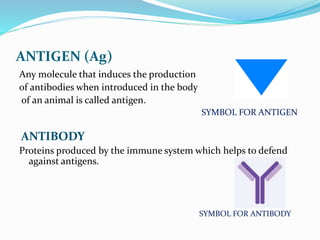
ANTIGEN (Ag)
Any molecule that induces the production
of antibodies when introduced in the body
of an animal is called antigen.
SYMBOL FOR ANTIGEN
ANTIBODY
Proteins produced by the immune system which helps to defend
against antigens.
SYMBOL FOR ANTIBODY
DEFINATION
 A ELISA Enzyme linked immunoabsorbent assay is a
specific type of biochemical test that measures the
presence or concentration of a antigen or antibody
present in a substance.
Enzyme label
 In ELISA it is necessary to use any marker to know the
antigen-antibody binding.
 For such purpose we label either antigen or antibody
with some materials that donot interfere with the
binding.
Continued….
 These labels used to change in color,emission of light or
other signal that shows antigen-antibody binding.
 The chosen enzyme should not be normally present in the
patient samples.
 The enzyme converts a colorless substrate to a colored
product indicating the presence of Ag-Ab binding.
TYPES OF ELISA
DIRECT ELISA
SANDWICH ELISA
INDIRECT ELISA
DIRECT ELISA
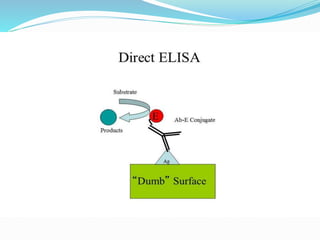
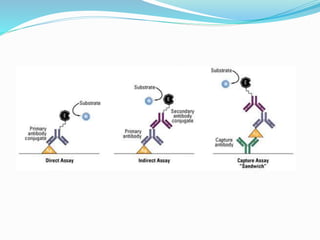
 A solution of the antigen to be tested for is added to
each well of microtiter plate, where it is given to
adhere to plastic through charge interactions.
 A solution of non reacting protein such as casein is
added to well in order to cover any plastic surface in
the well which remains uncoated by the antigen.
 The antibody with an attached enzyme is added which
binds specifically to test antigen coating the well.
Continued…
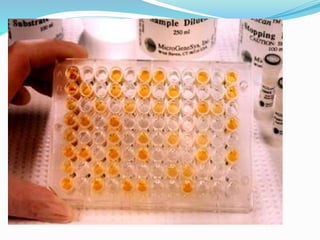
 A substrate for this enzyme is then added,this
substrate changes the color upon reaction with
enzyme.
 Higher the concentration of antibody,stronger the
color changed.
 Often spectrometer is used to give the quantitative
value for color change.
INDIRECT ELISA
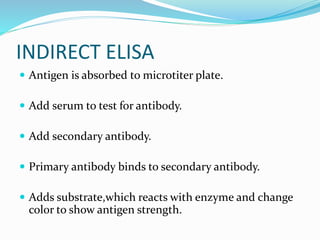
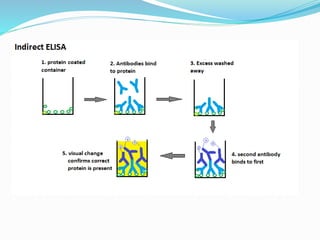
 Antigen is absorbed to microtiter plate.
 Add serum to test for antibody.
 Add secondary antibody.
 Primary antibody binds to secondary antibody.
 Adds substrate,which reacts with enzyme and change
color to show antigen strength.
SANDWICH ELISA
 In this procedure plate is coated with known quantity
of antibody.
 The primary antigen containing sample is added to
plate and captured by antibody.
 Plate is washed and removed unbound antigen.
Continued…
 A specific antibody is added and binds to antigen.Now
antigen is stuck between two antibodies.
 Enzyme linked secondary antibodies are applied to
detect antibodies.
 Substrate is added the enzyme reacts with substrate
that changes color.
APPLICATIONS OF ELISA
 1- Hormones
 2- Proteins
 3- Infectious Agent ( Viral, Bacterial,
 4- For Rapid TestParasitic, Fungal )
 5- Drug Tests
 6- IgG, IgM, IgA
 7- Tumor Tests
 8- Serum Proteins
 9- In Clinical Research
 10-HIV ,Hepatitus B & C test
Enzyme linked immunosorbent assay (elisa)

Enzyme linked immunosorbent assay (elisa)

  • 1.
    PREPARED BY NAHIMA ANHUM MSCMICROBIOLOGY 2ND SEMESTER SUBMITTED TO DR.ALI UNIVERSITY OF HARIPUR
  • 2.
    INTRODUCTION  ELISA isa widely used method for measuring the concentration of particular molecule such as antibody or antigen in a fluid,e.g serum or urine.  IMMUNO-refers to an immune response that causes the body to generate antibodies.  ASSAY-refers to test or check amount/purity of a substance in a given mixture.  First used by Engvall and Perlma in 1971.
  • 3.
    ANTIGEN (Ag) Any moleculethat induces the production of antibodies when introduced in the body of an animal is called antigen. SYMBOL FOR ANTIGEN ANTIBODY Proteins produced by the immune system which helps to defend against antigens. SYMBOL FOR ANTIBODY
  • 4.
    DEFINATION  A ELISAEnzyme linked immunoabsorbent assay is a specific type of biochemical test that measures the presence or concentration of a antigen or antibody present in a substance. Enzyme label  In ELISA it is necessary to use any marker to know the antigen-antibody binding.  For such purpose we label either antigen or antibody with some materials that donot interfere with the binding.
  • 5.
    Continued….  These labelsused to change in color,emission of light or other signal that shows antigen-antibody binding.  The chosen enzyme should not be normally present in the patient samples.  The enzyme converts a colorless substrate to a colored product indicating the presence of Ag-Ab binding.
  • 6.
    TYPES OF ELISA DIRECTELISA SANDWICH ELISA INDIRECT ELISA
  • 7.
    DIRECT ELISA  Asolution of the antigen to be tested for is added to each well of microtiter plate, where it is given to adhere to plastic through charge interactions.  A solution of non reacting protein such as casein is added to well in order to cover any plastic surface in the well which remains uncoated by the antigen.  The antibody with an attached enzyme is added which binds specifically to test antigen coating the well.
  • 9.
    Continued…  A substratefor this enzyme is then added,this substrate changes the color upon reaction with enzyme.  Higher the concentration of antibody,stronger the color changed.  Often spectrometer is used to give the quantitative value for color change.
  • 12.
    INDIRECT ELISA  Antigenis absorbed to microtiter plate.  Add serum to test for antibody.  Add secondary antibody.  Primary antibody binds to secondary antibody.  Adds substrate,which reacts with enzyme and change color to show antigen strength.
  • 14.
    SANDWICH ELISA  Inthis procedure plate is coated with known quantity of antibody.  The primary antigen containing sample is added to plate and captured by antibody.  Plate is washed and removed unbound antigen.
  • 15.
    Continued…  A specificantibody is added and binds to antigen.Now antigen is stuck between two antibodies.  Enzyme linked secondary antibodies are applied to detect antibodies.  Substrate is added the enzyme reacts with substrate that changes color.
  • 17.
    APPLICATIONS OF ELISA 1- Hormones  2- Proteins  3- Infectious Agent ( Viral, Bacterial,  4- For Rapid TestParasitic, Fungal )  5- Drug Tests  6- IgG, IgM, IgA  7- Tumor Tests  8- Serum Proteins  9- In Clinical Research  10-HIV ,Hepatitus B & C test