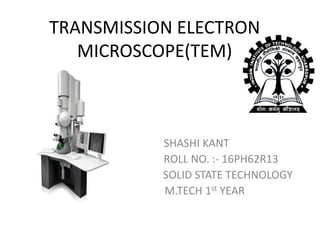
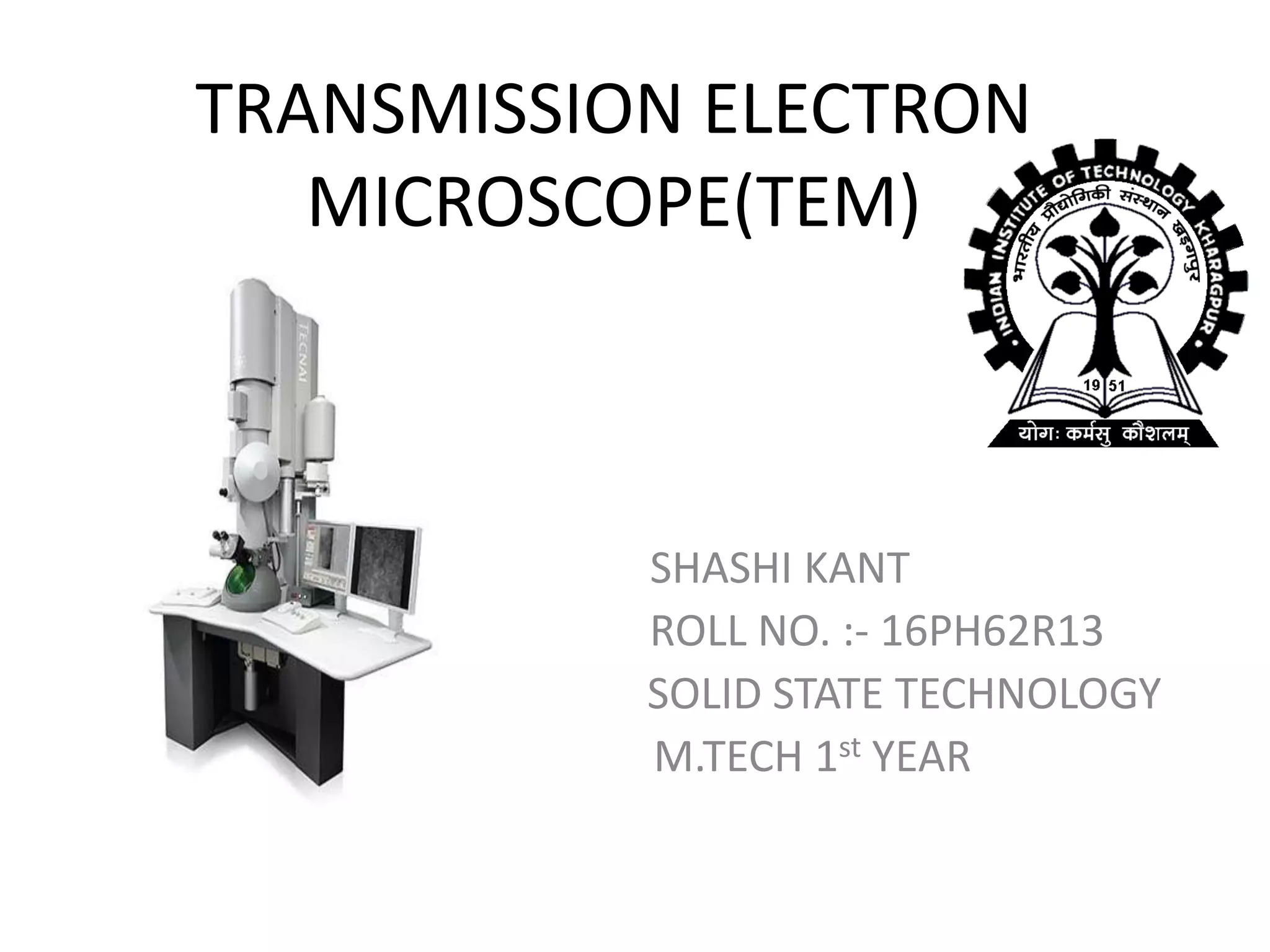

TRANSMISSION ELECTRON
MICROSCOPE(TEM)
SHASHI KANT
ROLL NO. :- 16PH62R13
SOLID STATE TECHNOLOGY
M.TECH 1st YEAR
Outline
• light microscope vs Electron microscope
• Types of Electron microscope
• Transmission electron micrscope
• Tem imaging
• Tem applications
• Advanateges
• Disadvantages
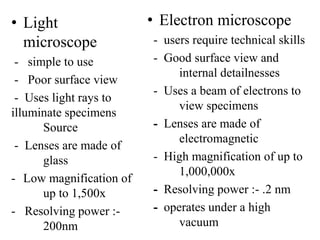
• Light
microscope
- simple to use
- Poor surface view
- Uses light rays to
illuminate specimens
Source
- Lenses are made of
glass
- Low magnification of
up to 1,500x
- Resolving power :-
200nm
• Electron microscope
- users require technical skills
- Good surface view and
internal detailnesses
- Uses a beam of electrons to
view specimens
- Lenses are made of
electromagnetic
- High magnification of up to
1,000,000x
- Resolving power :- .2 nm
- operates under a high
vacuum
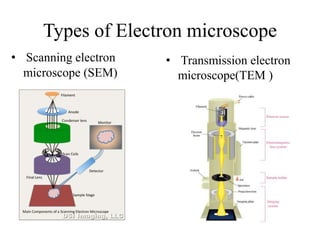
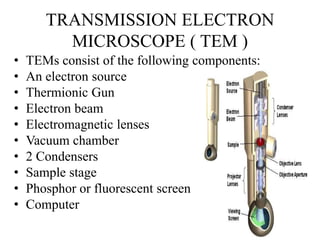
Types of Electron microscope
• Scanning electron
microscope (SEM)
• Transmission electron
microscope(TEM )
TRANSMISSION ELECTRON
MICROSCOPE ( TEM )
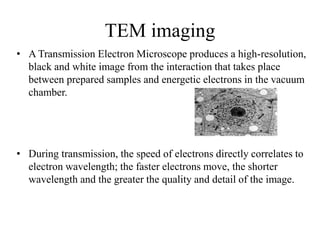
• TEMs consist of the following components:
• An electron source
• Thermionic Gun
• Electron beam
• Electromagnetic lenses
• Vacuum chamber
• 2 Condensers
• Sample stage
• Phosphor or fluorescent screen
• Computer
TEM imaging
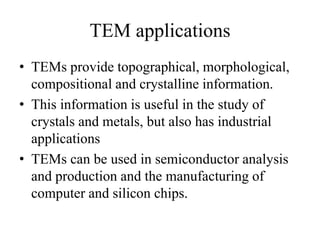
• A Transmission Electron Microscope produces a high-resolution,
black and white image from the interaction that takes place
between prepared samples and energetic electrons in the vacuum
chamber.
• During transmission, the speed of electrons directly correlates to
electron wavelength; the faster electrons move, the shorter
wavelength and the greater the quality and detail of the image.
TEM applications
• TEMs provide topographical, morphological,
compositional and crystalline information.
• This information is useful in the study of
crystals and metals, but also has industrial
applications
• TEMs can be used in semiconductor analysis
and production and the manufacturing of
computer and silicon chips.
Advantages
• TEMs have a wide-range of applications and can be utilized
in a variety of different scientific, educational and industrial
fields
• TEMs provide information on element and compound
structure
• Images are high-quality and detailed
• TEMs are able to yield information of surface features,
shape, size and structure
• They are easy to operate with proper training
Disadvantages
• TEMs are large and very expensive
• Laborious sample preparation
• Potential artifacts from sample preparation
• Operation and analysis requires special
training
• TEMs require special housing and
maintenance
• Images are black and white
Transmission electron

Transmission electron

  • 1.
    TRANSMISSION ELECTRON MICROSCOPE(TEM) SHASHI KANT ROLLNO. :- 16PH62R13 SOLID STATE TECHNOLOGY M.TECH 1st YEAR
  • 2.
    Outline • light microscopevs Electron microscope • Types of Electron microscope • Transmission electron micrscope • Tem imaging • Tem applications • Advanateges • Disadvantages
  • 3.
    • Light microscope - simpleto use - Poor surface view - Uses light rays to illuminate specimens Source - Lenses are made of glass - Low magnification of up to 1,500x - Resolving power :- 200nm • Electron microscope - users require technical skills - Good surface view and internal detailnesses - Uses a beam of electrons to view specimens - Lenses are made of electromagnetic - High magnification of up to 1,000,000x - Resolving power :- .2 nm - operates under a high vacuum
  • 4.
    Types of Electronmicroscope • Scanning electron microscope (SEM) • Transmission electron microscope(TEM )
  • 5.
    TRANSMISSION ELECTRON MICROSCOPE (TEM ) • TEMs consist of the following components: • An electron source • Thermionic Gun • Electron beam • Electromagnetic lenses • Vacuum chamber • 2 Condensers • Sample stage • Phosphor or fluorescent screen • Computer
  • 6.
    TEM imaging • ATransmission Electron Microscope produces a high-resolution, black and white image from the interaction that takes place between prepared samples and energetic electrons in the vacuum chamber. • During transmission, the speed of electrons directly correlates to electron wavelength; the faster electrons move, the shorter wavelength and the greater the quality and detail of the image.
  • 7.
    TEM applications • TEMsprovide topographical, morphological, compositional and crystalline information. • This information is useful in the study of crystals and metals, but also has industrial applications • TEMs can be used in semiconductor analysis and production and the manufacturing of computer and silicon chips.
  • 8.
    Advantages • TEMs havea wide-range of applications and can be utilized in a variety of different scientific, educational and industrial fields • TEMs provide information on element and compound structure • Images are high-quality and detailed • TEMs are able to yield information of surface features, shape, size and structure • They are easy to operate with proper training
  • 9.
    Disadvantages • TEMs arelarge and very expensive • Laborious sample preparation • Potential artifacts from sample preparation • Operation and analysis requires special training • TEMs require special housing and maintenance • Images are black and white