Downloaded 13 times

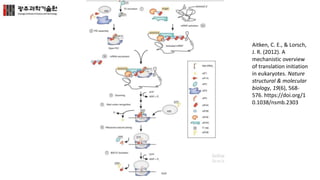
![Poulin F, Sonenberg N.
Mechanism of Translation
Initiation in Eukaryotes.
In: Madame Curie
Bioscience Database
[Internet]. Austin (TX):
Landes Bioscience; 2000-
2013. Available from:
https://www.ncbi.nlm.nih
.gov/books/NBK6597/](https://image.slidesharecdn.com/pptprotein-200102143808/85/Translation-Initiation-in-Eukaryotes-9-320.jpg)
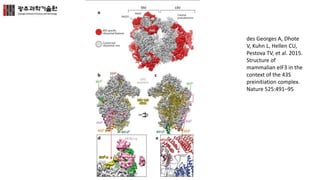
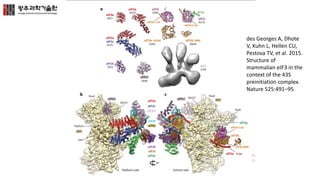
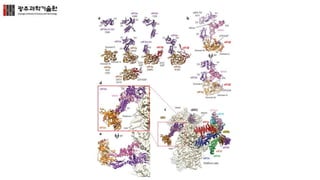
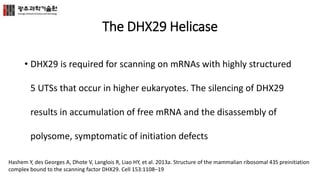
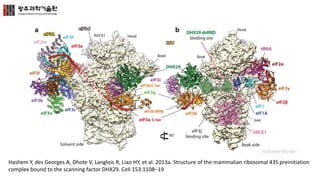
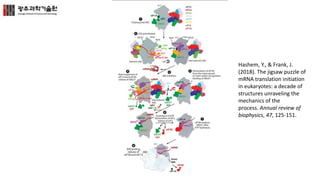
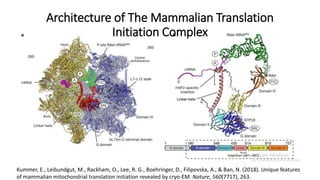


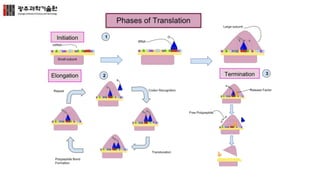
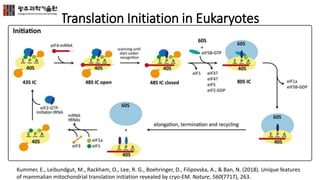
Translation initiation in eukaryotes is a highly regulated and rate-limiting process that involves the assembly of numerous transient complexes containing over a dozen eukaryotic initiation factors. This process culminates in the accommodation of a start codon at the appropriate ribosomal site. Structural biology has provided insights into the mammalian mitochondrial translation initiation complex and other key complexes and factors involved in the process, such as eIF3, the eIF2 ternary complex, and the DHX29 helicase. Dysregulation of translation initiation can contribute to diseases like cancer and metabolic disorders.


![translation in eukaryotes[1].pptx deatiled explaination](https://cdn.slidesharecdn.com/ss_thumbnails/translationineukaryotes1-250505053443-1349647d-thumbnail.jpg?width=640&height=640&fit=bounds)


![Ashelectures200kmkjnjkkjnkjnkjnjn j7[1].ppt](https://cdn.slidesharecdn.com/ss_thumbnails/ashelectures20071-250726214759-c2671eb9-thumbnail.jpg?width=640&height=640&fit=bounds)


