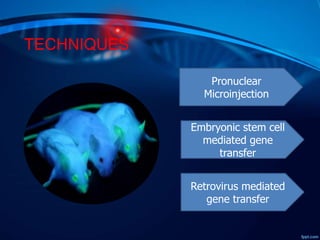
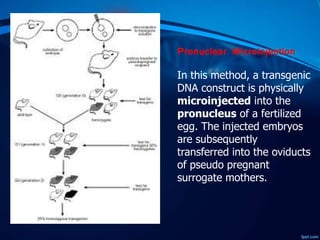
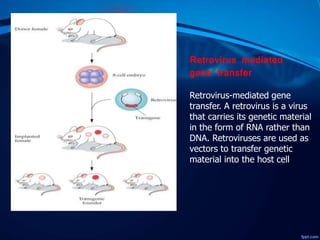
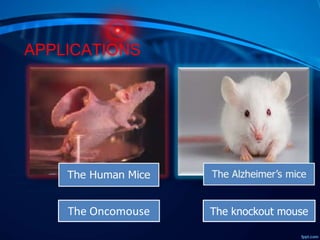
Transgenic mice, first created in 1982 by R. Jaenisch and R. Mulligan, carry a foreign gene inserted into their genome through techniques such as pronuclear microinjection, embryonic stem cell-mediated gene transfer, and retrovirus-mediated gene transfer. These methods allow scientists to manipulate genes for various applications, including the development of model organisms like the 'oncomouse' which aids in cancer research. While offering advantages such as behavioral similarity to humans, transgenic mice also face challenges like high costs and difficult embryo manipulation.