Transaction
 Analysis
       PRESENTED BY :


        •P R I Y A N K A R A I
              •M B A 1 4
       •A R M Y I N S T I T U T E
       OF MANAGEMENT,
           •K O L K A T A
 Developed by Canadian born US psychiatrist Eric
 Berne during the late 1950s


 A model for explaining why and how:
   People think like they do
   People act like they do
   People interact/communicate with others
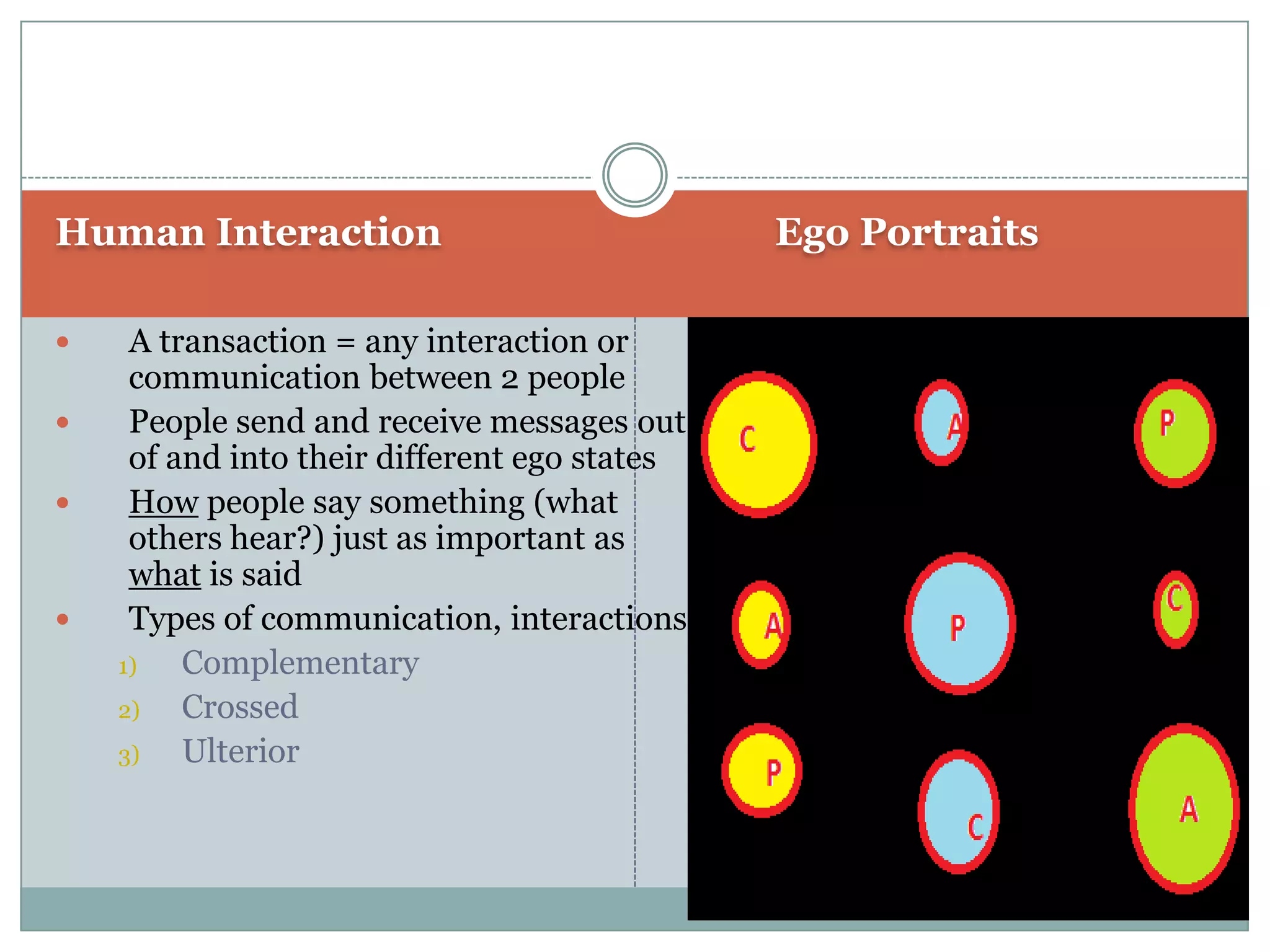
Human Interaction                             Ego Portraits

    A transaction = any interaction or
     communication between 2 people
    People send and receive messages out
     of and into their different ego states
    How people say something (what
     others hear?) just as important as
     what is said
    Types of communication, interactions
    1)   Complementary
    2)   Crossed
    3)   Ulterior
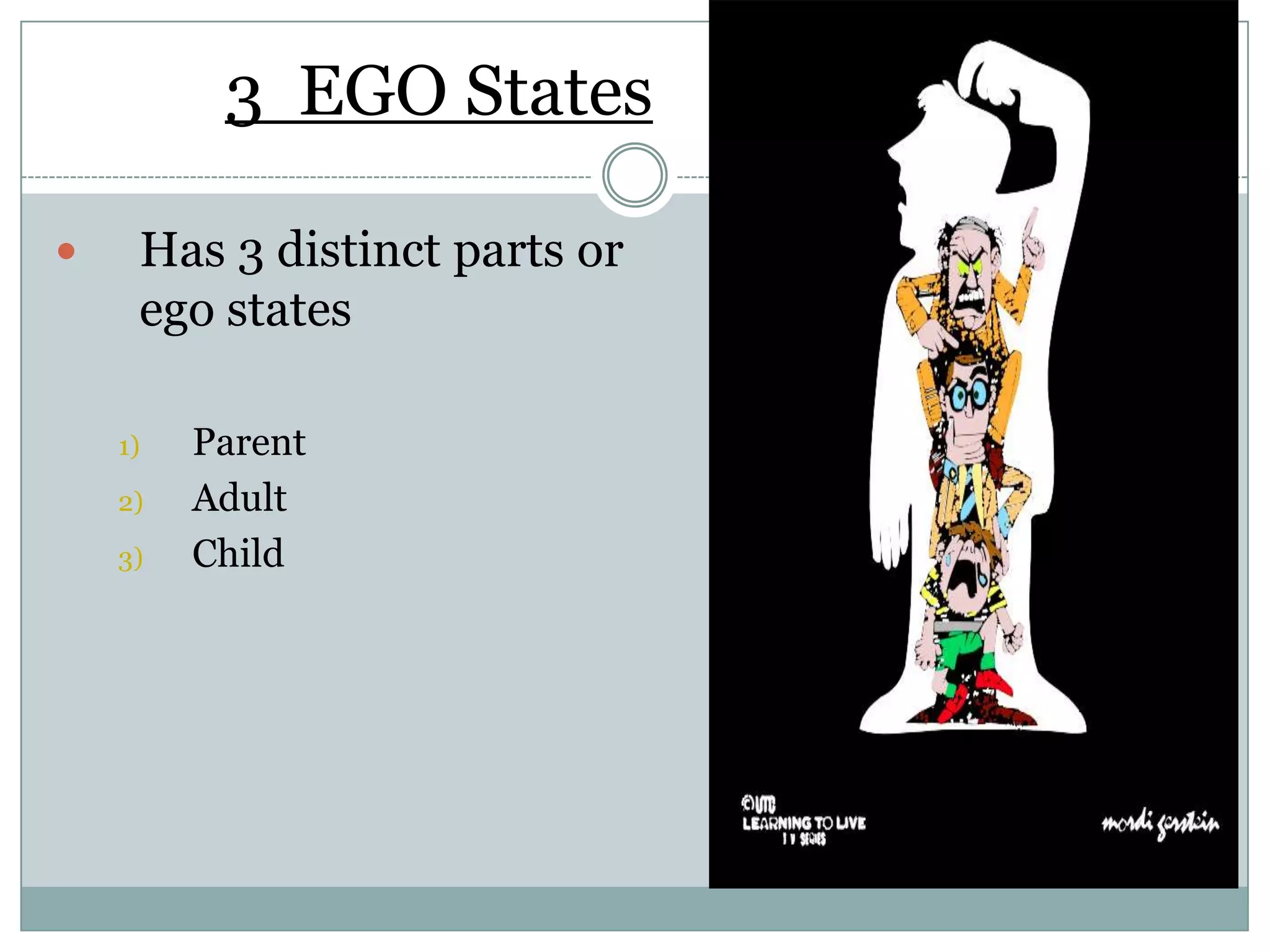
3 EGO States

    Has 3 distinct parts or
     ego states

    1)   Parent
    2)   Adult
    3)   Child
Parent Ego State


P    Behaviour , Thought
     , Feeling copied from
     Parents or Parent Figure


        Prejudicial views


        Nurturing views


        Critical views
Adult ego state

                                A
             Behaviour , thought
             and feelings which are
             direct responses of
             here and now


              Decision Based on
              Logic, Combination
              and Probabilities
Child State
                                           •Happy Impulsive
                                           •Angry, Fearful
                                           •Curious
Behaviors, thought and feelings replayed   •Eager to please
from the childhood                         •Pleasure seeking
                                           •Rebellious

         Natural Child


         Adaptive Child


         Little Professor
                                 C
Life Position analysis & Stroking


                         STROKING

                    POSITIVE STROKING :
                        “I LIKE YOU”

                    NEGATIVE STROKING :
                     “I DON’T LIKE YOU”
Types of transaction
 Complementary ‘Transactions’
 Crossed ‘Transactions’
 Ulterior ‘Transactions’
Complementary ‘Transactions’


        C       A       C

P       A       P       P
C       P       C       A
Example : P - C


“You have cold, you poor     “I don’t know. I just
thing. Is there anything I   feel so rotten. Can you
can get u?”                  please give me some
                             medicine.”
Example : A-A

“You can never                  “Exactly, They
trust one of those              are all alike.”
people.”
Crossed ‘Transactions’
                        How are you?

A-A : Stimulus-
                                       C
“Sir, This
computer doesn’t
boot. Can you
help me?”
                    A                  A
P-C :Response –     P                  P
”Well , Now what
did you do to it”
Ulterior' Transactions’


    A

P   P      A-A : “Where did you hide the
           car keys this time?”
C   C
           “Hide “ word means losing
           the car keys once again!!
           P-C
Transactional analysis - diagnosis

 Behavioral diagnosis


                                     Social diagnosis
 Historical diagnosis


                          Phenomenological diagnosis
Application of TA in OD
•To give ideas improve
communication.

•To Minimize regrettable actions.

•Control of interpersonal relationship.

•Promotes Social Interaction.

•Focuses on personal growth and
change.
Transaction Analysis (Human Resource)

Transaction Analysis (Human Resource)

  • 1.
    Transaction Analysis PRESENTED BY : •P R I Y A N K A R A I •M B A 1 4 •A R M Y I N S T I T U T E OF MANAGEMENT, •K O L K A T A
  • 2.
     Developed byCanadian born US psychiatrist Eric Berne during the late 1950s  A model for explaining why and how:  People think like they do  People act like they do  People interact/communicate with others
  • 3.
    Human Interaction Ego Portraits  A transaction = any interaction or communication between 2 people  People send and receive messages out of and into their different ego states  How people say something (what others hear?) just as important as what is said  Types of communication, interactions 1) Complementary 2) Crossed 3) Ulterior
  • 4.
    3 EGO States  Has 3 distinct parts or ego states 1) Parent 2) Adult 3) Child
  • 5.
    Parent Ego State P Behaviour , Thought , Feeling copied from Parents or Parent Figure Prejudicial views Nurturing views Critical views
  • 6.
    Adult ego state A Behaviour , thought and feelings which are direct responses of here and now Decision Based on Logic, Combination and Probabilities
  • 7.
    Child State •Happy Impulsive •Angry, Fearful •Curious Behaviors, thought and feelings replayed •Eager to please from the childhood •Pleasure seeking •Rebellious Natural Child Adaptive Child Little Professor C
  • 8.
    Life Position analysis& Stroking STROKING POSITIVE STROKING : “I LIKE YOU” NEGATIVE STROKING : “I DON’T LIKE YOU”
  • 9.
    Types of transaction Complementary ‘Transactions’  Crossed ‘Transactions’  Ulterior ‘Transactions’
  • 10.
    Complementary ‘Transactions’ C A C P A P P C P C A
  • 11.
    Example : P- C “You have cold, you poor “I don’t know. I just thing. Is there anything I feel so rotten. Can you can get u?” please give me some medicine.”
  • 12.
    Example : A-A “Youcan never “Exactly, They trust one of those are all alike.” people.”
  • 13.
    Crossed ‘Transactions’ How are you? A-A : Stimulus- C “Sir, This computer doesn’t boot. Can you help me?” A A P-C :Response – P P ”Well , Now what did you do to it”
  • 14.
    Ulterior' Transactions’ A P P A-A : “Where did you hide the car keys this time?” C C “Hide “ word means losing the car keys once again!! P-C
  • 15.
    Transactional analysis -diagnosis  Behavioral diagnosis  Social diagnosis  Historical diagnosis  Phenomenological diagnosis
  • 16.
    Application of TAin OD •To give ideas improve communication. •To Minimize regrettable actions. •Control of interpersonal relationship. •Promotes Social Interaction. •Focuses on personal growth and change.