Did you know?
Do you know that only 1% of the companies admit that their
succession planning process is outstanding?
Did you know?
Do you know that only 1% of the companies admit that their
succession planning process is outstanding?
And more than 60% of the companies bluntly admit that their
succession planning process is fair or even worse.
Succession planning process
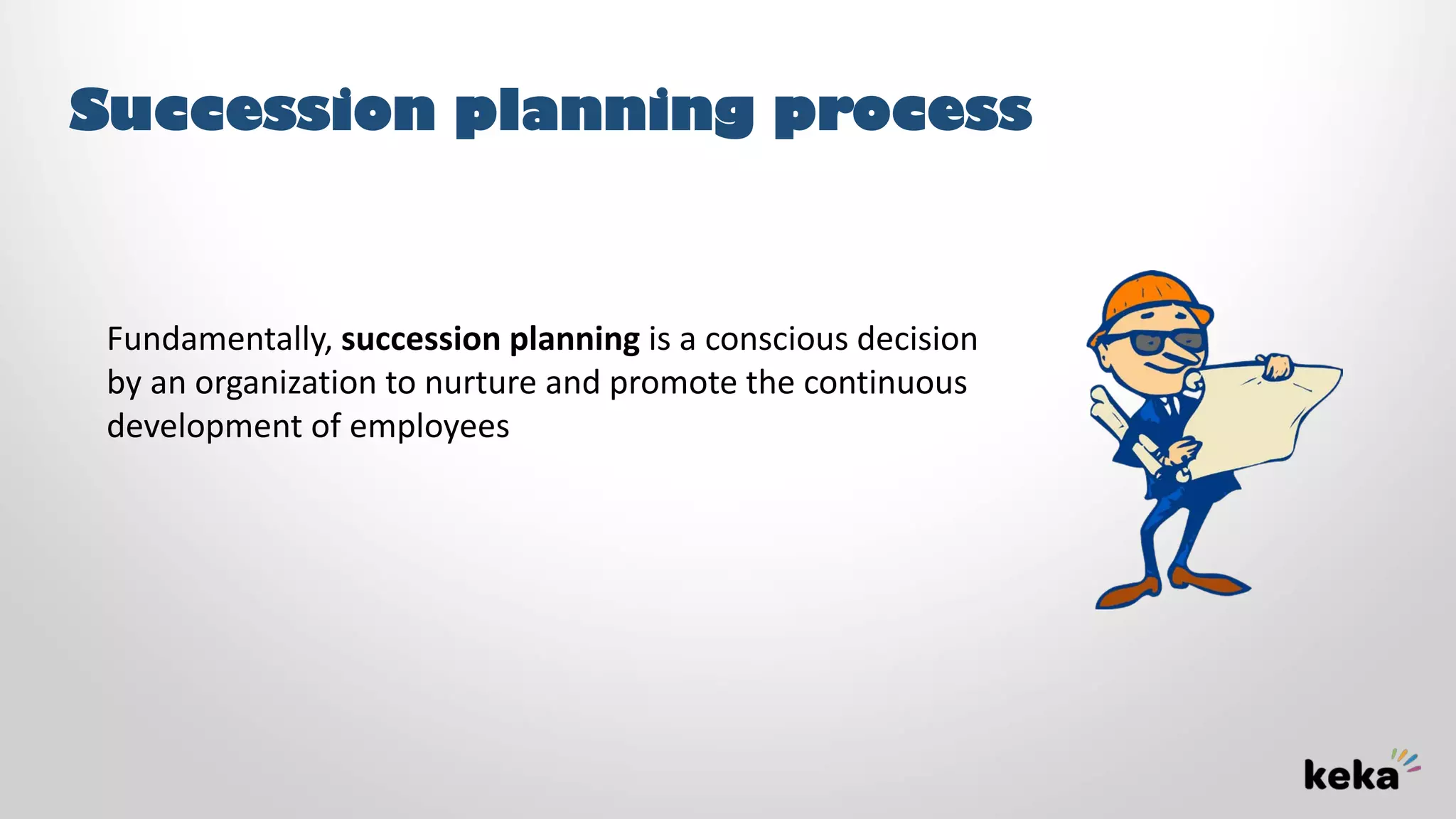
Fundamentally, succession planning is a conscious decision
by an organization to nurture and promote the continuous
development of employees
Succession planning process
… and to make sure that the key positions in the organization maintain
some measure of stability, thus enabling an organization to achieve
desired business objectives.
Succession planning vs. Replacement
planning
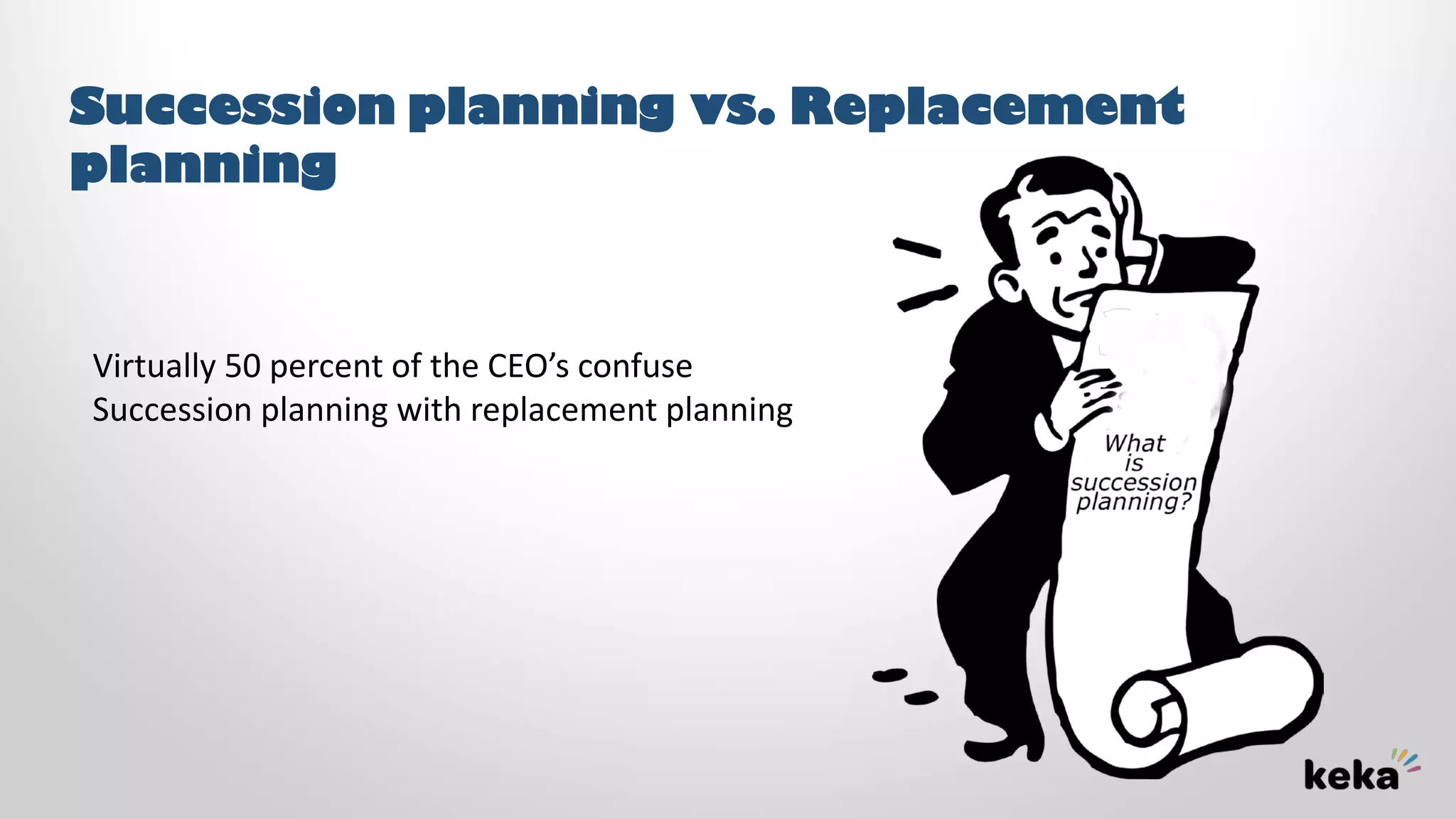
Virtually 50 percent of the CEO’s confuse
Succession planning with replacement planning
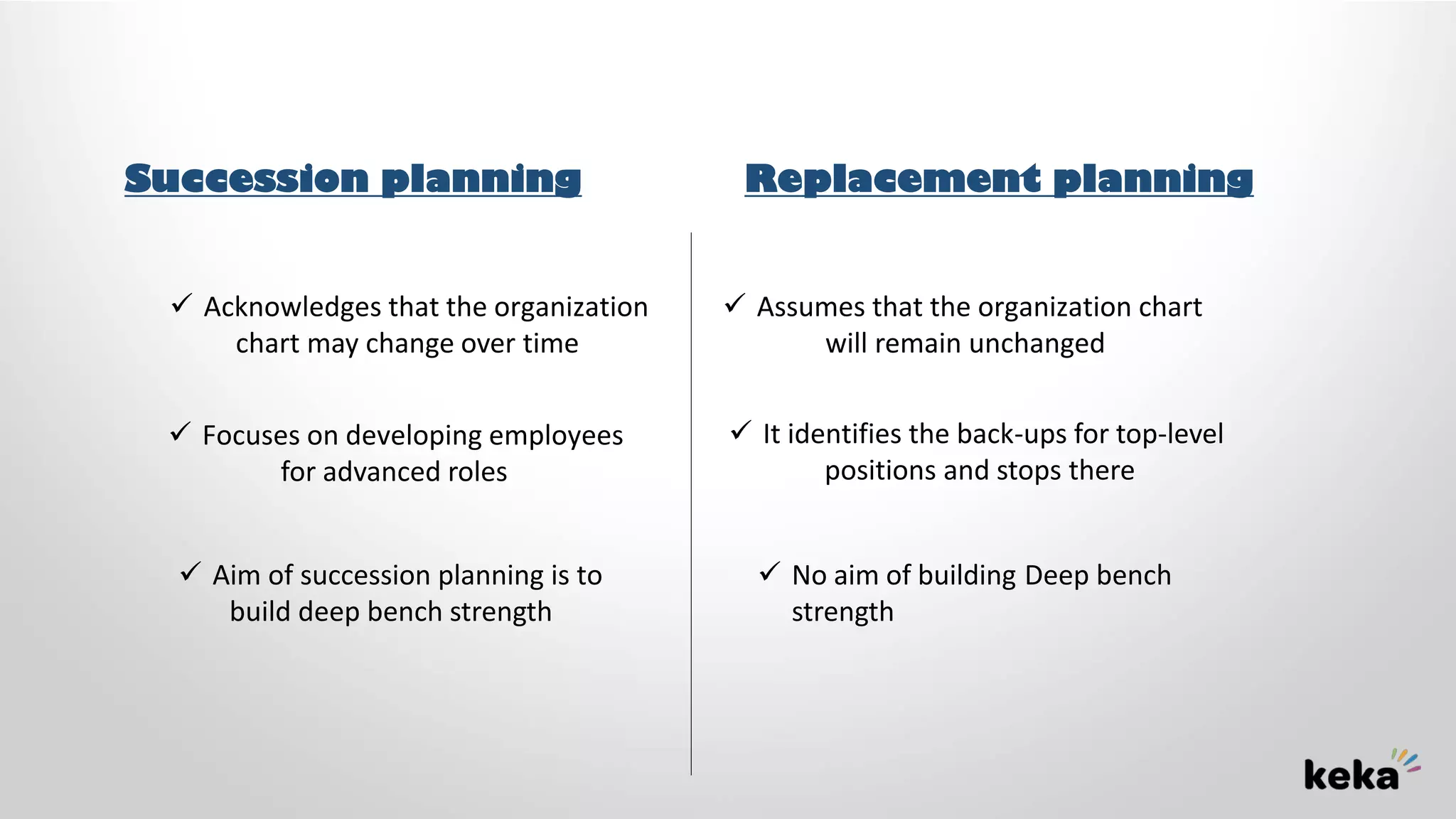
Replacement planning
 Assumes that the organization chart
will remain unchanged
 Acknowledges that the organization
chart may change over time
 It identifies the back-ups for top-level
positions and stops there
 Focuses on developing employees
for advanced roles
 Aim of succession planning is to
build deep bench strength
 No aim of building Deep bench
strength
Succession planning
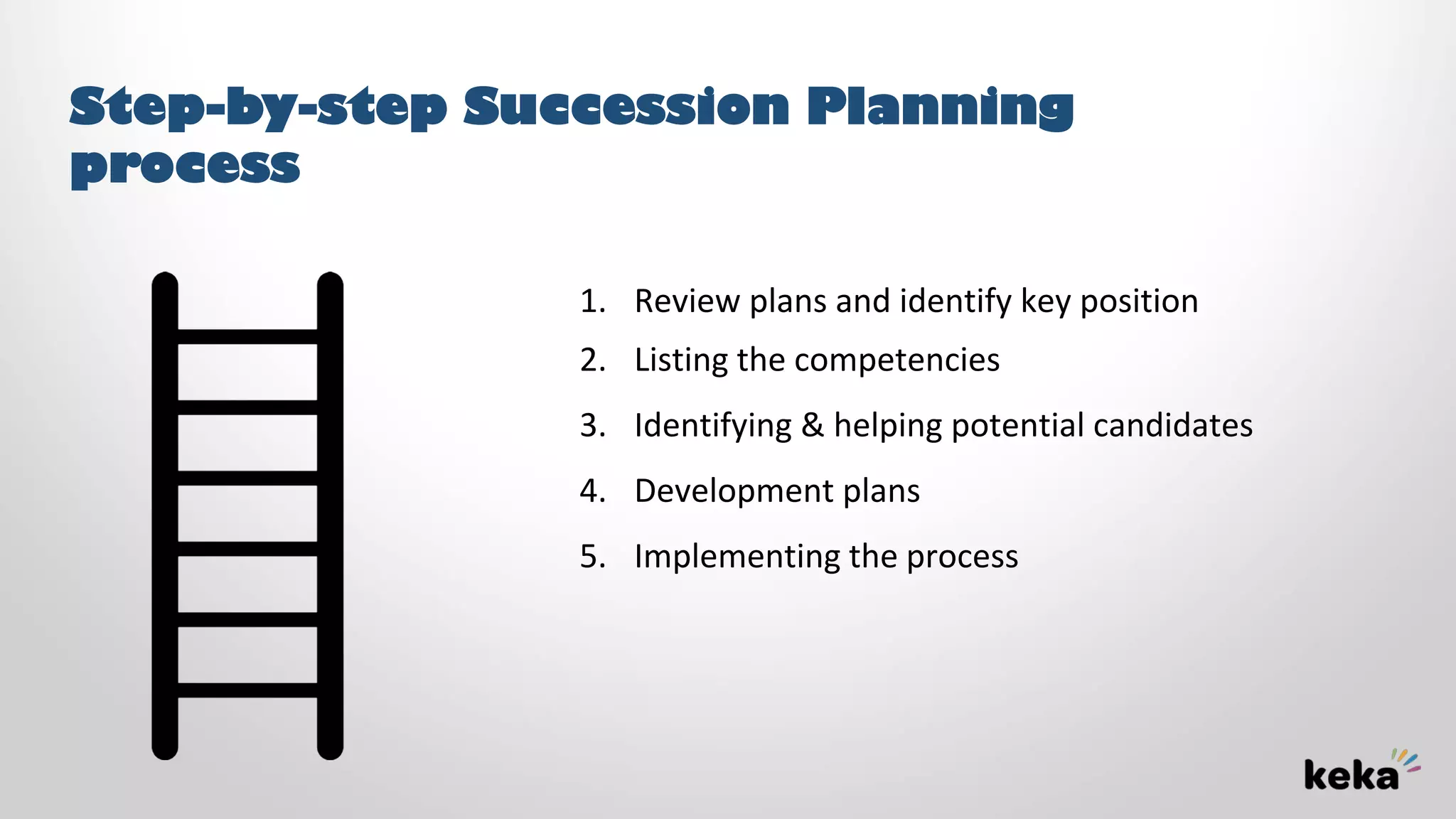
Step-by-step Succession Planning
process
1. Review plans and identify key position
2. Listing the competencies
3. Identifying & helping potential candidates
4. Development plans
5. Implementing the process
Succession Planning process
The first step in succession planning is to identify
current or future key positions or groups in the
organization
Step-1: Review Plans and identify key positions
Succession Planning process
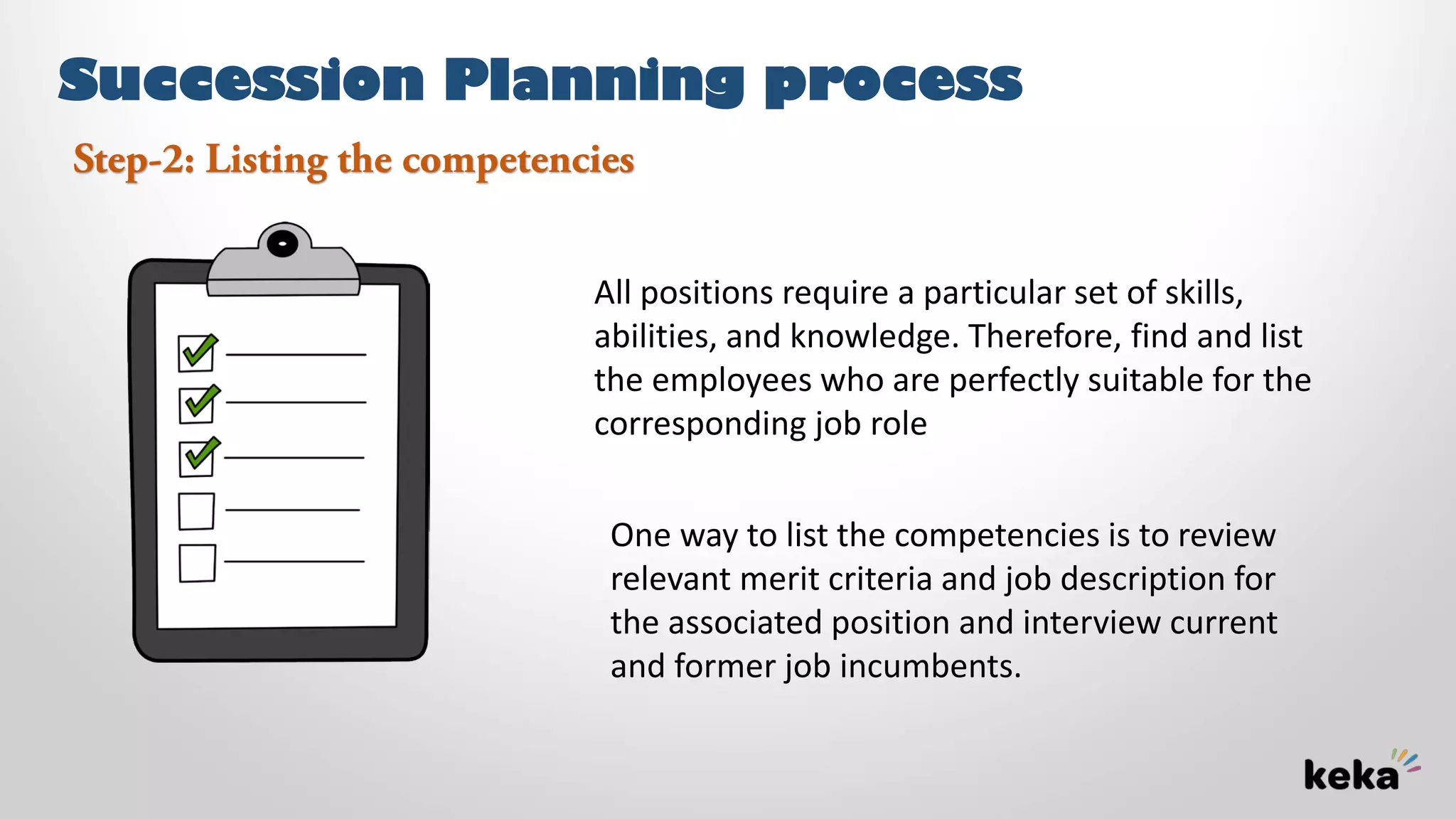
All positions require a particular set of skills,
abilities, and knowledge. Therefore, find and list
the employees who are perfectly suitable for the
corresponding job role
Step-2: Listing the competencies
Succession Planning process
All positions require a particular set of skills,
abilities, and knowledge. Therefore, find and list
the employees who are perfectly suitable for the
corresponding job role
Step-2: Listing the competencies
One way to list the competencies is to review
relevant merit criteria and job description for
the associated position and interview current
and former job incumbents.
Succession Planning process
This step of succession planning is similar to that of
general job recruitment practice.
Step-3: Identifying & helping potential candidates
Succession Planning process
This step of succession planning is similar to that of
general job recruitment practice.
But succession planning process goes one step
ahead by helping candidates who show great
interest in developing the requisite skills for the
particular position
Step-3: Identifying & helping potential candidates
Succession Planning process
This step of succession planning is similar to that of
general job recruitment practice.
But succession planning process goes one step
ahead by helping candidates who show great
interest in developing the requisite skills for the
particular position
Helping and mentoring these candidates prior to
the formal recruitment process that begins once, a
position becomes vacant.
Step-3: Identifying & helping potential candidates
Succession Planning process
Once you’ve found the relevant candidates suitable
for the role, based on their potential for success
and interest in a key position,
the organization should ensure that these
employees have access to development
opportunities and learning tools.
Step-4: Development plans
Succession Planning process
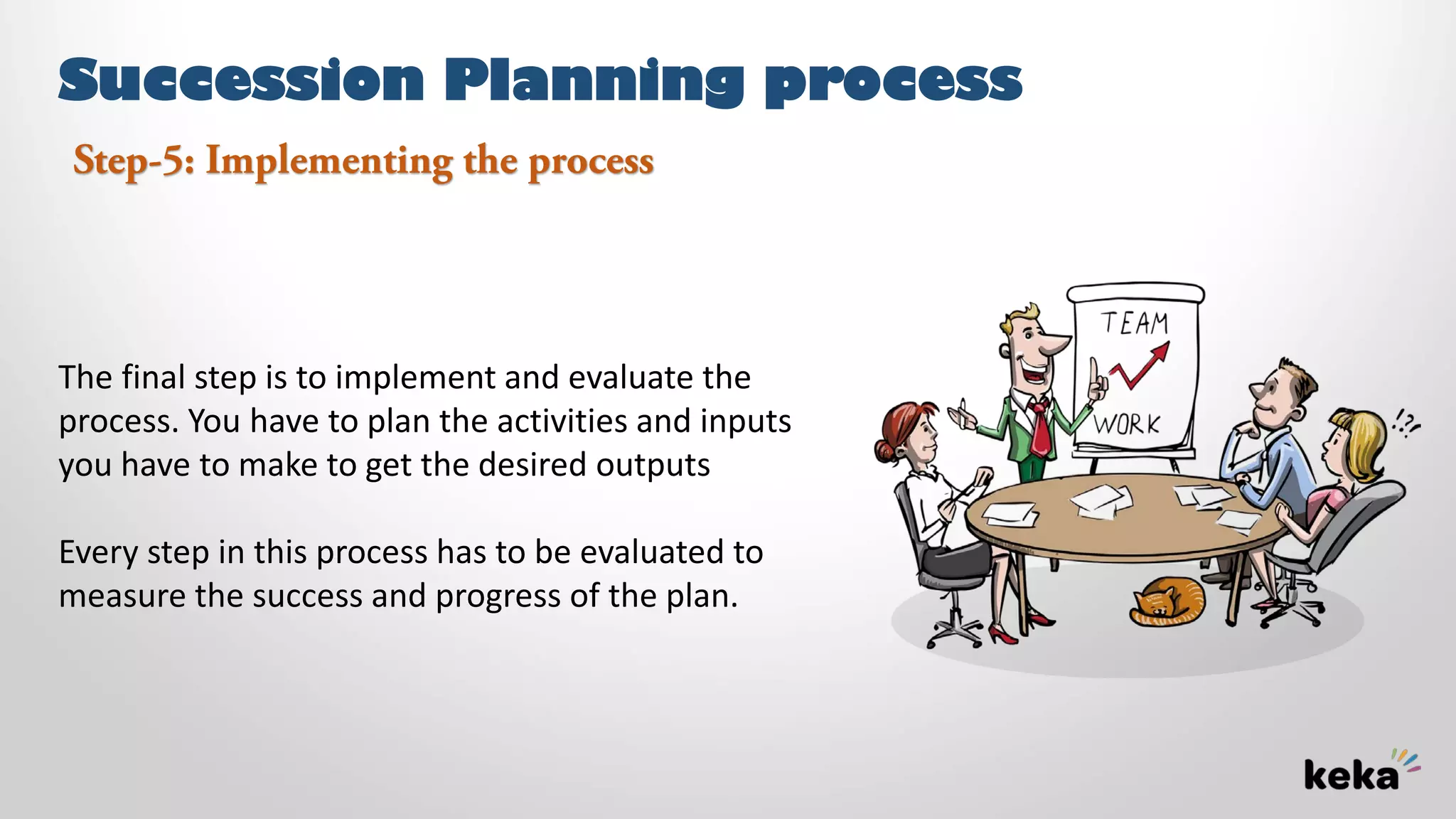
The final step is to implement and evaluate the
process. You have to plan the activities and inputs
you have to make to get the desired outputs
Every step in this process has to be evaluated to
measure the success and progress of the plan.
Step-5: Implementing the process
Succession Planning process
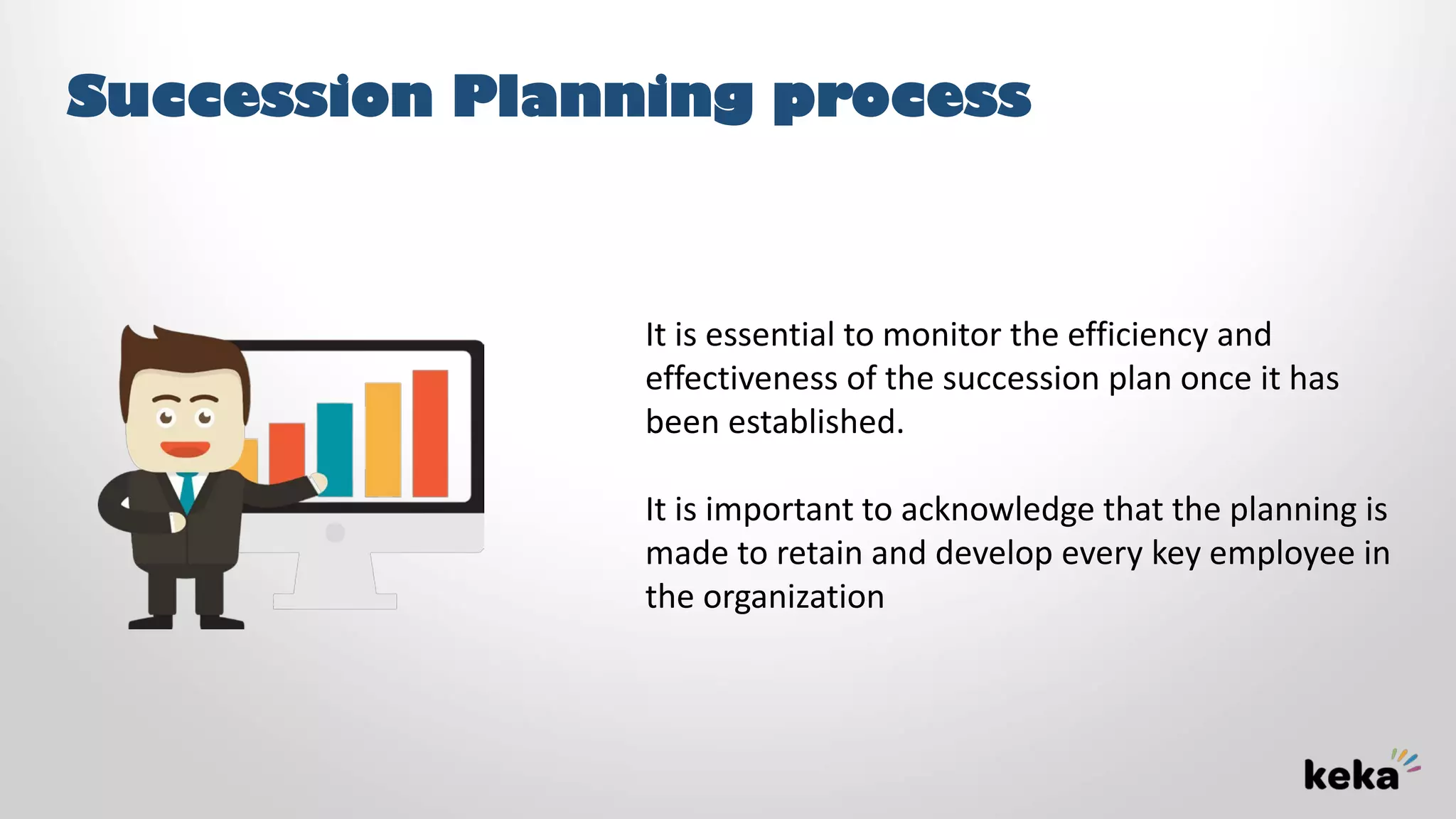
It is essential to monitor the efficiency and
effectiveness of the succession plan once it has
been established.
It is important to acknowledge that the planning is
made to retain and develop every key employee in
the organization
www.keka.com
Follow us to get
trending HR updates

Succession planning process - Step by step Guide

  • 2.
    Did you know? Doyou know that only 1% of the companies admit that their succession planning process is outstanding?
  • 3.
    Did you know? Doyou know that only 1% of the companies admit that their succession planning process is outstanding? And more than 60% of the companies bluntly admit that their succession planning process is fair or even worse.
  • 4.
    Succession planning process Fundamentally,succession planning is a conscious decision by an organization to nurture and promote the continuous development of employees
  • 5.
    Succession planning process …and to make sure that the key positions in the organization maintain some measure of stability, thus enabling an organization to achieve desired business objectives.
  • 6.
    Succession planning vs.Replacement planning Virtually 50 percent of the CEO’s confuse Succession planning with replacement planning
  • 7.
    Replacement planning  Assumesthat the organization chart will remain unchanged  Acknowledges that the organization chart may change over time  It identifies the back-ups for top-level positions and stops there  Focuses on developing employees for advanced roles  Aim of succession planning is to build deep bench strength  No aim of building Deep bench strength Succession planning
  • 8.
    Step-by-step Succession Planning process 1.Review plans and identify key position 2. Listing the competencies 3. Identifying & helping potential candidates 4. Development plans 5. Implementing the process
  • 9.
    Succession Planning process Thefirst step in succession planning is to identify current or future key positions or groups in the organization Step-1: Review Plans and identify key positions
  • 10.
    Succession Planning process Allpositions require a particular set of skills, abilities, and knowledge. Therefore, find and list the employees who are perfectly suitable for the corresponding job role Step-2: Listing the competencies
  • 11.
    Succession Planning process Allpositions require a particular set of skills, abilities, and knowledge. Therefore, find and list the employees who are perfectly suitable for the corresponding job role Step-2: Listing the competencies One way to list the competencies is to review relevant merit criteria and job description for the associated position and interview current and former job incumbents.
  • 12.
    Succession Planning process Thisstep of succession planning is similar to that of general job recruitment practice. Step-3: Identifying & helping potential candidates
  • 13.
    Succession Planning process Thisstep of succession planning is similar to that of general job recruitment practice. But succession planning process goes one step ahead by helping candidates who show great interest in developing the requisite skills for the particular position Step-3: Identifying & helping potential candidates
  • 14.
    Succession Planning process Thisstep of succession planning is similar to that of general job recruitment practice. But succession planning process goes one step ahead by helping candidates who show great interest in developing the requisite skills for the particular position Helping and mentoring these candidates prior to the formal recruitment process that begins once, a position becomes vacant. Step-3: Identifying & helping potential candidates
  • 15.
    Succession Planning process Onceyou’ve found the relevant candidates suitable for the role, based on their potential for success and interest in a key position, the organization should ensure that these employees have access to development opportunities and learning tools. Step-4: Development plans
  • 16.
    Succession Planning process Thefinal step is to implement and evaluate the process. You have to plan the activities and inputs you have to make to get the desired outputs Every step in this process has to be evaluated to measure the success and progress of the plan. Step-5: Implementing the process
  • 17.
    Succession Planning process Itis essential to monitor the efficiency and effectiveness of the succession plan once it has been established. It is important to acknowledge that the planning is made to retain and develop every key employee in the organization
  • 18.
    www.keka.com Follow us toget trending HR updates