


QUALITY ASSURANCE and GOOD
MANUFACTURING PRACTICE
MANISH KUMAR SHARMA
M. Pharmacy (pharmaceutics)
CONTENTS
1. Quality assurance
- principles of QA
- basic requirements
- QA, GMP & QC relationship
2. Good manufacturing practice
-principle
-list of documents & comparison of
various GMPs
-basic considerations
QUALITY ASSURANCE
QA covers all matters which individually or
collectively influence the quality of a product.
All parts of QA system should be adequately
resourced with Competent personnel, Suitable
& sufficient premises, equipment & facilities.
Principles of Quality Assurance (QA)
 Wide-ranging concept
Covers all matters that individually or
collectively influence the quality of a product
 Totality of the arrangements
To ensure that the drug is of the right quality
for the intended use
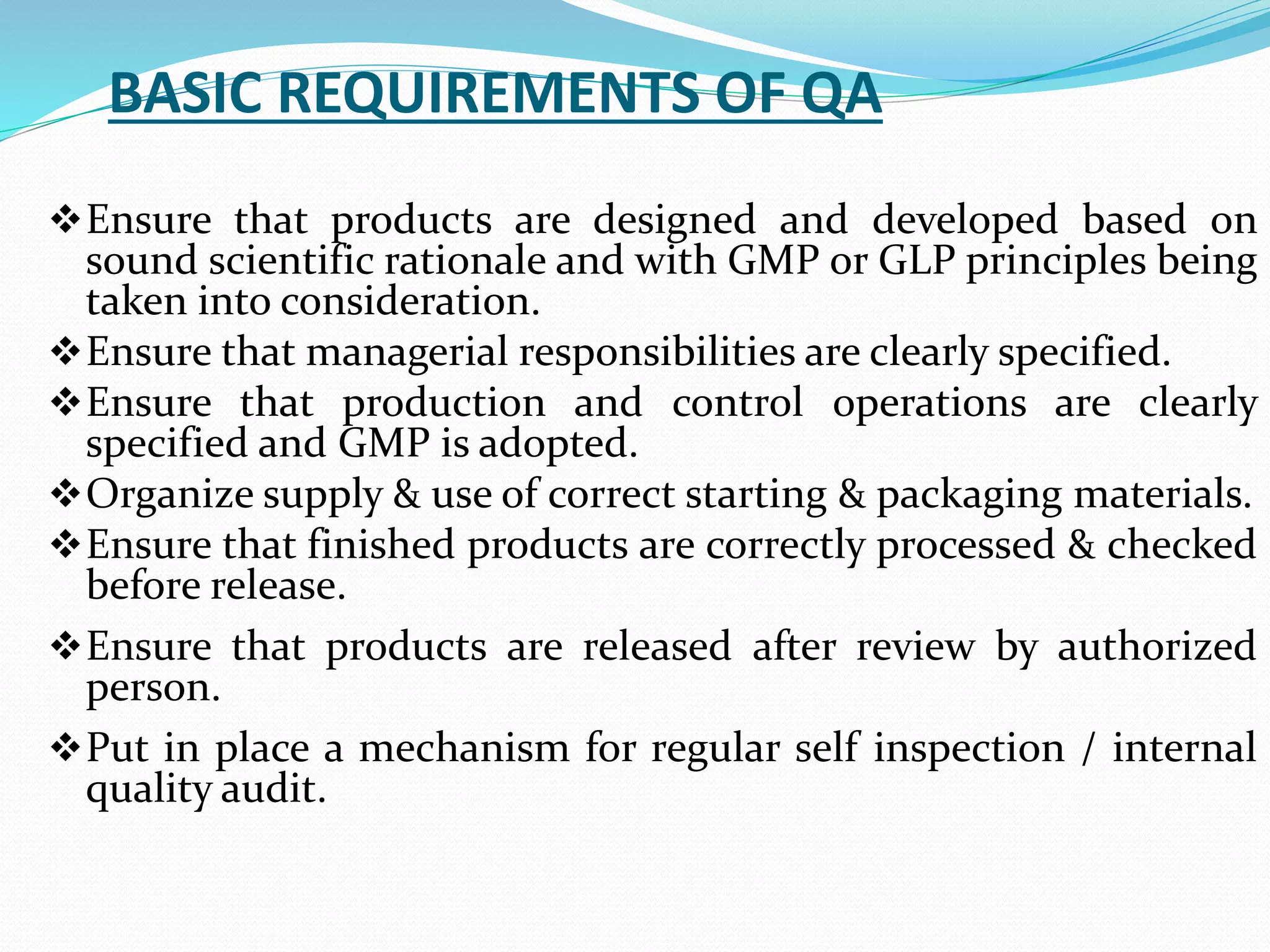
BASIC REQUIREMENTS OF QA
Ensure that products are designed and developed based on
sound scientific rationale and with GMP or GLP principles being
taken into consideration.
Ensure that managerial responsibilities are clearly specified.
Ensure that production and control operations are clearly
specified and GMP is adopted.
Organize supply & use of correct starting & packaging materials.
Ensure that finished products are correctly processed & checked
before release.
Ensure that products are released after review by authorized
person.
Put in place a mechanism for regular self inspection / internal
quality audit.
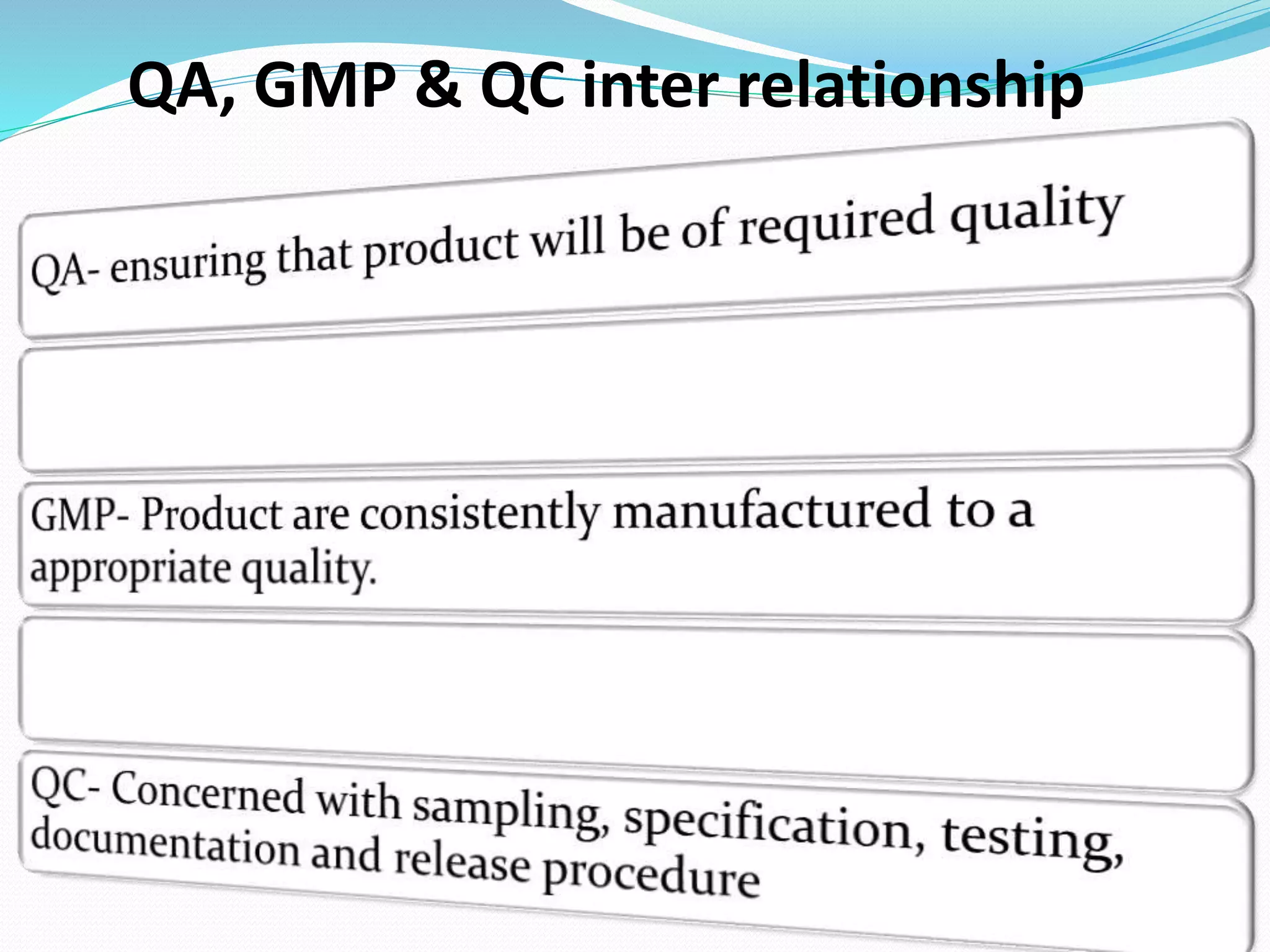
QA, GMP & QC inter relationship
GOOD
MANUFACTURING
PRACTICE
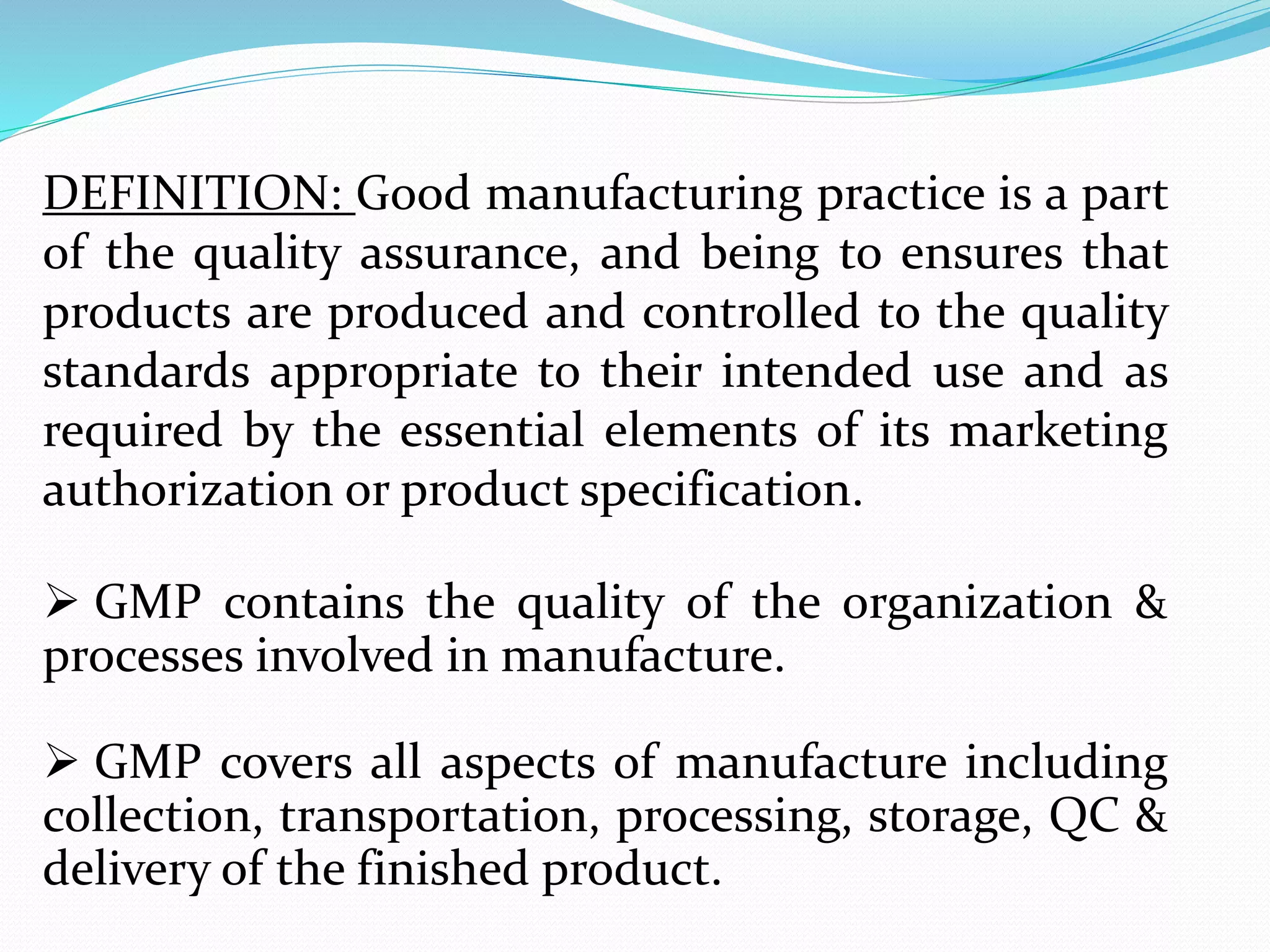
DEFINITION: Good manufacturing practice is a part
of the quality assurance, and being to ensures that
products are produced and controlled to the quality
standards appropriate to their intended use and as
required by the essential elements of its marketing
authorization or product specification.
 GMP contains the quality of the organization &
processes involved in manufacture.
 GMP covers all aspects of manufacture including
collection, transportation, processing, storage, QC &
delivery of the finished product.
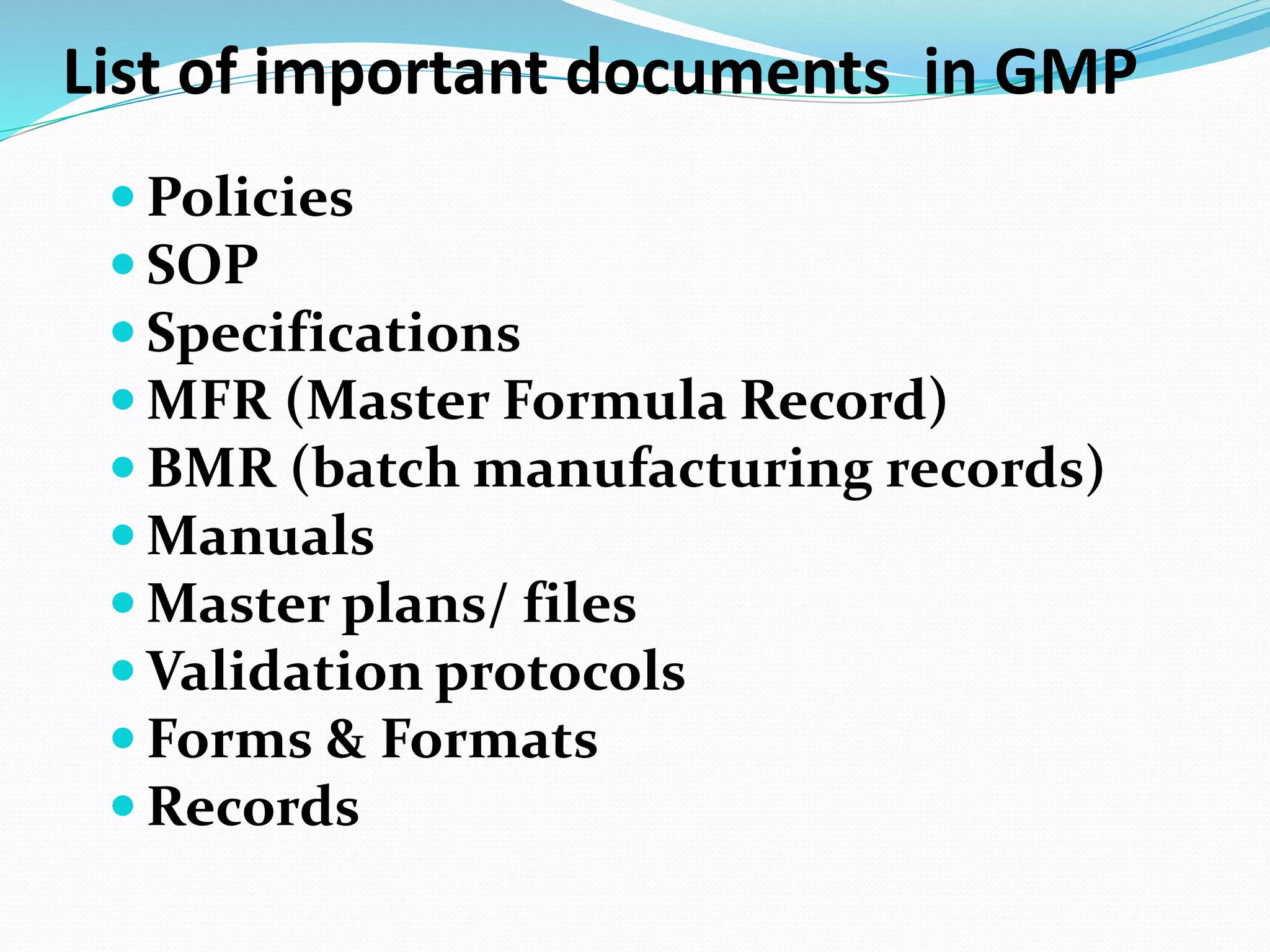
List of important documents in GMP
 Policies
 SOP
 Specifications
 MFR (Master Formula Record)
 BMR (batch manufacturing records)
 Manuals
 Master plans/ files
 Validation protocols
 Forms & Formats
 Records
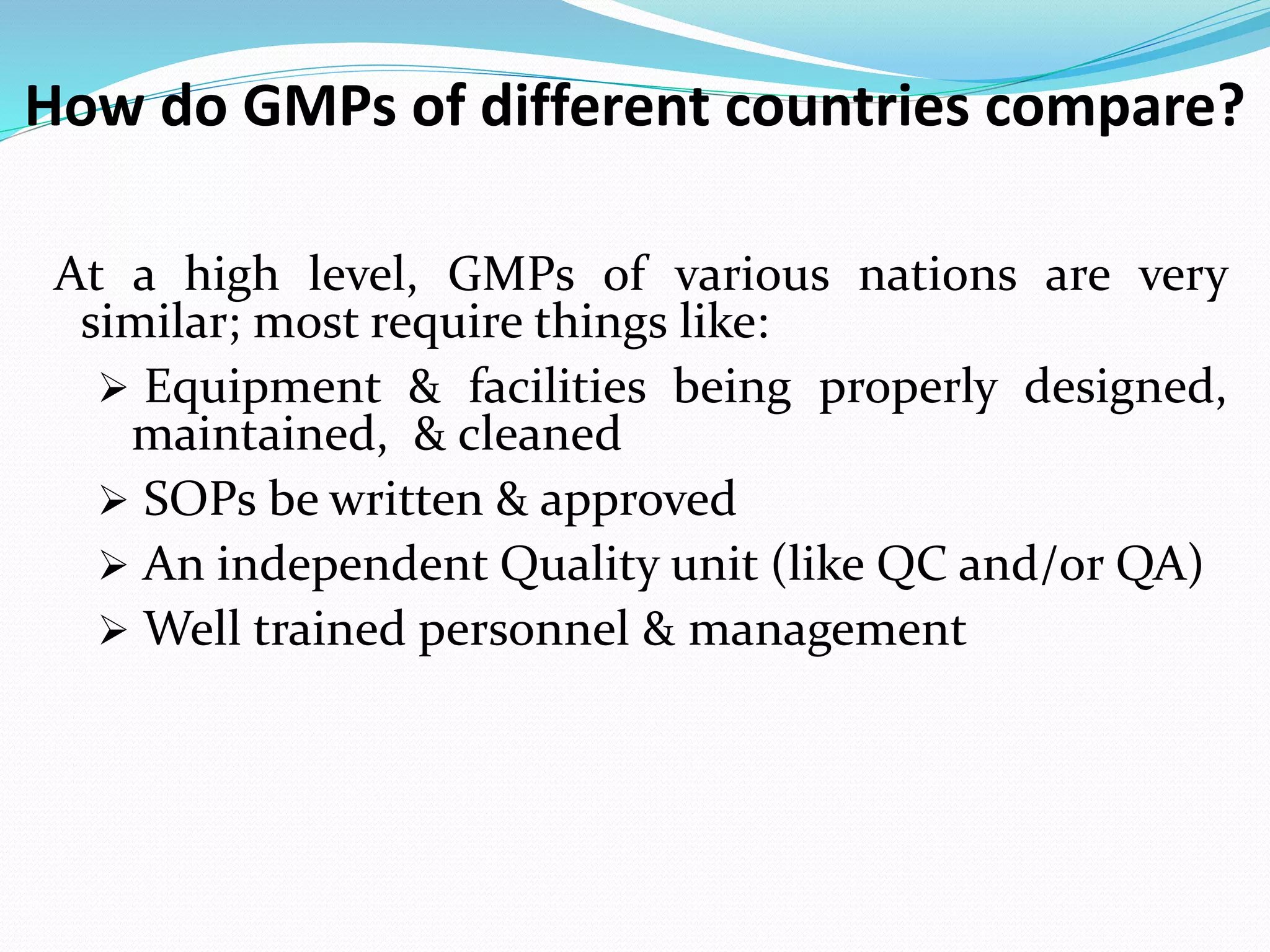
How do GMPs of different countries compare?
At a high level, GMPs of various nations are very
similar; most require things like:
 Equipment & facilities being properly designed,
maintained, & cleaned
 SOPs be written & approved
 An independent Quality unit (like QC and/or QA)
 Well trained personnel & management
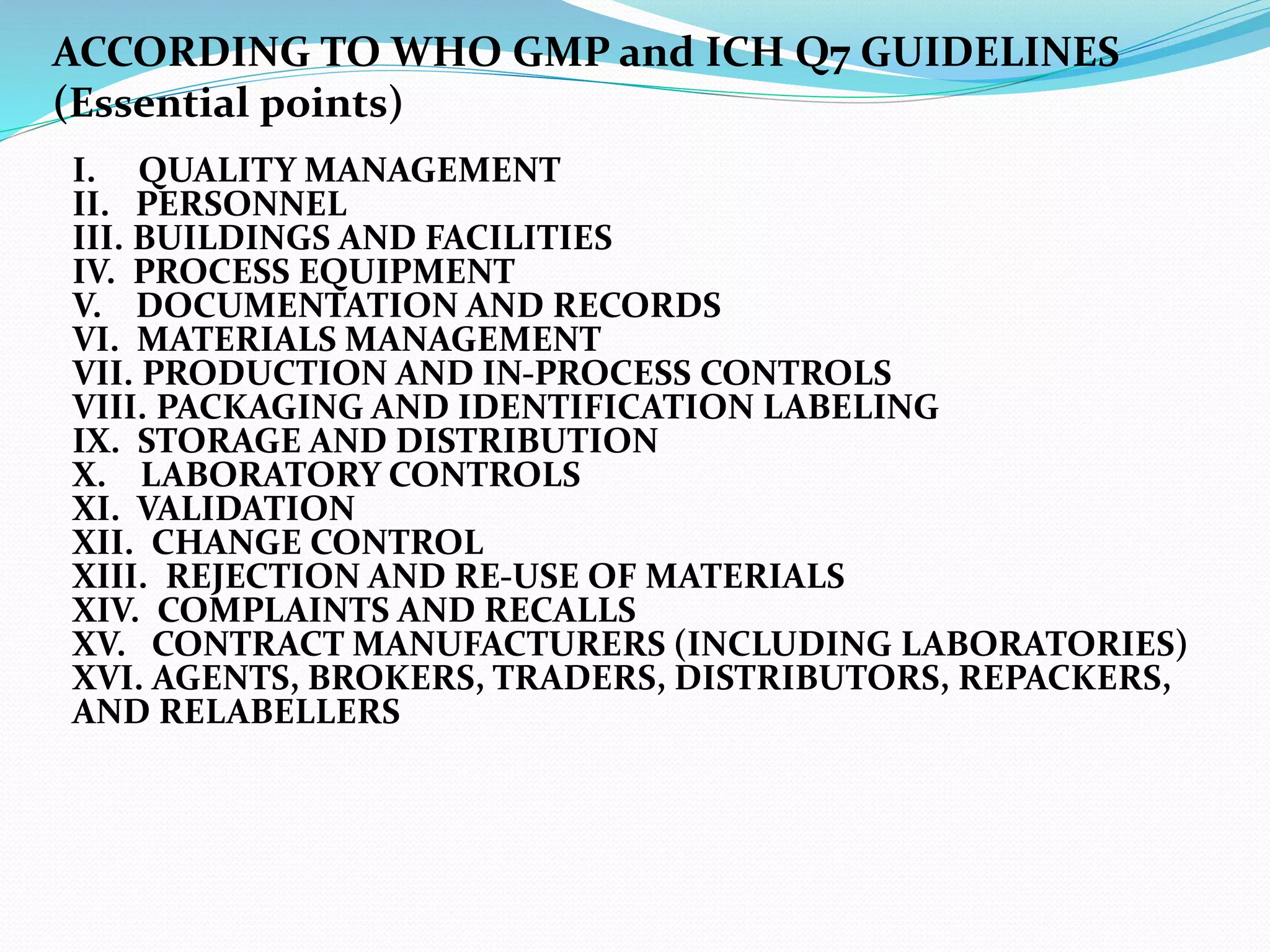
I. QUALITY MANAGEMENT
II. PERSONNEL
III. BUILDINGS AND FACILITIES
IV. PROCESS EQUIPMENT
V. DOCUMENTATION AND RECORDS
VI. MATERIALS MANAGEMENT
VII. PRODUCTION AND IN-PROCESS CONTROLS
VIII. PACKAGING AND IDENTIFICATION LABELING
IX. STORAGE AND DISTRIBUTION
X. LABORATORY CONTROLS
XI. VALIDATION
XII. CHANGE CONTROL
XIII. REJECTION AND RE-USE OF MATERIALS
XIV. COMPLAINTS AND RECALLS
XV. CONTRACT MANUFACTURERS (INCLUDING LABORATORIES)
XVI. AGENTS, BROKERS, TRADERS, DISTRIBUTORS, REPACKERS,
AND RELABELLERS
ACCORDING TO WHO GMP and ICH Q7 GUIDELINES
(Essential points)
TQM GMP

TQM GMP

  • 1.
    QUALITY ASSURANCE andGOOD MANUFACTURING PRACTICE MANISH KUMAR SHARMA M. Pharmacy (pharmaceutics)
  • 2.
    CONTENTS 1. Quality assurance -principles of QA - basic requirements - QA, GMP & QC relationship 2. Good manufacturing practice -principle -list of documents & comparison of various GMPs -basic considerations
  • 3.
  • 4.
    QA covers allmatters which individually or collectively influence the quality of a product. All parts of QA system should be adequately resourced with Competent personnel, Suitable & sufficient premises, equipment & facilities.
  • 5.
    Principles of QualityAssurance (QA)  Wide-ranging concept Covers all matters that individually or collectively influence the quality of a product  Totality of the arrangements To ensure that the drug is of the right quality for the intended use
  • 6.
    BASIC REQUIREMENTS OFQA Ensure that products are designed and developed based on sound scientific rationale and with GMP or GLP principles being taken into consideration. Ensure that managerial responsibilities are clearly specified. Ensure that production and control operations are clearly specified and GMP is adopted. Organize supply & use of correct starting & packaging materials. Ensure that finished products are correctly processed & checked before release. Ensure that products are released after review by authorized person. Put in place a mechanism for regular self inspection / internal quality audit.
  • 7.
    QA, GMP &QC inter relationship
  • 8.
  • 9.
    DEFINITION: Good manufacturingpractice is a part of the quality assurance, and being to ensures that products are produced and controlled to the quality standards appropriate to their intended use and as required by the essential elements of its marketing authorization or product specification.  GMP contains the quality of the organization & processes involved in manufacture.  GMP covers all aspects of manufacture including collection, transportation, processing, storage, QC & delivery of the finished product.
  • 10.
    List of importantdocuments in GMP  Policies  SOP  Specifications  MFR (Master Formula Record)  BMR (batch manufacturing records)  Manuals  Master plans/ files  Validation protocols  Forms & Formats  Records
  • 11.
    How do GMPsof different countries compare? At a high level, GMPs of various nations are very similar; most require things like:  Equipment & facilities being properly designed, maintained, & cleaned  SOPs be written & approved  An independent Quality unit (like QC and/or QA)  Well trained personnel & management
  • 12.
    I. QUALITY MANAGEMENT II.PERSONNEL III. BUILDINGS AND FACILITIES IV. PROCESS EQUIPMENT V. DOCUMENTATION AND RECORDS VI. MATERIALS MANAGEMENT VII. PRODUCTION AND IN-PROCESS CONTROLS VIII. PACKAGING AND IDENTIFICATION LABELING IX. STORAGE AND DISTRIBUTION X. LABORATORY CONTROLS XI. VALIDATION XII. CHANGE CONTROL XIII. REJECTION AND RE-USE OF MATERIALS XIV. COMPLAINTS AND RECALLS XV. CONTRACT MANUFACTURERS (INCLUDING LABORATORIES) XVI. AGENTS, BROKERS, TRADERS, DISTRIBUTORS, REPACKERS, AND RELABELLERS ACCORDING TO WHO GMP and ICH Q7 GUIDELINES (Essential points)