Good Manufacturing Practices
Purpose and Principles of GMP
DIPSAR
MD. IMRAN MALIK
(D.pharm, B.pharm- DIPSAR)
Persuing M.Pharm (Pharm. Management)
New Delhi, 14 Aug, 2015
2
GOOD MANUFACTURING PRACTICES
QUALITY OF DRUGS IS ESSENTIALLY THE RESPONSIBILITY OF
MANUFACTURERS.
GMP GUIDELINES ARE A MEANS TO ASSURE THIS VERY QUALITY OF
DRUGS.
GMP REGULATIONS WERE INTRODUCED IN THE FORM OF AMENDED
SCHEDULE ‘M’ IN 1988.
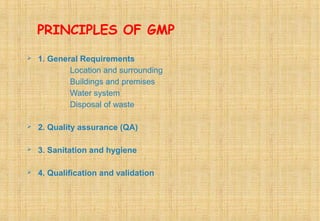
PRINCIPLES OF GMP
 1. General Requirements
Location and surrounding
Buildings and premises
Water system
Disposal of waste
 2. Quality assurance (QA)
 3. Sanitation and hygiene
 4. Qualification and validation
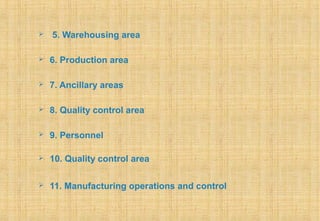
 5. Warehousing area
 6. Production area
 7. Ancillary areas
 8. Quality control area
 9. Personnel
 10. Quality control area
 11. Manufacturing operations and control
 12. Raw materials
 13. Documentation and records
 14. Self inspection and quality audit
 15. Specifications
 16. Master formula records
 17. Standard Operating Procedures (SOP)
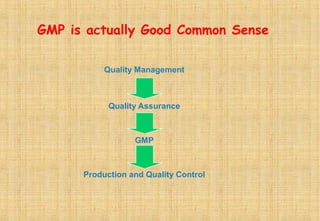
GMP is actually Good Common Sense
Quality Management
Quality Assurance
GMP
Production and Quality Control
Quality Management:
What is Quality Management?
The aspect of management function that determines and
implements the “quality policy”
The overall intention and direction regarding quality, as
formally expressed and authorized by top management
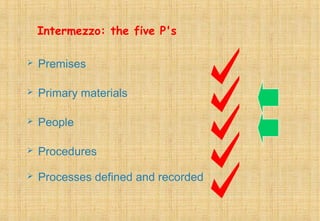
Intermezzo: the five P's
 Premises
 Primary materials
 People
 Procedures
 Processes defined and recorded
Quality Assurance
 QUALITY ASSURANCE IS COMPANY BASED.
 Quality assurance is a management tool
 In contractual situations, it also serves to generate confidence in
a supplier
 QA, GMP and Quality Control are interrelated aspects of Quality
Management
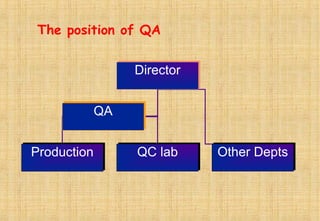
The position of QA
DirectorDirector
QAQA
ProductionProduction QC labQC lab Other DeptsOther Depts
Quality Assurance includes:
 Responsibility of the Manufacturer for the quality of the product
Fit for intended use
Comply with marketing authorization
Safety, efficacy and quality
 Commitment of senior management and involvement of all staff
 Comprehensively designed and well implemented quality system
 Full documentation and monitoring of effectiveness
 Competent personnel, sufficient premises, equipment and facilities
AIM OF Good Manufacturing Practices
 That part of QA that ensures that products are consistently
produced and controlled
Quality standards
Marketing authorization
 Aim: Diminishing risks that cannot be controlled by testing of
product
Contamination and cross-contamination
Mix-ups (confusion)
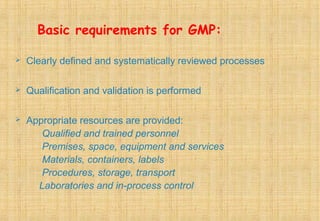
Basic requirements for GMP:
 Clearly defined and systematically reviewed processes
 Qualification and validation is performed
 Appropriate resources are provided:
Qualified and trained personnel
Premises, space, equipment and services
Materials, containers, labels
Procedures, storage, transport
Laboratories and in-process control
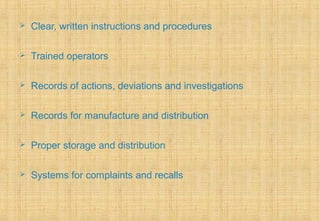
 Clear, written instructions and procedures
 Trained operators
 Records of actions, deviations and investigations
 Records for manufacture and distribution
 Proper storage and distribution
 Systems for complaints and recalls
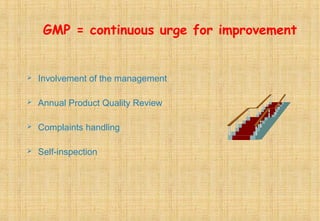
GMP = continuous urge for improvement
 Involvement of the management
 Annual Product Quality Review
 Complaints handling
 Self-inspection
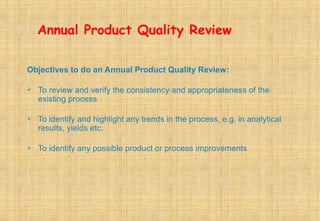
Annual Product Quality Review
Objectives to do an Annual Product Quality Review:
 To review and verify the consistency and appropriateness of the
existing process
 To identify and highlight any trends in the process, e.g. in analytical
results, yields etc.
 To identify any possible product or process improvements
Complaints handling
“All complaints and other information concerning
potentially defective products must be carefully
reviewed according to written procedures and
corrective action should be taken.”
 Investigation and evaluation should result in
appropriate follow-up actions
 All decisions and measures taken should be recorded
 Referenced in batch records
 Records reviewed - trends and recurring problems
Self-Inspection
Purpose is to evaluate whether a company’s operations
remain compliant with GMP
 The programme should
cover all aspects of production and quality control
be designed to detect shortcomings in the implementation of GMP
recommend corrective actions
set a timetable for corrective action to be completed
 Be performed routinely
 Also on special occasions such as
Recalls
Repeated rejections
When a GMP inspection is announced by the national drug
regulatory authority
Summary and conclusions:
 GMP is mandatory in countries with a regulated pharmaceutical
market, and in the WHO Prequalification Programme too.
 GMP's are very similar, they are nothing but Good Common Sense
 Good Practices cover all aspects of company's activities prior to sales
 GMP is not a reward, nor an external assignment, it should be built
into the company
 Just like quality, which should be built into the product
 The role and involvement of senior management is crucial
 GMP means an urge for continuous improvement, 3 of the tools to do
so are:
Annual Product Quality Reviews
Complaint handling and trending
Self-inspection
THANK
YOU

Good Manufacturing Practices (GMP)- Purpose and Principles

  • 2.
    Good Manufacturing Practices Purposeand Principles of GMP DIPSAR MD. IMRAN MALIK (D.pharm, B.pharm- DIPSAR) Persuing M.Pharm (Pharm. Management) New Delhi, 14 Aug, 2015 2
  • 3.
    GOOD MANUFACTURING PRACTICES QUALITYOF DRUGS IS ESSENTIALLY THE RESPONSIBILITY OF MANUFACTURERS. GMP GUIDELINES ARE A MEANS TO ASSURE THIS VERY QUALITY OF DRUGS. GMP REGULATIONS WERE INTRODUCED IN THE FORM OF AMENDED SCHEDULE ‘M’ IN 1988.
  • 4.
    PRINCIPLES OF GMP 1. General Requirements Location and surrounding Buildings and premises Water system Disposal of waste  2. Quality assurance (QA)  3. Sanitation and hygiene  4. Qualification and validation
  • 5.
     5. Warehousingarea  6. Production area  7. Ancillary areas  8. Quality control area  9. Personnel  10. Quality control area  11. Manufacturing operations and control
  • 6.
     12. Rawmaterials  13. Documentation and records  14. Self inspection and quality audit  15. Specifications  16. Master formula records  17. Standard Operating Procedures (SOP)
  • 7.
    GMP is actuallyGood Common Sense Quality Management Quality Assurance GMP Production and Quality Control
  • 8.
    Quality Management: What isQuality Management? The aspect of management function that determines and implements the “quality policy” The overall intention and direction regarding quality, as formally expressed and authorized by top management
  • 9.
    Intermezzo: the fiveP's  Premises  Primary materials  People  Procedures  Processes defined and recorded
  • 10.
    Quality Assurance  QUALITYASSURANCE IS COMPANY BASED.  Quality assurance is a management tool  In contractual situations, it also serves to generate confidence in a supplier  QA, GMP and Quality Control are interrelated aspects of Quality Management
  • 11.
    The position ofQA DirectorDirector QAQA ProductionProduction QC labQC lab Other DeptsOther Depts
  • 12.
    Quality Assurance includes: Responsibility of the Manufacturer for the quality of the product Fit for intended use Comply with marketing authorization Safety, efficacy and quality  Commitment of senior management and involvement of all staff  Comprehensively designed and well implemented quality system  Full documentation and monitoring of effectiveness  Competent personnel, sufficient premises, equipment and facilities
  • 13.
    AIM OF GoodManufacturing Practices  That part of QA that ensures that products are consistently produced and controlled Quality standards Marketing authorization  Aim: Diminishing risks that cannot be controlled by testing of product Contamination and cross-contamination Mix-ups (confusion)
  • 14.
    Basic requirements forGMP:  Clearly defined and systematically reviewed processes  Qualification and validation is performed  Appropriate resources are provided: Qualified and trained personnel Premises, space, equipment and services Materials, containers, labels Procedures, storage, transport Laboratories and in-process control
  • 15.
     Clear, writteninstructions and procedures  Trained operators  Records of actions, deviations and investigations  Records for manufacture and distribution  Proper storage and distribution  Systems for complaints and recalls
  • 16.
    GMP = continuousurge for improvement  Involvement of the management  Annual Product Quality Review  Complaints handling  Self-inspection
  • 17.
    Annual Product QualityReview Objectives to do an Annual Product Quality Review:  To review and verify the consistency and appropriateness of the existing process  To identify and highlight any trends in the process, e.g. in analytical results, yields etc.  To identify any possible product or process improvements
  • 18.
    Complaints handling “All complaintsand other information concerning potentially defective products must be carefully reviewed according to written procedures and corrective action should be taken.”  Investigation and evaluation should result in appropriate follow-up actions  All decisions and measures taken should be recorded  Referenced in batch records  Records reviewed - trends and recurring problems
  • 19.
    Self-Inspection Purpose is toevaluate whether a company’s operations remain compliant with GMP  The programme should cover all aspects of production and quality control be designed to detect shortcomings in the implementation of GMP recommend corrective actions set a timetable for corrective action to be completed  Be performed routinely  Also on special occasions such as Recalls Repeated rejections When a GMP inspection is announced by the national drug regulatory authority
  • 20.
    Summary and conclusions: GMP is mandatory in countries with a regulated pharmaceutical market, and in the WHO Prequalification Programme too.  GMP's are very similar, they are nothing but Good Common Sense  Good Practices cover all aspects of company's activities prior to sales  GMP is not a reward, nor an external assignment, it should be built into the company  Just like quality, which should be built into the product  The role and involvement of senior management is crucial  GMP means an urge for continuous improvement, 3 of the tools to do so are: Annual Product Quality Reviews Complaint handling and trending Self-inspection
  • 21.

Editor's Notes

  • #19 The product complaint principle is defined in the WHO GMP. The manufacturer must assume responsibility for the quality of the pharmaceutical products to ensure that they are fit for their intended use, comply with the requirements of the marketing authorization, and do not place the patient at risk because of inadequate safety, quality or efficacy. Complaints must be handled positively and carefully reviewed, and corrective actions must be taken as necessary. This can mean amending a manufacturing process as well as implementing a recall of a defective product from all markets where it has been distributed.
  • #20 The purpose of self-inspection is to evaluate the manufacturer’s compliance with GMP in all aspects of production and quality control. It also assists in ensuring quality improvement. There should be a programme that covers all aspects of production and quality control. It should be designed to detect shortcomings in the implementation of GMP and recommend corrective actions. The company should set a timetable for corrective action to be completed. You can verify this during your assessment.