Downloaded 584 times
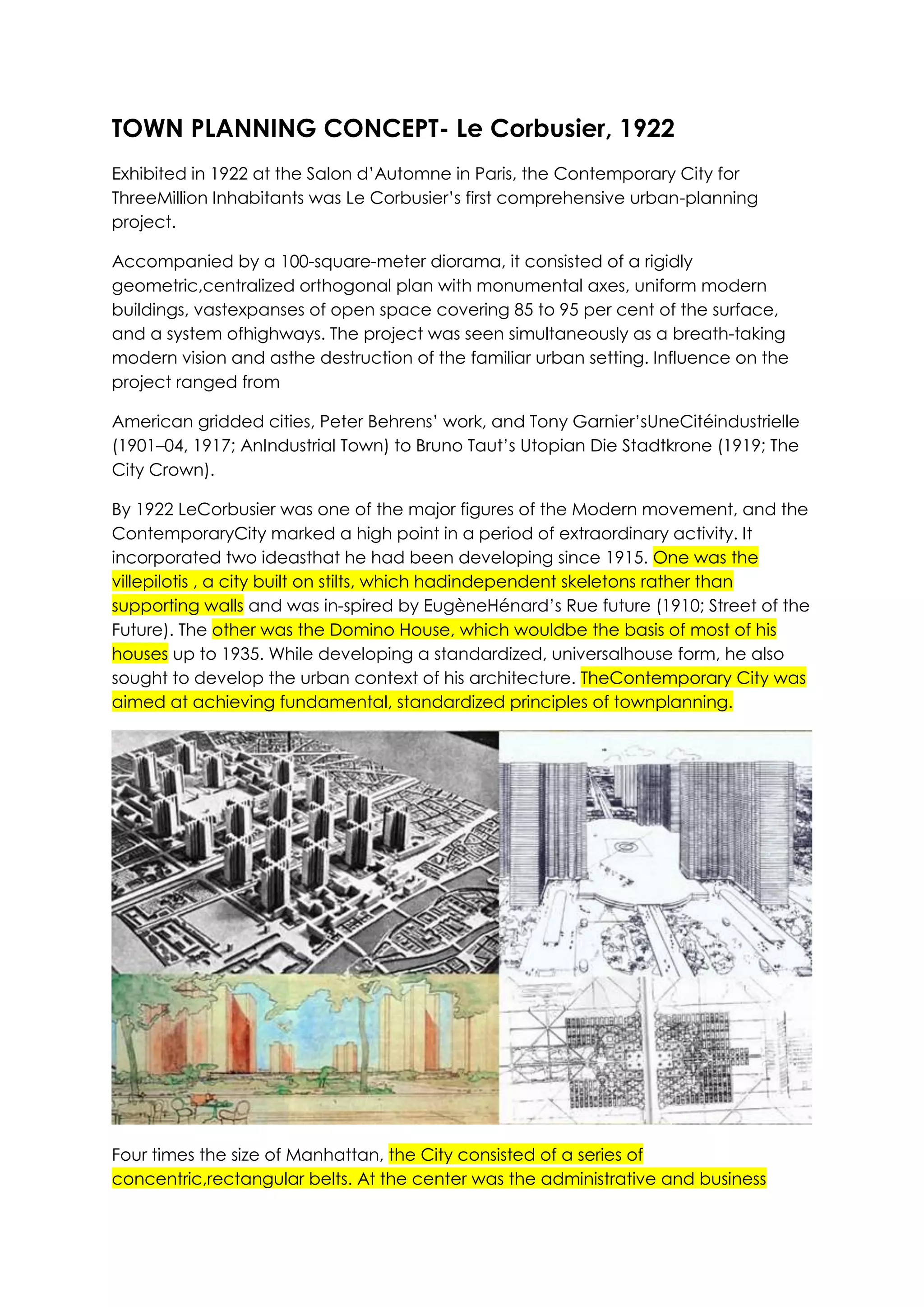
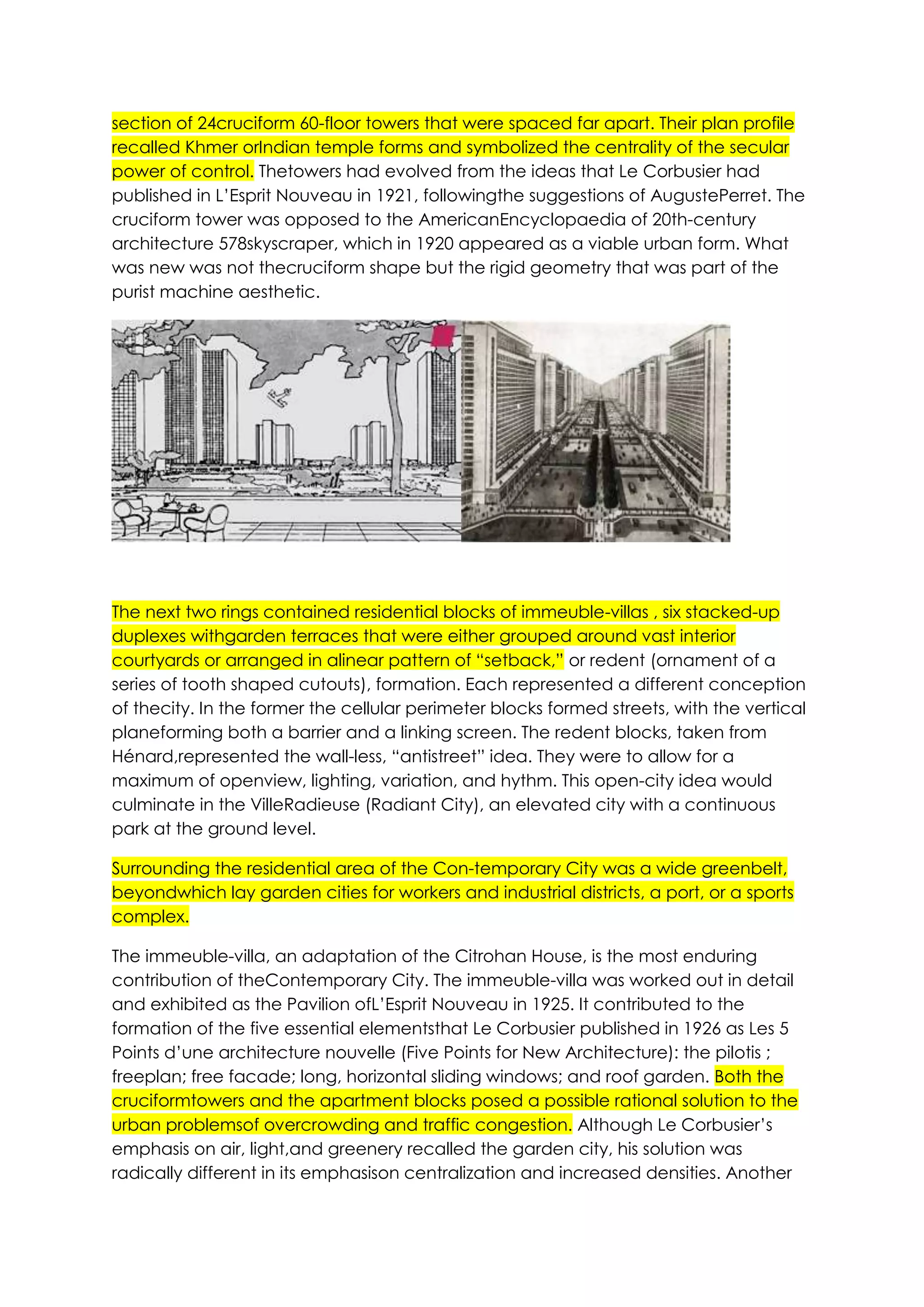


The Contemporary City for Three Million Inhabitants was Le Corbusier's first major urban planning project from 1922. It proposed a rigidly geometric and centralized city plan with vast open spaces covering 85-95% of the surface. The city consisted of concentric rectangular belts, with a central business district of tall cruciform towers and surrounding residential blocks of stacked duplexes with garden terraces. The project aimed to solve urban problems through standardization, increased densities, and separation of vehicular and pedestrian traffic via an elevated highway system. Though utopian and not fully practical, it had a immense influence on 20th century ideas of the modern city.


