PLAN 4003: Urban Form & Design
Week 4: Debating the American City
Anuradha Mukherji
Assistant Professor of Urban and Regional Planning
MORDERN PLANNING & LE CORBUSIER
- Critiques traditional physical structure of
cities
- Utopian vision of modern city geared
towards the car
- Not grounded in how people live, interact,
and enjoy cities
- Enamored with products of industrialization
– car, mechanization, standardization
CORBUSIER’S ARGUMENT
PACK DONKEY’S WAY
VS
MAN’S WAY
Man: Governed by reason, intelligence,
experience, goals
Pack Donkey: Comfort, convenience, lack of
concentration, meanders, line of least
resistance
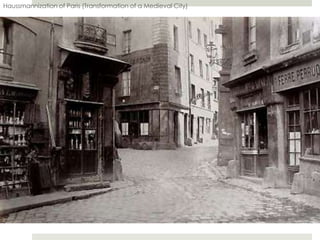
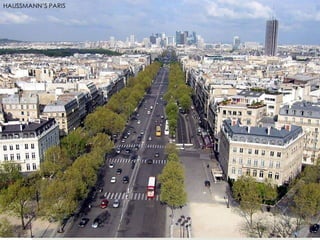
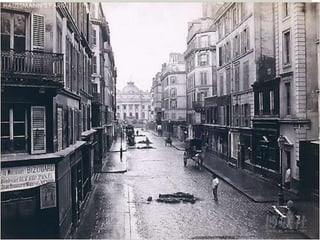
Haussmannization of Paris (Transformation of a Medieval City)
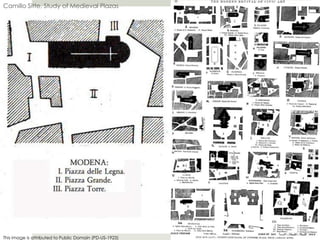
Camillo Sitte, Study of Medieval Plazas
This image is attributed to Public Domain (PD-US-1923)
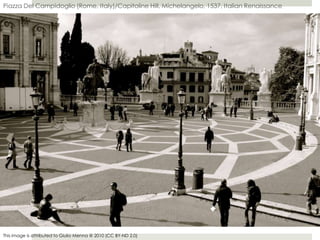
Piazza Del Campidoglio (Rome, Italy)/Capitoline Hill, Michelangelo, 1537, Italian Renaissance
This image is attributed to Giulio Menna @ 2010 (CC BY-ND 2.0)
CAMILLO SITTE’S IDEAS
- Straight lines are unnatural, do not follow
terrain
- Need both art and function to make cities
appealing
- Lack of urban public space in cities
- Isolated block of buildings, and no unifying
factors, boring spaces
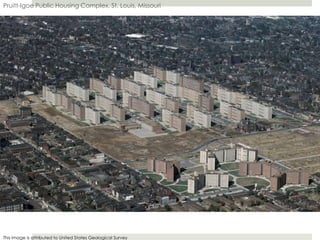
This image is attributed to United States Geological Survey
Pruitt-Igoe Public Housing Complex, St. Louis, Missouri
CORBUSIER’S IDEAS
- Modern city functions along straight lines –
sewers, tunnels, highways, traffic circulation
- Divided into grid system, no need for curves
- Stress on functionality, no artistic tradition
- Bare, efficient, functional – main purpose of
carrying traffic, gas, water, electric lines
- No discussion of street as a public space –
crooked streets as pack donkey’s way
CORBUSIER’S IDEAS
- High-rise vertical towers with lots of leftover
space in-between
- Standardized super blocks using repetition,
mechanization, and industrialization of
construction
- Dense city center comprising business and
residential towers with garden cities on
periphery
- Technical, civil engineering project
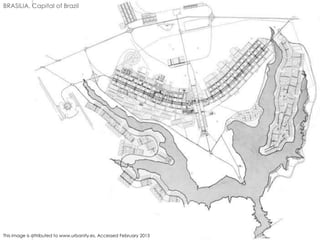
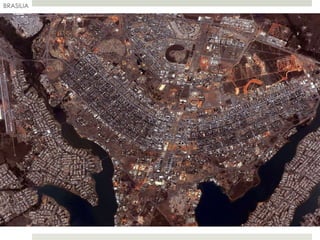
BRASILIA, Capital of Brazil
This image is attributed to www.urbanity.es, Accessed February 2013
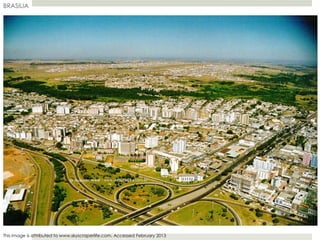
BRASILIA
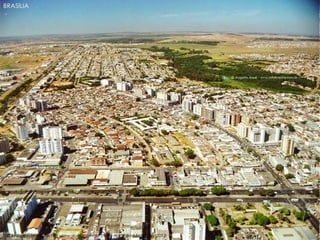
BRASILIA
This image is attributed to www.skyscraperlife.com, Accessed February 2013
BRASILIA
This image is attributed to www.skyscraperlife.com, Accessed February 2013
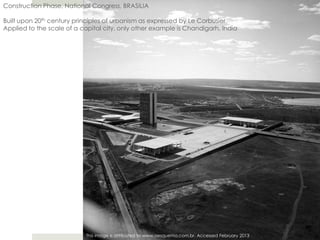
Construction Phase, National Congress, BRASILIA
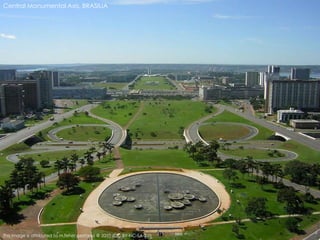
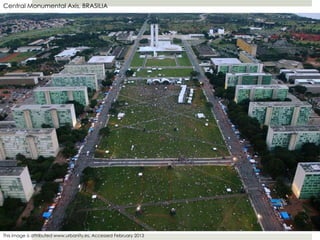
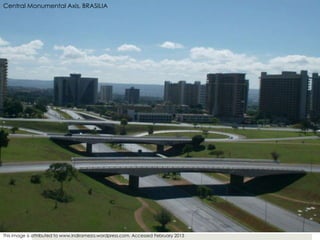
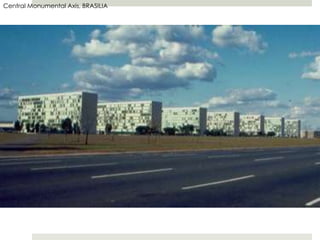
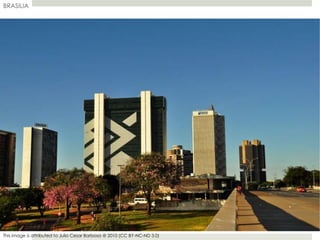
Built upon 20th century principles of urbanism as expressed by Le Corbusier
Applied to the scale of a capital city, only other example is Chandigarh, India
This image is attributed to www.oesquema.com.br, Accessed February 2013
Central Monumental Axis, BRASILIA
This image is attributed to m.feher.pestana @ 2010 (CC BY-NC-SA 2.0)
Central Monumental Axis, BRASILIA
This image is attributed www.urbanity.es, Accessed February 2013
Central Monumental Axis, BRASILIA
This image is attributed to www.indirameza.wordpress.com, Accessed February 2013
Central Monumental Axis, BRASILIA
HAUSSMANN’S PARIS
HAUSSMANN’S PARIS
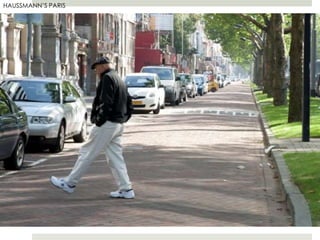
HAUSSMANN’S PARIS
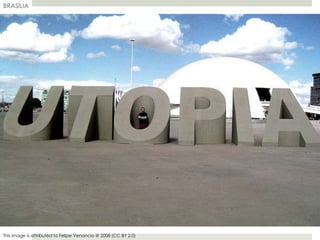
BRASILIA
This image is attributed to Felipe Venancio @ 2008 (CC BY 2.0)
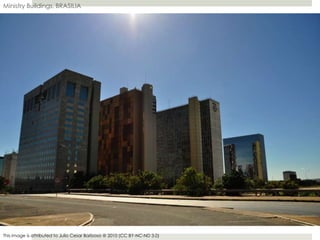
Ministry Buildings, BRASILIA
This image is attributed to Julio Cesar Barbosa @ 2010 (CC BY-NC-ND 3.0)
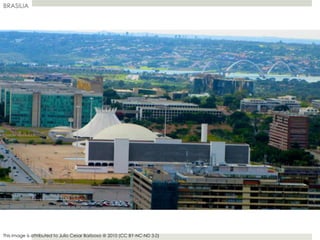
BRASILIA
This image is attributed to Julio Cesar Barbosa @ 2010 (CC BY-NC-ND 3.0)
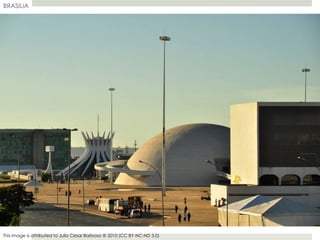
BRASILIA
This image is attributed to Julio Cesar Barbosa @ 2010 (CC BY-NC-ND 3.0)
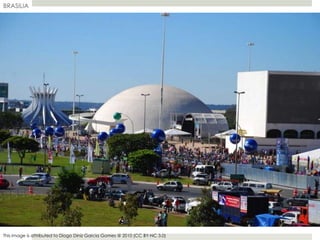
BRASILIA
This image is attributed to Diogo Diniz Garcia Gomes @ 2010 (CC BY-NC 3.0)
BRASILIA
This image is attributed to Julio Cesar Barbosa @ 2010 (CC BY-NC-ND 3.0)
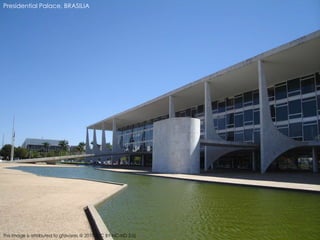
Presidential Palace, BRASILIA
This image is attributed to gtavares @ 2010 (CC BY-NC-ND 3.0)
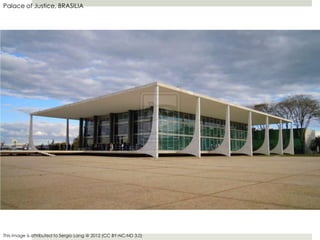
Palace of Justice, BRASILIA
This image is attributed to Sergio Lang @ 2012 (CC BY-NC-ND 3.0)
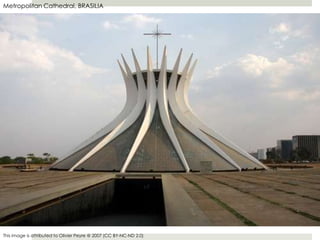
Metropolitan Cathedral, BRASILIA
This image is attributed to Olivier Peyre @ 2007 (CC BY-NC-ND 2.0)
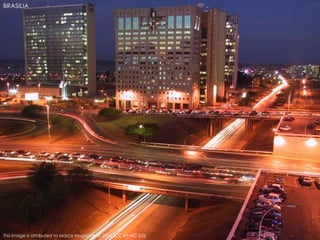
BRASILIA
This image is attributed to Marco Mugnatto @ 2010 (CC BY-NC 3.0)
CORBUSIAN CITY
- Theoretical top-down design, gigantic at
eye level, not to human-scale
- No sensitivity to local contexts
- Forgot how people lived for centuries –
need a car in a Corbusian city
- Centralized and controlled by designer, no
input from people
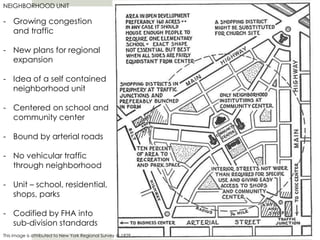
NEIGHBORHOOD UNIT
This image is attributed to New York Regional Survey @ 1929
- Growing congestion
and traffic
- New plans for regional
expansion
- Idea of a self contained
neighborhood unit
- Centered on school and
community center
- Bound by arterial roads
- No vehicular traffic
through neighborhood
- Unit – school, residential,
shops, parks
- Codified by FHA into
sub-division standards

Urban Form and Design - Debating the American City

  • 1.
    PLAN 4003: UrbanForm & Design Week 4: Debating the American City Anuradha Mukherji Assistant Professor of Urban and Regional Planning
  • 2.
    MORDERN PLANNING &LE CORBUSIER - Critiques traditional physical structure of cities - Utopian vision of modern city geared towards the car - Not grounded in how people live, interact, and enjoy cities - Enamored with products of industrialization – car, mechanization, standardization
  • 3.
    CORBUSIER’S ARGUMENT PACK DONKEY’SWAY VS MAN’S WAY Man: Governed by reason, intelligence, experience, goals Pack Donkey: Comfort, convenience, lack of concentration, meanders, line of least resistance
  • 4.
    Haussmannization of Paris(Transformation of a Medieval City)
  • 5.
    Camillo Sitte, Studyof Medieval Plazas This image is attributed to Public Domain (PD-US-1923)
  • 6.
    Piazza Del Campidoglio(Rome, Italy)/Capitoline Hill, Michelangelo, 1537, Italian Renaissance This image is attributed to Giulio Menna @ 2010 (CC BY-ND 2.0)
  • 7.
    CAMILLO SITTE’S IDEAS -Straight lines are unnatural, do not follow terrain - Need both art and function to make cities appealing - Lack of urban public space in cities - Isolated block of buildings, and no unifying factors, boring spaces
  • 8.
    This image isattributed to United States Geological Survey Pruitt-Igoe Public Housing Complex, St. Louis, Missouri
  • 9.
    CORBUSIER’S IDEAS - Moderncity functions along straight lines – sewers, tunnels, highways, traffic circulation - Divided into grid system, no need for curves - Stress on functionality, no artistic tradition - Bare, efficient, functional – main purpose of carrying traffic, gas, water, electric lines - No discussion of street as a public space – crooked streets as pack donkey’s way
  • 10.
    CORBUSIER’S IDEAS - High-risevertical towers with lots of leftover space in-between - Standardized super blocks using repetition, mechanization, and industrialization of construction - Dense city center comprising business and residential towers with garden cities on periphery - Technical, civil engineering project
  • 11.
    BRASILIA, Capital ofBrazil This image is attributed to www.urbanity.es, Accessed February 2013
  • 12.
  • 13.
    BRASILIA This image isattributed to www.skyscraperlife.com, Accessed February 2013
  • 14.
    BRASILIA This image isattributed to www.skyscraperlife.com, Accessed February 2013
  • 15.
    Construction Phase, NationalCongress, BRASILIA Built upon 20th century principles of urbanism as expressed by Le Corbusier Applied to the scale of a capital city, only other example is Chandigarh, India This image is attributed to www.oesquema.com.br, Accessed February 2013
  • 16.
    Central Monumental Axis,BRASILIA This image is attributed to m.feher.pestana @ 2010 (CC BY-NC-SA 2.0)
  • 17.
    Central Monumental Axis,BRASILIA This image is attributed www.urbanity.es, Accessed February 2013
  • 18.
    Central Monumental Axis,BRASILIA This image is attributed to www.indirameza.wordpress.com, Accessed February 2013
  • 19.
  • 20.
  • 21.
  • 22.
  • 23.
    BRASILIA This image isattributed to Felipe Venancio @ 2008 (CC BY 2.0)
  • 24.
    Ministry Buildings, BRASILIA Thisimage is attributed to Julio Cesar Barbosa @ 2010 (CC BY-NC-ND 3.0)
  • 25.
    BRASILIA This image isattributed to Julio Cesar Barbosa @ 2010 (CC BY-NC-ND 3.0)
  • 26.
    BRASILIA This image isattributed to Julio Cesar Barbosa @ 2010 (CC BY-NC-ND 3.0)
  • 27.
    BRASILIA This image isattributed to Diogo Diniz Garcia Gomes @ 2010 (CC BY-NC 3.0)
  • 28.
    BRASILIA This image isattributed to Julio Cesar Barbosa @ 2010 (CC BY-NC-ND 3.0)
  • 29.
    Presidential Palace, BRASILIA Thisimage is attributed to gtavares @ 2010 (CC BY-NC-ND 3.0)
  • 30.
    Palace of Justice,BRASILIA This image is attributed to Sergio Lang @ 2012 (CC BY-NC-ND 3.0)
  • 31.
    Metropolitan Cathedral, BRASILIA Thisimage is attributed to Olivier Peyre @ 2007 (CC BY-NC-ND 2.0)
  • 32.
    BRASILIA This image isattributed to Marco Mugnatto @ 2010 (CC BY-NC 3.0)
  • 33.
    CORBUSIAN CITY - Theoreticaltop-down design, gigantic at eye level, not to human-scale - No sensitivity to local contexts - Forgot how people lived for centuries – need a car in a Corbusian city - Centralized and controlled by designer, no input from people
  • 34.
    NEIGHBORHOOD UNIT This imageis attributed to New York Regional Survey @ 1929 - Growing congestion and traffic - New plans for regional expansion - Idea of a self contained neighborhood unit - Centered on school and community center - Bound by arterial roads - No vehicular traffic through neighborhood - Unit – school, residential, shops, parks - Codified by FHA into sub-division standards