TOOTH ATTRITION
MUK
BDS 3
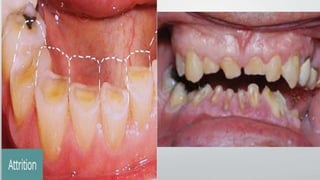
Attrition is the progressive wearing off of tooth
surfaces or restorations as a result of functional or
parafunctional occlusion of the teeth.
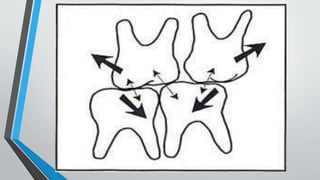
•Attrition majorly affects surfaces that come in contact on
occlusion which are : occlusal surfaces, proximal areas
and incisal edges.
Usually characterized by well defined shiny facets and
parallel striations within facet border of the attrited teeth
or tooth
Types of attrition
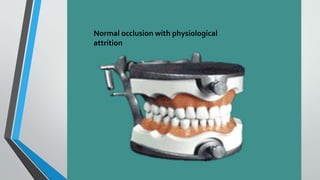
Physiological attrition: Attrition which occurs
progressively during normal aging process as a result of
masticatory occlusion. Usually a slow process through out
life .
This form of attrition plays an important role in maintaining
an advantageous crown to root ratio and gains intercoronal
space of 1cm which facilitates third molar eruption
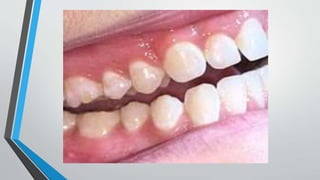
Normal occlusion with physiological
attrition
 Pathological attrition: This is a severe form of
attrition that occurs as a result of abnormalities in
occlusion ,chewing pattern and structural defects in
teeth .
Examples are bruxism or clenching
Attrition is considered pathological when it causes
functional, aesthetic and dental sensitivity problems
AETIOLOGY
Abnormal chewing habits: Parafunctional chewing habits like
Bruxism and chronic persistent chewing of coarse foods or other
substances like tobacco.
In other occupations workers are exposed to an atmosphere of
abrasive dusts e.g. silica
Odontogenesis imperfecta and dentinogenesis imperfecta in
which the hardness of enamel and dentine is reduced and such
teeth become more prone to attrition.
Clinical presentation of attrition
 Loss of tooth anatomy: rounding and sharpening of incisal ages, loss of
cusps and fracturing of teeth.
 Sensitivity and pain : attrition may be entirely asymptomatic or there may
be dentine hypersensitivity.
 Tooth discoloration : attrition and erosion of the enamel exposes inner and
darker dentine giving a yellower appearance
 Compromised periodontal support leading to drifting of teeth
 Altered occlusion due to decreasing occlusal vertical dimension
BRUXISM
• This is excessive teeth grinding and clenching which is an oral
parafunctional activity .it presents with many symptoms and signs of
which among is excessive attrited teeth
• Bruxism is of two types a classification based on times of occurrence
which are: Sleep bruxism and awake bruxism.
• However dental damage may be similar in both cases though sleep
bruxism presents with worse symptoms on waking and improves
during the course of the day .
ATTRITION AND DENTAL CARIES
• The effect of attrition on dental caries development is multifactorial
involving tooth erosion and abrasion
• Physiological Attrition wears out the protective enamel increasing
seeding of acid into the enamel matrix therefore increasing
demineralization and the chance of developing carious lesions.
• In pathological attrition which involves severe enamel wear, the
dentine is exposed and this predisposes the tooth to bacterial
invasion by S. mutans which consequently leads to development and
rapid progression of dental caries .
• Bruxism can result in reduced salivary flow rate from the parotid
gland which predisposes the individual to dental caries.
1

Tooth attrition

  • 1.
  • 2.
    Attrition is theprogressive wearing off of tooth surfaces or restorations as a result of functional or parafunctional occlusion of the teeth. •Attrition majorly affects surfaces that come in contact on occlusion which are : occlusal surfaces, proximal areas and incisal edges. Usually characterized by well defined shiny facets and parallel striations within facet border of the attrited teeth or tooth
  • 4.
    Types of attrition Physiologicalattrition: Attrition which occurs progressively during normal aging process as a result of masticatory occlusion. Usually a slow process through out life . This form of attrition plays an important role in maintaining an advantageous crown to root ratio and gains intercoronal space of 1cm which facilitates third molar eruption
  • 5.
    Normal occlusion withphysiological attrition
  • 7.
     Pathological attrition:This is a severe form of attrition that occurs as a result of abnormalities in occlusion ,chewing pattern and structural defects in teeth . Examples are bruxism or clenching Attrition is considered pathological when it causes functional, aesthetic and dental sensitivity problems
  • 8.
    AETIOLOGY Abnormal chewing habits:Parafunctional chewing habits like Bruxism and chronic persistent chewing of coarse foods or other substances like tobacco. In other occupations workers are exposed to an atmosphere of abrasive dusts e.g. silica Odontogenesis imperfecta and dentinogenesis imperfecta in which the hardness of enamel and dentine is reduced and such teeth become more prone to attrition.
  • 9.
    Clinical presentation ofattrition  Loss of tooth anatomy: rounding and sharpening of incisal ages, loss of cusps and fracturing of teeth.  Sensitivity and pain : attrition may be entirely asymptomatic or there may be dentine hypersensitivity.  Tooth discoloration : attrition and erosion of the enamel exposes inner and darker dentine giving a yellower appearance  Compromised periodontal support leading to drifting of teeth  Altered occlusion due to decreasing occlusal vertical dimension
  • 12.
    BRUXISM • This isexcessive teeth grinding and clenching which is an oral parafunctional activity .it presents with many symptoms and signs of which among is excessive attrited teeth • Bruxism is of two types a classification based on times of occurrence which are: Sleep bruxism and awake bruxism. • However dental damage may be similar in both cases though sleep bruxism presents with worse symptoms on waking and improves during the course of the day .
  • 14.
    ATTRITION AND DENTALCARIES • The effect of attrition on dental caries development is multifactorial involving tooth erosion and abrasion • Physiological Attrition wears out the protective enamel increasing seeding of acid into the enamel matrix therefore increasing demineralization and the chance of developing carious lesions. • In pathological attrition which involves severe enamel wear, the dentine is exposed and this predisposes the tooth to bacterial invasion by S. mutans which consequently leads to development and rapid progression of dental caries . • Bruxism can result in reduced salivary flow rate from the parotid gland which predisposes the individual to dental caries.
  • 15.