WASTING DISEASE OF
THE TEETH
DEFINED AS
as any gradual loss of tooth substance,
which is characterized by the formation of
smooth, polished surfaces without regard to
the possible mechanism of this loss
2
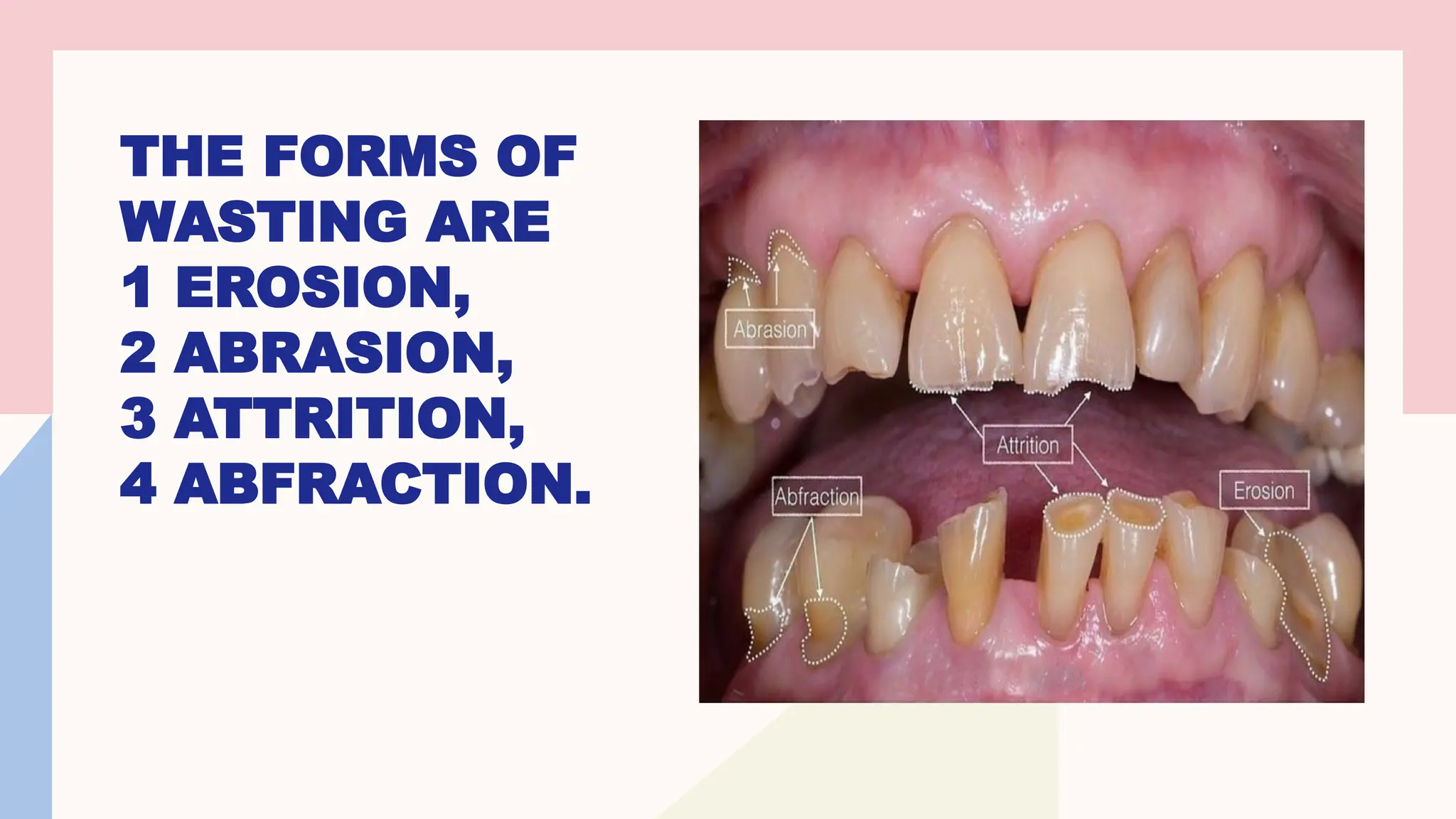
THE FORMS OF
WASTING ARE
1 EROSION,
2 ABRASION,
3 ATTRITION,
4 ABFRACTION.
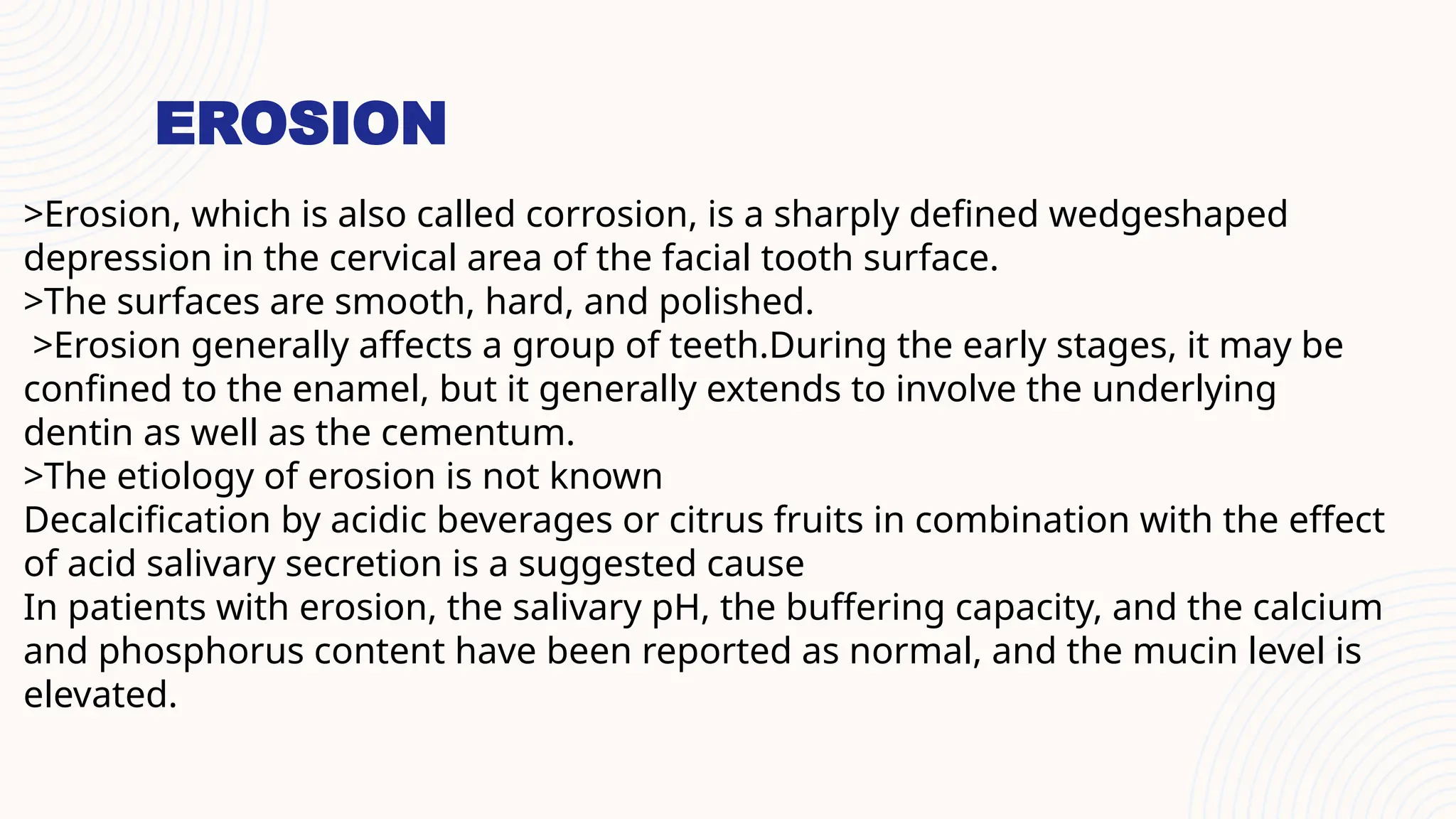
>Erosion, which is also called corrosion, is a sharply defined wedgeshaped
depression in the cervical area of the facial tooth surface.
>The surfaces are smooth, hard, and polished.
>Erosion generally affects a group of teeth.During the early stages, it may be
confined to the enamel, but it generally extends to involve the underlying
dentin as well as the cementum.
>The etiology of erosion is not known
Decalcification by acidic beverages or citrus fruits in combination with the effect
of acid salivary secretion is a suggested cause
In patients with erosion, the salivary pH, the buffering capacity, and the calcium
and phosphorus content have been reported as normal, and the mucin level is
elevated.
EROSION
5
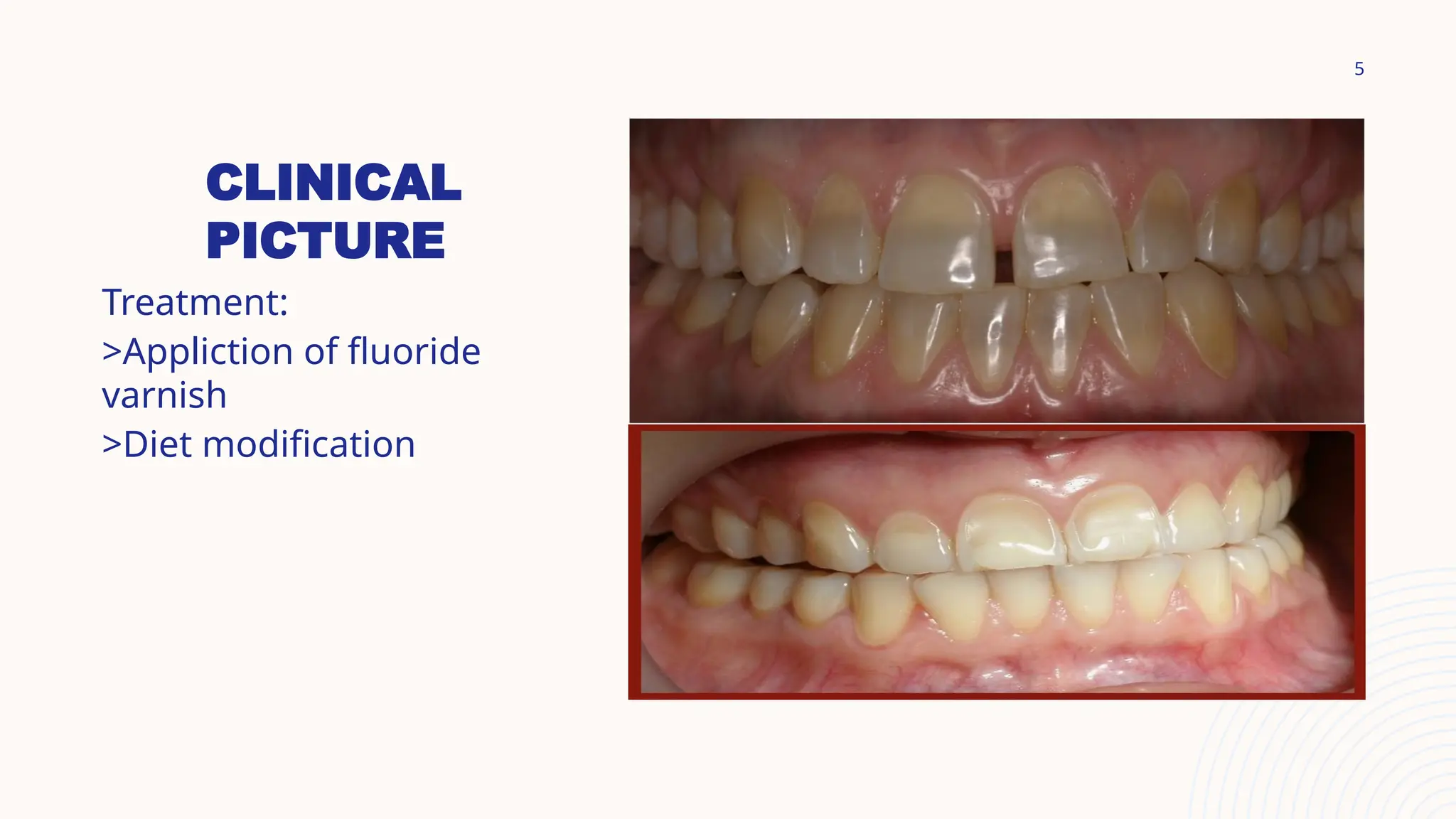
CLINICAL
PICTURE
Treatment:
>Appliction of fluoride
varnish
>Diet modification
6
ABRASION
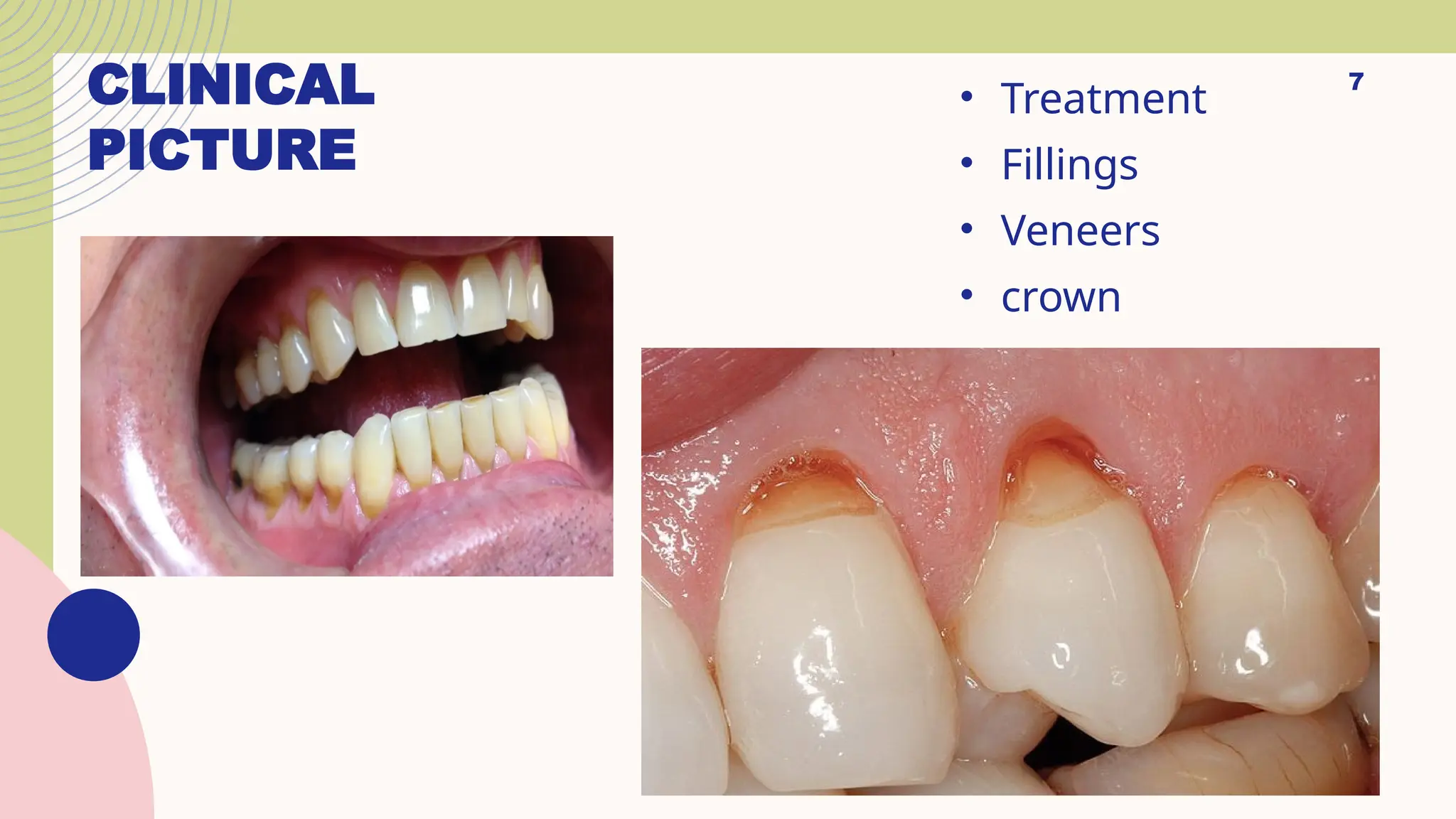
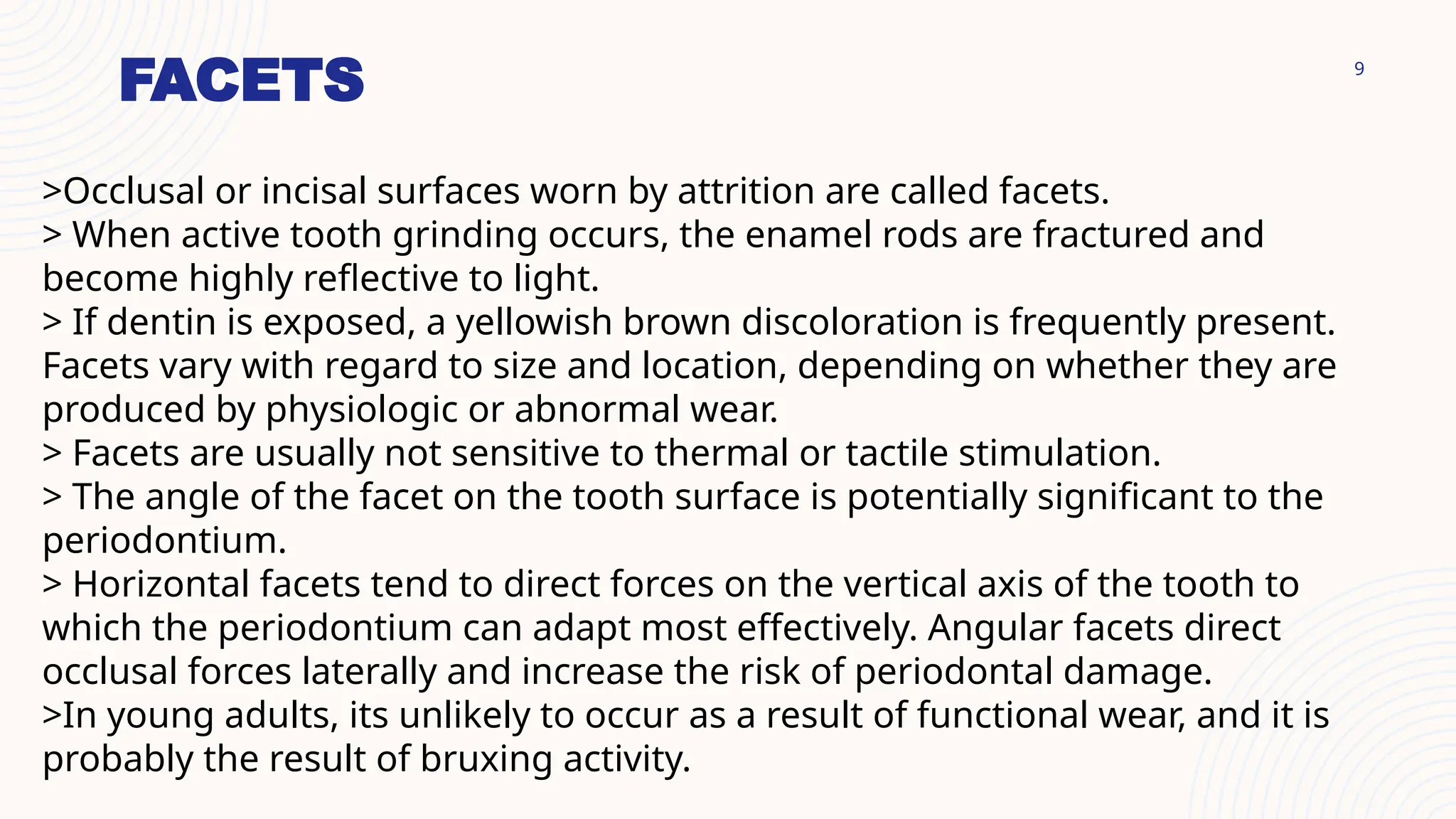
• Abrasion refers to the loss of tooth substance that is induced by mechanical wear other than that of
mastication.
• Abrasion results in saucer-shaped or wedge-shaped indentations with a smooth, shiny surface .
• Abrasion starts on exposed cementum surfaces rather than on the enamel, and it extends to involve the
dentin of the root.
• A sharp “ditching” around the cementoenamel junction appears to be the result of the softer cemental
surface as compared to much more harder enamel
• Continued exposure to the abrasive agent in combination with decalcification of the enamel by locally
formed acids may result in a loss of enamel followed by a loss of the dentin of the crown
> aggressive toothbrushing with an abrasive dentifrice is the most common cause.
> Tooth position (facial) is also a major factor in the abrasive loss of the root surface.
> Horizontal brushing at right angles to the vertical axis of the teeth results in the severest loss of tooth
substance.
> Occasionally, abrasion of the incisal edges occurs as a result of habits such as holding objects (e.g., bobby
pins, tacks) between the teeth.
7
CLINICAL
PICTURE
• Treatment
• Fillings
• Veneers
• crown
8
ATTRITION
Attrition is occlusal wear that results from functional contact with
opposing teeth
. Such physical wear patterns may occur on incisal, occlusal, or
approximal tooth surfaces.
A certain amount of tooth wear is physiologic, but accelerated wear
may occur when abnormal anatomic or unusual functional factors
are present
9
FACETS
>Occlusal or incisal surfaces worn by attrition are called facets.
> When active tooth grinding occurs, the enamel rods are fractured and
become highly reflective to light.
> If dentin is exposed, a yellowish brown discoloration is frequently present.
Facets vary with regard to size and location, depending on whether they are
produced by physiologic or abnormal wear.
> Facets are usually not sensitive to thermal or tactile stimulation.
> The angle of the facet on the tooth surface is potentially significant to the
periodontium.
> Horizontal facets tend to direct forces on the vertical axis of the tooth to
which the periodontium can adapt most effectively. Angular facets direct
occlusal forces laterally and increase the risk of periodontal damage.
>In young adults, its unlikely to occur as a result of functional wear, and it is
probably the result of bruxing activity.
10
ABFRACTION
>Abfraction, and it results from occlusal loading surfaces causing
tooth flexure and mechanical microfractures the cervical area.
> Mechanical microfractures from abfraction weakens the cervical
tooth structure and makes it much more susceptible to loss of tooth
structure via abrasion
>Treatment:
Mouth guards
Composite
Restoration
Orthodontic treatment
11
THANK YOU

Wasting disease of the teeth pppptt.pptx

  • 1.
  • 2.
    DEFINED AS as anygradual loss of tooth substance, which is characterized by the formation of smooth, polished surfaces without regard to the possible mechanism of this loss 2
  • 3.
    THE FORMS OF WASTINGARE 1 EROSION, 2 ABRASION, 3 ATTRITION, 4 ABFRACTION.
  • 4.
    >Erosion, which isalso called corrosion, is a sharply defined wedgeshaped depression in the cervical area of the facial tooth surface. >The surfaces are smooth, hard, and polished. >Erosion generally affects a group of teeth.During the early stages, it may be confined to the enamel, but it generally extends to involve the underlying dentin as well as the cementum. >The etiology of erosion is not known Decalcification by acidic beverages or citrus fruits in combination with the effect of acid salivary secretion is a suggested cause In patients with erosion, the salivary pH, the buffering capacity, and the calcium and phosphorus content have been reported as normal, and the mucin level is elevated. EROSION
  • 5.
  • 6.
    6 ABRASION • Abrasion refersto the loss of tooth substance that is induced by mechanical wear other than that of mastication. • Abrasion results in saucer-shaped or wedge-shaped indentations with a smooth, shiny surface . • Abrasion starts on exposed cementum surfaces rather than on the enamel, and it extends to involve the dentin of the root. • A sharp “ditching” around the cementoenamel junction appears to be the result of the softer cemental surface as compared to much more harder enamel • Continued exposure to the abrasive agent in combination with decalcification of the enamel by locally formed acids may result in a loss of enamel followed by a loss of the dentin of the crown > aggressive toothbrushing with an abrasive dentifrice is the most common cause. > Tooth position (facial) is also a major factor in the abrasive loss of the root surface. > Horizontal brushing at right angles to the vertical axis of the teeth results in the severest loss of tooth substance. > Occasionally, abrasion of the incisal edges occurs as a result of habits such as holding objects (e.g., bobby pins, tacks) between the teeth.
  • 7.
  • 8.
    8 ATTRITION Attrition is occlusalwear that results from functional contact with opposing teeth . Such physical wear patterns may occur on incisal, occlusal, or approximal tooth surfaces. A certain amount of tooth wear is physiologic, but accelerated wear may occur when abnormal anatomic or unusual functional factors are present
  • 9.
    9 FACETS >Occlusal or incisalsurfaces worn by attrition are called facets. > When active tooth grinding occurs, the enamel rods are fractured and become highly reflective to light. > If dentin is exposed, a yellowish brown discoloration is frequently present. Facets vary with regard to size and location, depending on whether they are produced by physiologic or abnormal wear. > Facets are usually not sensitive to thermal or tactile stimulation. > The angle of the facet on the tooth surface is potentially significant to the periodontium. > Horizontal facets tend to direct forces on the vertical axis of the tooth to which the periodontium can adapt most effectively. Angular facets direct occlusal forces laterally and increase the risk of periodontal damage. >In young adults, its unlikely to occur as a result of functional wear, and it is probably the result of bruxing activity.
  • 10.
    10 ABFRACTION >Abfraction, and itresults from occlusal loading surfaces causing tooth flexure and mechanical microfractures the cervical area. > Mechanical microfractures from abfraction weakens the cervical tooth structure and makes it much more susceptible to loss of tooth structure via abrasion >Treatment: Mouth guards Composite Restoration Orthodontic treatment
  • 11.