Notes: Thyroid and Parathyroid (pg 6)
Thyroid gland
• Located at the base of the throat, just behind
the Adam’s apple
• Butterfly-shaped
• Produces 2 hormones
1. Thyroid Hormone: Consists of 2 hormones
95% is Thyroxine (contains 4 Iodine atoms) and
5% is Triiodothyronine (contains 3 Iodine
atoms). Have the same function: Control the
rate at which glucose is turned into energy.
Target tissue: Every cell in the body
2. Calcitonin: Decreases blood calcium levels by
causing calcium to be deposited in the bones.
Thyroid Disorders
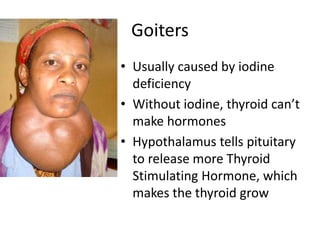
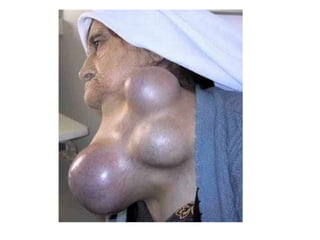
Goiters
• Usually caused by iodine
deficiency
• Without iodine, thyroid can’t
make hormones
• Hypothalamus tells pituitary
to release more Thyroid
Stimulating Hormone, which
makes the thyroid grow
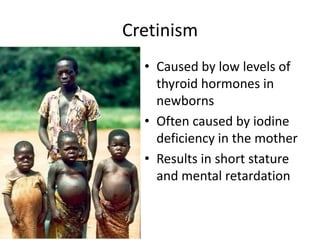
Cretinism
• Caused by low levels of
thyroid hormones in
newborns
• Often caused by iodine
deficiency in the mother
• Results in short stature
and mental retardation
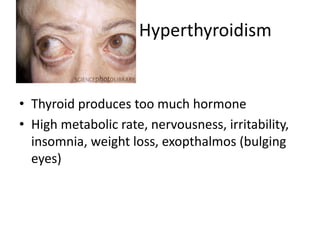
Hyperthyroidism

• Thyroid produces too much hormone
• High metabolic rate, nervousness, irritability,
insomnia, weight loss, exopthalmos (bulging
eyes)
Parathyroid Glands
• 4 small masses of glandular tissue found on
the posterior surface of the thyroid gland
Parathyroid Glands
• 4 small masses of glandular tissue found on
the posterior surface of the thyroid gland
• Make Parathyroid Hormone (PTH): Raises
blood calcium levels by stimulating bone
destroying cells (osteoclasts) to break down
bone and release calcium into the blood.
Parathyroid Glands
• 4 small masses of glandular tissue found on
the posterior surface of the thyroid gland
• Make Parathyroid Hormone (PTH): Raises
blood calcium levels by stimulating bone
destroying cells (osteoclasts) to break down
bone and release calcium into the blood.
• PTH and Calcitonin are antagonists and
maintain blood calcium levels through
negative feedback
Drawing (pg 7)
• Illustrate negative feedback loop for blood
calcium

Thyroid

  • 1.
    Notes: Thyroid andParathyroid (pg 6)
  • 2.
    Thyroid gland • Locatedat the base of the throat, just behind the Adam’s apple • Butterfly-shaped • Produces 2 hormones
  • 3.
    1. Thyroid Hormone:Consists of 2 hormones 95% is Thyroxine (contains 4 Iodine atoms) and 5% is Triiodothyronine (contains 3 Iodine atoms). Have the same function: Control the rate at which glucose is turned into energy. Target tissue: Every cell in the body
  • 4.
    2. Calcitonin: Decreasesblood calcium levels by causing calcium to be deposited in the bones.
  • 5.
  • 6.
    Goiters • Usually causedby iodine deficiency • Without iodine, thyroid can’t make hormones • Hypothalamus tells pituitary to release more Thyroid Stimulating Hormone, which makes the thyroid grow
  • 8.
    Cretinism • Caused bylow levels of thyroid hormones in newborns • Often caused by iodine deficiency in the mother • Results in short stature and mental retardation
  • 9.
    Hyperthyroidism • Thyroid producestoo much hormone • High metabolic rate, nervousness, irritability, insomnia, weight loss, exopthalmos (bulging eyes)
  • 10.
    Parathyroid Glands • 4small masses of glandular tissue found on the posterior surface of the thyroid gland
  • 11.
    Parathyroid Glands • 4small masses of glandular tissue found on the posterior surface of the thyroid gland • Make Parathyroid Hormone (PTH): Raises blood calcium levels by stimulating bone destroying cells (osteoclasts) to break down bone and release calcium into the blood.
  • 12.
    Parathyroid Glands • 4small masses of glandular tissue found on the posterior surface of the thyroid gland • Make Parathyroid Hormone (PTH): Raises blood calcium levels by stimulating bone destroying cells (osteoclasts) to break down bone and release calcium into the blood. • PTH and Calcitonin are antagonists and maintain blood calcium levels through negative feedback
  • 13.
    Drawing (pg 7) •Illustrate negative feedback loop for blood calcium