
Endocrine System
Endocrine System This system helps to regulate all the body's functions.  It is made up of ductless (without tubes) glands which produce and release hormones directly into the bloodstream.
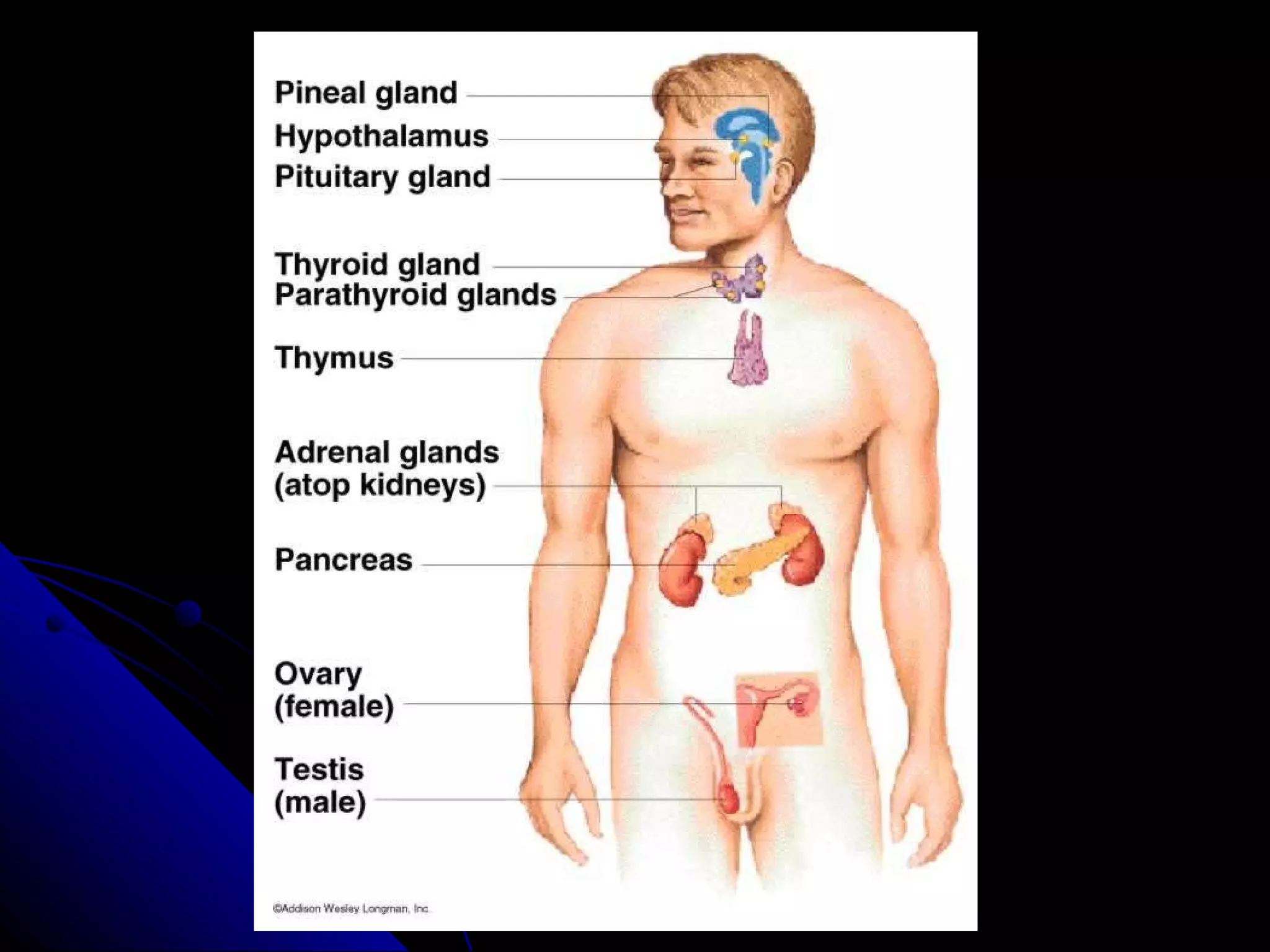
Endocrine Glands These are the major hormone-producing organs of the endocrine system. They release hormones directly into the bloodstream.
Hormone A chemical substance secreted by an endocrine gland or group of endocrine cells that acts to control or regulate specific physiological processes, including growth, metabolism, and reproduction.
THE ENDOCRINE GLANDS
 
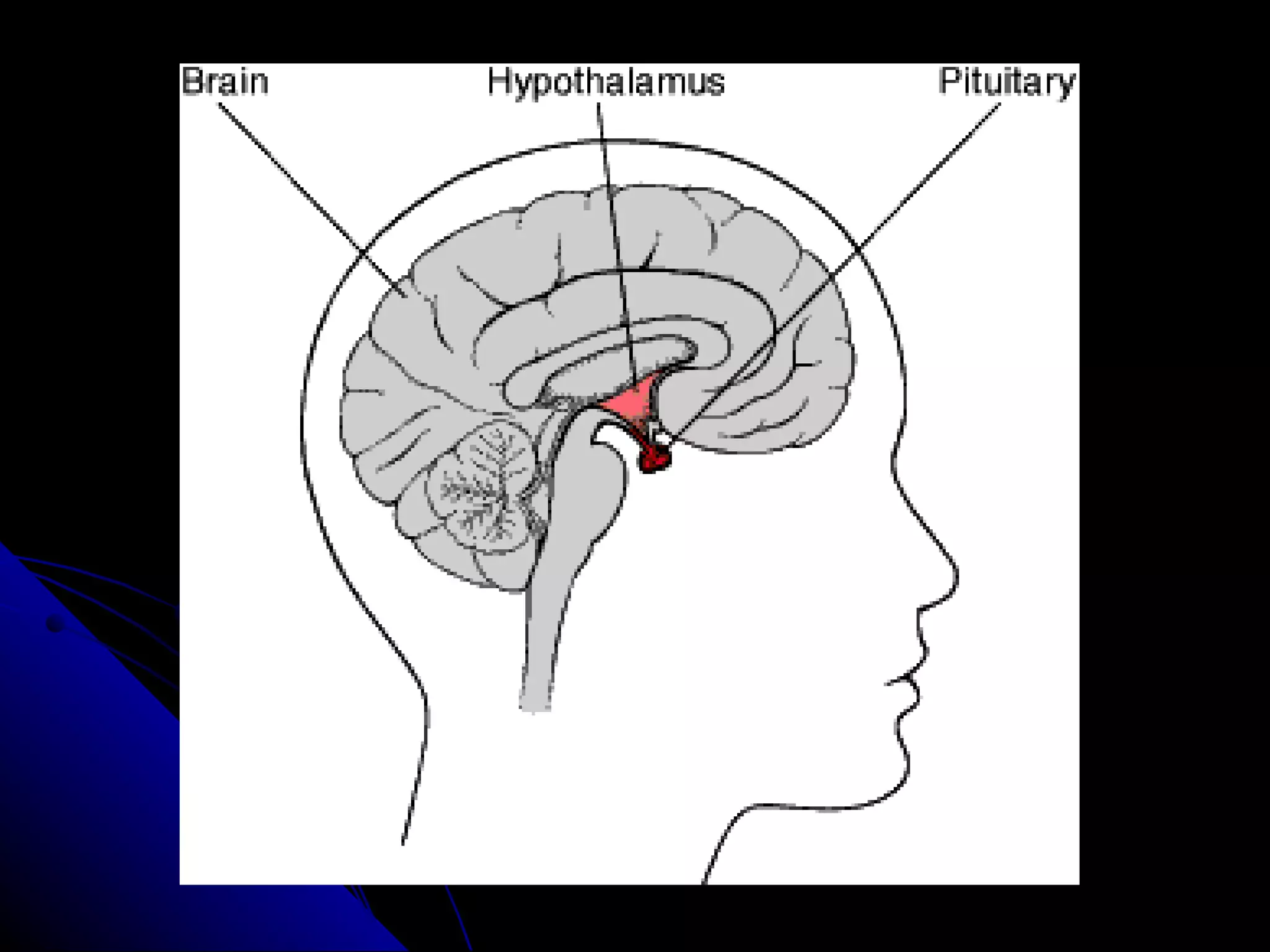
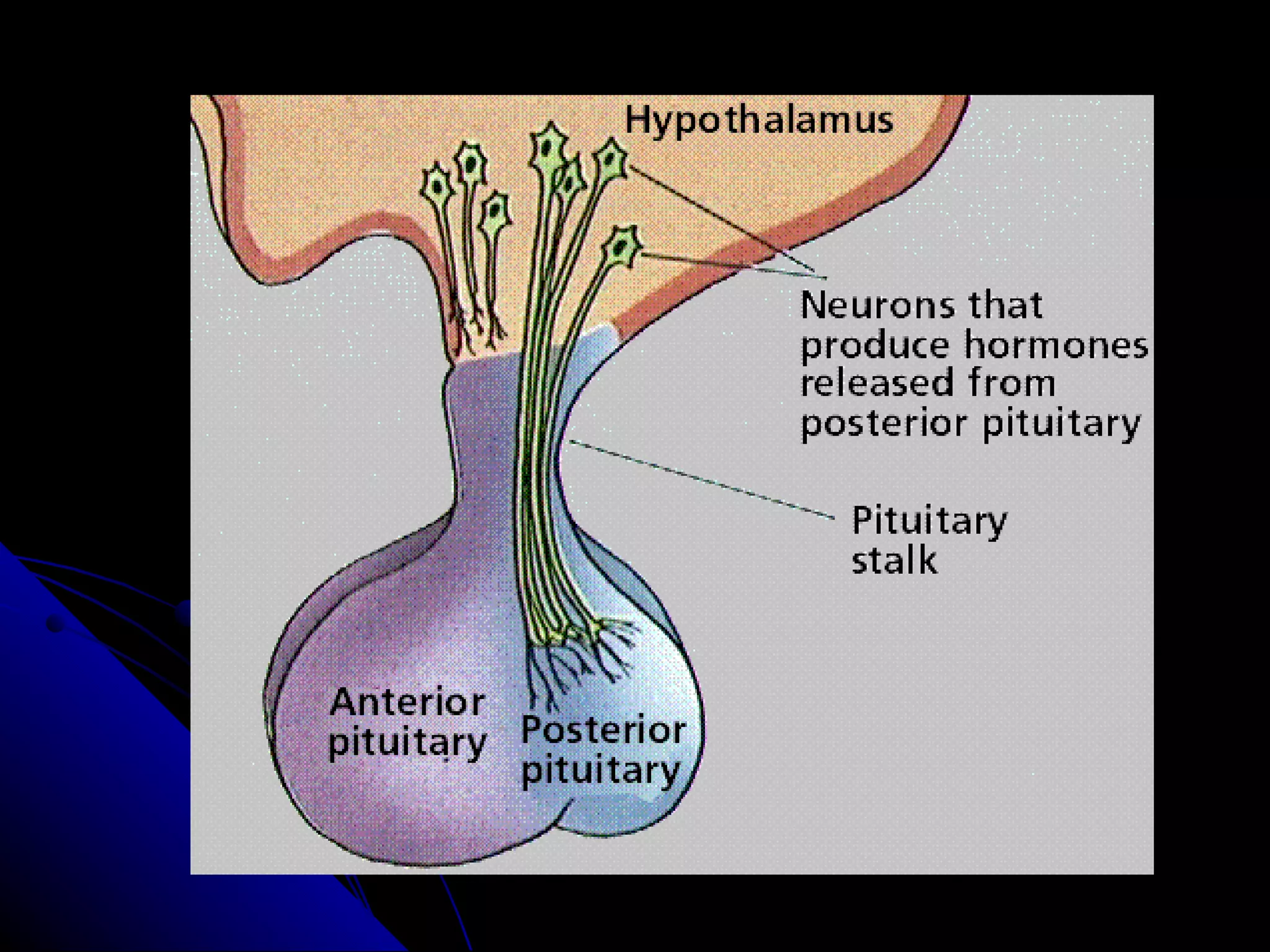
Pituitary Gland The pituitary gland is called the master gland. The hormones of the pituitary gland are called “ tropic hormones ”  . It is located within the brain. It hangs from the hypothalamus. It is just about the size of a pea. The pituitary is broken down into two parts, the   anterior lobe   and the   posterior lobe .
 
 
Hormones controlled by the  anterior lobe  of the pituitary include:   Human Growth Hormone (Somatotropin)   stimulates cell division and the growth of the muscles and bones.  Thyroid Stimulating Hormone   stimulates the thyroid gland to produce hormones.
Adrenocorticotropic Hormone   stimulates the adrenal cortex of the adrenal glands.  Prolactin stimulates the production of breast milk in females.  Follicle Stimulating Hormones   stimulates the development of eggs in the ovaries and sperm in the testes.  Luteinizing Hormone   causes sex hormone secretion in both males and females and also causes ovulation in females.
Hormones controlled by the  posterior lobe  of the pituitary include:   Antidiuretic Hormone/Vasopressin  helps the body to conserve water by promoting the reabsorption of water from the kidneys.  Oxytocin  causes contraction of the uterine muscles and promotes the release of milk from the breast.
Pineal Gland It is an outgrowth of the brain. It produces  melatonin . The  melatonin  forms part of the system that regulates the  circadian cycle  (body’s day-night cycles).  Normally, the production of melatonin by the pineal gland is inhibited by  light  and permitted by  darkness . For this reason melatonin has been called  " the hormone of darkness " .
 
The secretion of melatonin peaks in the middle of the night, and gradually falls during the second half of the night.  If the melatonin is low, the body becomes active. At the end of the day, when there is high melatonin in the body, the overall level of activity reduces in preparation for sleep.
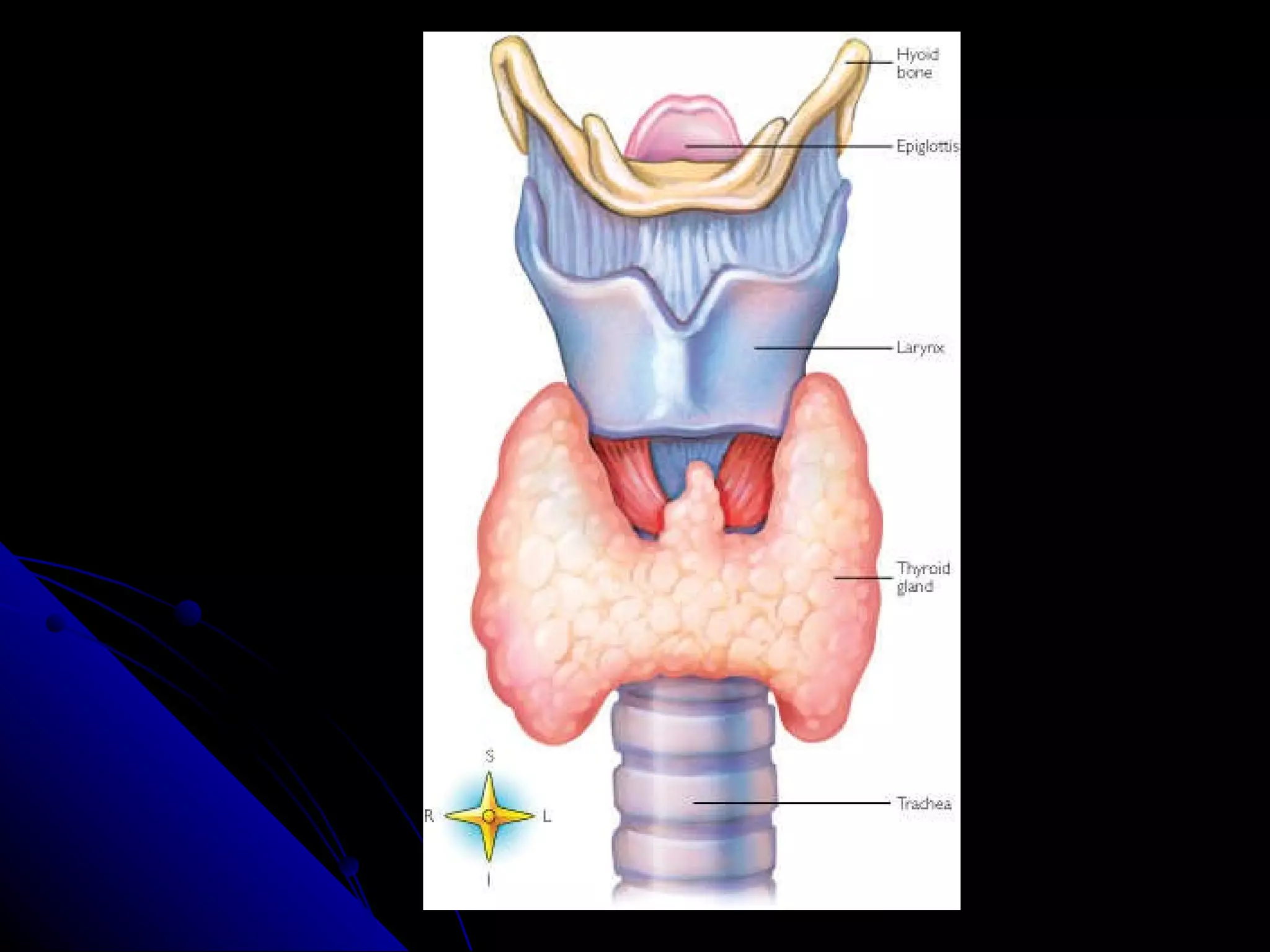
Thyroid Gland It is located at the base of the neck. It produces  thyroxin  that controls the rate at which the body cells use food to release energy.
 
It also produces  calcitonin  which reduces blood calcium levels by causing calcium to be deposited in the bones. Thyroid hormones also help in regulating body growth and development. Differences in metabolic rate determine how alert and energetic people are and how fat or thin they tend to be.
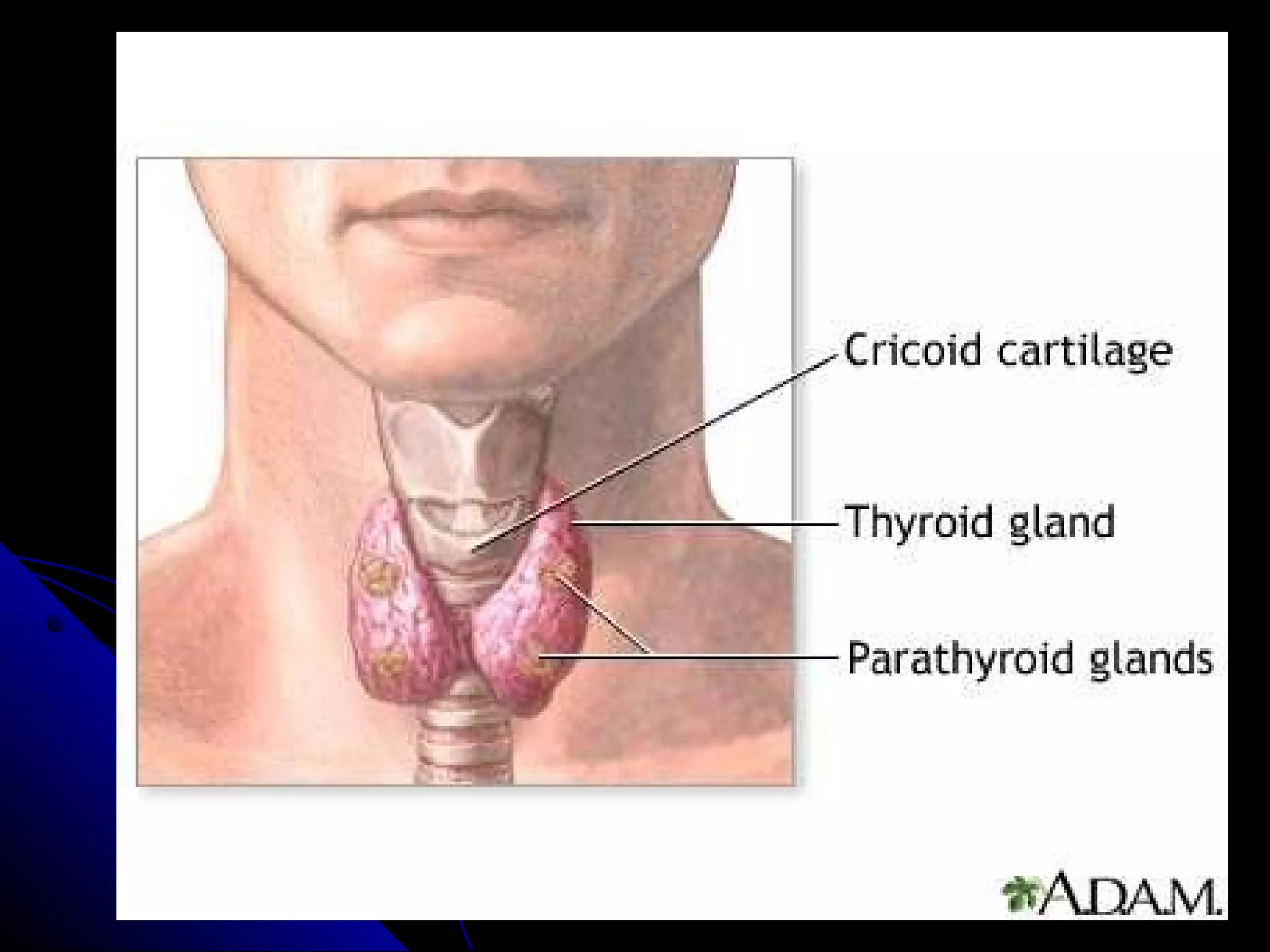
Parathyroid Glands These are two pairs of pea-sized glands found near the thyroid gland.  The hormone produced by these glands, called  parathormone , helps control the level of the calcium in the blood. If the calcium level is low, the glands increase their hormone production which causes the bones to release more calcium into the blood. If the blood level of calcium is too high, the glands lessen their production of the hormone.
 
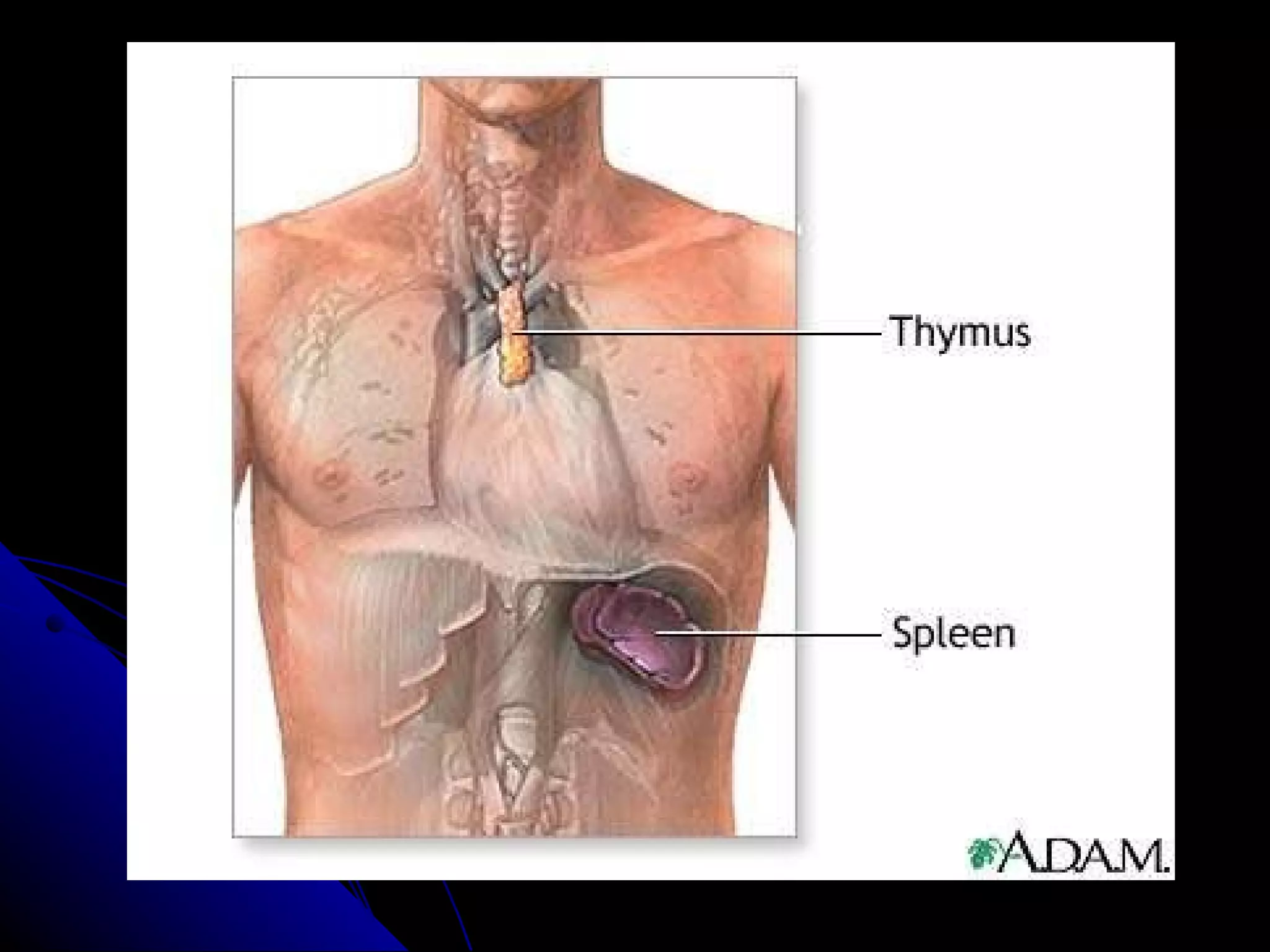
Thymus Glands It is located in the upper thorax behind the breast bone and extends below the thyroid gland.  It forms part of the body’s immune system. The function of the gland is to cause  lymphocytes  (white blood cells) to become  T cells   – cells which become part of the body’s defense against infection.
 
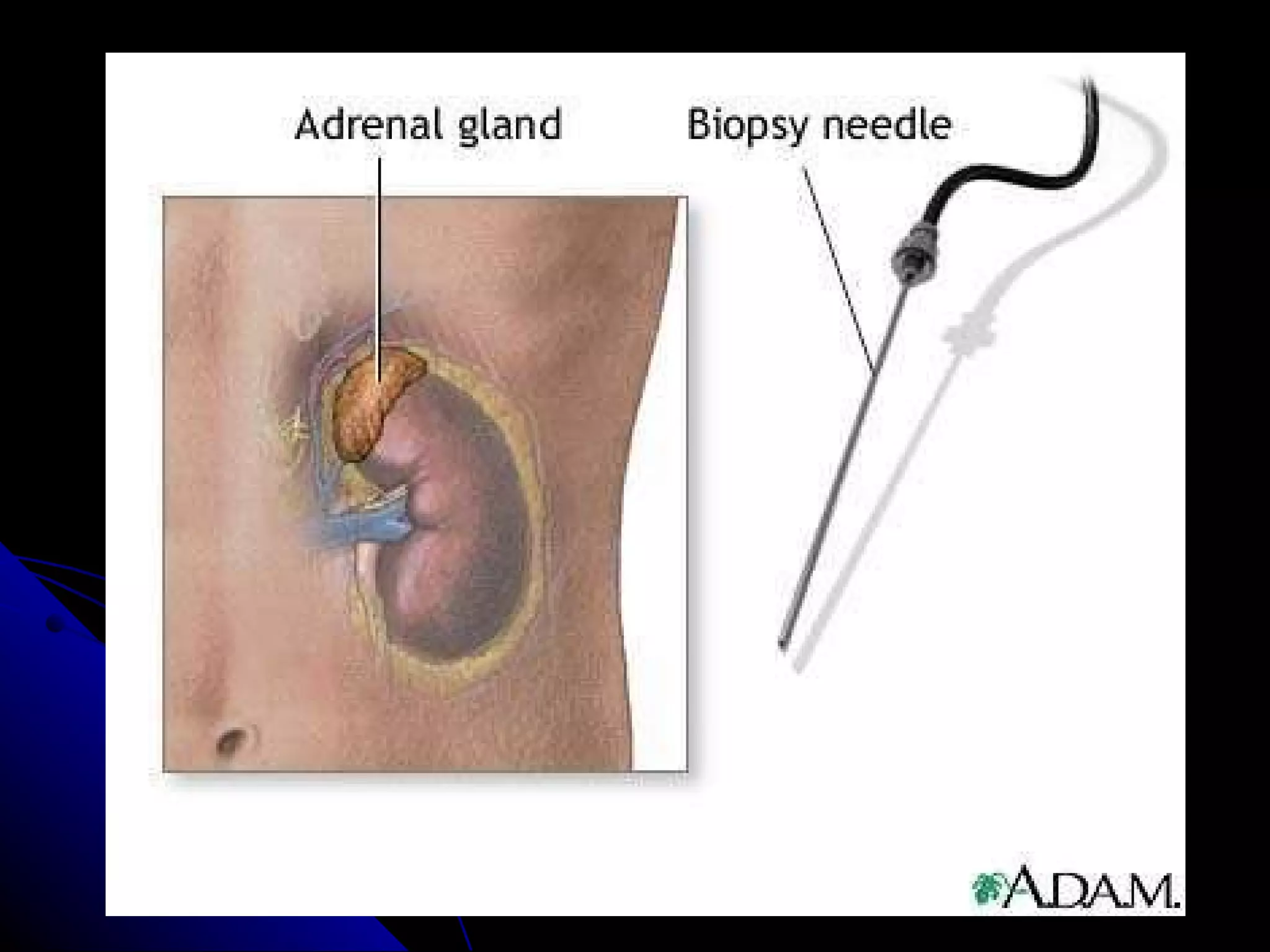
Adrenal Glands The adrenals are a pair of cone-shaped glands, each on top of a kidney. An adrenal gland has two parts – the  cortex  or the outer part, and the  medulla   or the inner part. The  cortex   produces  corticoids  that affect the body  metabolism  (is the process by which the body converts food into energy). The  medulla  produces  epinephrine  (adrenaline)  which mimics the sympathetic nervous system.
 
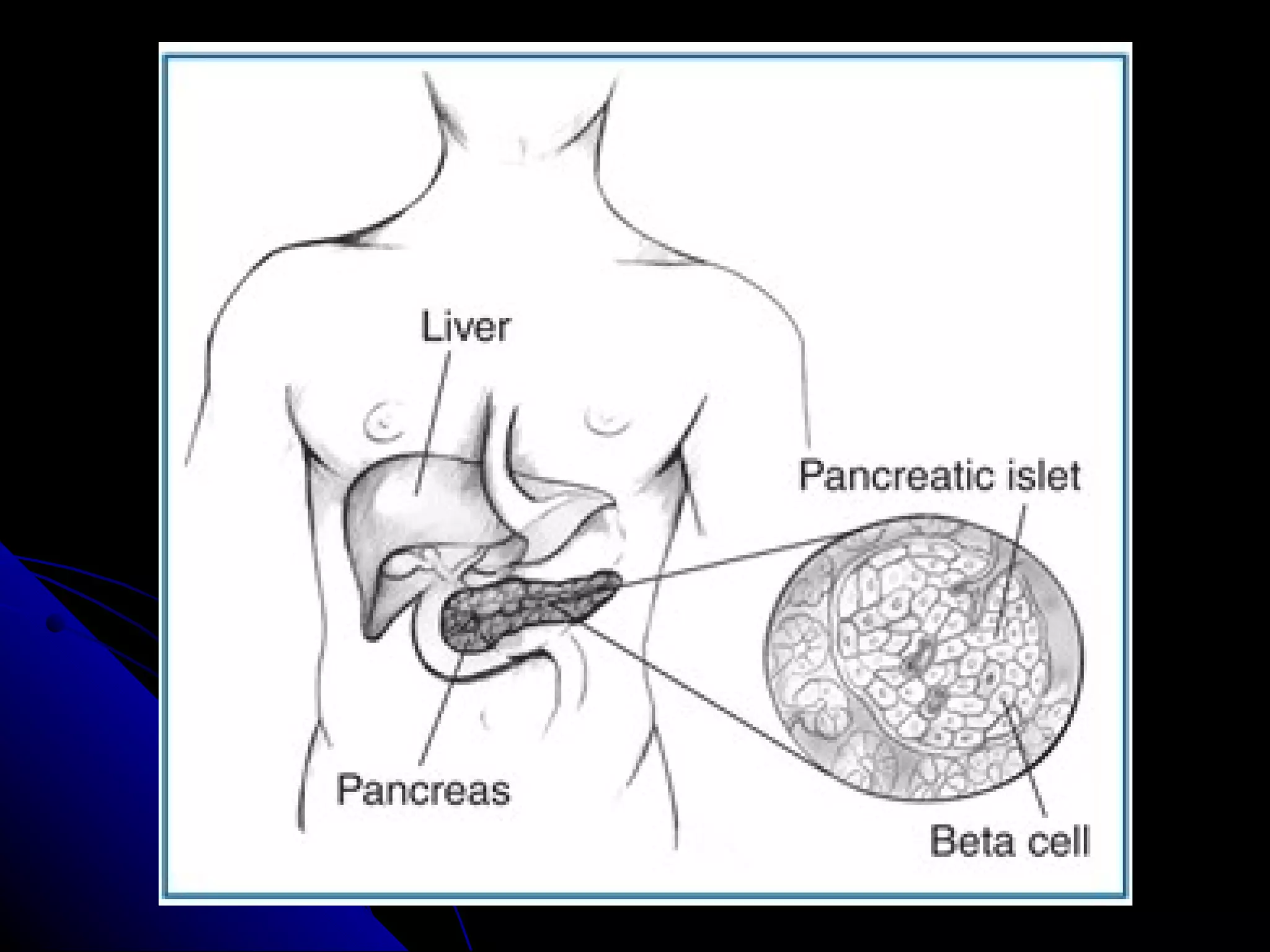
Pancreatic Islets Scattered throughout the pancreas are tiny glandular tissues called pancreatic islets (also called  islets of Langerhans ) that produce the hormones  glucagon  and  insulin .  Insulin  lowers blood sugar level while  glucagon  raises blood sugar level.
 
Gonads Testes They produce  androgens  (testosterone)  which causes the development of male secondary sex characteristics.
Ovaries They produce  estrogen  and  progesterone .  Estrogen  stimulates the development of the female secondary sex characteristics, as well as the growth of the inner lining of the uterus in preparation for implantation and development of a fertilized egg. In support of this reproductive function, the  progesterone  also promotes growth of the uterine lining.
Disorders of Endocrine System
A glandular disorder may be: Functional It results in the overproduction or underproduction of the hormones that the gland produces. Anatomical Abnormal changes in the structure or anatomy of a gland, such as the enlargement of the gland. Autoimmune Abnormal functioning of the immune system that causes your immune system to produce antibodies against your own tissues.
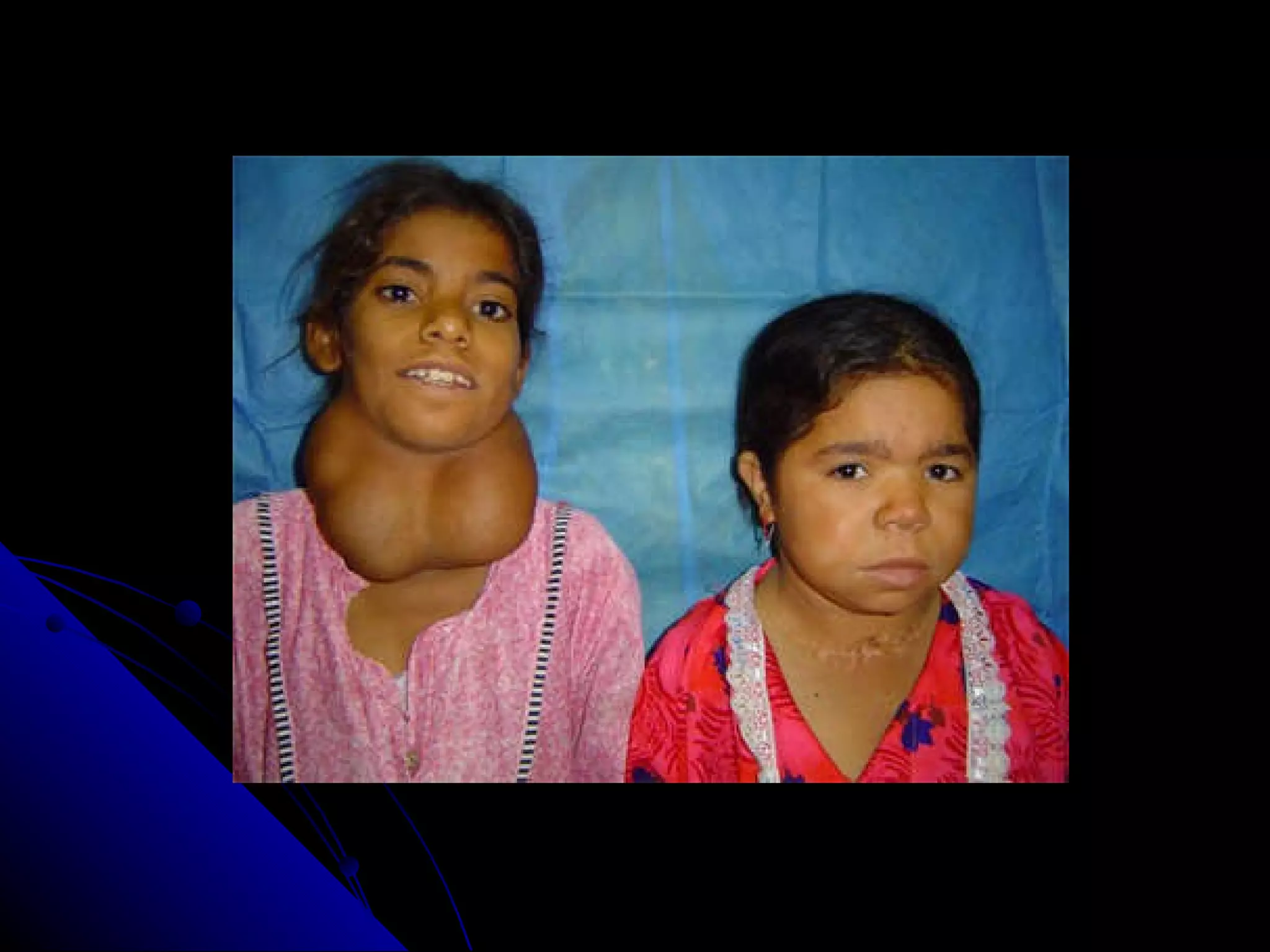
Hypothyroidism It is the underproductivity of the thyroid due to lack of iodine in the diet. A symptom of hypothyroidism is goiter, or the enlargement of the thyroid gland.  If the cause of goiter is lack of iodine, a patient should have more fish and iodized salt in his or her diet. If the goiter is too large, it can be removed by surgery.
 
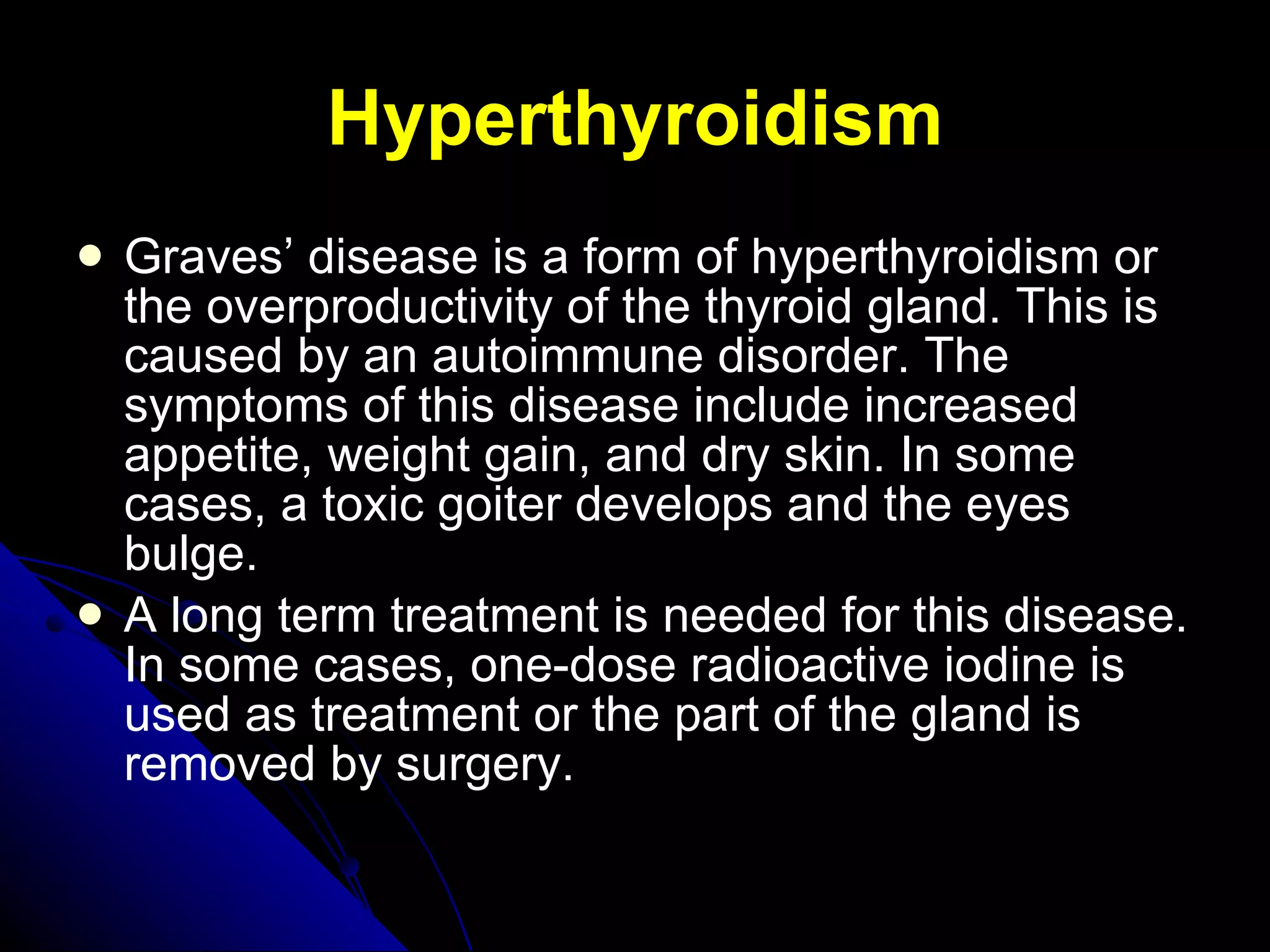
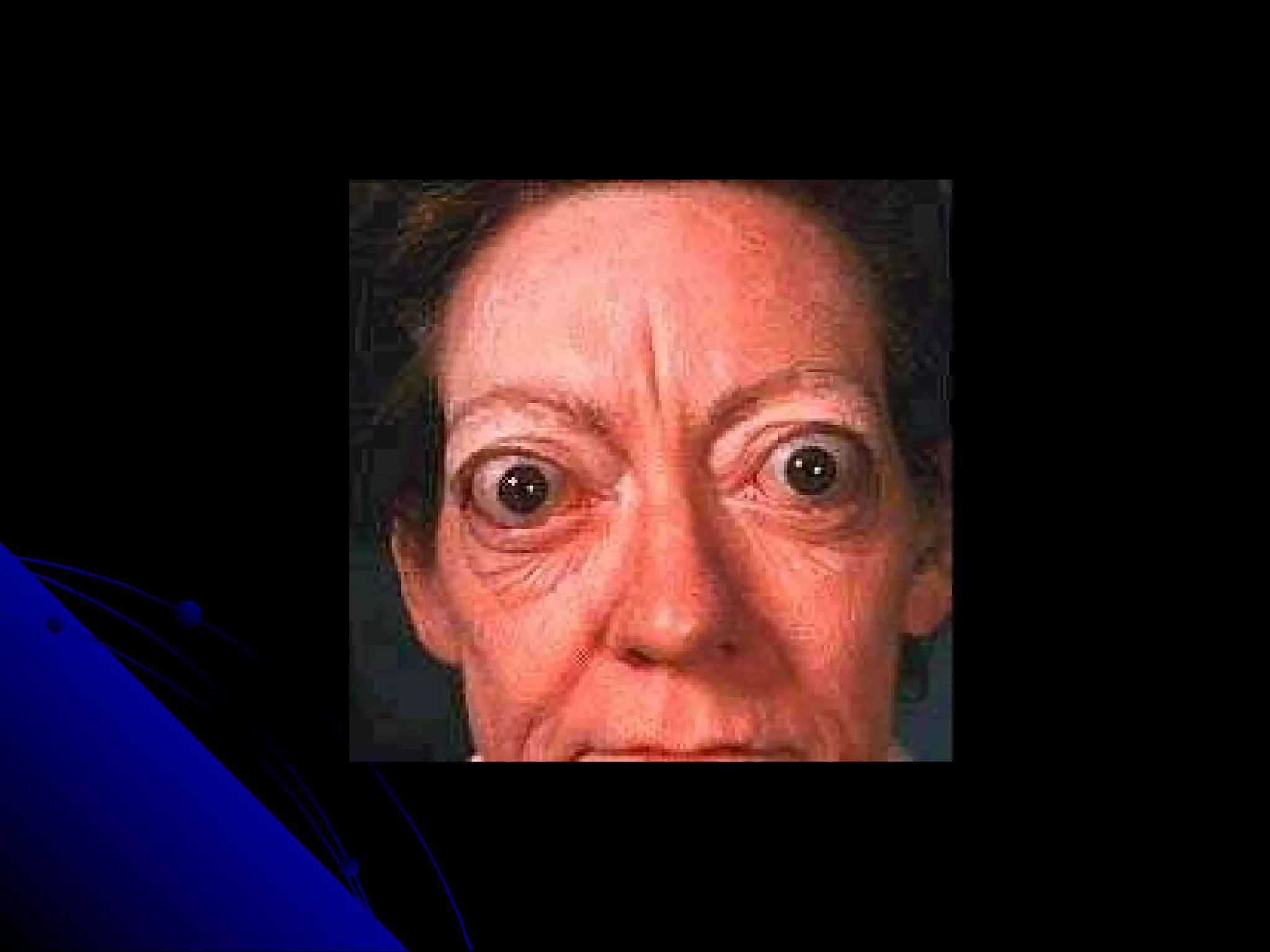
Hyperthyroidism Graves’ disease is a form of hyperthyroidism or the overproductivity of the thyroid gland. This is caused by an autoimmune disorder. The symptoms of this disease include increased appetite, weight gain, and dry skin. In some cases, a toxic goiter develops and the eyes bulge.  A long term treatment is needed for this disease. In some cases, one-dose radioactive iodine is used as treatment or the part of the gland is removed by surgery.
 
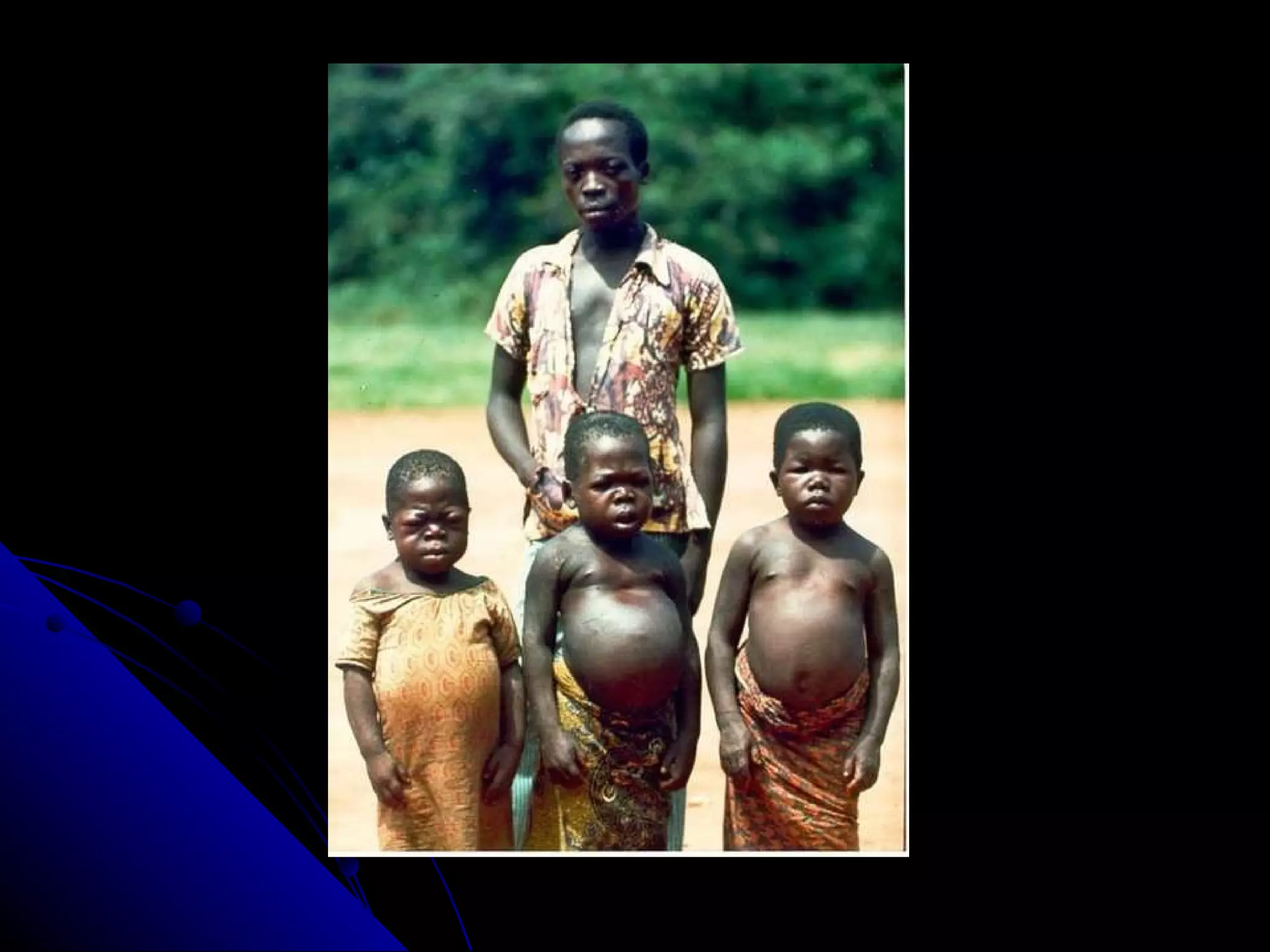
Cretinism   Underproductivity of the thyroid gland results in decreased production of thyroxin. A deficiency in thyroxin during the development of a fetus can cause cretinism. A cretin is short in height and has mental retardation.
 
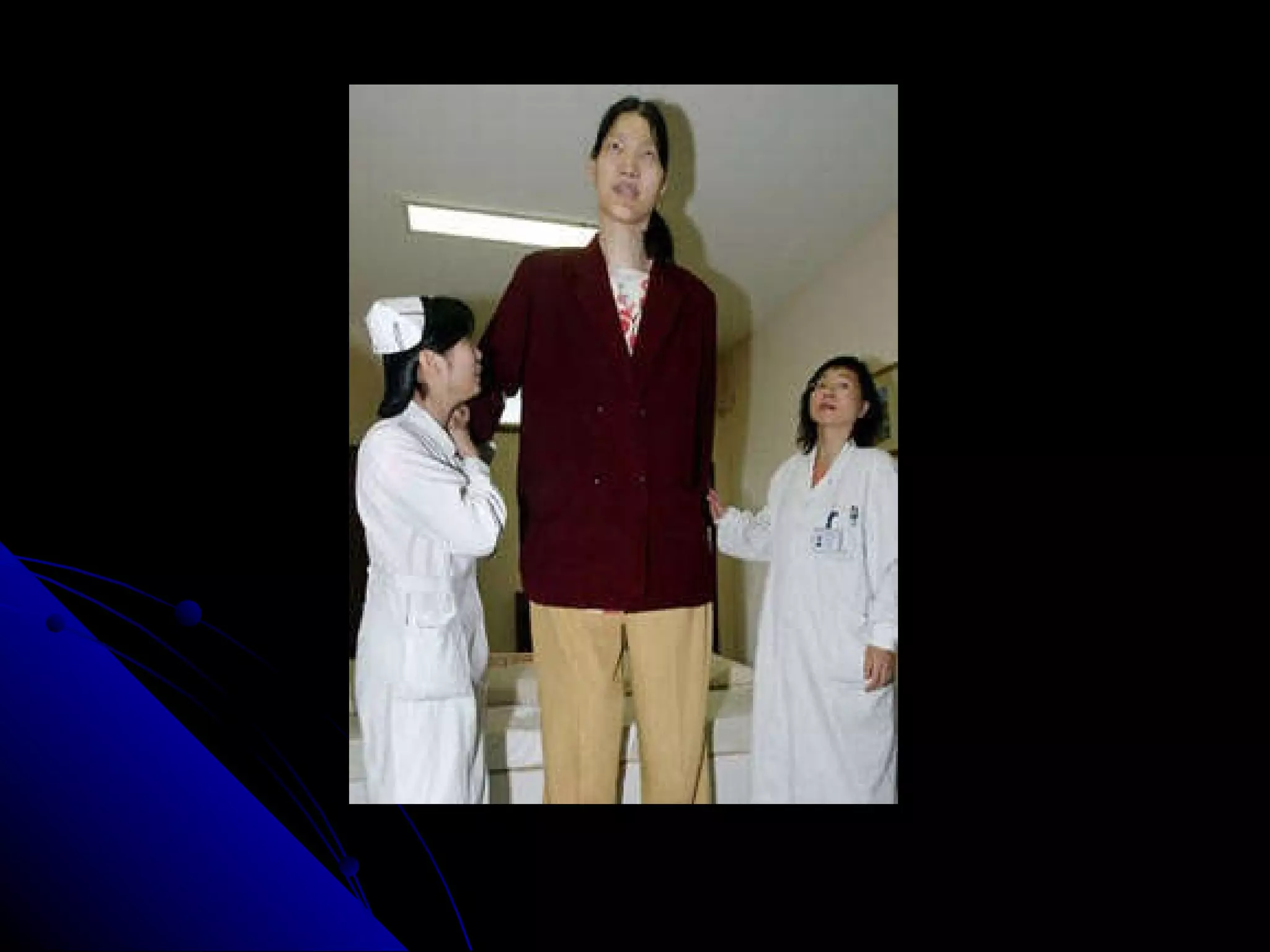
Gigantism Overproduction of the growth hormone causes gigantism or excessive tallness (adult height of 2.4 to 2.7 meters).
 
Dwarfism Underproduction of the growth hormone causes dwarfism where the body proportions are normal but adult height does not exceed 1.2 meters. Adults with this height are referred to as midgets. Dwarfs are adults who are short and with body proportions that are not normal.
 
Diabetes Mellitus It is a disorder in which the pancreas produces little or no insulin. Without insulin, blood sugar level rises. Diabetes is found to run in families. Children of a diabetic parent may likely develop the disease. Treatment of diabetes includes maintenance of normal weight, regular exercise, and proper diet. In cases where the patient is dependent on insulin, regular injection of insulin is recommended.
Hypofunction of Testes and Ovaries Hypofunction of the testes can be the result of some abnormality in development before birth. This causes failure of the development of male secondary sex characteristics. Hypofuntion of the ovaries may cause a female not to menstruate; it may also cause infertility.

Endocrine system

  • 1.
  • 2.
    Endocrine System Thissystem helps to regulate all the body's functions. It is made up of ductless (without tubes) glands which produce and release hormones directly into the bloodstream.
  • 3.
    Endocrine Glands Theseare the major hormone-producing organs of the endocrine system. They release hormones directly into the bloodstream.
  • 4.
    Hormone A chemicalsubstance secreted by an endocrine gland or group of endocrine cells that acts to control or regulate specific physiological processes, including growth, metabolism, and reproduction.
  • 5.
  • 6.
  • 7.
    Pituitary Gland Thepituitary gland is called the master gland. The hormones of the pituitary gland are called “ tropic hormones ” . It is located within the brain. It hangs from the hypothalamus. It is just about the size of a pea. The pituitary is broken down into two parts, the anterior lobe and the posterior lobe .
  • 8.
  • 9.
  • 10.
    Hormones controlled bythe anterior lobe of the pituitary include: Human Growth Hormone (Somatotropin) stimulates cell division and the growth of the muscles and bones. Thyroid Stimulating Hormone stimulates the thyroid gland to produce hormones.
  • 11.
    Adrenocorticotropic Hormone stimulates the adrenal cortex of the adrenal glands. Prolactin stimulates the production of breast milk in females. Follicle Stimulating Hormones stimulates the development of eggs in the ovaries and sperm in the testes. Luteinizing Hormone causes sex hormone secretion in both males and females and also causes ovulation in females.
  • 12.
    Hormones controlled bythe posterior lobe of the pituitary include: Antidiuretic Hormone/Vasopressin helps the body to conserve water by promoting the reabsorption of water from the kidneys. Oxytocin causes contraction of the uterine muscles and promotes the release of milk from the breast.
  • 13.
    Pineal Gland Itis an outgrowth of the brain. It produces melatonin . The melatonin forms part of the system that regulates the circadian cycle (body’s day-night cycles). Normally, the production of melatonin by the pineal gland is inhibited by light and permitted by darkness . For this reason melatonin has been called " the hormone of darkness " .
  • 14.
  • 15.
    The secretion ofmelatonin peaks in the middle of the night, and gradually falls during the second half of the night. If the melatonin is low, the body becomes active. At the end of the day, when there is high melatonin in the body, the overall level of activity reduces in preparation for sleep.
  • 16.
    Thyroid Gland Itis located at the base of the neck. It produces thyroxin that controls the rate at which the body cells use food to release energy.
  • 17.
  • 18.
    It also produces calcitonin which reduces blood calcium levels by causing calcium to be deposited in the bones. Thyroid hormones also help in regulating body growth and development. Differences in metabolic rate determine how alert and energetic people are and how fat or thin they tend to be.
  • 19.
    Parathyroid Glands Theseare two pairs of pea-sized glands found near the thyroid gland. The hormone produced by these glands, called parathormone , helps control the level of the calcium in the blood. If the calcium level is low, the glands increase their hormone production which causes the bones to release more calcium into the blood. If the blood level of calcium is too high, the glands lessen their production of the hormone.
  • 20.
  • 21.
    Thymus Glands Itis located in the upper thorax behind the breast bone and extends below the thyroid gland. It forms part of the body’s immune system. The function of the gland is to cause lymphocytes (white blood cells) to become T cells – cells which become part of the body’s defense against infection.
  • 22.
  • 23.
    Adrenal Glands Theadrenals are a pair of cone-shaped glands, each on top of a kidney. An adrenal gland has two parts – the cortex or the outer part, and the medulla or the inner part. The cortex produces corticoids that affect the body metabolism (is the process by which the body converts food into energy). The medulla produces epinephrine (adrenaline) which mimics the sympathetic nervous system.
  • 24.
  • 25.
    Pancreatic Islets Scatteredthroughout the pancreas are tiny glandular tissues called pancreatic islets (also called islets of Langerhans ) that produce the hormones glucagon and insulin . Insulin lowers blood sugar level while glucagon raises blood sugar level.
  • 26.
  • 27.
    Gonads Testes Theyproduce androgens (testosterone) which causes the development of male secondary sex characteristics.
  • 28.
    Ovaries They produce estrogen and progesterone . Estrogen stimulates the development of the female secondary sex characteristics, as well as the growth of the inner lining of the uterus in preparation for implantation and development of a fertilized egg. In support of this reproductive function, the progesterone also promotes growth of the uterine lining.
  • 29.
  • 30.
    A glandular disordermay be: Functional It results in the overproduction or underproduction of the hormones that the gland produces. Anatomical Abnormal changes in the structure or anatomy of a gland, such as the enlargement of the gland. Autoimmune Abnormal functioning of the immune system that causes your immune system to produce antibodies against your own tissues.
  • 31.
    Hypothyroidism It isthe underproductivity of the thyroid due to lack of iodine in the diet. A symptom of hypothyroidism is goiter, or the enlargement of the thyroid gland. If the cause of goiter is lack of iodine, a patient should have more fish and iodized salt in his or her diet. If the goiter is too large, it can be removed by surgery.
  • 32.
  • 33.
    Hyperthyroidism Graves’ diseaseis a form of hyperthyroidism or the overproductivity of the thyroid gland. This is caused by an autoimmune disorder. The symptoms of this disease include increased appetite, weight gain, and dry skin. In some cases, a toxic goiter develops and the eyes bulge. A long term treatment is needed for this disease. In some cases, one-dose radioactive iodine is used as treatment or the part of the gland is removed by surgery.
  • 34.
  • 35.
    Cretinism Underproductivity of the thyroid gland results in decreased production of thyroxin. A deficiency in thyroxin during the development of a fetus can cause cretinism. A cretin is short in height and has mental retardation.
  • 36.
  • 37.
    Gigantism Overproduction ofthe growth hormone causes gigantism or excessive tallness (adult height of 2.4 to 2.7 meters).
  • 38.
  • 39.
    Dwarfism Underproduction ofthe growth hormone causes dwarfism where the body proportions are normal but adult height does not exceed 1.2 meters. Adults with this height are referred to as midgets. Dwarfs are adults who are short and with body proportions that are not normal.
  • 40.
  • 41.
    Diabetes Mellitus Itis a disorder in which the pancreas produces little or no insulin. Without insulin, blood sugar level rises. Diabetes is found to run in families. Children of a diabetic parent may likely develop the disease. Treatment of diabetes includes maintenance of normal weight, regular exercise, and proper diet. In cases where the patient is dependent on insulin, regular injection of insulin is recommended.
  • 42.
    Hypofunction of Testesand Ovaries Hypofunction of the testes can be the result of some abnormality in development before birth. This causes failure of the development of male secondary sex characteristics. Hypofuntion of the ovaries may cause a female not to menstruate; it may also cause infertility.