Human Endocrine
        System
Endocrine Overview
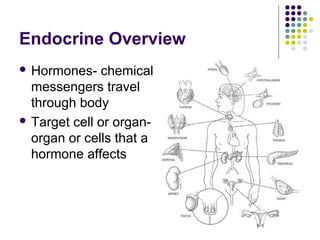
 Hormones-    chemical
  messengers travel
  through body
 Target cell or organ-
  organ or cells that a
  hormone affects
Control of Hormone Release
 Negative  feedback mechanism- hormone
  release is triggered by stimulus, rising levels
  of hormone inhibit further release
 Endocrine stimuli-
     Hormonal- hormones stimulate the release of
      others
     Humoral- blood stimulates release of hormones
     Neural- nerves stimulate hormone release
Anterior Pituitary Gland
 Growth   Hormone (GH)- affects growth of
  skeletal muscles and bones
 Prolactin (PRL)- stimulates milk production
  after pregnancy
 Gonadotropic- regulates hormone activity of
  sex organs
 Also effects adrenal cortex and thyroid
  hormone release
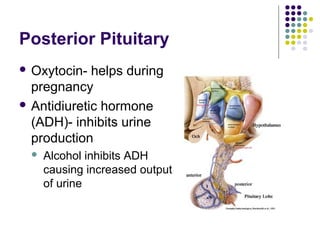
Posterior Pituitary
 Oxytocin-  helps during
  pregnancy
 Antidiuretic hormone
  (ADH)- inhibits urine
  production
     Alcohol inhibits ADH
      causing increased output
      of urine
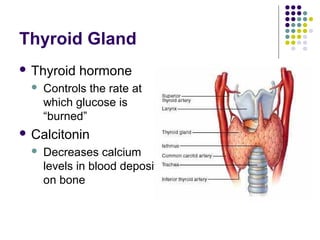
Thyroid Gland
 Thyroid    hormone
     Controls the rate at
      which glucose is
      “burned”
 Calcitonin
     Decreases calcium
      levels in blood deposits
      on bone
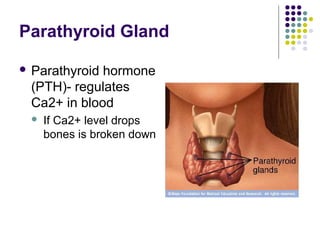
Parathyroid Gland

 Parathyroidhormone
 (PTH)- regulates
 Ca2+ in blood
    If Ca2+ level drops
     bones is broken down
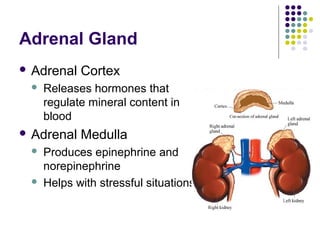
Adrenal Gland
 Adrenal   Cortex
    Releases hormones that
     regulate mineral content in
     blood
 Adrenal   Medulla
    Produces epinephrine and
     norepinephrine
    Helps with stressful situations
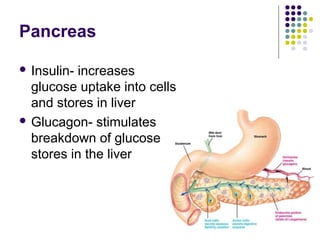
Pancreas

 Insulin- increases
  glucose uptake into cells
  and stores in liver
 Glucagon- stimulates
  breakdown of glucose
  stores in the liver
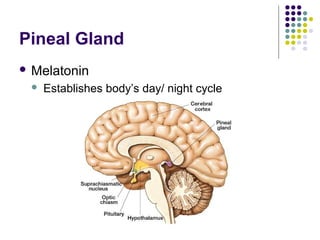
Pineal Gland
 Melatonin
    Establishes body’s day/ night cycle
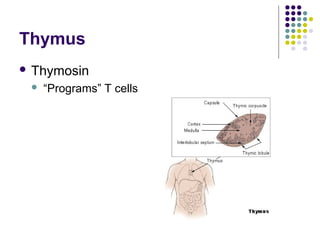
Thymus
 Thymosin
    “Programs” T cells
Gonads

 Androgens  (male)- sperm formation,
  development of male char
 Estrogens (female)- development of female
  char

Human endocrine system

  • 1.
  • 2.
    Endocrine Overview  Hormones- chemical messengers travel through body  Target cell or organ- organ or cells that a hormone affects
  • 3.
    Control of HormoneRelease  Negative feedback mechanism- hormone release is triggered by stimulus, rising levels of hormone inhibit further release  Endocrine stimuli-  Hormonal- hormones stimulate the release of others  Humoral- blood stimulates release of hormones  Neural- nerves stimulate hormone release
  • 4.
    Anterior Pituitary Gland Growth Hormone (GH)- affects growth of skeletal muscles and bones  Prolactin (PRL)- stimulates milk production after pregnancy  Gonadotropic- regulates hormone activity of sex organs  Also effects adrenal cortex and thyroid hormone release
  • 5.
    Posterior Pituitary  Oxytocin- helps during pregnancy  Antidiuretic hormone (ADH)- inhibits urine production  Alcohol inhibits ADH causing increased output of urine
  • 6.
    Thyroid Gland  Thyroid hormone  Controls the rate at which glucose is “burned”  Calcitonin  Decreases calcium levels in blood deposits on bone
  • 7.
    Parathyroid Gland  Parathyroidhormone (PTH)- regulates Ca2+ in blood  If Ca2+ level drops bones is broken down
  • 8.
    Adrenal Gland  Adrenal Cortex  Releases hormones that regulate mineral content in blood  Adrenal Medulla  Produces epinephrine and norepinephrine  Helps with stressful situations
  • 9.
    Pancreas  Insulin- increases glucose uptake into cells and stores in liver  Glucagon- stimulates breakdown of glucose stores in the liver
  • 10.
    Pineal Gland  Melatonin  Establishes body’s day/ night cycle
  • 11.
    Thymus  Thymosin  “Programs” T cells
  • 12.
    Gonads  Androgens (male)- sperm formation, development of male char  Estrogens (female)- development of female char