BIOLOGY OF BEHAVIOR
ENDOCRINE SYSTEM
PREPARED BY:
LEADER:
JANE MAELYNE LOPEZ
MEMBERS:
RYAN MATTHEW CASTILEJO
ELIZA LORAINE BERJA
ROB BENEDICT REFORSADO
BSCS 1-1
INTRODUCTION
The endocrine system is made up of the endocrine glands
that secrete hormones. Although there are scattered throughout
the body, they are still considered to be one system because
they have similar functions, similar mechanisms of influence,
& many important interrelationships.
Some glands also have non-endocrine regions that have
functions other than hormone secretion. For example, the
pancreas has a major exocrine portion that secretes digestive
enzymes & an endocrine portion that secretes hormones. The
ovaries & testes secrete hormones & also produce the ova &
sperm. Some organs, such as the stomach, intestines, & heart,
produce hormones, but their primary function is not hormone
secretion.
TERMS
1) Glands – Are special secreting organs which pour their secretions
either directly or indirectly into the bloodstream.
Kinds of Glands:
a) Duct Glands or Exocrine Glands – Have ducts or canals through
which they pour out their secretions. These include lacrimal (tear)
glands, sebaceous (sweat), salivary, gastric, mammary glands.
b) Ductless or Endocrine Glands – Pour their secretions called
hormones directly into the bloodstream.
2) Endocrine System - A set of glands that produce hormones-chemical messengers that circulate in the blood. One of the body’s two
communication systems (Nervous & Endocrine System). Derives its
name from the fact that various glands release hormones directly into
the blood, which in turn transports the hormones to target tissues via
ducts. Secretes hormones that coordinate slower but longer-acting
responses including reproduction, development, energy metabolism,
growth, & behavior.
TERMS
3) Hormone - Chemical messengers produced by the endocrine glands
& circulated in the blood. Chemical messengers carried by blood. May
stimulate other glands. Regulate growth, development, metabolism,
sex processes. “Messenger Molecules.” Reach all parts of the body,
but only target cells are equipped to respond.
Classification of Hormones:
a) Protein Hormones – (comprising small peptides, proteins &
glycoproteins) Are water-soluble thus (1) they don’t require carrier
proteins for circulatory system transport but (2) do require cell
membrane receptors to enter their target cells.
b) Steroid Hormones – Are cholesterol-derived compounds. They are
water insoluble thus (1) don’t require cell membrane receptors but (2)
do require carrier proteins for transport through the circulatory system.
c) Amino Acid Analogues & Derivatives – Include (1) catecholamines
that act like the protein hormones & (2) thyroid hormones that act like
steroids.
TERMS
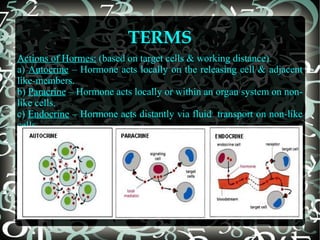
Actions of Hormes: (based on target cells & working distance)
a) Autocrine – Hormone acts locally on the releasing cell & adjacent
like-members.
b) Paracrine – Hormone acts locally or within an organ system on nonlike cells.
c) Endocrine – Hormone acts distantly via fluid transport on non-like
cells.
TERMS
Mechanisms of Hormone Release:
a) Humoral - In response to changing levels of ions or nutrients in the
blood.
b) Neural - Stimulation by nerves.
c) Hormonal - Stimulation received from other hormones.
4) Target Cells – Are cells responding to the hormones for which they
have receptors. Only cells possessing the proper receptors will respond
to hormones; this is what gives the endocrine system its specificity.
5) Homeostasis – Is the (unconscious) maintenance of a constant
internal environment by the organism. Homeostasis is accomplished
by two interconnected systems: (1) the Autonomic Nervous System
(sympathetic, parasympathetic & enteric) which communicates via
nerve impulses resulting in rapid, but typically short-lived responses;
& (2) the Endocrine System which communicates via hormones
resulting in a slower, but more prolonged response.
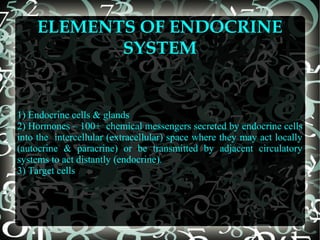
ELEMENTS OF ENDOCRINE
SYSTEM

1) Endocrine cells & glands
2) Hormones – 100+ chemical messengers secreted by endocrine cells
into the intercellular (extracellular) space where they may act locally
(autocrine & paracrine) or be transmitted by adjacent circulatory
systems to act distantly (endocrine).
3) Target cells
HYPOTHALAMUS
A part of the forebrain that sits below (hypo) the thalamus & is
responsible for orchestrating several behaviors that are considered
"maintenance" behaviors such as eating, drinking, sleeping, & body
temperature. In addition, the hypothalamus helps govern the endocrine
system (glands that produce hormones) using the pituitary gland, & is
also involved in feeling emotions & perceiving things are rewarding
(for example, being in love is perceived as a good & rewarding
feeling/emotion & something worth trying to obtain more of). All
vertebrate brains contain a hypothalamus. In humans, it is roughly the
size of an almond.
HORMONES
SECRETED HORMONE

EFFECT

Thyrotropin-releasing hormone Stimulate thyroid-stimulating
(Prolactin-releasing hormone) hormone (TSH) release from
anterior pituitary (primarily).
Stimulate prolactin release
from anterior pituitary.
Corticotropin-releasing hormone Stimulate adrenocorticotropic
hormone (ACTH) release from
anterior pituitary.
Dopamine
hormone)

(Prolactin-inhibiting Inhibit prolactin release from
anterior pituitary.
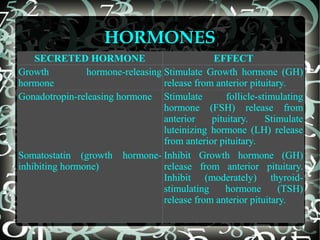
HORMONES
SECRETED HORMONE
EFFECT
Growth
hormone-releasing Stimulate Growth hormone (GH)
hormone
release from anterior pituitary.
Gonadotropin-releasing hormone Stimulate
follicle-stimulating
hormone (FSH) release from
anterior
pituitary.
Stimulate
luteinizing hormone (LH) release
from anterior pituitary.
Somatostatin (growth hormone- Inhibit Growth hormone (GH)
inhibiting hormone)
release from anterior pituitary.
Inhibit (moderately) thyroidstimulating
hormone
(TSH)
release from anterior pituitary.
HORMONES
SECRETED HORMONE

EFFECT

Oxytocin

Uterine contraction & Lactation
(letdown reflex).

Vasopressin
(antidiuretic hormone)

Increase in the permeability to
water of the cells of distal tubule
& collecting duct in the kidney &
thus allows water reabsorption &
excretion of concentrated urine
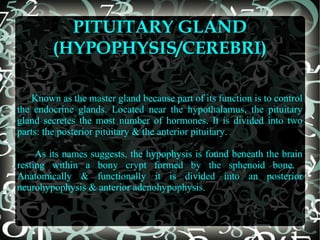
PITUITARY GLAND
(HYPOPHYSIS/CEREBRI)
Known as the master gland because part of its function is to control
the endocrine glands. Located near the hypothalamus, the pituitary
gland secretes the most number of hormones. It is divided into two
parts: the posterior pituitary & the anterior pituitary.
As its names suggests, the hypophysis is found beneath the brain
resting within a bony crypt formed by the sphenoid bone.
Anatomically & functionally it is divided into an posterior
neurohypophysis & anterior adenohypophysis.
HORMONES
SECRETED HORMONE

EFFECT

Oxytocin

Causes the uterus to contract
during childbirth.

Vasopressin/Anti-Diuretic
Hormone (ADH)

Regulates the amount of urine
being released by the bladder.

Growth hormone or Somatotropin Regulates the amount & tiring of
Hormone
body growth.
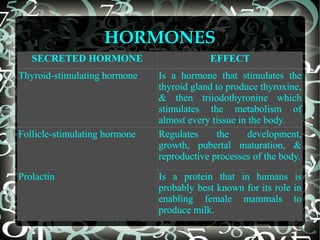
HORMONES
SECRETED HORMONE
Thyroid-stimulating hormone

Follicle-stimulating hormone

Prolactin

EFFECT
Is a hormone that stimulates the
thyroid gland to produce thyroxine,
& then triiodothyronine which
stimulates the metabolism of
almost every tissue in the body.
Regulates
the
development,
growth, pubertal maturation, &
reproductive processes of the body.
Is a protein that in humans is
probably best known for its role in
enabling female mammals to
produce milk.
THYROID GLAND
Arguably the phylogenetically oldest of the endocrine organs, the
thyroid gland is a bi-lobed gland lying ventral to the (gasp!) thyroid
cartilage of the larynx. It is a compound gland containing 2 sets of
endocrine producing cells: (1) Follicular cells that produce thyroid
hormones & (2) parafollicular cells that secrete calcitonin.
The thyroid gland is a very vascular organ that is located in the
neck. It consists of two lobes, one on each side of the trachea, just
below the larynx or voice box. The two lobes are connected by a
narrow band of tissue called the isthmus. Internally, the gland consists
of follicles, which produce thyroxine & triiodothyronine hormones.
These hormones contain iodine.
HORMONES
EFFECT
Triiodothyronine
It affects almost every physiological process in
the body, including growth & development,
metabolism, body temperature, & heart rate.
Thyroxine
Increases cardiac output. Increases heart rate.
(Tetraiodothyronine) Increases ventilation rate. Increases basal
metabolic rate. Potentiates the effects of
catecholamines. Potentiates brain development.
Thickens endometrium in females. increase
metabolism of proteins & carbohydrates.
Calcitonin
This protein hormone acts via membrane
receptors to lower blood calcium levels by (1)
suppressing osteoclast activity (bone resorption
& release of calcium) & (2) promoting osteoid
mineralization.
Calcitonin secretion is
regulated by serum levels of calcium.
SECRETED HORMONE
ADRENAL GLANDS
(SUPRARENAL GLANDS)
The suprarenal glands are bilateral, triangular shaped glands
positioned over the superior pole of the kidneys. A thick connective
tissue capsule invests each gland & the parenchyma is divided into
two regions, cortex & medulla.
The orange-colored 2 adrenal glands are located just above both
kidneys. It consists of two parts: the outer cortex & the inner medulla.
The adrenal cortex produces steroids that plays important role in
maintenance of blood pressure & regulation of the breakdown of
secretes hormones that help in the body’s reaction to stress.
ADRENAL CORTEX
(SUPRARENAL CORTEX)
Situated along the perimeter of the adrenal gland, the adrenal
cortex mediates the stress response through the production of
mineralocorticoids & glucocorticoids, including aldosterone & cortisol
respectively. It is also a secondary site of androgen synthesis.
The suprarenal cortex is divided into 3 zones based on the
arrangement of their cells. The zona glomerulosa is the most
superficial & its cells are arranged in ovoid clusters surrounded by
sinusoidal capillaries. The zona fasciculata is the middle cortical layer
& its cells are arranged in long straight cords surrounded by sinusoidal
capillaries. The zona reticularis is the deepest layer of the cortex & its
cells are arranged in interwoven cords separated by capillaries.
ADRENAL MEDULLA
(SUPRARENAL MEDULLA)

The adrenal medulla (Latin: suprarenal medulla) is part of the
adrenal gland. It is located at the center of the gland, being surrounded
by the adrenal cortex. It is the innermost part of the adrenal gland,
consisting of cells that secrete epinephrine (adrenaline),
norepinephrine (noradrenaline), & a small amount of dopamine in
response to stimulation by sympathetic preganglionic neurons.
HORMONES
SECRETED HORMONE
EFFECT
Mineralocorticoids
These hormones, such as Aldosterone
(Aldosterone)
controls the body’s sodium, potassium &
water level.
Glucocorticoids
Are steroids, like cortisone & cortisol,
which aids carbohydrates, fat & protein
metabolism in the body.
Androgen
Are responsible for the secondary sex
characteristics.
Epinephrine/Adrenaline
Regulates the sympathetic nervous
system, such as making the heart beat
fast, increase blood pressure, dilation of
pupils & other involuntary body
functions during stress.
HORMONES
SECRETED HORMONE
EFFECT
Norepinephrine
Maintains normal blood circulation &
increases blood pressure by constricting
the blood vessels.
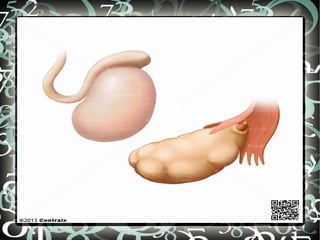
GONADS
(OVARIES & TESTES)
The gonad is the organ that makes gametes. The gonads in males
are the testes, & the gonads in females are the ovaries. The product,
gametes, are haploid germ cells. For example, spermatozoon & egg
cells are gametes.
Are the reproductive glands – testes or testicles in male & ovaries
in female. The testes & ovaries have the main function of stimulating
the reproductive organs to become mature & produce the sperm cells
for males & egg cells for females.
HORMONES
SECRETED HORMONE
EFFECT
Testosterone/Androgen The principal male hormone which is
responsible for the appearance of
secondary sex characteristics such
as growth of beard & public hair,
deepening of voice & increased in
height.
Estrogen
Female sex hormone that regulates
the secondary sex characteristics –
development of the breast, widening
of pelvic bones & growth of public
hair.
Progesterone
Another female sex hormones,
which
regulates
or
controls
menstruation & lactation in pregnant
women.
DISORDERS/AILMENTS
GLAND DISORDERS

DESCRIPTION

Hypothal- Hypopituitar Hypothalamic disease may cause insufficient
amus
-ism
or inhibited signalling to the pituitary
leading to deficiencies of one or more of the
following hormones: thyroid-stimulating
hormone, adrenocorticotropic hormone,
beta-endorphin,
luteinizing
hormone,
follicle-stimulating hormone, & melanocyte–
stimulating hormones.
Neurogenic Neurogenic diabetes insipidus may occur
Diabetes
due to low levels of ADH production from
Insipidus
the hypothalamus. Insufficient levels of
ADH result in increased thirst & urine
output, & prolonged excessive urine
excretion increases the risk of dehydration.
DISORDERS/AILMENTS
GLAND

DISORDERS/A
DESCRIPTION
ILMENTS
Hypothalamus Tertiary
Secondary hypothyroidism occurs
Hypothyroidism when TSH secretion from the
pituitary is impaired, whereas
tertiary hypothyroidism is the
deficiency or inhibition of TRH.
Developmental Insufficient GH production may
Disorders
cause poor somatic growth,
precocious
puberty
or
gonadotropin deficiency, failure to
initiate or complete puberty, & is
often associated with rapid weight
gain, low T4, & low levels of sex
hormones.
DISORDERS/AILMENTS
GLAND
Pituitary
Gland

DISORDERS/A
DESCRIPTION
ILMENTS
Diabetes
A condition where there is
Insipidus
excessive amount of urine excreted
in the body making the individual
dehydrated & weak, which
increased thirst & urination
Syndrome
of A condition cause by the water
inappropriate
intoxication due to the retention of
anti-diuretic
fluid in the body.
hormones
(SIADH)
DISORDERS/AILMENTS
GLAND
Pituitary
Gland

DISORDERS/A
DESCRIPTION
ILMENTS
Dwarfism
A condition when there is too little
growth of hormones during
childhood characterize by being
miniature. It is mark by
abnormally
short
bone
development.
Acromicria
Occurs when the deficiency of
growth hormones is after puberty
resulting to having small bones of
the extremities.
DISORDERS/AILMENTS
GLAND
Pituitary
Gland

DISORDERS/A
DESCRIPTION
ILMENTS
Giantism
Cause by excessive growth
hormones during childhood that
leads to over growth of skeletal
system.
Acromegaly

A condition due to excessive
production of growth hormone in
adults mark by overgrowth of
extremities (hands, feet & face).
DISORDERS/AILMENTS
GLAND DISORDER
Thyroid
Gland

Hyperthyroidism

DESCRIPTION

Hyperthyroidism, or overactive thyroid, is
due to the overproduction of the thyroid
hormones T3 & T4, which is most
commonly caused by the development of
Graves' disease, an autoimmune disease in
which antibodies are produced which
stimulate the thyroid to secrete excessive
quantities of thyroid hormones The disease
can result in the formation of a toxic goiter
as a result of thyroid growth in response to
a lack of negative feedback mechanisms.
Hypothyroid- Hypothyroidism is the underproduction of
ism
the thyroid hormones T3 & T4.
DISORDERS/AILMENTS
GLAND DISORDERS
Thyroid
Gland

Thyroid
neoplasm
Thyroid
cancer
Thyroiditis
Goitre

DESCRIPTION
Thyroid neoplasm is a neoplasm or tumor
of the thyroid.
Thyroid cancer is a malignant neoplasm
originating
from
follicular
or
parafollicular thyroid cells.
Inflammation of the thyroid.
A goitre or goiter, is a swelling of the neck
or larynx resulting from enlargement of
the thyroid gland, associated with a
thyroid gland that is functioning properly
or not.
DISORDERS/AILMENTS
GLAND DISORDERS
Adrenal
Gland

Cushing’s
Syndrome

DESCRIPTION

It is characterize by moon-shaped face,
obesity, easily bruised skin & poor healing
of wounds.
Adrenogenital Cause by excessive adrenal androgen &
Syndrome
more mark in women than in men
symptoms include hirsutism, amenorrhea,
deepening of voice & decrease breast size.
Addison’s
Undersection of glucocorticoids could
Disease
result to this disorder. The symptoms
exhibited are weakness, fatigue, weight
less, low blood pressure & tanning
without exposure to the sun or
hyperpigmentation.
DISORDERS/AILMENTS
GLAND
Gonads

DISORDERS

DESCRIPTION

Precocious Puberty

A syndrome characterize by
accelerated
sexual
development.
Sterility, Diminishes Sexual drive & Amenorrhea
Failure of sexual characteristics to develop
Infertility

Endocrine System

  • 1.
    BIOLOGY OF BEHAVIOR ENDOCRINESYSTEM PREPARED BY: LEADER: JANE MAELYNE LOPEZ MEMBERS: RYAN MATTHEW CASTILEJO ELIZA LORAINE BERJA ROB BENEDICT REFORSADO BSCS 1-1
  • 2.
    INTRODUCTION The endocrine systemis made up of the endocrine glands that secrete hormones. Although there are scattered throughout the body, they are still considered to be one system because they have similar functions, similar mechanisms of influence, & many important interrelationships. Some glands also have non-endocrine regions that have functions other than hormone secretion. For example, the pancreas has a major exocrine portion that secretes digestive enzymes & an endocrine portion that secretes hormones. The ovaries & testes secrete hormones & also produce the ova & sperm. Some organs, such as the stomach, intestines, & heart, produce hormones, but their primary function is not hormone secretion.
  • 3.
    TERMS 1) Glands –Are special secreting organs which pour their secretions either directly or indirectly into the bloodstream. Kinds of Glands: a) Duct Glands or Exocrine Glands – Have ducts or canals through which they pour out their secretions. These include lacrimal (tear) glands, sebaceous (sweat), salivary, gastric, mammary glands. b) Ductless or Endocrine Glands – Pour their secretions called hormones directly into the bloodstream. 2) Endocrine System - A set of glands that produce hormones-chemical messengers that circulate in the blood. One of the body’s two communication systems (Nervous & Endocrine System). Derives its name from the fact that various glands release hormones directly into the blood, which in turn transports the hormones to target tissues via ducts. Secretes hormones that coordinate slower but longer-acting responses including reproduction, development, energy metabolism, growth, & behavior.
  • 4.
    TERMS 3) Hormone -Chemical messengers produced by the endocrine glands & circulated in the blood. Chemical messengers carried by blood. May stimulate other glands. Regulate growth, development, metabolism, sex processes. “Messenger Molecules.” Reach all parts of the body, but only target cells are equipped to respond. Classification of Hormones: a) Protein Hormones – (comprising small peptides, proteins & glycoproteins) Are water-soluble thus (1) they don’t require carrier proteins for circulatory system transport but (2) do require cell membrane receptors to enter their target cells. b) Steroid Hormones – Are cholesterol-derived compounds. They are water insoluble thus (1) don’t require cell membrane receptors but (2) do require carrier proteins for transport through the circulatory system. c) Amino Acid Analogues & Derivatives – Include (1) catecholamines that act like the protein hormones & (2) thyroid hormones that act like steroids.
  • 5.
    TERMS Actions of Hormes:(based on target cells & working distance) a) Autocrine – Hormone acts locally on the releasing cell & adjacent like-members. b) Paracrine – Hormone acts locally or within an organ system on nonlike cells. c) Endocrine – Hormone acts distantly via fluid transport on non-like cells.
  • 6.
    TERMS Mechanisms of HormoneRelease: a) Humoral - In response to changing levels of ions or nutrients in the blood. b) Neural - Stimulation by nerves. c) Hormonal - Stimulation received from other hormones. 4) Target Cells – Are cells responding to the hormones for which they have receptors. Only cells possessing the proper receptors will respond to hormones; this is what gives the endocrine system its specificity. 5) Homeostasis – Is the (unconscious) maintenance of a constant internal environment by the organism. Homeostasis is accomplished by two interconnected systems: (1) the Autonomic Nervous System (sympathetic, parasympathetic & enteric) which communicates via nerve impulses resulting in rapid, but typically short-lived responses; & (2) the Endocrine System which communicates via hormones resulting in a slower, but more prolonged response.
  • 7.
    ELEMENTS OF ENDOCRINE SYSTEM 1)Endocrine cells & glands 2) Hormones – 100+ chemical messengers secreted by endocrine cells into the intercellular (extracellular) space where they may act locally (autocrine & paracrine) or be transmitted by adjacent circulatory systems to act distantly (endocrine). 3) Target cells
  • 9.
    HYPOTHALAMUS A part ofthe forebrain that sits below (hypo) the thalamus & is responsible for orchestrating several behaviors that are considered "maintenance" behaviors such as eating, drinking, sleeping, & body temperature. In addition, the hypothalamus helps govern the endocrine system (glands that produce hormones) using the pituitary gland, & is also involved in feeling emotions & perceiving things are rewarding (for example, being in love is perceived as a good & rewarding feeling/emotion & something worth trying to obtain more of). All vertebrate brains contain a hypothalamus. In humans, it is roughly the size of an almond.
  • 11.
    HORMONES SECRETED HORMONE EFFECT Thyrotropin-releasing hormoneStimulate thyroid-stimulating (Prolactin-releasing hormone) hormone (TSH) release from anterior pituitary (primarily). Stimulate prolactin release from anterior pituitary. Corticotropin-releasing hormone Stimulate adrenocorticotropic hormone (ACTH) release from anterior pituitary. Dopamine hormone) (Prolactin-inhibiting Inhibit prolactin release from anterior pituitary.
  • 12.
    HORMONES SECRETED HORMONE EFFECT Growth hormone-releasing StimulateGrowth hormone (GH) hormone release from anterior pituitary. Gonadotropin-releasing hormone Stimulate follicle-stimulating hormone (FSH) release from anterior pituitary. Stimulate luteinizing hormone (LH) release from anterior pituitary. Somatostatin (growth hormone- Inhibit Growth hormone (GH) inhibiting hormone) release from anterior pituitary. Inhibit (moderately) thyroidstimulating hormone (TSH) release from anterior pituitary.
  • 13.
    HORMONES SECRETED HORMONE EFFECT Oxytocin Uterine contraction& Lactation (letdown reflex). Vasopressin (antidiuretic hormone) Increase in the permeability to water of the cells of distal tubule & collecting duct in the kidney & thus allows water reabsorption & excretion of concentrated urine
  • 14.
    PITUITARY GLAND (HYPOPHYSIS/CEREBRI) Known asthe master gland because part of its function is to control the endocrine glands. Located near the hypothalamus, the pituitary gland secretes the most number of hormones. It is divided into two parts: the posterior pituitary & the anterior pituitary. As its names suggests, the hypophysis is found beneath the brain resting within a bony crypt formed by the sphenoid bone. Anatomically & functionally it is divided into an posterior neurohypophysis & anterior adenohypophysis.
  • 16.
    HORMONES SECRETED HORMONE EFFECT Oxytocin Causes theuterus to contract during childbirth. Vasopressin/Anti-Diuretic Hormone (ADH) Regulates the amount of urine being released by the bladder. Growth hormone or Somatotropin Regulates the amount & tiring of Hormone body growth.
  • 17.
    HORMONES SECRETED HORMONE Thyroid-stimulating hormone Follicle-stimulatinghormone Prolactin EFFECT Is a hormone that stimulates the thyroid gland to produce thyroxine, & then triiodothyronine which stimulates the metabolism of almost every tissue in the body. Regulates the development, growth, pubertal maturation, & reproductive processes of the body. Is a protein that in humans is probably best known for its role in enabling female mammals to produce milk.
  • 18.
    THYROID GLAND Arguably thephylogenetically oldest of the endocrine organs, the thyroid gland is a bi-lobed gland lying ventral to the (gasp!) thyroid cartilage of the larynx. It is a compound gland containing 2 sets of endocrine producing cells: (1) Follicular cells that produce thyroid hormones & (2) parafollicular cells that secrete calcitonin. The thyroid gland is a very vascular organ that is located in the neck. It consists of two lobes, one on each side of the trachea, just below the larynx or voice box. The two lobes are connected by a narrow band of tissue called the isthmus. Internally, the gland consists of follicles, which produce thyroxine & triiodothyronine hormones. These hormones contain iodine.
  • 20.
    HORMONES EFFECT Triiodothyronine It affects almostevery physiological process in the body, including growth & development, metabolism, body temperature, & heart rate. Thyroxine Increases cardiac output. Increases heart rate. (Tetraiodothyronine) Increases ventilation rate. Increases basal metabolic rate. Potentiates the effects of catecholamines. Potentiates brain development. Thickens endometrium in females. increase metabolism of proteins & carbohydrates. Calcitonin This protein hormone acts via membrane receptors to lower blood calcium levels by (1) suppressing osteoclast activity (bone resorption & release of calcium) & (2) promoting osteoid mineralization. Calcitonin secretion is regulated by serum levels of calcium. SECRETED HORMONE
  • 21.
    ADRENAL GLANDS (SUPRARENAL GLANDS) Thesuprarenal glands are bilateral, triangular shaped glands positioned over the superior pole of the kidneys. A thick connective tissue capsule invests each gland & the parenchyma is divided into two regions, cortex & medulla. The orange-colored 2 adrenal glands are located just above both kidneys. It consists of two parts: the outer cortex & the inner medulla. The adrenal cortex produces steroids that plays important role in maintenance of blood pressure & regulation of the breakdown of secretes hormones that help in the body’s reaction to stress.
  • 23.
    ADRENAL CORTEX (SUPRARENAL CORTEX) Situatedalong the perimeter of the adrenal gland, the adrenal cortex mediates the stress response through the production of mineralocorticoids & glucocorticoids, including aldosterone & cortisol respectively. It is also a secondary site of androgen synthesis. The suprarenal cortex is divided into 3 zones based on the arrangement of their cells. The zona glomerulosa is the most superficial & its cells are arranged in ovoid clusters surrounded by sinusoidal capillaries. The zona fasciculata is the middle cortical layer & its cells are arranged in long straight cords surrounded by sinusoidal capillaries. The zona reticularis is the deepest layer of the cortex & its cells are arranged in interwoven cords separated by capillaries.
  • 24.
    ADRENAL MEDULLA (SUPRARENAL MEDULLA) Theadrenal medulla (Latin: suprarenal medulla) is part of the adrenal gland. It is located at the center of the gland, being surrounded by the adrenal cortex. It is the innermost part of the adrenal gland, consisting of cells that secrete epinephrine (adrenaline), norepinephrine (noradrenaline), & a small amount of dopamine in response to stimulation by sympathetic preganglionic neurons.
  • 25.
    HORMONES SECRETED HORMONE EFFECT Mineralocorticoids These hormones,such as Aldosterone (Aldosterone) controls the body’s sodium, potassium & water level. Glucocorticoids Are steroids, like cortisone & cortisol, which aids carbohydrates, fat & protein metabolism in the body. Androgen Are responsible for the secondary sex characteristics. Epinephrine/Adrenaline Regulates the sympathetic nervous system, such as making the heart beat fast, increase blood pressure, dilation of pupils & other involuntary body functions during stress.
  • 26.
    HORMONES SECRETED HORMONE EFFECT Norepinephrine Maintains normalblood circulation & increases blood pressure by constricting the blood vessels.
  • 27.
    GONADS (OVARIES & TESTES) Thegonad is the organ that makes gametes. The gonads in males are the testes, & the gonads in females are the ovaries. The product, gametes, are haploid germ cells. For example, spermatozoon & egg cells are gametes. Are the reproductive glands – testes or testicles in male & ovaries in female. The testes & ovaries have the main function of stimulating the reproductive organs to become mature & produce the sperm cells for males & egg cells for females.
  • 29.
    HORMONES SECRETED HORMONE EFFECT Testosterone/Androgen Theprincipal male hormone which is responsible for the appearance of secondary sex characteristics such as growth of beard & public hair, deepening of voice & increased in height. Estrogen Female sex hormone that regulates the secondary sex characteristics – development of the breast, widening of pelvic bones & growth of public hair. Progesterone Another female sex hormones, which regulates or controls menstruation & lactation in pregnant women.
  • 30.
    DISORDERS/AILMENTS GLAND DISORDERS DESCRIPTION Hypothal- HypopituitarHypothalamic disease may cause insufficient amus -ism or inhibited signalling to the pituitary leading to deficiencies of one or more of the following hormones: thyroid-stimulating hormone, adrenocorticotropic hormone, beta-endorphin, luteinizing hormone, follicle-stimulating hormone, & melanocyte– stimulating hormones. Neurogenic Neurogenic diabetes insipidus may occur Diabetes due to low levels of ADH production from Insipidus the hypothalamus. Insufficient levels of ADH result in increased thirst & urine output, & prolonged excessive urine excretion increases the risk of dehydration.
  • 31.
    DISORDERS/AILMENTS GLAND DISORDERS/A DESCRIPTION ILMENTS Hypothalamus Tertiary Secondary hypothyroidismoccurs Hypothyroidism when TSH secretion from the pituitary is impaired, whereas tertiary hypothyroidism is the deficiency or inhibition of TRH. Developmental Insufficient GH production may Disorders cause poor somatic growth, precocious puberty or gonadotropin deficiency, failure to initiate or complete puberty, & is often associated with rapid weight gain, low T4, & low levels of sex hormones.
  • 32.
    DISORDERS/AILMENTS GLAND Pituitary Gland DISORDERS/A DESCRIPTION ILMENTS Diabetes A condition wherethere is Insipidus excessive amount of urine excreted in the body making the individual dehydrated & weak, which increased thirst & urination Syndrome of A condition cause by the water inappropriate intoxication due to the retention of anti-diuretic fluid in the body. hormones (SIADH)
  • 33.
    DISORDERS/AILMENTS GLAND Pituitary Gland DISORDERS/A DESCRIPTION ILMENTS Dwarfism A condition whenthere is too little growth of hormones during childhood characterize by being miniature. It is mark by abnormally short bone development. Acromicria Occurs when the deficiency of growth hormones is after puberty resulting to having small bones of the extremities.
  • 34.
    DISORDERS/AILMENTS GLAND Pituitary Gland DISORDERS/A DESCRIPTION ILMENTS Giantism Cause by excessivegrowth hormones during childhood that leads to over growth of skeletal system. Acromegaly A condition due to excessive production of growth hormone in adults mark by overgrowth of extremities (hands, feet & face).
  • 35.
    DISORDERS/AILMENTS GLAND DISORDER Thyroid Gland Hyperthyroidism DESCRIPTION Hyperthyroidism, oroveractive thyroid, is due to the overproduction of the thyroid hormones T3 & T4, which is most commonly caused by the development of Graves' disease, an autoimmune disease in which antibodies are produced which stimulate the thyroid to secrete excessive quantities of thyroid hormones The disease can result in the formation of a toxic goiter as a result of thyroid growth in response to a lack of negative feedback mechanisms. Hypothyroid- Hypothyroidism is the underproduction of ism the thyroid hormones T3 & T4.
  • 36.
    DISORDERS/AILMENTS GLAND DISORDERS Thyroid Gland Thyroid neoplasm Thyroid cancer Thyroiditis Goitre DESCRIPTION Thyroid neoplasmis a neoplasm or tumor of the thyroid. Thyroid cancer is a malignant neoplasm originating from follicular or parafollicular thyroid cells. Inflammation of the thyroid. A goitre or goiter, is a swelling of the neck or larynx resulting from enlargement of the thyroid gland, associated with a thyroid gland that is functioning properly or not.
  • 37.
    DISORDERS/AILMENTS GLAND DISORDERS Adrenal Gland Cushing’s Syndrome DESCRIPTION It ischaracterize by moon-shaped face, obesity, easily bruised skin & poor healing of wounds. Adrenogenital Cause by excessive adrenal androgen & Syndrome more mark in women than in men symptoms include hirsutism, amenorrhea, deepening of voice & decrease breast size. Addison’s Undersection of glucocorticoids could Disease result to this disorder. The symptoms exhibited are weakness, fatigue, weight less, low blood pressure & tanning without exposure to the sun or hyperpigmentation.
  • 38.
    DISORDERS/AILMENTS GLAND Gonads DISORDERS DESCRIPTION Precocious Puberty A syndromecharacterize by accelerated sexual development. Sterility, Diminishes Sexual drive & Amenorrhea Failure of sexual characteristics to develop Infertility