Department of Physics
Topic –Thermodynamic Process
Prof. B.V. Tupte
Head, Department of Physics
Shri Govindrao Munghate Arts and
Science College Kurkheda.
A thermodynamic process is a chemical or physical
process that takes place in a thermodynamic system,
which changes the system from an initial state to a
final state. There are different forms of
thermodynamic processes. Isobaric and isochoric
processes are two such processes.
3
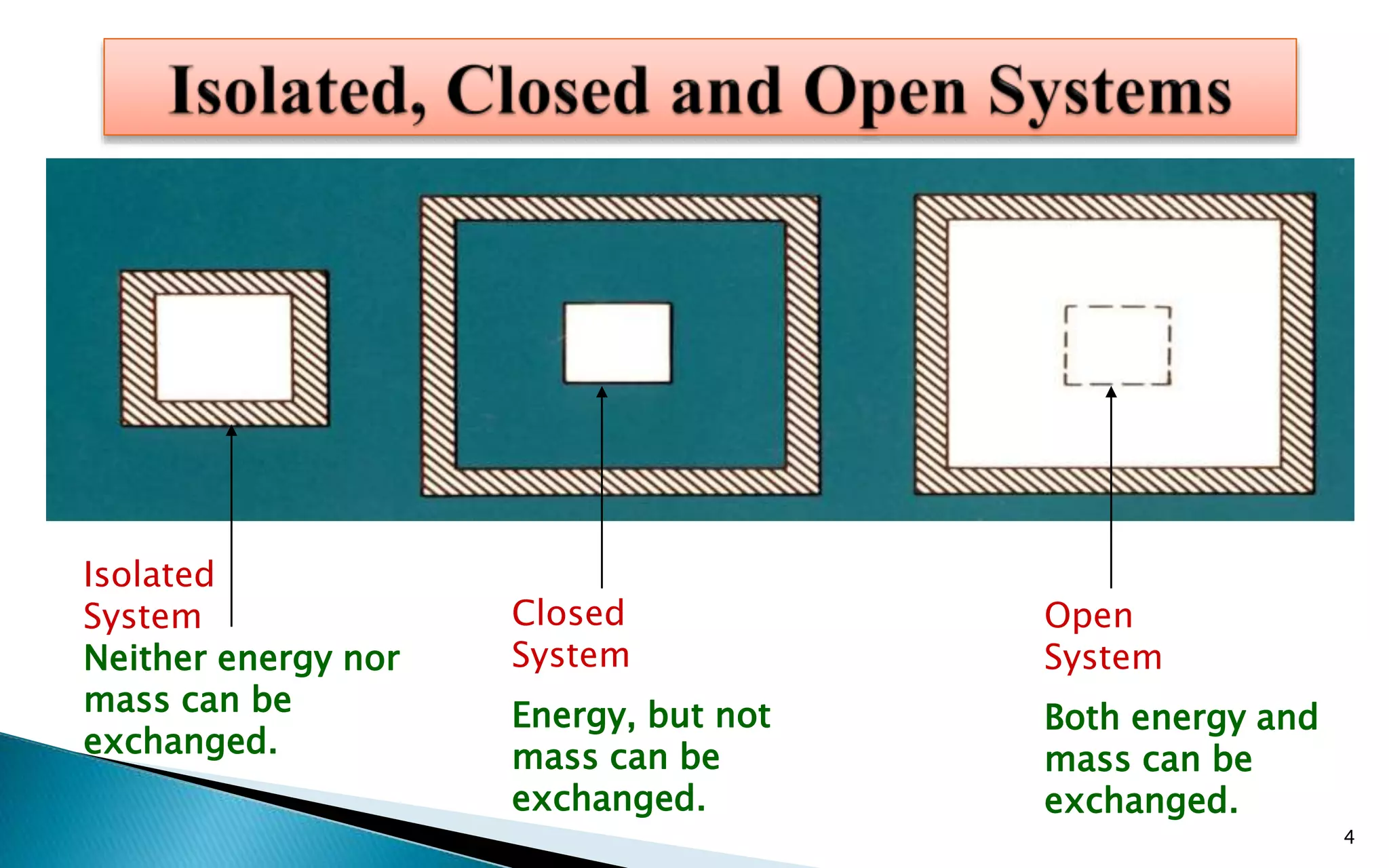
 An isolated system cannot exchange mass or energy with its
surroundings.
 The wall of an isolated system must be adiabatic.
 A closed system can exchange energy, but not mass, with its
surroundings.
 The energy exchange may be mechanical (associated with a volume
change) or thermal (associated with heat transfer through a diathermal
wall).
 An open system can exchange both mass and energy with its
surroundings.
4
Isolated
System
Neither energy nor
mass can be
exchanged.
Closed
System
Energy, but not
mass can be
exchanged.
Open
System
Both energy and
mass can be
exchanged.
An isothermal process is a thermodynamic
process that occurs under a constant temperature.
This means an isothermal process occurs in a
system where the temperature is constant. In order to
keep the temperature of the system constant, heat
should be transferred out of the system or into the
system.
ISOTHERMAL PROCESS
The following are examples of isothermal process
Changes of state or phase changes of different liquids through
process of melting and evaporation are isothermal.
Industrial application can be carnot engine .In carnot engine
some part of cycle are carried isothermally.
 Reactions going in the refrigerator are isothermal and constant
temperature is maintained in it.
Melting of ice at 0 degree is an example of isothermal process.
Reactions carried out in heat pump are also isothermal.
For ex:
Evaporation of water from rivers and seas is an
example of phase change process as obviously water is
coverted into its vapour without any change in
temperature of river/sea or the vapour.
Freezing of water is also an isothermal process, as
water at 0°C is coverted into ice at 0°C.
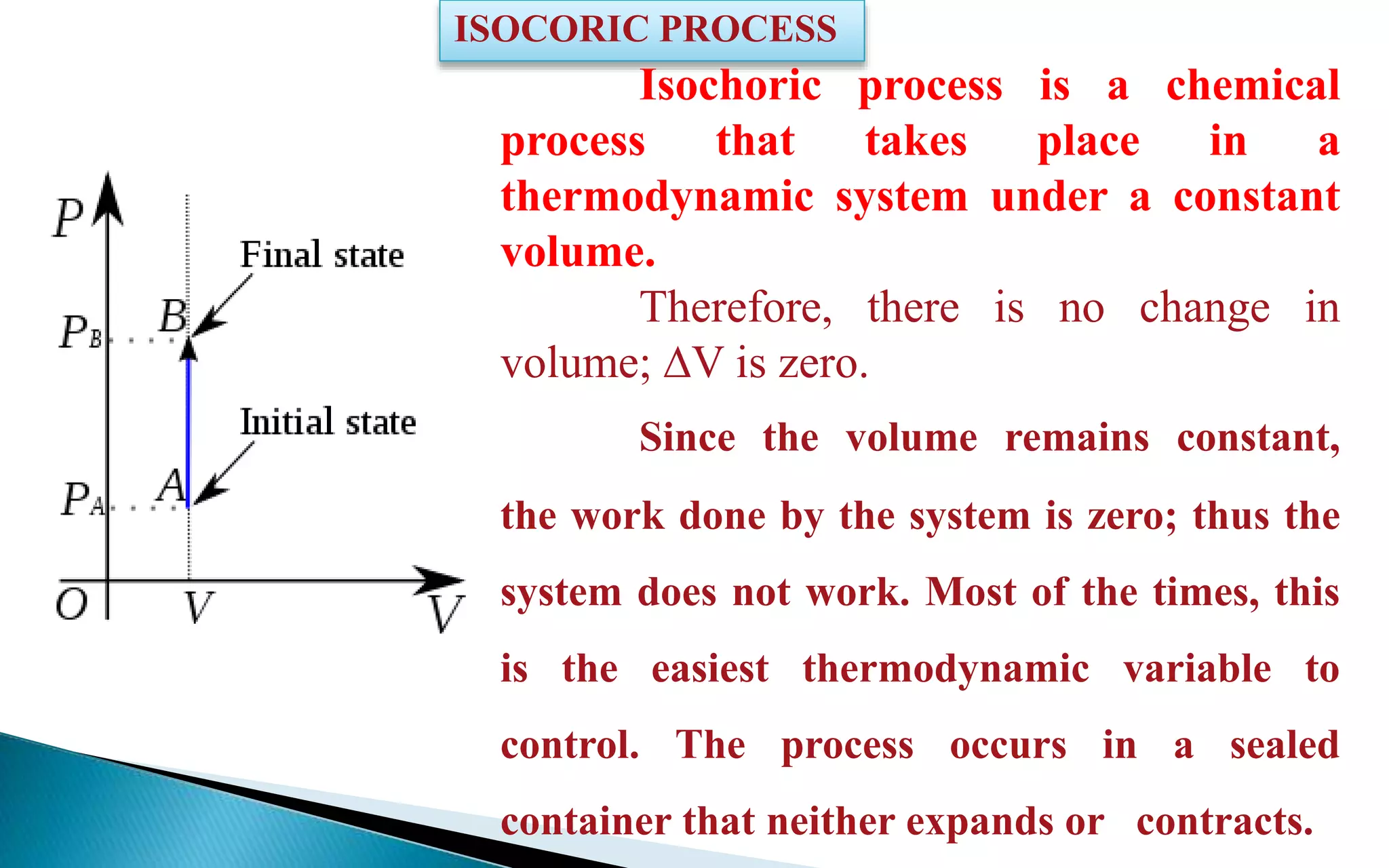
ISOCORIC PROCESS
Isochoric process is a chemical
process that takes place in a
thermodynamic system under a constant
volume.
Therefore, there is no change in
volume; ∆V is zero.
Since the volume remains constant,
the work done by the system is zero; thus the
system does not work. Most of the times, this
is the easiest thermodynamic variable to
control. The process occurs in a sealed
container that neither expands or contracts.
An isobaric process is process that takes
place in a thermodynamic system under
constant pressure. Therefore, the change in
pressure or ∆P is zero.
Usually, the system keeps the pressure constant
via allowing the volume of the system to
change; it can be either an expansion or a
contraction.
This change in volume can neutralize the
changes in pressure that may occur due to heat
transfer between the system and the
surrounding.
ISOBARIC PROCESS
In boiler the water is heated at constant pressure.
Simple example for isobaric pressure is pressure
cooker which we use it in our home for cooking the rice.
The rice is cooking at desired pressure(3bar) when the
pressure increases(>3bar) it start whistling so that the
excess pressure will released and come to its desired
(3bar)pressure.
ISOBARIC PROCESS
ADIABATIC PROCESS
Adiabatic process is a thermodynamic process that occurs without
any heat transfer between a system and its surrounding.
 Here, either heat or matter is not transferred into or out of the
system. Therefore, in adiabatic process, the only way energy
transfers between a system and its surrounding is as work.
An adiabatic process can be maintained by quickly doing the
process. For example, if we quickly compress a gas in a cylinder,
there’s not enough time for the system to transfer heat energy to the
environment. In adiabatic processes, the work done by the system
changes the internal energy of the system
Isothermal and adiabatic processes are thermodynamic
processes.
These processes describe the relationship between
internal energy of a system and its changes.
The main difference between isothermal and adiabatic
process is that isothermal process occurs under constant
temperature whereas adiabatic process occurs under varying
temperature.
Thermodynamic Process.pptx

Thermodynamic Process.pptx

  • 1.
    Department of Physics Topic–Thermodynamic Process Prof. B.V. Tupte Head, Department of Physics Shri Govindrao Munghate Arts and Science College Kurkheda.
  • 2.
    A thermodynamic processis a chemical or physical process that takes place in a thermodynamic system, which changes the system from an initial state to a final state. There are different forms of thermodynamic processes. Isobaric and isochoric processes are two such processes.
  • 3.
    3  An isolatedsystem cannot exchange mass or energy with its surroundings.  The wall of an isolated system must be adiabatic.  A closed system can exchange energy, but not mass, with its surroundings.  The energy exchange may be mechanical (associated with a volume change) or thermal (associated with heat transfer through a diathermal wall).  An open system can exchange both mass and energy with its surroundings.
  • 4.
    4 Isolated System Neither energy nor masscan be exchanged. Closed System Energy, but not mass can be exchanged. Open System Both energy and mass can be exchanged.
  • 5.
    An isothermal processis a thermodynamic process that occurs under a constant temperature. This means an isothermal process occurs in a system where the temperature is constant. In order to keep the temperature of the system constant, heat should be transferred out of the system or into the system. ISOTHERMAL PROCESS
  • 6.
    The following areexamples of isothermal process Changes of state or phase changes of different liquids through process of melting and evaporation are isothermal. Industrial application can be carnot engine .In carnot engine some part of cycle are carried isothermally.  Reactions going in the refrigerator are isothermal and constant temperature is maintained in it. Melting of ice at 0 degree is an example of isothermal process. Reactions carried out in heat pump are also isothermal.
  • 7.
    For ex: Evaporation ofwater from rivers and seas is an example of phase change process as obviously water is coverted into its vapour without any change in temperature of river/sea or the vapour. Freezing of water is also an isothermal process, as water at 0°C is coverted into ice at 0°C.
  • 8.
    ISOCORIC PROCESS Isochoric processis a chemical process that takes place in a thermodynamic system under a constant volume. Therefore, there is no change in volume; ∆V is zero. Since the volume remains constant, the work done by the system is zero; thus the system does not work. Most of the times, this is the easiest thermodynamic variable to control. The process occurs in a sealed container that neither expands or contracts.
  • 9.
    An isobaric processis process that takes place in a thermodynamic system under constant pressure. Therefore, the change in pressure or ∆P is zero. Usually, the system keeps the pressure constant via allowing the volume of the system to change; it can be either an expansion or a contraction. This change in volume can neutralize the changes in pressure that may occur due to heat transfer between the system and the surrounding. ISOBARIC PROCESS
  • 10.
    In boiler thewater is heated at constant pressure. Simple example for isobaric pressure is pressure cooker which we use it in our home for cooking the rice. The rice is cooking at desired pressure(3bar) when the pressure increases(>3bar) it start whistling so that the excess pressure will released and come to its desired (3bar)pressure. ISOBARIC PROCESS
  • 11.
    ADIABATIC PROCESS Adiabatic processis a thermodynamic process that occurs without any heat transfer between a system and its surrounding.  Here, either heat or matter is not transferred into or out of the system. Therefore, in adiabatic process, the only way energy transfers between a system and its surrounding is as work. An adiabatic process can be maintained by quickly doing the process. For example, if we quickly compress a gas in a cylinder, there’s not enough time for the system to transfer heat energy to the environment. In adiabatic processes, the work done by the system changes the internal energy of the system
  • 12.
    Isothermal and adiabaticprocesses are thermodynamic processes. These processes describe the relationship between internal energy of a system and its changes. The main difference between isothermal and adiabatic process is that isothermal process occurs under constant temperature whereas adiabatic process occurs under varying temperature.