Thermionic & Photoelectric
Emission
9/21/2021 1
GENERAL PHYSICS
Dr. Jonathan Lalrinmawia
Thermionic Emission
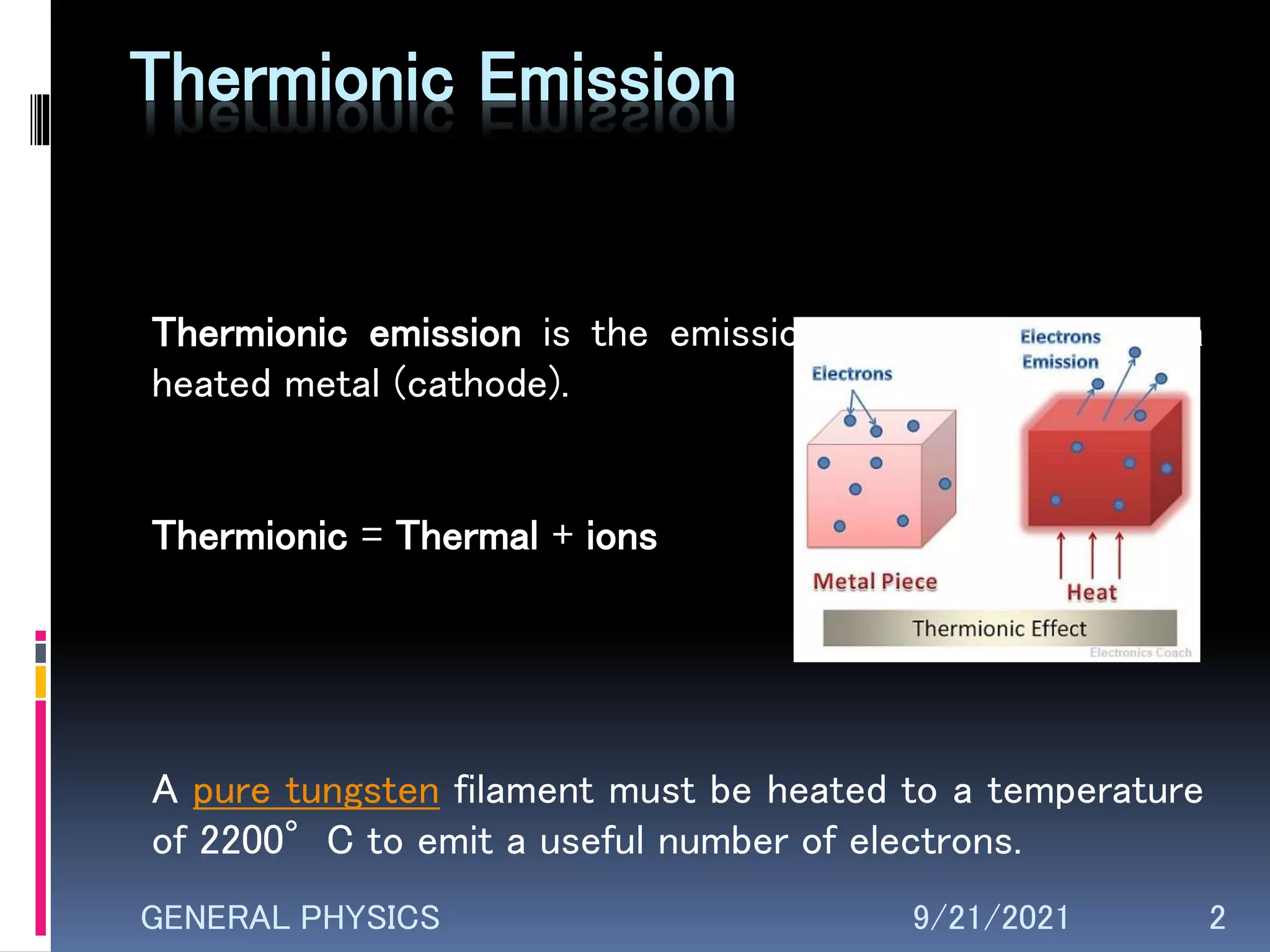
Thermionic emission is the emission of electrons from a
heated metal (cathode).
Thermionic = Thermal + ions
A pure tungsten filament must be heated to a temperature
of 2200°C to emit a useful number of electrons.
9/21/2021 2
GENERAL PHYSICS
Thermionic Emission
Factors affecting Thermionic Emission
 temperature of the metal surface
 area of the metal surface
 the work function of the metal
Thermionic emitters are used in
 high-frequency vacuum transistors for electronics
 electron guns for scientific instrumentation
 power electronics
 x-ray generation
 energy converters from high-temperature sources
and solar energy.
9/21/2021 3
GENERAL PHYSICS
Photo-Electric Emission.
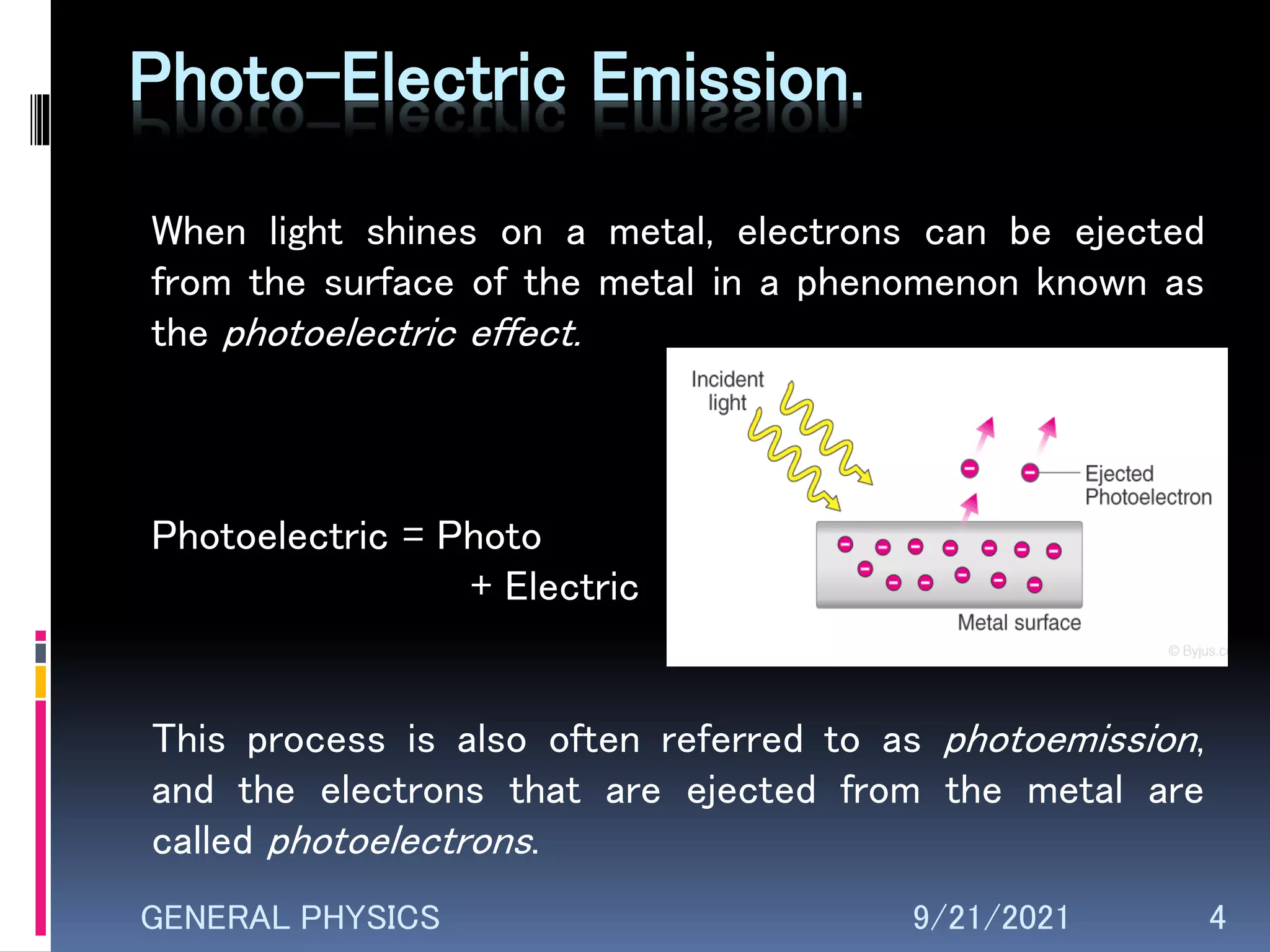
When light shines on a metal, electrons can be ejected
from the surface of the metal in a phenomenon known as
the photoelectric effect.
Photoelectric = Photo
+ Electric
This process is also often referred to as photoemission,
and the electrons that are ejected from the metal are
called photoelectrons.
9/21/2021 4
GENERAL PHYSICS
Thermionic Emission Vs Photo-
Electric Emission.
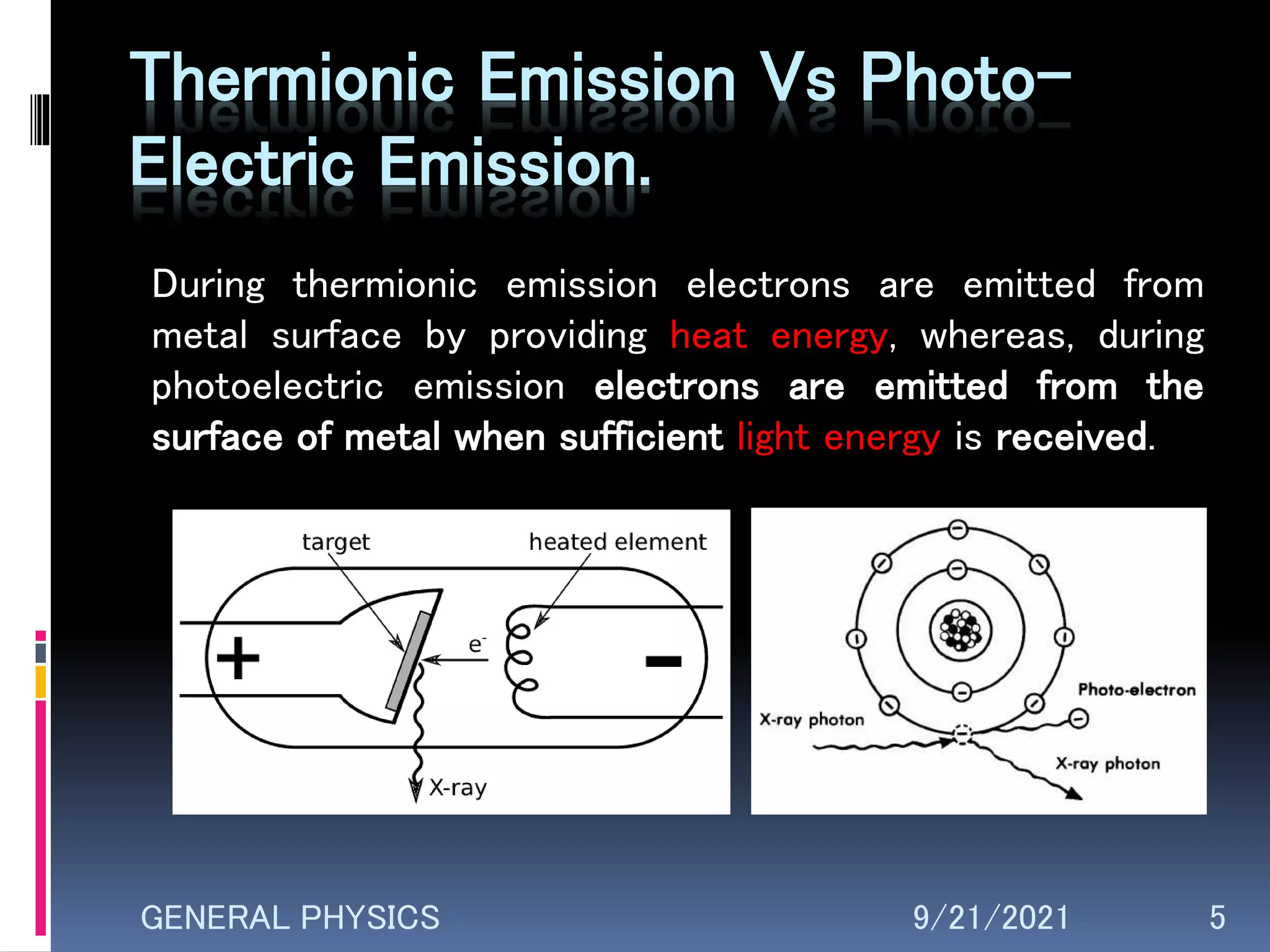
During thermionic emission electrons are emitted from
metal surface by providing heat energy, whereas, during
photoelectric emission electrons are emitted from the
surface of metal when sufficient light energy is received.
9/21/2021 5
GENERAL PHYSICS

Thermionic & Photoelectric Emission

  • 1.
    Thermionic & Photoelectric Emission 9/21/20211 GENERAL PHYSICS Dr. Jonathan Lalrinmawia
  • 2.
    Thermionic Emission Thermionic emissionis the emission of electrons from a heated metal (cathode). Thermionic = Thermal + ions A pure tungsten filament must be heated to a temperature of 2200°C to emit a useful number of electrons. 9/21/2021 2 GENERAL PHYSICS
  • 3.
    Thermionic Emission Factors affectingThermionic Emission  temperature of the metal surface  area of the metal surface  the work function of the metal Thermionic emitters are used in  high-frequency vacuum transistors for electronics  electron guns for scientific instrumentation  power electronics  x-ray generation  energy converters from high-temperature sources and solar energy. 9/21/2021 3 GENERAL PHYSICS
  • 4.
    Photo-Electric Emission. When lightshines on a metal, electrons can be ejected from the surface of the metal in a phenomenon known as the photoelectric effect. Photoelectric = Photo + Electric This process is also often referred to as photoemission, and the electrons that are ejected from the metal are called photoelectrons. 9/21/2021 4 GENERAL PHYSICS
  • 5.
    Thermionic Emission VsPhoto- Electric Emission. During thermionic emission electrons are emitted from metal surface by providing heat energy, whereas, during photoelectric emission electrons are emitted from the surface of metal when sufficient light energy is received. 9/21/2021 5 GENERAL PHYSICS