Downloaded 255 times
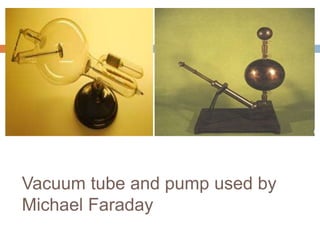
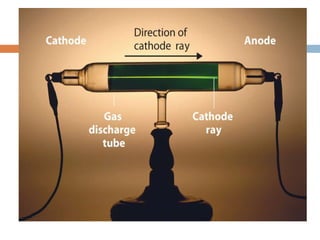
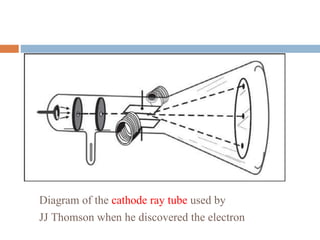
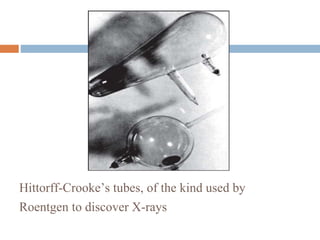
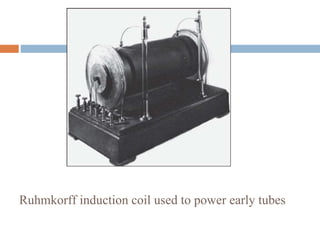
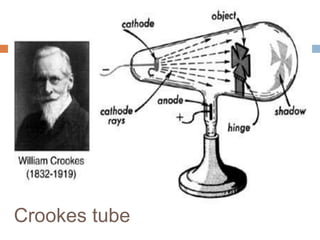
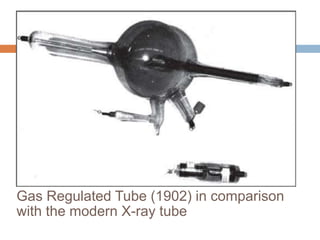
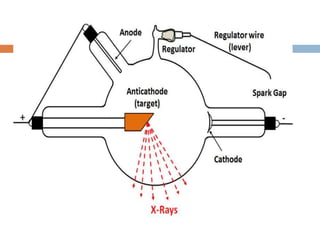
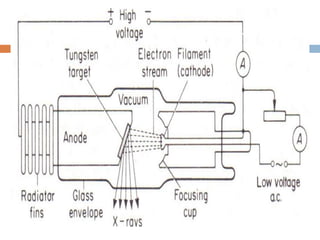
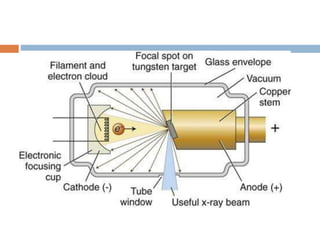
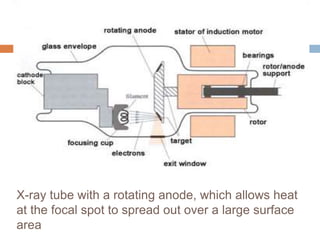
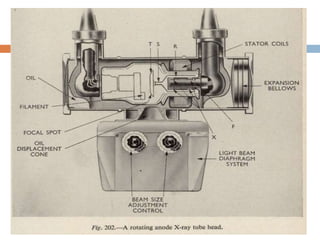
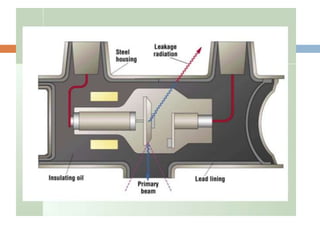


The document provides details on the history and development of the modern X-ray tube. It discusses early experiments with evacuated glass tubes in the 18th and 19th centuries. Key developments include Roentgen's discovery of X-rays in 1895 using a Crookes tube, and Coolidge's invention of the hot cathode tube with a tungsten filament in 1913. The modern X-ray tube consists of a cathode that emits a focused electron beam, a rotating or stationary anode that produces X-rays upon electron impact, and components to dissipate heat and maintain the vacuum within the glass envelope.


