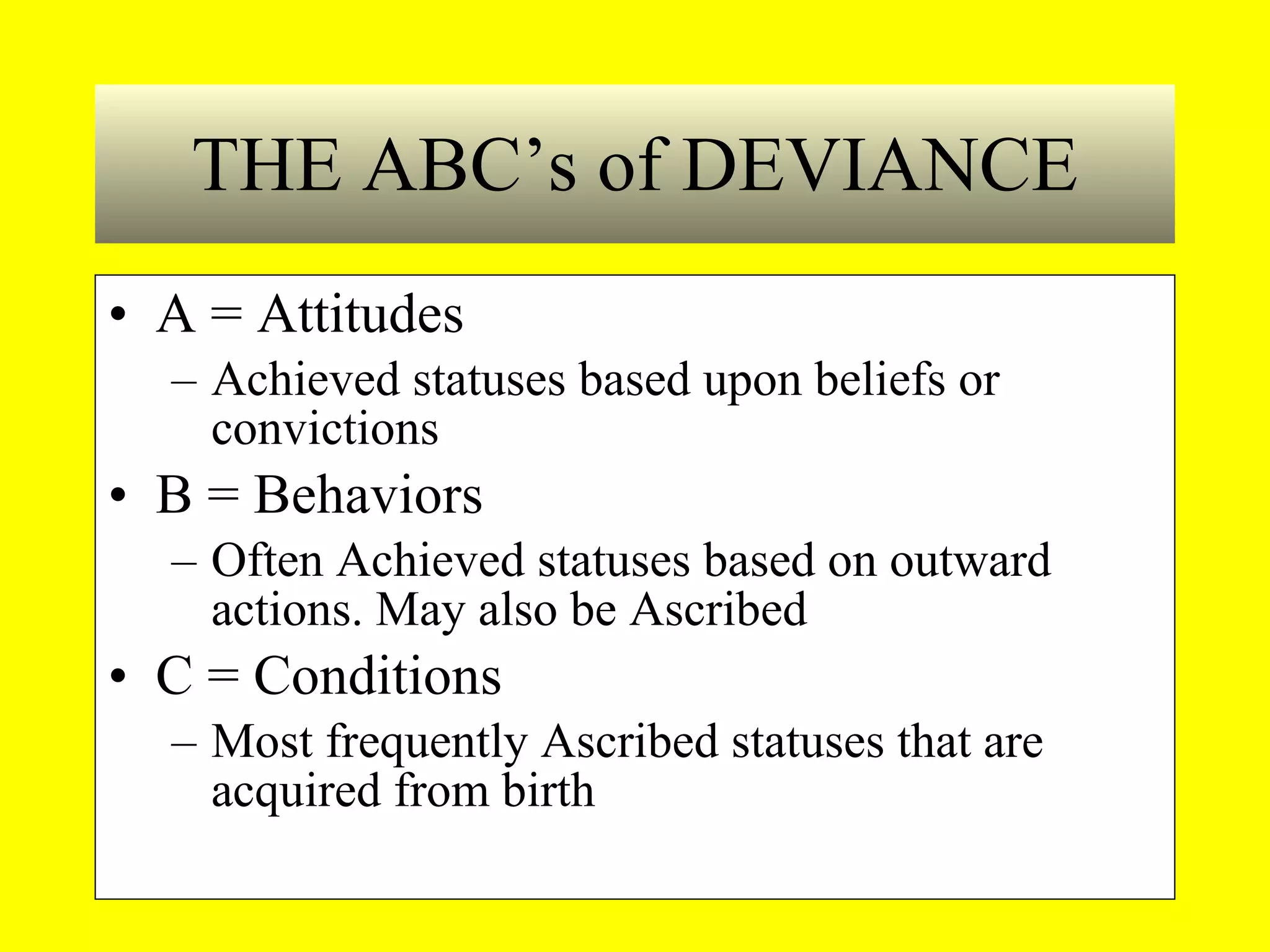
THE ABC’s of DEVIANCE A = Attitudes Achieved statuses based upon beliefs or convictions B = Behaviors Often Achieved statuses based on outward actions. May also be Ascribed  C = Conditions Most frequently Ascribed statuses that are acquired from birth
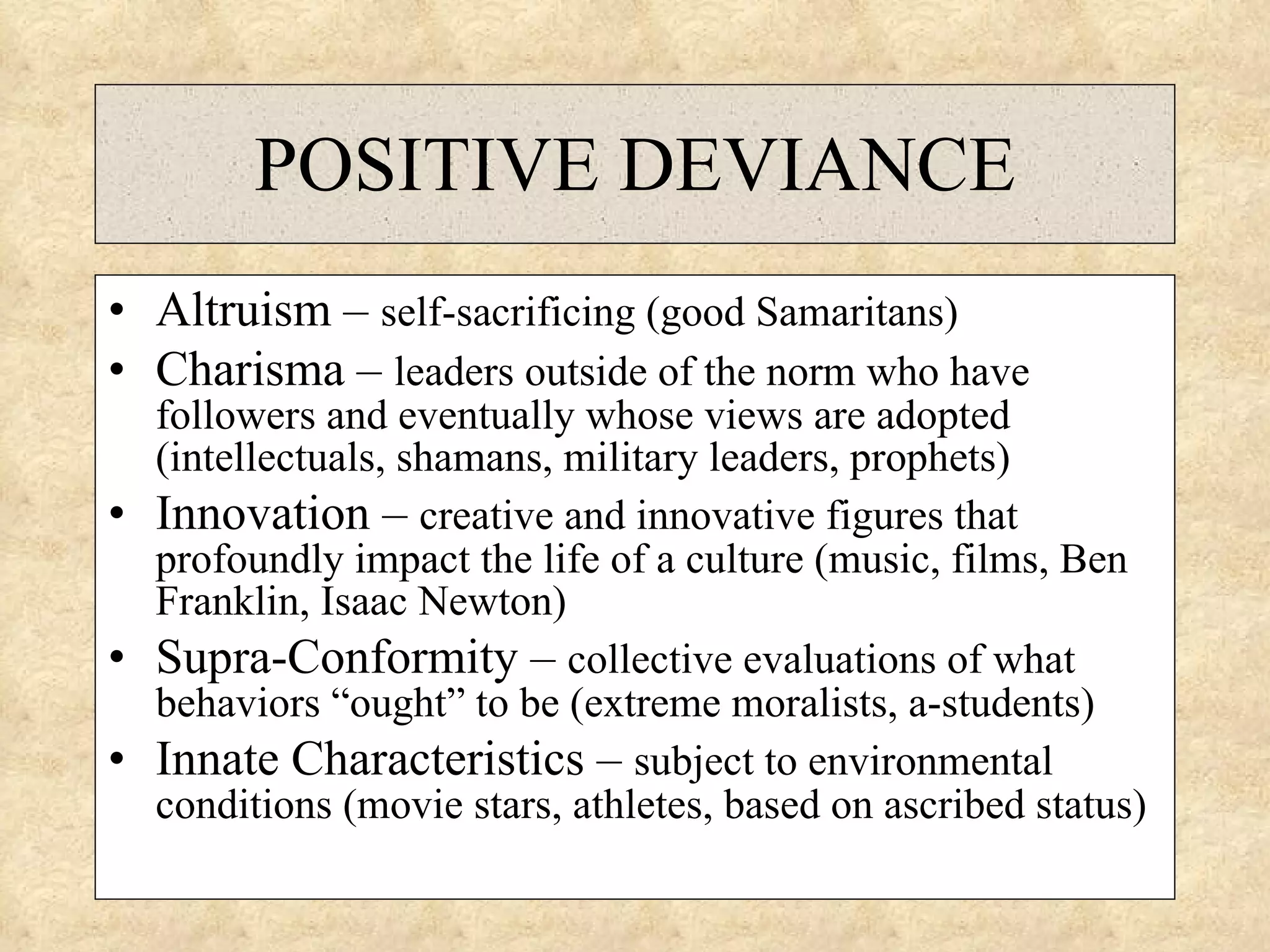
POSITIVE DEVIANCE Altruism –  self-sacrificing (good Samaritans) Charisma –  leaders outside of the norm who have followers and eventually whose views are adopted (intellectuals, shamans, military leaders, prophets) Innovation –  creative and innovative figures that profoundly impact the life of a culture (music, films, Ben Franklin, Isaac Newton) Supra-Conformity –  collective evaluations of what behaviors “ought” to be (extreme moralists, a-students) Innate Characteristics –  subject to environmental conditions (movie stars, athletes, based on ascribed status)
THE PROCESS OF DEVIANCE Societal reaction to deviance is a complex social-cultural-historical process based on shifting definitions, organizational interests and professional “expertise” The “reaction” and the “deviance” are a mutually interrelated phenomenon
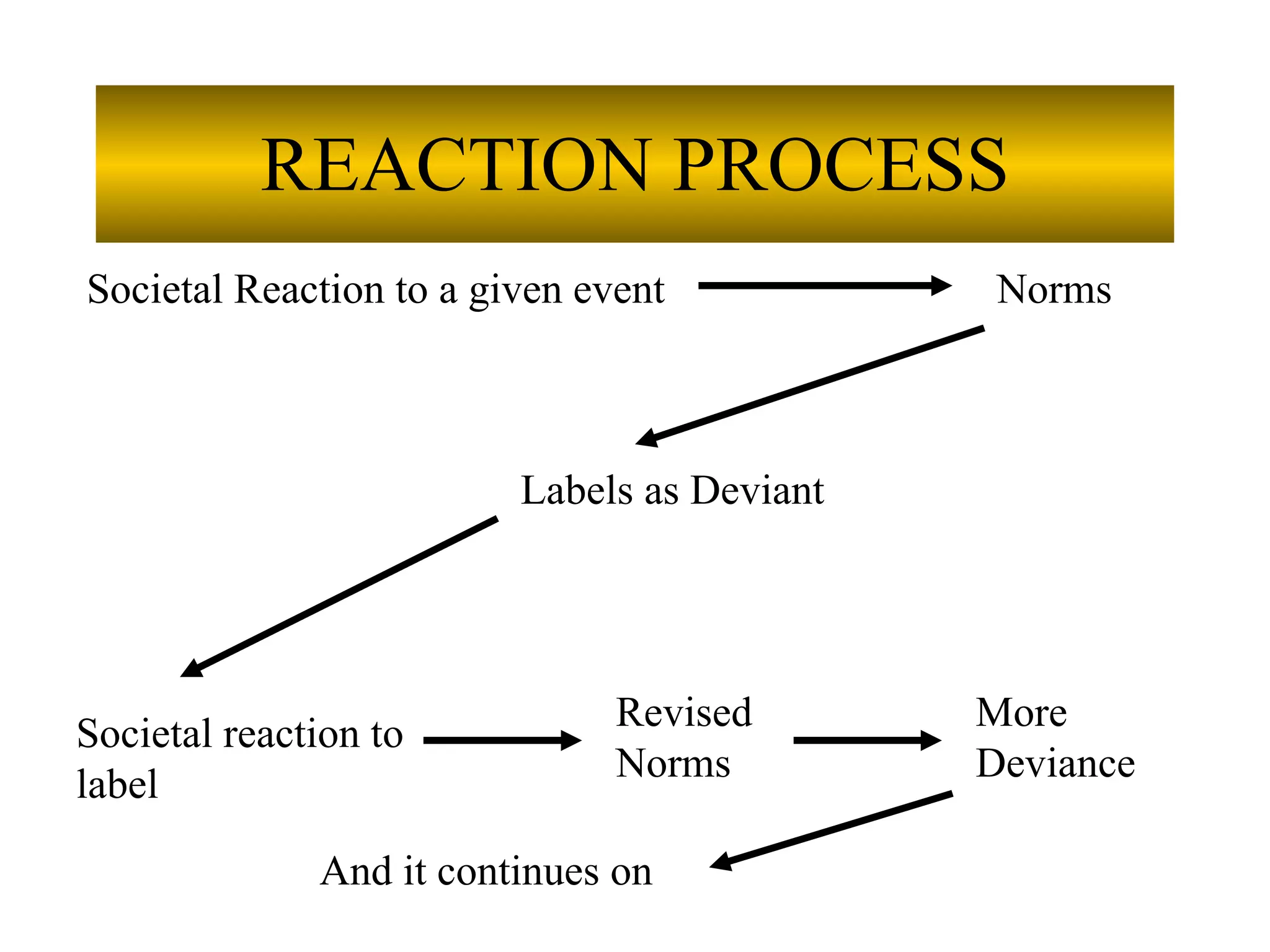
REACTION PROCESS Societal Reaction to a given event  Norms Labels as Deviant Societal reaction to label Revised Norms More Deviance And it continues on
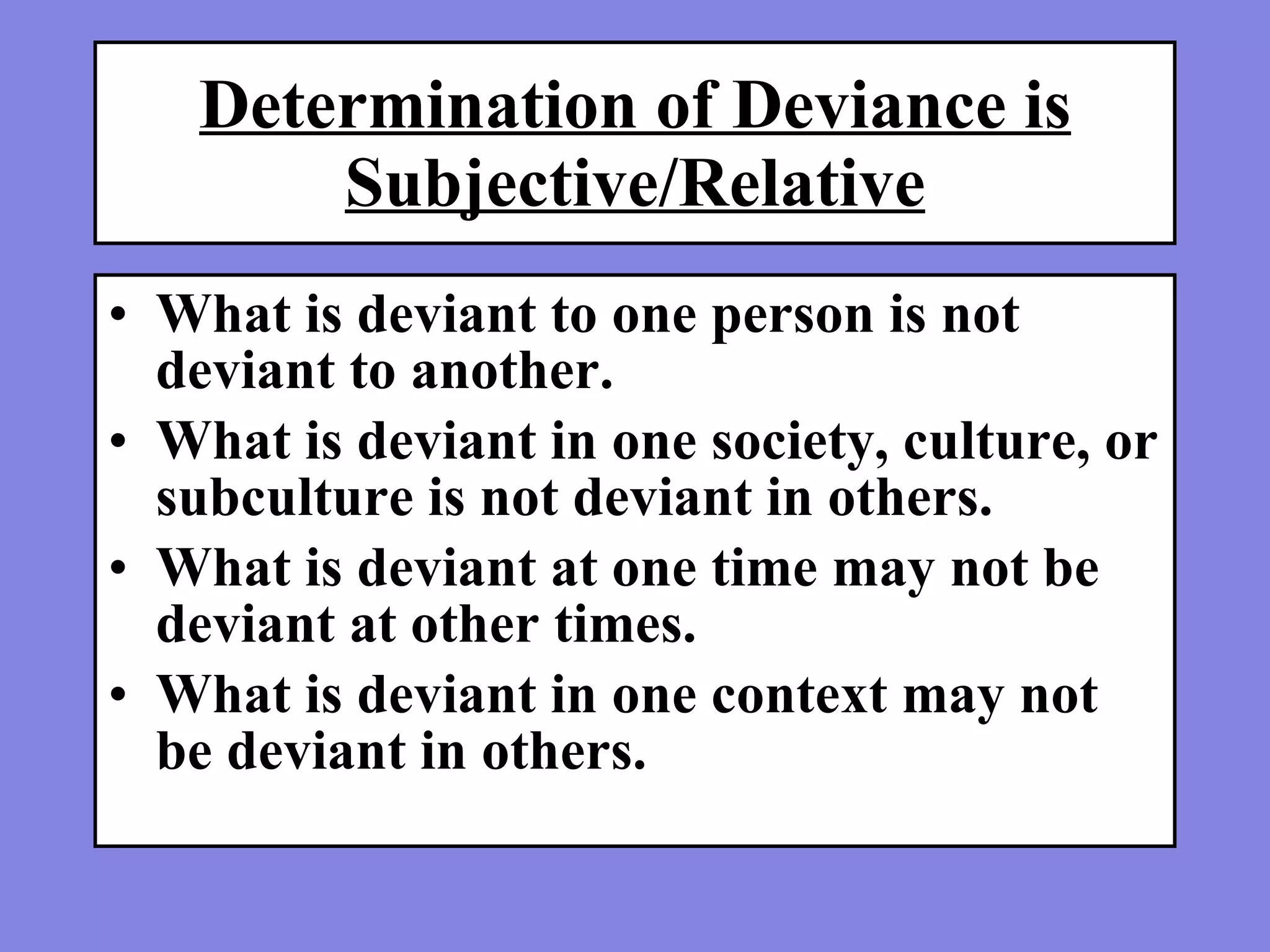
Determination of Deviance is Subjective/Relative What is deviant to one person is not deviant to another.  What is deviant in one society, culture, or subculture is not deviant in others.  What is deviant at one time may not be deviant at other times.  What is deviant in one context may not be deviant in others.
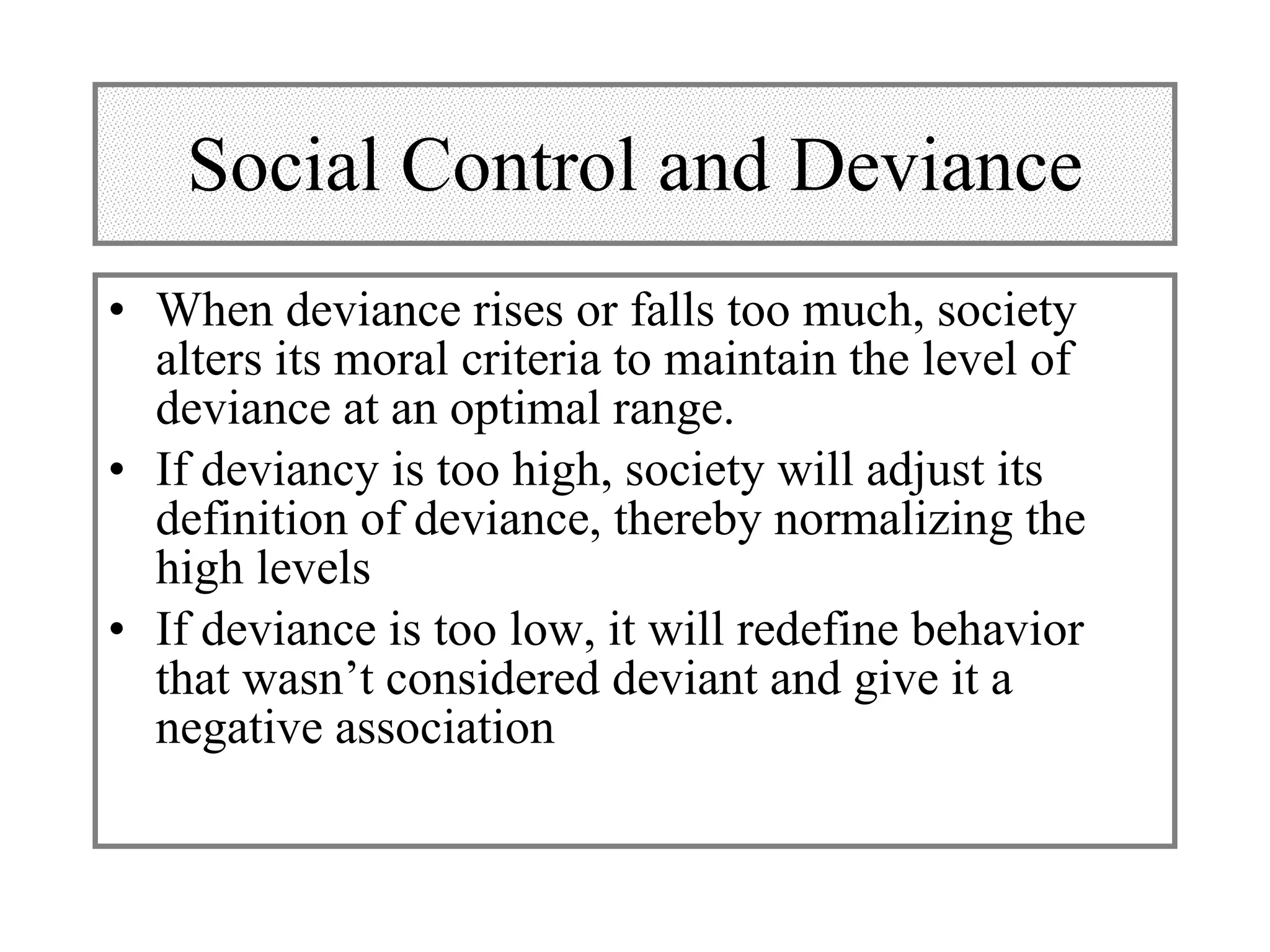
Social Control and Deviance When deviance rises or falls too much, society alters its moral criteria to maintain the level of deviance at an optimal range. If deviancy is too high, society will adjust its definition of deviance, thereby normalizing the high levels If deviance is too low, it will redefine behavior that wasn’t considered deviant and give it a negative association
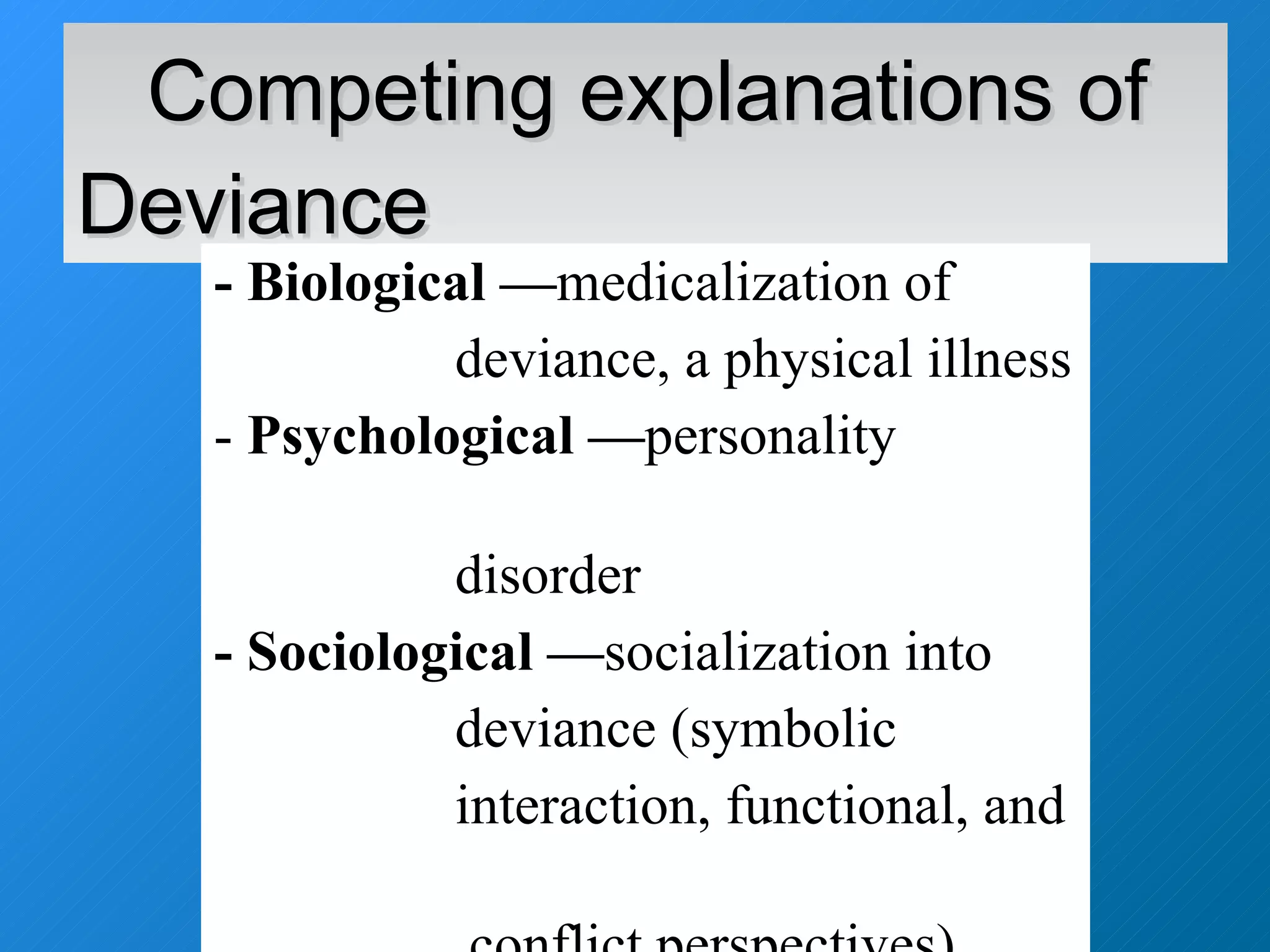
Competing explanations of Deviance - Biological — medicalization of deviance, a physical illness Psychological — personality  disorder - Sociological — socialization into deviance (symbolic  interaction, functional, and  conflict perspectives)

Theories of Deviance

  • 1.
    THE ABC’s ofDEVIANCE A = Attitudes Achieved statuses based upon beliefs or convictions B = Behaviors Often Achieved statuses based on outward actions. May also be Ascribed C = Conditions Most frequently Ascribed statuses that are acquired from birth
  • 2.
    POSITIVE DEVIANCE Altruism– self-sacrificing (good Samaritans) Charisma – leaders outside of the norm who have followers and eventually whose views are adopted (intellectuals, shamans, military leaders, prophets) Innovation – creative and innovative figures that profoundly impact the life of a culture (music, films, Ben Franklin, Isaac Newton) Supra-Conformity – collective evaluations of what behaviors “ought” to be (extreme moralists, a-students) Innate Characteristics – subject to environmental conditions (movie stars, athletes, based on ascribed status)
  • 3.
    THE PROCESS OFDEVIANCE Societal reaction to deviance is a complex social-cultural-historical process based on shifting definitions, organizational interests and professional “expertise” The “reaction” and the “deviance” are a mutually interrelated phenomenon
  • 4.
    REACTION PROCESS SocietalReaction to a given event Norms Labels as Deviant Societal reaction to label Revised Norms More Deviance And it continues on
  • 5.
    Determination of Devianceis Subjective/Relative What is deviant to one person is not deviant to another. What is deviant in one society, culture, or subculture is not deviant in others. What is deviant at one time may not be deviant at other times. What is deviant in one context may not be deviant in others.
  • 6.
    Social Control andDeviance When deviance rises or falls too much, society alters its moral criteria to maintain the level of deviance at an optimal range. If deviancy is too high, society will adjust its definition of deviance, thereby normalizing the high levels If deviance is too low, it will redefine behavior that wasn’t considered deviant and give it a negative association
  • 7.
    Competing explanations ofDeviance - Biological — medicalization of deviance, a physical illness Psychological — personality disorder - Sociological — socialization into deviance (symbolic interaction, functional, and conflict perspectives)