Deviance & Social Control
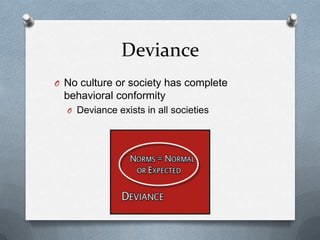
DevianceNo culture or society has complete behavioral conformityDeviance exists in all societies
DevianceDeviance – variations from a set of norms or shared social expectationsDeviants – the people who violate these shared expectationsConformity – when people follow the norms of their social group or society
DevianceNorms rarely state exactly what behaviors are acceptable and which are unacceptableVariations in behavior are allowedDeviance occurs when someone pushes past the range of acceptable behavior
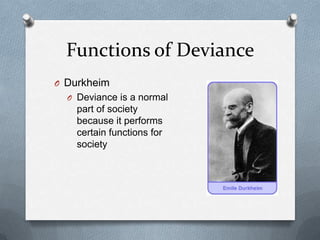
Functions of DevianceDurkheimDeviance is a normal part of society because it performs certain functions for society
Functions of DevianceHelps to define the limits of social toleranceShows the extent to which norms can be violated without reactionHelps to clarify the boundaries of normsPublic control of deviants illustrates the limits to the general members of society
Functions of DevianceIncreases solidarity and integration of the groupDeviance can increase solidarity among groups of deviantsNon-deviant groups can come together to combat deviance
Functions of Deviance“Safety valve” for social discontentAllows people to escape from conventional norms and rid themselves of frustration without disrupting the whole social systemCan funnel anger in a different direction
Functions of DevianceCan indicate defects or inadequacies in the existing social organizationCan set in motion steps that lead to social change
Dysfunctions of DevianceIsolated instances of deviance have little effect on system stabilityWidespread, long-term or more extreme norm violations can impair the functioning of groups or of entire systems
Dysfunctions of DevianceDisrupt the social orderDisrupt the status quoMake social life unpredictableCreate tension and conflict
Dysfunctions of DevianceDisrupt the will of others to conformUnpunished norm violations decrease the desire of others to conformConformity only happens whenOther conform as wellThose who conform are differentiated from those who don’tViolators are punished
Dysfunctions of DevianceDestroy trustSocial life is partly based on assuming others are honest and trustworthyPeople become more dependent on the legal system when trust is destroyedDivert resources into social rehabilitation and control efforts
Social ControlInternal means of controlPeople conform to norms because they believe they should, even when no one else is presentPeople are socialized to see themselves in a certain wayExternal means of controlOthers in the group utilize pressures or sanctions to attempt to control an individual’s behavior
Social ControlSanctions – rewards or punishments used to encourage proper behavior or discourage deviant behaviorPositive and negative sanctionsFormal and informal sanctions
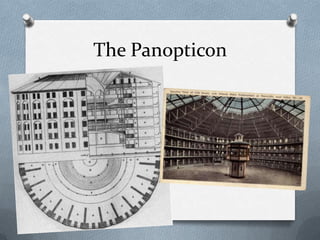
The Panopticon
Theories Explaining DevianceBiological theories of devianceMedical model – assumes an unhealthy biological organismWeakness or defects produce deviant behaviorBiological determinismEugenicsDoesn’t explain why others with the same bio traits don’t become deviant
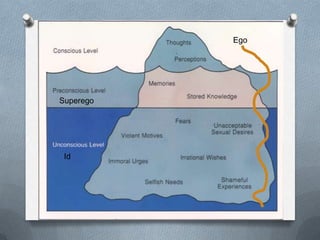
Theories Explaining DeviancePsychoanalytic theories of devianceFreud – all human behavior is based on seeking pleasure and avoiding painId (pleasure principle), ego (reality principle), superego (moral principle)Conscious – wants, needs, desires; what we are aware ofPreconscious – brought to the surface by a memory or experienceSubconscious – repressed memories; biological desires and urges
EgoSuperegoId
Sociological Theories of DevianceExplain deviance by looking at the sociocultural processes and organizational structuresStill considers acts and actorsDoes not dismiss biological or psychological factors
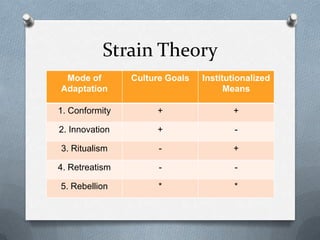
Strain TheoryStructural functionalistMerton’s strain theoryDeviance arises from the struggle society has between culturally defined goals and the socially approved means by which they are metDeviance is the result of a strain between a society’s culture and social structure
Strain Theory
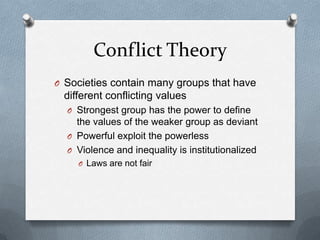
Conflict TheorySocieties contain many groups that have different conflicting valuesStrongest group has the power to define the values of the weaker group as deviantPowerful exploit the powerlessViolence and inequality is institutionalizedLaws are not fair
Symbolic InteractionFocus on sociocultural learning process through which deviant acts are learned and the conditions under which they are learnedEmphasize the groups to which people belong and how we learn the norms of those groups
Symbolic InteractionCultural transmission theoryWhen deviance is a part of a subculture’s cultural pattern, it is transmitted to new members through socializationDeviance results not from violated norms, but from conforming to them
Symbolic InteractionDifferential association theoryDeviance results when individuals have more contact with groups that define deviance favorably than with groups that define it unfavorablyContact with actual criminals is not necessaryExposure to favorable definitions is enough
Symbolic InteractionSocial learning theoryDeviant and conforming behaviors are determined by the consequences that follow themInstrumental conditions – behavior is acquired through direct conditioning or imitating the modeled behavior of othersDifferential reinforcement – persistent behaviors result from the rewards or punishments following the behavior
Labeling TheorySome behaviors are labeled “deviant” and being given such a label influences a person’s behaviorDeviance is the result of human interactionDeviance is a relative act – not the result of a specific type of act but rather the consequence of applying a particular label

Deviance and social control

  • 1.
  • 2.
    DevianceNo culture orsociety has complete behavioral conformityDeviance exists in all societies
  • 3.
    DevianceDeviance – variationsfrom a set of norms or shared social expectationsDeviants – the people who violate these shared expectationsConformity – when people follow the norms of their social group or society
  • 4.
    DevianceNorms rarely stateexactly what behaviors are acceptable and which are unacceptableVariations in behavior are allowedDeviance occurs when someone pushes past the range of acceptable behavior
  • 5.
    Functions of DevianceDurkheimDevianceis a normal part of society because it performs certain functions for society
  • 6.
    Functions of DevianceHelpsto define the limits of social toleranceShows the extent to which norms can be violated without reactionHelps to clarify the boundaries of normsPublic control of deviants illustrates the limits to the general members of society
  • 7.
    Functions of DevianceIncreasessolidarity and integration of the groupDeviance can increase solidarity among groups of deviantsNon-deviant groups can come together to combat deviance
  • 8.
    Functions of Deviance“Safetyvalve” for social discontentAllows people to escape from conventional norms and rid themselves of frustration without disrupting the whole social systemCan funnel anger in a different direction
  • 9.
    Functions of DevianceCanindicate defects or inadequacies in the existing social organizationCan set in motion steps that lead to social change
  • 10.
    Dysfunctions of DevianceIsolatedinstances of deviance have little effect on system stabilityWidespread, long-term or more extreme norm violations can impair the functioning of groups or of entire systems
  • 11.
    Dysfunctions of DevianceDisruptthe social orderDisrupt the status quoMake social life unpredictableCreate tension and conflict
  • 12.
    Dysfunctions of DevianceDisruptthe will of others to conformUnpunished norm violations decrease the desire of others to conformConformity only happens whenOther conform as wellThose who conform are differentiated from those who don’tViolators are punished
  • 13.
    Dysfunctions of DevianceDestroytrustSocial life is partly based on assuming others are honest and trustworthyPeople become more dependent on the legal system when trust is destroyedDivert resources into social rehabilitation and control efforts
  • 14.
    Social ControlInternal meansof controlPeople conform to norms because they believe they should, even when no one else is presentPeople are socialized to see themselves in a certain wayExternal means of controlOthers in the group utilize pressures or sanctions to attempt to control an individual’s behavior
  • 15.
    Social ControlSanctions –rewards or punishments used to encourage proper behavior or discourage deviant behaviorPositive and negative sanctionsFormal and informal sanctions
  • 16.
  • 17.
    Theories Explaining DevianceBiologicaltheories of devianceMedical model – assumes an unhealthy biological organismWeakness or defects produce deviant behaviorBiological determinismEugenicsDoesn’t explain why others with the same bio traits don’t become deviant
  • 19.
    Theories Explaining DeviancePsychoanalytictheories of devianceFreud – all human behavior is based on seeking pleasure and avoiding painId (pleasure principle), ego (reality principle), superego (moral principle)Conscious – wants, needs, desires; what we are aware ofPreconscious – brought to the surface by a memory or experienceSubconscious – repressed memories; biological desires and urges
  • 20.
  • 21.
    Sociological Theories ofDevianceExplain deviance by looking at the sociocultural processes and organizational structuresStill considers acts and actorsDoes not dismiss biological or psychological factors
  • 22.
    Strain TheoryStructural functionalistMerton’sstrain theoryDeviance arises from the struggle society has between culturally defined goals and the socially approved means by which they are metDeviance is the result of a strain between a society’s culture and social structure
  • 23.
  • 24.
    Conflict TheorySocieties containmany groups that have different conflicting valuesStrongest group has the power to define the values of the weaker group as deviantPowerful exploit the powerlessViolence and inequality is institutionalizedLaws are not fair
  • 25.
    Symbolic InteractionFocus onsociocultural learning process through which deviant acts are learned and the conditions under which they are learnedEmphasize the groups to which people belong and how we learn the norms of those groups
  • 26.
    Symbolic InteractionCultural transmissiontheoryWhen deviance is a part of a subculture’s cultural pattern, it is transmitted to new members through socializationDeviance results not from violated norms, but from conforming to them
  • 27.
    Symbolic InteractionDifferential associationtheoryDeviance results when individuals have more contact with groups that define deviance favorably than with groups that define it unfavorablyContact with actual criminals is not necessaryExposure to favorable definitions is enough
  • 28.
    Symbolic InteractionSocial learningtheoryDeviant and conforming behaviors are determined by the consequences that follow themInstrumental conditions – behavior is acquired through direct conditioning or imitating the modeled behavior of othersDifferential reinforcement – persistent behaviors result from the rewards or punishments following the behavior
  • 29.
    Labeling TheorySome behaviorsare labeled “deviant” and being given such a label influences a person’s behaviorDeviance is the result of human interactionDeviance is a relative act – not the result of a specific type of act but rather the consequence of applying a particular label