Children Apperception
Test
(C) COPYRIGHTS RESERVED::
DR. SHAINI VARGHESE
Let’s create stories.....
Before beginning with the topic, let’s have a try out with the test itself.
There is a sequence of pictures with the stated situations.
Observe the pictures carefully.
Imagine a story on each situation which will have a beginning, middle and
end.
Also figure out the relation between/among characters.
Express what they might be feeling , thinking or talking.
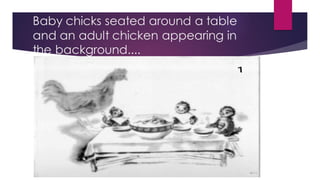
Baby chicks seated around a table
and an adult chicken appearing in
the background....
A large bear and a baby bear playing
tug of war....
A lion sitting on a throne Being
watched by a mouse Through a
peephole.....
A mother kangaroo with a joey in her
pouch and an older Joey beside her...
Two baby bears sleeping on a small
bed in front of a larger bed containing
two bulges...
A cave in which two large bears are
lying down next to a baby bear....
A ferocious tiger leaping toward a
monkey who is trying to climb a tree...
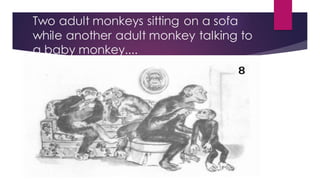
Two adult monkeys sitting on a sofa
while another adult monkey talking to
a baby monkey....
A rabbit sitting on a child’s bed
viewed through a doorway....
A puppy being spanked by an adult
dog in front of a bathroom....
CAT: A projective test
What are projective tests?
Projective tests are personality assessments that present ambiguous visual stimuli
to the subject and ask the subject to respond with whatever comes to mind. In
projective techniques, respondents are asked to interpret the behaviour of others. In
interpreting the behaviour of others, respondents indirectly project their own
motivations, beliefs, attitudes or feelings into the situation.
Introduction to CAT:
CAT was developed by Leopold Bellak and Sonya Bellak in 1948. The CAT is a
projective method or apperceptive method which helps in investigating
personality by studying the dynamic meaningfulness of the individual differences
in perception of standard stimuli.
Apperception means definite recognition. The original idea of CAT was produced
by Dr. Ernst Kris. Kris pointed out how we could expect children to identify
themselves much more readily with animals than with persons. Children can
easily project to animals. Thus, the pictures on the CAT often address the manner
in which individuals interact with their environment in terms of need fulfillment.
An individually administered, appropriate for children aged 3 to 10 years.
Purpose:
The CAT is used to assess personality, level of maturity, and, often, psychological
health of a child.
The theory is that a child’s responses to a series of drawings of animals or
humans in familiar situations are likely to reveal significant aspects of a child’s
personality.
Some of these dimensions of personality include level of reality testing and
judgment, control and regulation of drives, defenses, conflicts, and level of
autonomy.
Description:
The original CAT featured 10 pictures of animals in such human social contexts
as playing games or sleeping in a bed. Today, this version is known as the CAT or
the CAT-A (for animal). Animals were chosen for the pictures because it was
believed that young children relate better to animals than humans. Each picture is
presented by a test administrator in the form of a card.
The pictures are meant to encourage the children to tell stories related to
competition, illness, injuries, body image, family life, and school situations.
Administration:
The CAT, which takes 20–45 minutes to administer, is conducted by a trained pr
ofessional—psychiatrist, psychologist, social worker, teacher or specially trained pediatrician—in a
clinical, research, or educational setting. The test may be used directly in therapy or as
a play technique in other settings.
After carefully establishing rapport with the child, the examiner shows the child one card after
another in a particular sequence (although fewer than ten cards may be used at the examiner's
discretion) and encourages the child to tell a story—with a beginning, middle, and end—about the
characters. The examiner may ask the child to describe, for example, what led up to the scene
depicted, the emotions of the characters, and what might happen in the future.
The CAT test manual suggests that the administrator should consider the following variables
when analyzing a child’s story about a particular card:
. . - The protagonist (main character) of the story;
- The primary needs of the protagonist;
- The relationship of the main character to his or her personal environment..
Scoring:
In a projective test such as the CAT, there is no right or wrong answer. Thus there
is no numerical score or scale for the test.
The test administrator records the essence of each of the stories told and
indicates the presence or absence of certain thematic elements on the form
provided.
As in the TAT, each story is carefully analyzed to uncover the child's underlying
needs, conflicts, emotions, attitudes, and response patterns. The CAT's creators
suggest a series of ten variables to consider when interpreting the results. These
variables include the story's major theme, the major character's needs, drives,
anxieties, conflicts, fears, and the child's conception of the external world.
Uses:
The CAT, is designed for use in clinical, educational, and research settings,
To discover the child’s structure of personality, his dynamic mode of reacting to his
problems and the manner he would handlehis problem of development.
The pictures also draw out a child’s anxieties, fears and psychological defenses.
The child’s structure and his dynamic method of reacting to and handling his
problems of growth.
Thank You!!!!
Feedback suggestions are welcome....
E-mail Id: shaini1010@gmail.com

Cat

  • 1.
    Children Apperception Test (C) COPYRIGHTSRESERVED:: DR. SHAINI VARGHESE
  • 2.
    Let’s create stories..... Beforebeginning with the topic, let’s have a try out with the test itself. There is a sequence of pictures with the stated situations. Observe the pictures carefully. Imagine a story on each situation which will have a beginning, middle and end. Also figure out the relation between/among characters. Express what they might be feeling , thinking or talking.
  • 3.
    Baby chicks seatedaround a table and an adult chicken appearing in the background....
  • 4.
    A large bearand a baby bear playing tug of war....
  • 5.
    A lion sittingon a throne Being watched by a mouse Through a peephole.....
  • 6.
    A mother kangaroowith a joey in her pouch and an older Joey beside her...
  • 7.
    Two baby bearssleeping on a small bed in front of a larger bed containing two bulges...
  • 8.
    A cave inwhich two large bears are lying down next to a baby bear....
  • 9.
    A ferocious tigerleaping toward a monkey who is trying to climb a tree...
  • 10.
    Two adult monkeyssitting on a sofa while another adult monkey talking to a baby monkey....
  • 11.
    A rabbit sittingon a child’s bed viewed through a doorway....
  • 12.
    A puppy beingspanked by an adult dog in front of a bathroom....
  • 13.
    CAT: A projectivetest What are projective tests? Projective tests are personality assessments that present ambiguous visual stimuli to the subject and ask the subject to respond with whatever comes to mind. In projective techniques, respondents are asked to interpret the behaviour of others. In interpreting the behaviour of others, respondents indirectly project their own motivations, beliefs, attitudes or feelings into the situation.
  • 14.
    Introduction to CAT: CATwas developed by Leopold Bellak and Sonya Bellak in 1948. The CAT is a projective method or apperceptive method which helps in investigating personality by studying the dynamic meaningfulness of the individual differences in perception of standard stimuli. Apperception means definite recognition. The original idea of CAT was produced by Dr. Ernst Kris. Kris pointed out how we could expect children to identify themselves much more readily with animals than with persons. Children can easily project to animals. Thus, the pictures on the CAT often address the manner in which individuals interact with their environment in terms of need fulfillment. An individually administered, appropriate for children aged 3 to 10 years.
  • 15.
    Purpose: The CAT isused to assess personality, level of maturity, and, often, psychological health of a child. The theory is that a child’s responses to a series of drawings of animals or humans in familiar situations are likely to reveal significant aspects of a child’s personality. Some of these dimensions of personality include level of reality testing and judgment, control and regulation of drives, defenses, conflicts, and level of autonomy.
  • 16.
    Description: The original CATfeatured 10 pictures of animals in such human social contexts as playing games or sleeping in a bed. Today, this version is known as the CAT or the CAT-A (for animal). Animals were chosen for the pictures because it was believed that young children relate better to animals than humans. Each picture is presented by a test administrator in the form of a card. The pictures are meant to encourage the children to tell stories related to competition, illness, injuries, body image, family life, and school situations.
  • 17.
    Administration: The CAT, whichtakes 20–45 minutes to administer, is conducted by a trained pr ofessional—psychiatrist, psychologist, social worker, teacher or specially trained pediatrician—in a clinical, research, or educational setting. The test may be used directly in therapy or as a play technique in other settings. After carefully establishing rapport with the child, the examiner shows the child one card after another in a particular sequence (although fewer than ten cards may be used at the examiner's discretion) and encourages the child to tell a story—with a beginning, middle, and end—about the characters. The examiner may ask the child to describe, for example, what led up to the scene depicted, the emotions of the characters, and what might happen in the future. The CAT test manual suggests that the administrator should consider the following variables when analyzing a child’s story about a particular card: . . - The protagonist (main character) of the story; - The primary needs of the protagonist; - The relationship of the main character to his or her personal environment..
  • 18.
    Scoring: In a projectivetest such as the CAT, there is no right or wrong answer. Thus there is no numerical score or scale for the test. The test administrator records the essence of each of the stories told and indicates the presence or absence of certain thematic elements on the form provided. As in the TAT, each story is carefully analyzed to uncover the child's underlying needs, conflicts, emotions, attitudes, and response patterns. The CAT's creators suggest a series of ten variables to consider when interpreting the results. These variables include the story's major theme, the major character's needs, drives, anxieties, conflicts, fears, and the child's conception of the external world.
  • 19.
    Uses: The CAT, isdesigned for use in clinical, educational, and research settings, To discover the child’s structure of personality, his dynamic mode of reacting to his problems and the manner he would handlehis problem of development. The pictures also draw out a child’s anxieties, fears and psychological defenses. The child’s structure and his dynamic method of reacting to and handling his problems of growth.
  • 20.
    Thank You!!!! Feedback suggestionsare welcome.... E-mail Id: shaini1010@gmail.com