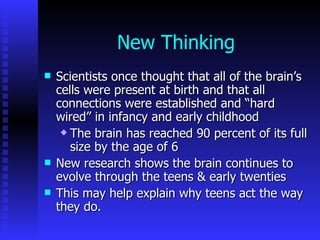
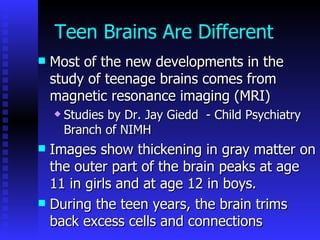
1) The brain continues developing through adolescence and early adulthood, with significant changes occurring in brain structure and function during this period.
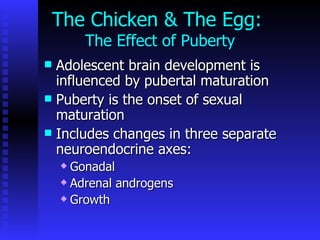
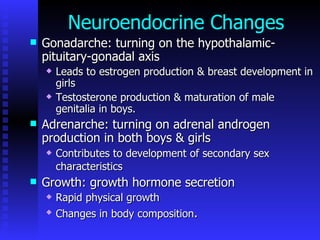
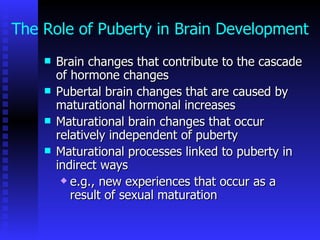
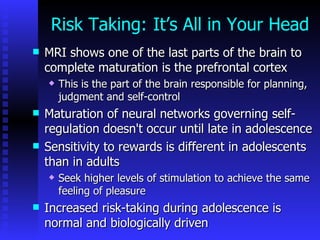
2) Puberty triggers a cascade of hormonal changes that influence brain development in both direct and indirect ways. Areas of the brain involved in self-regulation and risk-taking, such as the prefrontal cortex, are among the last to fully mature.
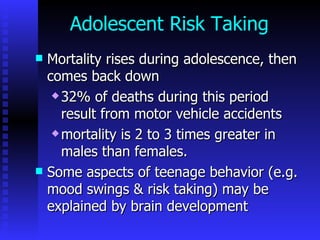
3) Adolescents tend to engage in more risk-taking behaviors than children or adults, which may be explained by an imbalance between the earlier maturation of the brain's reward system versus the later maturation of self-control regions.



![Module_C-Adolescent_Brain_Development[1].pptx](https://cdn.slidesharecdn.com/ss_thumbnails/modulec-adolescentbraindevelopment1-250826220624-04f4be93-thumbnail.jpg?width=640&height=640&fit=bounds)


![Hypothalamus short ppt by Dr. Neha [PT].pptx](https://cdn.slidesharecdn.com/ss_thumbnails/hypothalamusbydr-260124145759-b9f94a93-thumbnail.jpg?width=640&height=640&fit=bounds)


