Clinical psychology dep.
Biological approach in psychology
Present by
Darya Rostem
Clinical psychologist
Biological psychology
This viewpoint emphasizes
the impact of biology on our
behavior.
Psychobiologists study how
the brain, the nervous system,
and hormones and genetics
influence our behavior.
The main concern of this approach
1. The relationship between mind and body
2. The effects mind on body.
3. the influence of heredity on behavior.
How do biopsychologists explain human
behavior?
Genetics
Brain structure & functions
Nervous system
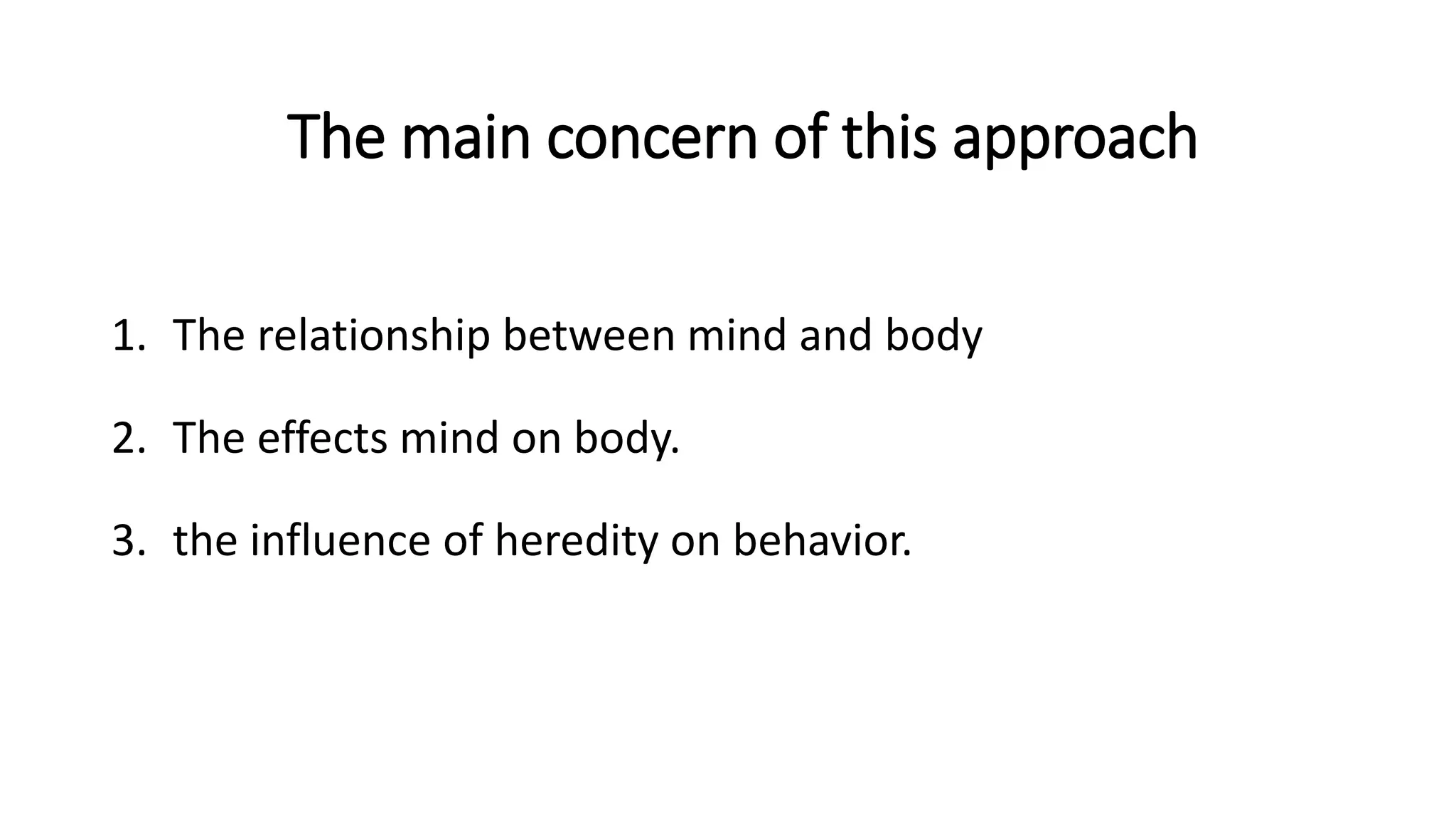
 Genetic inheritance. It
is assumed that genes
have a major effect
on developing mental
illness.
• genetic influences in particular types of
behavior, These genes are thought to
influence the development of the
nervous system, making it vulnerable
to malfunctioning in certain ways that
produce the symptoms of the disorder.
• Kendler et al. (1985) found that
relatives of schizophrenics were 18
times more likely to develop the
illness than a matched control
group.
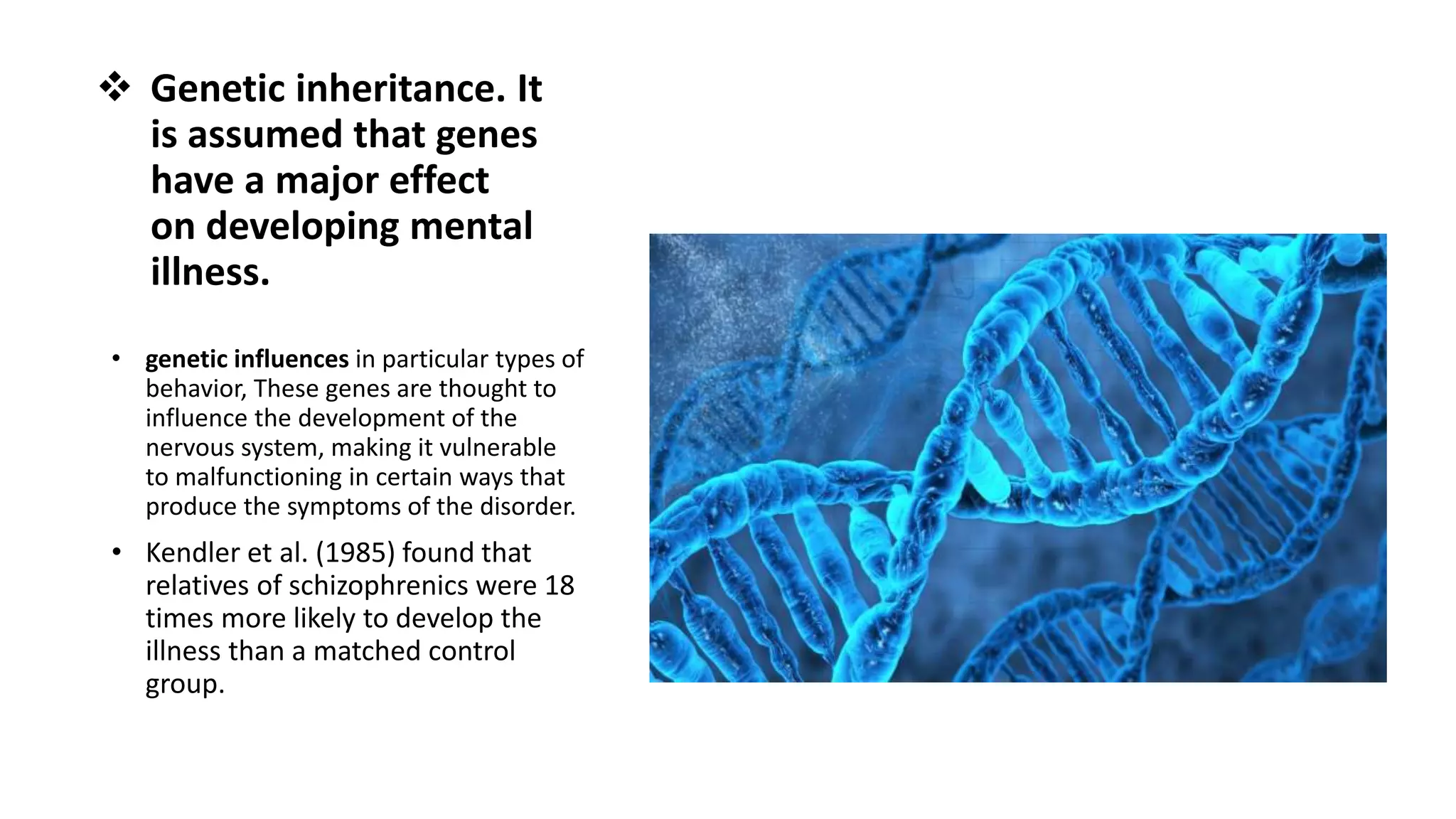
Brain areas
biopsychological explanations often
focus on which brain areas are
responsible for which types of
thinking or behaviour and how they
connect with other functions and
brain areas.
For example;
Broca’s area, which controls the
production of speech and Wernicke’s
area, which controls the
comprehension of speech.
 Bio-chemistry. Chemical imbalance in the brain
may be involved in certain mental illness.
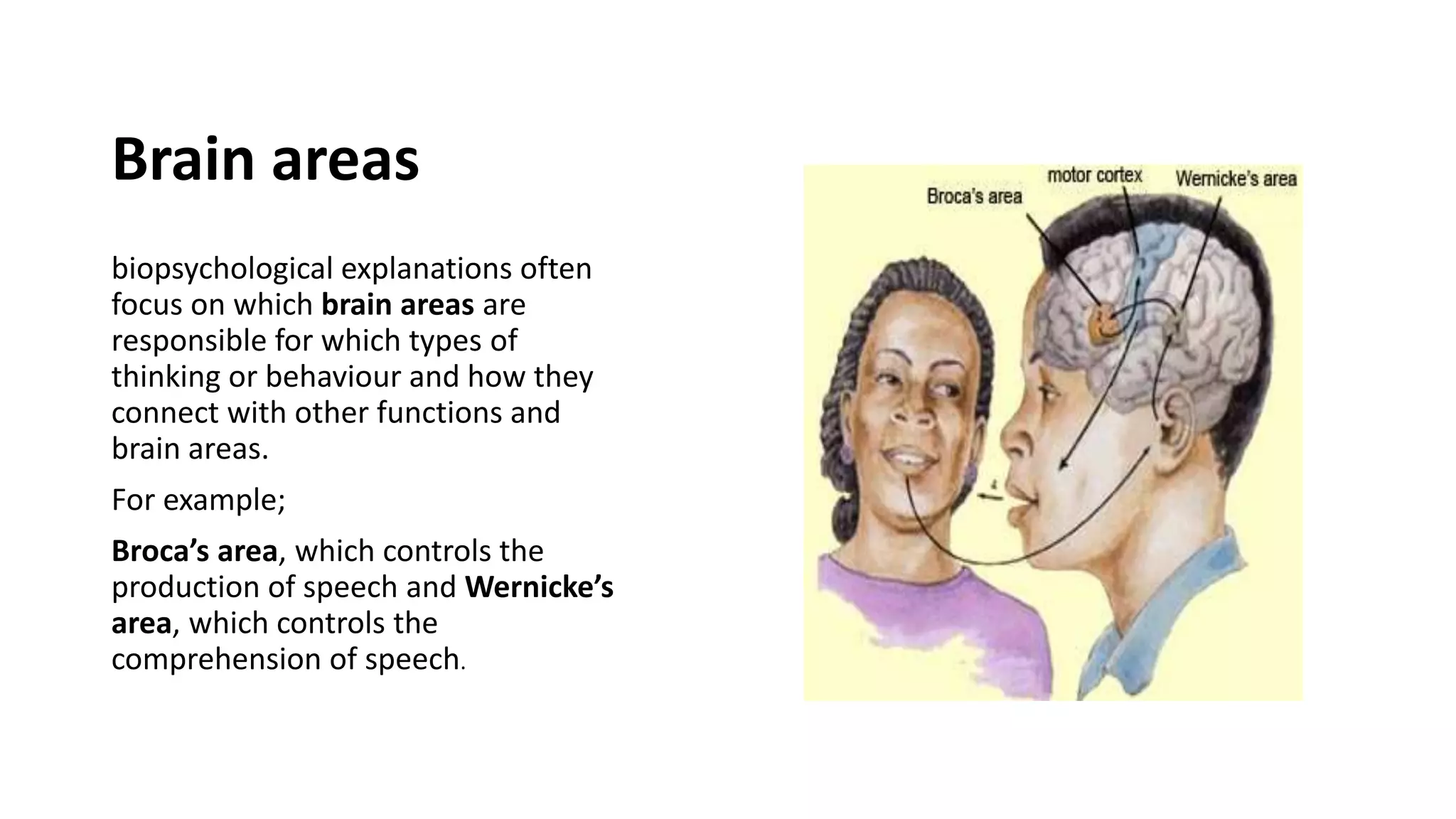
• For example, too much
Dopamine has been detected in
the brains of Schizophrenia.
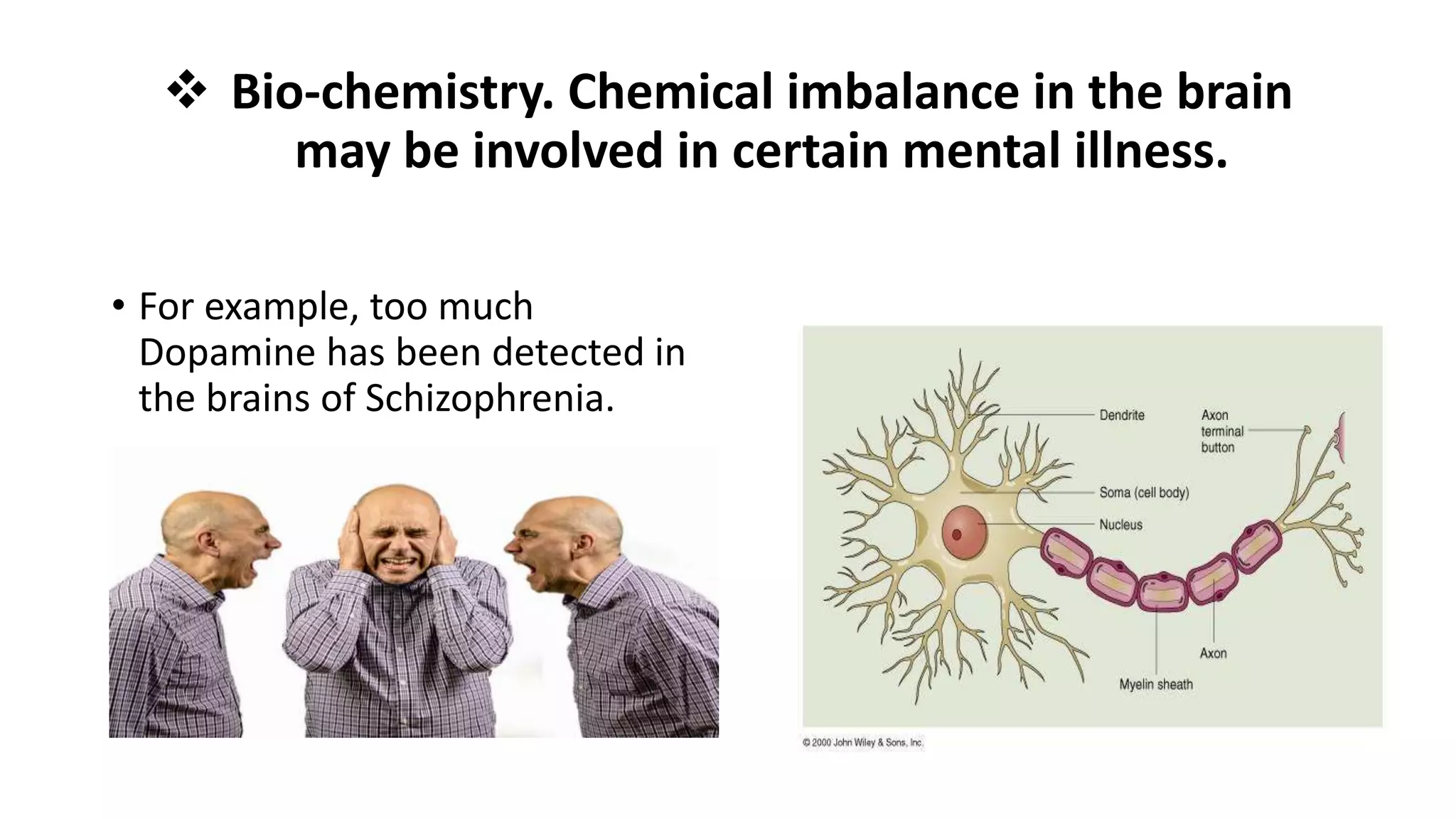
The major neurotransmitters and their
function and location
The main assumptions of biological
approach
 A mental illness is similar to a physical illness, both have a physical causes.
Organic disorders
• E.g. Alzheimer disease
Functional disorders
• E.g. Depression
Infection
• Barr et al. (1990) found
increased levels of
schizophrenia amongst
mothers who had ‘flu’ during
they were pregnant.
• This suggest a possible link
between infection and
schizophrenia.
Mental illness has a physiological causes,
needs physiological treatment
1) Psychosurgery
1) ECT (Electro-Convulsive Therapy)
2) Chemotherapy (drug)
Psychosurgery
• Is an invasive medical
treatment that
involves the deliberate
destruction of tiny
amount of brain tissue
in order to treat
mental illness, such as
clinical depression.
ECT (Electro-Convulsive Therapy)
• is a procedure, done under
general anesthesia, in which
small electric currents are
passed through the brain,
intentionally triggering a brief
seizure. ECT seems to cause
changes in brain chemistry that
can quickly reverse symptoms of
certain mental illnesses.
Chemotherapy (drug)
• used to treat psychological
disorders with medications
Methodology in biological psychology
• Genetics study
1. Twins study
2. Adoption study
3. Family study
• Scans
1. FMRI
2. MRI
Methodology in biological psychology
• Case study • Post mortem study of the brain
Some of the subfield of biological psychology
Biological approaches Research procedures used
1. Physiological psychology Direct manipulation on the nerve system, chemical
and electrical activities of the neurons……
2. Psychopharmacology Focus on the effects of the drug on brain activity and
behavior.
3. neuropsychology Focus on brain dysfunction and behavioral problems
caused by the Brain damage in humans.
4. Psychophysiology Examines physiological activities related to
psychological processes. Such as heat rate, respiration
rate, and using EEG (brainwave activity during
thinking)
Strength point
• One strength of the biological
approach is that it is very
scientific. This is a strength
because the experiments used
are measurable, objective and
can be repeated to test for
reliability.
• This approach supported by
empirical evidence.
• One strength of the biological
approach is that the treatment
can be used directly.
Such as, depression : Prozac
Anxiety : Librium
Weakness point
• One weakness of the biological
approach is that it focuses too much
on the 'nature' side of the
nature/nurture debate. It argues that
behaviour is caused by hormones,
neurotransmitters and genetics. One
theory is that schizophrenia is genetic,
however, twin studies show that it is
not completely genetic and the
environment has a part to play.
• The therapies offered by the biological
approach can have serious side
effects. i.e. Tardive dyskinesia
• The main limitation of the biological
approach is that it may be useful in
dealing with the symptoms of mental
illness but it may not be effective in
resolving the underlying causes.

Biological approach in psychology

  • 1.
    Clinical psychology dep. Biologicalapproach in psychology Present by Darya Rostem Clinical psychologist
  • 2.
    Biological psychology This viewpointemphasizes the impact of biology on our behavior. Psychobiologists study how the brain, the nervous system, and hormones and genetics influence our behavior.
  • 3.
    The main concernof this approach 1. The relationship between mind and body 2. The effects mind on body. 3. the influence of heredity on behavior.
  • 4.
    How do biopsychologistsexplain human behavior?
  • 5.
  • 6.
  • 7.
  • 8.
     Genetic inheritance.It is assumed that genes have a major effect on developing mental illness. • genetic influences in particular types of behavior, These genes are thought to influence the development of the nervous system, making it vulnerable to malfunctioning in certain ways that produce the symptoms of the disorder. • Kendler et al. (1985) found that relatives of schizophrenics were 18 times more likely to develop the illness than a matched control group.
  • 9.
    Brain areas biopsychological explanationsoften focus on which brain areas are responsible for which types of thinking or behaviour and how they connect with other functions and brain areas. For example; Broca’s area, which controls the production of speech and Wernicke’s area, which controls the comprehension of speech.
  • 10.
     Bio-chemistry. Chemicalimbalance in the brain may be involved in certain mental illness. • For example, too much Dopamine has been detected in the brains of Schizophrenia.
  • 11.
    The major neurotransmittersand their function and location
  • 12.
    The main assumptionsof biological approach  A mental illness is similar to a physical illness, both have a physical causes. Organic disorders • E.g. Alzheimer disease Functional disorders • E.g. Depression
  • 13.
    Infection • Barr etal. (1990) found increased levels of schizophrenia amongst mothers who had ‘flu’ during they were pregnant. • This suggest a possible link between infection and schizophrenia.
  • 14.
    Mental illness hasa physiological causes, needs physiological treatment 1) Psychosurgery 1) ECT (Electro-Convulsive Therapy) 2) Chemotherapy (drug)
  • 15.
    Psychosurgery • Is aninvasive medical treatment that involves the deliberate destruction of tiny amount of brain tissue in order to treat mental illness, such as clinical depression.
  • 16.
    ECT (Electro-Convulsive Therapy) •is a procedure, done under general anesthesia, in which small electric currents are passed through the brain, intentionally triggering a brief seizure. ECT seems to cause changes in brain chemistry that can quickly reverse symptoms of certain mental illnesses.
  • 17.
    Chemotherapy (drug) • usedto treat psychological disorders with medications
  • 19.
    Methodology in biologicalpsychology • Genetics study 1. Twins study 2. Adoption study 3. Family study • Scans 1. FMRI 2. MRI
  • 20.
    Methodology in biologicalpsychology • Case study • Post mortem study of the brain
  • 21.
    Some of thesubfield of biological psychology Biological approaches Research procedures used 1. Physiological psychology Direct manipulation on the nerve system, chemical and electrical activities of the neurons…… 2. Psychopharmacology Focus on the effects of the drug on brain activity and behavior. 3. neuropsychology Focus on brain dysfunction and behavioral problems caused by the Brain damage in humans. 4. Psychophysiology Examines physiological activities related to psychological processes. Such as heat rate, respiration rate, and using EEG (brainwave activity during thinking)
  • 22.
    Strength point • Onestrength of the biological approach is that it is very scientific. This is a strength because the experiments used are measurable, objective and can be repeated to test for reliability. • This approach supported by empirical evidence. • One strength of the biological approach is that the treatment can be used directly. Such as, depression : Prozac Anxiety : Librium
  • 23.
    Weakness point • Oneweakness of the biological approach is that it focuses too much on the 'nature' side of the nature/nurture debate. It argues that behaviour is caused by hormones, neurotransmitters and genetics. One theory is that schizophrenia is genetic, however, twin studies show that it is not completely genetic and the environment has a part to play. • The therapies offered by the biological approach can have serious side effects. i.e. Tardive dyskinesia • The main limitation of the biological approach is that it may be useful in dealing with the symptoms of mental illness but it may not be effective in resolving the underlying causes.