Alcohol & the Adolescent Brain A Developmental Approach Kirstin Brown & Sarah Pahl
Quick Facts Alcohol is by far the most used and abused drug among America’s teenagers.   According to a national survey, nearly one third (31.5%) of all high school students reported hazardous drinking (5+ drinks in one setting) during the 30 days preceding the survey. Youth Risk Behavior Surveillance – United States, 1999. June 09, 2000 / 49(SS05);1-96 Kann, L., S. Kinchen, B. Williams, J. Ross, R. Lowry, J. Grunbaum, and L. Kolbe.,  www.cdc.gov/mmwr/preview/mmwrhtml/ss4905a1.htm  accessed June 19, 2001.
Quick Facts 80% of all adolescents will experiment with alcohol by their senior year in high school. The brain undergoes a great amount of development during the teen years Repeated alcohol exposure might alter the path of teen brain development. White, A. M. (n.d.) Helping adolescents make the most of their changing brain. Retrieved from http://www.alcohol-info.com
Quick Facts Teen drinking is the #1 source of adult alcoholism. Youth who begin drinking before age 15 are four times more likely to become an alcoholic. Teenagers who drink too much may lose up to 10% of their brainpower. Wuethrich, B. (2001). Getting stupid. Discover Magazine. Retrieved from http://discovermagazine.com/2001/mar/featstupid
Alcohol Affects Adolescents… Physical Cognitive Emotional Social
Physical Development
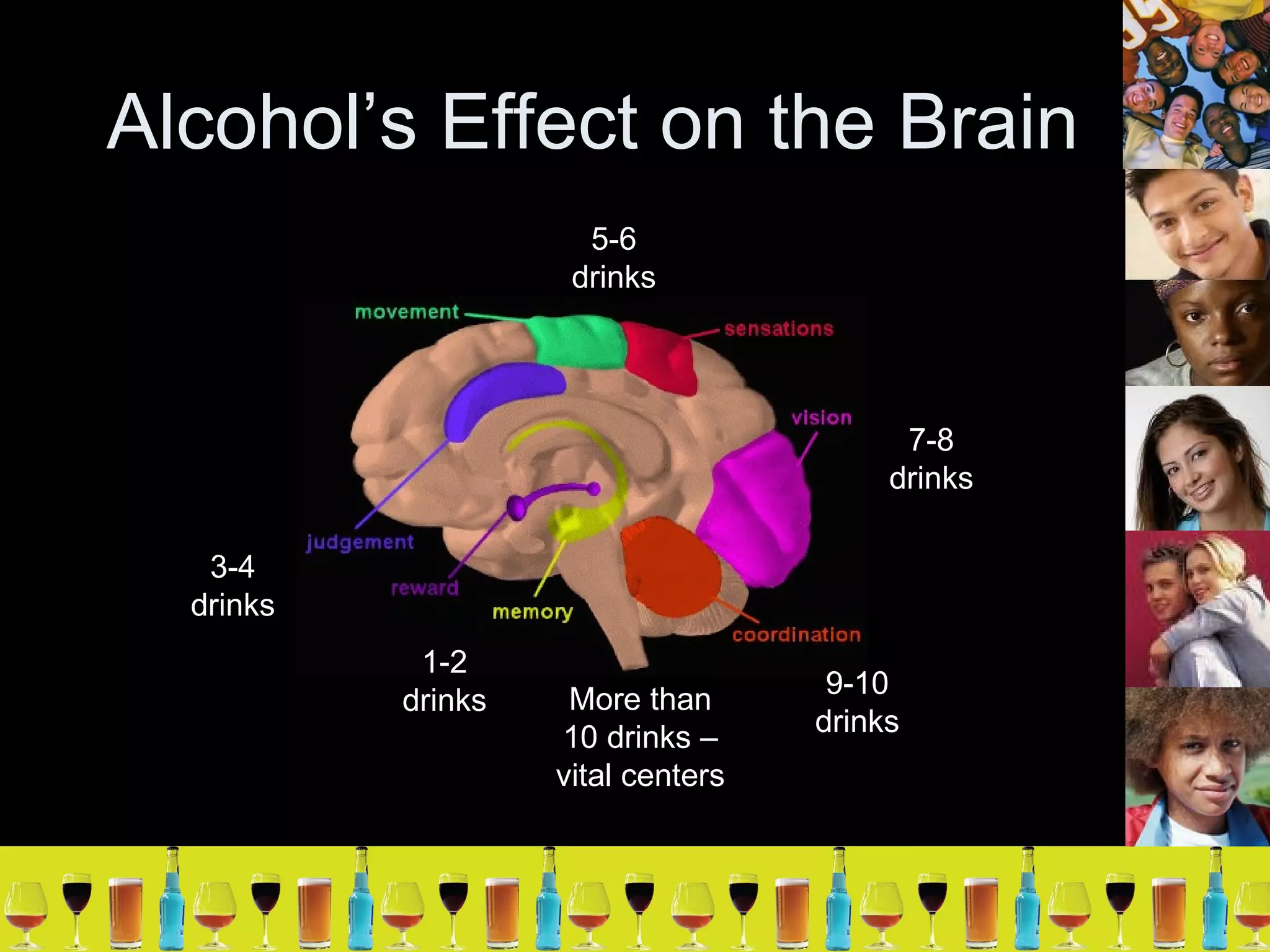
Alcohol’s Effect on the Brain 1-2 drinks 3-4 drinks 5-6 drinks 7-8 drinks 9-10 drinks More than 10 drinks –vital centers
Brain Areas Affected Corpus Callosum Hippocampus Prefrontal Cortex
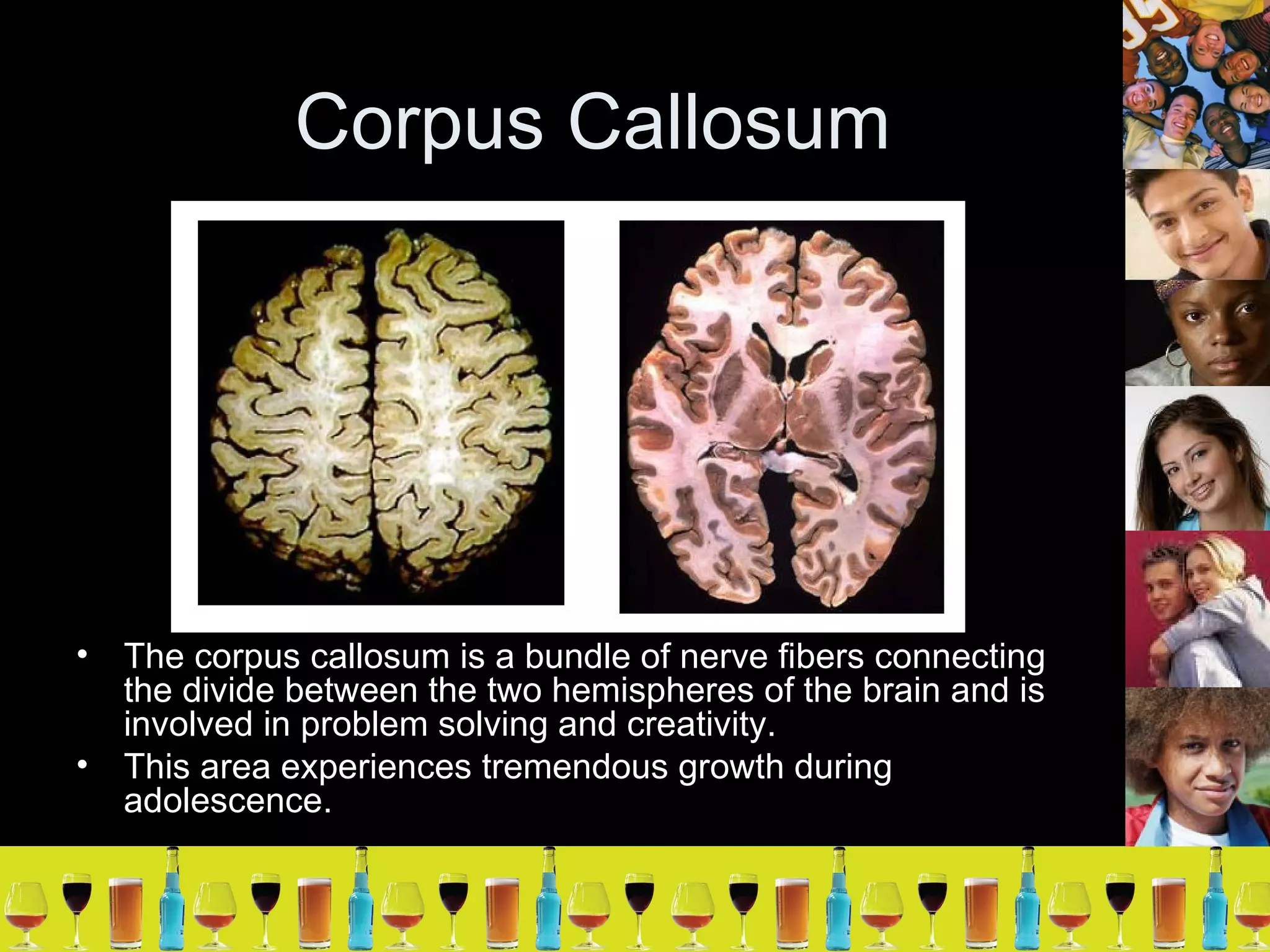
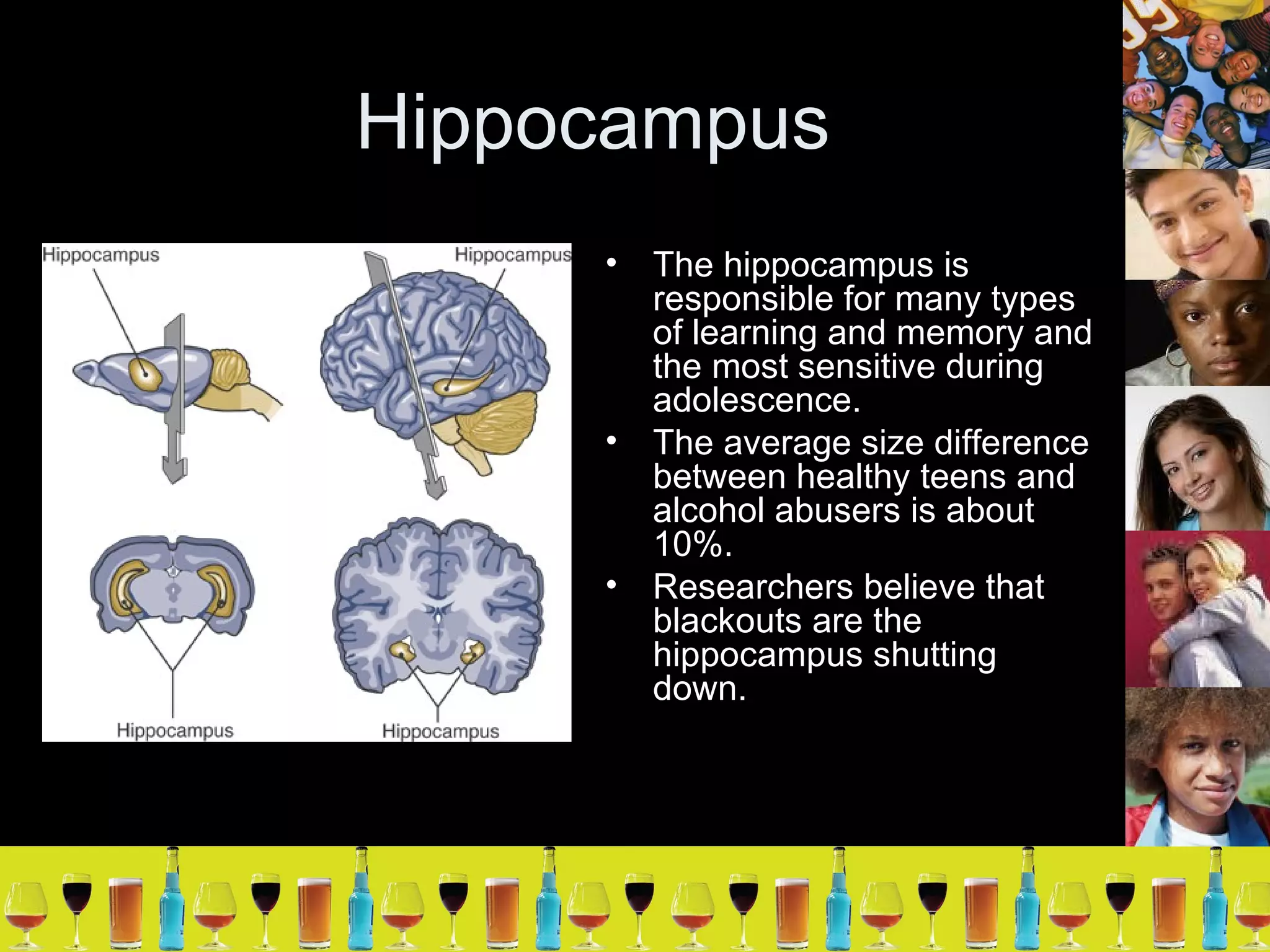
Corpus Callosum The corpus callosum is a bundle of nerve fibers connecting the divide between the two hemispheres of the brain and is involved in problem solving and creativity.  This area experiences tremendous growth during adolescence.
Hippocampus The hippocampus is responsible for many types of learning and memory and the most sensitive during adolescence. The average size difference between healthy teens and alcohol abusers is about 10%. Researchers believe that blackouts are the hippocampus shutting down.
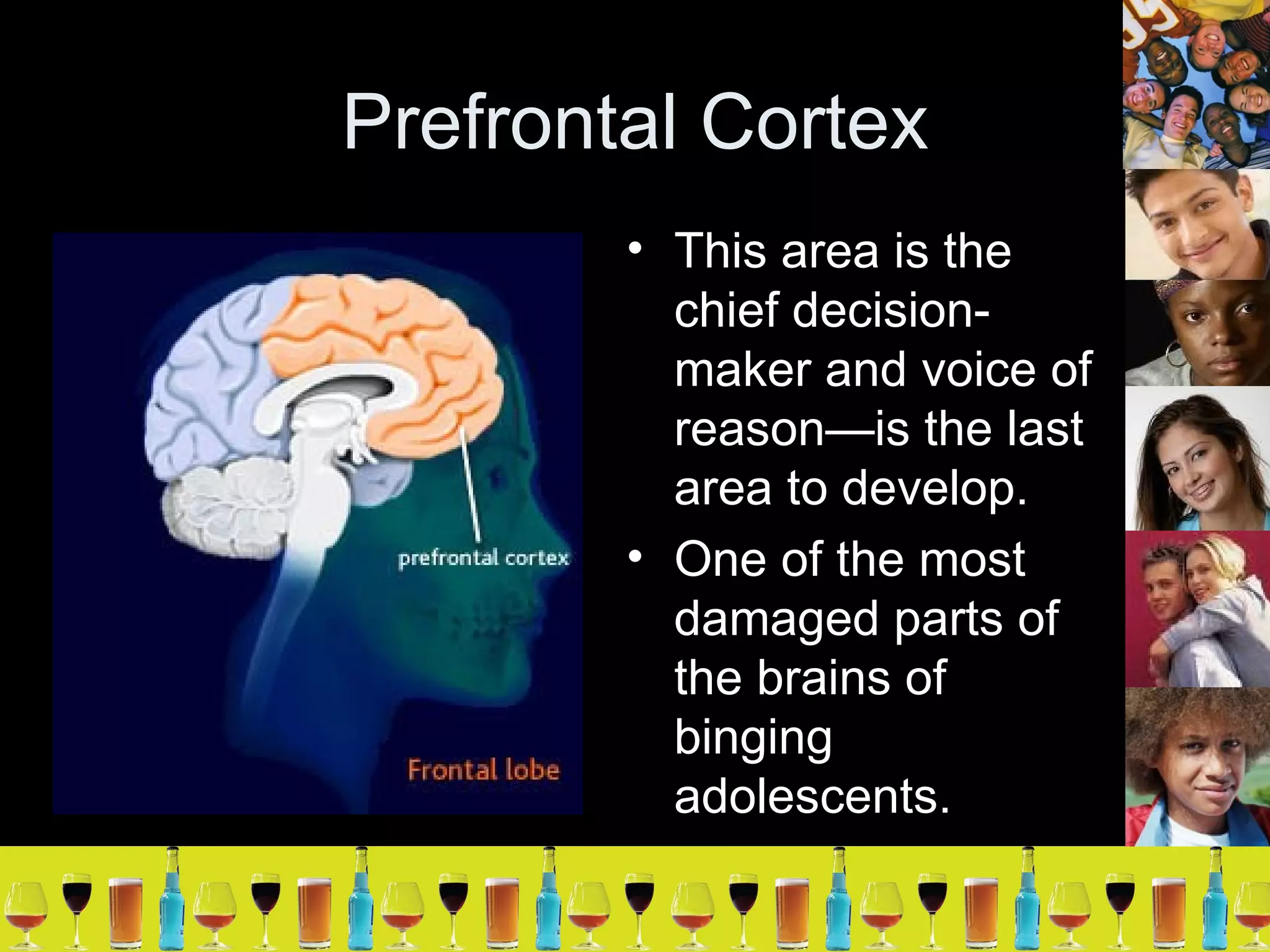
Prefrontal Cortex This area is the chief decision-maker and voice of reason—is the last area to develop. One of the most damaged parts of the brains of binging adolescents.
Cognitive Development
Memory Recall
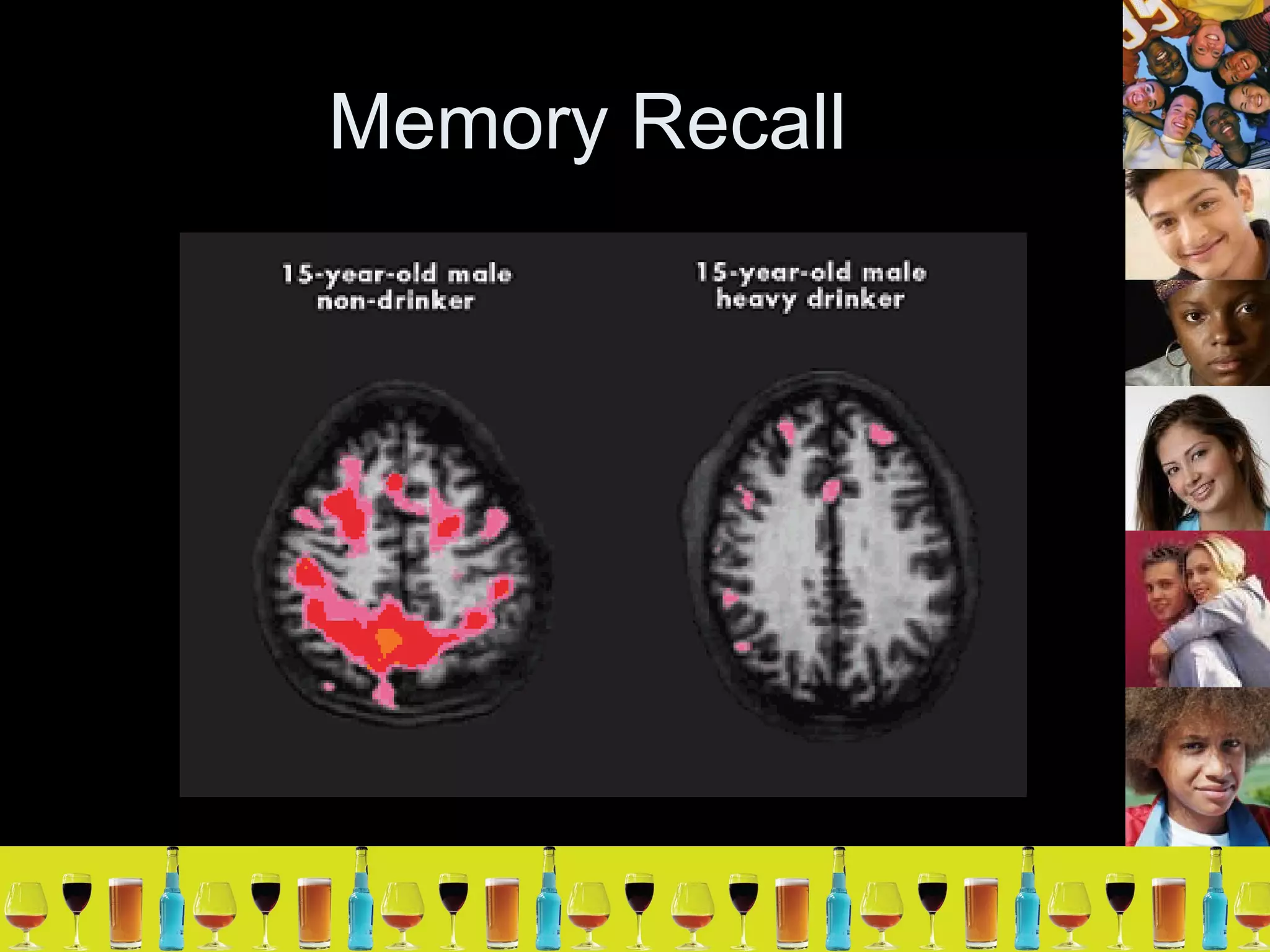
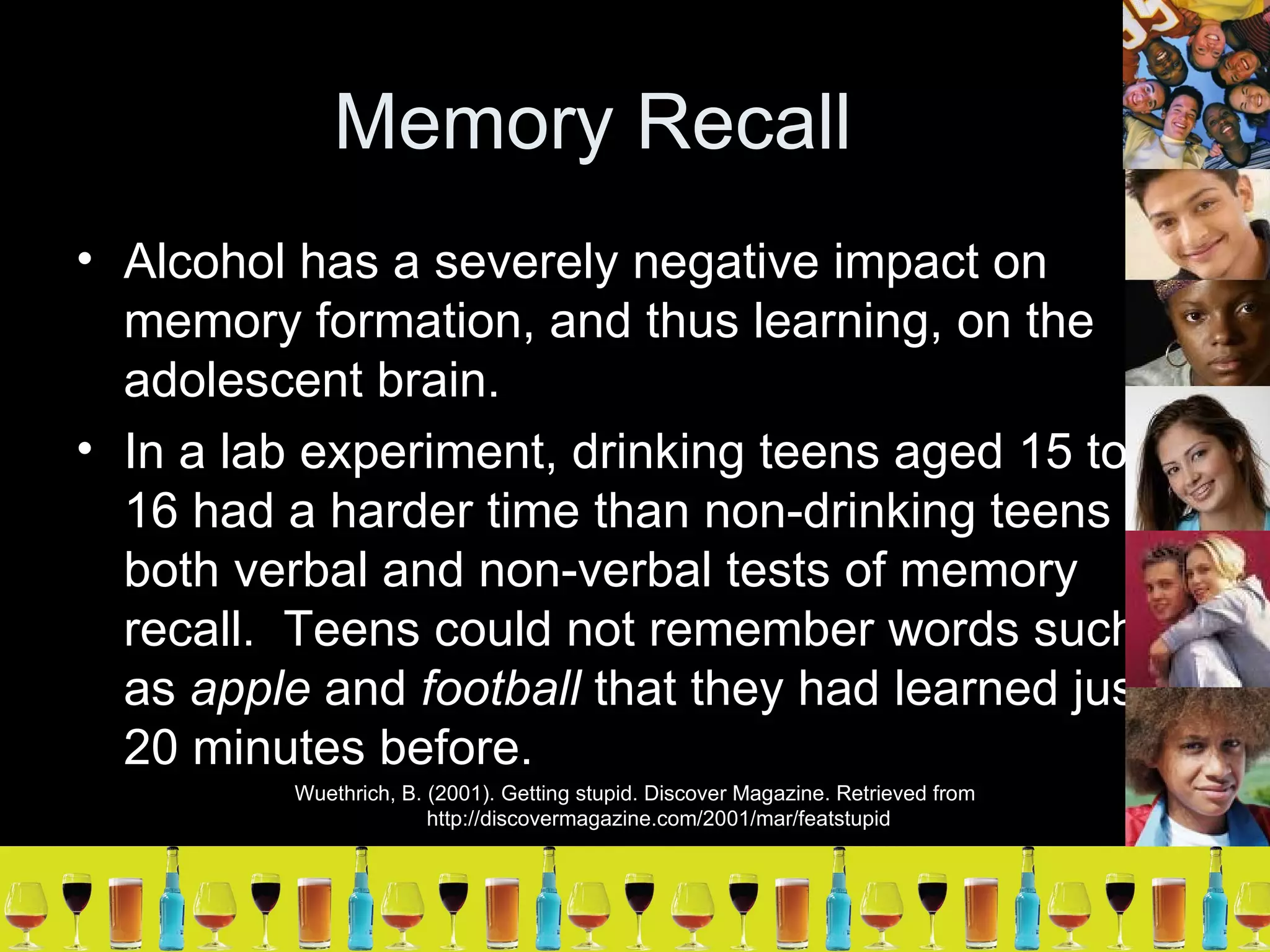
Memory Recall Alcohol has a severely negative impact on memory formation, and thus learning, on the adolescent brain. In a lab experiment, drinking teens aged 15 to 16 had a harder time than non-drinking teens in both verbal and non-verbal tests of memory recall.  Teens could not remember words such as  apple  and  football  that they had learned just 20 minutes before. Wuethrich, B. (2001). Getting stupid. Discover Magazine. Retrieved from http://discovermagazine.com/2001/mar/featstupid
Emotional and Social  Development
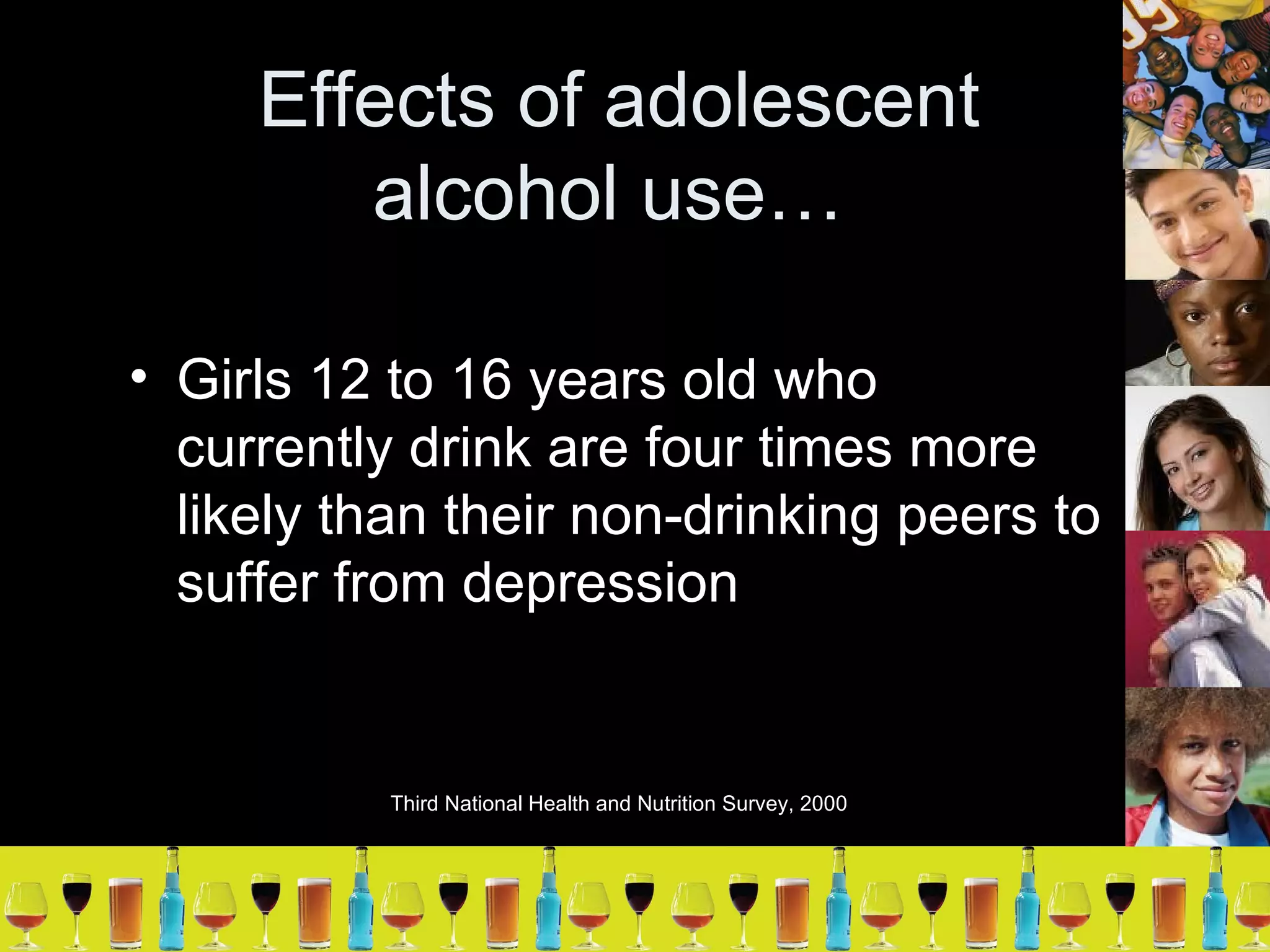
Effects of adolescent alcohol use…  Girls 12 to 16 years old who currently drink are four times more likely than their non-drinking peers to suffer from depression Third National Health and Nutrition Survey, 2000
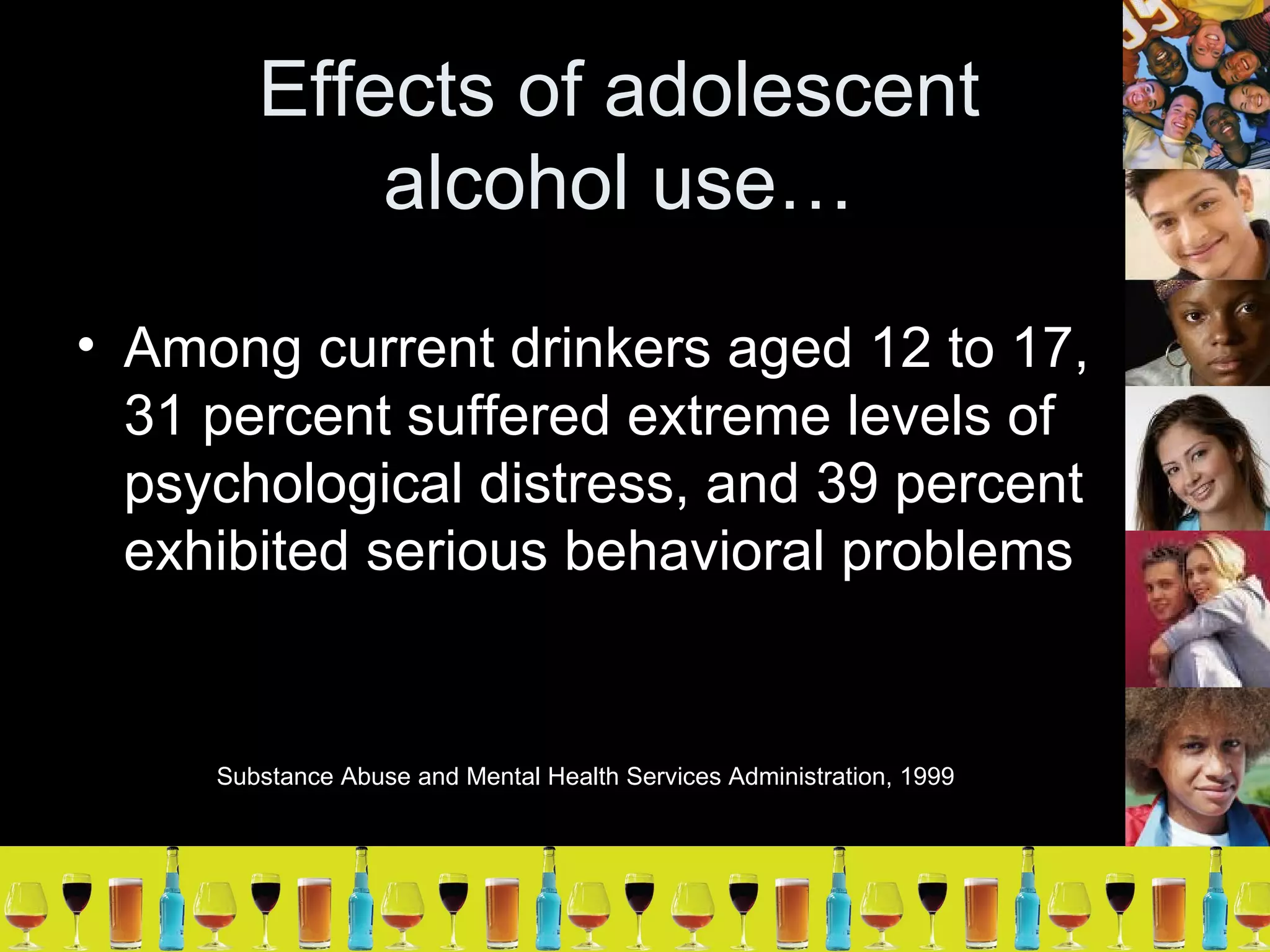
Effects of adolescent alcohol use… Among current drinkers aged 12 to 17, 31 percent suffered extreme levels of psychological distress, and 39 percent exhibited serious behavioral problems Substance Abuse and Mental Health Services Administration, 1999
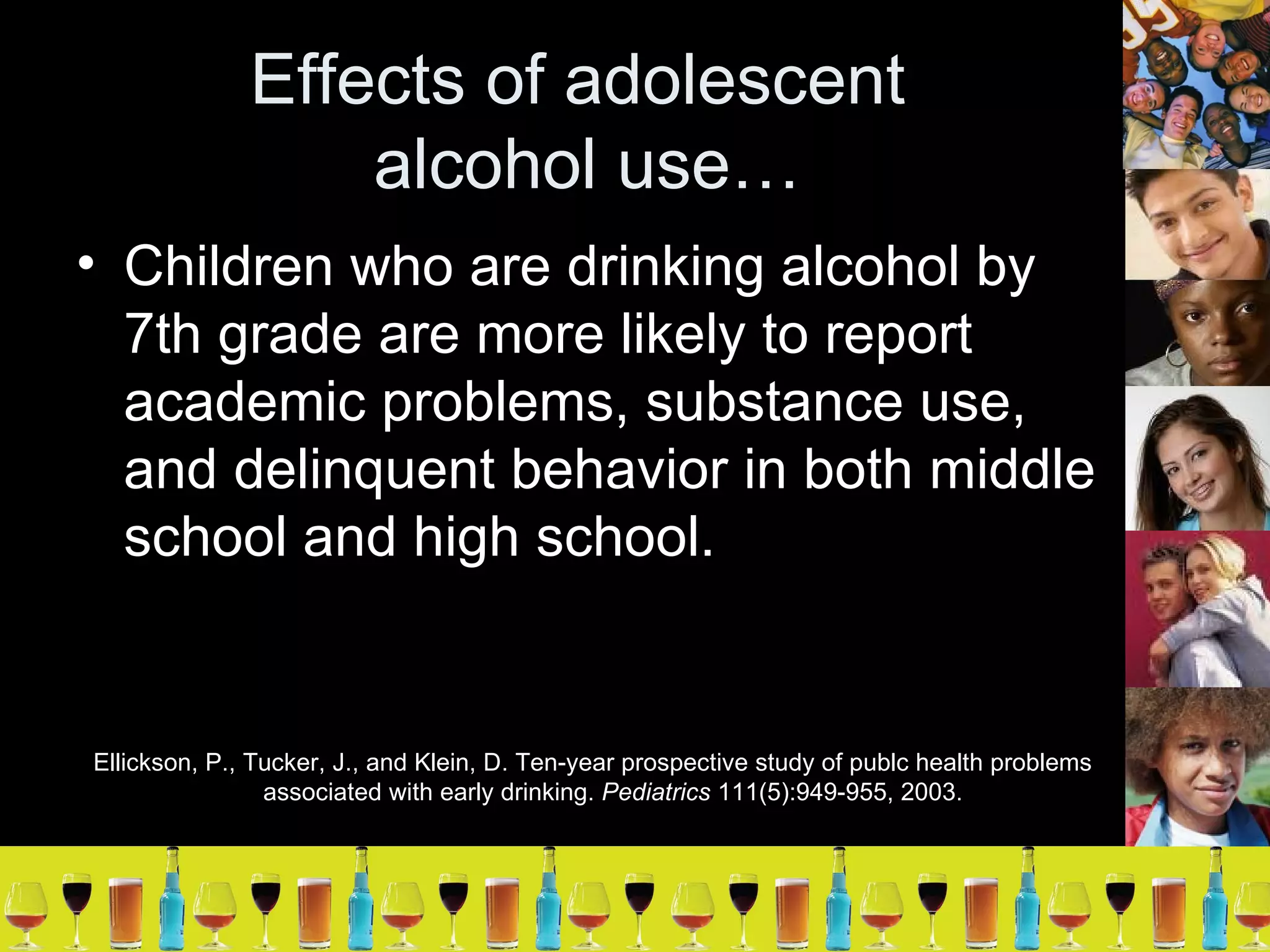
Effects of adolescent  alcohol use… Children who are drinking alcohol by 7th grade are more likely to report academic problems, substance use, and delinquent behavior in both middle school and high school. Ellickson, P., Tucker, J., and Klein, D. Ten-year prospective study of publc health problems associated with early drinking.  Pediatrics  111(5):949-955, 2003.
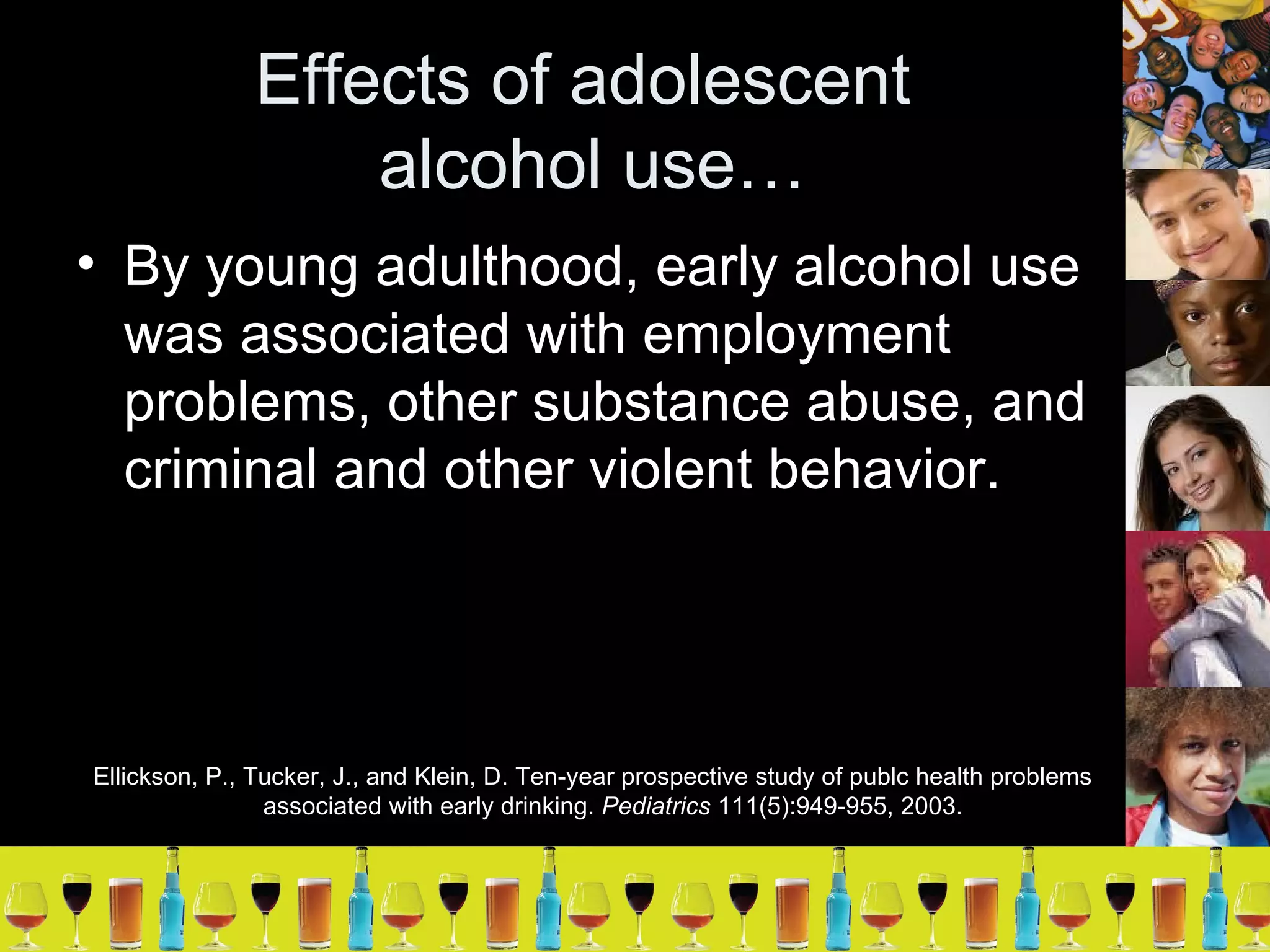
Effects of adolescent  alcohol use… By young adulthood, early alcohol use was associated with employment problems, other substance abuse, and criminal and other violent behavior. Ellickson, P., Tucker, J., and Klein, D. Ten-year prospective study of publc health problems associated with early drinking.  Pediatrics  111(5):949-955, 2003.
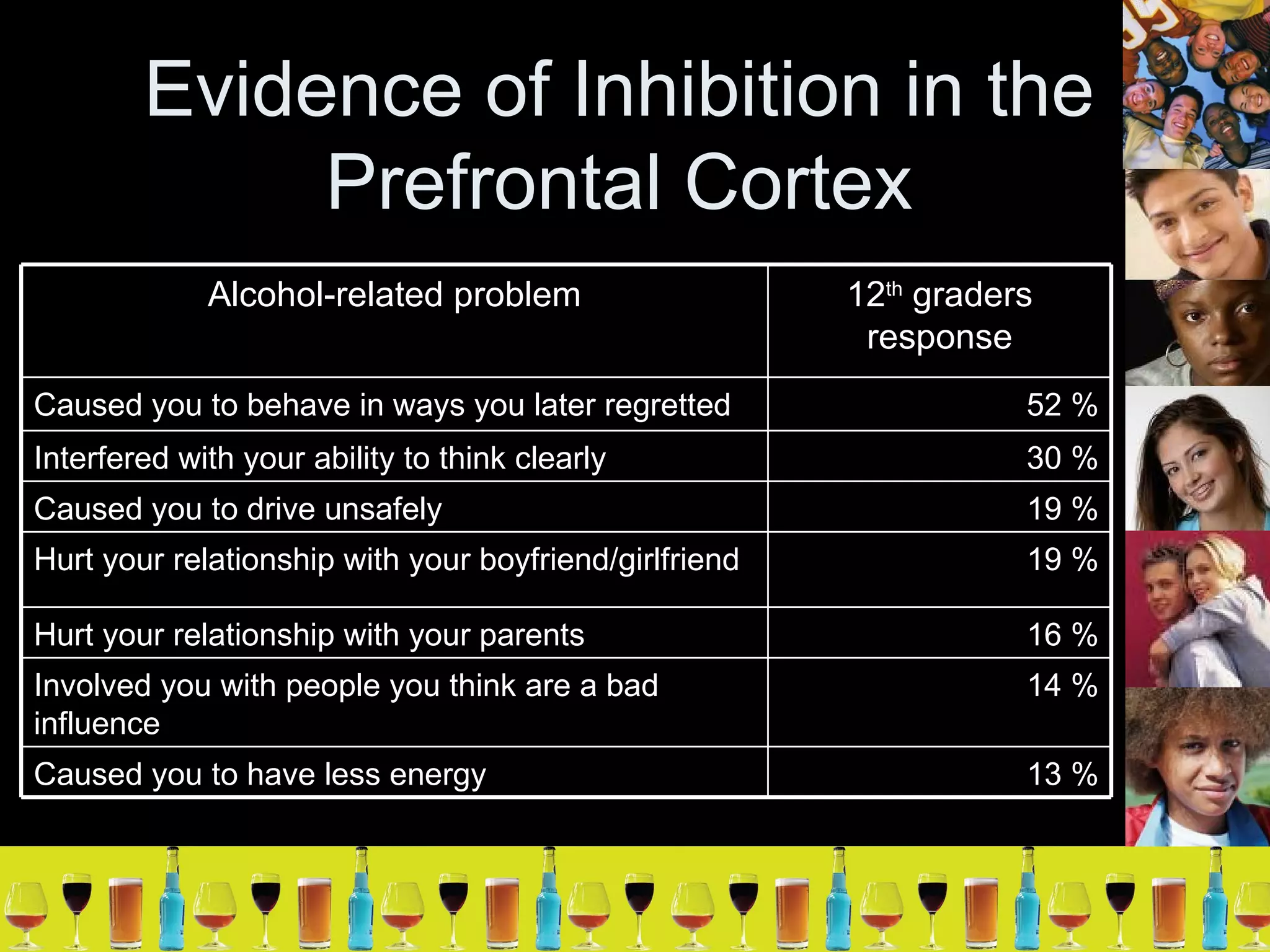
Evidence of Inhibition in the Prefrontal Cortex 13 % Caused you to have less energy 14 % Involved you with people you think are a bad influence 16 % Hurt your relationship with your parents 19 % Hurt your relationship with your boyfriend/girlfriend 19 % Caused you to drive unsafely 30 % Interfered with your ability to think clearly 52 % Caused you to behave in ways you later regretted  12 th  graders response Alcohol-related problem
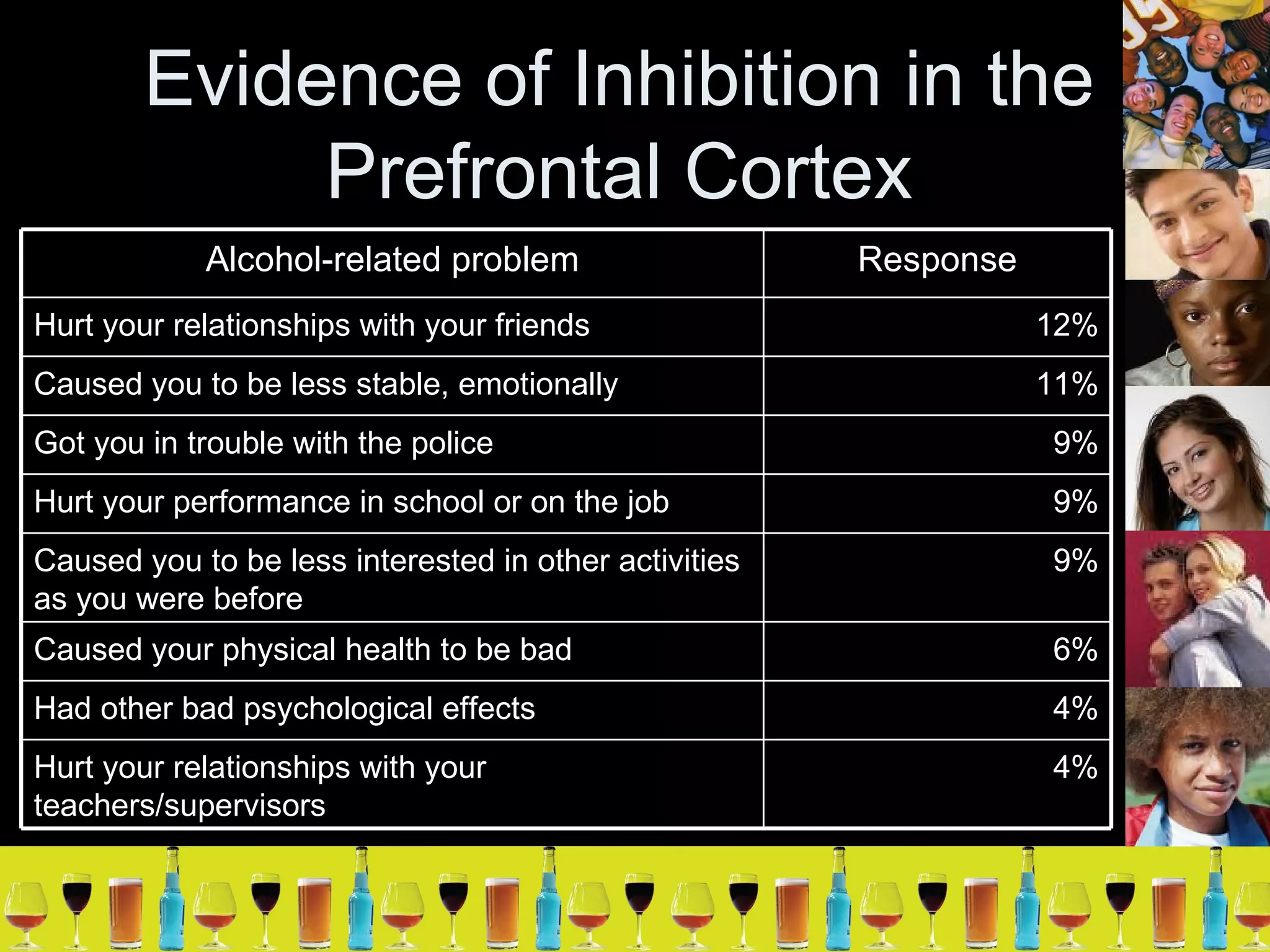
Evidence of Inhibition in the Prefrontal Cortex 4% Had other bad psychological effects 4% Hurt your relationships with your teachers/supervisors 6% Caused your physical health to be bad 9% Caused you to be less interested in other activities as you were before 9% Hurt your performance in school or on the job 9% Got you in trouble with the police 11% Caused you to be less stable, emotionally 12% Hurt your relationships with your friends Response Alcohol-related problem
Concluding Remarks

Alcohol and Adolescent Development

  • 1.
    Alcohol & theAdolescent Brain A Developmental Approach Kirstin Brown & Sarah Pahl
  • 2.
    Quick Facts Alcoholis by far the most used and abused drug among America’s teenagers.   According to a national survey, nearly one third (31.5%) of all high school students reported hazardous drinking (5+ drinks in one setting) during the 30 days preceding the survey. Youth Risk Behavior Surveillance – United States, 1999. June 09, 2000 / 49(SS05);1-96 Kann, L., S. Kinchen, B. Williams, J. Ross, R. Lowry, J. Grunbaum, and L. Kolbe., www.cdc.gov/mmwr/preview/mmwrhtml/ss4905a1.htm accessed June 19, 2001.
  • 3.
    Quick Facts 80%of all adolescents will experiment with alcohol by their senior year in high school. The brain undergoes a great amount of development during the teen years Repeated alcohol exposure might alter the path of teen brain development. White, A. M. (n.d.) Helping adolescents make the most of their changing brain. Retrieved from http://www.alcohol-info.com
  • 4.
    Quick Facts Teendrinking is the #1 source of adult alcoholism. Youth who begin drinking before age 15 are four times more likely to become an alcoholic. Teenagers who drink too much may lose up to 10% of their brainpower. Wuethrich, B. (2001). Getting stupid. Discover Magazine. Retrieved from http://discovermagazine.com/2001/mar/featstupid
  • 5.
    Alcohol Affects Adolescents…Physical Cognitive Emotional Social
  • 6.
  • 7.
    Alcohol’s Effect onthe Brain 1-2 drinks 3-4 drinks 5-6 drinks 7-8 drinks 9-10 drinks More than 10 drinks –vital centers
  • 8.
    Brain Areas AffectedCorpus Callosum Hippocampus Prefrontal Cortex
  • 9.
    Corpus Callosum Thecorpus callosum is a bundle of nerve fibers connecting the divide between the two hemispheres of the brain and is involved in problem solving and creativity. This area experiences tremendous growth during adolescence.
  • 10.
    Hippocampus The hippocampusis responsible for many types of learning and memory and the most sensitive during adolescence. The average size difference between healthy teens and alcohol abusers is about 10%. Researchers believe that blackouts are the hippocampus shutting down.
  • 11.
    Prefrontal Cortex Thisarea is the chief decision-maker and voice of reason—is the last area to develop. One of the most damaged parts of the brains of binging adolescents.
  • 12.
  • 13.
  • 14.
    Memory Recall Alcoholhas a severely negative impact on memory formation, and thus learning, on the adolescent brain. In a lab experiment, drinking teens aged 15 to 16 had a harder time than non-drinking teens in both verbal and non-verbal tests of memory recall. Teens could not remember words such as apple and football that they had learned just 20 minutes before. Wuethrich, B. (2001). Getting stupid. Discover Magazine. Retrieved from http://discovermagazine.com/2001/mar/featstupid
  • 15.
  • 16.
    Effects of adolescentalcohol use… Girls 12 to 16 years old who currently drink are four times more likely than their non-drinking peers to suffer from depression Third National Health and Nutrition Survey, 2000
  • 17.
    Effects of adolescentalcohol use… Among current drinkers aged 12 to 17, 31 percent suffered extreme levels of psychological distress, and 39 percent exhibited serious behavioral problems Substance Abuse and Mental Health Services Administration, 1999
  • 18.
    Effects of adolescent alcohol use… Children who are drinking alcohol by 7th grade are more likely to report academic problems, substance use, and delinquent behavior in both middle school and high school. Ellickson, P., Tucker, J., and Klein, D. Ten-year prospective study of publc health problems associated with early drinking. Pediatrics 111(5):949-955, 2003.
  • 19.
    Effects of adolescent alcohol use… By young adulthood, early alcohol use was associated with employment problems, other substance abuse, and criminal and other violent behavior. Ellickson, P., Tucker, J., and Klein, D. Ten-year prospective study of publc health problems associated with early drinking. Pediatrics 111(5):949-955, 2003.
  • 20.
    Evidence of Inhibitionin the Prefrontal Cortex 13 % Caused you to have less energy 14 % Involved you with people you think are a bad influence 16 % Hurt your relationship with your parents 19 % Hurt your relationship with your boyfriend/girlfriend 19 % Caused you to drive unsafely 30 % Interfered with your ability to think clearly 52 % Caused you to behave in ways you later regretted 12 th graders response Alcohol-related problem
  • 21.
    Evidence of Inhibitionin the Prefrontal Cortex 4% Had other bad psychological effects 4% Hurt your relationships with your teachers/supervisors 6% Caused your physical health to be bad 9% Caused you to be less interested in other activities as you were before 9% Hurt your performance in school or on the job 9% Got you in trouble with the police 11% Caused you to be less stable, emotionally 12% Hurt your relationships with your friends Response Alcohol-related problem
  • 22.