Brain
Development
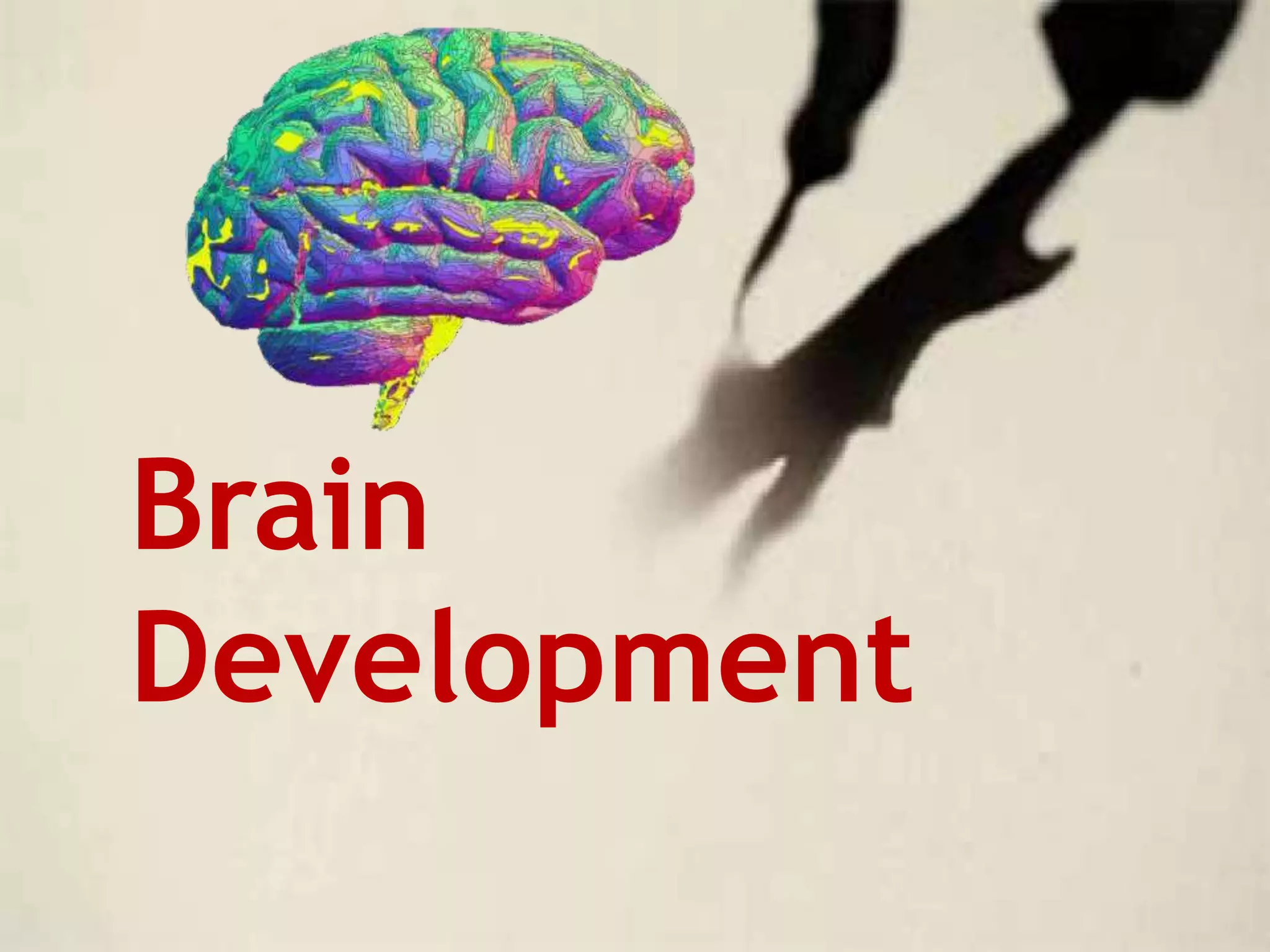
Brain Development
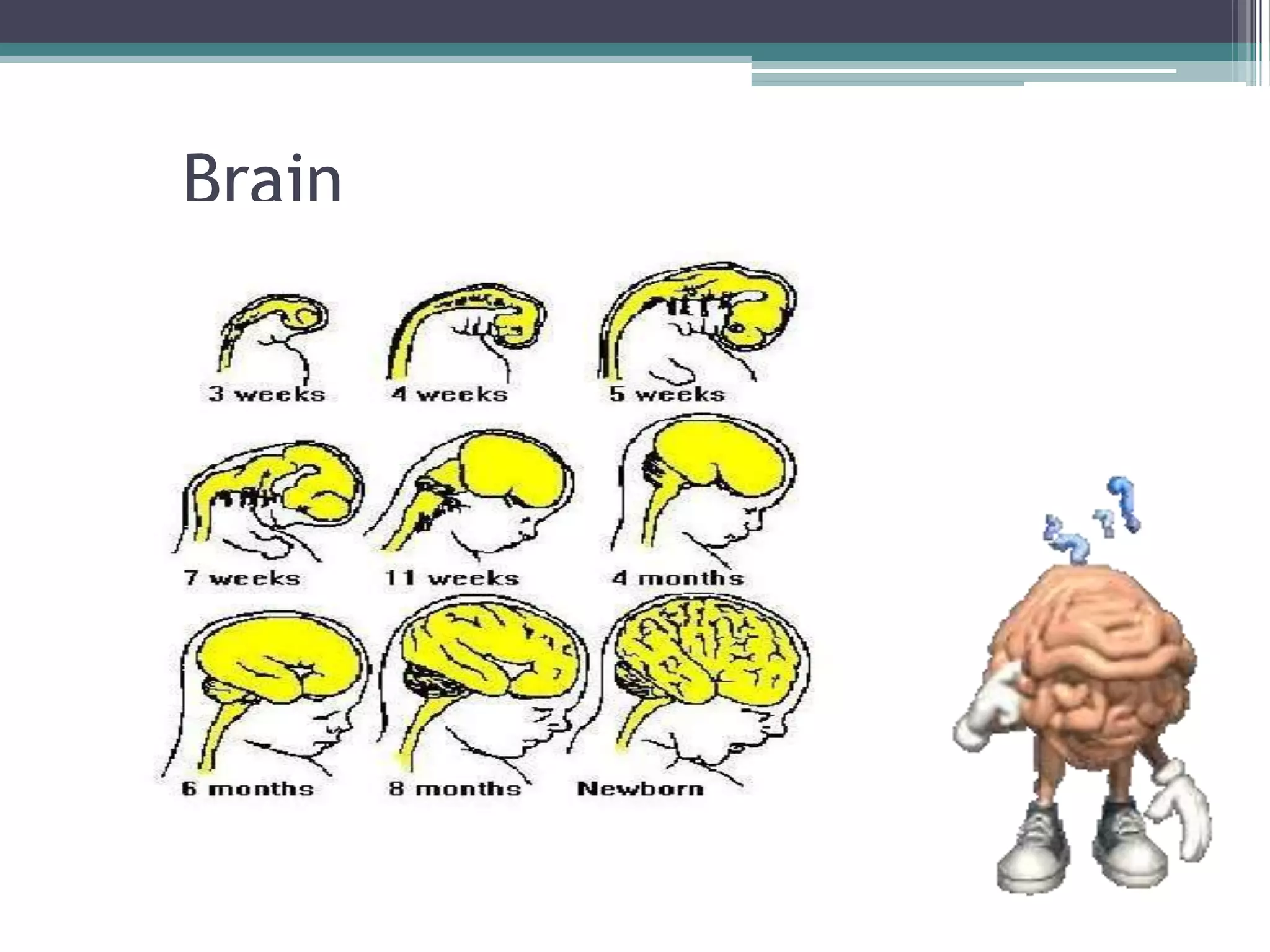
• It begins shortly after conception and
continuous through the life span
• Maybe affected through sensing pathways by
sound, touch, vision, smell, and thoughts.
• The important aspects of brain is the ability to
change during young age.
The Brain
Brain
The Human Brain
• Frontal lobe –
voluntary
movement,thinking,
and personality
• Parietal lobe - speech,
language, attention,
sensation, motor
control
• Occipital Lobe- Vision
• Temporal Lobe -
hearing, language and
memory processing
Early Childhood
Rapid change of brain
Process of myelination continue and brain size
increase
Brain Plasticity
Flexible and prepared to learn
Blooming and Pruning
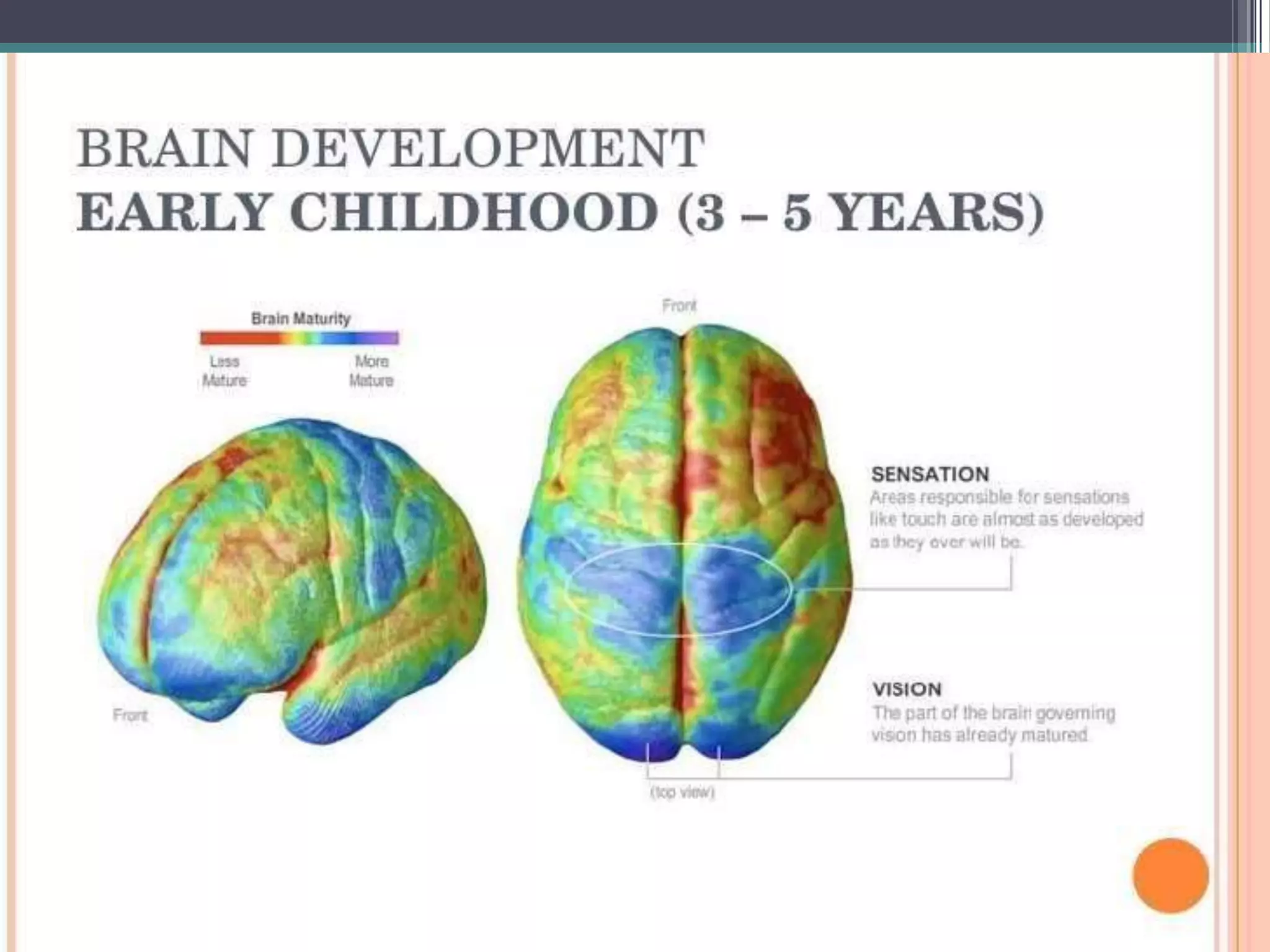
Early Childhood
3 years – Most rapid changes due to
bombardment of experiences
- Brain is ¾ of adult size
- 1090 grams for famale brain
- 1270 grams for male brain
Early Childhood
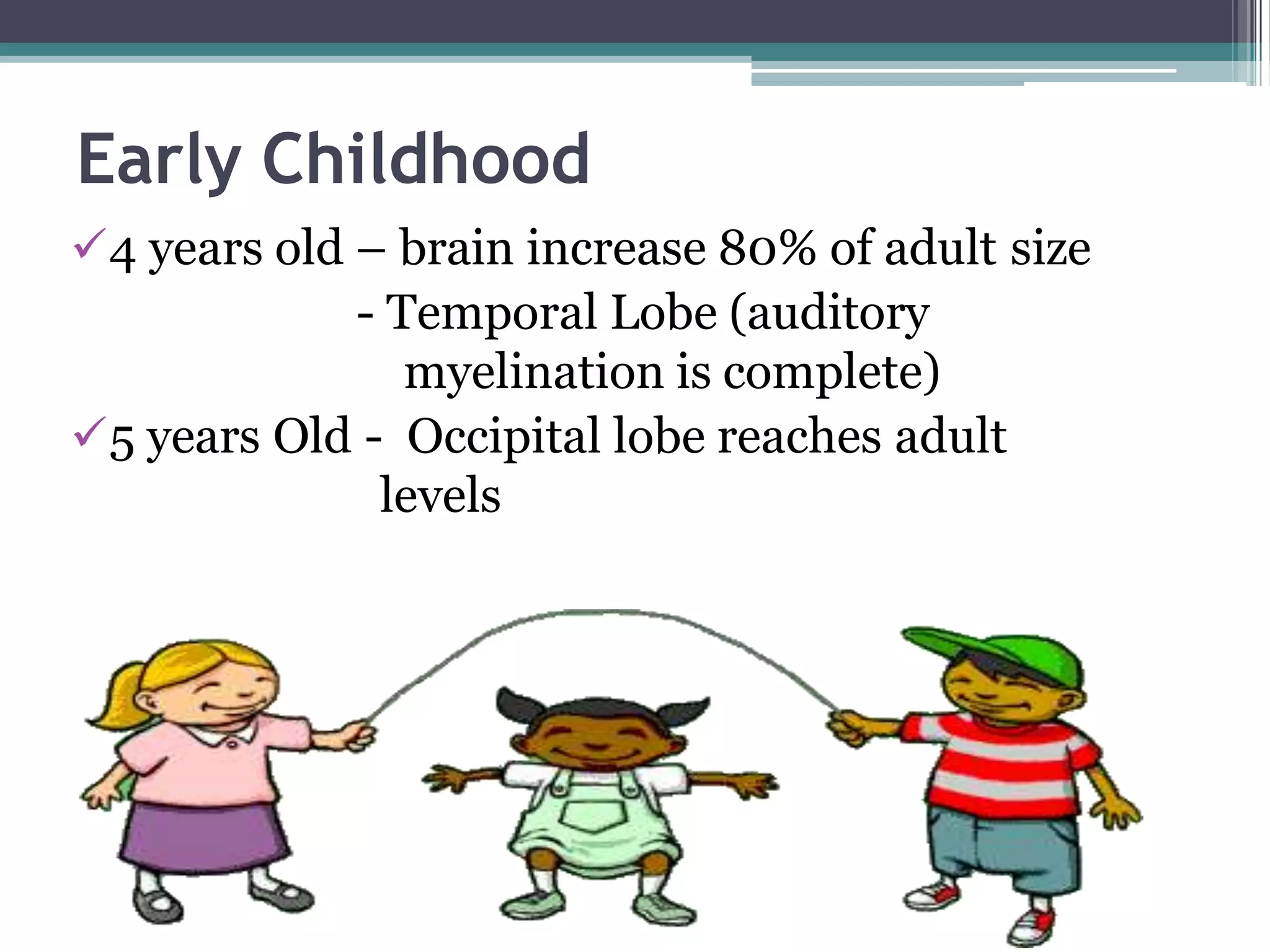
4 years old – brain increase 80% of adult size
- Temporal Lobe (auditory
myelination is complete)
5 years Old - Occipital lobe reaches adult
levels
Early Childhood
Effects of Neglect and/ or abuse
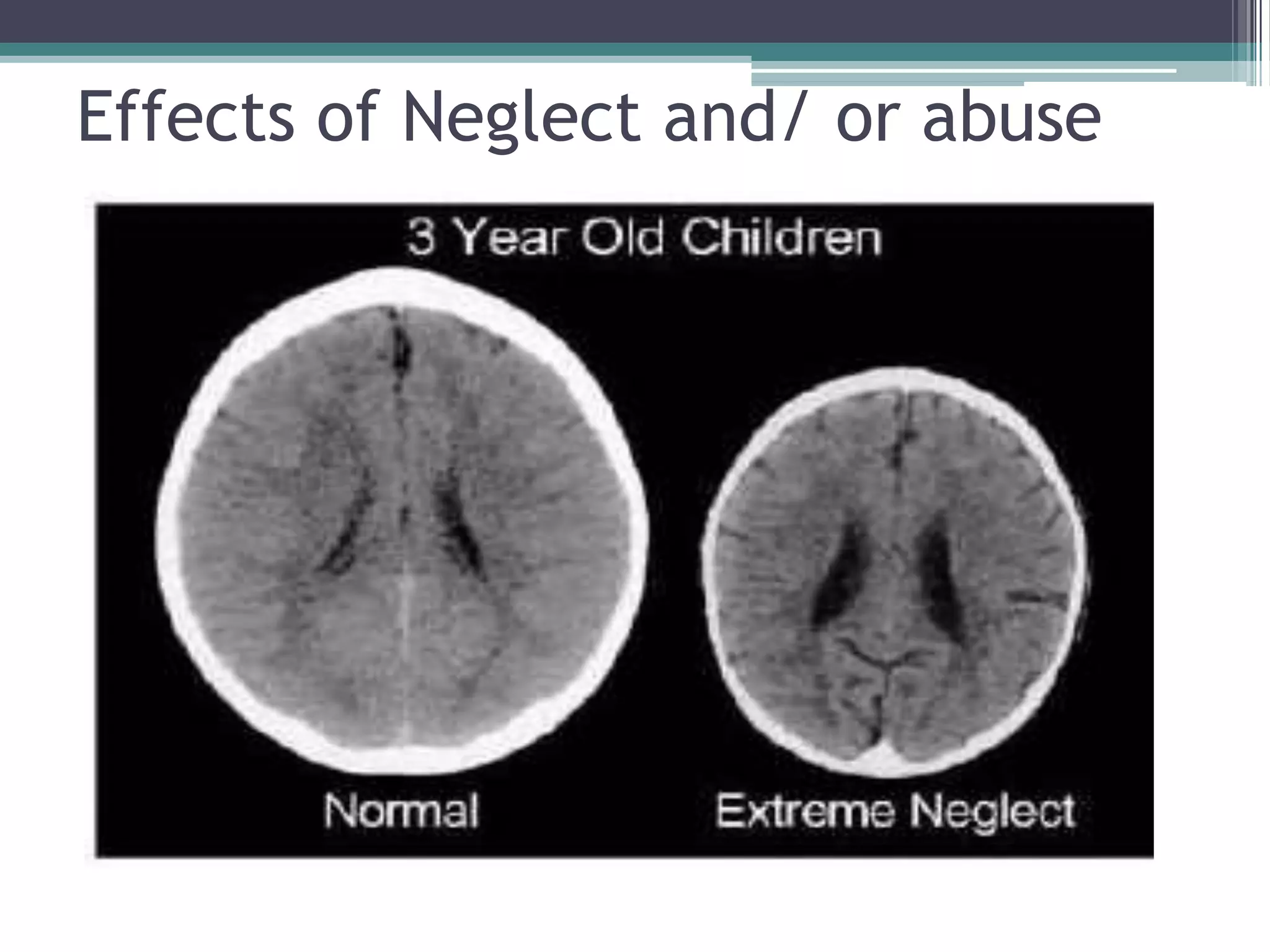
-the frontal lobe develops improperly when
deprived of affection and positive emotional
experiences
-Lack of stimulation causes
neurons in the brain to die off
Effects of Neglect and/ or abuse
Middle Childhood
• Brain volume stabilizes
Weight : 1440 grams in male
1260 grams in female
6- 7 years old –maturation of occipital lobe
- Contrast sensitivity and peripheral
vision reach adult levels
8 years old- maturation of temporal lobe
Brain maintain flexible for future learning
Adolescence
• Transition from childhood to adulthood
• Social, psychological and emotional changes
accompany by puberty
• Selective pruning takes place
- Frontal lobe loses 3%
• Myelination- allows to operate more effeciency
• Emotional Control
Amygdala- Holds emotional memory
- develops before frontal develops
Adolescence
• Teens experience a greater desire and need to
thrill-seeking than any other age group
Genetics and Environment
• There is an evident that early experience can
dramatically alter the genes are expressed in
developing brain
• Teens experience is a greater desire & need to
thrill-seeking than any other age group
References
• http://bbbgeorgia.org/brainTimeAdolescence.p
hp
• http://www.slideshare.net/StefanieMarshall/the
-brain-4557772?qid=6bedbead-f7b2-46f8-b835-
4647c6a03ff4&v=&b=&from_search=1
• http://www.slideshare.net/vacagodx/infant-
brain-development-2891731
• http://www.slideshare.net/nationalsafeplace/ad
olescent-brain-development-and-its-
effects?qid=6bedbead-f7b2-46f8-b835-
4647c6a03ff4&v=&b=&from_search=4
References
• http://www.slideshare.net/vacagodx/infant-
brain-development-2891731?next_slideshow=1
Brain Development.pptx

Brain Development.pptx