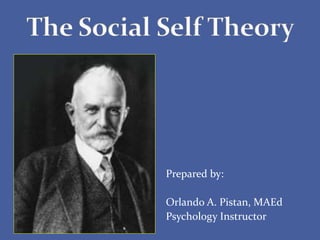

Prepared by:
Orlando A. Pistan, MAEd
Psychology Instructor
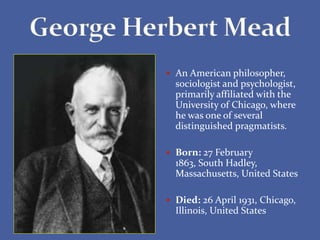
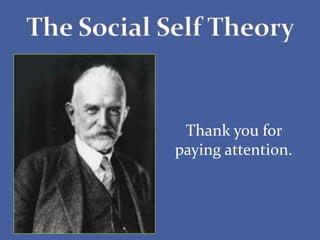
 An American philosopher,
sociologist and psychologist,
primarily affiliated with the
University of Chicago, where
he was one of several
distinguished pragmatists.
 Born: 27 February
1863, South Hadley,
Massachusetts, United States
 Died: 26 April 1931, Chicago,
Illinois, United States
His theory of the social self is based on the
perspective that the self emerges from social
interactions, such as:
1. Observing others;
2. Responding to other’s opinions about one self,
and;
3. Internalizing external opinions;
4. Internal feelings about one self.
Mead disagreed on the view of other
sociologists and psychologist that the self was
based on biological factors and inherited
traits.
According to Mead, the self is not there from
birth, but it is developed over time from social
experiences and activities.
Language
Play
Games
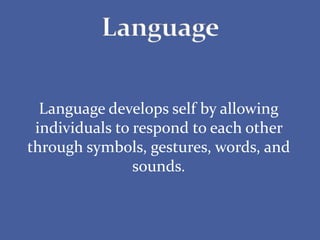
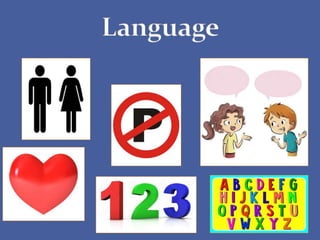
Language develops self by allowing
individuals to respond to each other
through symbols, gestures, words, and
sounds.
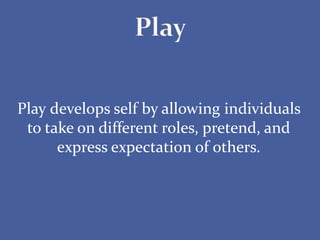
Play develops self by allowing individuals
to take on different roles, pretend, and
express expectation of others.
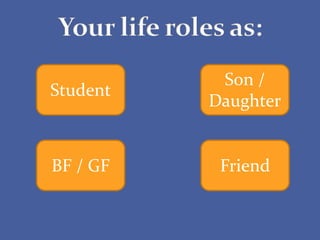
Student
Son /
Daughter
BF / GF Friend
Games develops self by allowing
individuals to understand and adhere to
the rules of the activity. Rules must be
abide in order to win, or be successful in
an activity.
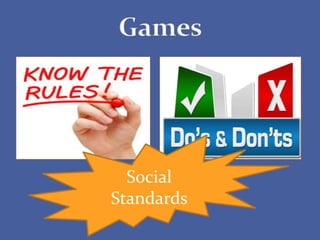
Social
Standards
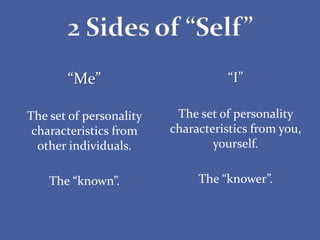
“Me”
The set of personality
characteristics from
other individuals.
The “known”.
“I”
The set of personality
characteristics from you,
yourself.
The “knower”.
 Human beings learn the expectations of society
through socialization.
 Socialization is different based on race, gender and
class.
 Socialization serves as “social control”, through
institutions and coercion.
Social control refers to the many ways in which our
behavior, thoughts, and appearance are regulated by the
norms, rules, laws, and social structures of
society. Social control is a necessary component
of social order, for society could not exist without it.
Coercion- the practice of persuading someone to do
something by using force or threats.
 Punishment
 Imprisonment
 Isolation
Family
Media
Peers
Religion
Schools
 The basic unit of the
society.
 Primarily introduce
children to the
expectations of the
society.
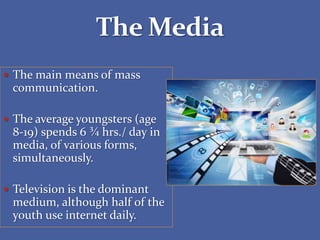
 The main means of mass
communication.
 The average youngsters (age
8-19) spends 6 ¾ hrs./ day in
media, of various forms,
simultaneously.
 Television is the dominant
medium, although half of the
youth use internet daily.
 Print media
 Books
 Magazines
 Newspaper
 Poster
 Slogan
 Flyers
 Electronic media
 TV
 Radio
 Internet
 Advertisements
 Videos
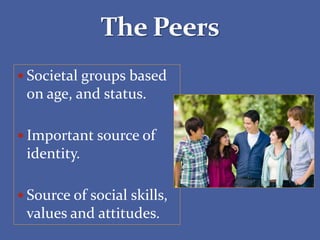
 Societal groups based
on age, and status.
 Important source of
identity.
 Source of social skills,
values and attitudes.
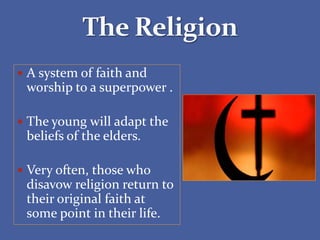
 A system of faith and
worship to a superpower .
 The young will adapt the
beliefs of the elders.
 Very often, those who
disavow religion return to
their original faith at
some point in their life.
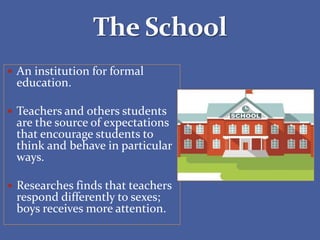
 An institution for formal
education.
 Teachers and others students
are the source of expectations
that encourage students to
think and behave in particular
ways.
 Researches finds that teachers
respond differently to sexes;
boys receives more attention.
Thank you for
paying attention.

The Social Self - George Mead

  • 1.
    Prepared by: Orlando A.Pistan, MAEd Psychology Instructor
  • 2.
     An Americanphilosopher, sociologist and psychologist, primarily affiliated with the University of Chicago, where he was one of several distinguished pragmatists.  Born: 27 February 1863, South Hadley, Massachusetts, United States  Died: 26 April 1931, Chicago, Illinois, United States
  • 3.
    His theory ofthe social self is based on the perspective that the self emerges from social interactions, such as: 1. Observing others; 2. Responding to other’s opinions about one self, and; 3. Internalizing external opinions; 4. Internal feelings about one self.
  • 4.
    Mead disagreed onthe view of other sociologists and psychologist that the self was based on biological factors and inherited traits. According to Mead, the self is not there from birth, but it is developed over time from social experiences and activities.
  • 5.
  • 6.
    Language develops selfby allowing individuals to respond to each other through symbols, gestures, words, and sounds.
  • 8.
    Play develops selfby allowing individuals to take on different roles, pretend, and express expectation of others.
  • 9.
  • 10.
    Games develops selfby allowing individuals to understand and adhere to the rules of the activity. Rules must be abide in order to win, or be successful in an activity.
  • 11.
  • 13.
    “Me” The set ofpersonality characteristics from other individuals. The “known”. “I” The set of personality characteristics from you, yourself. The “knower”.
  • 14.
     Human beingslearn the expectations of society through socialization.  Socialization is different based on race, gender and class.  Socialization serves as “social control”, through institutions and coercion.
  • 15.
    Social control refersto the many ways in which our behavior, thoughts, and appearance are regulated by the norms, rules, laws, and social structures of society. Social control is a necessary component of social order, for society could not exist without it. Coercion- the practice of persuading someone to do something by using force or threats.  Punishment  Imprisonment  Isolation
  • 16.
  • 17.
     The basicunit of the society.  Primarily introduce children to the expectations of the society.
  • 18.
     The mainmeans of mass communication.  The average youngsters (age 8-19) spends 6 ¾ hrs./ day in media, of various forms, simultaneously.  Television is the dominant medium, although half of the youth use internet daily.
  • 19.
     Print media Books  Magazines  Newspaper  Poster  Slogan  Flyers  Electronic media  TV  Radio  Internet  Advertisements  Videos
  • 20.
     Societal groupsbased on age, and status.  Important source of identity.  Source of social skills, values and attitudes.
  • 21.
     A systemof faith and worship to a superpower .  The young will adapt the beliefs of the elders.  Very often, those who disavow religion return to their original faith at some point in their life.
  • 22.
     An institutionfor formal education.  Teachers and others students are the source of expectations that encourage students to think and behave in particular ways.  Researches finds that teachers respond differently to sexes; boys receives more attention.
  • 23.