Downloaded 130 times
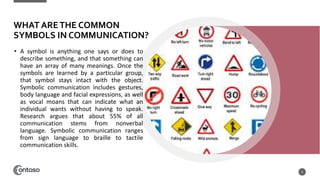




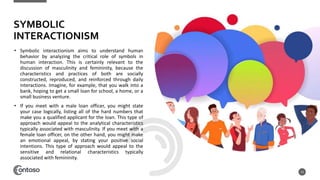
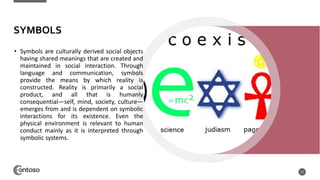
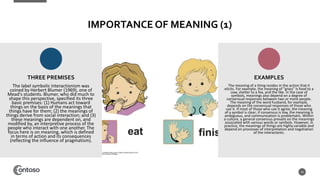
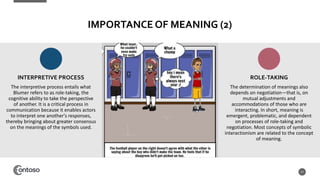
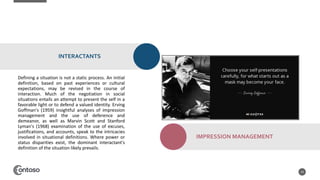



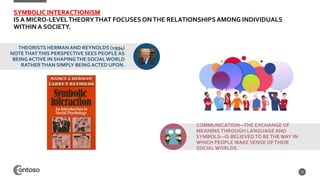
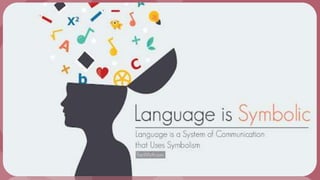

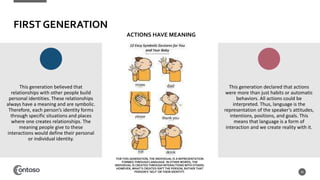


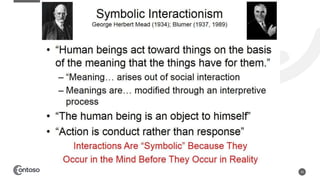
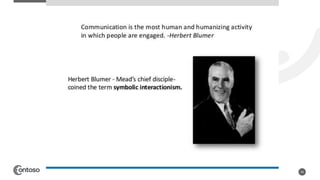
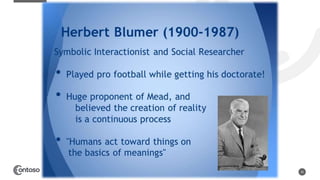
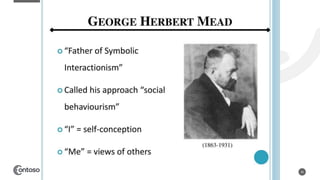

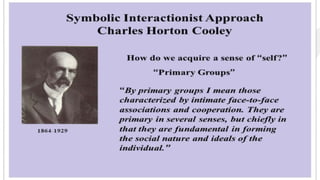

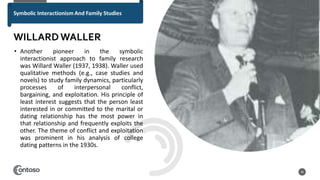
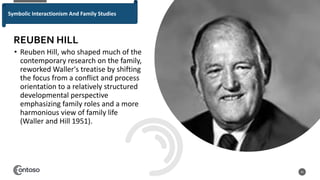
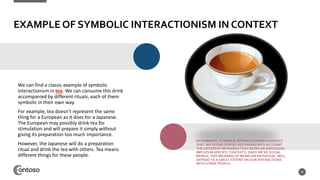
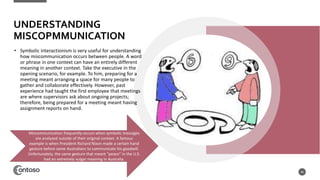




Symbolic interactionism is a sociological theory that focuses on the relationships among individuals within a society. Communication, the exchange of meaning through language and symbols, is believed to be how people make sense of their social worlds. There are two main generations of symbolic interactionism. The first sees actions as always having meaning, while the second sees social life as a performance of roles. Proponents of symbolic interactionism, such as George Herbert Mead, Charles Cooley, and Erving Goffman, studied how meanings and identities emerge through social interaction and the interpretive processes used by individuals.


