UTS: UNDERSTANDING THE SELF
LESSON 2
Sociology
 the study of human behavior. Sociology refers
to social behavior, society, patterns of social
relationships, social interaction, and culture that
surrounds everyday life.
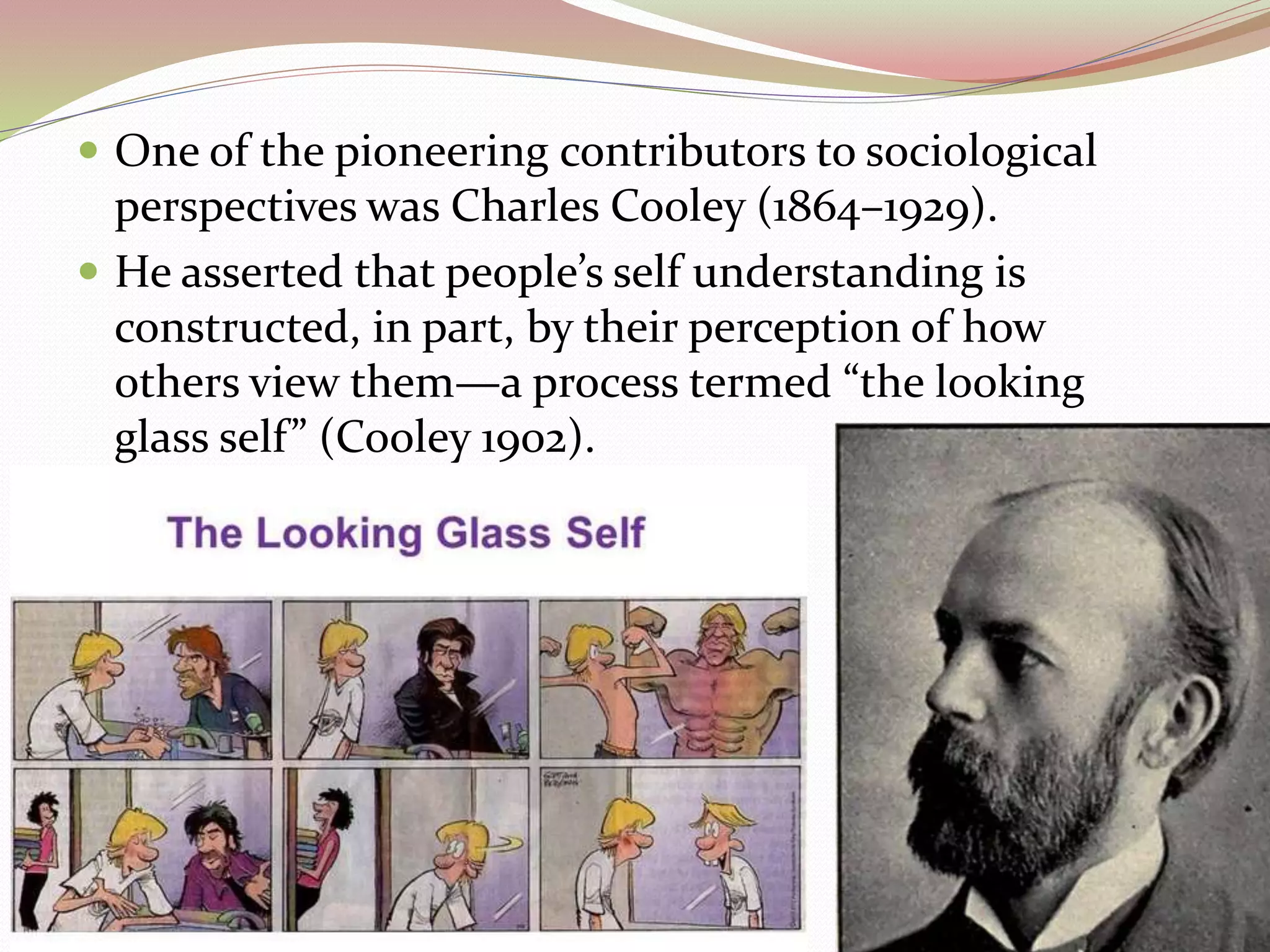
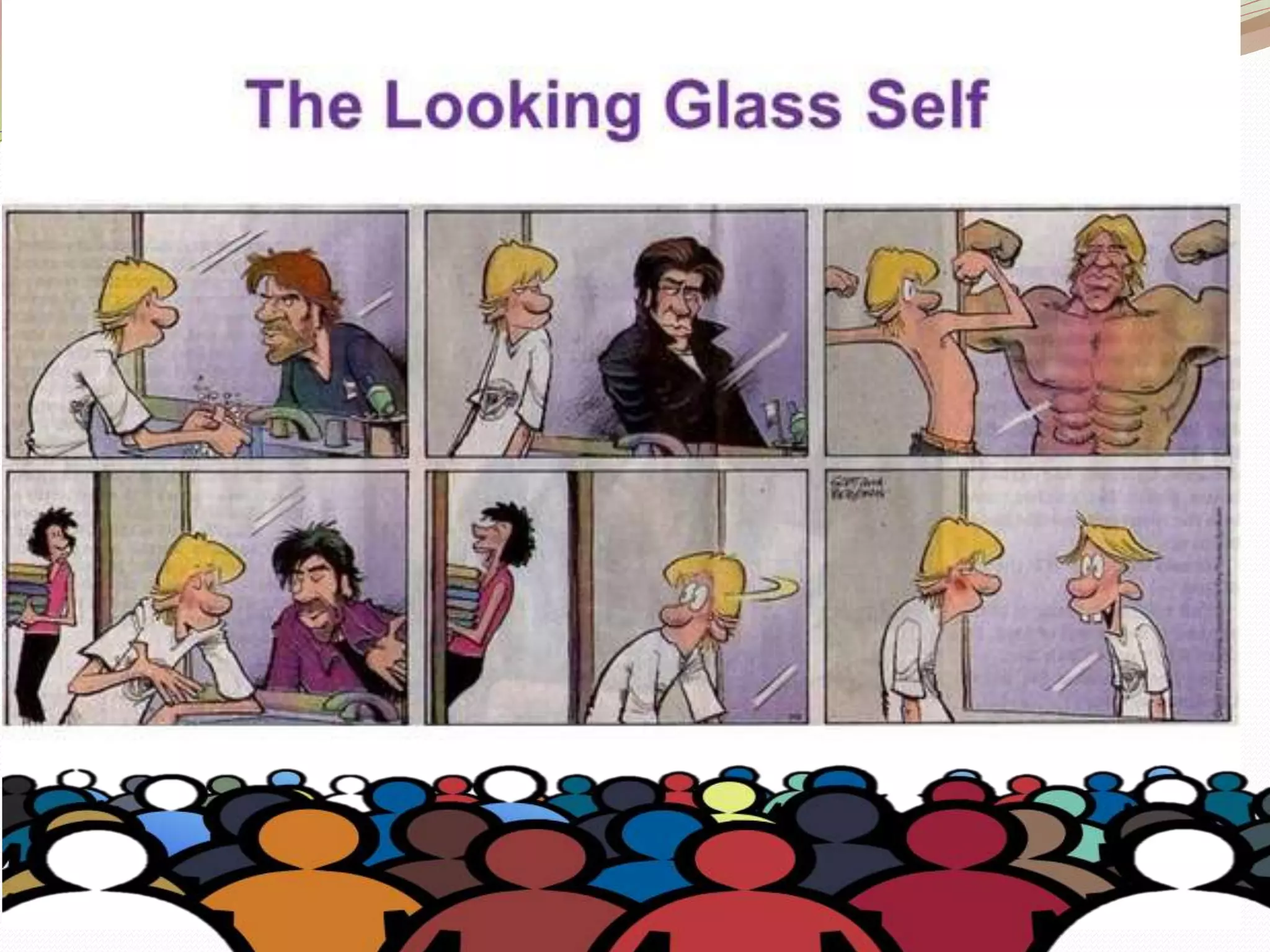
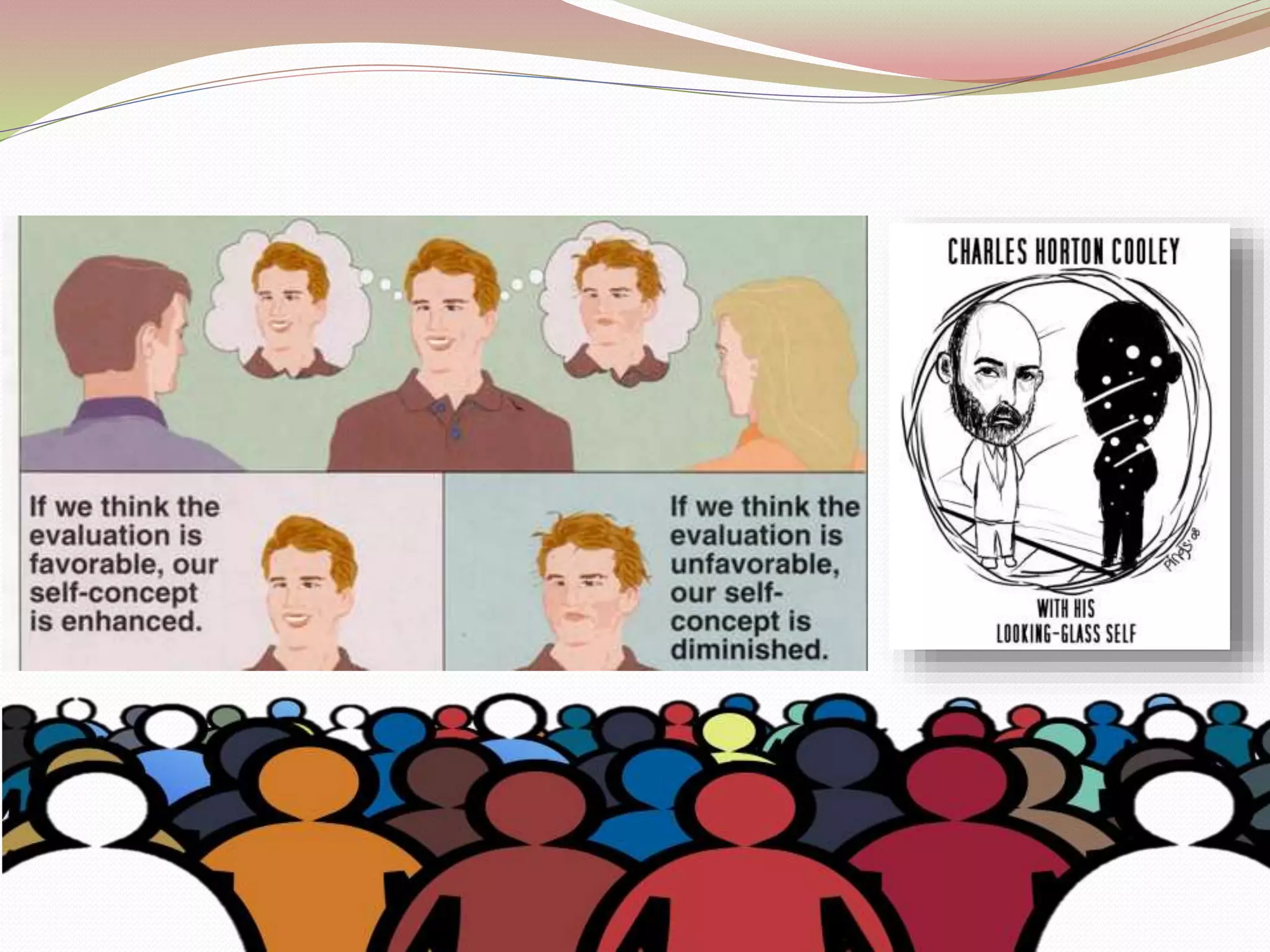
 One of the pioneering contributors to sociological
perspectives was Charles Cooley (1864–1929).
 He asserted that people’s self understanding is
constructed, in part, by their perception of how
others view them—a process termed “the looking
glass self” (Cooley 1902).
THEORY OF THE SOCIAL SELF
 GEORGE HERBERT MEAD
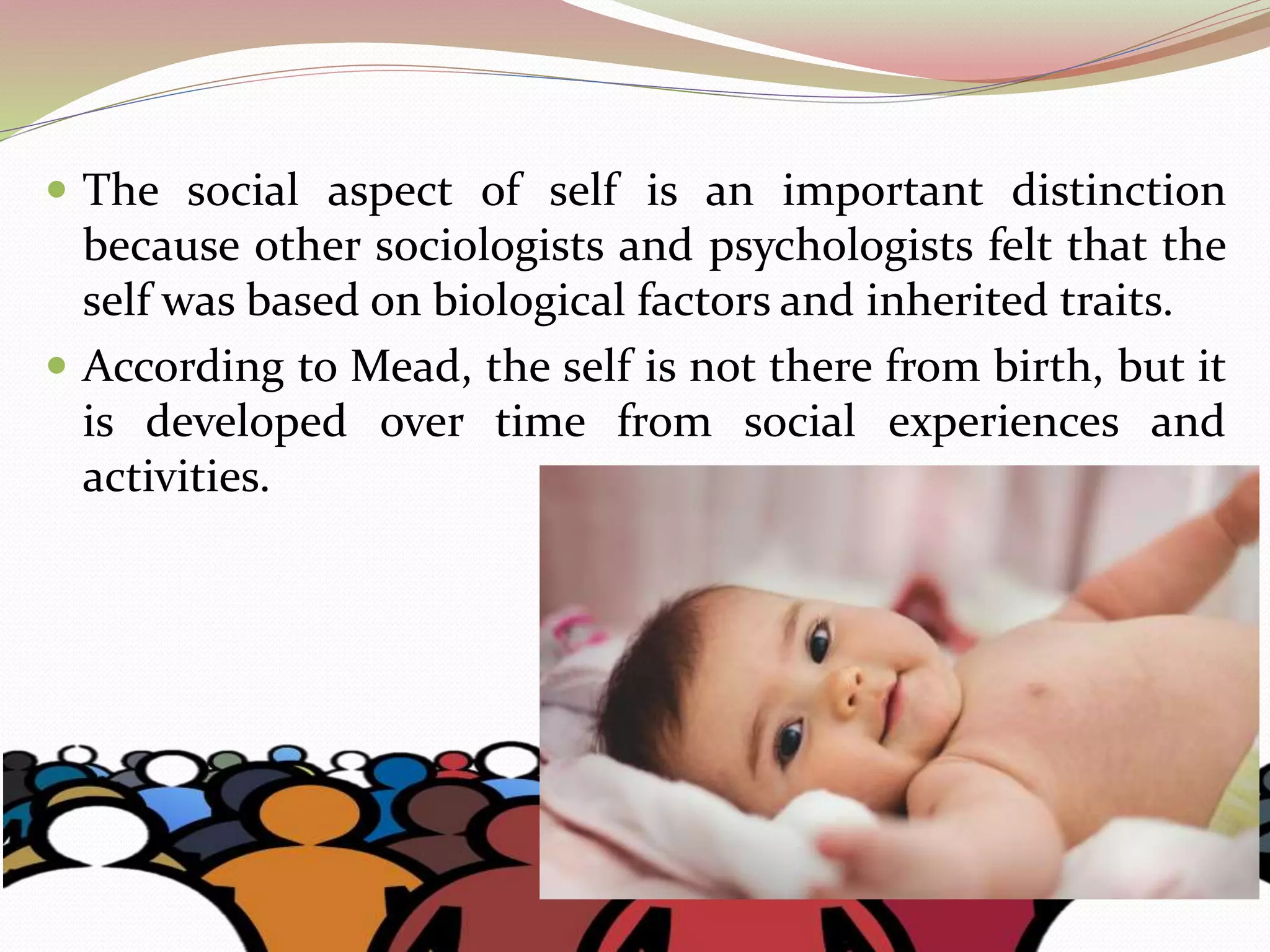
 The social aspect of self is an important distinction
because other sociologists and psychologists felt that the
self was based on biological factors and inherited traits.
 According to Mead, the self is not there from birth, but it
is developed over time from social experiences and
activities.
Development of Self
 According to Mead, three activities develop the self:
 Language develops self by allowing individuals to
respond to each other through symbols, gestures,
words, and sounds.
Development of Self
 According to Mead, three activities develop the self:
 Play develops self by allowing individuals to take on
different roles, pretend, and express expectations of
others. It develops one's self-consciousness through
role-playing.
Development of Self
 According to Mead, three activities develop the self:
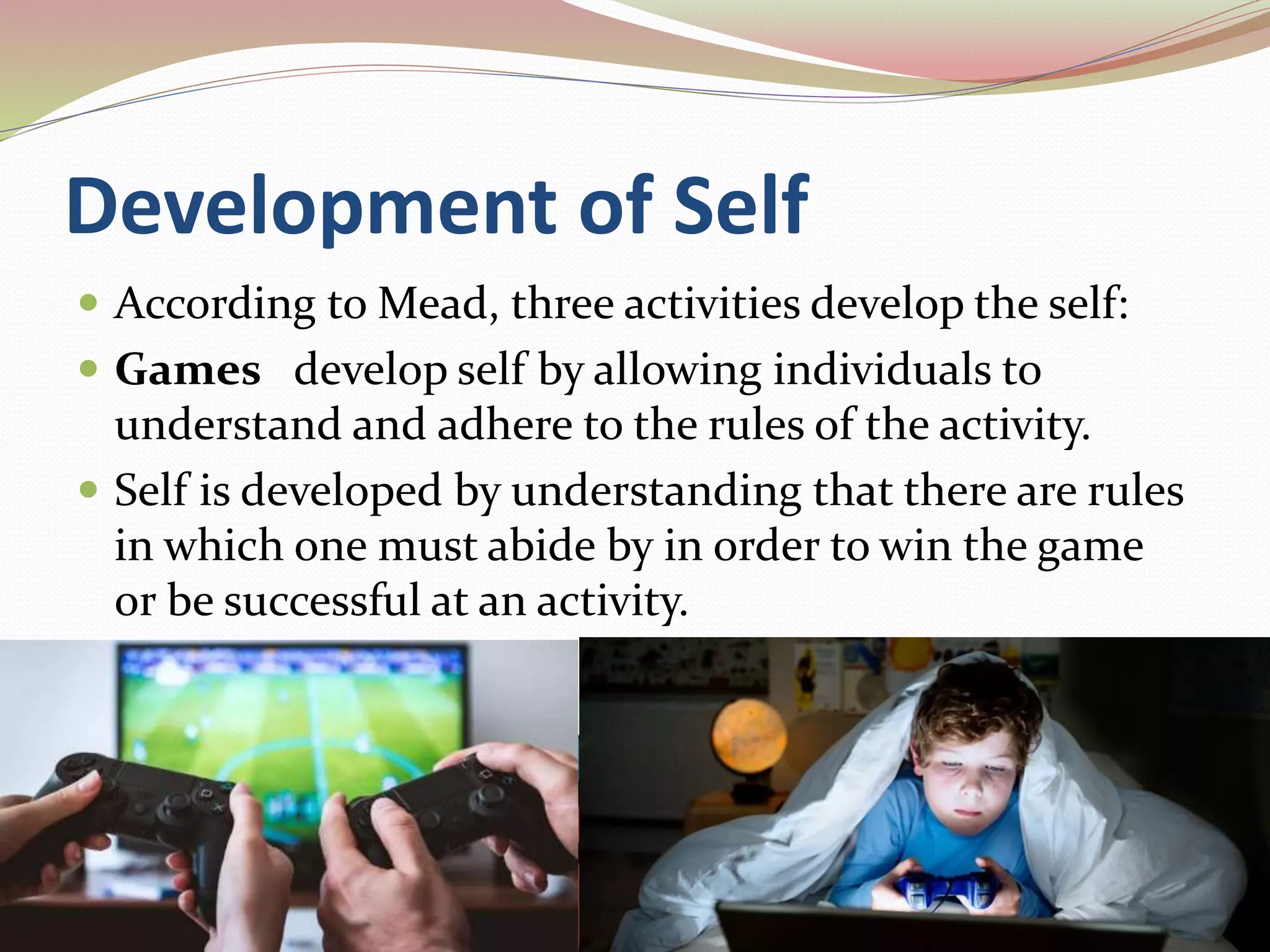
 Games develop self by allowing individuals to
understand and adhere to the rules of the activity.
 Self is developed by understanding that there are rules
in which one must abide by in order to win the game
or be successful at an activity.
Two Sides of Self: Me & I
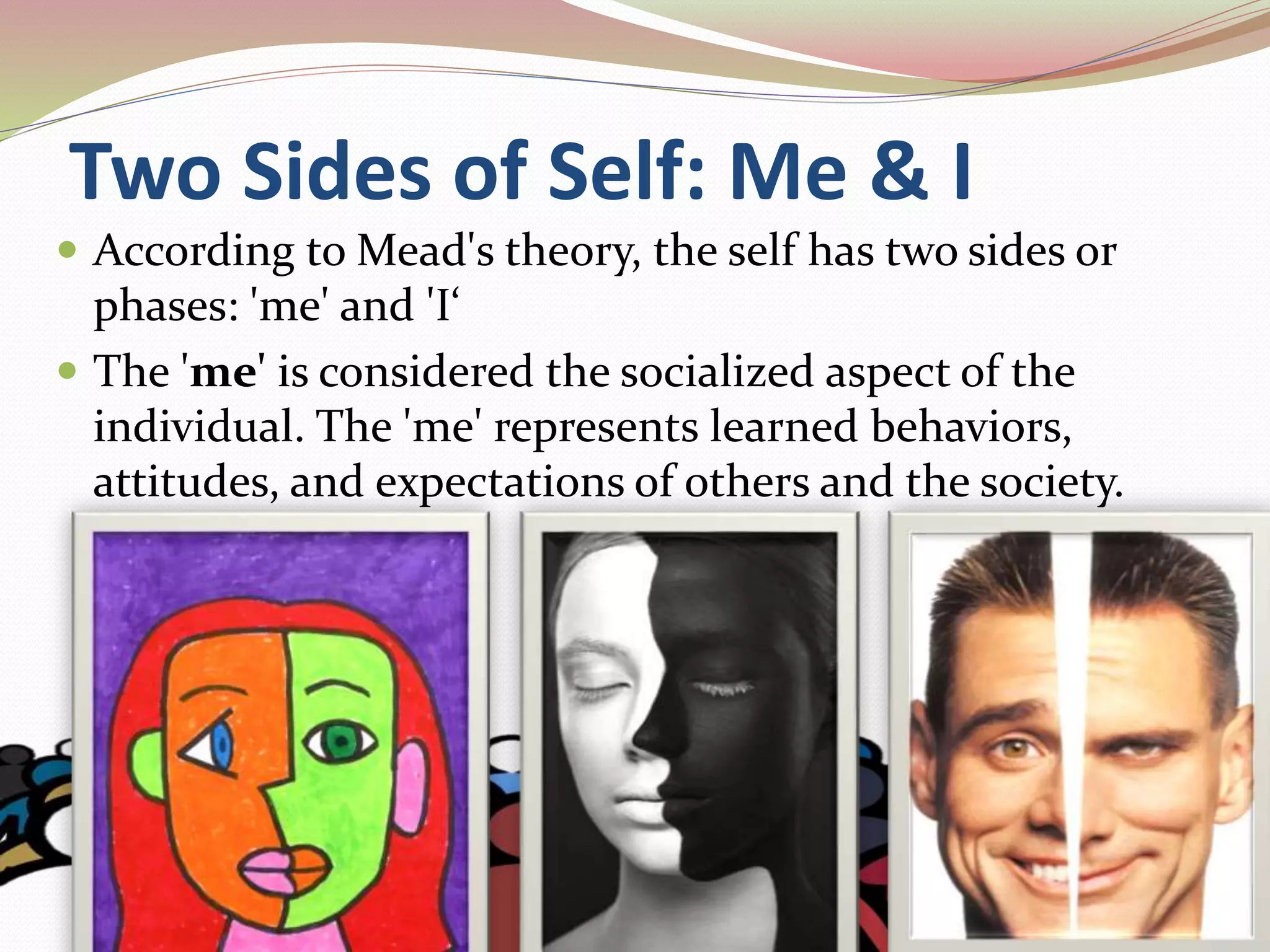
 According to Mead's theory, the self has two sides or
phases: 'me' and 'I‘
 The 'me' is considered the socialized aspect of the
individual. The 'me' represents learned behaviors,
attitudes, and expectations of others and the society.
Two Sides of Self: Me & I
 According to Mead's theory, the self has two sides or
phases: 'me' and 'I‘
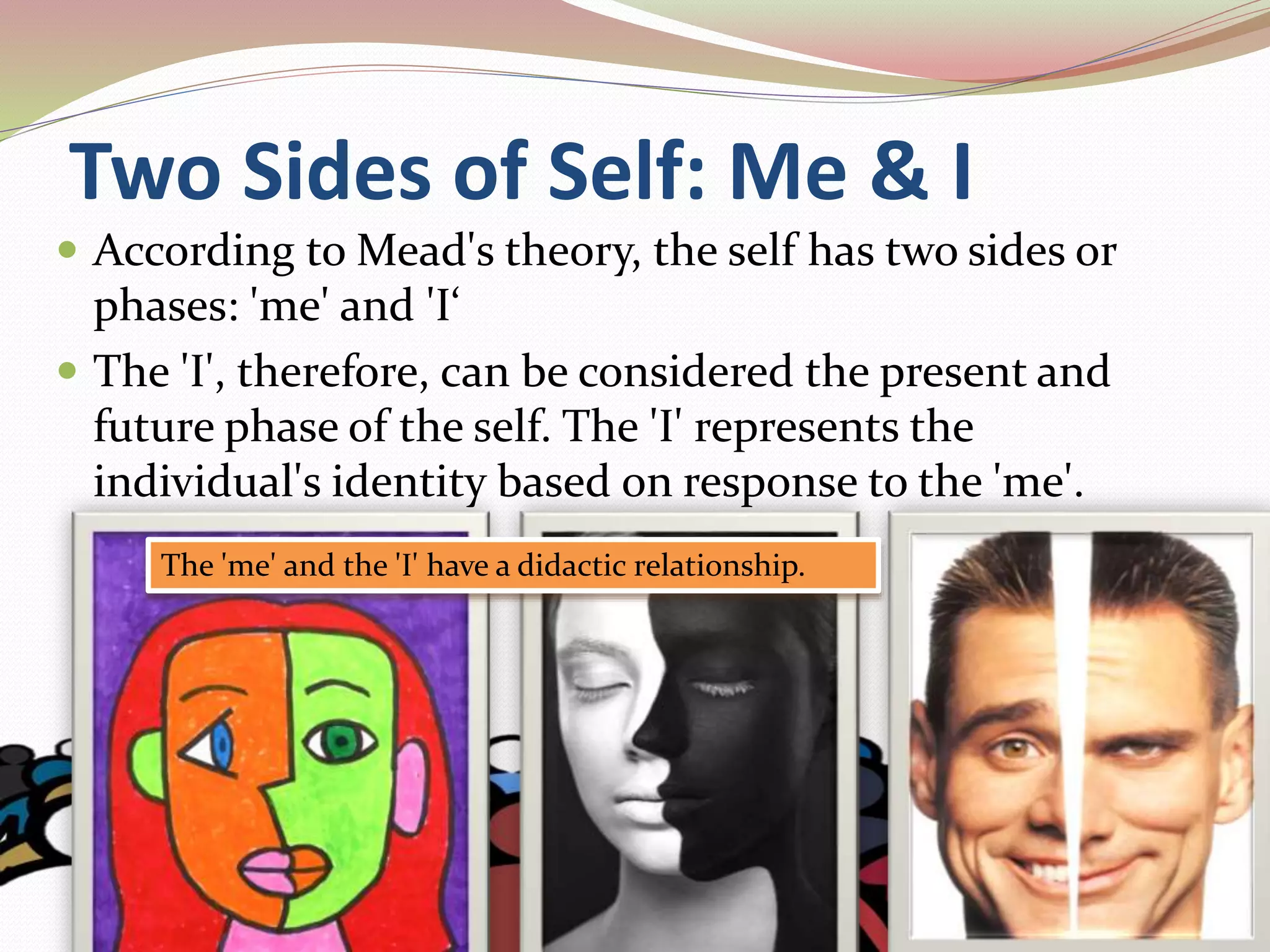
 The 'I', therefore, can be considered the present and
future phase of the self. The 'I' represents the
individual's identity based on response to the 'me'.
The 'me' and the 'I' have a didactic relationship.
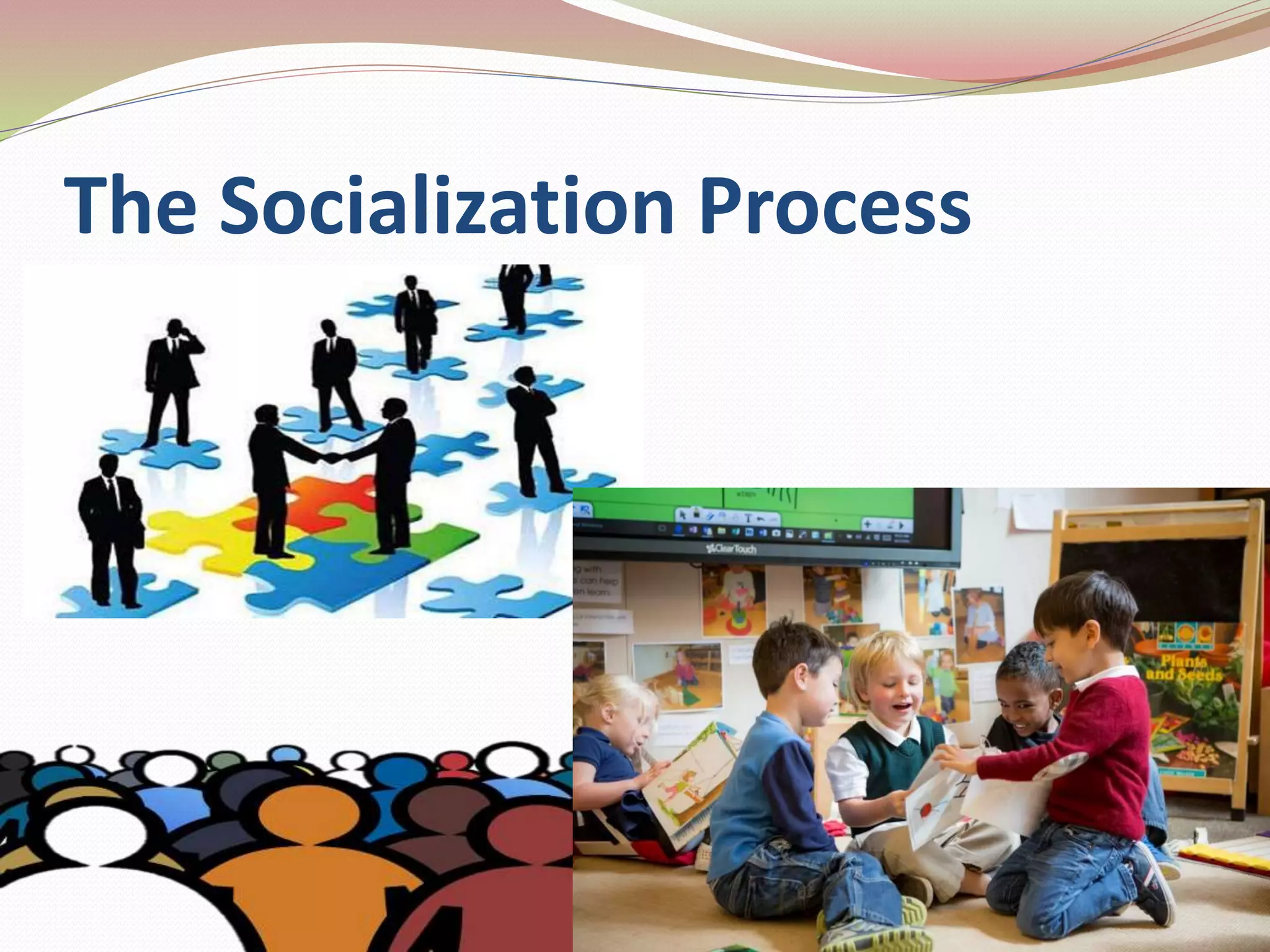
The Socialization Process
Agents of Socialization
 Family
 The primary function of the family is to reproduce
society, both biologically through procreation and
socially through socialization. Given these functions,
the individual’s experience of his or her family shifts
over time.
Agents of Socialization
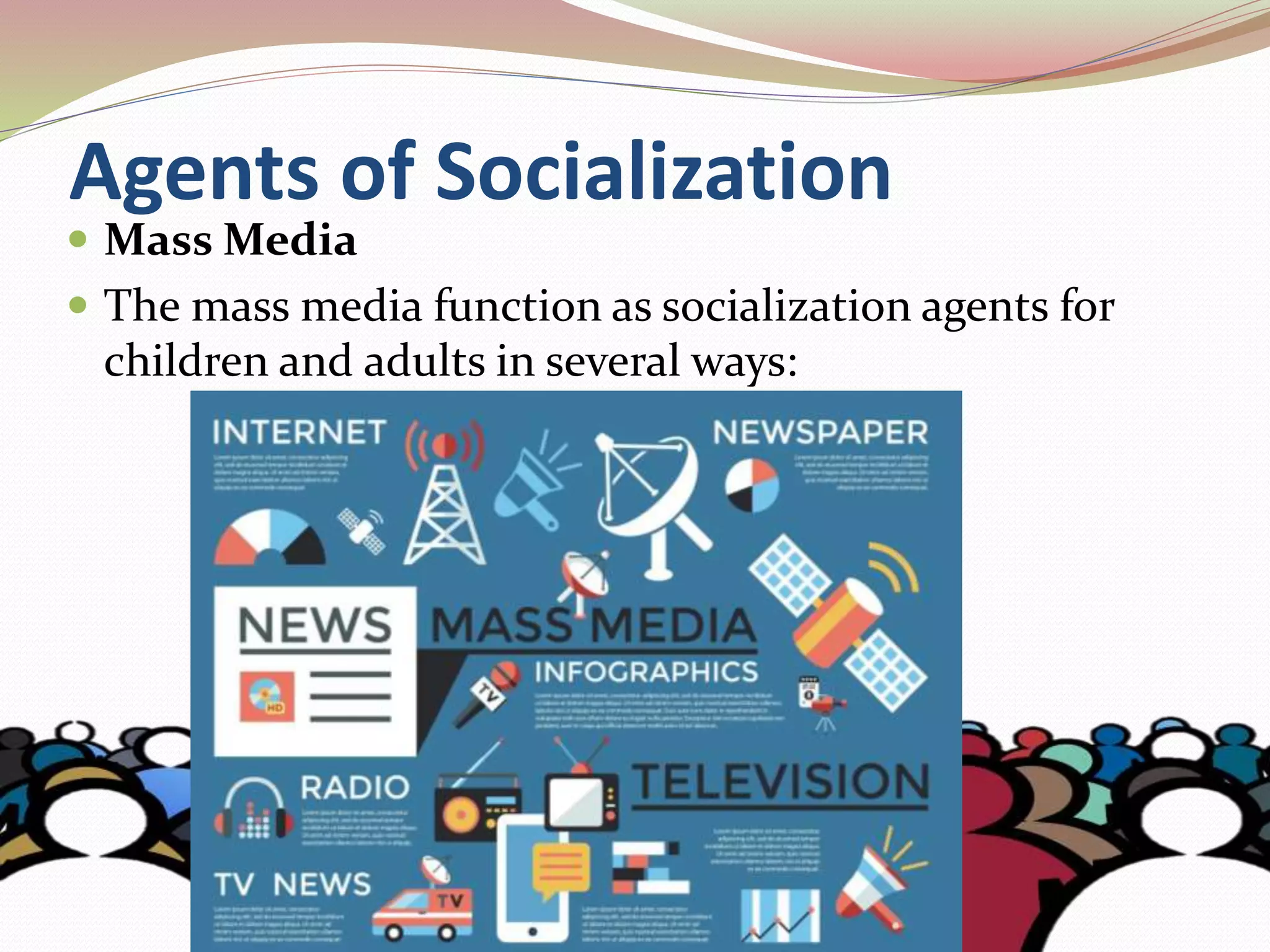
 Mass Media
 The mass media function as socialization agents for
children and adults in several ways:
Agents of Socialization
 Peer Group
 The influence of the peer group typically peaks during
adolescence.
 Peer group generally only affect short term interests
unlike the family, which has long term influence.
Agents of Socialization
 Religion
 Children tend to develop the same religious beliefs as
their parents.
Agents of Socialization
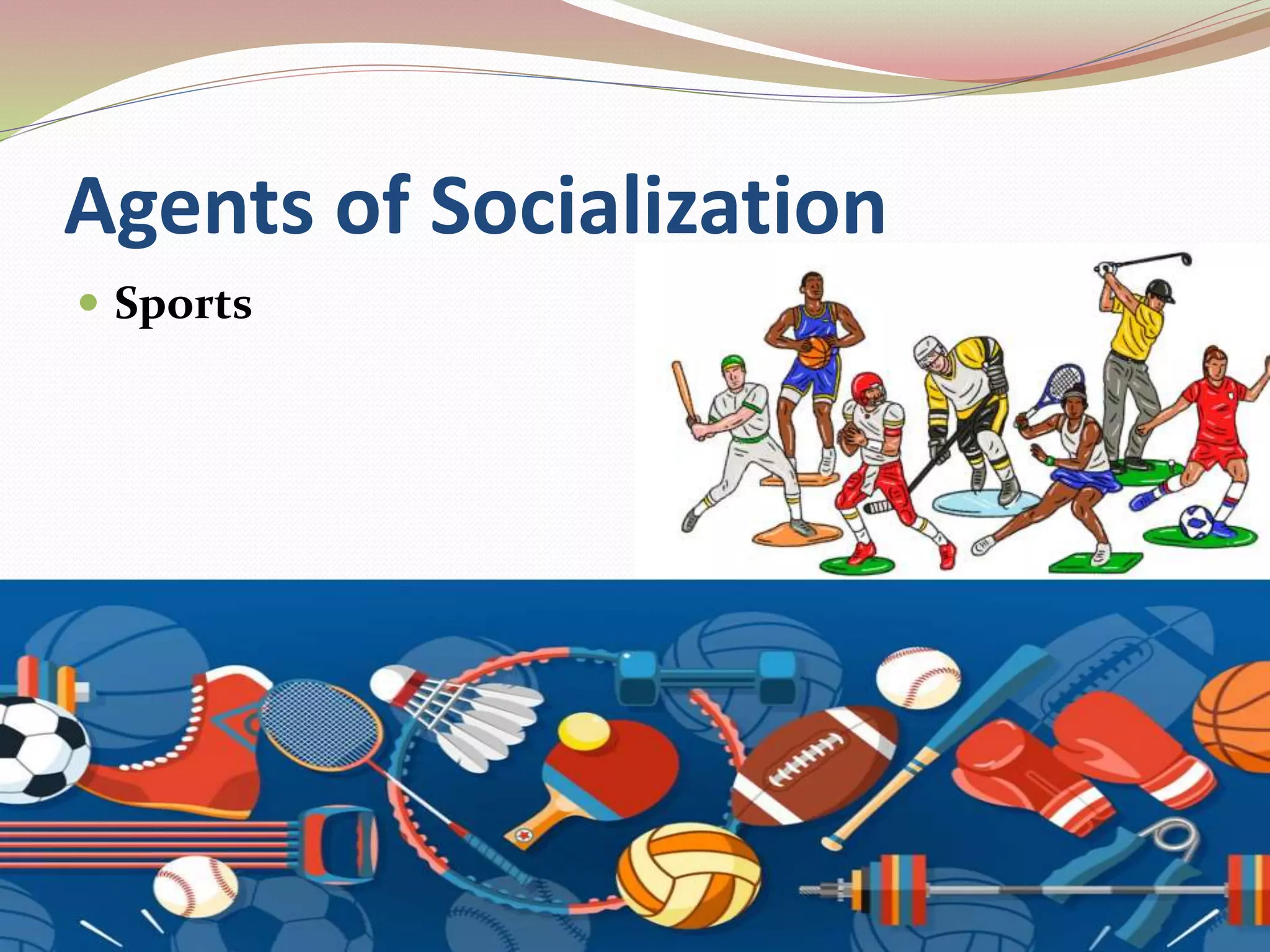
 Sports
Agents of Socialization
 School
 In school, teachers and other students are the source
of expectations that encourage children to think and
behave in particular ways.
UTS: UNDERSTANDING THE SELF : The self in sociological perspective

UTS: UNDERSTANDING THE SELF : The self in sociological perspective

  • 1.
  • 2.
    Sociology  the studyof human behavior. Sociology refers to social behavior, society, patterns of social relationships, social interaction, and culture that surrounds everyday life.
  • 3.
     One ofthe pioneering contributors to sociological perspectives was Charles Cooley (1864–1929).  He asserted that people’s self understanding is constructed, in part, by their perception of how others view them—a process termed “the looking glass self” (Cooley 1902).
  • 7.
    THEORY OF THESOCIAL SELF  GEORGE HERBERT MEAD
  • 8.
     The socialaspect of self is an important distinction because other sociologists and psychologists felt that the self was based on biological factors and inherited traits.  According to Mead, the self is not there from birth, but it is developed over time from social experiences and activities.
  • 9.
    Development of Self According to Mead, three activities develop the self:  Language develops self by allowing individuals to respond to each other through symbols, gestures, words, and sounds.
  • 10.
    Development of Self According to Mead, three activities develop the self:  Play develops self by allowing individuals to take on different roles, pretend, and express expectations of others. It develops one's self-consciousness through role-playing.
  • 11.
    Development of Self According to Mead, three activities develop the self:  Games develop self by allowing individuals to understand and adhere to the rules of the activity.  Self is developed by understanding that there are rules in which one must abide by in order to win the game or be successful at an activity.
  • 12.
    Two Sides ofSelf: Me & I  According to Mead's theory, the self has two sides or phases: 'me' and 'I‘  The 'me' is considered the socialized aspect of the individual. The 'me' represents learned behaviors, attitudes, and expectations of others and the society.
  • 13.
    Two Sides ofSelf: Me & I  According to Mead's theory, the self has two sides or phases: 'me' and 'I‘  The 'I', therefore, can be considered the present and future phase of the self. The 'I' represents the individual's identity based on response to the 'me'. The 'me' and the 'I' have a didactic relationship.
  • 14.
  • 15.
    Agents of Socialization Family  The primary function of the family is to reproduce society, both biologically through procreation and socially through socialization. Given these functions, the individual’s experience of his or her family shifts over time.
  • 16.
    Agents of Socialization Mass Media  The mass media function as socialization agents for children and adults in several ways:
  • 17.
    Agents of Socialization Peer Group  The influence of the peer group typically peaks during adolescence.  Peer group generally only affect short term interests unlike the family, which has long term influence.
  • 18.
    Agents of Socialization Religion  Children tend to develop the same religious beliefs as their parents.
  • 19.
  • 20.
    Agents of Socialization School  In school, teachers and other students are the source of expectations that encourage children to think and behave in particular ways.