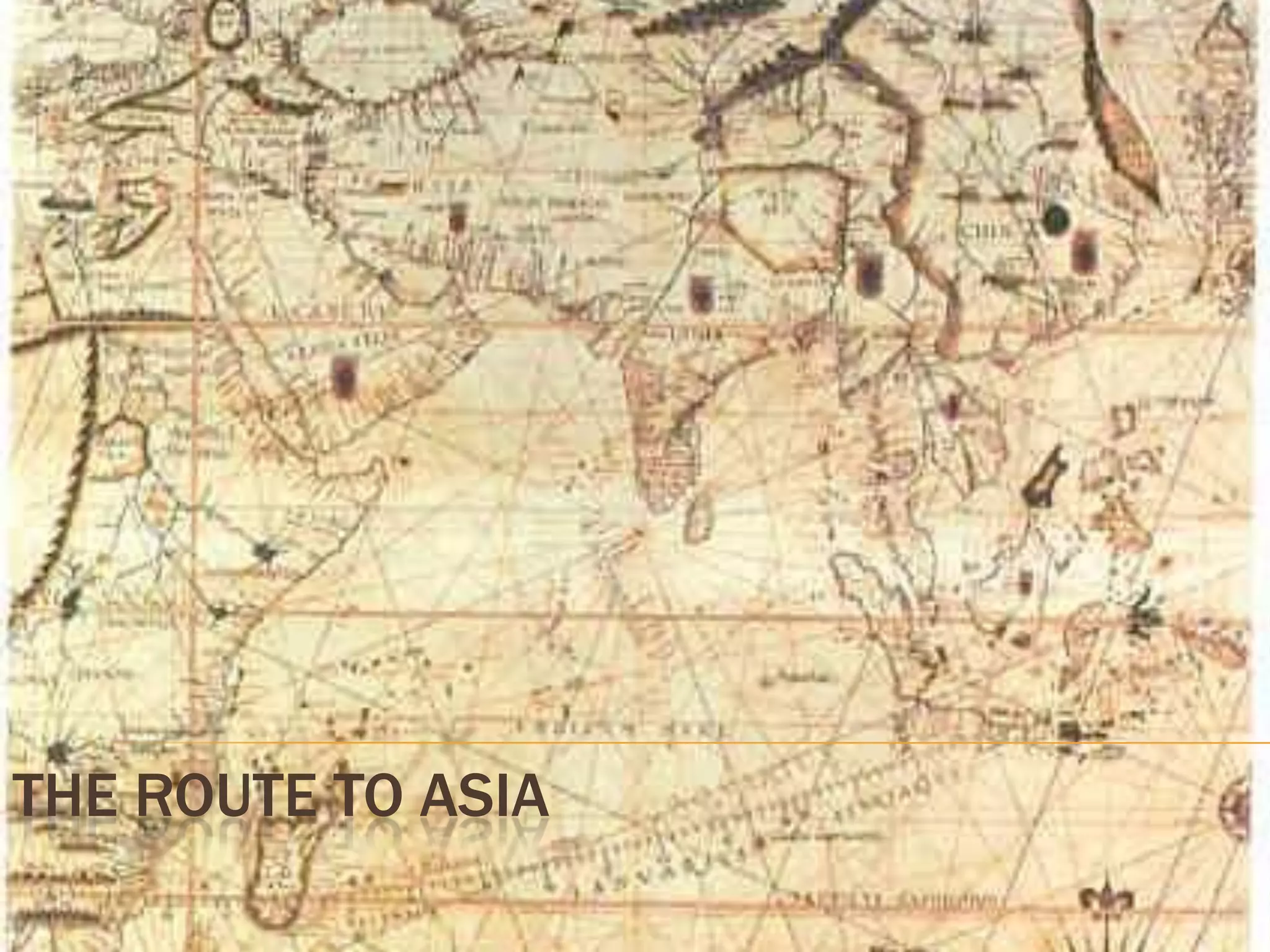
THE ROUTE TO ASIA
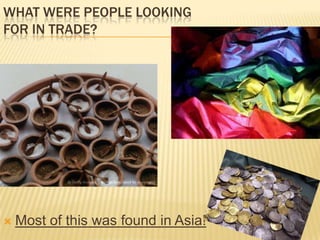
WHAT WERE PEOPLE LOOKING
FOR IN TRADE?
 Most of this was found in Asia!
THE PORTUGUESE
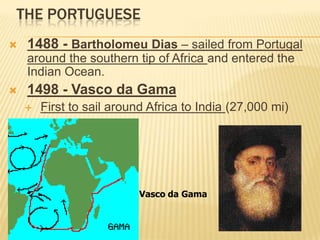
 1488 - Bartholomeu Dias – sailed from Portugal
around the southern tip of Africa and entered the
Indian Ocean.
 1498 - Vasco da Gama
 First to sail around Africa to India (27,000 mi)
Vasco da Gama
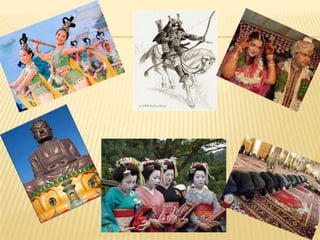
EUROPE’S VIEW OF ASIA
 Europeans respected Asian cultures.
Many of these cultures were as old, if not
older, than the European powers.
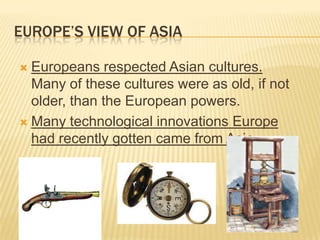
 Many technological innovations Europe
had recently gotten came from Asia.
THIS LED TO….
 Europe considered Asian cultures as
equals in business dealings.
 Very little colonization took place initially.
THE GOAL….
 The goal in Asian exploration was to make
everyone lots of money.
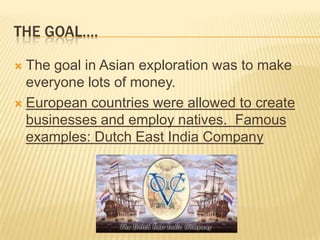
 European countries were allowed to create
businesses and employ natives. Famous
examples: Dutch East India Company
THE IMPACT….
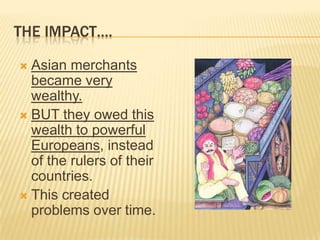
 Asian merchants
became very
wealthy.
 BUT they owed this
wealth to powerful
Europeans, instead
of the rulers of their
countries.
 This created
problems over time.
AND IN CLOSING….
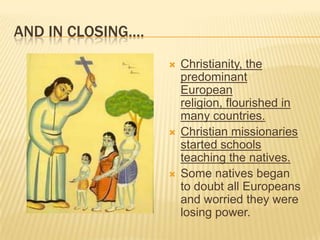
 Christianity, the
predominant
European
religion, flourished in
many countries.
 Christian missionaries
started schools
teaching the natives.
 Some natives began
to doubt all Europeans
and worried they were
losing power.

The route to asia

  • 1.
  • 2.
    WHAT WERE PEOPLELOOKING FOR IN TRADE?  Most of this was found in Asia!
  • 3.
    THE PORTUGUESE  1488- Bartholomeu Dias – sailed from Portugal around the southern tip of Africa and entered the Indian Ocean.  1498 - Vasco da Gama  First to sail around Africa to India (27,000 mi) Vasco da Gama
  • 4.
    EUROPE’S VIEW OFASIA  Europeans respected Asian cultures. Many of these cultures were as old, if not older, than the European powers.  Many technological innovations Europe had recently gotten came from Asia.
  • 6.
    THIS LED TO…. Europe considered Asian cultures as equals in business dealings.  Very little colonization took place initially.
  • 7.
    THE GOAL….  Thegoal in Asian exploration was to make everyone lots of money.  European countries were allowed to create businesses and employ natives. Famous examples: Dutch East India Company
  • 8.
    THE IMPACT….  Asianmerchants became very wealthy.  BUT they owed this wealth to powerful Europeans, instead of the rulers of their countries.  This created problems over time.
  • 9.
    AND IN CLOSING…. Christianity, the predominant European religion, flourished in many countries.  Christian missionaries started schools teaching the natives.  Some natives began to doubt all Europeans and worried they were losing power.