Most governments in the world were
Absolute Monarchies.
The rulers had absolute power.
Citizens had little to no rights.
Freedom was a dream.
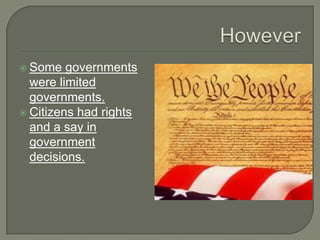
 Some governments
were limited
governments.
 Citizens had rights
and a say in
government
decisions.
 Changes in Europe in
the 1600s-1700s
began to affect how
people saw the
government.
 The discovery of the
Americas, the change
in economics, etc led
to a new way of
seeing things.
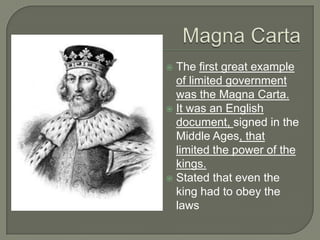
 The first great example
of limited government
was the Magna Carta.
 It was an English
document, signed in the
Middle Ages, that
limited the power of the
kings.
 Stated that even the
king had to obey the
laws
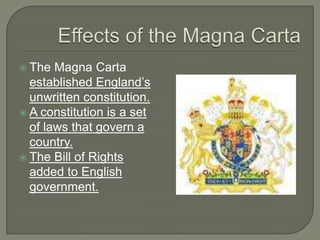
 The Magna Carta
established England’s
unwritten constitution.
 A constitution is a set
of laws that govern a
country.
 The Bill of Rights
added to English
government.
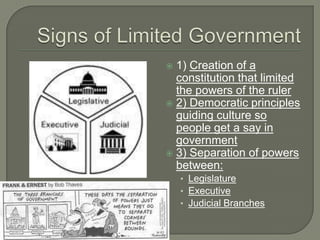
 1) Creation of a
constitution that limited
the powers of the ruler
 2) Democratic principles
guiding culture so
people get a say in
government
 3) Separation of powers
between:
• Legislature
• Executive
• Judicial Branches

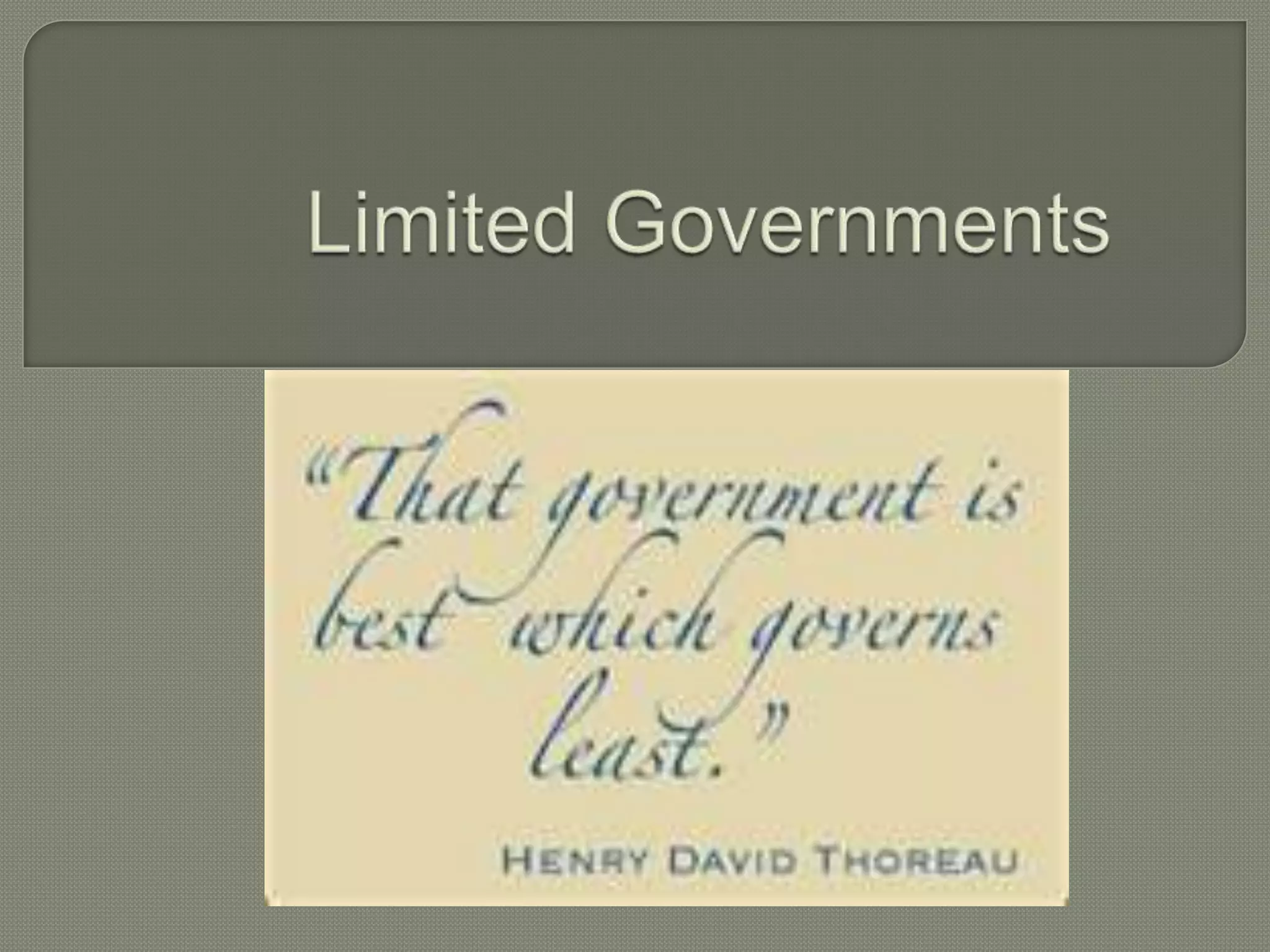
Limited governments

  • 2.
    Most governments inthe world were Absolute Monarchies. The rulers had absolute power. Citizens had little to no rights. Freedom was a dream.
  • 3.
     Some governments werelimited governments.  Citizens had rights and a say in government decisions.
  • 4.
     Changes inEurope in the 1600s-1700s began to affect how people saw the government.  The discovery of the Americas, the change in economics, etc led to a new way of seeing things.
  • 5.
     The firstgreat example of limited government was the Magna Carta.  It was an English document, signed in the Middle Ages, that limited the power of the kings.  Stated that even the king had to obey the laws
  • 6.
     The MagnaCarta established England’s unwritten constitution.  A constitution is a set of laws that govern a country.  The Bill of Rights added to English government.
  • 7.
     1) Creationof a constitution that limited the powers of the ruler  2) Democratic principles guiding culture so people get a say in government  3) Separation of powers between: • Legislature • Executive • Judicial Branches