By: slideshare.net The Age of Early European Explorations & Conquests
Earlier Explorations Islam & the Spice Trade    Malacca A New Player    Europe Nicolo, Maffeo, & Marco Polo, 1271 Expansion becomes a state enterprise    monarchs had the authority & the resources. Better seaworthy ships.  Chinese Admiral Zheng He & the Ming “Treasure Fleet”
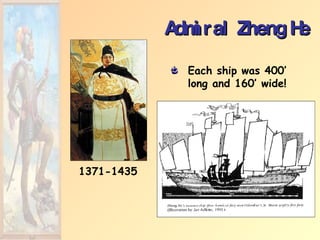
Admiral Zheng He 1371-1435 Each ship was 400’ long and 160’ wide!
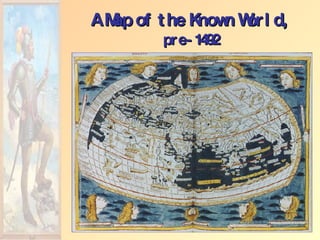
A Map of the Known World,   pre- 1492
Motives for European Exploration Crusades    by-pass intermediaries to get to Asia. Renaissance    curiosity about other lands and peoples. Reformation    refugees & missionaries. Monarchs seeking new sources of revenue. Technological advances. Fame and fortune.
New Maritime Technologies Hartman Astrolabe (1532)‏ Better Maps [Portulan] Sextant Mariner’s Compass
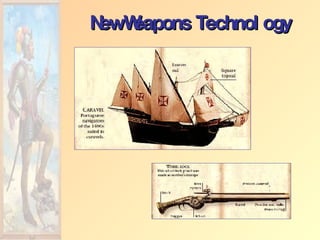
New Weapons Technology
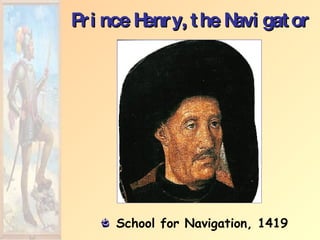
Prince Henry, the Navigator School for Navigation, 1419
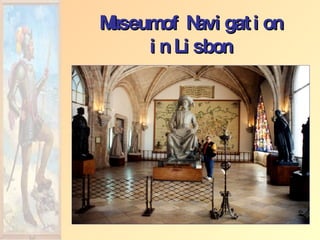
Museum of Navigation in Lisbon
Portuguese Maritime Empire Exploring the west coast of Africa. Bartolomeo Dias, 1487. Vasco da Gama, 1498. Calicut. Admiral Alfonso de Albuquerque (Goa, 1510; Malacca, 1511).
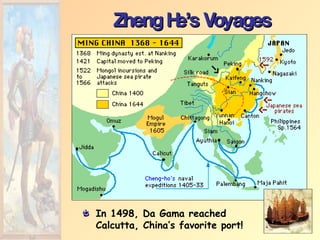
Zheng He’s Voyages In 1498, Da Gama reached Calcutta, China’s favorite port!
Christofo Colon  [1451-1506]
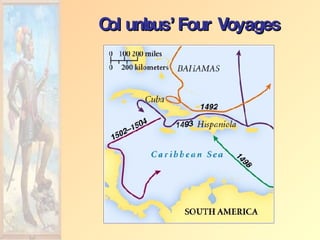
Columbus’ Four Voyages
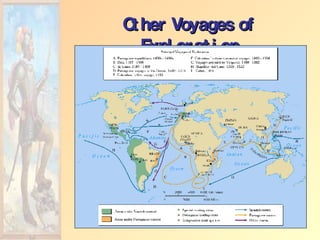
Other Voyages of Exploration
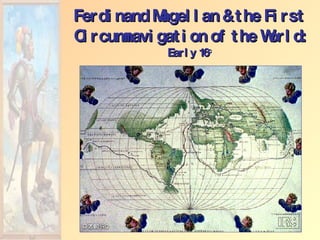
Ferdinand Magellan & the First Circumnavigation of the World: Early 16 c
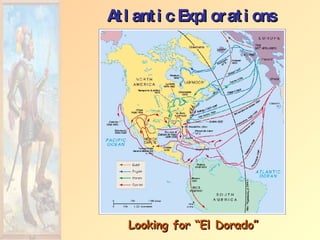
Atlantic Explorations Looking for “El Dorado”
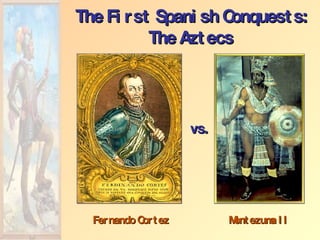
Fernando Cortez The First Spanish Conquests: The Aztecs Montezuma II vs.
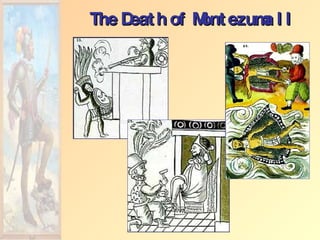
The Death of Montezuma II
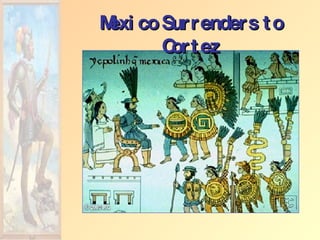
Mexico Surrenders to Cortez
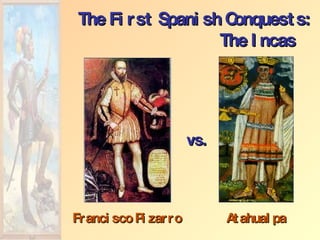
Francisco Pizarro The First Spanish Conquests:   The Incas Atahualpa vs.
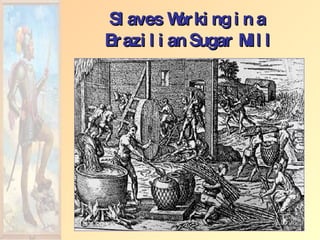
Slaves Working in a  Brazilian Sugar Mill
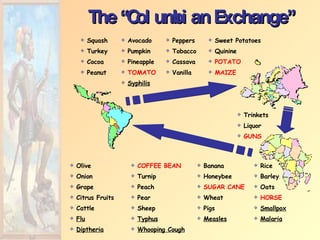
Why would the 'Columbian Exchange' be considered the tsunami of unintentional "bio-terrorism"??
The “Columbian Exchange” Syphilis MAIZE Vanilla TOMATO Peanut POTATO Cassava Pineapple Cocoa Quinine Tobacco Pumpkin Turkey Sweet Potatoes Peppers Avocado Squash  Whooping Cough Diptheria Malaria Measles Typhus Flu Smallpox Pigs Sheep Cattle HORSE Wheat Pear Citrus Fruits Oats SUGAR CANE Peach Grape Barley Honeybee Turnip Onion Rice Banana COFFEE BEAN Olive GUNS Liquor Trinkets
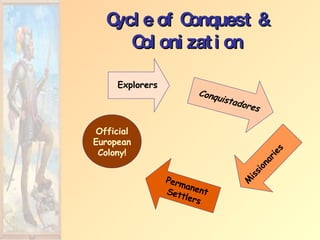
Cycle of Conquest & Colonization Explorers Conquistadores Missionaries Permanent Settlers Official European Colony!
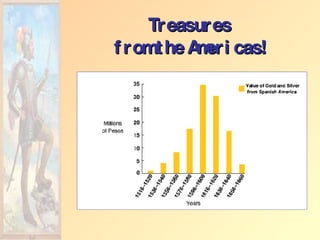
Treasures from the Americas!
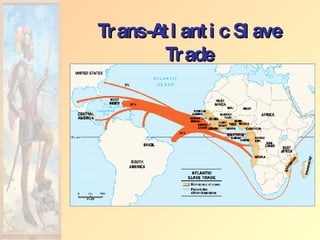
Trans-Atlantic Slave Trade
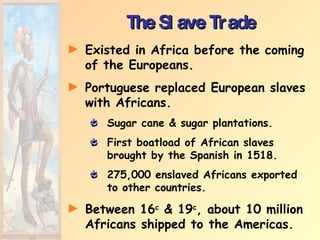
The Slave Trade Existed in Africa before the coming of the Europeans. Portuguese replaced European slaves with Africans. Sugar cane & sugar plantations. First boatload of African slaves brought by the Spanish in 1518. 275,000 enslaved Africans exported to other countries. Between 16 c  & 19 c , about 10 million Africans shipped to the Americas.
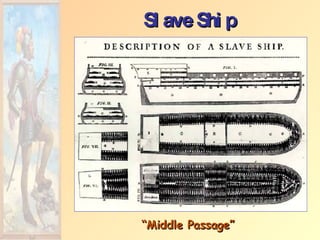
Slave Ship “ Middle Passage”
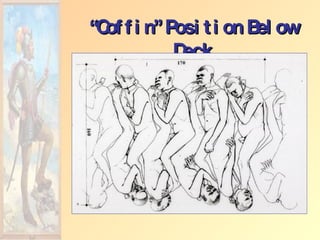
“ Coffin” Position Below Deck
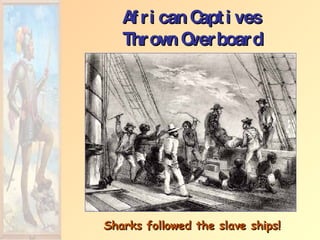
African Captives Thrown Overboard Sharks followed the slave ships!
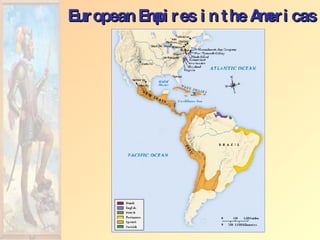
European Empires in the Americas
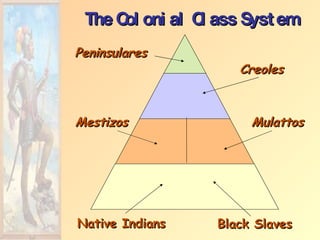
The Colonial Class System Peninsulares Creoles Mestizos Mulattos Native Indians Black Slaves
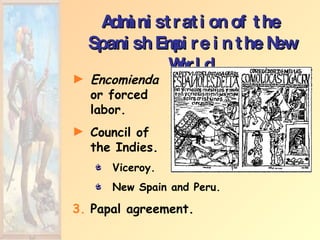
Administration of the Spanish Empire in the New World Encomienda  or forced  labor. Council of  the Indies. Viceroy. New Spain and Peru. Papal agreement.
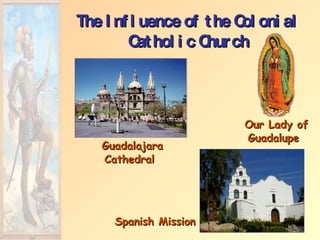
The Influence of the Colonial Catholic Church Guadalajara Cathedral Our Lady of Guadalupe Spanish Mission
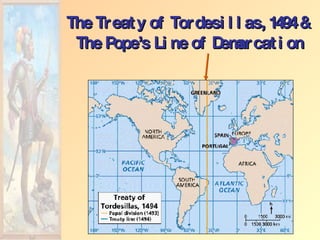
The Treaty of Tordesillas, 1494 &  The Pope’s Line of Demarcation
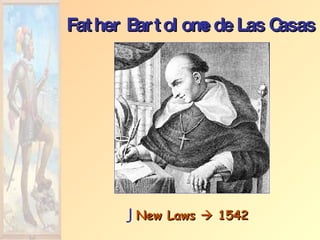
Father Bartolome de Las Casas New Laws    1542
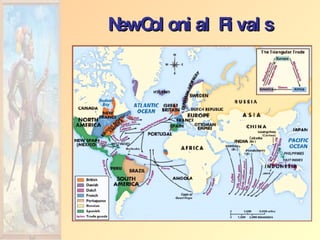
New Colonial Rivals Portugal lacked the numbers and wealth to dominate trade in the Indian Ocean. Spain in Asia    consolidated its holdings in the Philippines. First English expedition to the Indies in 1591. Surat in NW India in 1608. Dutch arrive in India in 1595.
New Colonial Rivals
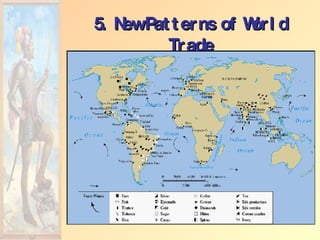
Impact of European Expansion Native populations ravaged by disease. Influx of gold, and especially silver, into Europe created an inflationary economic climate. [ “Price Revolution” ] New products introduced across the continents [“Columbian Exchange”]. Deepened colonial rivalries.
5.  New Patterns of World Trade

European Exploration And Colonization

  • 1.
    By: slideshare.net TheAge of Early European Explorations & Conquests
  • 2.
    Earlier Explorations Islam& the Spice Trade  Malacca A New Player  Europe Nicolo, Maffeo, & Marco Polo, 1271 Expansion becomes a state enterprise  monarchs had the authority & the resources. Better seaworthy ships. Chinese Admiral Zheng He & the Ming “Treasure Fleet”
  • 3.
    Admiral Zheng He1371-1435 Each ship was 400’ long and 160’ wide!
  • 4.
    A Map ofthe Known World, pre- 1492
  • 5.
    Motives for EuropeanExploration Crusades  by-pass intermediaries to get to Asia. Renaissance  curiosity about other lands and peoples. Reformation  refugees & missionaries. Monarchs seeking new sources of revenue. Technological advances. Fame and fortune.
  • 6.
    New Maritime TechnologiesHartman Astrolabe (1532)‏ Better Maps [Portulan] Sextant Mariner’s Compass
  • 7.
  • 8.
    Prince Henry, theNavigator School for Navigation, 1419
  • 9.
  • 10.
    Portuguese Maritime EmpireExploring the west coast of Africa. Bartolomeo Dias, 1487. Vasco da Gama, 1498. Calicut. Admiral Alfonso de Albuquerque (Goa, 1510; Malacca, 1511).
  • 11.
    Zheng He’s VoyagesIn 1498, Da Gama reached Calcutta, China’s favorite port!
  • 12.
    Christofo Colon [1451-1506]
  • 13.
  • 14.
    Other Voyages ofExploration
  • 15.
    Ferdinand Magellan &the First Circumnavigation of the World: Early 16 c
  • 16.
    Atlantic Explorations Lookingfor “El Dorado”
  • 17.
    Fernando Cortez TheFirst Spanish Conquests: The Aztecs Montezuma II vs.
  • 18.
    The Death ofMontezuma II
  • 19.
  • 20.
    Francisco Pizarro TheFirst Spanish Conquests: The Incas Atahualpa vs.
  • 21.
    Slaves Working ina Brazilian Sugar Mill
  • 22.
    Why would the'Columbian Exchange' be considered the tsunami of unintentional "bio-terrorism"??
  • 23.
    The “Columbian Exchange”Syphilis MAIZE Vanilla TOMATO Peanut POTATO Cassava Pineapple Cocoa Quinine Tobacco Pumpkin Turkey Sweet Potatoes Peppers Avocado Squash Whooping Cough Diptheria Malaria Measles Typhus Flu Smallpox Pigs Sheep Cattle HORSE Wheat Pear Citrus Fruits Oats SUGAR CANE Peach Grape Barley Honeybee Turnip Onion Rice Banana COFFEE BEAN Olive GUNS Liquor Trinkets
  • 24.
    Cycle of Conquest& Colonization Explorers Conquistadores Missionaries Permanent Settlers Official European Colony!
  • 25.
  • 26.
  • 27.
    The Slave TradeExisted in Africa before the coming of the Europeans. Portuguese replaced European slaves with Africans. Sugar cane & sugar plantations. First boatload of African slaves brought by the Spanish in 1518. 275,000 enslaved Africans exported to other countries. Between 16 c & 19 c , about 10 million Africans shipped to the Americas.
  • 28.
    Slave Ship “Middle Passage”
  • 29.
  • 30.
    African Captives ThrownOverboard Sharks followed the slave ships!
  • 31.
    European Empires inthe Americas
  • 32.
    The Colonial ClassSystem Peninsulares Creoles Mestizos Mulattos Native Indians Black Slaves
  • 33.
    Administration of theSpanish Empire in the New World Encomienda or forced labor. Council of the Indies. Viceroy. New Spain and Peru. Papal agreement.
  • 34.
    The Influence ofthe Colonial Catholic Church Guadalajara Cathedral Our Lady of Guadalupe Spanish Mission
  • 35.
    The Treaty ofTordesillas, 1494 & The Pope’s Line of Demarcation
  • 36.
    Father Bartolome deLas Casas New Laws  1542
  • 37.
    New Colonial RivalsPortugal lacked the numbers and wealth to dominate trade in the Indian Ocean. Spain in Asia  consolidated its holdings in the Philippines. First English expedition to the Indies in 1591. Surat in NW India in 1608. Dutch arrive in India in 1595.
  • 38.
  • 39.
    Impact of EuropeanExpansion Native populations ravaged by disease. Influx of gold, and especially silver, into Europe created an inflationary economic climate. [ “Price Revolution” ] New products introduced across the continents [“Columbian Exchange”]. Deepened colonial rivalries.
  • 40.
    5. NewPatterns of World Trade