MODULE 16
THE REVISED BLOOMS TAXONOMY OF
EDUCATIONAL OBJECTIVES
After 45 yearssince the publication of Blooms Taxonomy, Lorin
Anderson (Bloom’s former student) and David Karthwohl led a new
group of experts to work together. The result was what is now
called the revise taxonomy.
1. Levels or categories of thinking in the old taxonomy were nouns,
while the revised taxonomy they are verbs. The use of action
words instead of nouns was done to highlight that thinking is an
active process. For example, evaluate instead of evaluation, or
analyze instead of analysis.
2. While the revised taxonomy remains to be hierarchical levels of
increasing complexity, it is instead to be mor flexible, is that
allows the categories to overlap.
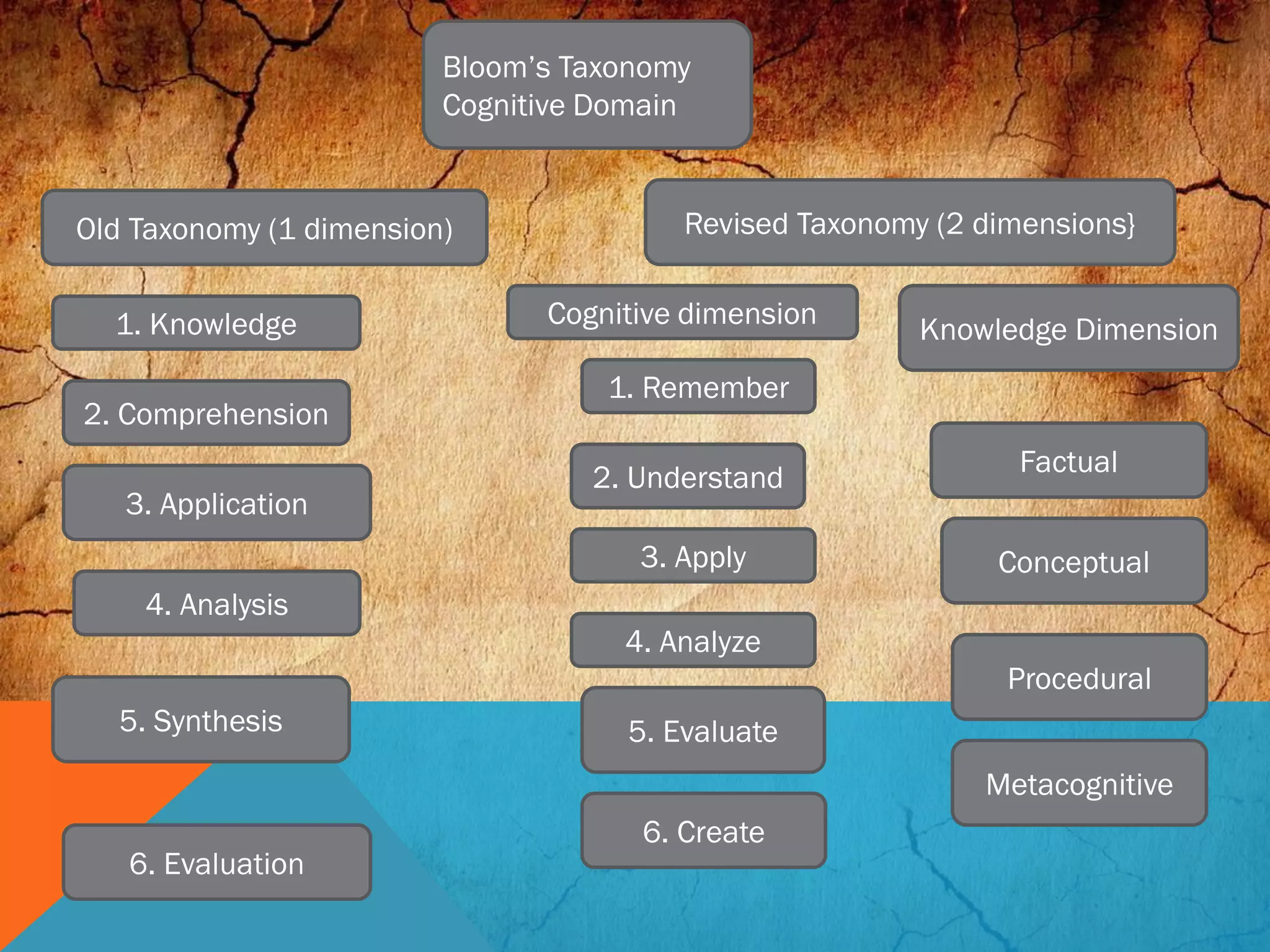
3. Remember is a more appropriate word for the first thinking level which
involves recalling and retrieving knowledge.
4. The comprehension level was changed to understand.
5. Synthesis was change to create and was placed as the highest level.
6. The cognitive domain now includes two dimensions: the cognitive
dimension and the knowledge dimension. The knowlege dimension of the
revised taxonomy was based on the sub categories of knowledge in the
old taxonomy
Bloom’s Taxonomy
Cognitive Domain
Old Taxonomy (1 dimension) Revised Taxonomy (2 dimensions}
1. Knowledge
2. Comprehension
3. Application
4. Analysis
5. Synthesis
6. Evaluation
Cognitive dimension
Knowledge Dimension
1. Remember
2. Understand
3. Apply
4. Analyze
5. Evaluate
6. Create
Factual
Conceptual
Procedural
Metacognitive
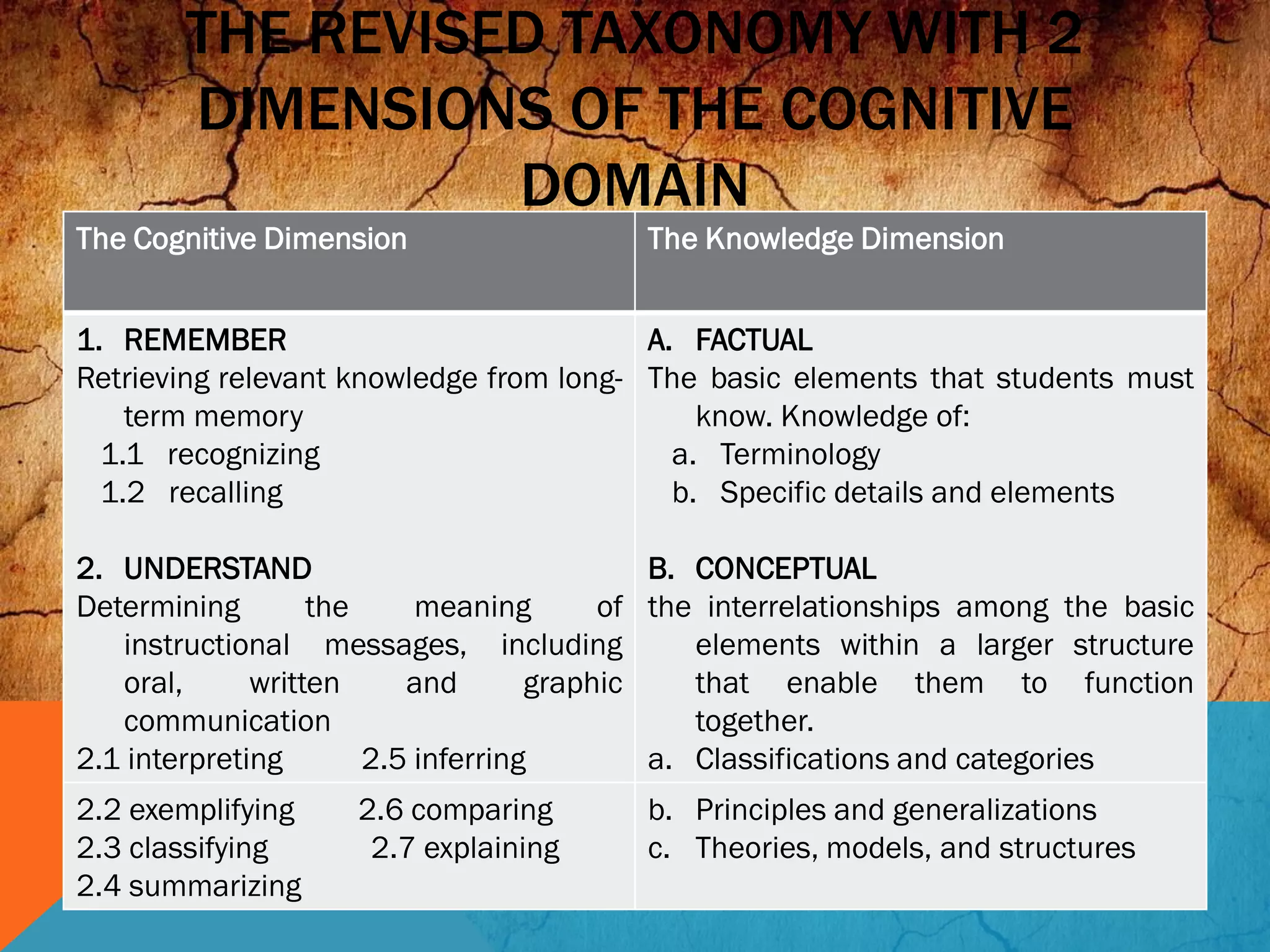
THE REVISED TAXONOMY WITH 2
DIMENSIONS OF THE COGNITIVE
DOMAIN
The Cognitive Dimension The Knowledge Dimension
1. REMEMBER
Retrieving relevant knowledge from long-
term memory
1.1 recognizing
1.2 recalling
2. UNDERSTAND
Determining the meaning of
instructional messages, including
oral, written and graphic
communication
2.1 interpreting 2.5 inferring
A. FACTUAL
The basic elements that students must
know. Knowledge of:
a. Terminology
b. Specific details and elements
B. CONCEPTUAL
the interrelationships among the basic
elements within a larger structure
that enable them to function
together.
a. Classifications and categories
2.2 exemplifying 2.6 comparing
2.3 classifying 2.7 explaining
2.4 summarizing
b. Principles and generalizations
c. Theories, models, and structures
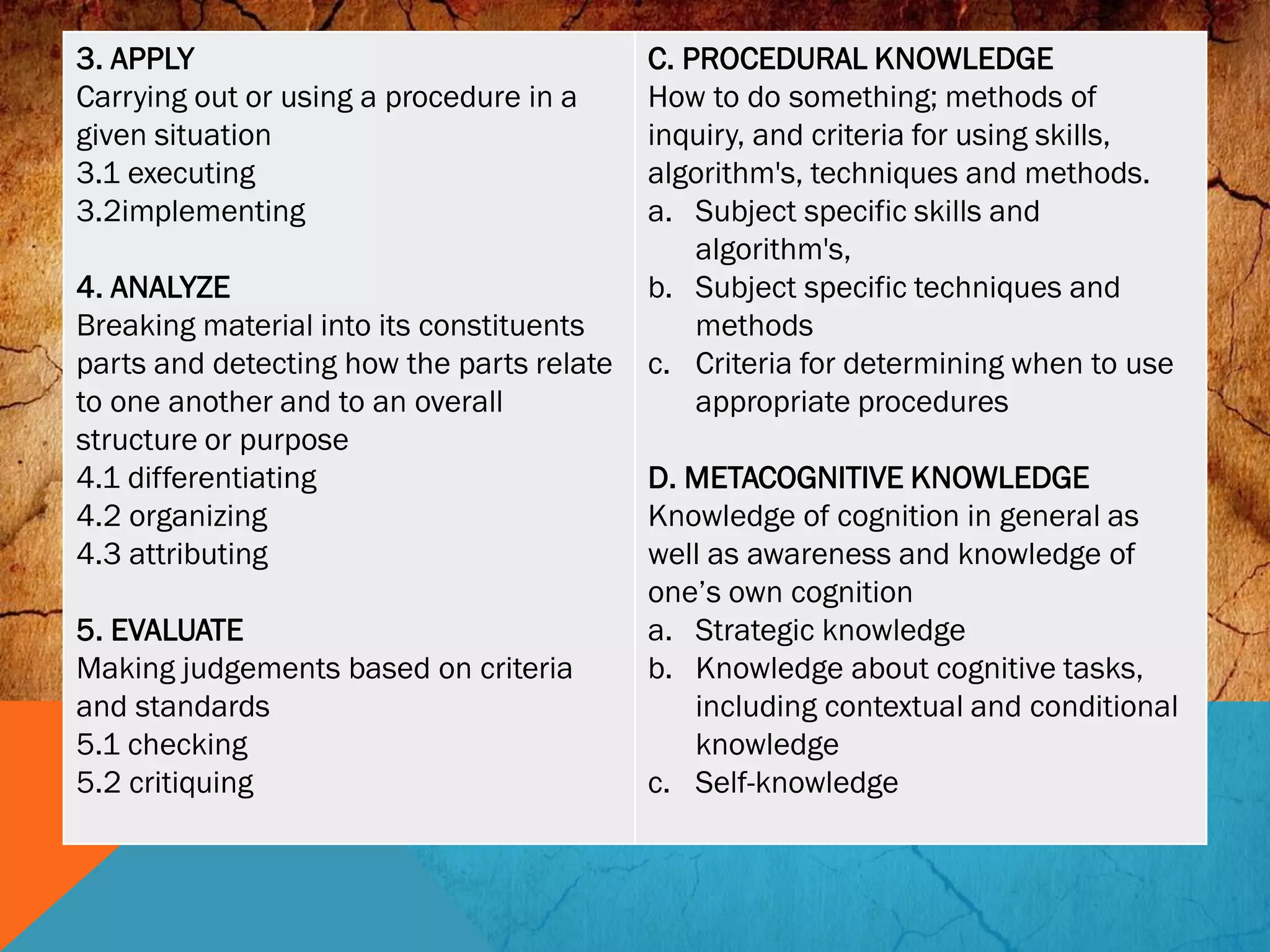
3. APPLY
Carrying out or using a procedure in a
given situation
3.1 executing
3.2implementing
4. ANALYZE
Breaking material into its constituents
parts and detecting how the parts relate
to one another and to an overall
structure or purpose
4.1 differentiating
4.2 organizing
4.3 attributing
5. EVALUATE
Making judgements based on criteria
and standards
5.1 checking
5.2 critiquing
C. PROCEDURAL KNOWLEDGE
How to do something; methods of
inquiry, and criteria for using skills,
algorithm's, techniques and methods.
a. Subject specific skills and
algorithm's,
b. Subject specific techniques and
methods
c. Criteria for determining when to use
appropriate procedures
D. METACOGNITIVE KNOWLEDGE
Knowledge of cognition in general as
well as awareness and knowledge of
one’s own cognition
a. Strategic knowledge
b. Knowledge about cognitive tasks,
including contextual and conditional
knowledge
c. Self-knowledge
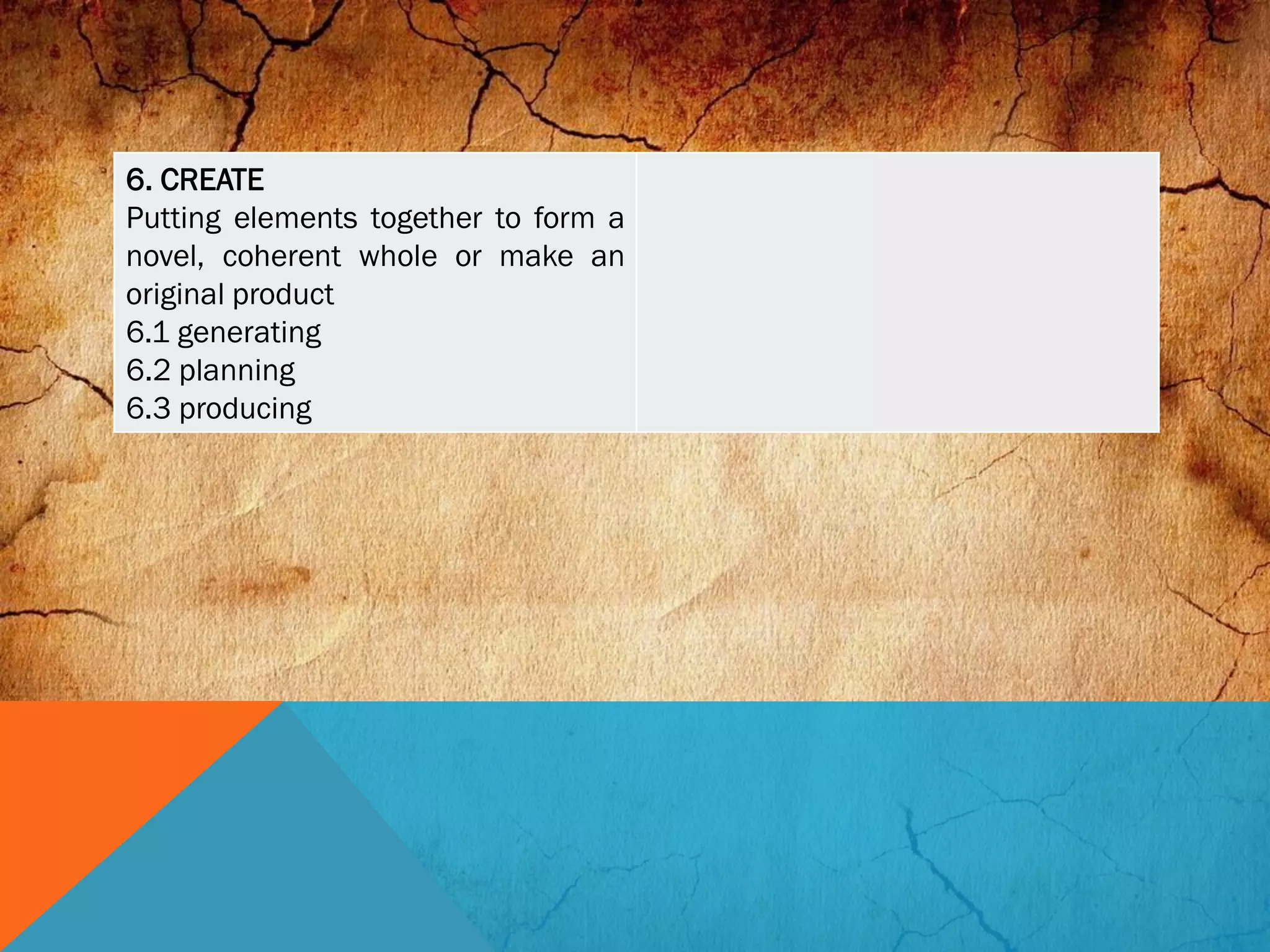
6. CREATE
Putting elements together to form a
novel, coherent whole or make an
original product
6.1 generating
6.2 planning
6.3 producing
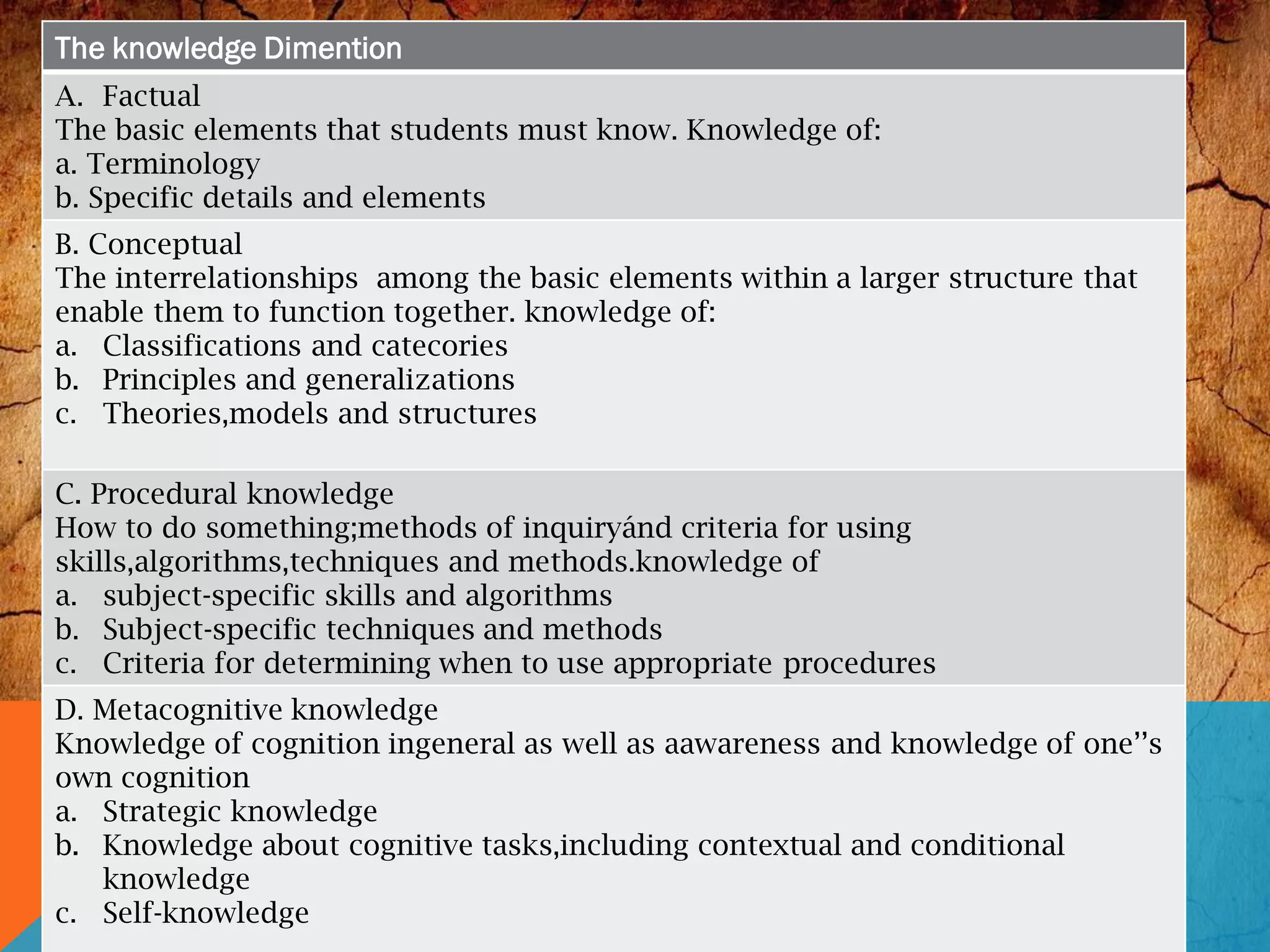
The knowledge Dimention
A. Factual
The basic elements that students must know. Knowledge of:
a. Terminology
b. Specific details and elements
B. Conceptual
The interrelationships among the basic elements within a larger structure that
enable them to function together. knowledge of:
a. Classifications and catecories
b. Principles and generalizations
c. Theories,models and structures
C. Procedural knowledge
How to do something;methods of inquiryánd criteria for using
skills,algorithms,techniques and methods.knowledge of
a. subject-specific skills and algorithms
b. Subject-specific techniques and methods
c. Criteria for determining when to use appropriate procedures
D. Metacognitive knowledge
Knowledge of cognition ingeneral as well as aawareness and knowledge of one’’s
own cognition
a. Strategic knowledge
b. Knowledge about cognitive tasks,including contextual and conditional
knowledge
c. Self-knowledge
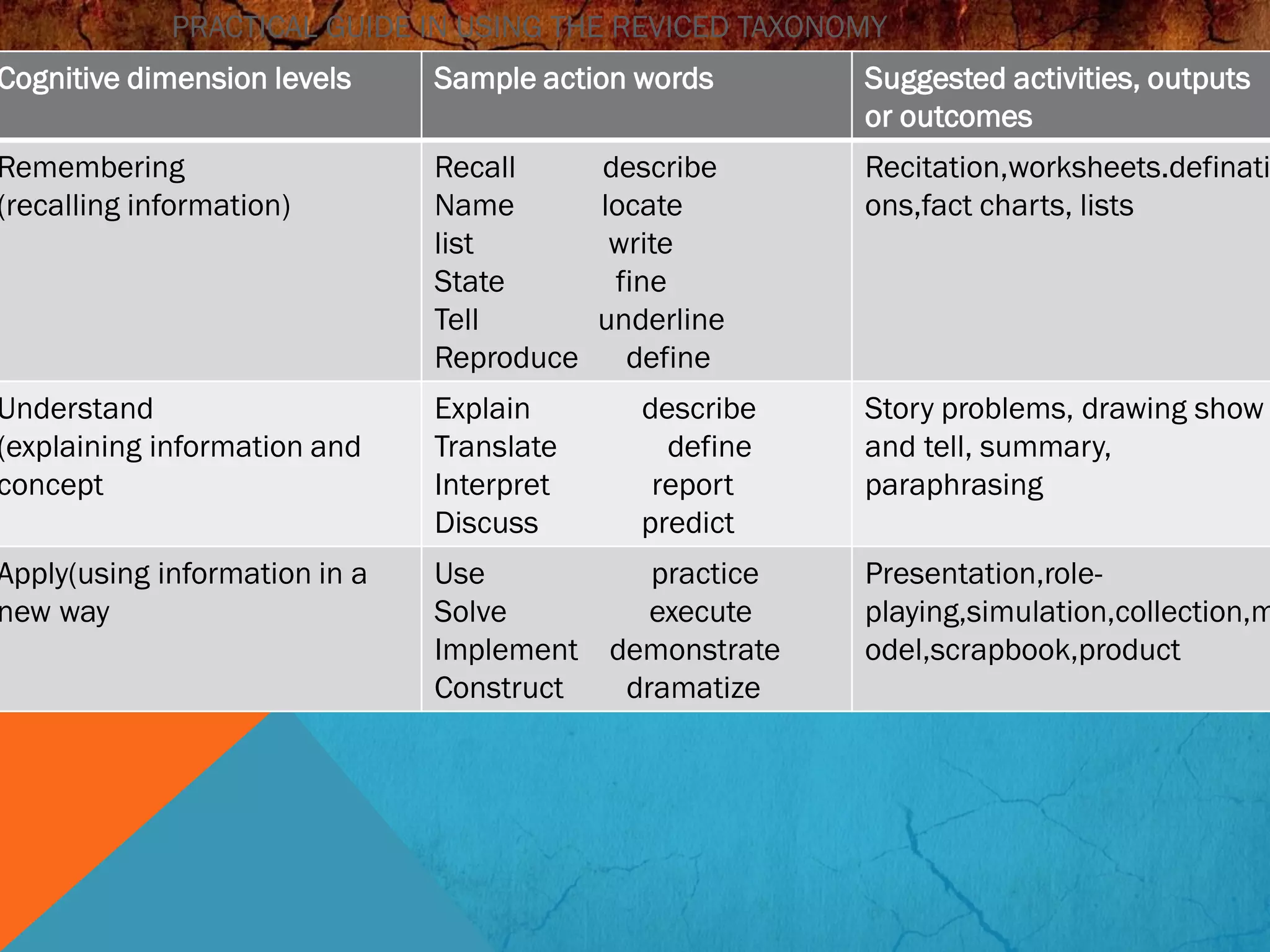
Cognitive dimension levels Sample action words Suggested activities, outputs
or outcomes
Remembering
(recalling information)
Recall describe
Name locate
list write
State fine
Tell underline
Reproduce define
Recitation,worksheets.definati
ons,fact charts, lists
Understand
(explaining information and
concept
Explain describe
Translate define
Interpret report
Discuss predict
Story problems, drawing show
and tell, summary,
paraphrasing
Apply(using information in a
new way
Use practice
Solve execute
Implement demonstrate
Construct dramatize
Presentation,role-
playing,simulation,collection,m
odel,scrapbook,product
PRACTICAL GUIDE IN USING THE REVICED TAXONOMY
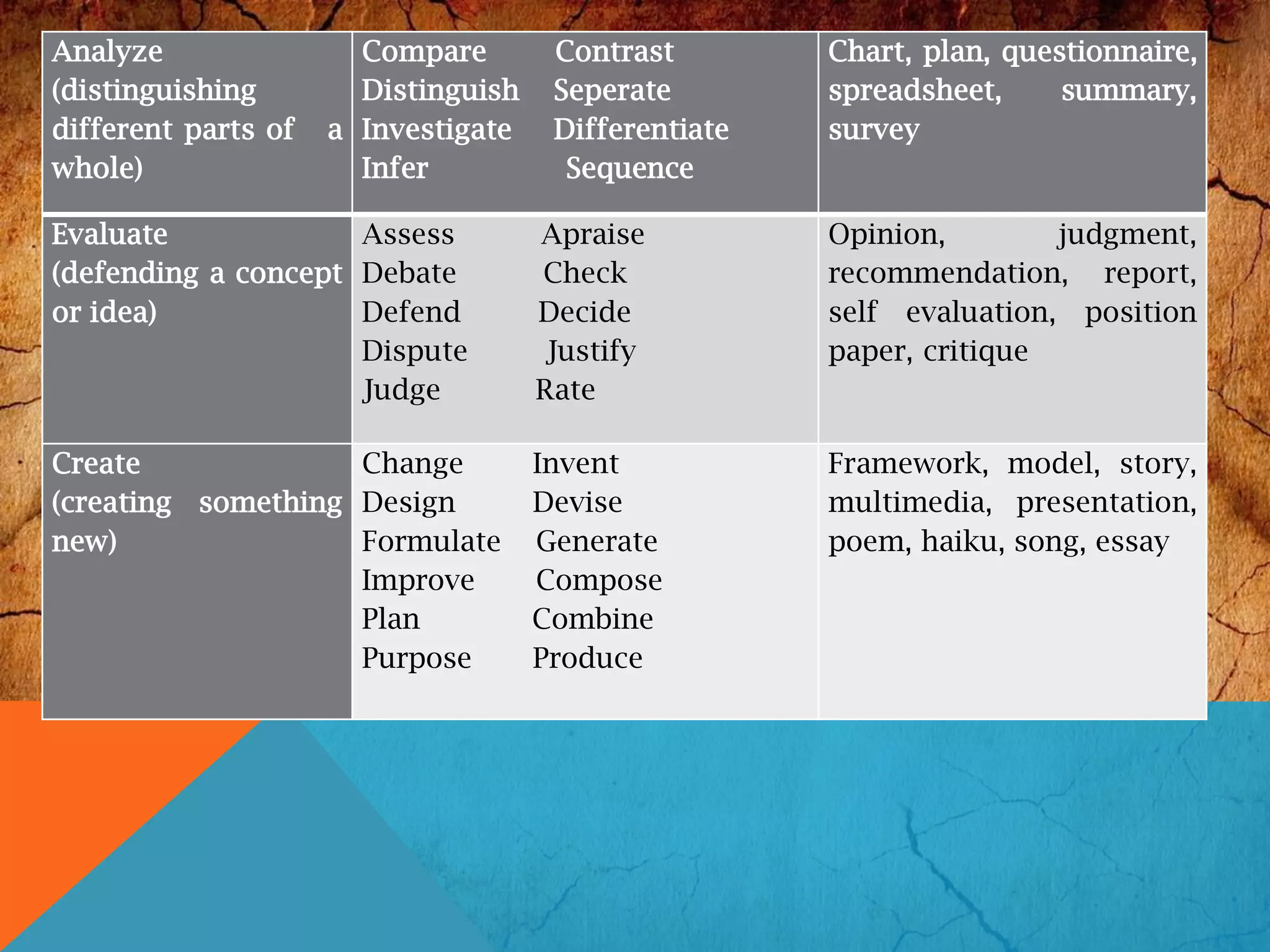
Analyze
(distinguishing
different parts of a
whole)
Compare Contrast
Distinguish Seperate
Investigate Differentiate
Infer Sequence
Chart, plan, questionnaire,
spreadsheet, summary,
survey
Evaluate
(defending a concept
or idea)
Assess Apraise
Debate Check
Defend Decide
Dispute Justify
Judge Rate
Opinion, judgment,
recommendation, report,
self evaluation, position
paper, critique
Create
(creating something
new)
Change Invent
Design Devise
Formulate Generate
Improve Compose
Plan Combine
Purpose Produce
Framework, model, story,
multimedia, presentation,
poem, haiku, song, essay
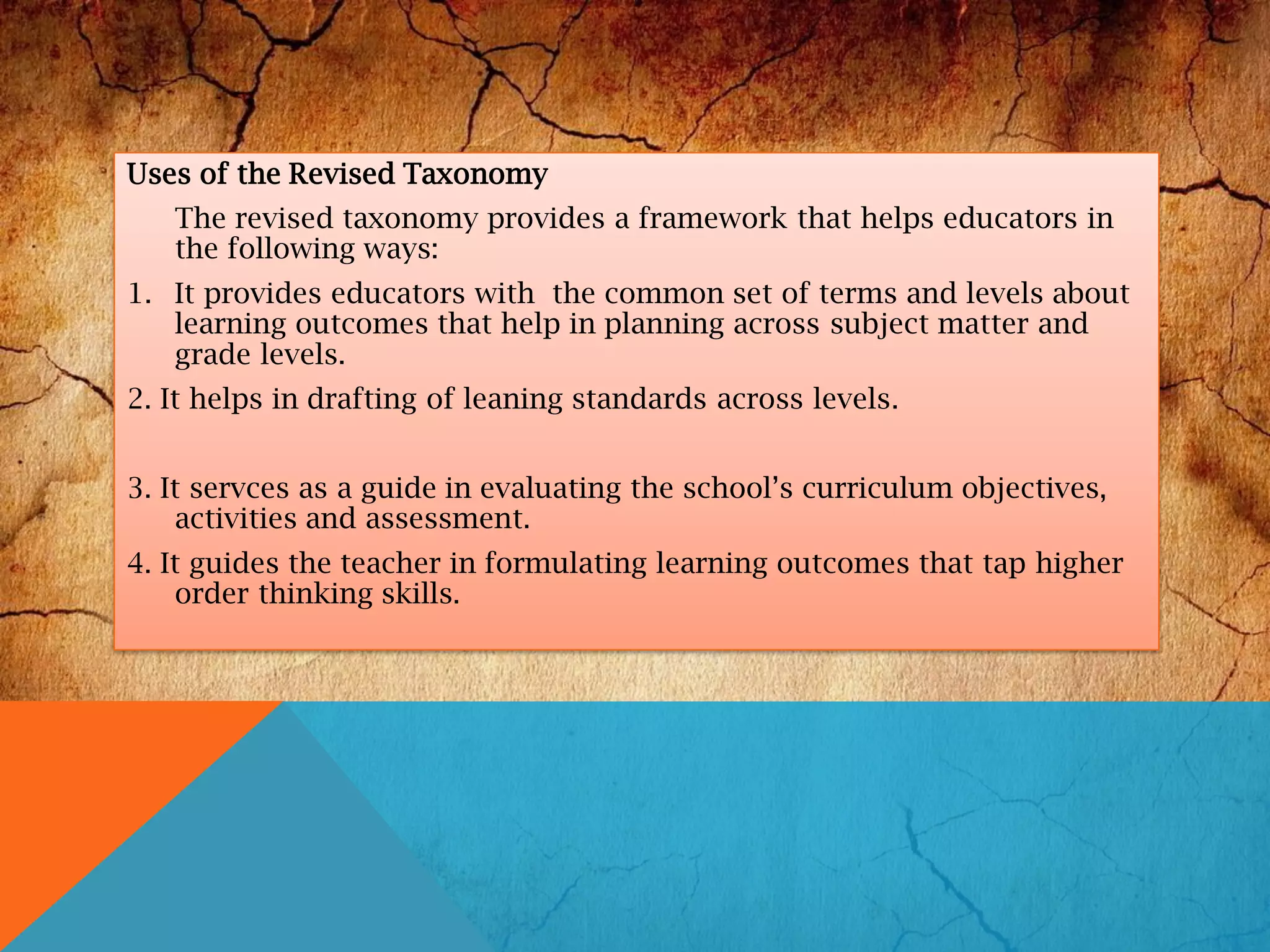
Uses of the Revised Taxonomy
The revised taxonomy provides a framework that helps educators in
the following ways:
1. It provides educators with the common set of terms and levels about
learning outcomes that help in planning across subject matter and
grade levels.
2. It helps in drafting of leaning standards across levels.
3. It servces as a guide in evaluating the school’s curriculum objectives,
activities and assessment.
4. It guides the teacher in formulating learning outcomes that tap higher
order thinking skills.
The Revised Blooms Taxonomy of Educational Objectives.pdf

The Revised Blooms Taxonomy of Educational Objectives.pdf

  • 1.
    MODULE 16 THE REVISEDBLOOMS TAXONOMY OF EDUCATIONAL OBJECTIVES
  • 2.
    After 45 yearssincethe publication of Blooms Taxonomy, Lorin Anderson (Bloom’s former student) and David Karthwohl led a new group of experts to work together. The result was what is now called the revise taxonomy. 1. Levels or categories of thinking in the old taxonomy were nouns, while the revised taxonomy they are verbs. The use of action words instead of nouns was done to highlight that thinking is an active process. For example, evaluate instead of evaluation, or analyze instead of analysis. 2. While the revised taxonomy remains to be hierarchical levels of increasing complexity, it is instead to be mor flexible, is that allows the categories to overlap.
  • 3.
    3. Remember isa more appropriate word for the first thinking level which involves recalling and retrieving knowledge. 4. The comprehension level was changed to understand. 5. Synthesis was change to create and was placed as the highest level. 6. The cognitive domain now includes two dimensions: the cognitive dimension and the knowledge dimension. The knowlege dimension of the revised taxonomy was based on the sub categories of knowledge in the old taxonomy
  • 4.
    Bloom’s Taxonomy Cognitive Domain OldTaxonomy (1 dimension) Revised Taxonomy (2 dimensions} 1. Knowledge 2. Comprehension 3. Application 4. Analysis 5. Synthesis 6. Evaluation Cognitive dimension Knowledge Dimension 1. Remember 2. Understand 3. Apply 4. Analyze 5. Evaluate 6. Create Factual Conceptual Procedural Metacognitive
  • 5.
    THE REVISED TAXONOMYWITH 2 DIMENSIONS OF THE COGNITIVE DOMAIN The Cognitive Dimension The Knowledge Dimension 1. REMEMBER Retrieving relevant knowledge from long- term memory 1.1 recognizing 1.2 recalling 2. UNDERSTAND Determining the meaning of instructional messages, including oral, written and graphic communication 2.1 interpreting 2.5 inferring A. FACTUAL The basic elements that students must know. Knowledge of: a. Terminology b. Specific details and elements B. CONCEPTUAL the interrelationships among the basic elements within a larger structure that enable them to function together. a. Classifications and categories 2.2 exemplifying 2.6 comparing 2.3 classifying 2.7 explaining 2.4 summarizing b. Principles and generalizations c. Theories, models, and structures
  • 6.
    3. APPLY Carrying outor using a procedure in a given situation 3.1 executing 3.2implementing 4. ANALYZE Breaking material into its constituents parts and detecting how the parts relate to one another and to an overall structure or purpose 4.1 differentiating 4.2 organizing 4.3 attributing 5. EVALUATE Making judgements based on criteria and standards 5.1 checking 5.2 critiquing C. PROCEDURAL KNOWLEDGE How to do something; methods of inquiry, and criteria for using skills, algorithm's, techniques and methods. a. Subject specific skills and algorithm's, b. Subject specific techniques and methods c. Criteria for determining when to use appropriate procedures D. METACOGNITIVE KNOWLEDGE Knowledge of cognition in general as well as awareness and knowledge of one’s own cognition a. Strategic knowledge b. Knowledge about cognitive tasks, including contextual and conditional knowledge c. Self-knowledge
  • 7.
    6. CREATE Putting elementstogether to form a novel, coherent whole or make an original product 6.1 generating 6.2 planning 6.3 producing
  • 8.
    The knowledge Dimention A.Factual The basic elements that students must know. Knowledge of: a. Terminology b. Specific details and elements B. Conceptual The interrelationships among the basic elements within a larger structure that enable them to function together. knowledge of: a. Classifications and catecories b. Principles and generalizations c. Theories,models and structures C. Procedural knowledge How to do something;methods of inquiryánd criteria for using skills,algorithms,techniques and methods.knowledge of a. subject-specific skills and algorithms b. Subject-specific techniques and methods c. Criteria for determining when to use appropriate procedures D. Metacognitive knowledge Knowledge of cognition ingeneral as well as aawareness and knowledge of one’’s own cognition a. Strategic knowledge b. Knowledge about cognitive tasks,including contextual and conditional knowledge c. Self-knowledge
  • 9.
    Cognitive dimension levelsSample action words Suggested activities, outputs or outcomes Remembering (recalling information) Recall describe Name locate list write State fine Tell underline Reproduce define Recitation,worksheets.definati ons,fact charts, lists Understand (explaining information and concept Explain describe Translate define Interpret report Discuss predict Story problems, drawing show and tell, summary, paraphrasing Apply(using information in a new way Use practice Solve execute Implement demonstrate Construct dramatize Presentation,role- playing,simulation,collection,m odel,scrapbook,product PRACTICAL GUIDE IN USING THE REVICED TAXONOMY
  • 10.
    Analyze (distinguishing different parts ofa whole) Compare Contrast Distinguish Seperate Investigate Differentiate Infer Sequence Chart, plan, questionnaire, spreadsheet, summary, survey Evaluate (defending a concept or idea) Assess Apraise Debate Check Defend Decide Dispute Justify Judge Rate Opinion, judgment, recommendation, report, self evaluation, position paper, critique Create (creating something new) Change Invent Design Devise Formulate Generate Improve Compose Plan Combine Purpose Produce Framework, model, story, multimedia, presentation, poem, haiku, song, essay
  • 11.
    Uses of theRevised Taxonomy The revised taxonomy provides a framework that helps educators in the following ways: 1. It provides educators with the common set of terms and levels about learning outcomes that help in planning across subject matter and grade levels. 2. It helps in drafting of leaning standards across levels. 3. It servces as a guide in evaluating the school’s curriculum objectives, activities and assessment. 4. It guides the teacher in formulating learning outcomes that tap higher order thinking skills.