The appointment of the
education commission of 1964-
1966 popularly known as
‘KOTHARI COMMISION’ was a
significant event in the history
of education in free India.
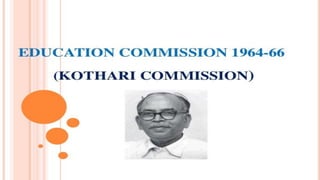
In 1964,Dr.D.S Kothari was
requested to give advise to
the government on the action
to be taken for the
development of education at
all the levels and he
submitted a report in 1966.
RECOMMENDATIONS
The opening sentence report ‘The
Destiny of India is being shaped in
the classrooms’.
‘According to the commission', the
most important and urgent reform
needed in education was to
transform it and related it to the
life, needs and aspirations of the
people and there by make it a
powerful instrument of social,
economic and cultural
transformation necessary for the
realization of the national goals’.
AIMS OF EDUCATIONS
The commissions clearly specified the five
important aims of educations in India.
1.EDUCATION AND PRODUCTIVITY
• Science education as an integral part of school
course.
• Work experience as an important aspect of
general educations.
• Vocational education especially at the secondary
school stage to meet the needs of industry,
agriculture and commerce.
• Improvement of scientific and technical
education and research at the university stage.
2. SOCIAL AND NATIONAL INTEGRATION
According to the commission
common school system, social service, NSS,NCC
teaching languages, Literatures, philosophy and
history of India would go a long way in promoting
national integration.
3. EDUCATION AND MODERNISATION
Another important aim of education is
modernization. Education should awaken curiosity,
Interests, Attitudes and sense of values and skills in
the pupils.
4. DEVELOPMENT OF DEMOCRASY
India is the largest
democracy in the world. The
success of democracy depends
upon the education of the masses.
5. SOCIAL AND SPIRITUAL VALUES
Education system
should emphasize the development
of fundamental, Social, Moral and
Spiritual values.
EDUCATIONAL STUCTURE
The commission recommended pre
school education ( 1-3 years ) and 10 year period
of general education.it may be subdivided into
Lower primary and Upper primary stages. The high
school stage ( 3-2 years )and higher secondary
stage of three or more years were also
recommended by the commission.
STATUS OF TEACHERS
Teachers have to play an important
role in improving the standard of
education. Their quantity, qualification
and character should be up to the mark.
The socio-economic and professional
status of teachers must be improved.
EQUALISATION OF EDUCATIONAL
OPPORTUNITY
o The commission stressed the need for
equalization of educational opportunity.
o Scholarships and books should be given
to deserving students.
oAdult education is also to be improved.
CURRICULAR DEVELOPMENT
 The commission felt that the existing curriculum
is badly in need of reform.
METHODS OF TEACHING
The commission emphasized the importance of
modern methods of teaching. The commission
recommended dynamic methods of teaching and
flexibility of curriculum in order to make school life
lively and inspiring.
LANGUAGE POLICY
The three language formula after due modification
should be used as medium of instruction.
The mother tongue or regional language should be
compulsory at the lower primary stage.
The official language Hindi or associated language
English should be added at the higher primary stage.
The modern Indian or European language may also be
studied the secondary stage.
TEXT BOOKS AND STUDY METERIALS
A comprehensive programme of text
book production at national level should be
implemented.
SCHOOL BUILDING
Since the accommodation in most of
the school is unsatisfactory the commission
recommended the construction of new school
buildings keeping in view the economy and
local condition.
GUIDANCE AND COUNSELLING
Hence adequate arrangements should be made in
all secondary schools to introduce guidance service with a
trained counselor.
EVALUATION
Evaluation is a continuous process closely related to the
aims and objectives of education. The written examination
should be improved and oral tests as part of internal
assessment should be given due weightage.
OTHER IMPORTANT RECOMMENDATIONS
The commission also
stressed the importance of
science,education,vocational and
technical training ,agricultural
research ,adult education, literacy
campaign.
GOVERNMENT ACTION
It was on the
basis of the report that
the NEW EDUCATION
POLICY was declared in
1968.
MERITS
 The Kothari commission report was a masterly piece of work on
all aspects of Indian Education.
 The commission presented a comprehensive study of
educational problems in the context of the national needs and
aspirations.
 The commission made a realistic approach to link education to
the socio-economic , cultural and spiritual aspects of Indian
life.
 The commission recommended reasonable and respectable
scales of pay to all categories of teachers subject to periodical
revision.
DEMERITS
The position of heads of schools was left
undecided by the commission.
The commission committed a mistake in placing
Sanskrit on a par with Arabic.
The views of commission on medium of
instruction was not only conflicting but also
controversial.

Kothari commission

  • 2.
    The appointment ofthe education commission of 1964- 1966 popularly known as ‘KOTHARI COMMISION’ was a significant event in the history of education in free India. In 1964,Dr.D.S Kothari was requested to give advise to the government on the action to be taken for the development of education at all the levels and he submitted a report in 1966.
  • 3.
    RECOMMENDATIONS The opening sentencereport ‘The Destiny of India is being shaped in the classrooms’. ‘According to the commission', the most important and urgent reform needed in education was to transform it and related it to the life, needs and aspirations of the people and there by make it a powerful instrument of social, economic and cultural transformation necessary for the realization of the national goals’.
  • 4.
    AIMS OF EDUCATIONS Thecommissions clearly specified the five important aims of educations in India. 1.EDUCATION AND PRODUCTIVITY • Science education as an integral part of school course. • Work experience as an important aspect of general educations. • Vocational education especially at the secondary school stage to meet the needs of industry, agriculture and commerce. • Improvement of scientific and technical education and research at the university stage.
  • 5.
    2. SOCIAL ANDNATIONAL INTEGRATION According to the commission common school system, social service, NSS,NCC teaching languages, Literatures, philosophy and history of India would go a long way in promoting national integration. 3. EDUCATION AND MODERNISATION Another important aim of education is modernization. Education should awaken curiosity, Interests, Attitudes and sense of values and skills in the pupils.
  • 6.
    4. DEVELOPMENT OFDEMOCRASY India is the largest democracy in the world. The success of democracy depends upon the education of the masses. 5. SOCIAL AND SPIRITUAL VALUES Education system should emphasize the development of fundamental, Social, Moral and Spiritual values.
  • 7.
    EDUCATIONAL STUCTURE The commissionrecommended pre school education ( 1-3 years ) and 10 year period of general education.it may be subdivided into Lower primary and Upper primary stages. The high school stage ( 3-2 years )and higher secondary stage of three or more years were also recommended by the commission.
  • 8.
    STATUS OF TEACHERS Teachershave to play an important role in improving the standard of education. Their quantity, qualification and character should be up to the mark. The socio-economic and professional status of teachers must be improved.
  • 9.
    EQUALISATION OF EDUCATIONAL OPPORTUNITY oThe commission stressed the need for equalization of educational opportunity. o Scholarships and books should be given to deserving students. oAdult education is also to be improved.
  • 10.
    CURRICULAR DEVELOPMENT  Thecommission felt that the existing curriculum is badly in need of reform. METHODS OF TEACHING The commission emphasized the importance of modern methods of teaching. The commission recommended dynamic methods of teaching and flexibility of curriculum in order to make school life lively and inspiring.
  • 11.
    LANGUAGE POLICY The threelanguage formula after due modification should be used as medium of instruction. The mother tongue or regional language should be compulsory at the lower primary stage. The official language Hindi or associated language English should be added at the higher primary stage. The modern Indian or European language may also be studied the secondary stage.
  • 12.
    TEXT BOOKS ANDSTUDY METERIALS A comprehensive programme of text book production at national level should be implemented. SCHOOL BUILDING Since the accommodation in most of the school is unsatisfactory the commission recommended the construction of new school buildings keeping in view the economy and local condition.
  • 13.
    GUIDANCE AND COUNSELLING Henceadequate arrangements should be made in all secondary schools to introduce guidance service with a trained counselor. EVALUATION Evaluation is a continuous process closely related to the aims and objectives of education. The written examination should be improved and oral tests as part of internal assessment should be given due weightage.
  • 14.
    OTHER IMPORTANT RECOMMENDATIONS Thecommission also stressed the importance of science,education,vocational and technical training ,agricultural research ,adult education, literacy campaign.
  • 15.
    GOVERNMENT ACTION It wason the basis of the report that the NEW EDUCATION POLICY was declared in 1968.
  • 16.
    MERITS  The Kotharicommission report was a masterly piece of work on all aspects of Indian Education.  The commission presented a comprehensive study of educational problems in the context of the national needs and aspirations.  The commission made a realistic approach to link education to the socio-economic , cultural and spiritual aspects of Indian life.  The commission recommended reasonable and respectable scales of pay to all categories of teachers subject to periodical revision.
  • 17.
    DEMERITS The position ofheads of schools was left undecided by the commission. The commission committed a mistake in placing Sanskrit on a par with Arabic. The views of commission on medium of instruction was not only conflicting but also controversial.