The PRINCIPLES of LEARNING (Principles of Teaching 1)
The document outlines key principles of learning, emphasizing that learning is an internal process activated by the learner, and is influenced by personal relevance and experiences. It describes characteristics of effective learning such as cooperation, emotion, and individual uniqueness, alongside laws of learning like the law of effect and the law of readiness. Overall, understanding these principles can guide effective teaching practices.
• WHAT ISMEANT BY
LEARNING?
• HOW and WHEN
CAN WE SAY THAT
SOMEONE has
LEARNED?
3.
‘’IF YOU ARENOT WILLING TO
LEARN, NO ONE CAN HELP
YOU.
IF YOU ARE WILLING TO LEARN,
NO ONE CAN STOP YOU’’.
-th?NK
4.
PRINCIPLES OF LEARNING
FromHorne and Pine
(1990)
• The principles of learning provide
additional insight into what makes people
learn most effectively. The principles have
been discovered, tested, and used in
practical situations.
• By knowing some principles on how
learning takes place, we will be guided
on how to teach.
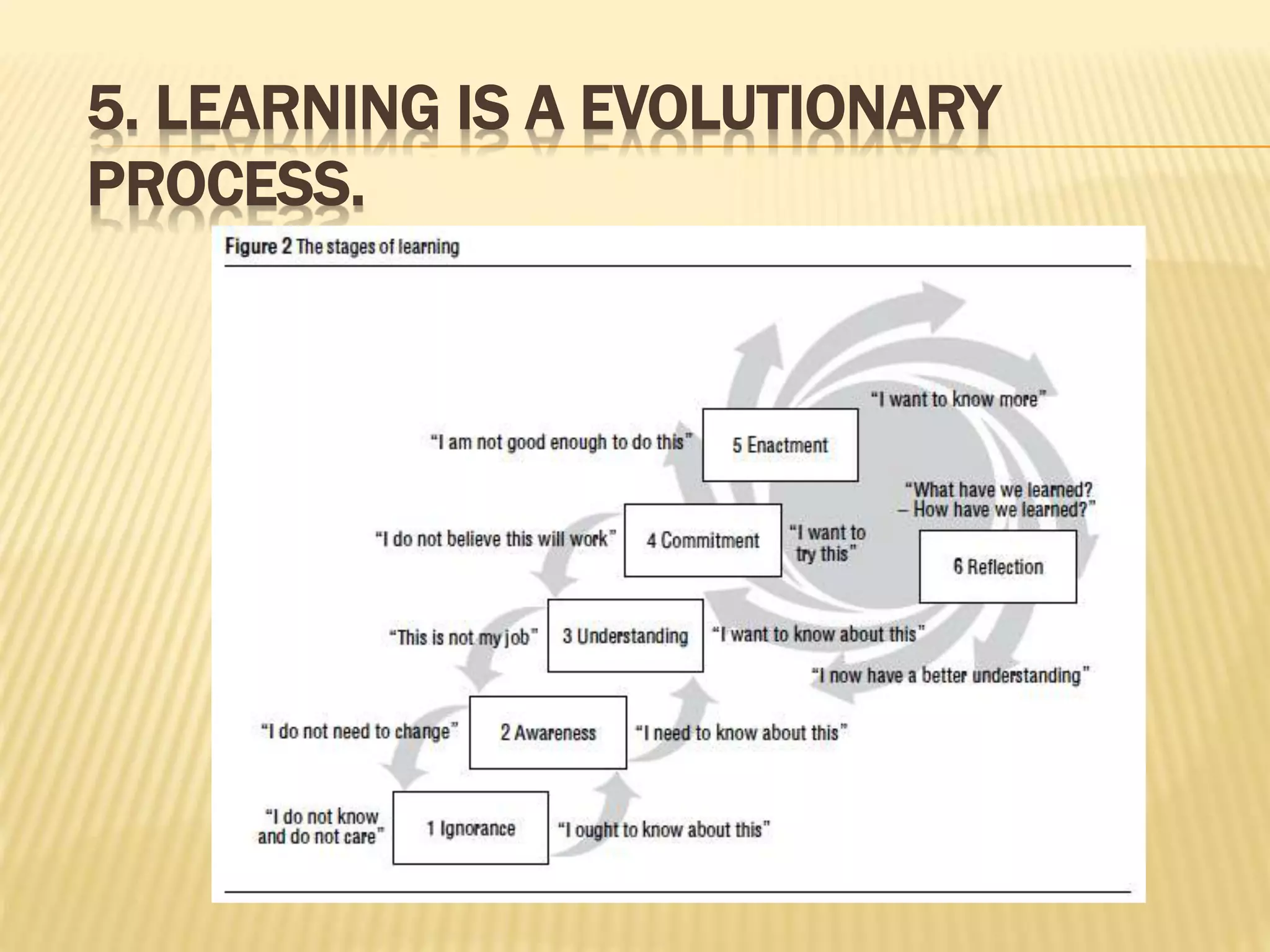
5.
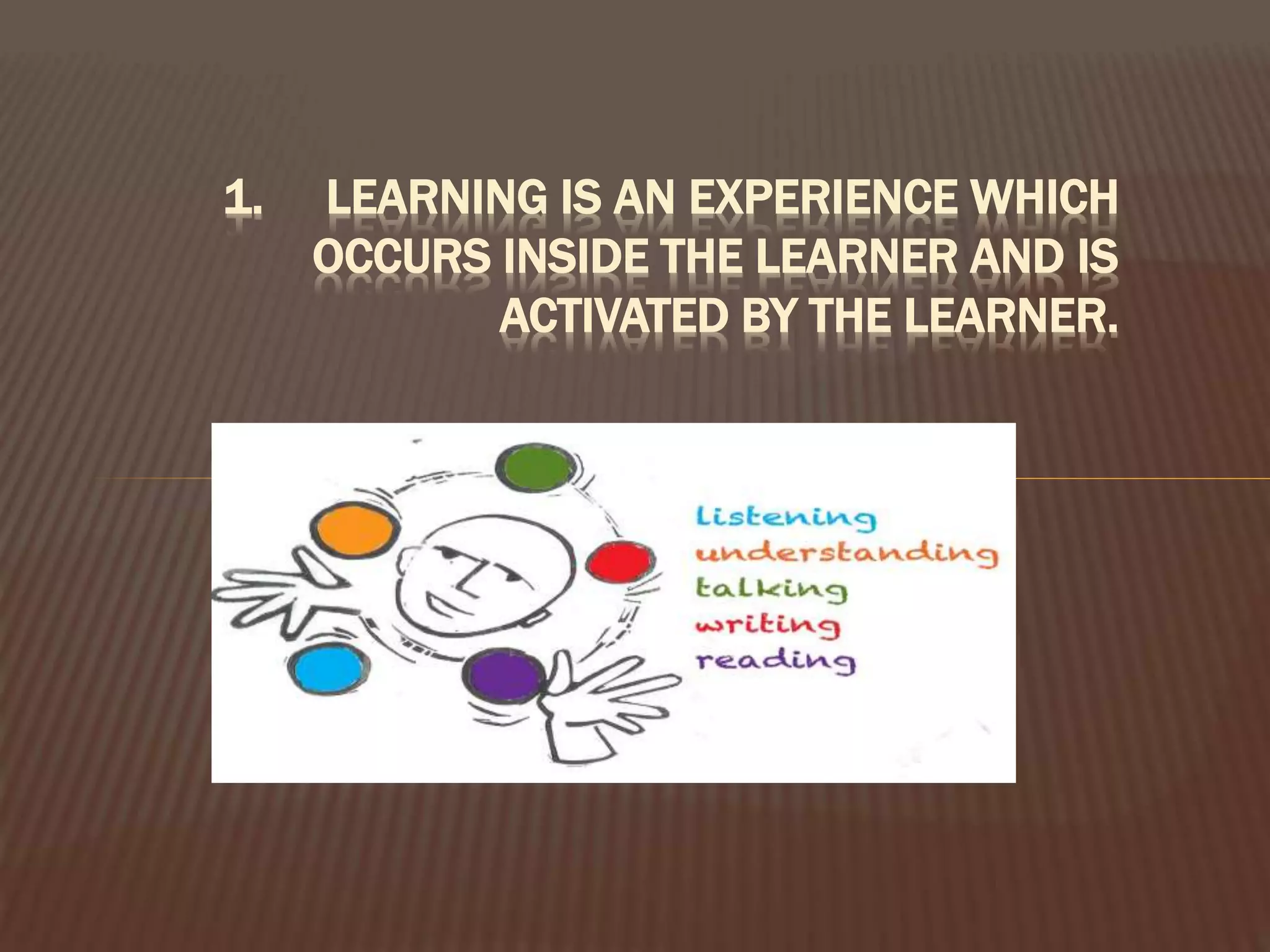
1. LEARNING ISAN EXPERIENCE WHICH
OCCURS INSIDE THE LEARNER AND IS
ACTIVATED BY THE LEARNER.
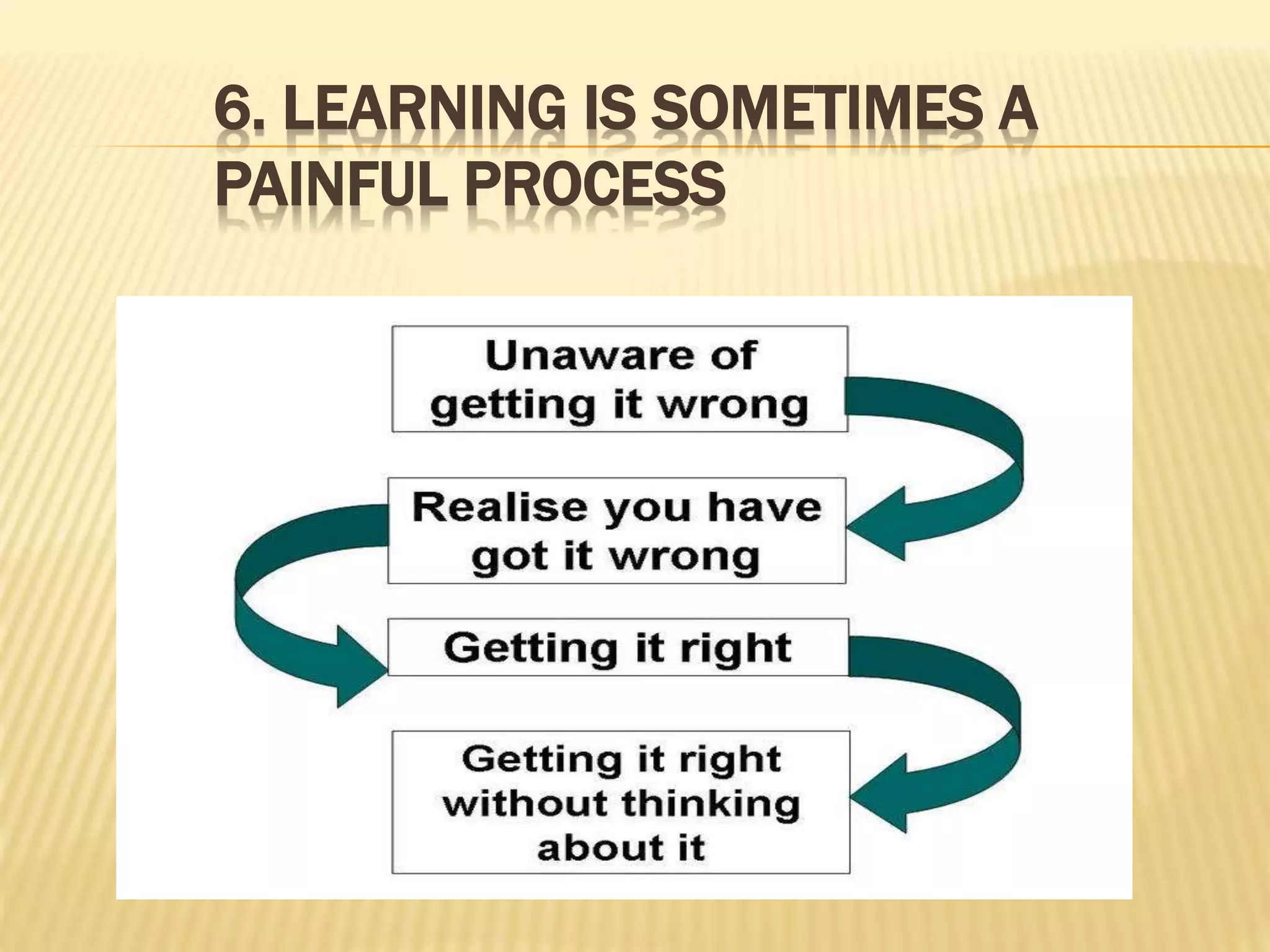
6.
NO ONE DIRECTLYTEACHES ANYONE
ANYTHING of SIGNIFICANCE…
‘’People LEARN
what they
WANT to
LEARN,
they SEE what
they WANT to
SEE,
and HEAR what
they WANT to
HEAR’’.
7.
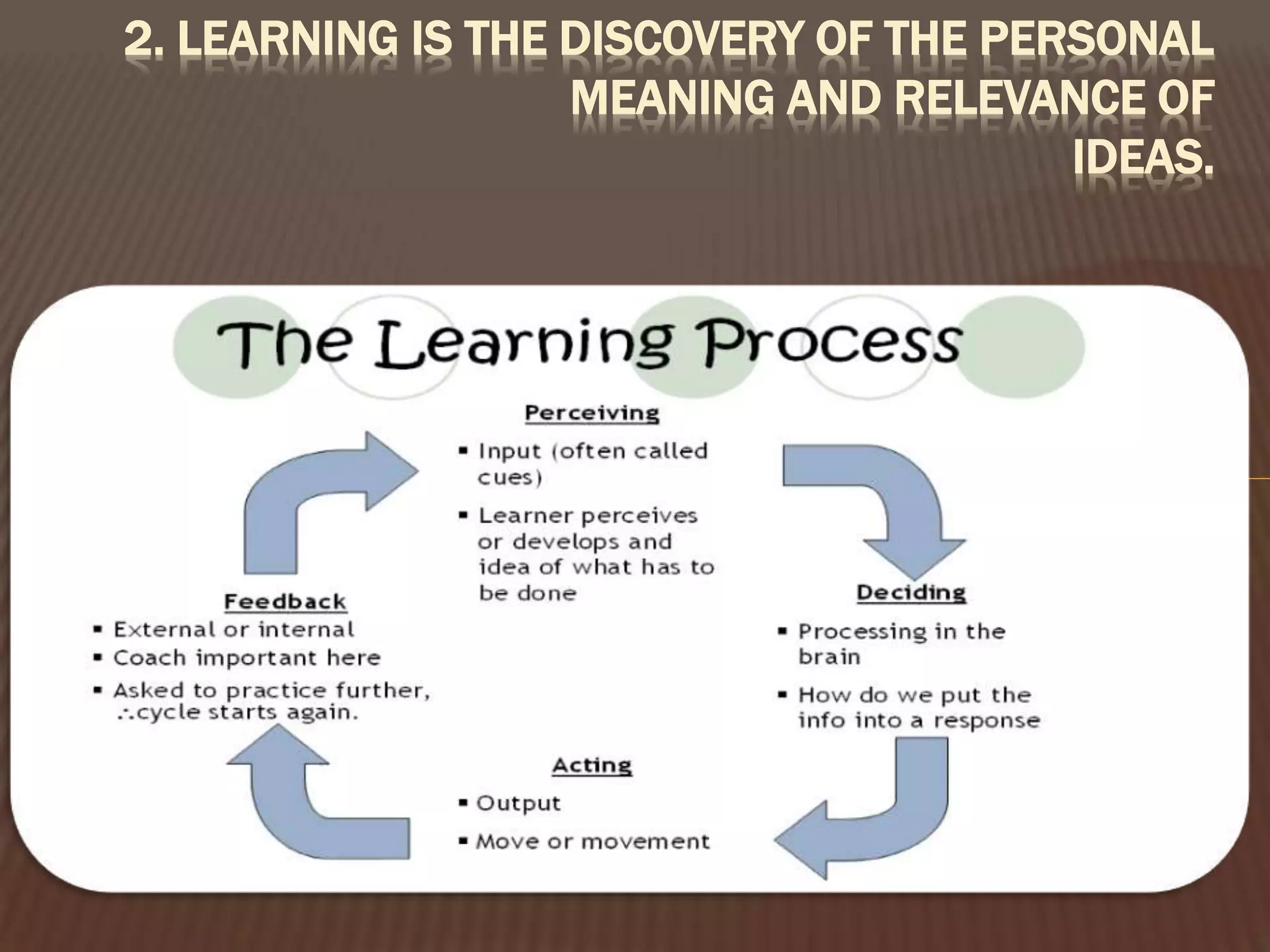
2. LEARNING ISTHE DISCOVERY OF THE PERSONAL
MEANING AND RELEVANCE OF
IDEAS.
8.
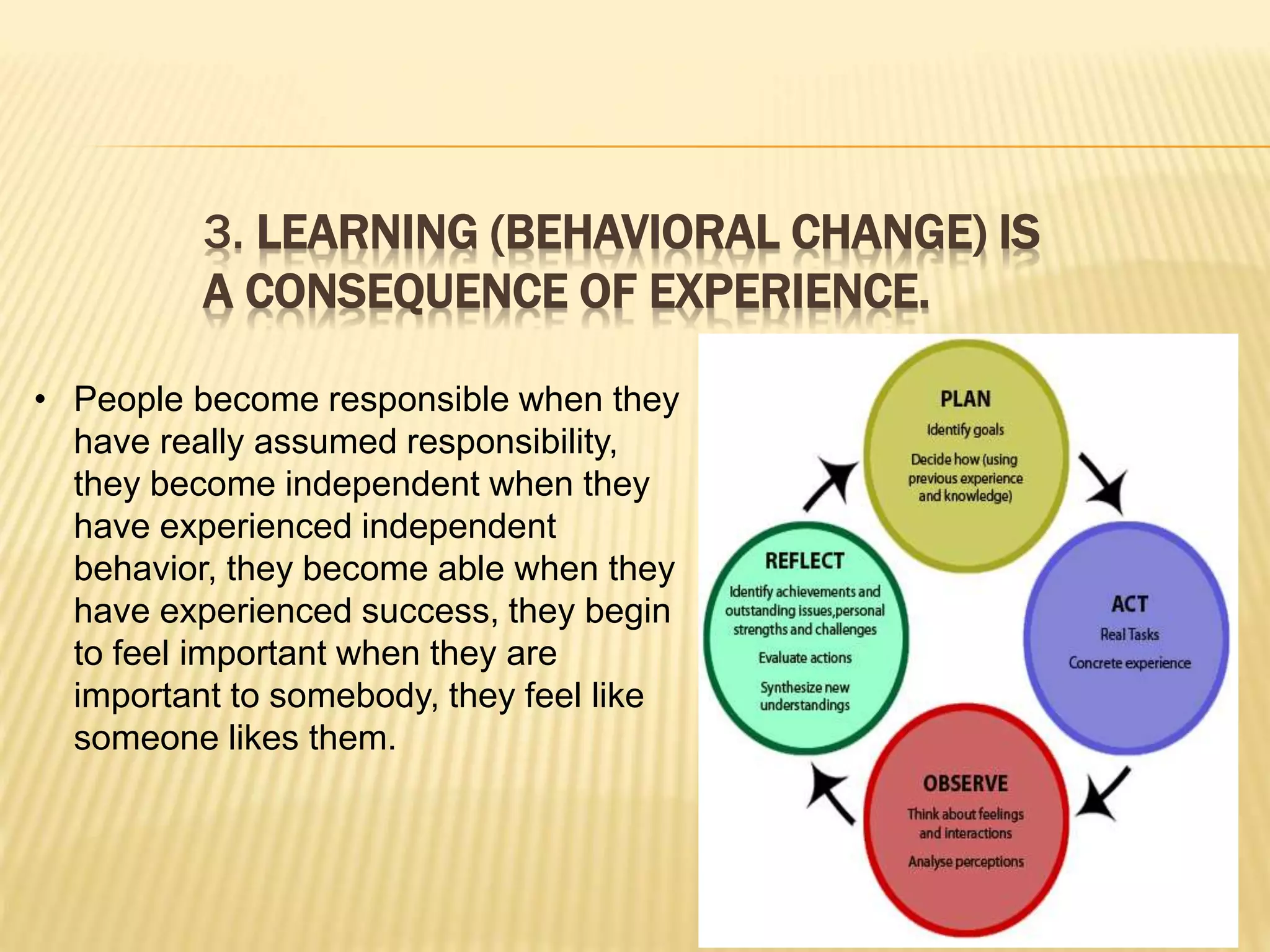
3. LEARNING (BEHAVIORALCHANGE) IS
A CONSEQUENCE OF EXPERIENCE.
• People become responsible when they
have really assumed responsibility,
they become independent when they
have experienced independent
behavior, they become able when they
have experienced success, they begin
to feel important when they are
important to somebody, they feel like
someone likes them.
9.
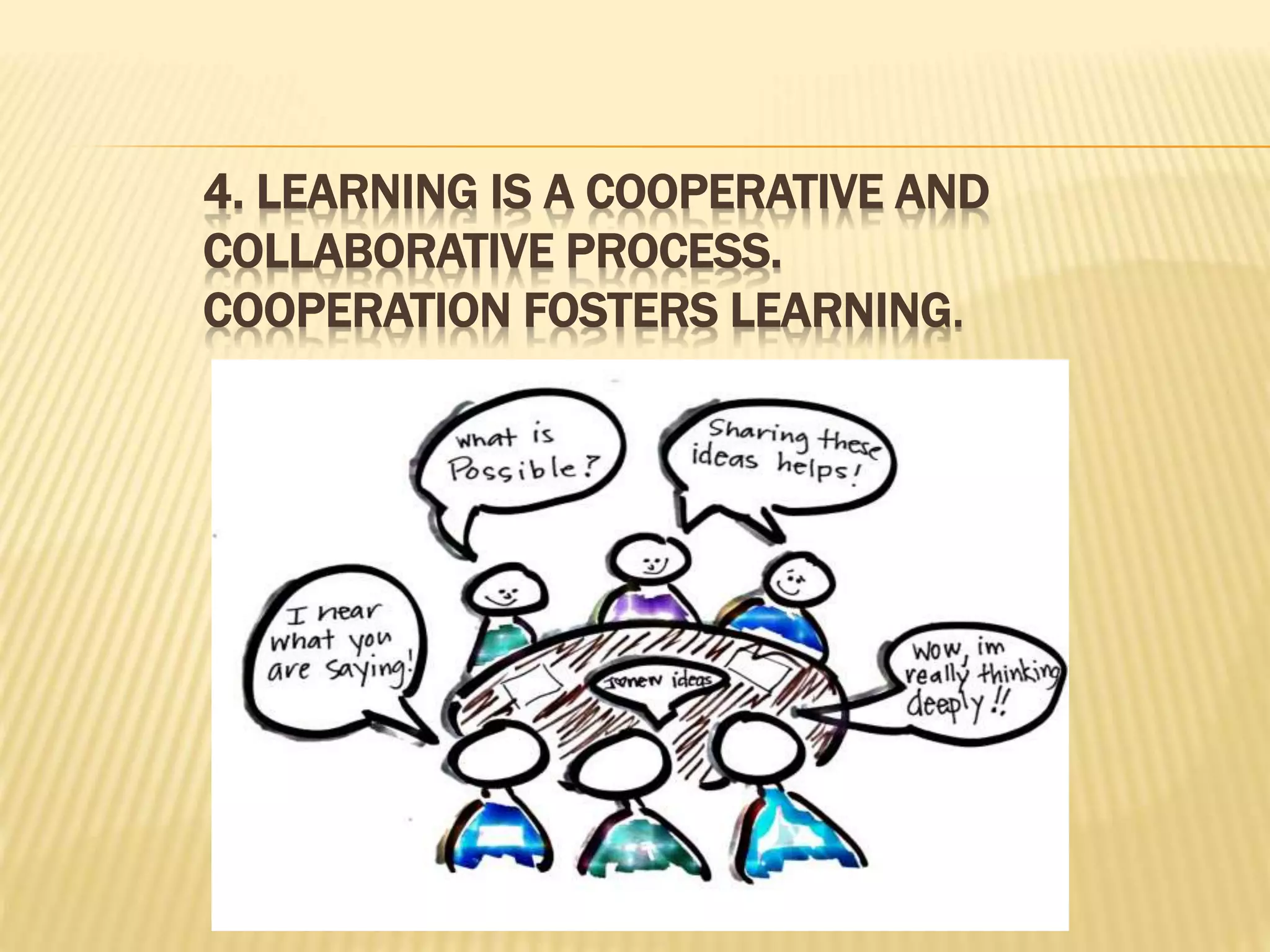
4. LEARNING ISA COOPERATIVE AND
COLLABORATIVE PROCESS.
COOPERATION FOSTERS LEARNING.
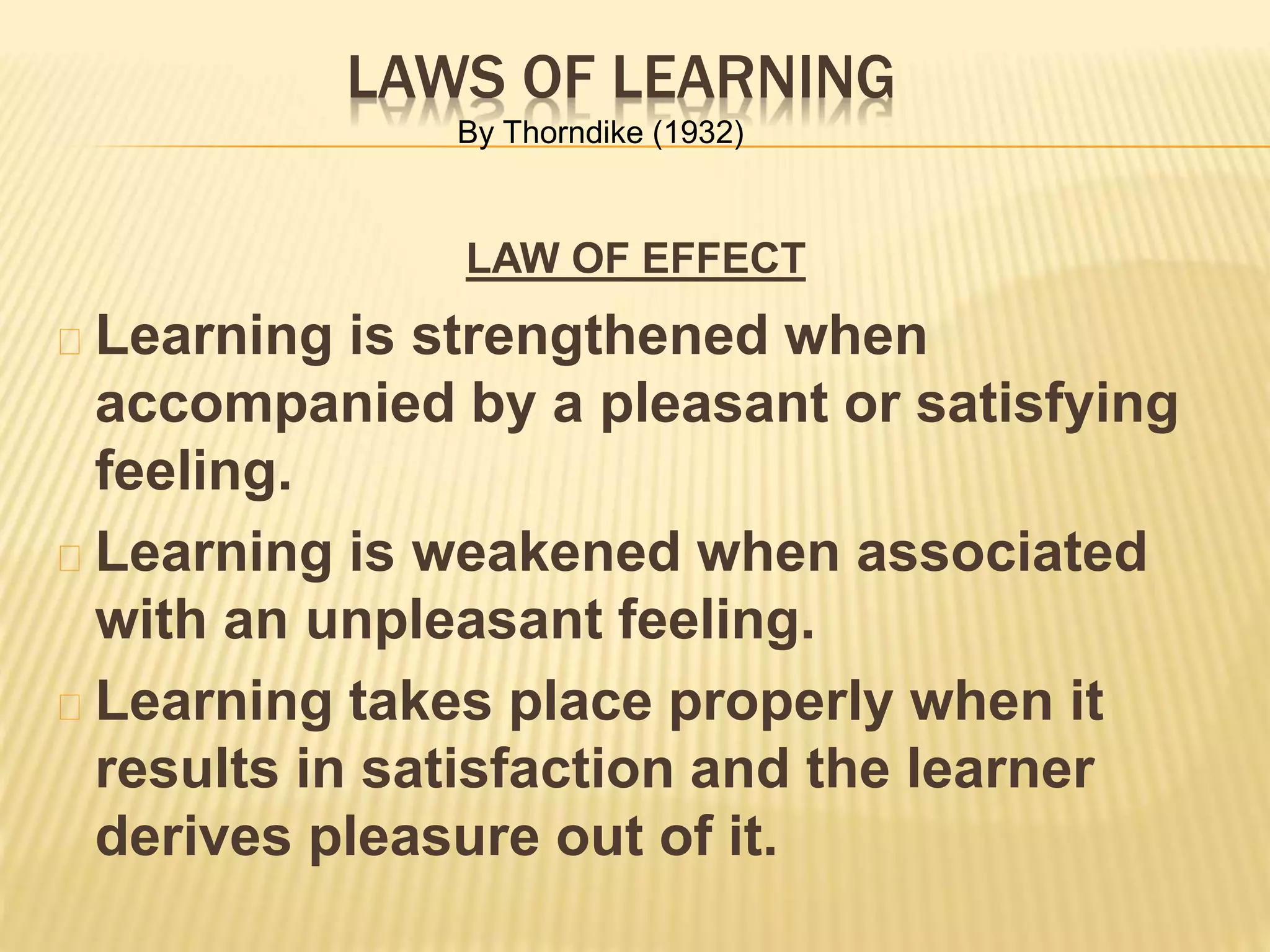
LAWS OF LEARNING
LAWOF EFFECT
Learning is strengthened when
accompanied by a pleasant or satisfying
feeling.
Learning is weakened when associated
with an unpleasant feeling.
Learning takes place properly when it
results in satisfaction and the learner
derives pleasure out of it.
By Thorndike (1932)
17.
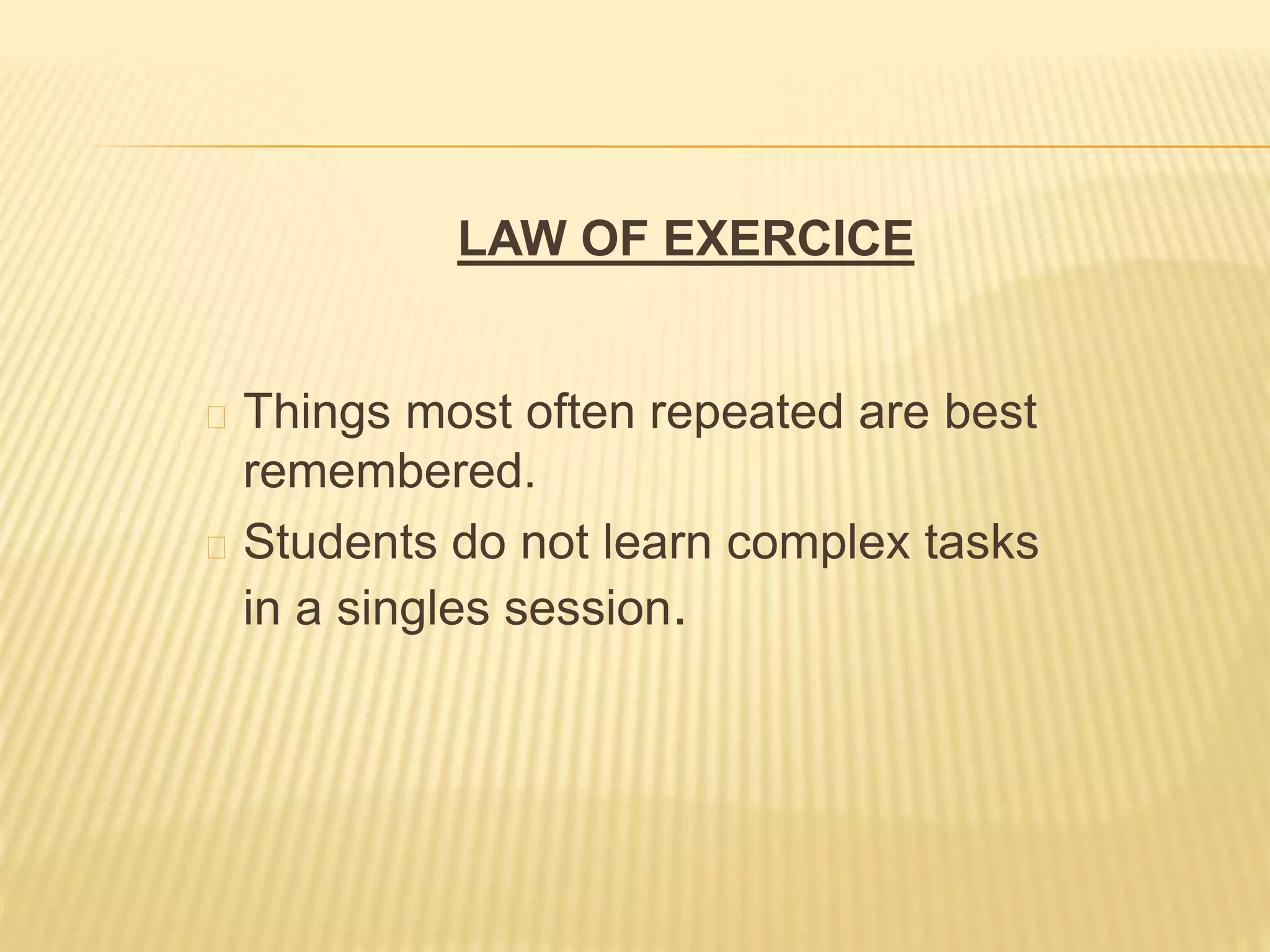
LAW OF EXERCICE
Thingsmost often repeated are best
remembered.
Students do not learn complex tasks
in a singles session.
18.
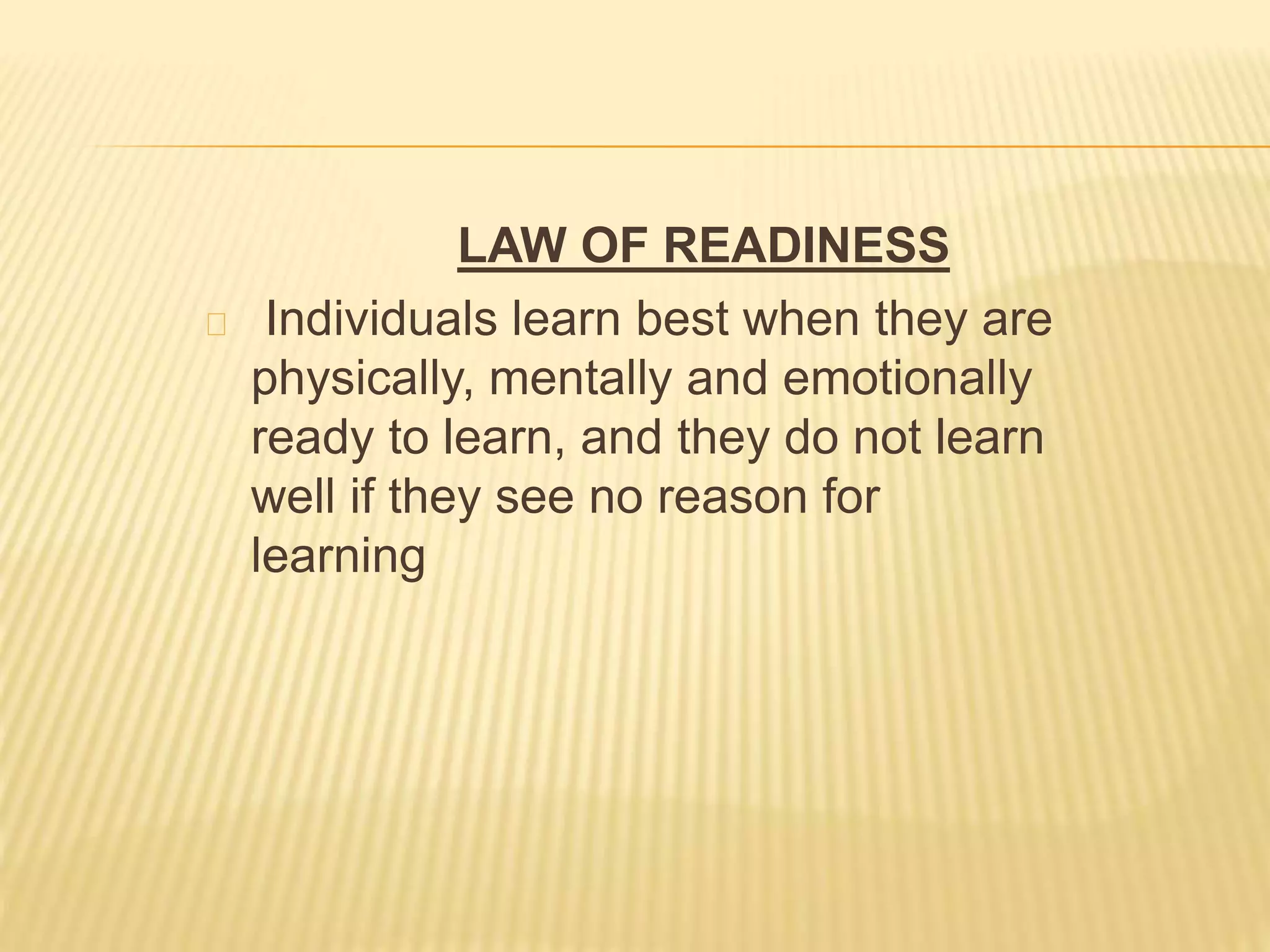
LAW OF READINESS
Individualslearn best when they are
physically, mentally and emotionally
ready to learn, and they do not learn
well if they see no reason for
learning
19.
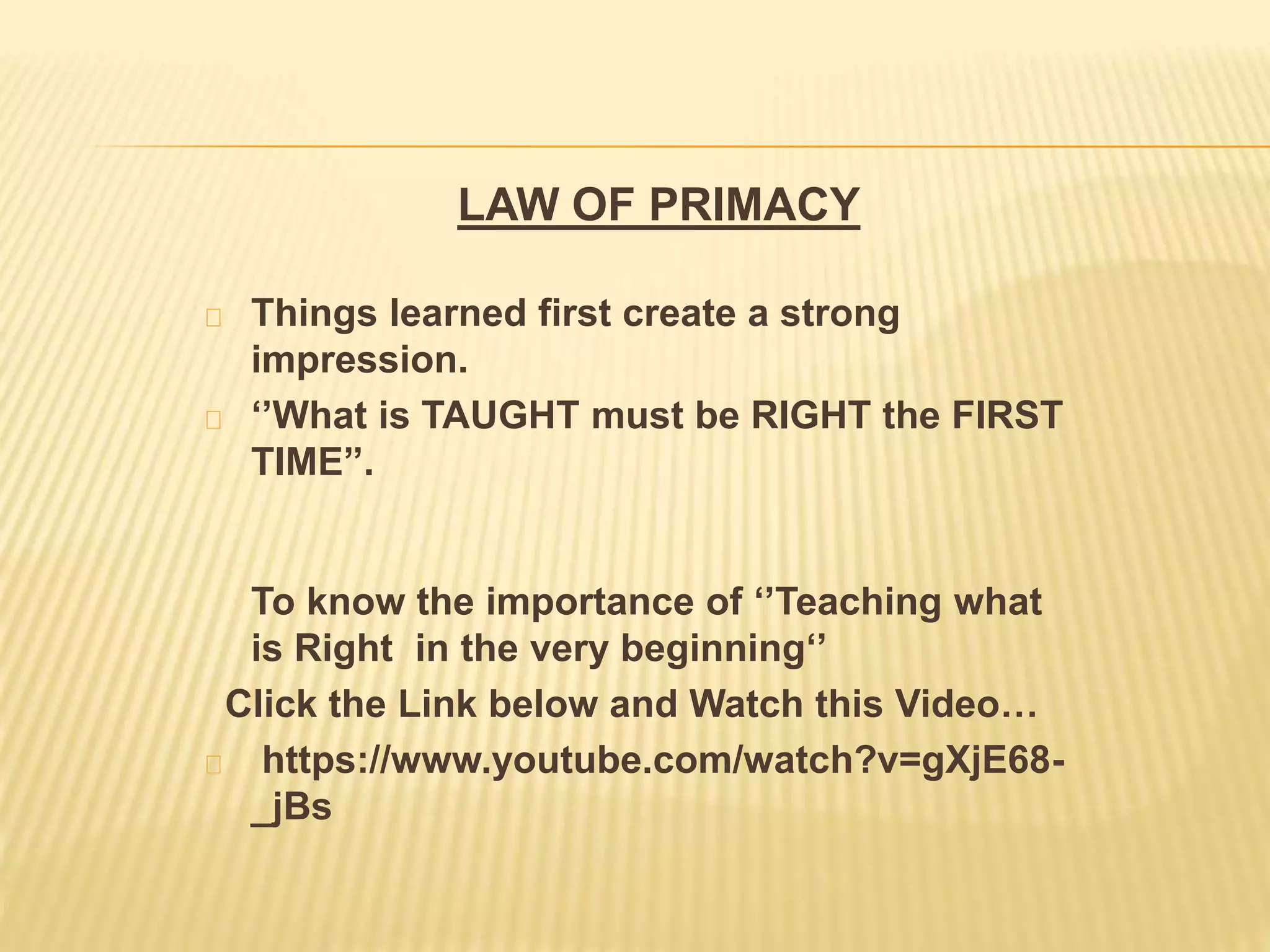
LAW OF PRIMACY
Thingslearned first create a strong
impression.
‘’What is TAUGHT must be RIGHT the FIRST
TIME’’.
To know the importance of ‘’Teaching what
is Right in the very beginning‘’
Click the Link below and Watch this Video…
https://www.youtube.com/watch?v=gXjE68-
_jBs
LAW OF INTENSITY
Themore intense the material taught,
the more it is likely learned.
22.
LAW OF FREEDOM
Thingfreely learned are best
learned.
The greater the freedom enjoyed
by the students in the class, the
greater the intellectual and moral
advancement enjoyed by them.