Constructivism:
Knowledge Construction/
Concept Learning
Prepared by:
Al Francis Galabo
Constructivism
 It focuses on knowledge
construction.
Two Views of Constructivism
Individual Constructivism
– It emphasizes individual,
internal construction of knowledge.
Social Constructivism
– It emphasizes that “knowledge exist in a social
context and is initially shared with others instead
of being represented solely in the mind of an
individual”.
Characteristics of Constructivism
1. Learners construct understanding.
2. New learning depends on current
understanding.
3. Learning is facilitated by social
interaction
4. Meaningful learning occurs within
authentic learning tasks.
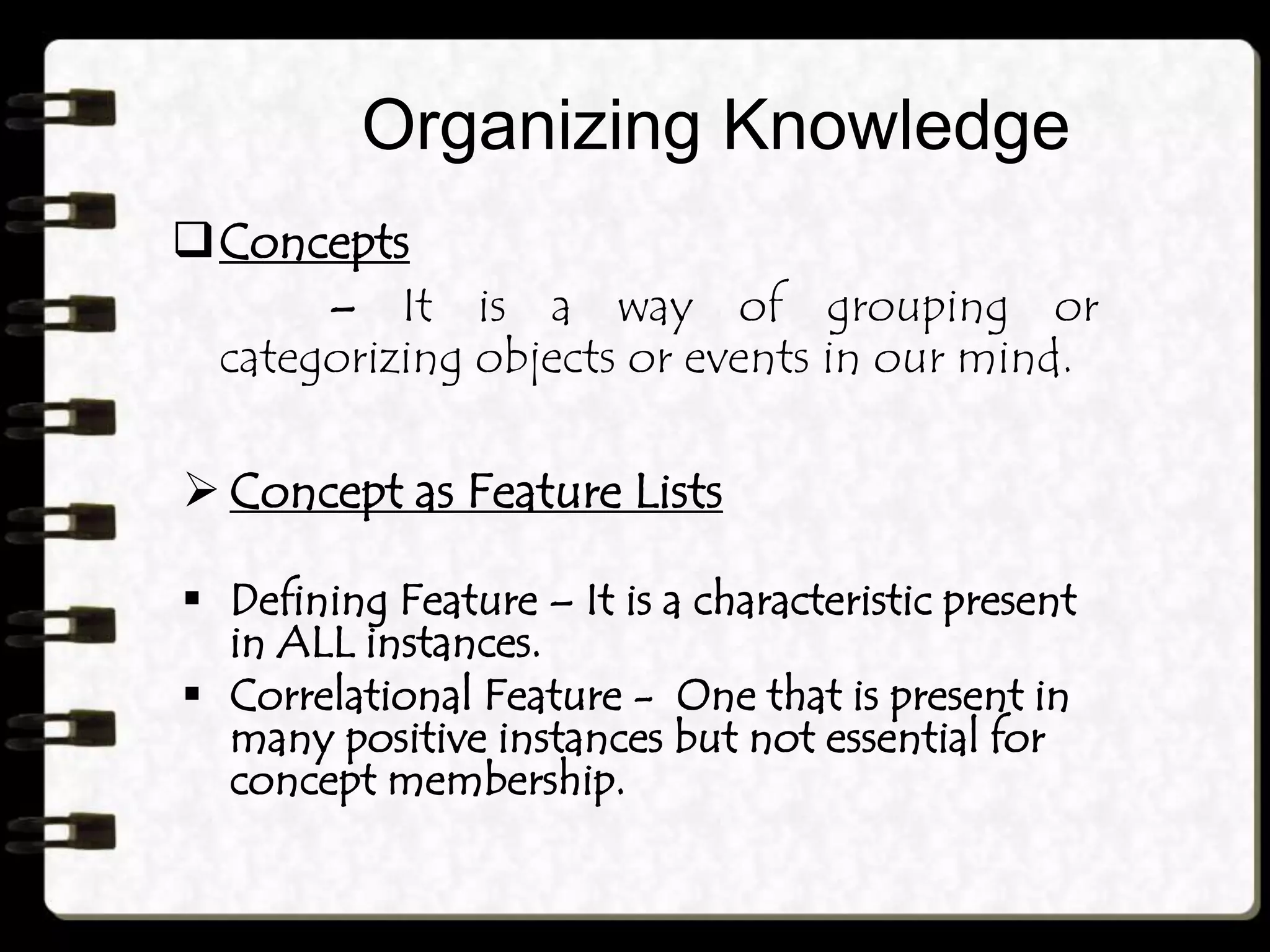
Organizing Knowledge
Concepts
– It is a way of grouping or
categorizing objects or events in our mind.
 Concept as Feature Lists
 Defining Feature – It is a characteristic present
in ALL instances.
 Correlational Feature - One that is present in
many positive instances but not essential for
concept membership.
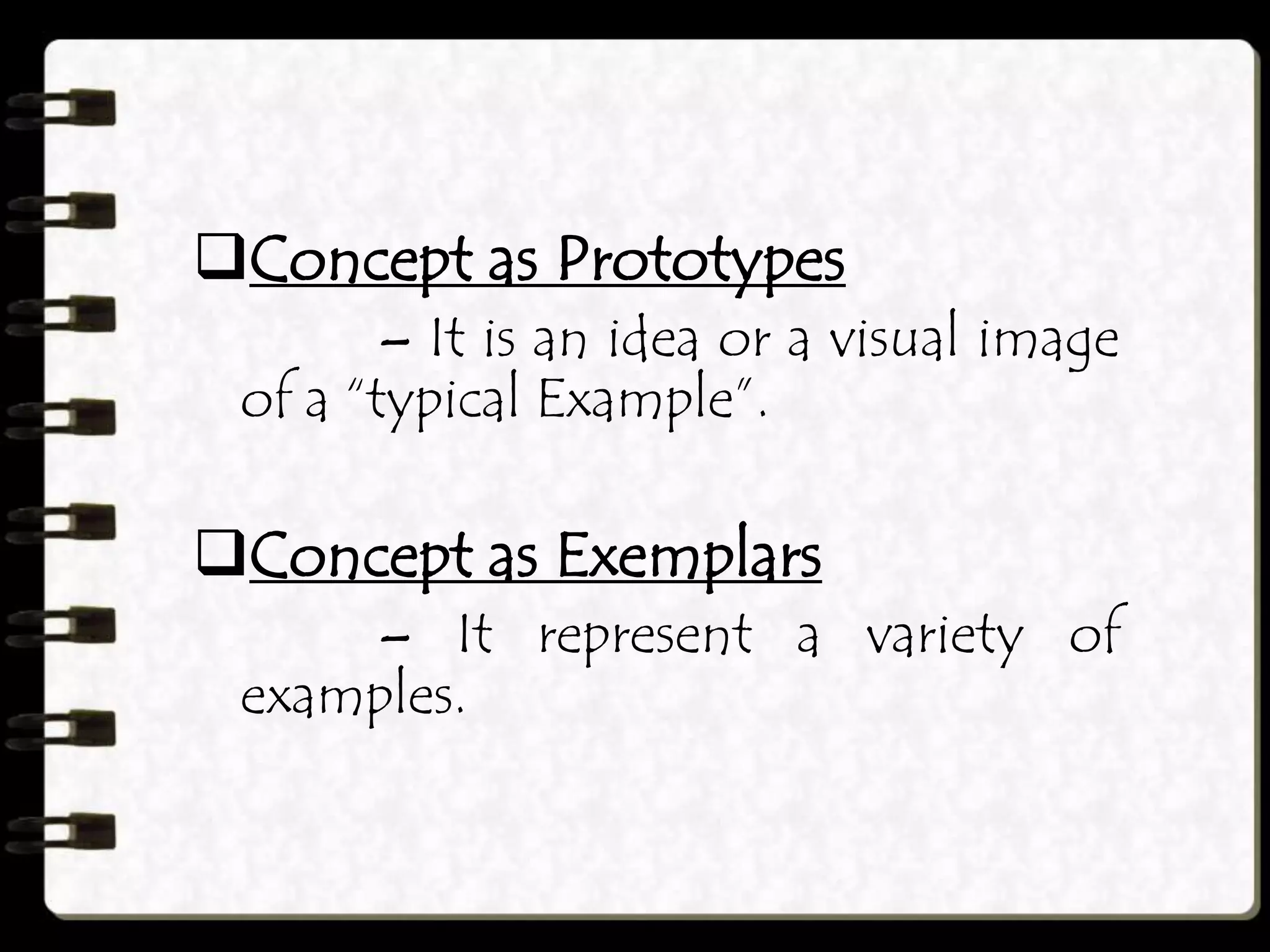
Concept as Prototypes
– It is an idea or a visual image
of a “typical Example”.
Concept as Exemplars
– It represent a variety of
examples.
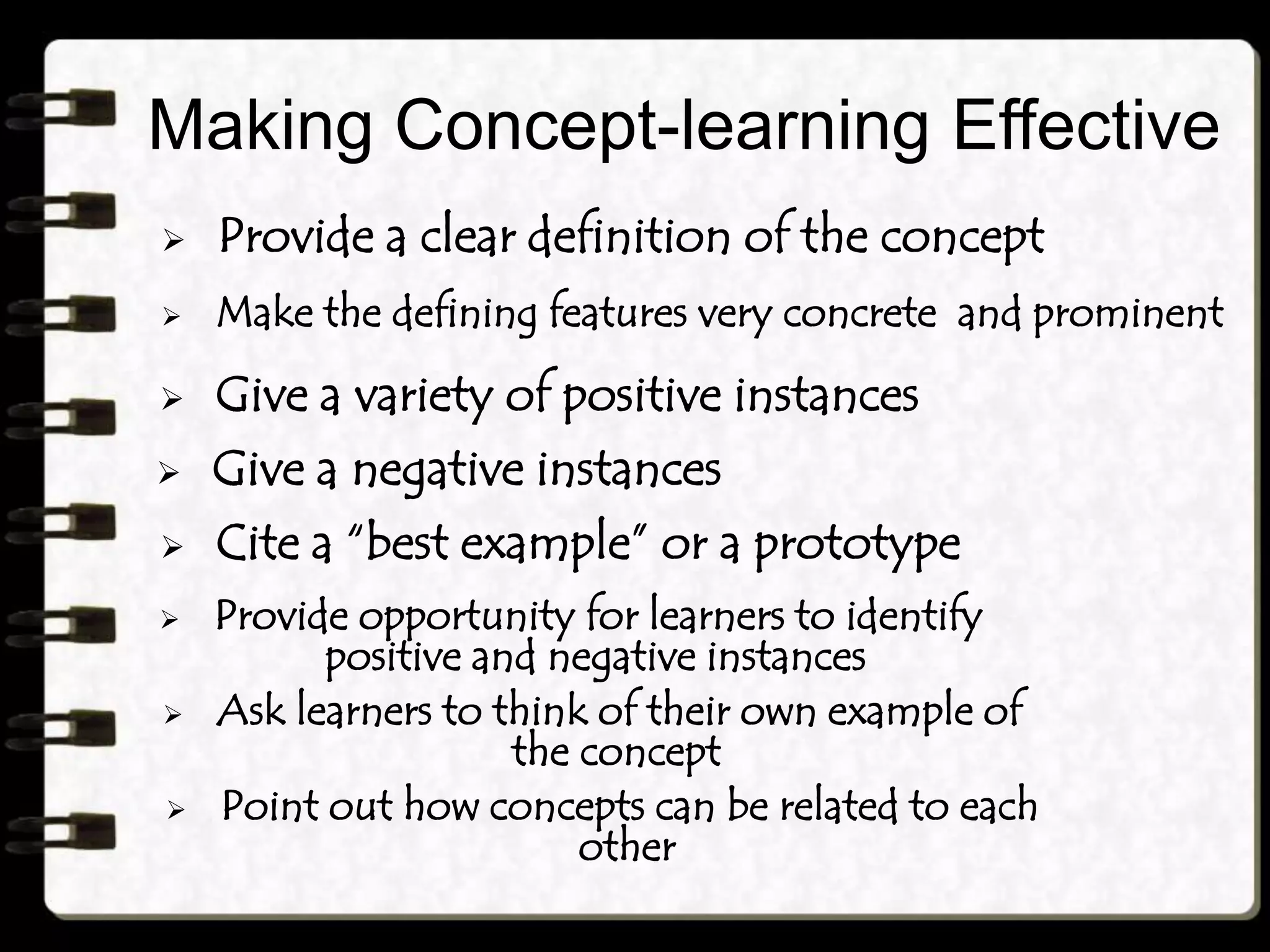
Making Concept-learning Effective
 Provide a clear definition of the concept
 Make the defining features very concrete and prominent
 Give a variety of positive instances
 Give a negative instances
 Cite a “best example” or a prototype
 Provide opportunity for learners to identify
positive and negative instances
 Ask learners to think of their own example of
the concept
 Point out how concepts can be related to each
other
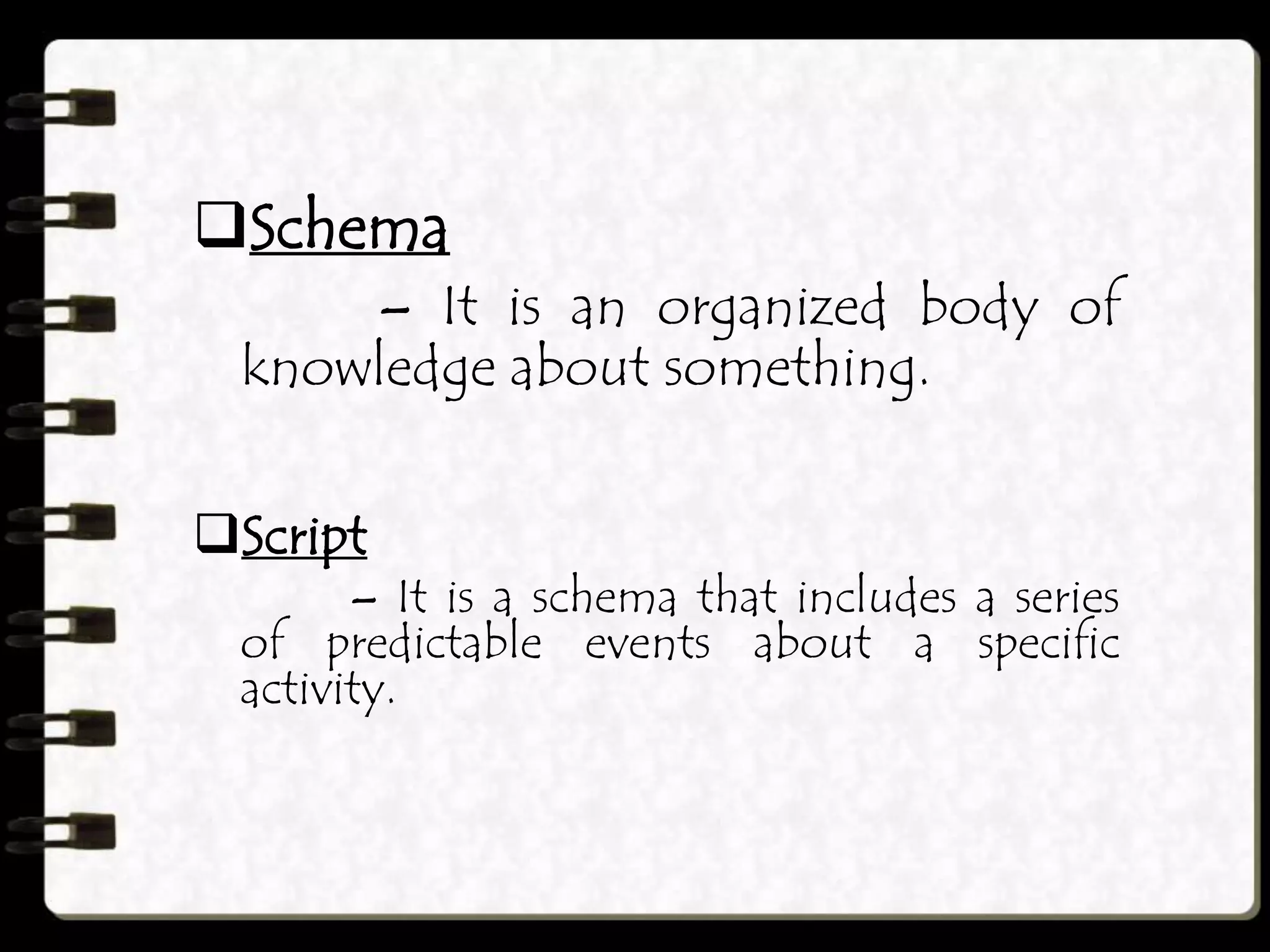
Schema
– It is an organized body of
knowledge about something.
Script
– It is a schema that includes a series
of predictable events about a specific
activity.
Constructivism in Facilitating
learning
pplying
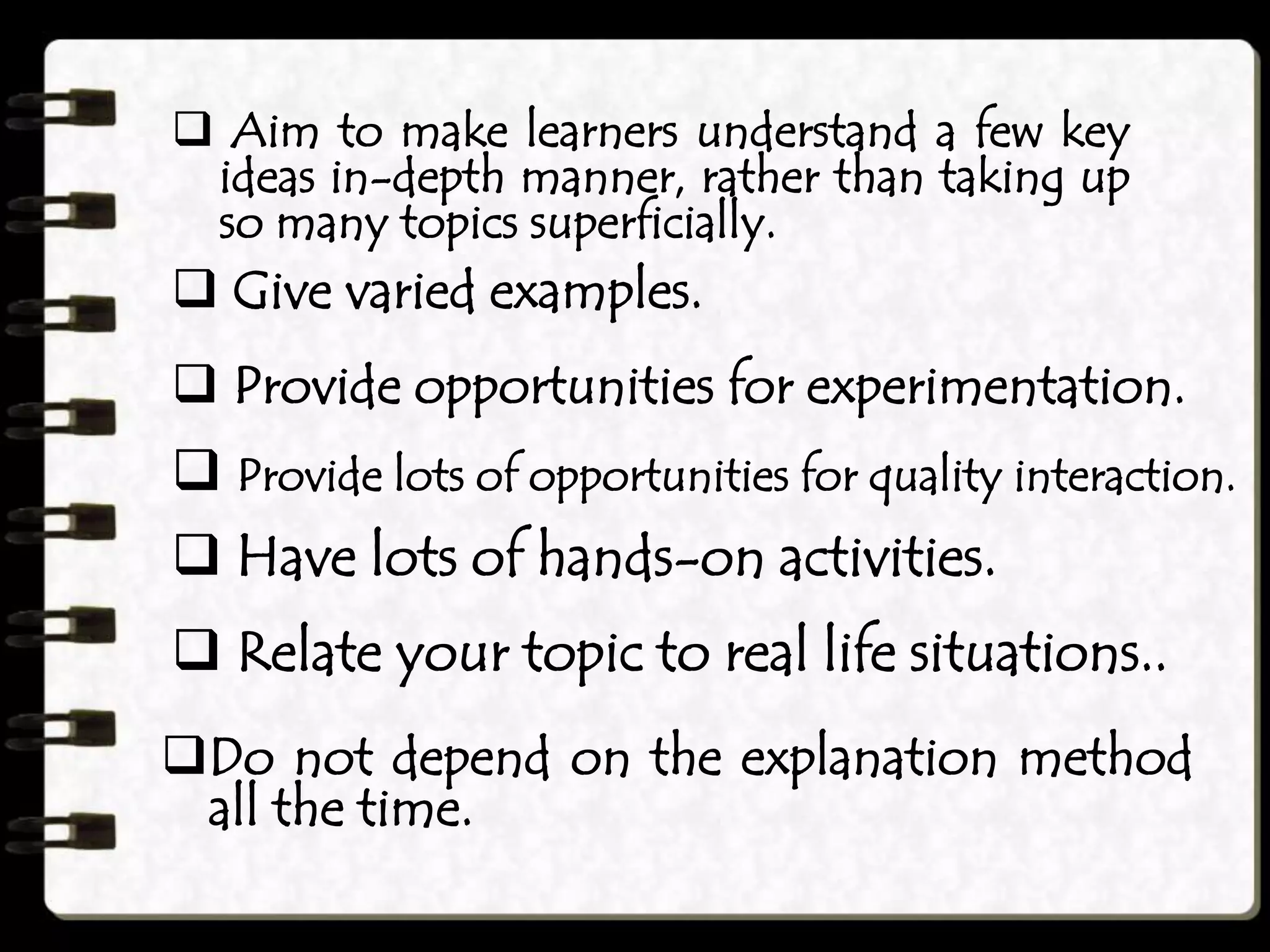
 Aim to make learners understand a few key
ideas in-depth manner, rather than taking up
so many topics superficially.
 Give varied examples.
 Provide opportunities for experimentation.
 Provide lots of opportunities for quality interaction.
 Have lots of hands-on activities.
 Relate your topic to real life situations..
Do not depend on the explanation method
all the time.

Constructivism : Knowledge Construction/Concept Learning

  • 1.
  • 2.
    Constructivism  It focuseson knowledge construction.
  • 3.
    Two Views ofConstructivism Individual Constructivism – It emphasizes individual, internal construction of knowledge. Social Constructivism – It emphasizes that “knowledge exist in a social context and is initially shared with others instead of being represented solely in the mind of an individual”.
  • 4.
    Characteristics of Constructivism 1.Learners construct understanding. 2. New learning depends on current understanding. 3. Learning is facilitated by social interaction 4. Meaningful learning occurs within authentic learning tasks.
  • 5.
    Organizing Knowledge Concepts – Itis a way of grouping or categorizing objects or events in our mind.  Concept as Feature Lists  Defining Feature – It is a characteristic present in ALL instances.  Correlational Feature - One that is present in many positive instances but not essential for concept membership.
  • 6.
    Concept as Prototypes –It is an idea or a visual image of a “typical Example”. Concept as Exemplars – It represent a variety of examples.
  • 7.
    Making Concept-learning Effective Provide a clear definition of the concept  Make the defining features very concrete and prominent  Give a variety of positive instances  Give a negative instances  Cite a “best example” or a prototype  Provide opportunity for learners to identify positive and negative instances  Ask learners to think of their own example of the concept  Point out how concepts can be related to each other
  • 8.
    Schema – It isan organized body of knowledge about something. Script – It is a schema that includes a series of predictable events about a specific activity.
  • 9.
  • 10.
     Aim tomake learners understand a few key ideas in-depth manner, rather than taking up so many topics superficially.  Give varied examples.  Provide opportunities for experimentation.  Provide lots of opportunities for quality interaction.  Have lots of hands-on activities.  Relate your topic to real life situations.. Do not depend on the explanation method all the time.