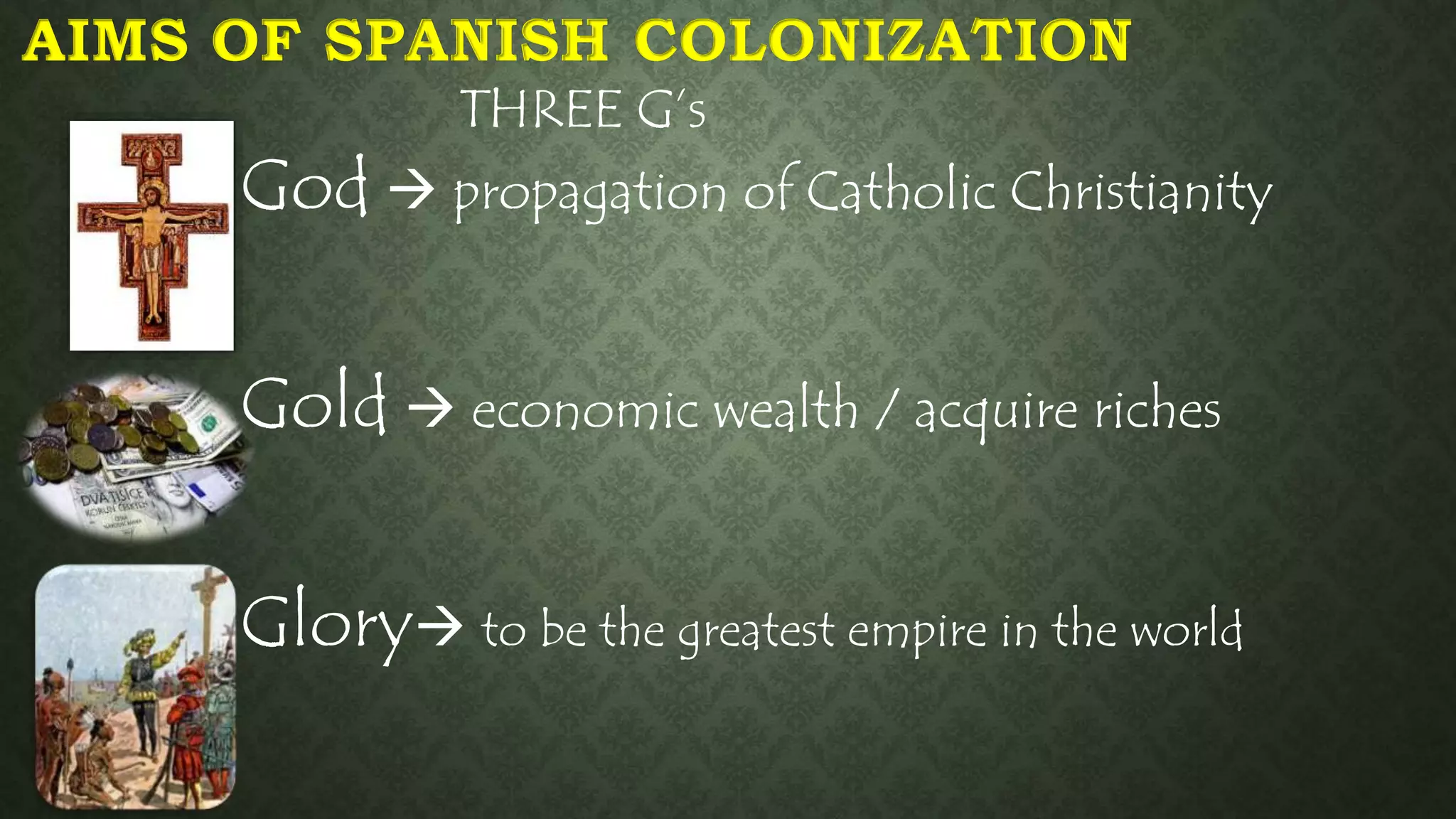
AIMS OF SPANISH COLONIZATION
THREE G’s
God  propagation of Catholic Christianity
Gold  economic wealth / acquire riches
Glory to be the greatest empire in the world
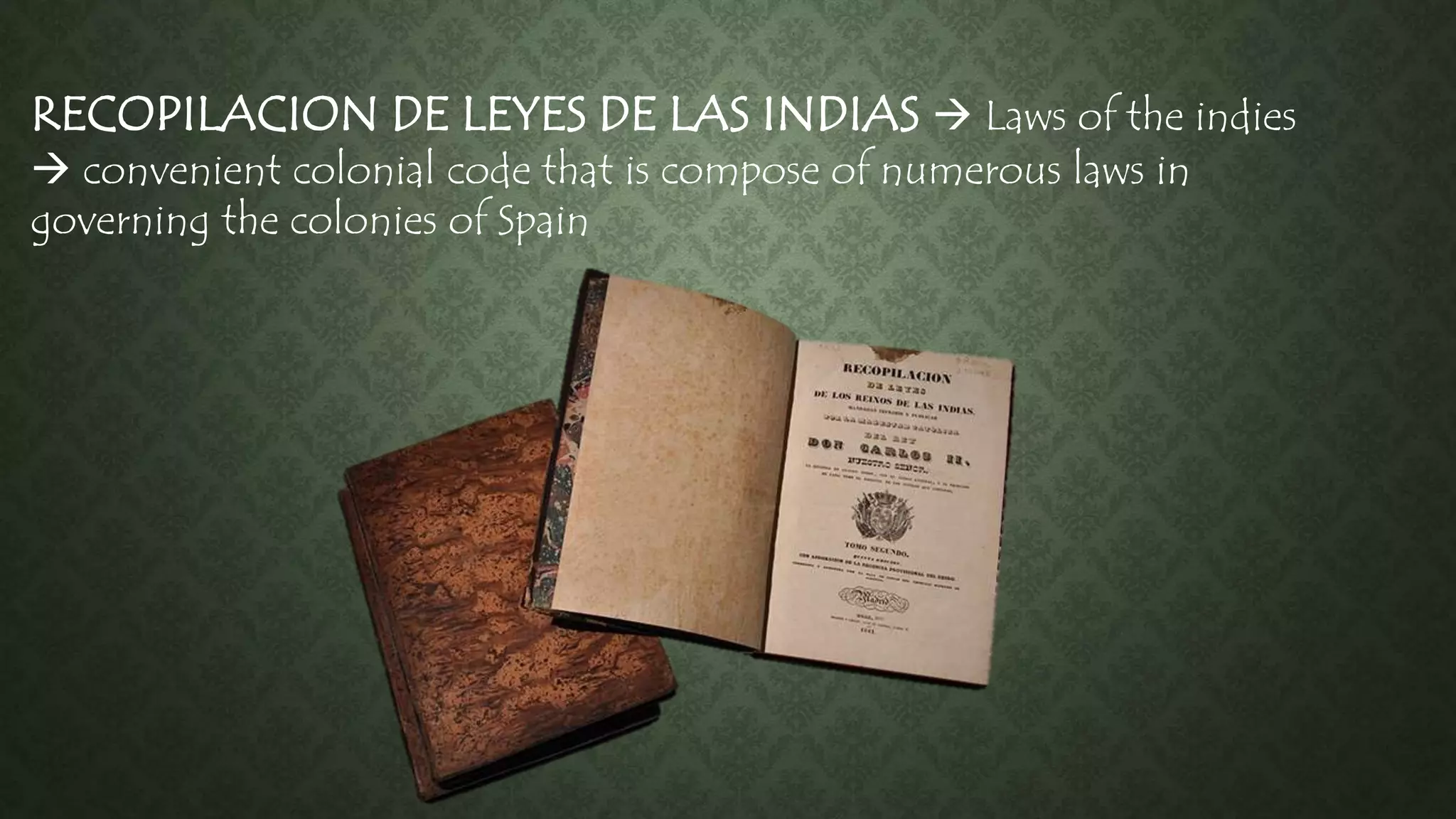
RECOPILACION DE LEYES DE LAS INDIAS  Laws of the indies
 convenient colonial code that is compose of numerous laws in
governing the colonies of Spain
ON TAXATION
Impose and collect revenue for public purpose
One of the laws promulgated by the Indies promulgated by the Spanish
crown was to require conquered inhabitants to pay tribute in recognition
of the Spanish sovereignty.
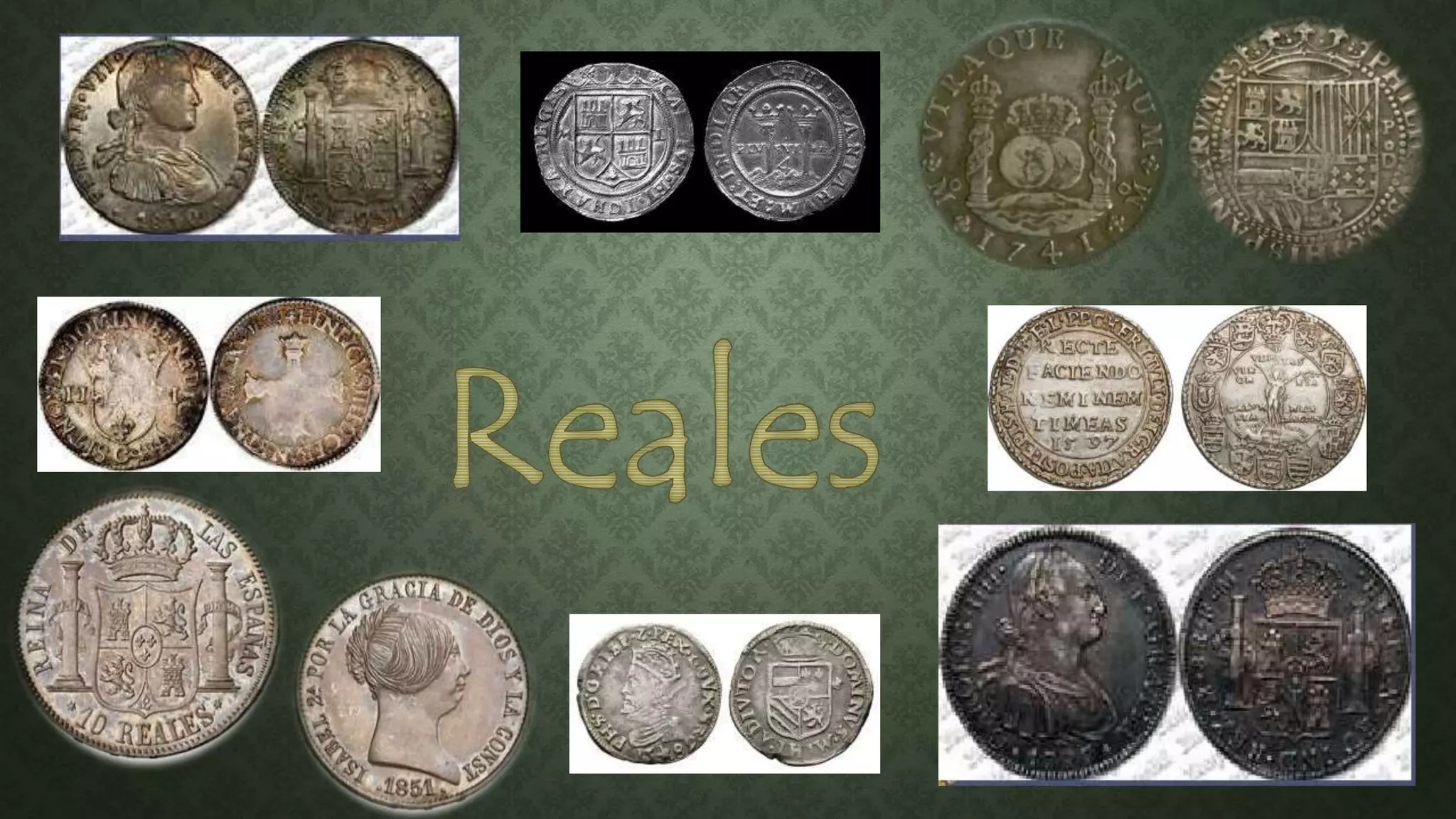
 Before  One family paid tribute amounting to eight reales or one
peso. If unmarried one-half tribute
 In 1589  it was increased to ten reales
 in 1851  increased to twelve reales
 in 1884  abolished and was replaced with a personal cedula tax.
Bandala  natives were coerced to sell their harvest
to the government at very low price.
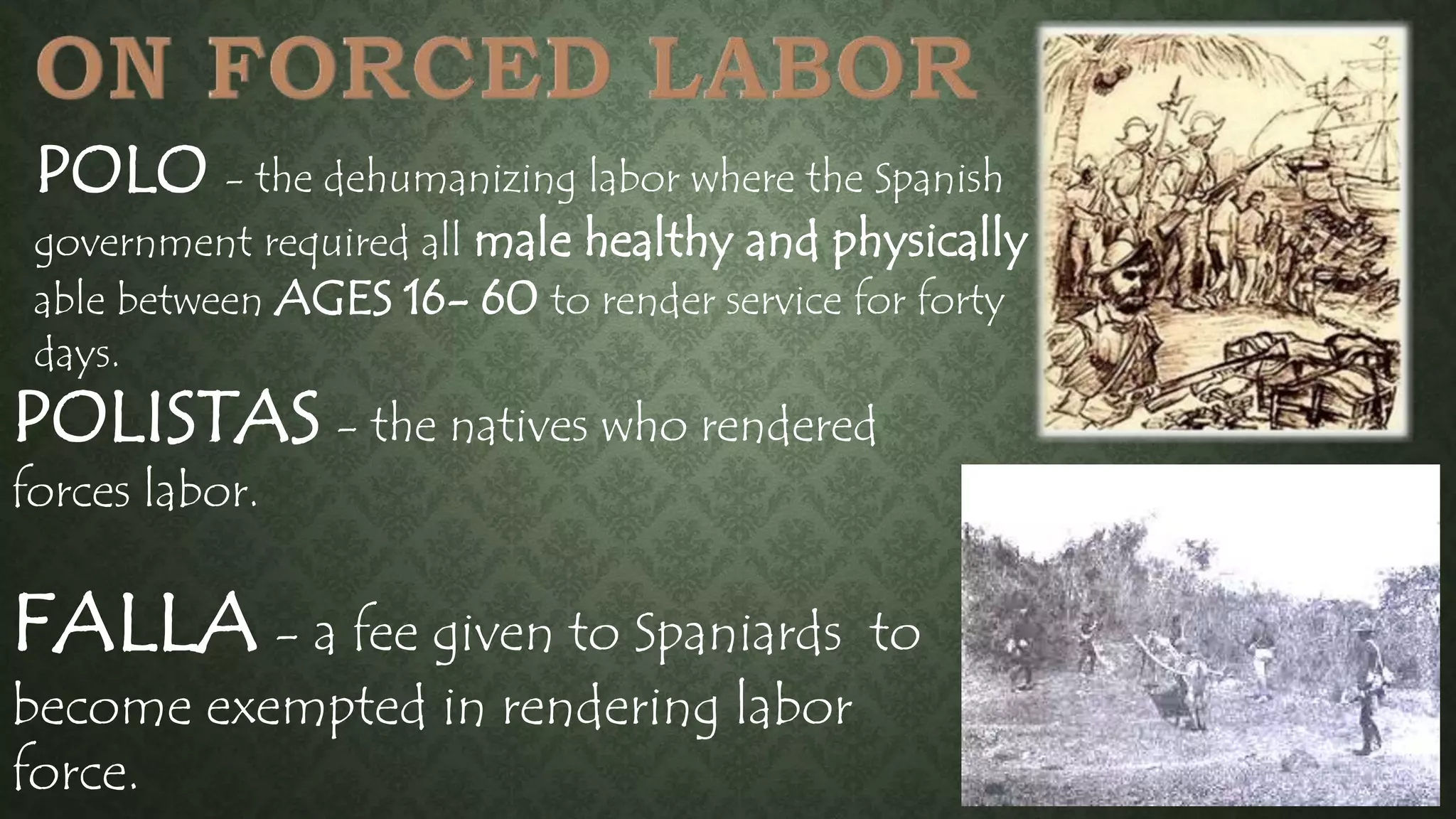
POLO - the dehumanizing labor where the Spanish
government required all male healthy and physically
able between AGES 16- 60 to render service for forty
days.
POLISTAS - the natives who rendered
forces labor.
FALLA - a fee given to Spaniards to
become exempted in rendering labor
force.
Established by Jose Basco Y Vargas in 1781
the increase in revenues of the government through
the cultivation of tobacco.
The cultivation of tobacco
was confined to NUEVA
ECIJA, CAGAYAN
VALLEY,
MARINDUQUE, AND
ILOCOS PROVINCES.
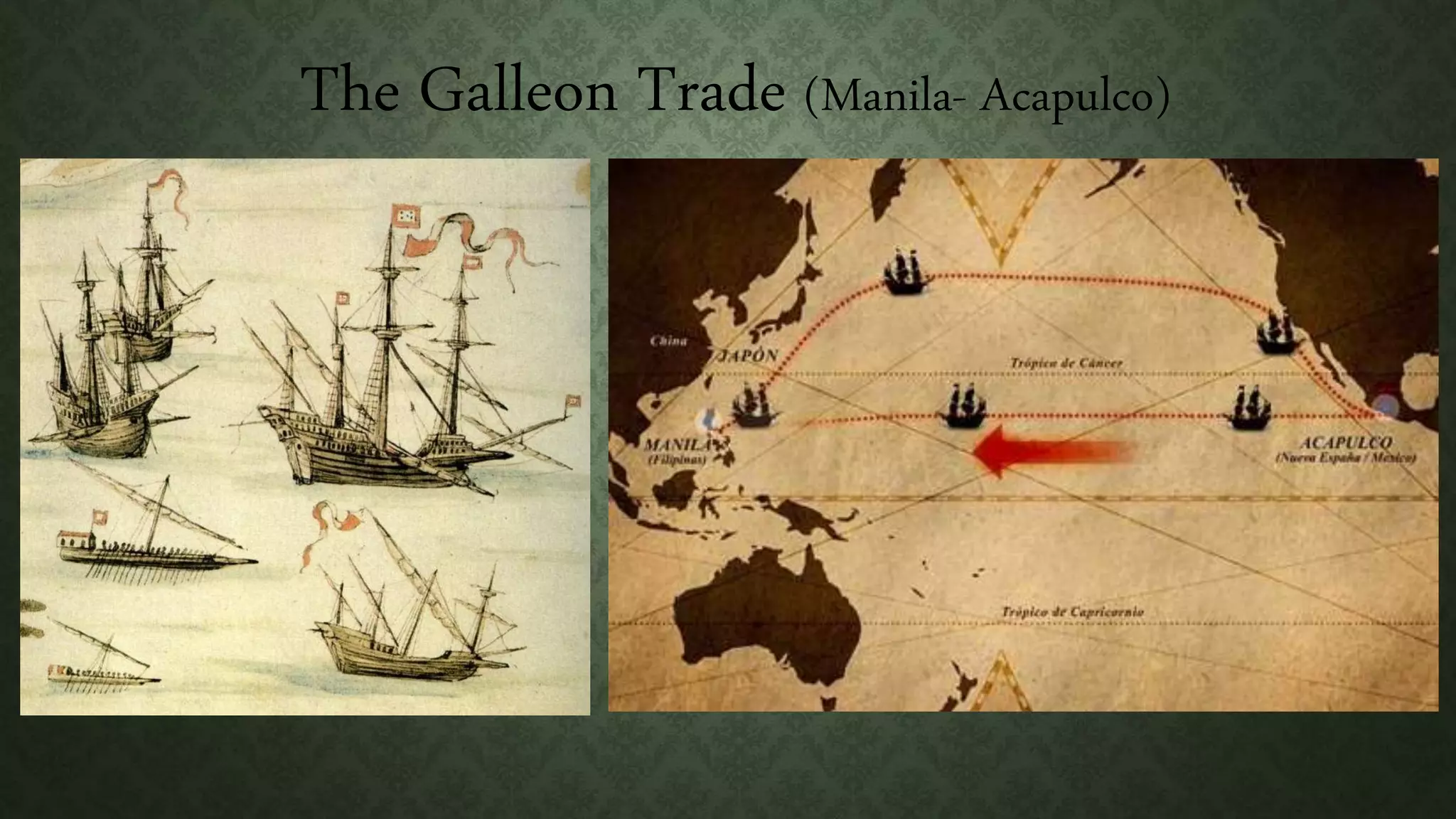
The Galleon Trade (Manila- Acapulco)
Obras Pias- a Foundation where money from
trade was invested and appropriated to be given to
charitable institutions.
The Encomienderos abused their right by way of forcing the
natives to pay tribute beyond what the law prescribed.
Encomienda a grant by the Spanish Crown to a colonist conferring the
right to demand tribute and forced labor from the inhabitants of an area.
TWO KINDS OF Encomienda
ROYAL exclusively owned by the king
PRIVATE owned by private person
Fathers Pedro Chirino Antonio De Morga
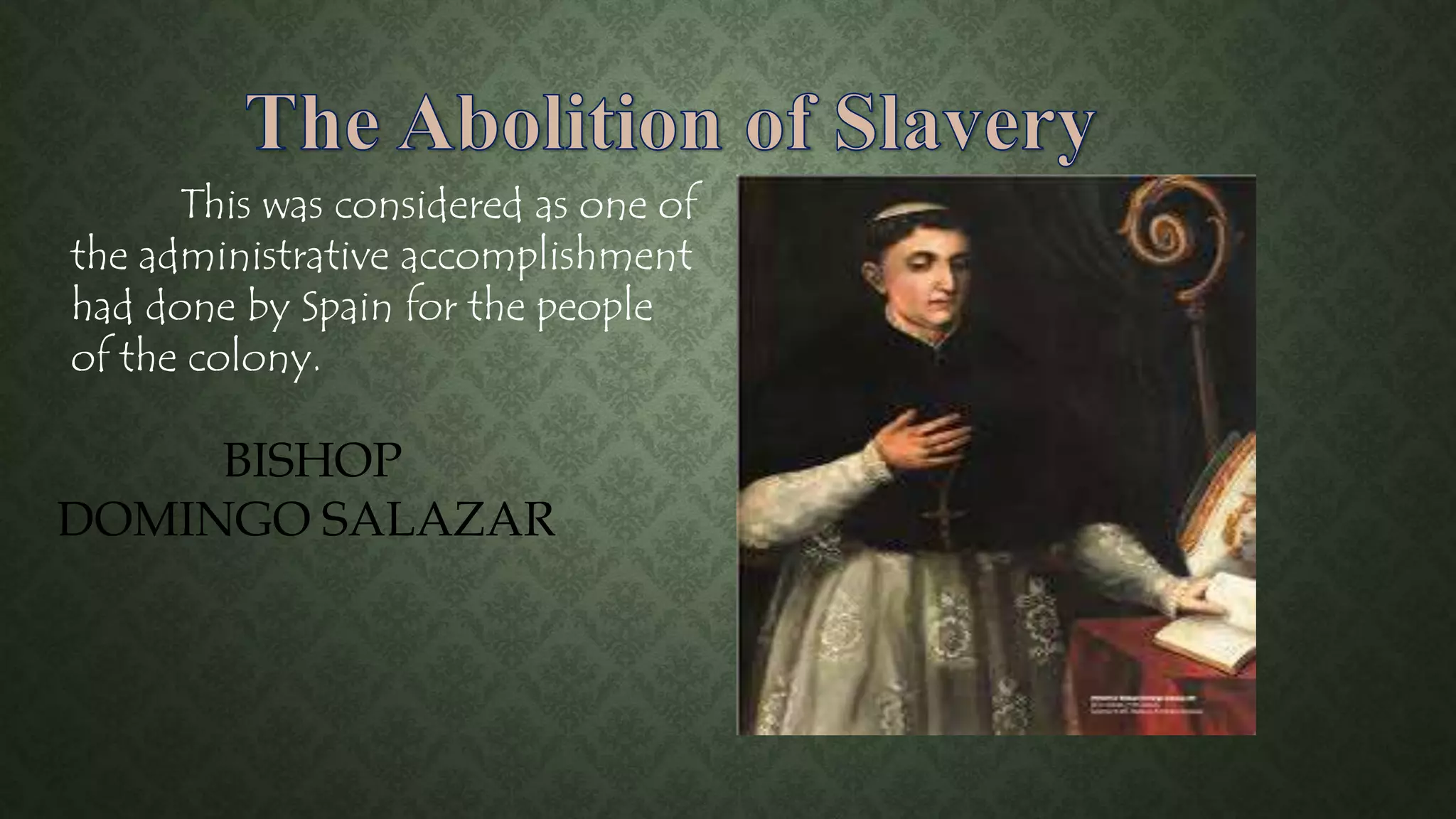
This was considered as one of
the administrative accomplishment
had done by Spain for the people
of the colony.
BISHOP
DOMINGO SALAZAR
first book in the Philippines, the Doctrina Christiana
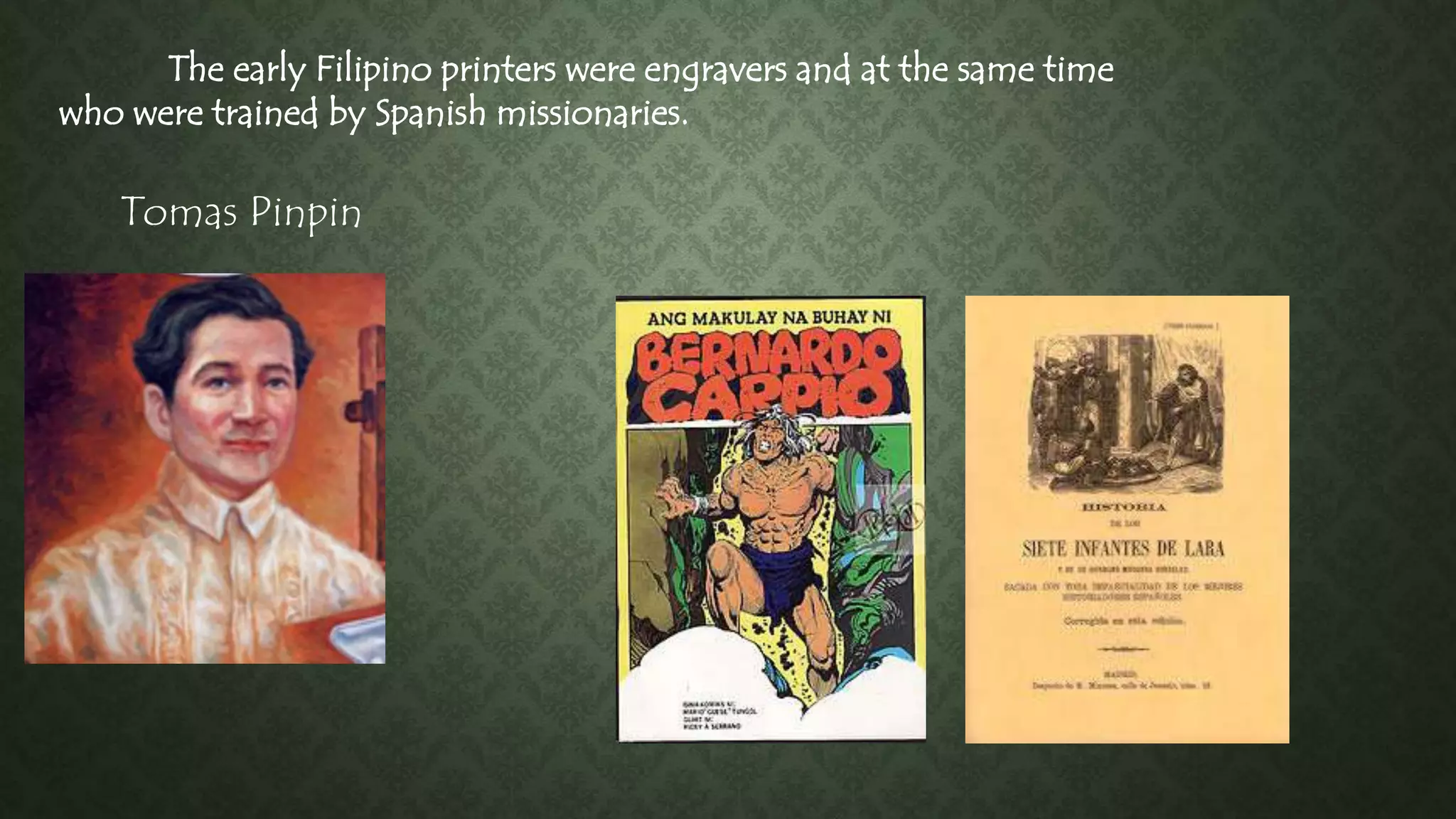
The early Filipino printers were engravers and at the same time
who were trained by Spanish missionaries.
Tomas Pinpin
Jose Dela Cruz (Husing Sisiw 1746-1829) Francisco Baltazar (1789-1862)
Felix Resurrection Hidaldo, won a silver medal for his
Christian Virgins Exposed
Juan Luna received his first gold medal for his
Spolarium as their entries for Madrigal Exposition of
Fine Arts.
On Religion
With the help of the soldiers, the missionaries easily conquered
territories of the colony and converted the natives to Christianity.
The various missionaries who used their religious influence to facilitate
the teaching of Gospel and propagation of Catholic Christian faith were
• the Augustinians (1565)
• the Franciscans (1577)
• The Jesuits (1581)
• the Dominicans (1587)
• the Recollects (1606).
The Filipino conversion to Christianity inevitably meant the
adoption of fiesta as a socio- religious event celebrating the feast
day of the patron saint of the Catholic town as an occasion of
thanksgiving for a bountiful harvest and other blessings.
SAN AGUSTIN CHURCH
oldest church in the
Philippines
 In 1863, the Spanish government enacted and implemented an educational reform primarily
designed to improve the state of education throughout the archipelago.
 The decree provided for the establishment of at least one school for boys and one for
girls in every town.
 The decree also provided for the establishment of a normal school for male teachers
under the supervision of the Jesuits and created a commission of eight
members headed by the Governor General.
 University of Santo Tomas- oldest pontifical university in the Philippines founded by Dominicans
in 1611
 Colegio De San Juan De Letran- founded in 1601
 Colegio De Sta. Potentiana- 1589
 Colegio De Sta. Isabel- 1632
 College of La Concordia- 1869
 Assumption Convent- 1892
 The government also allowed foreign investors to establish
residence in the Philippines. Spain opened its ports in Manila and
other parts of the country.
 Foreign banking institutions and other lending and credit facilities
were open. Roads and bridges were built, shipping lines, inter
islands and overseas were improved and communication system
were upgraded.
 The opening of the Philippines to world trade and with the
emergence of multifarious forces, e.g., scientific and industrial,
economic, social, and political resulted in economic changes and
prosperity that improved the quality of life of the Filipinos.
POLITICAL SYSTEM
Governor General chief executive of the Philippines
CHECKS TO GUBERNATORIAL POWERS
o Royal Audiencia (Supreme Court)
Autos acordados  acts agreed upon by the members of Royal
Audiencia
Oidor  members
o Archbishop and the clergy who were influential in the king’s court
o The complaints which subordinate public offials & private citizens
o Residencia  trial of an outgoing governor general and other Spanish
officials
Governor Guido Lavezaris  first Spanish gov. gen. who was subjected
to a residencia (1572-75)
o Visitador an investigator which the king sent to the colony to investigate
conditions in the Philippines
 ALCADIAS provinces governed by ALCALDE MAYOR
 CORREGIMIENTOS special districts that represents unpacified regions
 CORREGIDOR usually an army officer that governs CORREGIMIENTOS
 PUEBLO town
 Gobernadorcillo  petty governor administrate a pueblo  also known as
CAPITAN and his wife CAPITANA
 TENIETE MAYOR Chief lieutenant
 JUEZ DE SEMENTERAS justice of the fields
 JUEZ DE GANADOS justice of cattle
 JUEZ DE POLICIA justice of police
 DIRECTORCILLO municipal Secretary
 CABEZA DE BARANGAY administrate a BARANGAY or barrios
 AYUNTAMIENTO  city government
 CABILDO  city council
 Alcalde (mayor)
sRegidores(councilors)
 Aguacil mayor (chief constable)
 Escribano (secretary)
The Philippines under Spanish Regime

The Philippines under Spanish Regime

  • 2.
    AIMS OF SPANISHCOLONIZATION THREE G’s God  propagation of Catholic Christianity Gold  economic wealth / acquire riches Glory to be the greatest empire in the world
  • 3.
    RECOPILACION DE LEYESDE LAS INDIAS  Laws of the indies  convenient colonial code that is compose of numerous laws in governing the colonies of Spain
  • 4.
    ON TAXATION Impose andcollect revenue for public purpose One of the laws promulgated by the Indies promulgated by the Spanish crown was to require conquered inhabitants to pay tribute in recognition of the Spanish sovereignty.  Before  One family paid tribute amounting to eight reales or one peso. If unmarried one-half tribute  In 1589  it was increased to ten reales  in 1851  increased to twelve reales  in 1884  abolished and was replaced with a personal cedula tax.
  • 6.
    Bandala  nativeswere coerced to sell their harvest to the government at very low price.
  • 7.
    POLO - thedehumanizing labor where the Spanish government required all male healthy and physically able between AGES 16- 60 to render service for forty days. POLISTAS - the natives who rendered forces labor. FALLA - a fee given to Spaniards to become exempted in rendering labor force.
  • 8.
    Established by JoseBasco Y Vargas in 1781 the increase in revenues of the government through the cultivation of tobacco. The cultivation of tobacco was confined to NUEVA ECIJA, CAGAYAN VALLEY, MARINDUQUE, AND ILOCOS PROVINCES.
  • 9.
    The Galleon Trade(Manila- Acapulco)
  • 10.
    Obras Pias- aFoundation where money from trade was invested and appropriated to be given to charitable institutions.
  • 11.
    The Encomienderos abusedtheir right by way of forcing the natives to pay tribute beyond what the law prescribed. Encomienda a grant by the Spanish Crown to a colonist conferring the right to demand tribute and forced labor from the inhabitants of an area. TWO KINDS OF Encomienda ROYAL exclusively owned by the king PRIVATE owned by private person
  • 12.
    Fathers Pedro ChirinoAntonio De Morga
  • 13.
    This was consideredas one of the administrative accomplishment had done by Spain for the people of the colony. BISHOP DOMINGO SALAZAR
  • 14.
    first book inthe Philippines, the Doctrina Christiana
  • 15.
    The early Filipinoprinters were engravers and at the same time who were trained by Spanish missionaries. Tomas Pinpin
  • 16.
    Jose Dela Cruz(Husing Sisiw 1746-1829) Francisco Baltazar (1789-1862)
  • 17.
    Felix Resurrection Hidaldo,won a silver medal for his Christian Virgins Exposed Juan Luna received his first gold medal for his Spolarium as their entries for Madrigal Exposition of Fine Arts.
  • 18.
    On Religion With thehelp of the soldiers, the missionaries easily conquered territories of the colony and converted the natives to Christianity. The various missionaries who used their religious influence to facilitate the teaching of Gospel and propagation of Catholic Christian faith were • the Augustinians (1565) • the Franciscans (1577) • The Jesuits (1581) • the Dominicans (1587) • the Recollects (1606).
  • 19.
    The Filipino conversionto Christianity inevitably meant the adoption of fiesta as a socio- religious event celebrating the feast day of the patron saint of the Catholic town as an occasion of thanksgiving for a bountiful harvest and other blessings.
  • 20.
    SAN AGUSTIN CHURCH oldestchurch in the Philippines
  • 21.
     In 1863,the Spanish government enacted and implemented an educational reform primarily designed to improve the state of education throughout the archipelago.  The decree provided for the establishment of at least one school for boys and one for girls in every town.  The decree also provided for the establishment of a normal school for male teachers under the supervision of the Jesuits and created a commission of eight members headed by the Governor General.  University of Santo Tomas- oldest pontifical university in the Philippines founded by Dominicans in 1611  Colegio De San Juan De Letran- founded in 1601  Colegio De Sta. Potentiana- 1589  Colegio De Sta. Isabel- 1632  College of La Concordia- 1869  Assumption Convent- 1892
  • 22.
     The governmentalso allowed foreign investors to establish residence in the Philippines. Spain opened its ports in Manila and other parts of the country.  Foreign banking institutions and other lending and credit facilities were open. Roads and bridges were built, shipping lines, inter islands and overseas were improved and communication system were upgraded.  The opening of the Philippines to world trade and with the emergence of multifarious forces, e.g., scientific and industrial, economic, social, and political resulted in economic changes and prosperity that improved the quality of life of the Filipinos.
  • 23.
    POLITICAL SYSTEM Governor Generalchief executive of the Philippines CHECKS TO GUBERNATORIAL POWERS o Royal Audiencia (Supreme Court) Autos acordados  acts agreed upon by the members of Royal Audiencia Oidor  members o Archbishop and the clergy who were influential in the king’s court o The complaints which subordinate public offials & private citizens o Residencia  trial of an outgoing governor general and other Spanish officials Governor Guido Lavezaris  first Spanish gov. gen. who was subjected to a residencia (1572-75) o Visitador an investigator which the king sent to the colony to investigate conditions in the Philippines
  • 24.
     ALCADIAS provincesgoverned by ALCALDE MAYOR  CORREGIMIENTOS special districts that represents unpacified regions  CORREGIDOR usually an army officer that governs CORREGIMIENTOS  PUEBLO town  Gobernadorcillo  petty governor administrate a pueblo  also known as CAPITAN and his wife CAPITANA  TENIETE MAYOR Chief lieutenant  JUEZ DE SEMENTERAS justice of the fields  JUEZ DE GANADOS justice of cattle  JUEZ DE POLICIA justice of police  DIRECTORCILLO municipal Secretary  CABEZA DE BARANGAY administrate a BARANGAY or barrios  AYUNTAMIENTO  city government  CABILDO  city council  Alcalde (mayor) sRegidores(councilors)  Aguacil mayor (chief constable)  Escribano (secretary)