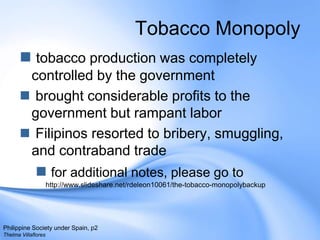
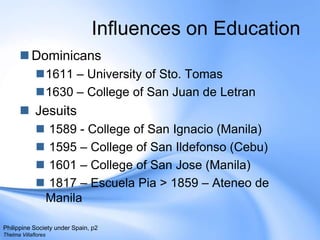
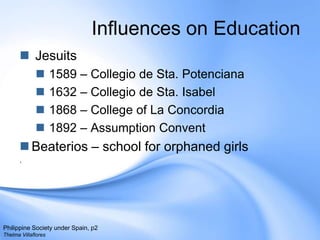

1) The Spanish government controlled tobacco production in the Philippines and imposed a tobacco monopoly, which generated significant profits but relied on exploitative labor practices. Filipinos resisted by smuggling and illegal trade. 2) Several religious orders, including the Augustinians, Franciscans, Jesuits, and Dominicans, arrived in the late 16th-17th centuries and established churches, schools, and universities that spread Christianity and European cultural influences. 3) While European customs were gradually adopted in the Philippines, the native population still largely maintained their own cultural heritage and modified foreign practices to fit local traditions.


